Spring is here: Poem Number 33

One of my personal favorite poems in the entire collection is this one:

JapaneseRomanizationTranslation
ひさかたのHisakata noIn these spring days
光のどけきHikari no dokekiwith the tranquil light
encompassing
春の日にHaru no hi niThe four directions
心なくShizu gokoro nakuwhy should the blossoms scatter
花のちるらHana no chiruranwith uneasy hearts?
Translation by Dr Joshua Mostow

The author, Ki no Tomonori (紀友則, ? – 905?), was the cousin of Ki no Tsurayuki (poem 35). Tomonori is one of the Thirty-Six Immortals of Poetry, and helped to compile another famous poetry anthology, the Kokinshū (古今集).

The Kokinshū, formerly known as the Kokin Waka Shū (古今和歌集 “Collection of Ancient and Modern Japanese Poetry”) was completed in 905 and was the first of many efforts by the ancient Court to compile the best poetry, past and present, into an official anthology. The Hyakunin Isshu by contrast was one man’s effort in his retirement. More on that in a later post. As for Tomonori, it is said that he didn’t live to see the completion of the Kokinshū, sadly.

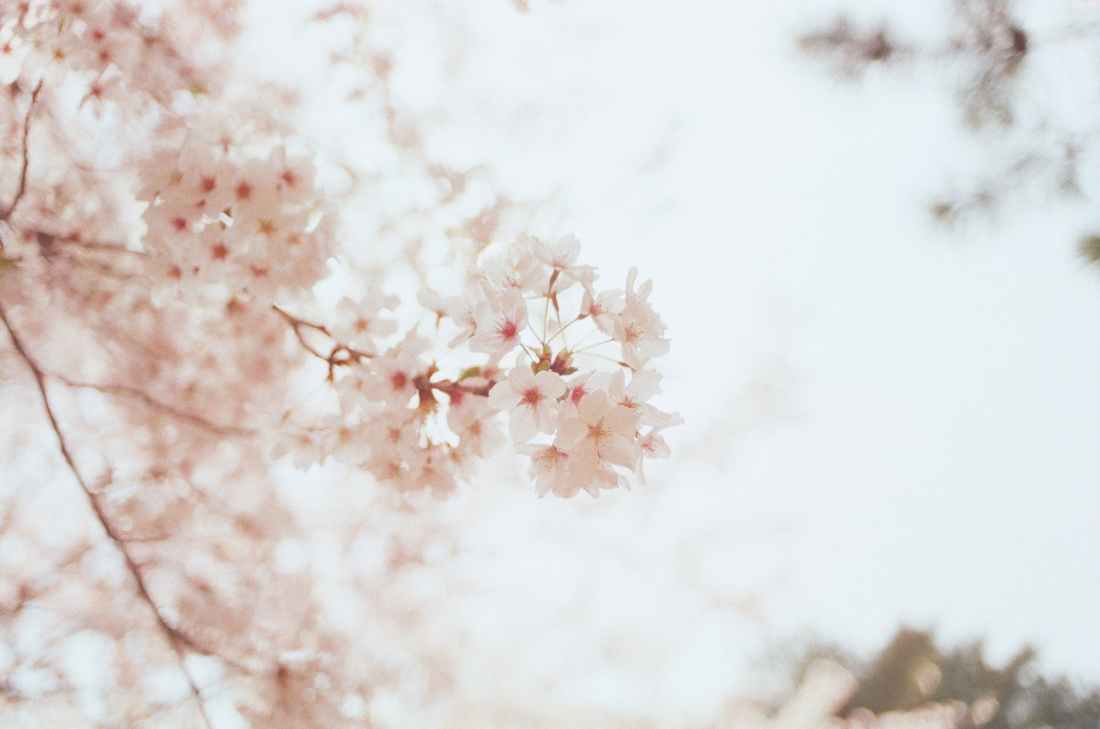
As for this poem, this is one of the most famous in the collection and emblematic of Spring, but also the fleeting nature of the world, and the touch of melancholy that comes with it. Truly this is a lovely poem. It also has a textbook example of a pillow word in the form of ひさかたの (hisakata no) in its opening verse, also used in poem 76.

New Hyakunin Isshu Book: A Review

Well, the book was actually published in 1996, but I came across this book only recently: Joshua S. Mostow’s Pictures of the Heart: The Hyakunin Isshu in Word and Image. The book is a serious effort to study the Hyakunin Isshu, and not for a casual reader, but also the history and culture around it, while offering fresh, new translations.

The first chapter alone, dealing with issues of historiography and deconstruction, makes my head hurt, but it makes an important argument: that only studying the poems themselves, and ignoring their role in Japanese culture leads readers to a one-sided view. Mastov demonstrates how some poems have even changed and evolved over time, depending on which book published the poem over the centuries. Sometimes, even in antiquity, poems were radically different depending on which book, so Mastov explores the various debates surrounding each poem. Who knew a few lines of verse could cause so much scholarly debate?

The book is a great read because for each poem, it carefully analyzes it, provides historical context, artwork and shows how the poem has been interpreted over the generations. It often debunks certain assumptions too. For example, Poem Number 6 is traditionally thought to allude to the story of Tanabata, but in fact Mastov demonstrates how this is a later interpretation.

The translations for the poems as well are quite good, readable, and well thought out in my opinion. The book is a weighty tome, but for any serious students of Japanese poetry, and in particular the Hyakunin Isshu, I highly recommend it.

A Full Moon Night: Poem Number 7

As tonight is a Worm Moon, but also one where the moon is the closest in its orbit to Earth in 19 years, I thought this was a fitting poem, and also one of my favorite:

JapaneseRomanizationTranslation
天の原Ama no haraAs I gaze out, far
ふりさけ見ればFurisake mirebaacross the plains of heaven
春日なるKasuga naruah, at Kasuga,
三笠の山にMikasa no yama nifrom behind Mount Mikasa,
出でし月かもIdeshi tsuki kamoit’s the same moon that came out then!
Translation by Dr Joshua Mostow

According to historical accounts, Abé no Nakamaro (阿倍仲麻呂, 701 – 770), the author, went to China to study at the age of 16. This was part of the yearly mission made by Japan to the Imperial Tang Court in China. The missions to China from Japan (or Kentō-shi 遣唐使) were perilous undertakings due to poor ship construction and storms from the south, so they didn’t come often, and sometimes got shipwrecked.

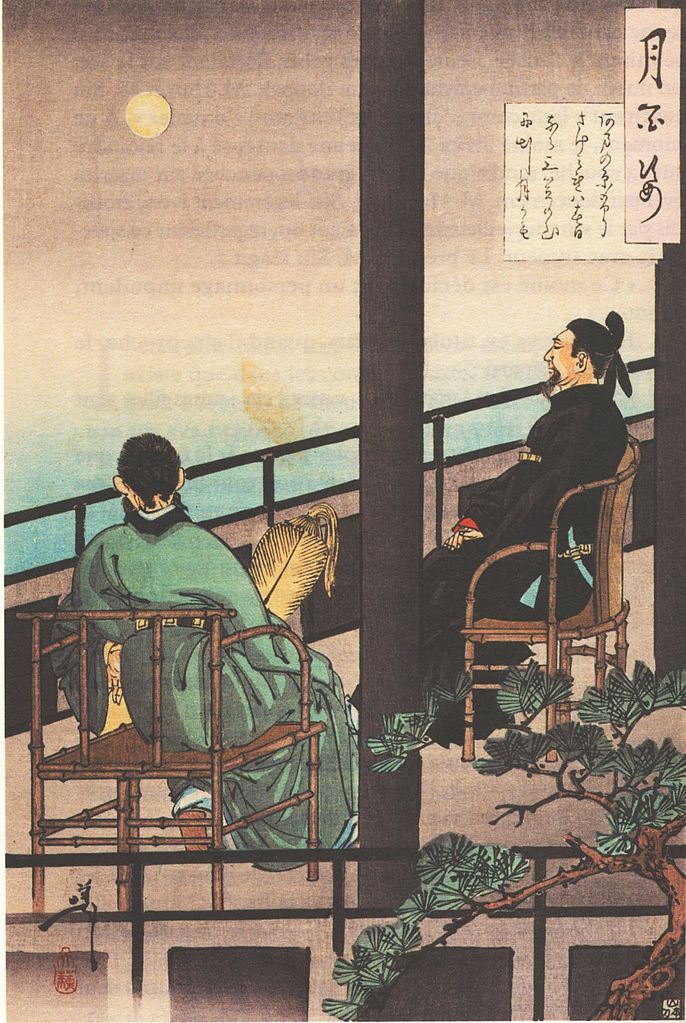
He spent many years in China and became friends with famous poets at the time such as Li Bo and Wang Wei, and was in the service of the Chinese emperor Xuan-Zong for a time. But after so many years of service, it was time for Nakamaro to return to Japan, and according to the story, on the night before he departed, his friends in China threw him a farewell feast. That evening, he looked up and saw a beautiful moon, and composed this poem. It was at Mount Mikasa many years before that Nakamaro prayed for safe return someday from China, and he remembered that same moon so many years ago. This is depicted in the featured photo above from a woodblock print collection (print number 64) called the One Hundred Aspects of the Moon by Yoshitoshi.

Sadly, his return trip failed, and the ship was blown off course to the land of Annam, where he then trekked back to China and eventually passed away never seeing his homeland again.