
One of the most famous and recognizable poems in the Hyakunin Isshu is poem 17:
| Japanese | Romanization | Translation |
|---|---|---|
| 千早ぶる | Chihayaburu | Unheard of |
| 神代もきかず | Kamiyo mo kikazu | even in the legendary age |
| 龍田川 | Tatsuta-gawa | of the awesome gods: |
| からくれなゐに | Karakurenai ni | Tatsuta River in scarlet |
| 水くくるとは | Mizu kukuru to wa | and the water flowing under it. |
The poet, Ariwara no Narihara Ason (在原業平朝臣, 825 – 990) or “Sir Ariwara no Narihara”, was the closest thing to a poetic genius during his time, and this poem is a prime example. Originally published in the Imperial anthology, the Kokin Wakashū, as poem number 294, it is considered one of the most iconic of the one-hundred Hyakunin Isshu poems.
Narihara is also credited for writing what is considered the greatest Waka poem on cherry blossoms (桜, sakura) ever composed:
| Japanese | Romanization | Translation |
|---|---|---|
| 世の中に | Yo no naka ni | If in all the world |
| 絶えて桜の | Taete sakura no | there were of cherry blossoms |
| なかりせば | Kanariseba | no trace anywhere |
| 春の心は | Haru no kokoro wa | ah, how truly peaceful then |
| のどけからまし | Nodokekaramashi | spring would be for everyone! |
Not surprisingly, Narihira was thus considered one of the Six Immortals of Poetry.
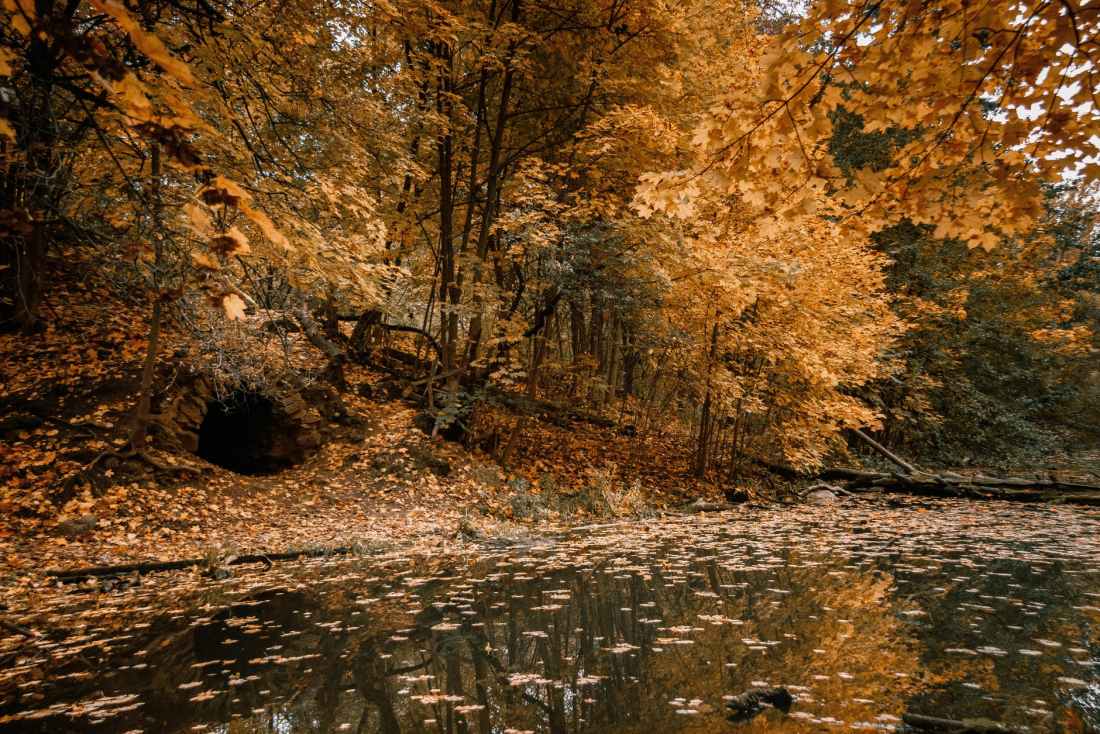
Returning to this poem, there is a lot to unpack. The imagery of red, autumn leaves flowing along the river provides a very memorable contrast. The Tatsuta-gawa River can be found in modern-day Nara Prefecture, and is a scenic, gentle flowing river near the town of Ikaruka. I’d love to see it someday. I cover more about the Tatsuta-gawa River and iconic Mt Mimuro in poem 69, but several poems in the Kokin Wakashū anthology also refer to fall leaves floating on it.
Also, it should be noted that the fourth line is an example of a traditional Japanese color word.
Lastly, the opening line of this poem, chihayaburu, is a prime example of “pillow words” in Japanese poetry. It literally means something like “a thousand swift swords”, but really is an honorific epithet when referring to the gods, similar to how Homer used to use special epithets for each of the Olympian gods. Nevertheless, it’s a famous line, and can be found in Waka poetry written even in modern times, and is also the title of the popular manga exploring the Hyakunin Isshu card game.

If there is one poem worth learning in all the Hyakunin Isshu, I would argue, it is this one.
 The Hyakunin Isshu