
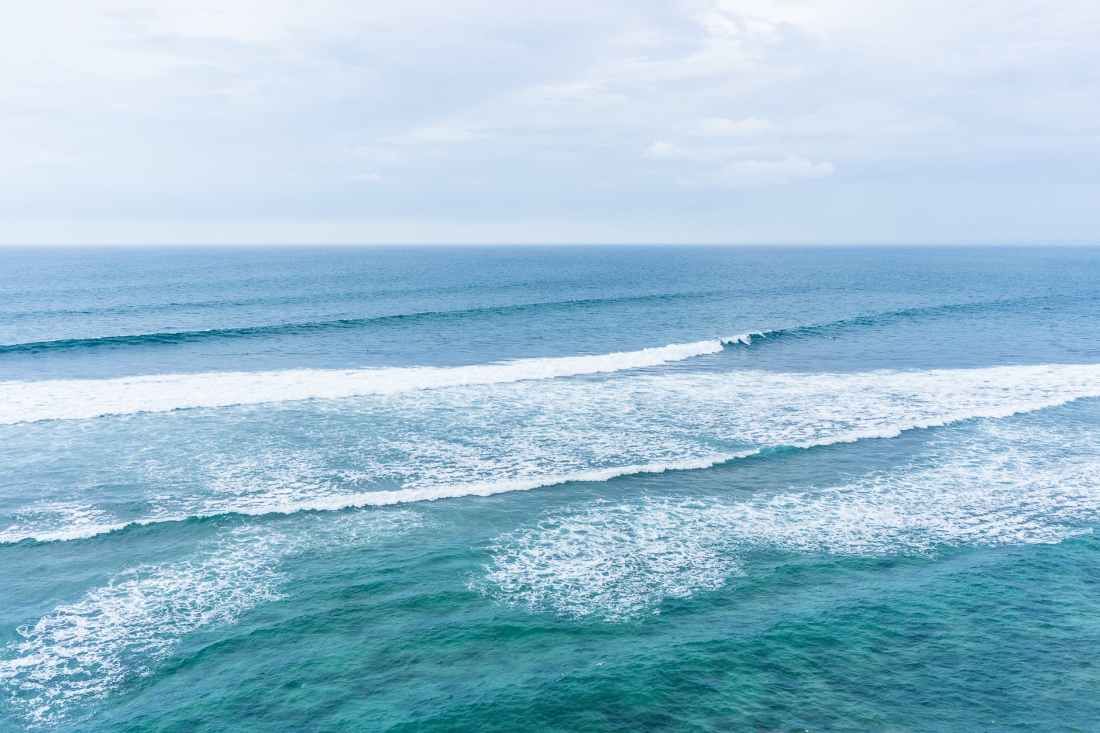
This is a kind of continuation of the last poem, and is one of the most vivid in the Hyakunin Isshu:
| Japanese | Romanization | Translation |
|---|---|---|
| わたの原 | Wata no hara | As I row out into |
| こぎ出でて見れば | Kogi idete mireba | the wide-sea plain and look |
| 久方の | Hisakata no | all around me— |
| 雲ゐにまがう | Kumoi ni magou | the white waves of the offing |
| おきつしらなみ | Okitsu shiranami | could be mistaken for clouds! |
The author of this poem has the rather grandiose name of Hosshōji Nyūdō Saki no Kanpaku Daijōdaijin (法性寺入道前関白太政大臣, 1097 – 1164), which means “Buddhist novice of Hosshoji Temple, and former Chief Adviser to the Emperor, and Chancellor of the Realm”. His personal name was Fujiwara no Tadamichi. Tadamichi was the recipient of Mototoshi’s complaint in poem 75, but my new book implies that Tadamichi was no saint.
The role of chief adviser (kanpaku 関白), was an increasingly common ploy in the 10th and 11th centuries used by members of the Fujiwara clan to control the Emperor. The cycle was to have the reigning emperor marry a daughter of a particular Fujiwara sub-clan. If an imperial heir was born, the head of that sub-clan of the Fujiwara would insinuate themselves as the regent (sesshō, 摂政) for the new child heir, while pushing out the old emperor using one excuse or another to justify their retirement. We see this very clearly in the Diary of Lady Murasaki, but also the struggle that affected Sadayori (poem 64) and Sei Shonagon (poem 62). Emperor Sanjō (poem 69) was one such emperor who was pushed out by his regent so his heir could take over early (with the Regent the power behind the throne).
Further, once the child heir is old enough to take the throne as emperor, the regent could seamlessly transition to chief adviser (kanpaku). With this process, the Fujiwara practically had a lock on the Imperial family, with few emperors able to resist this cycle.
Tadamichi as regent, was thus a literal king-maker, but was embroiled in a nasty succession dispute between the future Emperor Go-Shirakawa and the retired Emperor Sutoku (poem 77). This dispute spiraled out of control, resulting in the disastrous Hōgen Rebellion of 1156. The Rebellion in turn started the rapid decline of the Heian Court aristocracy, and the eventual rise of a series of samurai(not nobility)-led, military regimes until 1868. Saigyō Hōshi (poem 86) was devoted to Emperor Sutoku even after he took tonsure, and lamented the Emperor’s passing as a result of his failed rebellion.
The poem itself uses a lot of vivid imagery and pillow words that we’ve seen in other poems. For example the phrase, hisakata no was also found in poem 33. Other notable phrases:
- wata no hara – field of cotton (the sky)
- okitsu shiranami – the white waves offshore
It’s an interesting image to imagine: somewhere offshore where the clouds and the white waves blend together in the horizon.
Professor Mostow notes that this poem also has a possible political interpretation by some medieval commentators, because of the allusion “clouds” to “heaven” in the Confucian sense. In such interpretations, it implies that the author is confused by the affairs of the state. However, this interpretation is not shared by other commentators who believe this poem is literal, not allegorical.
In any case, a great poem.
 The Hyakunin Isshu