Hyakunin Isshu: Splatoon Style

Hello readers! It’s been a while (almost 10 years in fact) since I last posted to this blog. My interest in the Hyakunin Isshu has not diminished during that time, but I had reached the end of the initial project, and then focused on other things at the time. Now, things have somewhat come full-circle and if you are still here, I hope you enjoy these new posts.

Lately, I have been playing a great Nintendo game called Splatoon 2, a fun, futuristic game involving sea life that has evolved long after humans are gone, and is also a satire on Japanese culture.

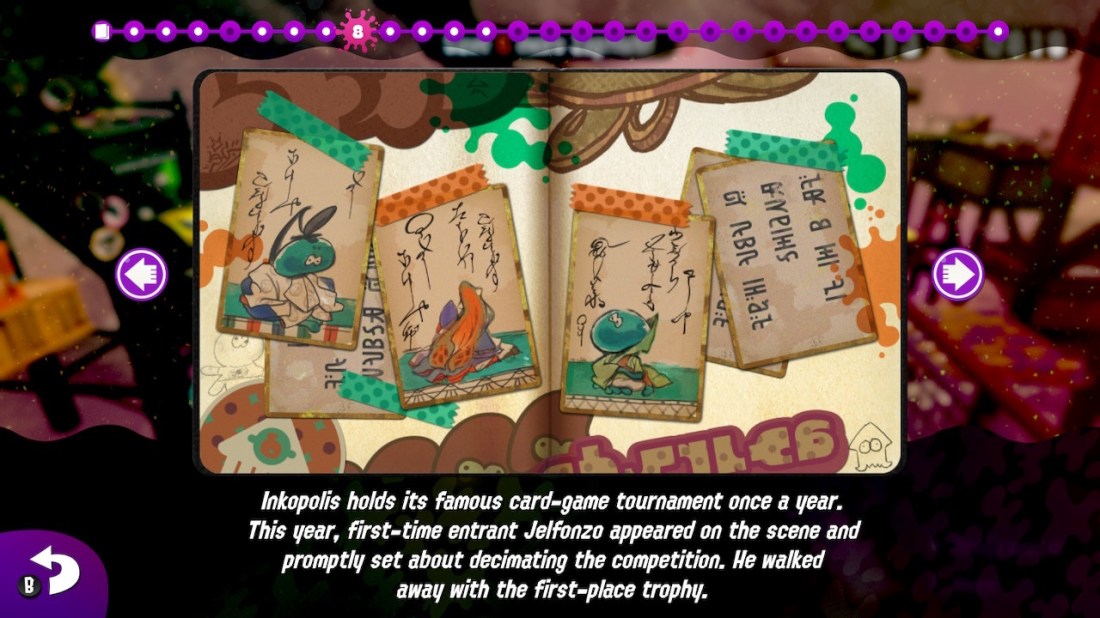
During the main story quest, players can pick up special journey entries that provide a window into the life of Inklings and Inkopolis city, and I was surprised by this entry, shown above.

Look familiar? These are karuta cards from the Hyakunin Isshu anthology, but featuring Splatoon characters instead! The text alludes to a karuta game tournament, just like those that take place in Japan.

I always enjoy it when subtle elements of Japanese culture make their way into popular games.1

If you own a Switch, but haven’t played Splatoon 2 yet, definitely pick it up and see if you can find this journal entry too. ๐Ÿฆ‘

1 Another example in the other blog.
The Beautiful Village of Yoshino

The small town of Yoshino (ๅ‰้‡Ž, official site), near the old capitol of Nara, was a popular spot since ancient times and was often the subject of poetry in the Hyakunin Isshu anthology, for example poem 31 and poem 94.โ€‚Further, according to the old Japanese historical account, the Nihon Shoki, visits to Yoshino to view the cherry blossoms went as far back as Empress Jitล (poem 2) and became a tradition ever since.

There is also a famous love story that takes place between the celebrated 12th century warrior Minamoto no Yoshitsune, and his mistress Shizuka Gozen. It was said that winter, while fleeing his jealous older brother, on the way to Oshu province in the north, they had to separate for her safety. In the snows of Yoshino, they parted, and Shizuka was sad to watch her beloved disappear in the snow.

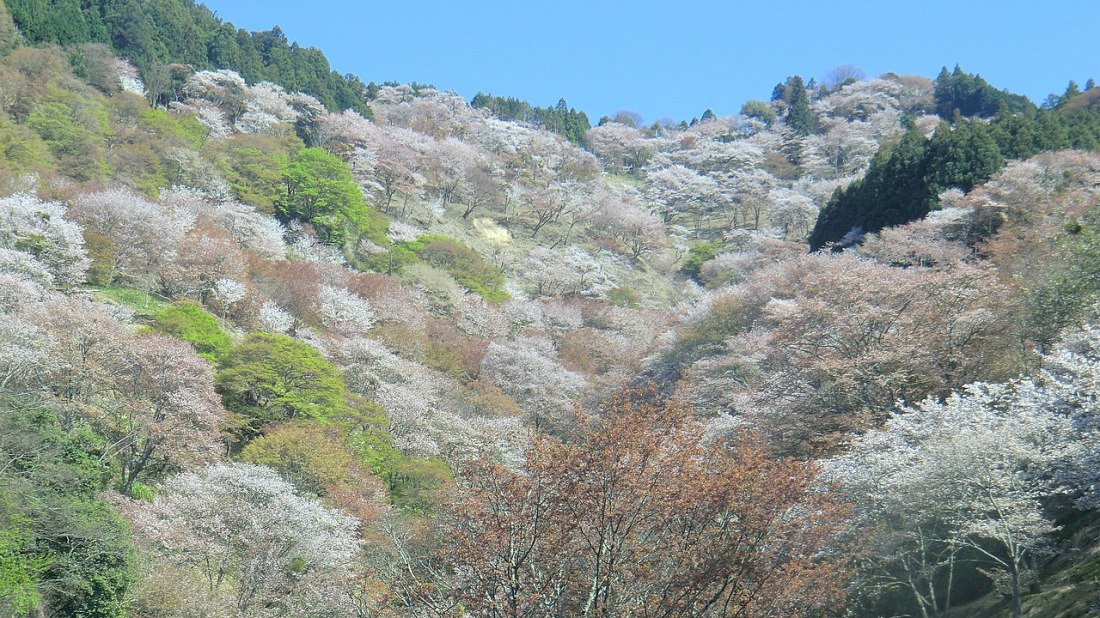
Last spring, the Yasaka Taxi company in Japan posted a terrific photo of Yoshino (original link on Twitter):

Even to this day, cherry blossom viewing at Yoshino is a major tourism destination, and from what I hear, it’s pretty amazing.

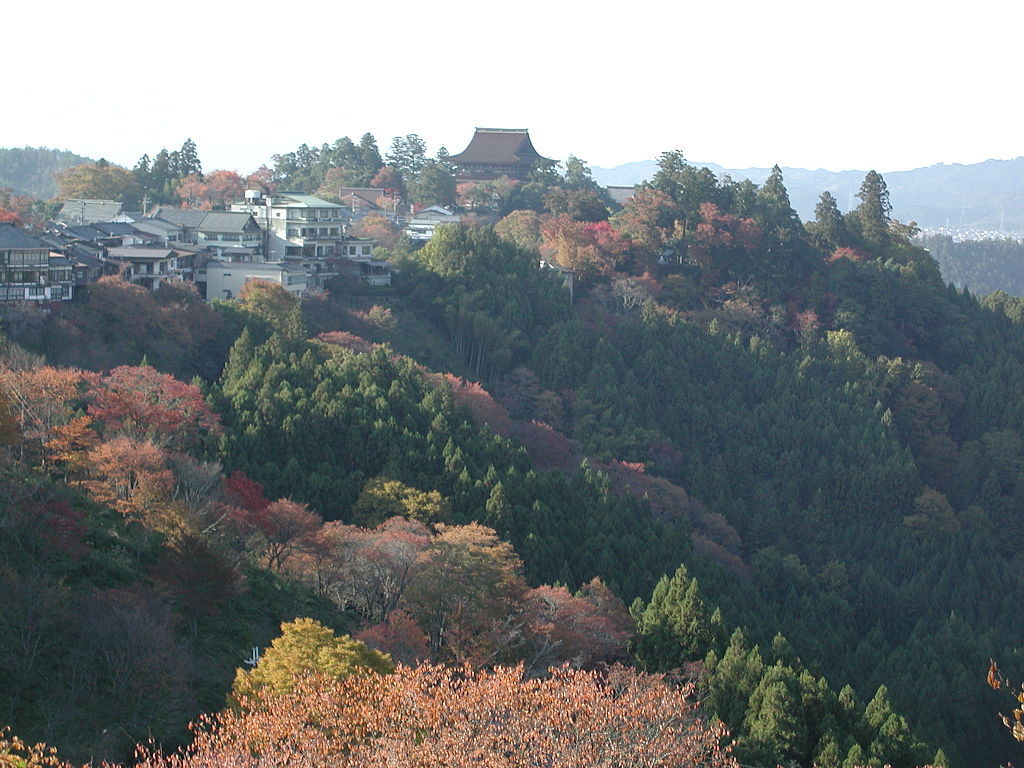
Yoshino is also lovely in Fall, by the way:

The mountains of Yoshino in Fall, photo by No machine-readable author provided. Outside147~commonswiki assumed (based on copyright claims)., CC BY-SA 3.0, via Wikimedia Commons

One can imagine why the aristocracy of early Japan valued this place so highly. ๐Ÿ˜„๐ŸŒธ

P.S. Featured photo is of the mountains surrounding Yoshino village in spring, photo by 8-hachiro, CC BY-SA 3.0, via Wikimedia Commons