
Hello dear readers,
I recently came back from a family trip to Japan (mentioned here), and while there we took the kids to see the old capitol of Kyoto, where many of the poets of the Hyakunin Isshu lived,1 and where many events took place. But one thing on my bucket-list was to see was the Oishi Tengu-do karuta shop. Last year, I bought a karuta set at a local bookstore in Japan, and of the sets I bought the Tengu-do set was my favorite. And since we wanted to go to Kyoto anyway, it was a great opportunity to visit the home shop fo Tengu-do.
The Tengo-do shop is in the southeast part of Kyoto. If you get to Fushimi-Momoyama station, you can easily walk south 2-3 blocks to get there.
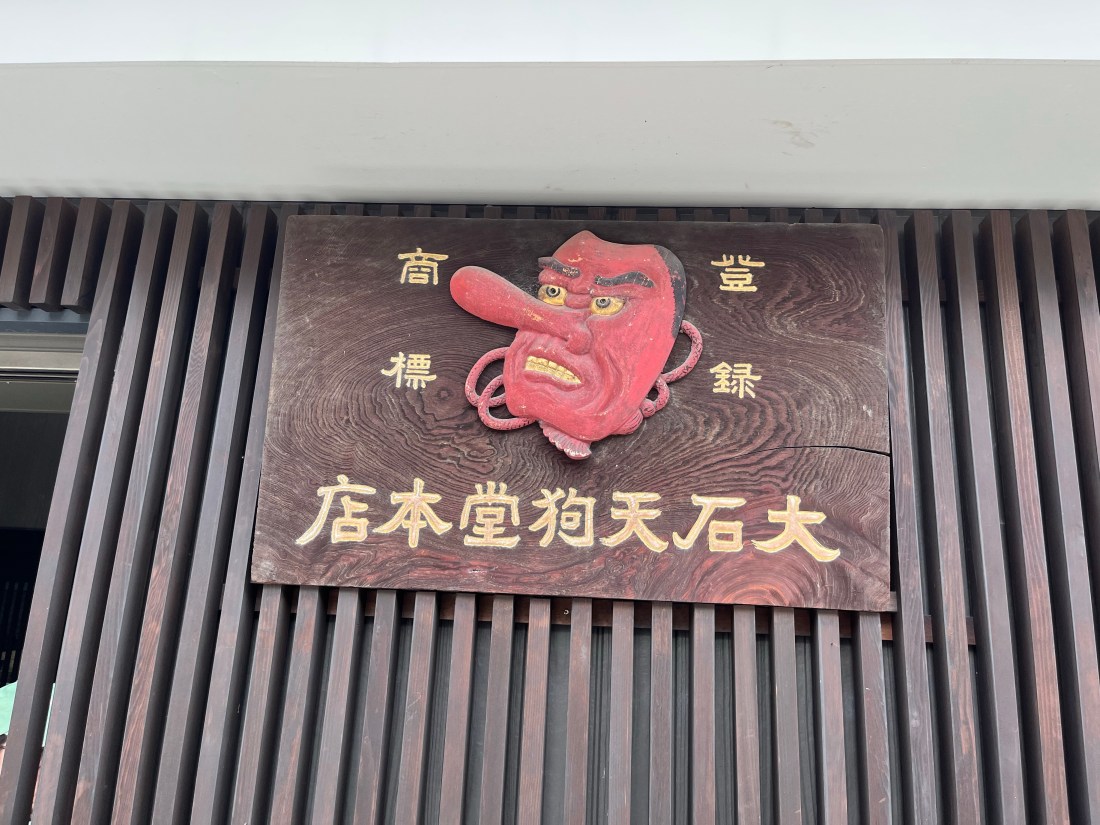
The shop is in a residential neighborhood, but if you look carefully, you can find the sign like so:

The inside of the shop is a single room, just enough room for myself and family, and I didn’t get a chance to take a photo, but I found some good photos online. The elderly lady minding the shop was very kind. We perused for a bit, and I found a few items that I wanted to get. The most important was this set:

This was one of more expensive sets, but I knew that I probably wouldn’t visit Kyoto again for another 10-15 years, so I figured I’d better go big or go broke.

The detail on the cards, especially the border is simply amazing. The yomifuda cards below are for poems 1 and 2:
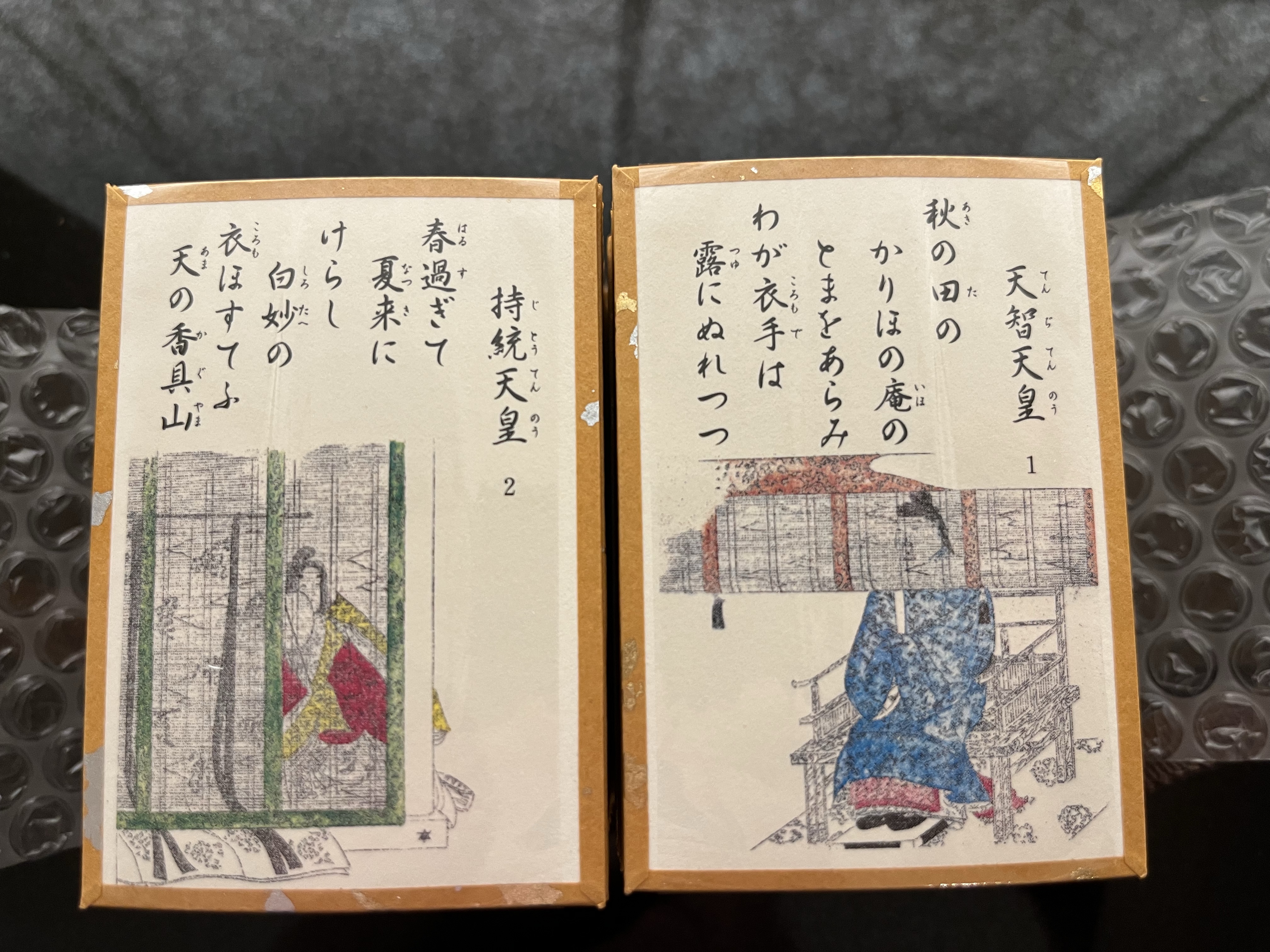
I also picked up a couple other odds and ends, but this was the real treasure. It was great to visit the home shop of Tengu-do, and to patronize a business like this. If you happen to be in Kyoto, and have an interest in the Hyakunin Isshu and/or karuta, definitely stop by!
1 Prior to Kyoto, the capitol of Japan was a city called Nara. Some of the earliest poets and figures of the Hyakunin Isshu lived when Nara was still the capitol, but I’d estimate at the remaining three-fourths lived in and around Kyoto until you get to the very last few poets who lived in the new capitol of Kamakura. That’s how much history the anthology spans.


 The Hyakunin Isshu