
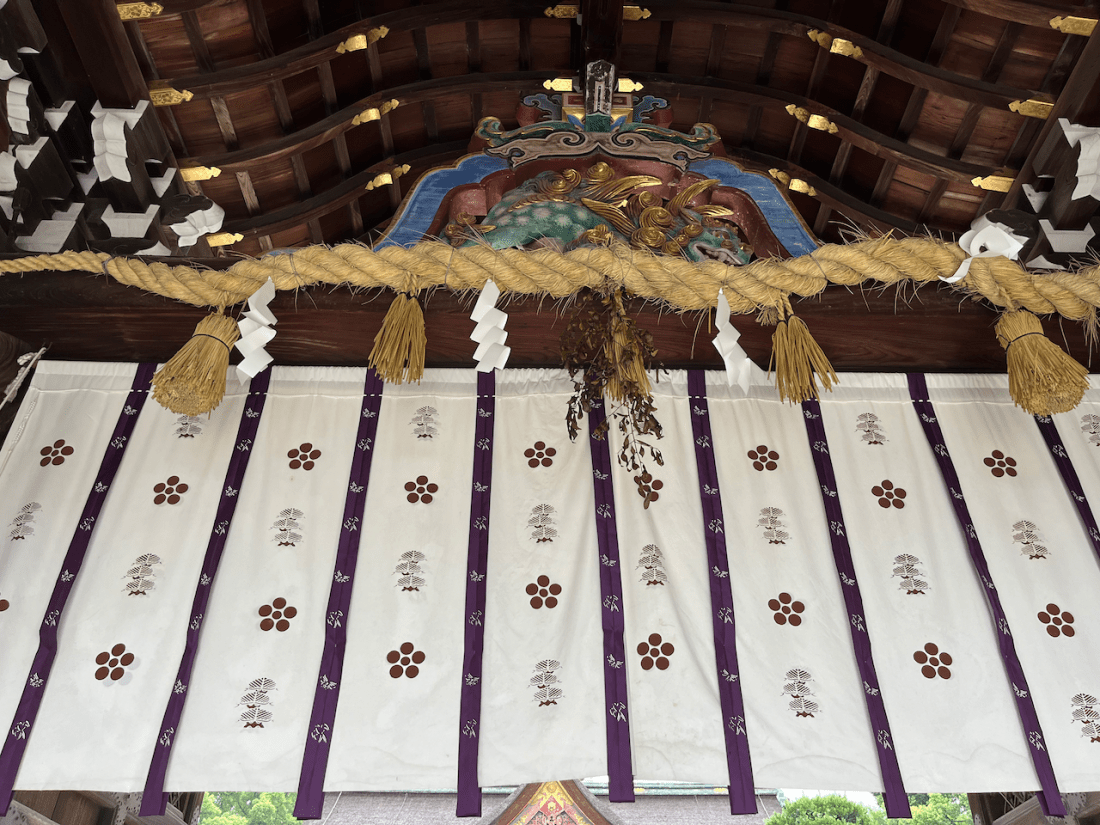
I’ve been writing in my other blog several articles about my family’s visit to Kyoto and Nara in July 2023, but for this particular article, I wanted to write it on this blog instead. You’ll see why shortly. While in Kyoto, we made an unexpected stop at a Shinto shrine called the Kitano-Tenmangu Shrine (北野天満宮) right in the middle of the city.
Kitano-Tenmangu Shrine (English / Japanese homepages) is devoted to a Shinto kami named Tenjin, who’s essentially the God of Learning. Each year, thousands of kids trying to pass their entrance exams visit local shrines, and pray for success. I’ve prayed at the Yushima Tenmangu Shrine in Tokyo myself years ago when trying to pass a Japanese-language certification test (I passed). The one in Kyoto, though, Kitano Tenmangu, is the original shrine.
But what’s the big deal?
The kami Tenjin is a deified form of the poet and scholar, Sugawara no Michizane, who composed poem 24 in the Hyakunin Isshu. When he was ousted by the powerful rival Fujiwara no Tokihira (father of Atsutada, poem 43), and died in exile, people worried that his vengeful spirit had returned to plague the capitol. The untimely deaths Tokihira and Atsutada certainly didn’t help this. Michizane was posthumously re-instated to the Imperial Court bureaucracy, elevated to a high rank, and venerated as a Shinto kami1 to appease him.
Anyhow, Kitano Tenmangu is the original shrine devoted to Michizane and has since grown into a large network of shrines across Japan.
The Shrine itself is relatively small, since it’s inside the city, but it has lots of neat things in it. When you first come in, there is a walkway like so leading to the inner sanctum:

To the right, is a plum tree, though not blossomging in July:

Plum blossoms (umé 梅) are associated with Michizane due to a famous poem he wrote in exile:
| Japanese | Romanization | Translation |
| 東風吹かば | Kochi fukaba | When the east wind blows, |
| にほひをこせよ | Nioi okose yo | let it send your fragrance, |
| 梅の花 | Ume no hana | oh plum blossoms. |
| 主なしとて | Aruji nashi tote | Although your master is gone, |
| 春を忘るな | Haru o wasuru na | do not forget the spring. |
Anyhow, if you continue you get to the gate to the inner sanctum:


The inner sanctum is here (I prayed for my Japanese-language exam this year as well… we’ll see if I pass again 😄):

What’s really neat is that if you loop back around toward the main entrance, you’ll see this:
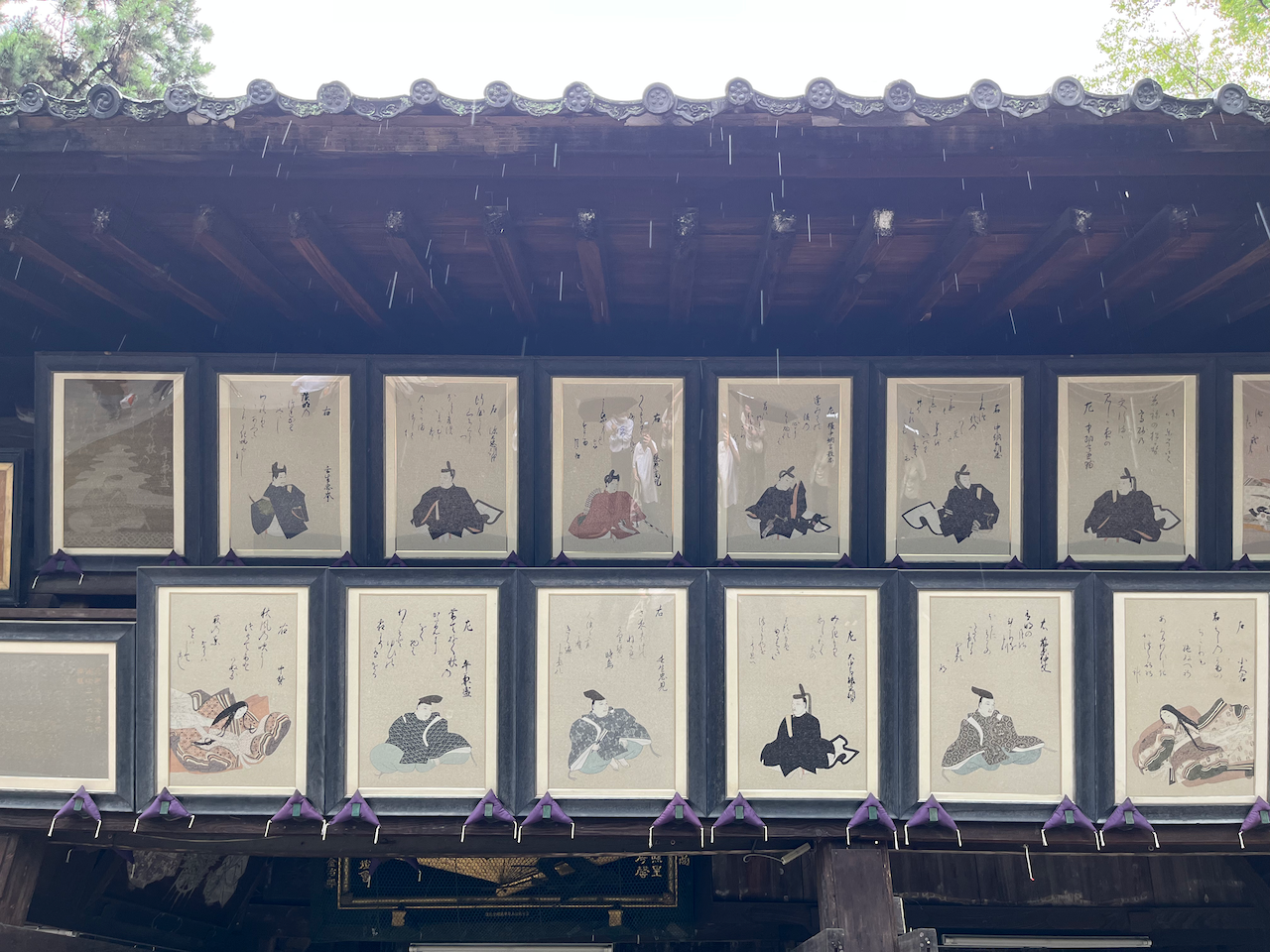

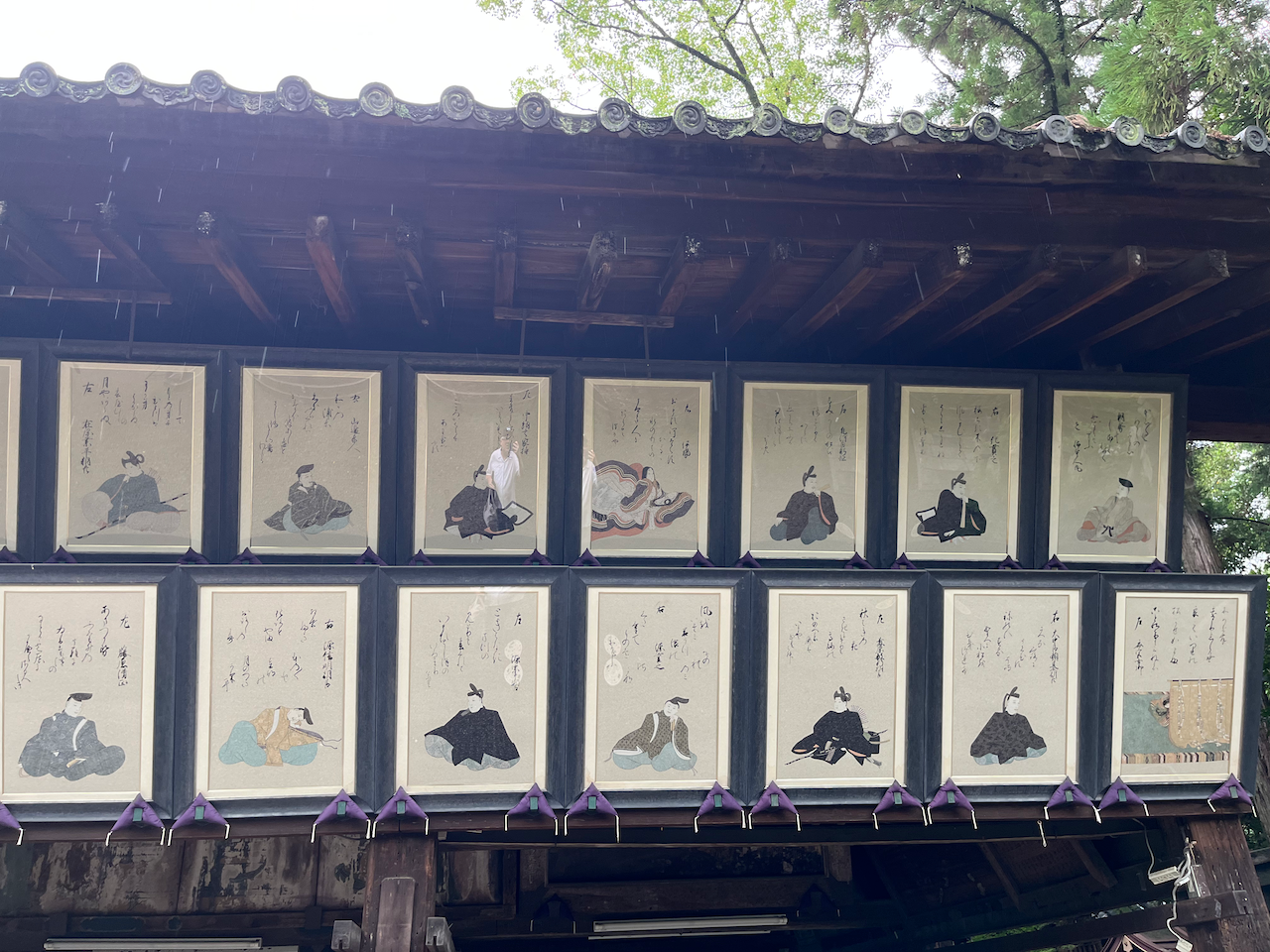
The pavilion near the front entrance had displays of various poems from the Hyakunin Isshu in the form of yomifuda karuta cards! If you look at the photos, you might even see my reflection, too. ;-p
The inside room of the pavilion was interesting too, with lots of really old pictures and paintings affixed:


I also picked up an omamori charm as well:

Kitano Tenmangu is a great place to visit while you are in Kyoto, and its tribute to both the famous scholar, and to the Hyakunin Isshu really warmed my heart.
1 This isn’t that unusual in Shinto since the notion of a kami is very broad, and includes not just gods, but also nature spirits, great historical figures, and “anything else that inspires awe” according to one writer.
 The Hyakunin Isshu