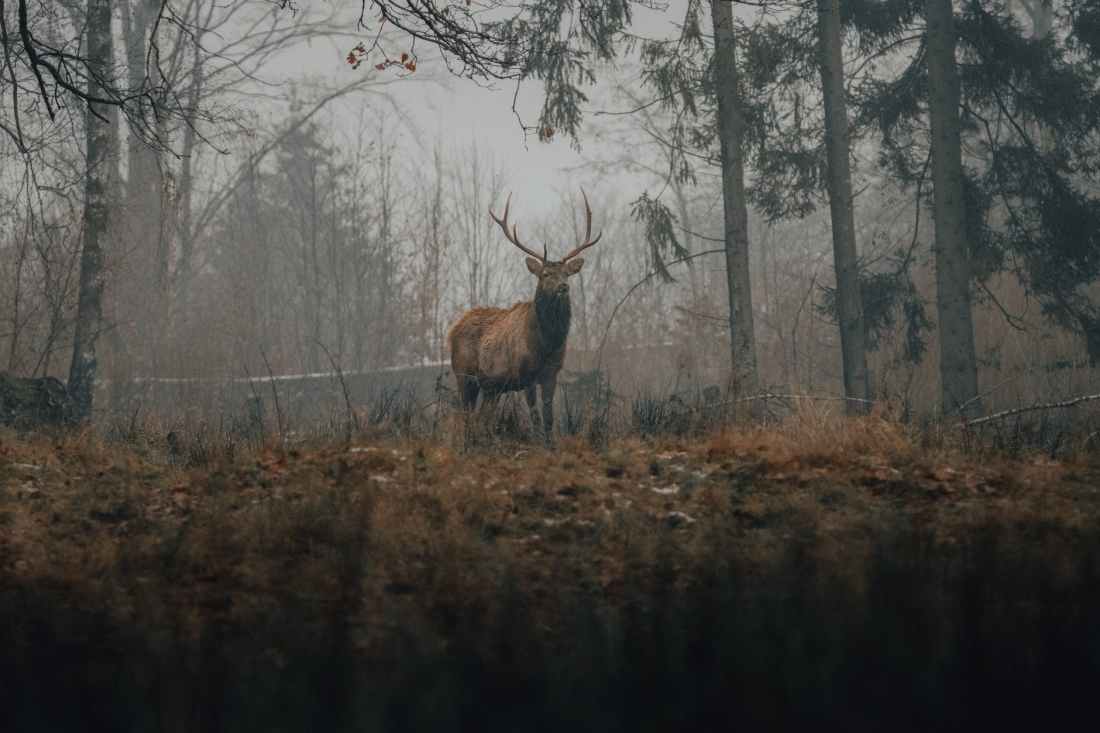
A Deer’s Cry in Autumn: Poem Number 5

This is a very iconic poem about Autumn from the Hyakunin Isshu:

JapaneseRomanizationTranslation
奥山にOkuyama niWhen I hear the voice
もみふみわけMomiji fumiwakeof the stag crying for his mate
鳴く鹿のNaku shika nostepping through the fallen leaves
こえ聞く時ぞKoe kiku toki zodeep in the mountains—
this is the time
秋は悲しきAki wa kanashikithat autumn is saddest.
Translation by Dr Joshua Mostow

The poem was composed by one mysterious figure named Sarumaru Dayū (猿丸大夫, dates unknown), whom we know nothing about.

My new book offers a couple theories as to Sarumaru’s identity. One theory is that he could be the son of Emperor Tenmu (mentioned here among others places) named Prince Yuge (弓削皇子, Yuge no Miko). Another theory suggests that he could be the infamous Buddhist monk Dokyo, Japan’s version of Rasputin, who served Empress Shotoku. However, these theories are, as of writing, entirely speculative. We simply don’t have enough information.

Whoever Sarumaru was though, he nonetheless earned a place among the Thirty-Six Immortals of Poetry.

Even in the Kokinshū where this poem is first found, it is listed as anonymous, according to Professor Mostow, but seems to have been composed for a poetry contest in 893 hosted by Prince Koresada. Mostow further explains that this poem is surprisingly tricky to interpret: who is walking through the leaves, the deer or the author?

Speaking of deer, deer have been an integral part of Japanese poetry since early times. This and poem 83 show how the deer’s cry is a popular poetic symbol of sadness or melancholy.

No Refuge In This World: Poem Number 83

This is a well-known poem in the Hyakunin Isshu, and I felt worth posting here:

JapaneseRomanizationTranslation
世の中よYo no naka yoWithin this world
道こそなけれMichi koso nakerethere is, indeed, no path!
入るOmoi iruEven deep in this mountains
山の奥にもYama no oku ni moI have entered, heart set,
鹿ぞ鳴くなるShika zo naku naruI seem to hear the deer cry!
Translation by Dr Joshua Mostow

The author, Kōtai Gōgū no Daibu Toshinari (皇太后宮大夫俊成, 1114 – 1204), or “Master of the Grand Empress’s Palace, Shunzei”. He is also known as Fujiwara no Shunzei, or Fujiwara no Toshinari (俊成 can be read either way), the father of Fujiwara no Teika . Additionally, a surprising number of other poets in the Hyakunin Isshu were associated with (poem 81, 86 and 87), studied under Shunzei (poem 89 and 98), or were directly in opposition to him (poem 79). Shunzei is probably the second most important person in the Hyakunin Isshu after his son of course. 😏

This poem is both moving and technically strong. For example, according to Mostow, the phrase omoi iru is a “pivot word”, meaning that both the words before and after hinge on its double meanings: omoi-iru “to set one’s heart on” and iru “to enter”.

Again, as Mostow explains, the poem generates quite a bit of debate because it’s not clear what concerned him so much. Was it melancholy, a sense of his mortality, or was the state of society at the time (i.e. the decline of the Heian Period)?

Speaking of a deer’s cry, I found this video one of the famous “Nara deer”:

The Nara deer are more domesticated versions of the wild deer in Japan, but it gives you an idea what Shunzei must have heard deep in the woods 900 years ago.

P.S. See poem 5 for something similar.