The World Moves On: Poem 93

I was reminded of this poem recently and felt like sharing it with readers. It is one of the most poignant in the anthology, I think:

JapaneseRomanizationTranslation
世の中はYo no naka waIf only this world
つねにもがもなTsune ni mo ga mo nacould always remain the same!
なぎさこぐNagisa koguThe sight of them towing
あまのぶねのAma no obune nothe small boats of the fishermen who row in the tide
綱手かなしもTsuna de kanashi mois touching indeed!
Translation by Dr Joshua Mostow

This poem was composed by the Kamakura no Udaijin (鎌倉右大臣, 1192-1219), or “Kamakura Minister of the Right”. He is also known as Minamoto no Sanetomo. Sanetomo was the third shogun of the new Kamamura Shogunate, the same military government opposed by Emperor Gotoba (poem 99) and Emperor Juntoku (poem 100).

Sanetomo was a more gentler ruler than some of his predecessors, and even studied poetry under Fujiwara no Teika (poem 97), the compiler of the Hyakunin Isshu anthology and contributed to other Imperial anthologies as well.

However, he lived at a time when the old Heian court (which included most of the authors in this anthology) had been reduced to a shadow of its former self (see poem 100 above). The power had shifted away from the Imperial Court to the eastern city of Kamakura, and the country was still rebuilding itself after war. Sadly, this new center of power was unstable, and as the third Shogun, he was surrounded by ambitious family members and retainers who either plotted to replace him with their chosen candidate, or ruled “on his behalf”. Sanetomo was a tragic, powerless figure who was given to drink and poetry because he had little else to look forward to.

After escaping other assassination attempts, Sanetomo was killed at age 28 at Tsurugaoka Hachimangu shrine (English site here). His nephew, Kugyo, was hiding behind a ginkgo tree which can be seen to the left of the stairs in the photo above. As Sanetomo descended the stairs, Kugyo leapt out and cut him down with a sword. The ginkgo tree still stood for another 800+ years, but finally fell over in March of 2010 due to age and disease. Efforts to resuscitate the tree are underway. The photos in this post were both taken by me in the winter of 2023: the stump of the dead tree is on the left, while the restored sapling is fenced off in the middle. The grand stairs leading up to the shrine is where Sanetomo was assassinated.
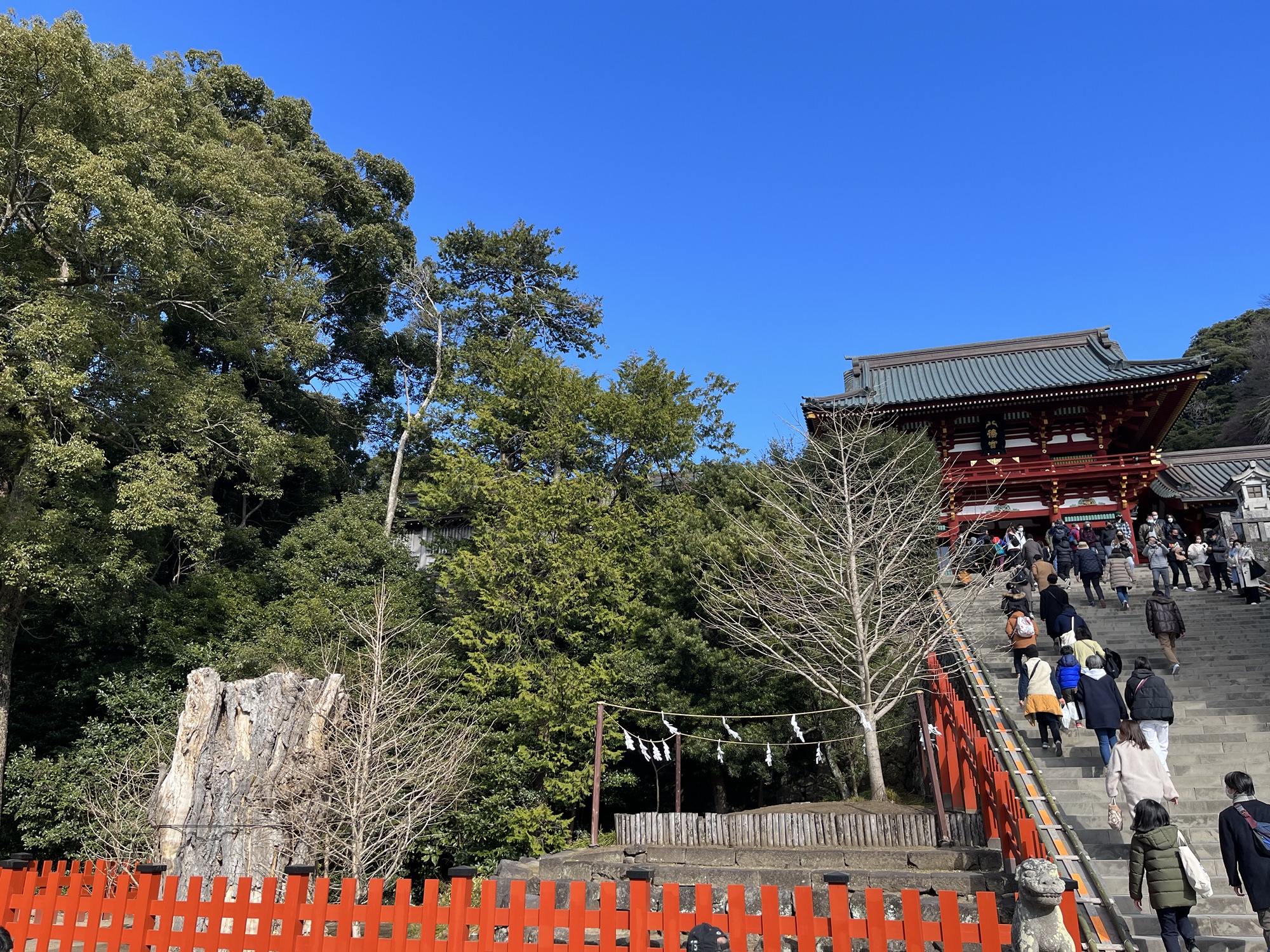
This poem reflects his melancholy as he views the shores of Kamakura, and wishing this peaceful scene would always remain, in contrast to the turbulent life he lived.

Politics and power are a dangerous thing.
The Hyakunin Isshu as a Rough Historical Tour

As you may have started to notice, the Hyakunin Isshu anthology provides a subtle historical overview of the classical period in Japanese history. This may have been intention on the part of Fujiwara no Teika, or just reflects the sentiment of his time. Either way, it’s an interesting tour of Japan from the 8th to 12th centuries.

The anthology begins with poems in the Nara Period, when Japanese culture, flush with cultural imports from China (e.g. Confucian ethics, Buddhism, technology, administration, poetry, etc). It was an exciting time in Japanese history. And if you look at the poems from this era, you can see that they tend to feature benevolent rulers (poem 1), bright and happy natural scenes (poems 2 and poem 4), or just often dealt with frivolous issues of love (poem 3 and poem 12) or just life in general around the capitol (poem 10).

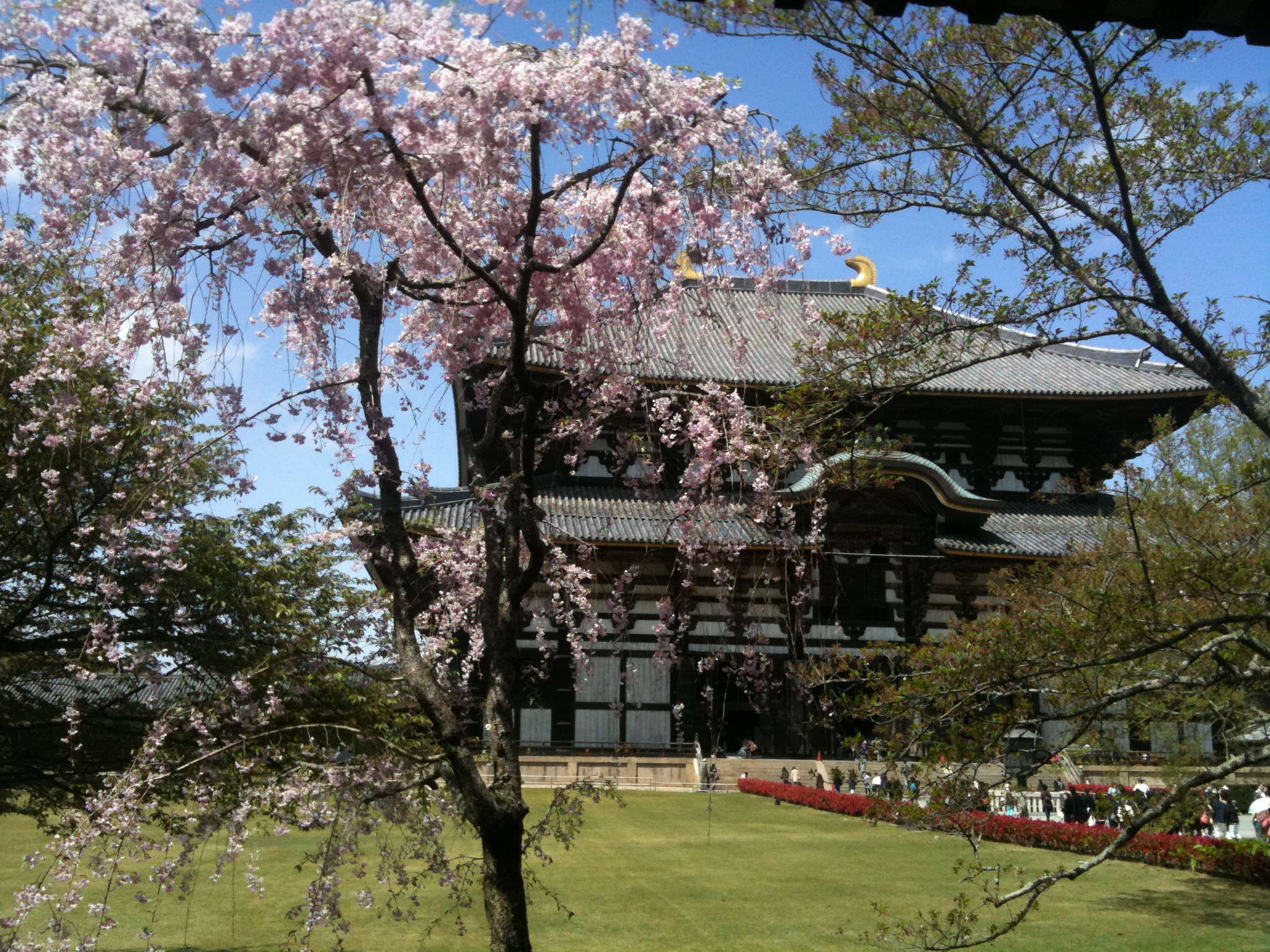
Todaiji Temple in Nara on a warm April day in 2010. Taken by author.

Even when the poems were more melancholy (poem 9, poem 11) they still reflected a more genteel time, and were probably included by Fujiwara no Teika to demonstrate the range of poetic skills of the nobility during that bygone time.

However, the Nara Period eventually gave way to the Heian Period, which was a 400-year flowering of Japanese culture that is still revered today. The transition was slow, and much remained the same generations later, but eventually things started to change:

  • Japan’s contact with China and the Asian mainland eventually stopped, and Japanese culture turned more and more inward for several centuries. Poetry and culture at this time reflected more “native” styles by and by.
  • Politically, the northern-branch of the Fujiwara clan gradually monopolized power around the Emperor through political marriages. In the early period, the nobility included several families who supported the family, but by the 11th century, the Fujiwara controlled every major position in government and most emperors were related to them in one way or another. This is what led in part to Sugawara no Michizan’e exile for example. You’ll notice too how many of the poets have the surname “Fujiwara” in the anthology as well, including Fujiwara no Teika the compiler himself.
  • Toward the end, conflict began to arise again and again, culminating in the famous Genpei War and the fall of the Heike clan. The new samurai class (originally bodyguards to the noble families) clashed with one another for control of Japan and ultimately swept aside the nobility, while still trying to imitate the courtly culture.

As such, if you look at poems toward the very end of the Hyakunin Isshu, they tend to be more dismal in tone. Starting with poem 77 onward, you get an increasing melancholy tone to many poems, culminating at the end when poets often speak of longing for the past (poem 100), complaints about life (poem 83, poem 99) or just expressions of people suffering (poem 95).

Indeed, by this time the flowering culture that started in the Nara Period and flourished in the Heian Period had declined, and war and politics had taken their toll on society. The final few poems begin in the militaristic Kamakura Period, and reflect both nostalgia and unease by people of that era. Small wonder that Fujiwara no Teika, who took tonsure after Emperor Go-Daigo was exiled, decided to compile the Hyakunin Isshu the way he did.