Interview with Karuta Peru Club: History of the Hyakunin Isshu

Hello readers,

Recently I mentioned an upcoming interview with the Karuta Peru Club via Steph, a fellow karuta player.

I am happy to report that we finished our interview and it is available on YouTube!

Also available on Spotify in podcast form:

In this episode, Steph and I mostly discuss the history of the blog, but then talk about some of my favorite historical figures in the Hyakunin Isshu, such as Sugawara no Michigan’s (poem 24) and Lady Izumi (poem 56), among other things. It was a fun conversation and Steph was a terrific host.

I do sometimes use the word “um” a lot, especially when I am a bit nervous (this was my first interview), but I hope viewers and listeners learn something new, and enjoy the conversation too!

In the next episode, we plan to focus more on our experiences playing kyōgi Karuta (competitive karuta). Stay tuned!

Big thanks to Steph for making all this happen. 🎉

P.S. books cited in the interview (non-Amazon links below):

Visiting Kitano Tenmangu Shrine

I’ve been writing in my other blog several articles about my family’s visit to Kyoto and Nara in July 2023, but for this particular article, I wanted to write it on this blog instead. You’ll see why shortly. While in Kyoto, we made an unexpected stop at a Shinto shrine called the Kitano-Tenmangu Shrine (北野天満宮) right in the middle of the city.

Kitano-Tenmangu Shrine (English / Japanese homepages) is devoted to a Shinto kami named Tenjin, who’s essentially the God of Learning. Each year, thousands of kids trying to pass their entrance exams visit local shrines, and pray for success. I’ve prayed at the Yushima Tenmangu Shrine in Tokyo myself years ago when trying to pass a Japanese-language certification test (I passed). The one in Kyoto, though, Kitano Tenmangu, is the original shrine.

But what’s the big deal?

The kami Tenjin is a deified form of the poet and scholar, Sugawara no Michizane, who composed poem 24 in the Hyakunin Isshu. When he was ousted by the powerful rival Fujiwara no Tokihira (father of Atsutada, poem 43), and died in exile, people worried that his vengeful spirit had returned to plague the capitol. The untimely deaths Tokihira and Atsutada certainly didn’t help this. Michizane was posthumously re-instated to the Imperial Court bureaucracy, elevated to a high rank, and venerated as a Shinto kami1 to appease him.

Anyhow, Kitano Tenmangu is the original shrine devoted to Michizane and has since grown into a large network of shrines across Japan.

The Shrine itself is relatively small, since it’s inside the city, but it has lots of neat things in it. When you first come in, there is a walkway like so leading to the inner sanctum:

To the right, is a plum tree, though not blossomging in July:

Plum blossoms (umé 梅) are associated with Michizane due to a famous poem he wrote in exile:

JapaneseRomanizationTranslation
東風吹かばKochi fukabaWhen the east wind blows,
にほひをこせよNioi okose yolet it send your fragrance,
梅の花Ume no hanaoh plum blossoms.
主なしとてAruji nashi toteAlthough your master is gone,
春を忘るなHaru o wasuru nado not forget the spring.
Sugawara no Michizané (845 – 903), translation by Robert Borgen

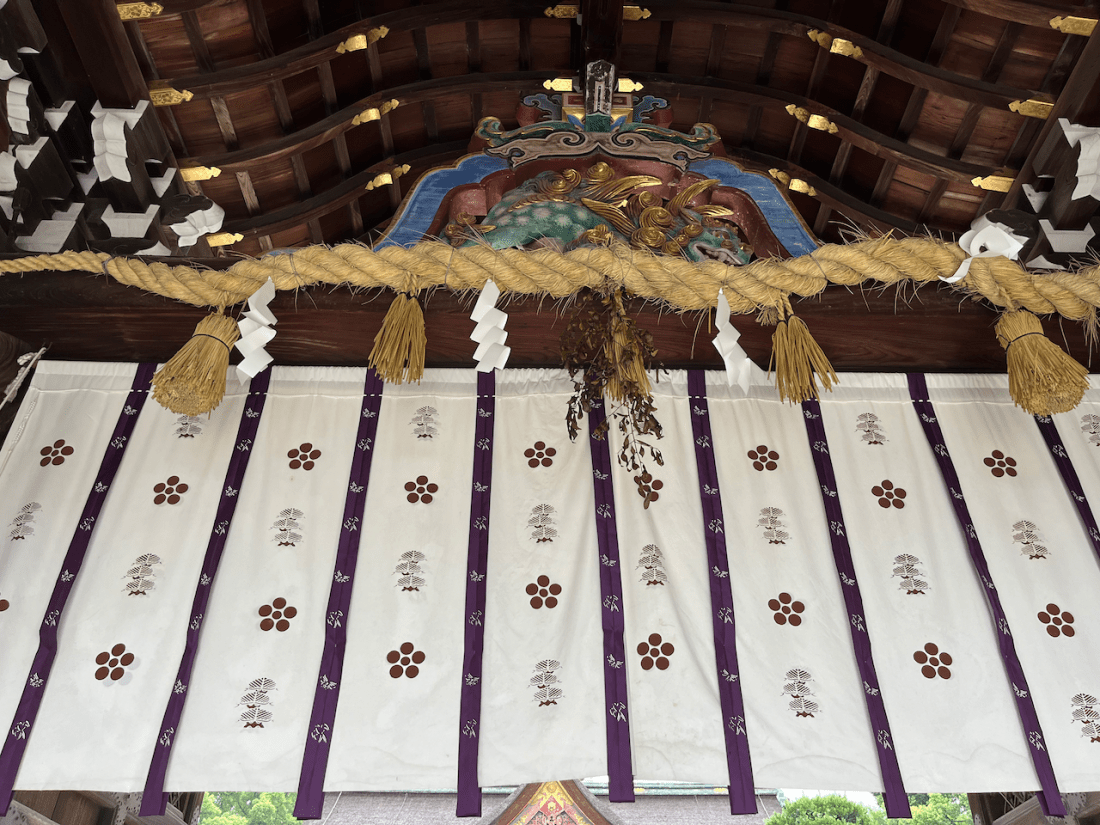
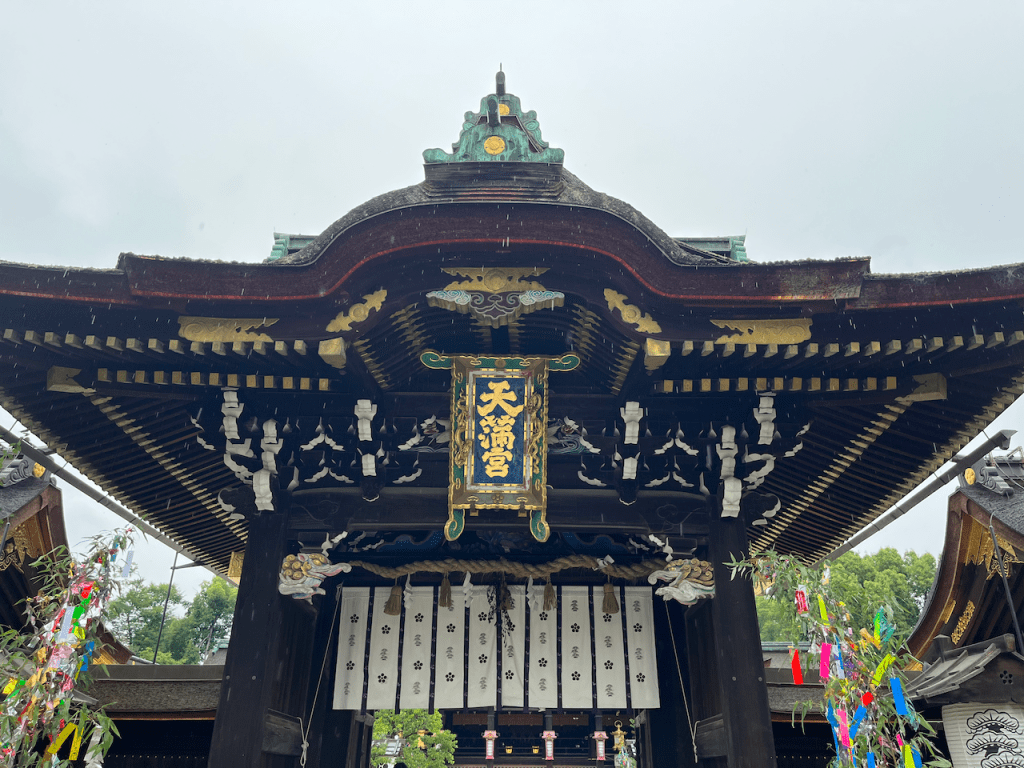
Anyhow, if you continue you get to the gate to the inner sanctum:

The inner sanctum is here (I prayed for my Japanese-language exam this year as well… we’ll see if I pass again 😄):

What’s really neat is that if you loop back around toward the main entrance, you’ll see this:

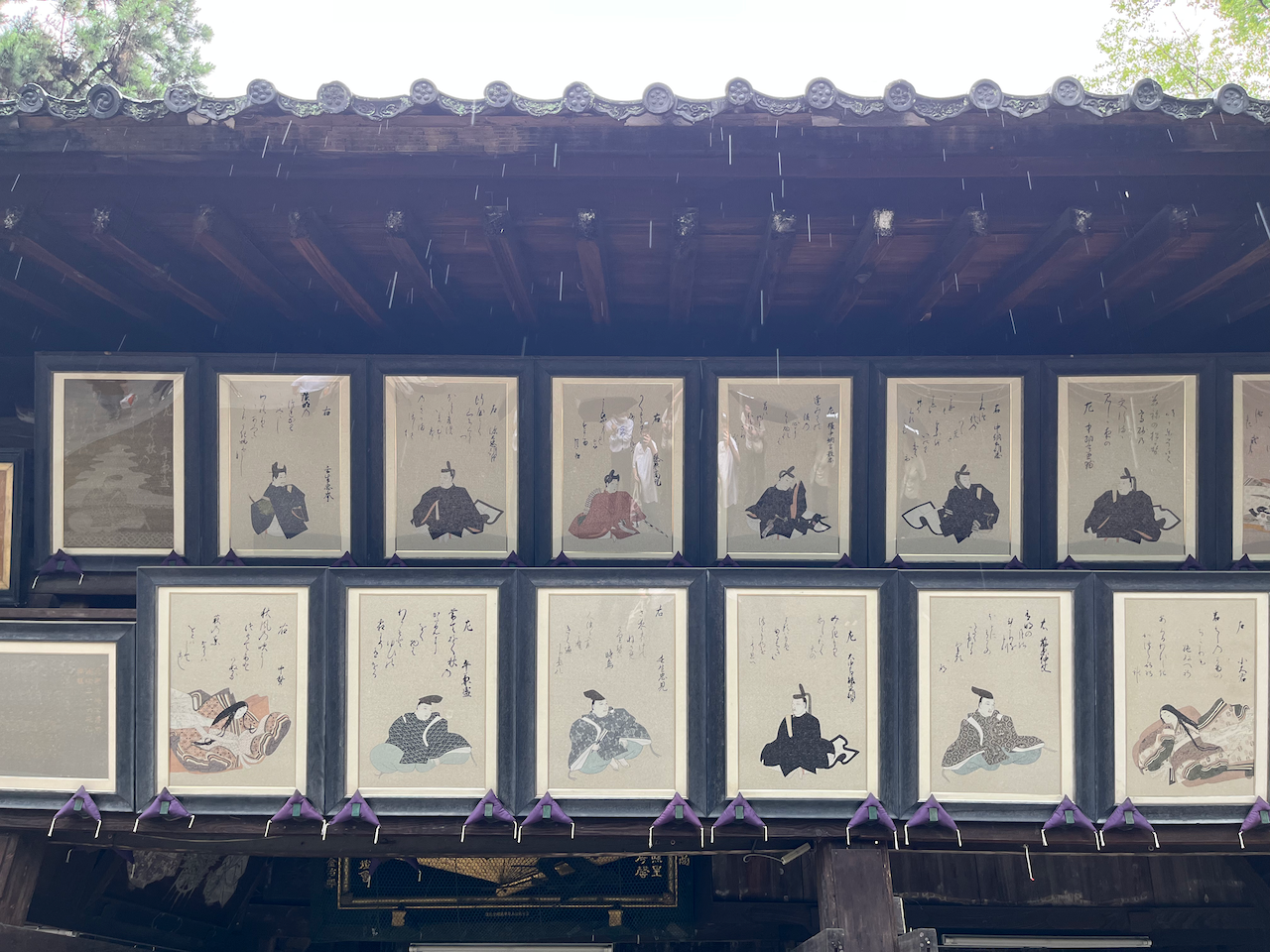
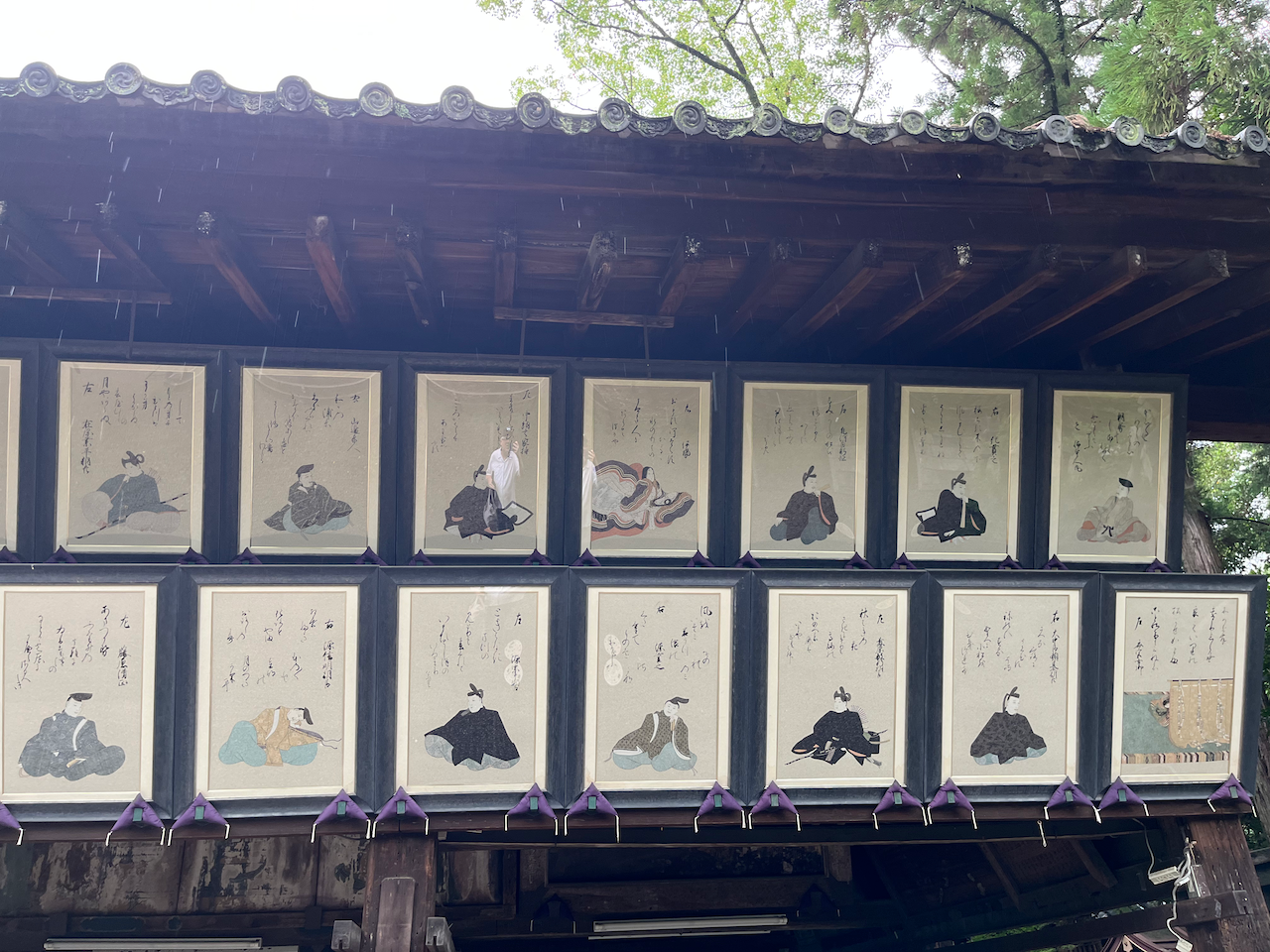
The pavilion near the front entrance had displays of various poems from the Hyakunin Isshu in the form of yomifuda karuta cards! If you look at the photos, you might even see my reflection, too. ;-p

The inside room of the pavilion was interesting too, with lots of really old pictures and paintings affixed:

I also picked up an omamori charm as well:

I keep this in my wallet.

Kitano Tenmangu is a great place to visit while you are in Kyoto, and its tribute to both the famous scholar, and to the Hyakunin Isshu really warmed my heart.

1 This isn’t that unusual in Shinto since the notion of a kami is very broad, and includes not just gods, but also nature spirits, great historical figures, and “anything else that inspires awe” according to one writer.

An Offering To The Gods: Poem Number 24

Hi folks, after a long break due to work obligations, I am back and happy to post this excellent poem by my favorite author in the Hyakunin Isshu:

JapaneseRomanizationTranslation
このたびはKono tabi waThis time around
ぬさもとりあNusa motori aezuI couldn’t even bring the
sacred streamers
手向山Tamuke yama—Offering Hill—
もみのにしきMomiji no nishikibut if this brocade of leaves
神のまにまにKami no mani maniis to the gods’ liking….
Translation by Dr Joshua Mostow

The poem is signed as Kanké (菅家, 845 – 903), which is the Sinified (Chinese) way to read the Sugawara Family name (lit. “House of Sugawara”). You see similar names used for the Taira Clan (e.g. Heike 平家) and Minamoto Clan (e.g. Genji 源氏) in later times. Anyhow, the author is none other than the famous poet/scholar Sugawara no Michizane who in later generations was deified as a sort of god of learning named “Tenjin” after he was wrongfully exiled through political intrigue.

The term nusa (幣) means a special wand used in Shinto religious ceremonies. The photo above is an example of a nusa, more formally a gohei (御幣) “wand” used in Shinto religious ceremonies, with the paper streamers used for purification (photo by nnh, Public domain, via Wikimedia Commons). At this time in history, according to the Hyakunin Isshu Daijiten, small nusa were often made from thin strips of paper and cloth and offered to the gods for a safe journey.

The poem was composed by Michizane after going on an excursion with his patron, Emperor Uda. Compare with another outing made years later by (then retired) Emperor Uda later in poem 26. In this case, Michizane had little time to prepare, and couldn’t make a proper offering to the gods for a safe trip. However, admiring the beautiful autumn scene on Mount Tamuke, he hopes that this will make a suitable offering instead. Sadly Michizane would be disgraced and exiled only a short time later.

My interest in Sugawara no Michizane mostly comes because I admire him as a fellow scholar. I visited one of his shrines in Tokyo a couple times over the years, and usually try to pay respects. In July 2023, I visited the home shrine of Kitano Tenmangu as well.

Kitano Tenmangu shrine in Kyoto, Japan. Taken in July 2023.

The real life Michizane was no god of learning, but his real-life contributions to poetry and Chinese literature in Japan helped the culture flourish at that time, and earned his place as a trusted adviser to the Emperor, despite his more humble background. This also helped explain his status centuries later as a god of learning. Every year in Japan in April, students pay respects hoping that they can pass entrance exams, and it’s nice to see his legacy carry on so many years later.