
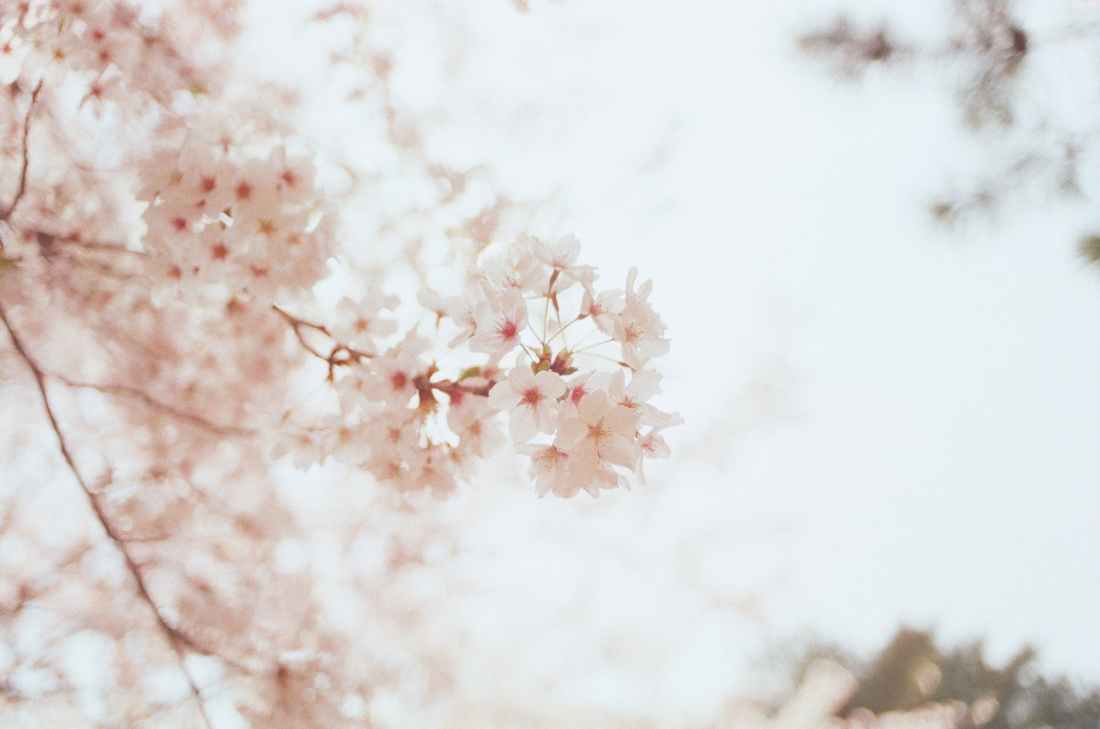
One of my personal favorite poems in the entire collection is this one:
| Japanese | Romanization | Translation |
|---|---|---|
| ひさかたの | Hisakata no | In these spring days |
| 光のどけき | Hikari nodokeki | with the tranquil light encompassing |
| 春の日に | Haru no hi ni | The four directions |
| しづ心なく | Shizu gokoro naku | why should the blossoms scatter |
| 花のちるらむ | Hana no chiruran | with uneasy hearts? |
The author, Ki no Tomonori (紀友則, ? – 905?), was the cousin of Ki no Tsurayuki (poem 35). Tomonori is one of the Thirty-Six Immortals of Poetry, and helped to compile another famous poetry anthology, the Kokinshū (古今集).
The Kokinshū, formerly known as the Kokin Waka Shū (古今和歌集 “Collection of Ancient and Modern Japanese Poetry”) was completed in 905 and was the first of many efforts by the ancient Court to compile the best poetry, past and present, into an official anthology. The Hyakunin Isshu by contrast was one man’s effort in his retirement. More on that in a later post. As for Tomonori, it is said that he didn’t live to see the completion of the Kokinshū, sadly.
As for this poem, this is one of the most famous in the collection and emblematic of Spring, but also the fleeting nature of the world, and the touch of melancholy that comes with it. Truly this is a lovely poem. It also has a textbook example of a pillow word in the form of ひさかたの (hisakata no) in its opening verse, also used in poem 76.
P.S. Special thanks to “E.G.” for some typo fixes in the poem.
 The Hyakunin Isshu