Twin Peaks: Poem Number 13

The second poem in our series devoted to Valentine’s Day is this one:

JapaneseRomanizationTranslation
筑波嶺のTsukubane noLike the Mina River
みねより落つるMine yori otsuruthat falls from the peak
みなの川Minano-gawaof Mount Tsukuba
恋ぞつもりてKoi zo tsumoriteso my longing has collected
淵となりぬるFuchi to naru nuruand turned into deep pools.
Translation by Dr Joshua Mostow

The poem was composed by Yōzei-in (陽成院, 868 – 949), known in English as Emperor Yōzei. Yozei was the firstborn son of Emperor Seiwa, and Empress Takaiko. Takaiko, is thought to have briefly eloped with Ariwara no Narihira, who wrote poem 17 (ちは) in the Hyakunin Isshu, as eluded to in episode six of the Ise Stories.

According to commentaries, the poem was intended for “the princess of Tsuridono” who was the daughter of Emperor Kōkō’s (poem 15, きみがためは).

Nevertheless, the analogy of Mount Tsukuba (modern-day Ibaraki Prefecture), pictured above, was an excellent choice. The mountain is famous in Japanese culture, especially for the two peaks: one called nantai (男体, “Man”) on the western side, and nyotai (女体, “Woman”) on the eastern side. It was a frequent topic used in love poetry back in the day. Even today, it is a very popular destination for tourists and nature lovers. This style of simple love poetry is something you’re likely to also see in older anthologies such as the Manyoshu or the Kojiki.

Sadly, Emperor Yozei is better known for his severe mental instability in later year. Anecdotes from the time relate how Yozei would commit odd or violent behavior, such as riding around the palace with his 30 horses, swinging around the legendary sword, Kusanagi, one of the Three Sacred Treasures of the Imperial Household, beating his wet nurse to death, and killing small animals for amusement. His behavior became increasingly erratic, and so he abdicated in favor of the aforementioned Emperor Koko in the year 884, at the age of 17.

….. or is that what really happened? My new book implies that there is a theory that the story of his insanity was made up by Koko’s faction, or possibly exaggerated as justification for a power-play. The fact that Yozei continued to live peacefully until the age of 82, composing poetry like the one above lends to the possibility that he was not as ill-health as first thought.
A Thousand Swift Swords: Poem Number 17

One of the most famous and recognizable poems in the Hyakunin Isshu is poem 17:

JapaneseRomanizationTranslation
千早ぶるChihayaburuUnheard of
神代もきかずKamiyo mo kikazueven in the legendary age
龍田がわTatsuta-gawaof the awesome gods:
からくれなKarakurenai niTatsuta River in scarlet
みずくくるとはMizu kukuru to waand the water flowing under it.
Translation by Dr Joshua Mostow

The poet, Ariwara no Narihara Ason (在原業平朝臣, 825 – 990) or “Sir Ariwara no Narihara”, was the closest thing to a poetic genius during his time, and this poem is a prime example. Originally published in the Imperial anthology, the Kokin Wakashū, as poem number 294, it is considered one of the most iconic of the one-hundred Hyakunin Isshu poems.

Narihara is also credited for writing what is considered the greatest Waka poem on cherry blossoms (桜, sakura) ever composed:

JapaneseRomanizationTranslation
世の中にYo no naka niIf in all the world
絶えて桜のTaete sakura nothere were of cherry blossoms
なかりせばKanarisebano trace anywhere
春の心はHaru no kokoro waah, how truly peaceful then
のどけからましNodokekaramashispring would be for everyone!
Translation by Dr Josha Mostow and Dr Royall Tyler from the Ise Stories, the poem is also number 53 in the Kokin Wakashū.

Not surprisingly, Narihira was thus considered one of the Six Immortals of Poetry.

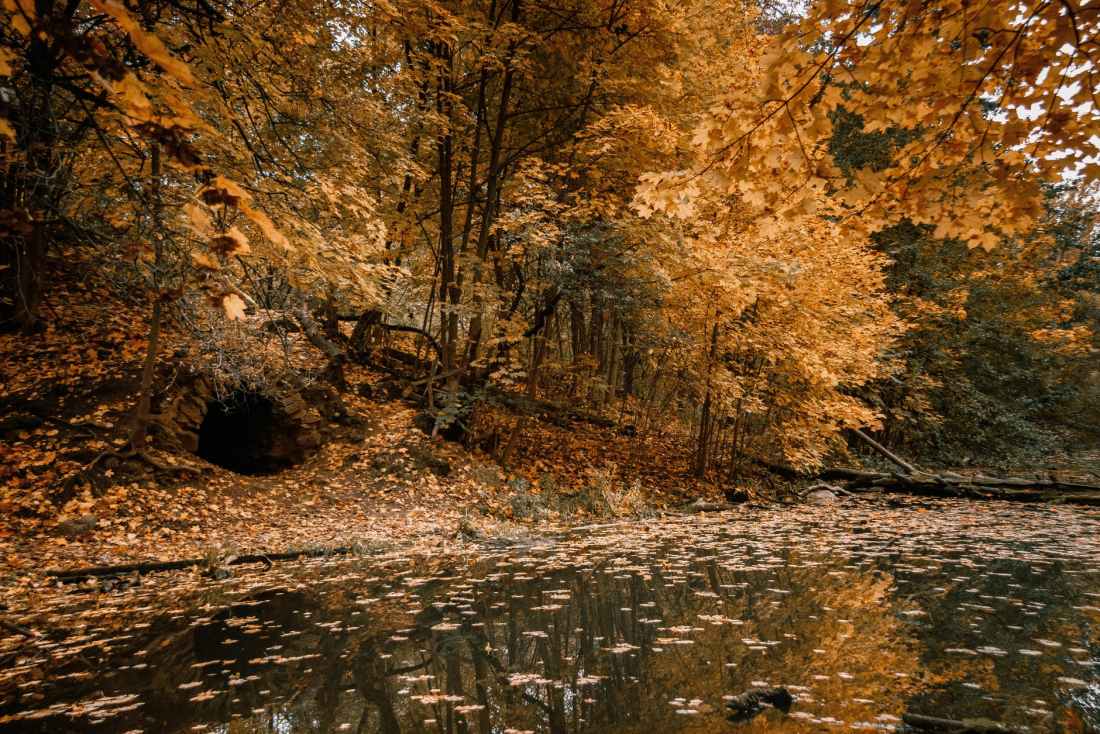
Returning to this poem, there is a lot to unpack. The imagery of red, autumn leaves flowing along the river provides a very memorable contrast. The Tatsuta-gawa River can be found in modern-day Nara Prefecture, and is a scenic, gentle flowing river near the town of Ikaruka. I’d love to see it someday. I cover more about the Tatsuta-gawa River and iconic Mt Mimuro in poem 69, but several poems in the Kokin Wakashū anthology also refer to fall leaves floating on it.

Also, it should be noted that the fourth line is an example of a traditional Japanese color word.

Lastly, the opening line of this poem, chihayaburu, is a prime example of “pillow words” in Japanese poetry. It literally means something like “a thousand swift swords”, but really is an honorific epithet when referring to the gods, similar to how Homer used to use special epithets for each of the Olympian gods. Nevertheless, it’s a famous line, and can be found in Waka poetry written even in modern times, and is also the title of the popular manga exploring the Hyakunin Isshu card game.

If there is one poem worth learning in all the Hyakunin Isshu, I would argue, it is this one.