Kurumazaki Shrine

During our recent trip to Japan, we visited the city of Kyoto. I talked about this here, but I also wanted to share another site in Kyoto that relates to one of the poets of the Hyakunin Isshu : Kuramazaki Shrine. You can find their official website here, but there is no English and the site is a bit hard to navigate. The shrine itself has a very interesting layout:
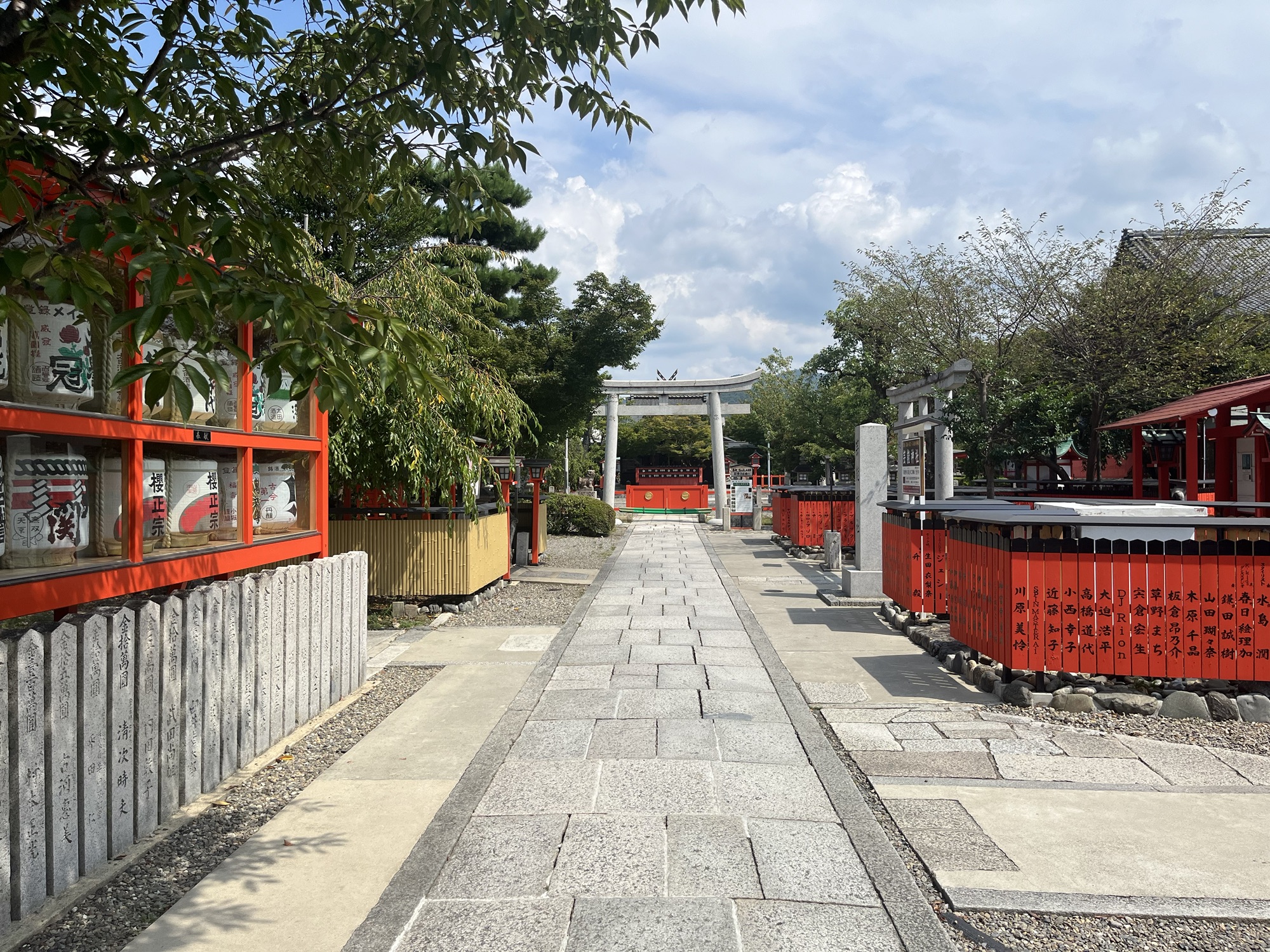
The photo above is the main promenade leading to the inner sanctum (toward the back). Apparently, it’s tradition in Japanese culture to walk along the edge of the walkway, not right in the middle, so bear that in mind when visiting a shrine like this.

This Shinto shrine is notable for its many visits by celebrities who leave autographed red plaques.
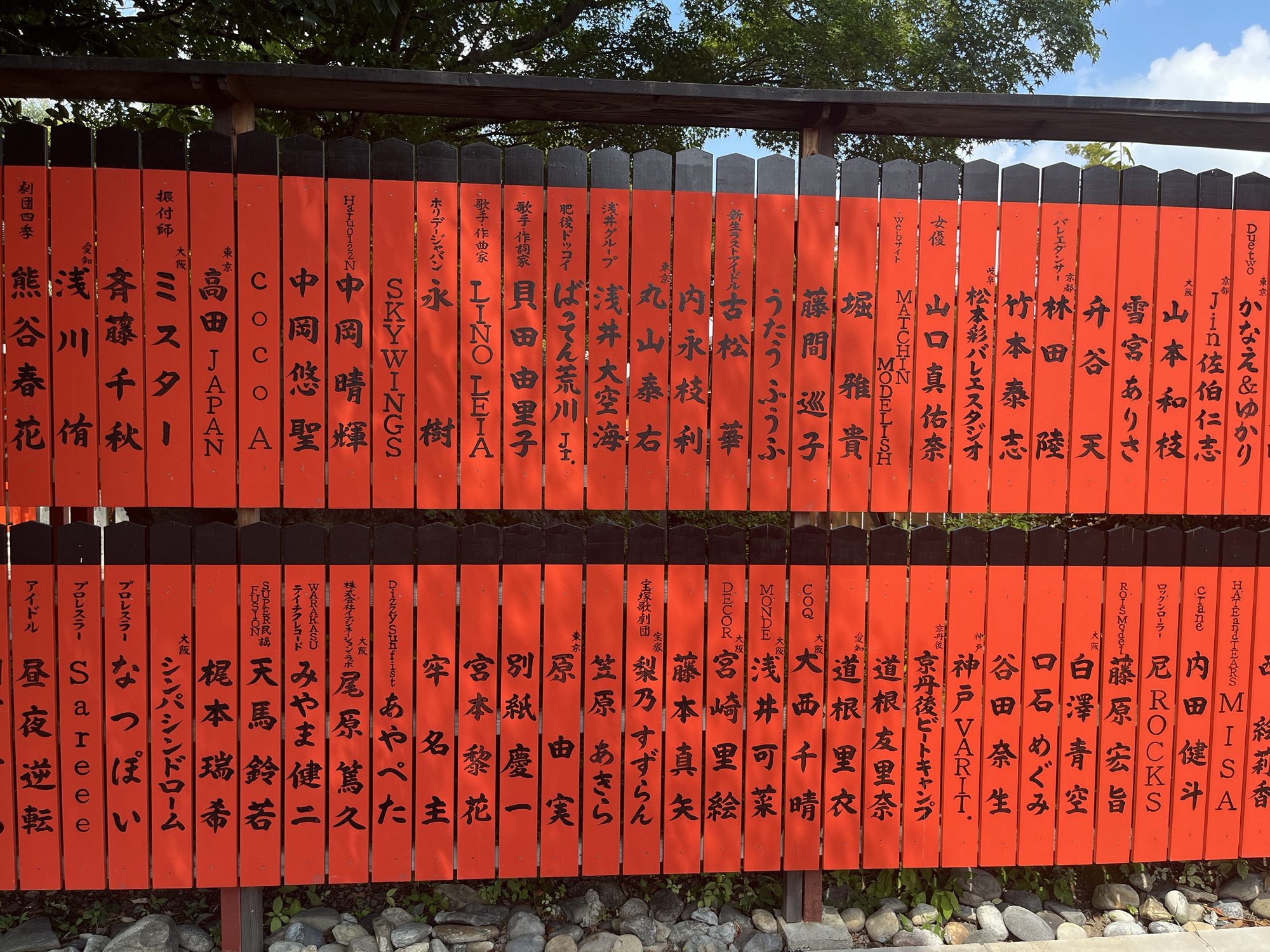
Shinto shrines often serve particular need in society: love, business success, health, etc. In the case of Kurumazaki Shrine, the focus is on show-business, acting, theater, etc.

Why does this matter?

It turns out that Sei Shonagon, author of the Pillow Book and poem 62 (よを) in the Hyakunin Isshu is enshrined here. Not only that, but you can purchase a special omamori charm with her image on it. I learned about this place on social media after seeing the actress First Summer Uika, who played Sei Shonagon in the historical drama, visit the shrine.

Because this site contains many sub-shrines and side passages, it took a bit of effort to find Sei Shonagon’s shrine. It is halfway down the promenade, on the left, and looks like so:

I paid my respects to this esteemed author, and the family and I continued to explore. I found First Summer Uika’s plaque near the inner sanctum:

Incidentally, my wife is a fan of the JPop group Snow Man, and you can see one of their markers just to the left. We both got something out of this trip. 😛

As I alluded to earlier, the shrine complex is deceptively long, with many nooks and hidden shrines and side paths. The site map gives some sense of this. For reference, the Sei Shonagon shrine is number 20 on the map, and you can see there are many other sites here too. I didn’t photograph every shrine here, and most are probably obscure to readers (and obscure to myself). The common theme was both fortune, and also show business. They were some pretty neat shrines though, such as this one showing various theater masks:

At last we came to the gift shop, and I got a Sei Shonagon charm (omamori):

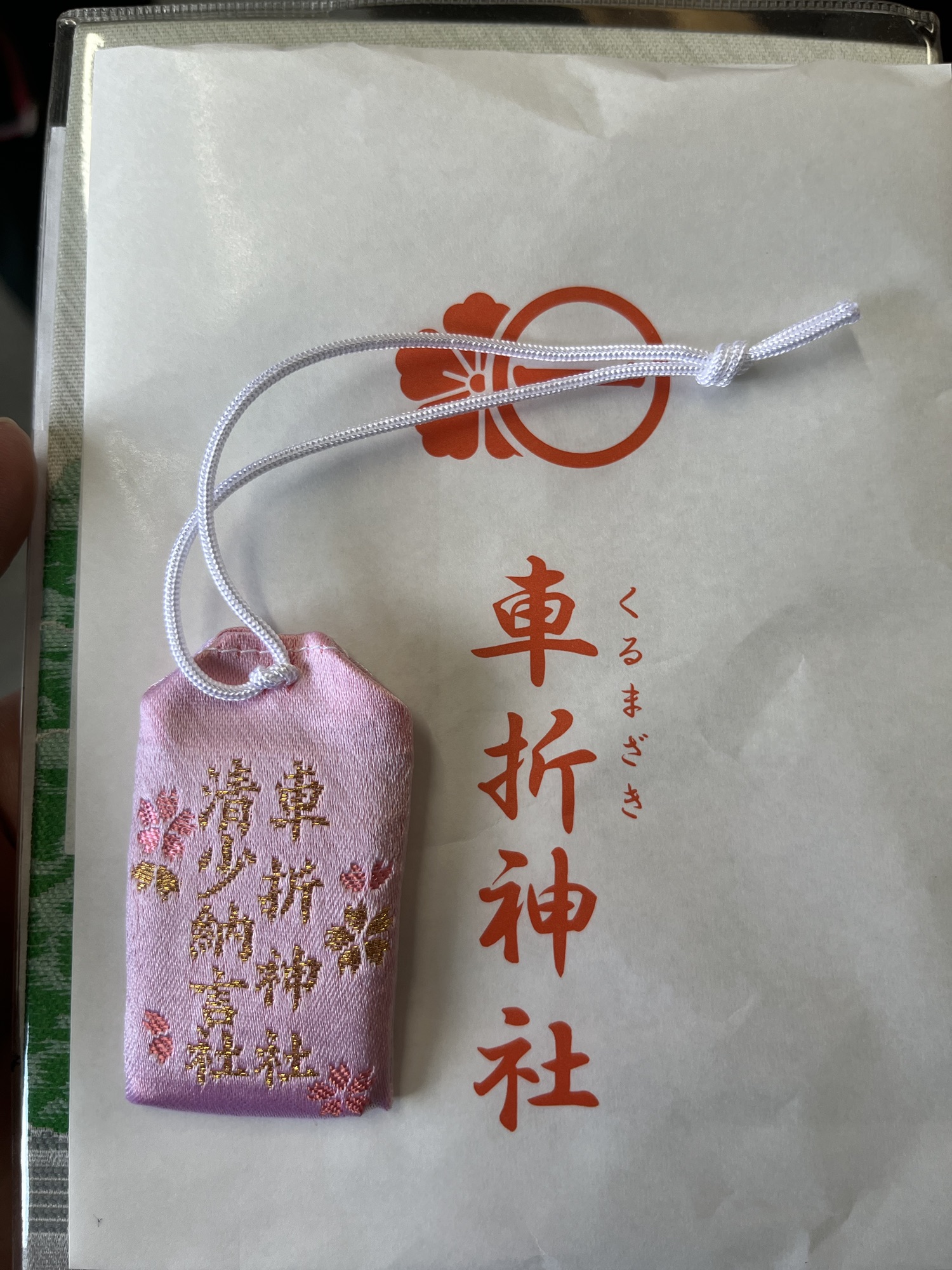
Later, when I got back home and realized that the charm was intended for ladies,1 I was rather embarrassed, yet I didn’t want it to go to waste, so I gave it to my daughter whose preparing for college this year. It seemed fitting, and I am happy to report that she got a good score in her SAT exam the following month, so perhaps the charm worked?

Anyhow, Kurumazaki Shrine is not something tourists usually visit because it’s a little removed from the nearby touristy area of Arashiyama, and like many Shinto shrines, it’s very Japan-centric, but it’s a cool slice-of-life of Japanese popular culture, both past and present.

As for me, I was happy to pay my respects to such a wonderful poet and author directly, someone’s whose creativity and work indirectly helped make this blog what it is today.

P.S. Later that day, I stumbled upon the place where the Hyakunin Isshu was compiled, so I managed to visit two sites in one day. Not too shabby.

1 It’s clearly written on the signs, I just failed to pay attention. I was maybe a bit star-struck perhaps. 😅

Omi Shrine

One of most iconic places in the world of Karuta is a placed called Omi Shrine, also called Omi Jingu (近江神宮, おうみじんぐう) in Japanese. It is here that the big championship events are often held, and it is a big part of season one of the anime series Chihayafuru. Not to sound like a cliché, but it is a kind of mecca for the Karuta world and the Hyakunin Isshu.

A scene from Chihayafuru as Chihaya approaches the Rōmon gate.

What is Omi Shrine though?

You see, Japan has essentially two religions that co-exist: the native Shinto religion and imported Buddhist one. We don’t need to go into detail about how they differ; I have an entire blog on the subject. Suffice to say, they differ. Even the place names are different. Buddhist temples are called otera or end with -ji. Shinto shrines are called jinja, jingu or taisha.

Anyhow, Omi is a Shinto shrine located in the city of Ōtsu, in Shiga Prefecture. This area was once the province of Omi, hence the name. The shrine’s constructed began in 1937 and finished by 1940. It is a young shrine, but has a deep connection to the past.

Like all Shinto shrines, Omi Shrine venerates a kami, a divine figure. A kami can be a god (think ancient Greek gods) from Japanese mythology, a local spirit, or even a historical figure. Some shrines venerate more than one kami.

Omi Shrine venerates none other than Emperor Tenji, who wrote poem one of the Hyakunin Isshu (あきの). During his reign, the capitol of Japan was moved to Otsu city and there he reigned until his death. Here, he carried out many essential reforms that provided the foundation for Japanese society for centuries. Because Tenji also wrote the opening poem of the Hyakunin Isshu, the shrine became quickly associated with the anthology and with Karuta.

The shrine website even has a handy catalog of the Hyakunin Isshu poems, not unlike mine. 😉

The English website is pretty limited, but the Japanese site has a lot of great information about the shrine, Karuta and so on.

The shrine is a bit removed from the usual touristy areas, so you might not be able to get there. However if you do go, it’s good etiquette to pay respects to the kami there. Per Shinto tradition (explained here) the process is:

  1. Bow deeply at the waist twice.
  2. In reverence, clap twice.
  3. Bow once more.

You can also use the water font nearby to wash your hands a bit (just watch how other Japanese do it) and your face a bit before facing the kami.

You can also pick up an omamori charm too.

I haven’t been to Omi Shrine myself but it seems like a lovely, scenic location, and I would love to play Karuta there someday even if I get crushed.

P.S. Featured photo is the Rōmon (楼門, “Sakura Gate”), photo by Kenpei, courtesy of Commons Wikimedia.

Visiting Kitano Tenmangu Shrine

I’ve been writing in my other blog several articles about my family’s visit to Kyoto and Nara in July 2023, but for this particular article, I wanted to write it on this blog instead. You’ll see why shortly. While in Kyoto, we made an unexpected stop at a Shinto shrine called the Kitano-Tenmangu Shrine (北野天満宮) right in the middle of the city.

Kitano-Tenmangu Shrine (English / Japanese homepages) is devoted to a Shinto kami named Tenjin, who’s essentially the God of Learning. Each year, thousands of kids trying to pass their entrance exams visit local shrines, and pray for success. I’ve prayed at the Yushima Tenmangu Shrine in Tokyo myself years ago when trying to pass a Japanese-language certification test (I passed). The one in Kyoto, though, Kitano Tenmangu, is the original shrine.

But what’s the big deal?

The kami Tenjin is a deified form of the poet and scholar, Sugawara no Michizane, who composed poem 24 in the Hyakunin Isshu. When he was ousted by the powerful rival Fujiwara no Tokihira (father of Atsutada, poem 43), and died in exile, people worried that his vengeful spirit had returned to plague the capitol. The untimely deaths Tokihira and Atsutada certainly didn’t help this. Michizane was posthumously re-instated to the Imperial Court bureaucracy, elevated to a high rank, and venerated as a Shinto kami1 to appease him.

Anyhow, Kitano Tenmangu is the original shrine devoted to Michizane and has since grown into a large network of shrines across Japan.

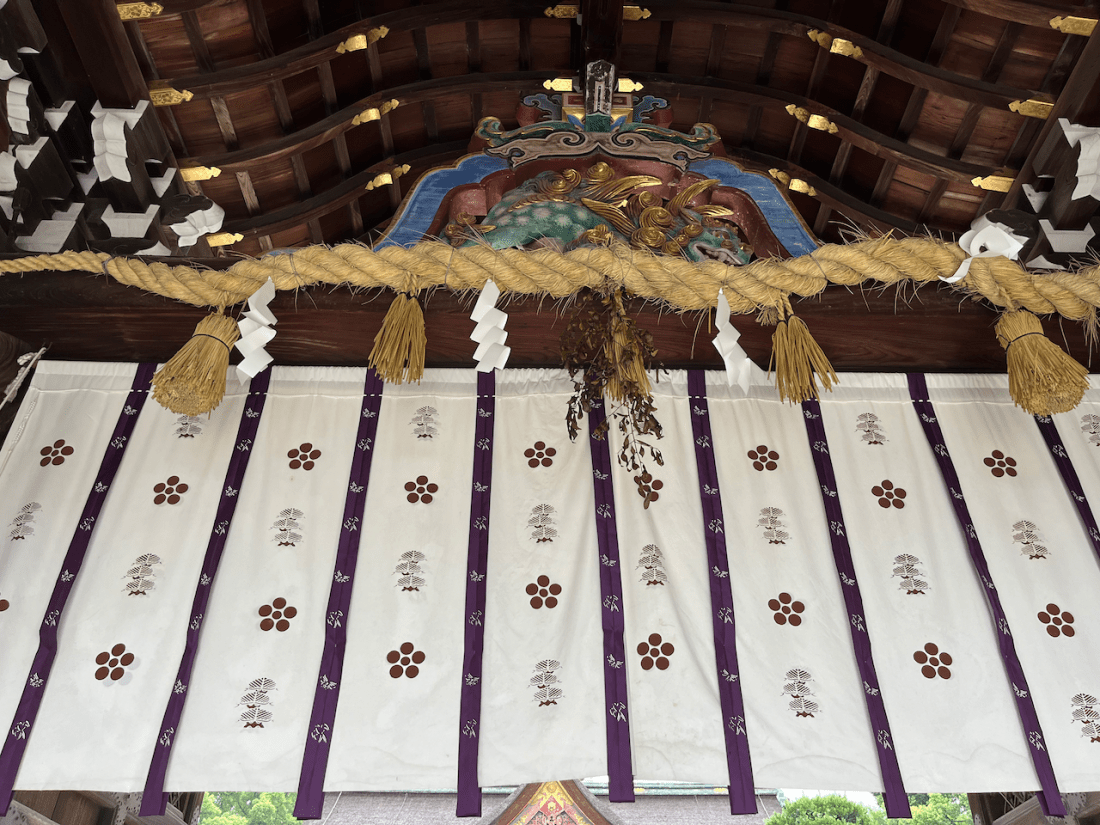
The Shrine itself is relatively small, since it’s inside the city, but it has lots of neat things in it. When you first come in, there is a walkway like so leading to the inner sanctum:

To the right, is a plum tree, though not blossomging in July:

Plum blossoms (umé 梅) are associated with Michizane due to a famous poem he wrote in exile:

JapaneseRomanizationTranslation
東風吹かばKochi fukabaWhen the east wind blows,
にほひをこせよNioi okose yolet it send your fragrance,
梅の花Ume no hanaoh plum blossoms.
主なしとてAruji nashi toteAlthough your master is gone,
春を忘るなHaru o wasuru nado not forget the spring.
Sugawara no Michizané (845 – 903), translation by Robert Borgen

Anyhow, if you continue you get to the gate to the inner sanctum:

The inner sanctum is here (I prayed for my Japanese-language exam this year as well… we’ll see if I pass again 😄):

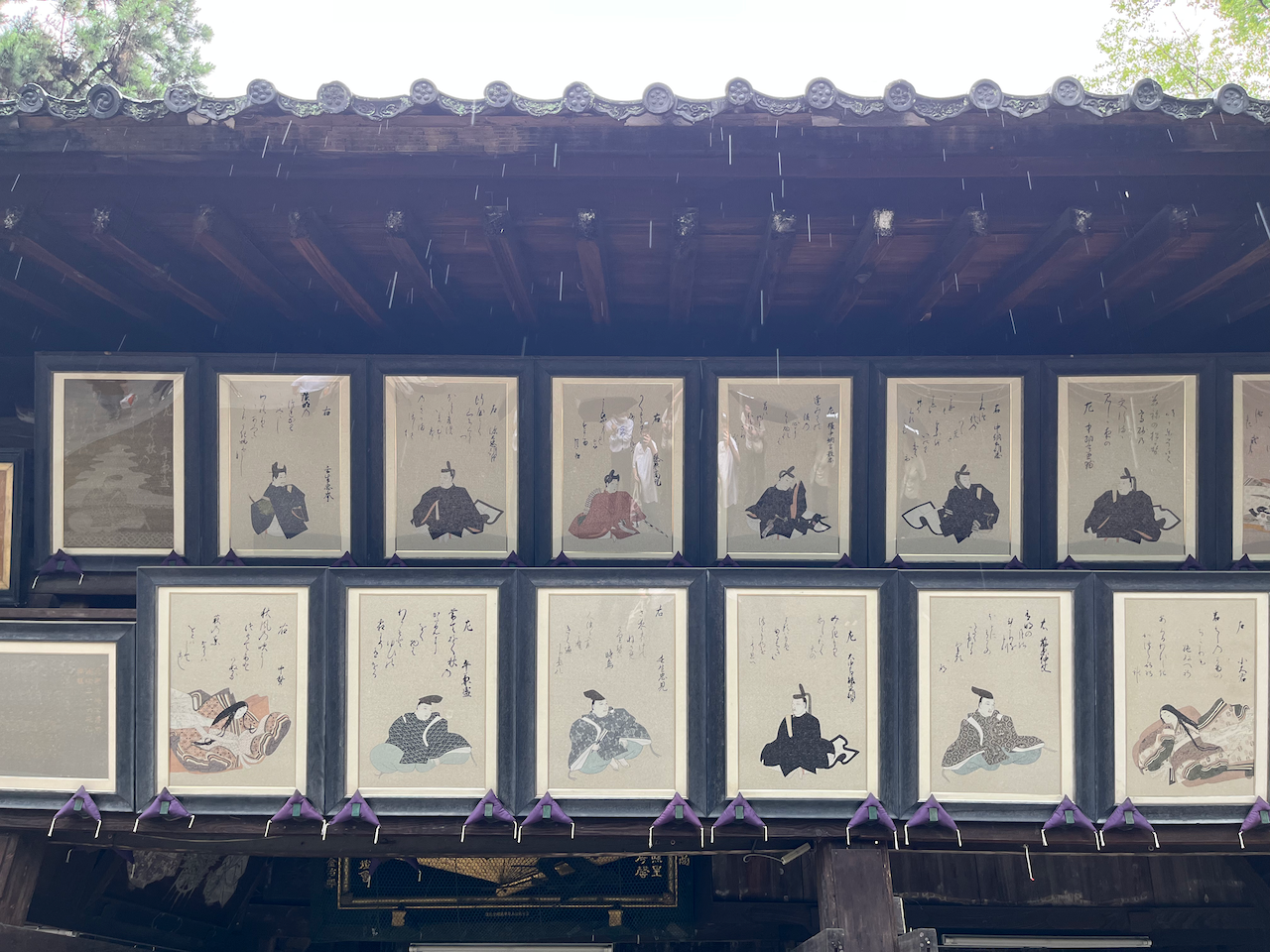
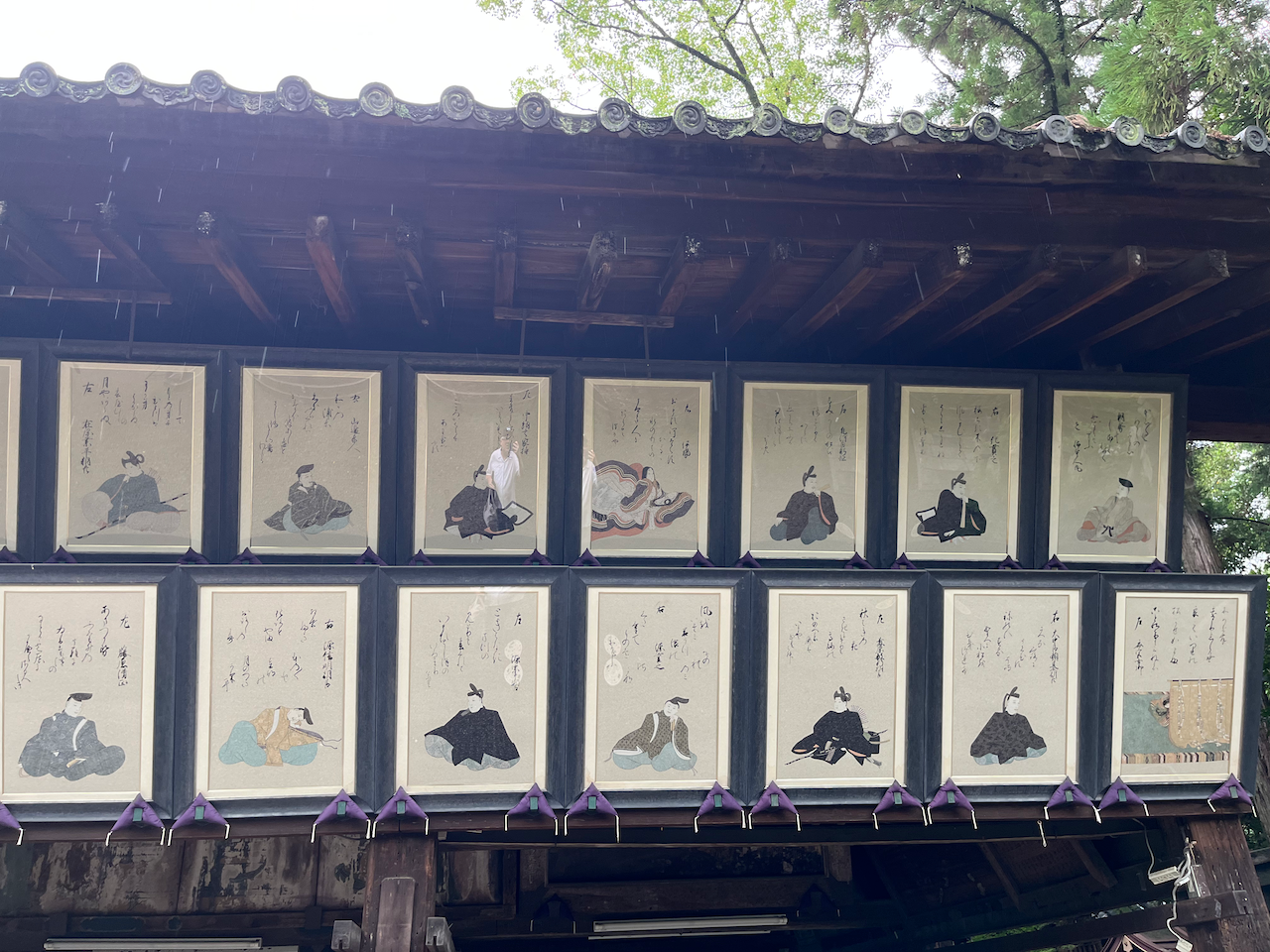
What’s really neat is that if you loop back around toward the main entrance, you’ll see this:

The pavilion near the front entrance had displays of various poems from the Hyakunin Isshu in the form of yomifuda karuta cards! If you look at the photos, you might even see my reflection, too. ;-p

The inside room of the pavilion was interesting too, with lots of really old pictures and paintings affixed:

I also picked up an omamori charm as well:

I keep this in my wallet.

Kitano Tenmangu is a great place to visit while you are in Kyoto, and its tribute to both the famous scholar, and to the Hyakunin Isshu really warmed my heart.

1 This isn’t that unusual in Shinto since the notion of a kami is very broad, and includes not just gods, but also nature spirits, great historical figures, and “anything else that inspires awe” according to one writer.

Long Summer: Poem Number 98

As Summer starts to wind down, I thought this would be a good poem. In fact, it’s one of the few about Summer in the Hyakunin Isshu:

JapaneseRomanizationTranslation
風そよぐKaze soyoguIn the evening
ならの小川おがわNara no ogawa nowhen the wind rustles the oaks
ゆうぐれはYugure waat Nara-no-Ogawa,
みそぎぞ夏のMisogi zo natsu noit is the ablutions that are
しるしなりけるShirushi narikeruthe only sign it’s still summer!
Translation by Dr Joshua Mostow

The author of this poem is Ju-ni-i Ietaka (従二位家隆, 1158 – 1237), or “Ietaka of Junior Second Rank”. His personal name was Fujiwara no Ietaka, and that he was the son-in-law of Jakuren (poem 87), and studied poetry under Fujiwara no Shunzei (poem 83). In fact he was so talented that he became the tutor for a young Emperor Gotoba (poem 99). After the Emperor’s exile following the Jokyu War, Ietaka and Gotoba still corresponded and shared poems.

My new book suggests that this might be why Teika (poem 97), compiler of the Hyakunin Isshu, put them next to one another (poems 98 and 99) numerically.

The notion of ablution or misogi (禊ぎ) is a Shinto ritual involving purification through cold water, prayer, etc. The practice is still alive and well today, and is often done in the summer months, but it varies depending on the particular Shinto shrine. In Shinto, people accumulate impurities through bad actions or traumatic events, and have to expunge them through ritual to balance their lives. As Professor Mostow explains, it was also popular in the author’s time as a well of making up for carrying on illicit affairs too. 😉

According to the Hyakunin Isshu Daijiten, the second verse of the poem is a good example of a kakekotoba ( 掛詞) wordplay, in that it has two meanings. First, nara can mean an oak tree (楢), especially Quercus serrata trees. The second meaning, nara no ogawa, refers to the font at the upper Kamo Shrine also called the Kamigamo Shrine (kamigamo-jinja, 上賀茂神社). The homepage can be found here.

The nara-no-ogawa next to the Kamigamo Shrine. Photo courtesy of 663highland, CC BY-SA 3.0, via Wikimedia Commons

Another concept in late summer is the notion of zansho (残暑) which is the long, hot, humid summer that comes after the monsoon season in June-July. Speaking from first-hand experience, it’s stifling hot, but here the poem implies that the summer is nearly over, and only the ablutions remain.

P.S. Featured photo is of Iyagatani (伊屋ヶ谷) waterfall, of Ryujuin (龍樹院) Temple. Photo by 松岡明芳, CC BY-SA 3.0, via Wikimedia Commons

An Offering To The Gods: Poem Number 24

Hi folks, after a long break due to work obligations, I am back and happy to post this excellent poem by my favorite author in the Hyakunin Isshu:

JapaneseRomanizationTranslation
このたびはKono tabi waThis time around
ぬさもとりあNusa motori aezuI couldn’t even bring the
sacred streamers
手向山Tamuke yama—Offering Hill—
もみのにしきMomiji no nishikibut if this brocade of leaves
神のまにまにKami no mani maniis to the gods’ liking….
Translation by Dr Joshua Mostow

The poem is signed as Kanké (菅家, 845 – 903), which is the Sinified (Chinese) way to read the Sugawara Family name (lit. “House of Sugawara”). You see similar names used for the Taira Clan (e.g. Heike 平家) and Minamoto Clan (e.g. Genji 源氏) in later times. Anyhow, the author is none other than the famous poet/scholar Sugawara no Michizane who in later generations was deified as a sort of god of learning named “Tenjin” after he was wrongfully exiled through political intrigue.

The term nusa (幣) means a special wand used in Shinto religious ceremonies. The photo above is an example of a nusa, more formally a gohei (御幣) “wand” used in Shinto religious ceremonies, with the paper streamers used for purification (photo by nnh, Public domain, via Wikimedia Commons). At this time in history, according to the Hyakunin Isshu Daijiten, small nusa were often made from thin strips of paper and cloth and offered to the gods for a safe journey.

The poem was composed by Michizane after going on an excursion with his patron, Emperor Uda. Compare with another outing made years later by (then retired) Emperor Uda later in poem 26. In this case, Michizane had little time to prepare, and couldn’t make a proper offering to the gods for a safe trip. However, admiring the beautiful autumn scene on Mount Tamuke, he hopes that this will make a suitable offering instead. Sadly Michizane would be disgraced and exiled only a short time later.

My interest in Sugawara no Michizane mostly comes because I admire him as a fellow scholar. I visited one of his shrines in Tokyo a couple times over the years, and usually try to pay respects. In July 2023, I visited the home shrine of Kitano Tenmangu as well.

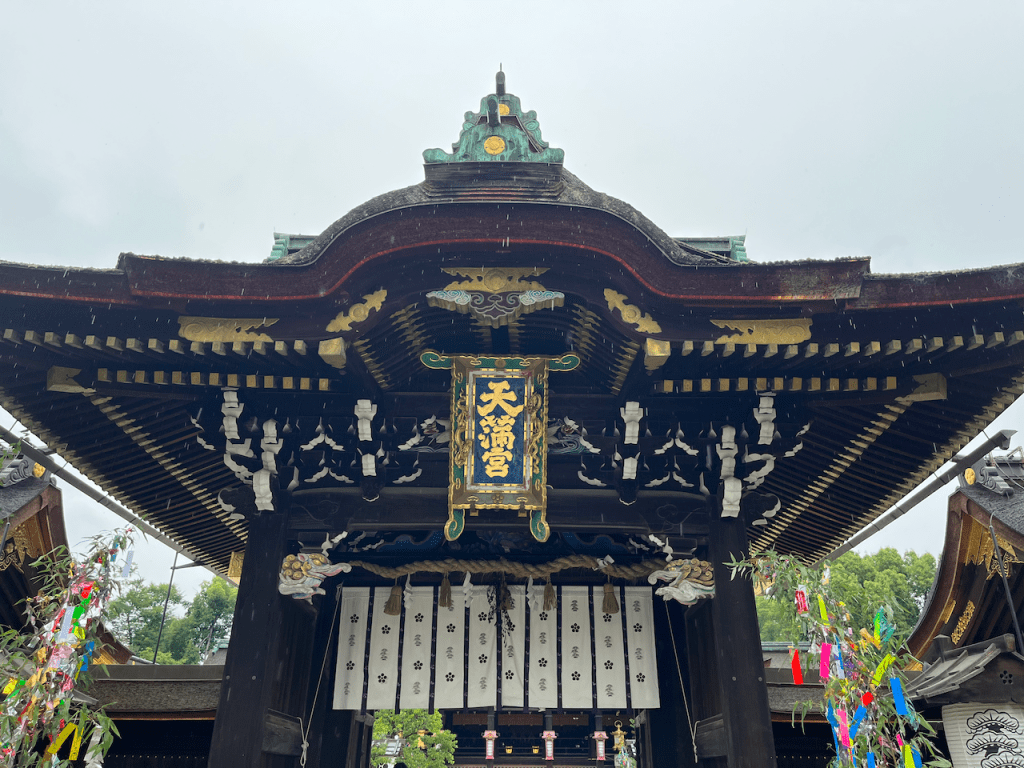
Kitano Tenmangu shrine in Kyoto, Japan. Taken in July 2023.

The real life Michizane was no god of learning, but his real-life contributions to poetry and Chinese literature in Japan helped the culture flourish at that time, and earned his place as a trusted adviser to the Emperor, despite his more humble background. This also helped explain his status centuries later as a god of learning. Every year in Japan in April, students pay respects hoping that they can pass entrance exams, and it’s nice to see his legacy carry on so many years later.

A Vow Broken Before the Gods: Poem Number 38

The third poem in our series dedicated to women is another personal favorite:

JapaneseRomanizationTranslation
忘らるるWasuraruruForgotten by him,
身をば思Mi wo ba omowazuI do not think of myself.
ちかてしChikaite shiBut I can’t help worry
人の命のHito no inochi noabout the life of
the man who
しくもあるかなOshiku mo aru kanaswore so fervently
before the gods!
Translation by Dr Joshua Mostow

The author, Ukon (右近, dates unknown), takes her sobriquet after her father’s position in the Court as Lesser Captain of the Right Bodyguards, or ukon-e no shōshō (右近衛少将). She served as a lady in waiting to Empress Onshi. Apparently she was a busy woman. Like her father, she is said to have had a number of romantic liaisons, including Atsutada (poem 43), Asatada (poem 44), and Prince Motoyoshi (poem 20) among others. Her tryst with Atsutada is mentioned in a later text called the Tales of Yamato. Ukon also actively participated in poetry contests.

Professor Mostow explains that there are historically two interpretations to this poem. One interpretation is that she wrote the letter to her cold lover, conveying a mean, sarcastic tone. My new book favors this theory, and implies that the lover who spurned her was none other than Fujiwara no Atsutada mentioned above.

The other explanation is more of a private letter to herself. This second meaning then sounds less harsh in tone, and more tragic.

A Broken Thread: Poem Number 89

For our fourth poem in honor of Valentine’s Day, I thought this was an excellent choice:

JapaneseRomanizationTranslation
玉のTama no o yoO, jeweled thread of life!
絶えなば絶えねTaenaba taeneif you are to break, then break now!
ながらNagaraebaFor, if I live on,
しのぶることのShinoburu koto nomy ability to hide my love
よはりもぞするYowari mo zo suruwill most surely weaken!
Translation by Dr Joshua Mostow

The author of this poem, Shokushi Naishinnō (式子内親王) was the daughter of Emperor Go-Shirakawa and was high priestess, or saiin (斎院), of the Kamo Shrine near Kyoto (office website, Japanese only). Because the Kamo Shrine was so central to the spiritual protection of the capitol, the high-priestess could only be the daughter of an emperor, and was expected to be a vestal virgin. She would serve as the high-priestess until such time as a new emperor was enthroned.

The daughter of Emperor Go-Shirakawa received a world-class education in poetry from none other than Fujiwara no Shunzei (poem 83), and later by his son, Fujiwara no Teika (poem 97), the compiler of the Hyakunin Isshu. The Hyakunin Isshu Daijiten also alludes to rumors that Teika and Shokushi Naishinnō later had a romantic relationship. Further, researchers have noted that Teika frequently mentions her in his journal.

However, if the two had a romantic relationship, they never married. Shokushi Naishinnō became the high priestess and led a celibate life. According to one story, after Shokushi Naishinnō passed away, it is said that Teika’s strong feelings of longing for her eventually led to the sprouting of teikakazura flowers (Asiatic Jasmine, Trachelospermum asiaticum) around her grave.

Shokushi Naishinnō, in addition to being the high priestess, also left a considerable poetry collection in her own right. This poem belonged to another anthology under the subject of “hidden love”, according to Mostow. This was a popular subject of poetry contests and similar poems can be found in the Hyakunin Isshu as well.

One other note here is the imagery of strings of jewelry symbolizing one’s life, as in the first verse of the poem above. It seems to have been a frequent metaphor and there are example poems dating all the way to the Manyoshu that use similar imagery.