The poem from the Manyoshu feels like an ancient Japanese dad-joke. Read it out loud and you’ll see what I mean:
| Manyogana | Modern Japanese | Romanization | Rough Translation |
|---|---|---|---|
| 淑人乃 | よき人の | Yoki hito no | Men of old |
| 良跡吉見而 | よしとよく見て | Yoshito yoku mite | came to Yoshino |
| 好常言師 | よしと言ひし | Yoshito ii shi | and declared it a good place, |
| 芳野吉見与 | 吉野よく見よ | Yoshino yoku miyo | So, good sons, go |
| 良人四来三 | よき人よく見 | Yoki hito yoku mi | and take in the view! |
The author of the poem is Emperor Tenmu whom we saw here and here. He is the younger brother of Emperor Tenji of Hyakunin Isshu fame (poem 1, あきの), and husband/uncle to Empress Jito (poem 2, はるす).
Yo, yo, yo, this poem has lots of “yo” words.
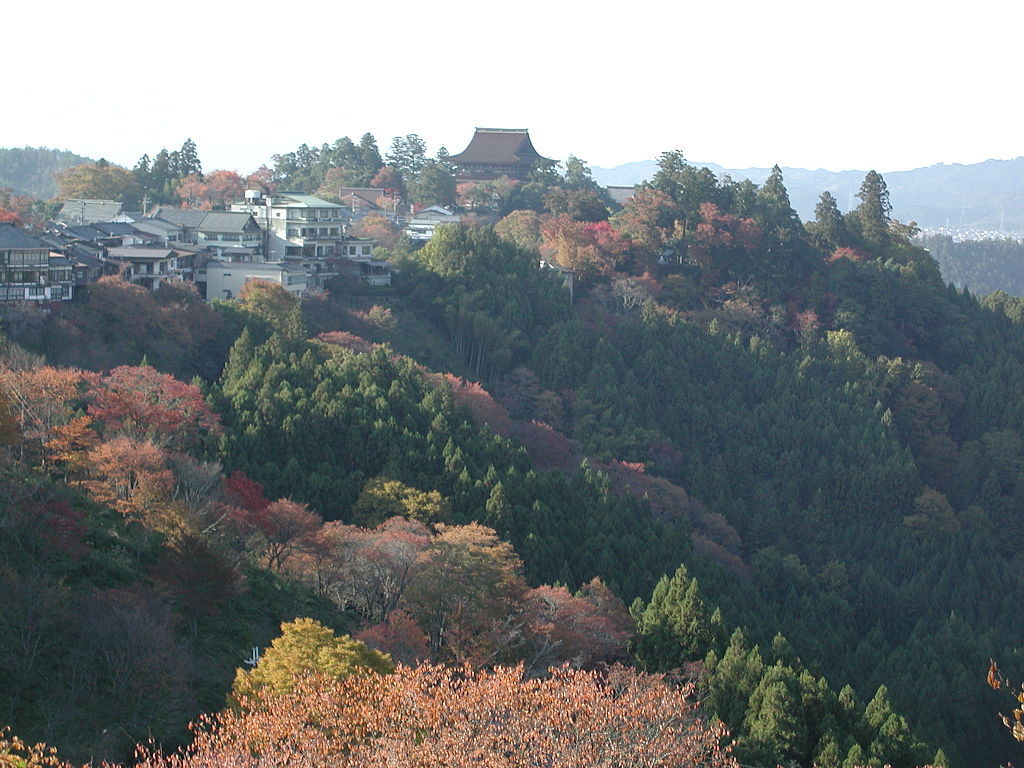
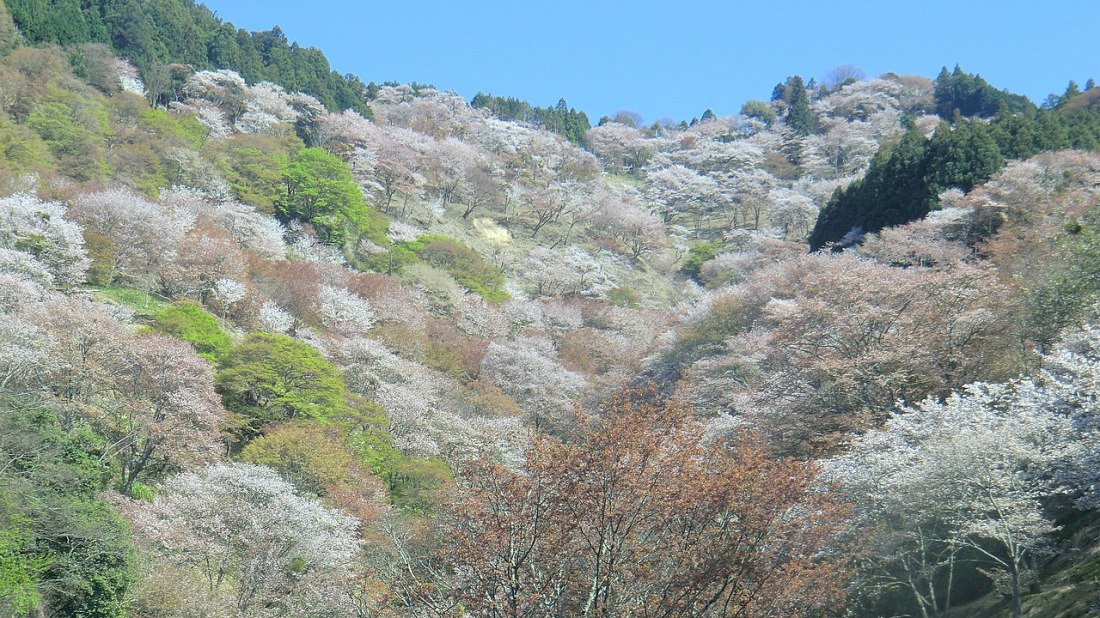
The poem was, evidentially, a suggestion by Emperor Tenmu to his sons to visit the beautiful village of Yoshino, near the old capital of Nara, famed for its otherworldly beauty in Spring. The featured image shows Yoshino and its famous cherry trees.
It was also an attempt to foster good relations between Tenmu and his sons through a combination of humor and providing some fatherly advice. Given how complicated family relations were at the time (see links above), and since Tenmu had defeated his own nephew in combat to assume the throne, he had reason to worry.
Sadly, it didn’t work.
After Tenmu’s passing, one son, Prince Ōtsu (ōtsu no miko, 大津皇子), started a rebellion and was later given the death penalty at the age of 24. Wikipedia implies that the rebellion may be a false charge though brought by Empress Jito so that her own son could ascend the throne. My book on the Manyoshu delves into this at length and comes to the same conclusion.
Still, you can’t blame Emperor Tenmu for trying to heal family divisions, yo.