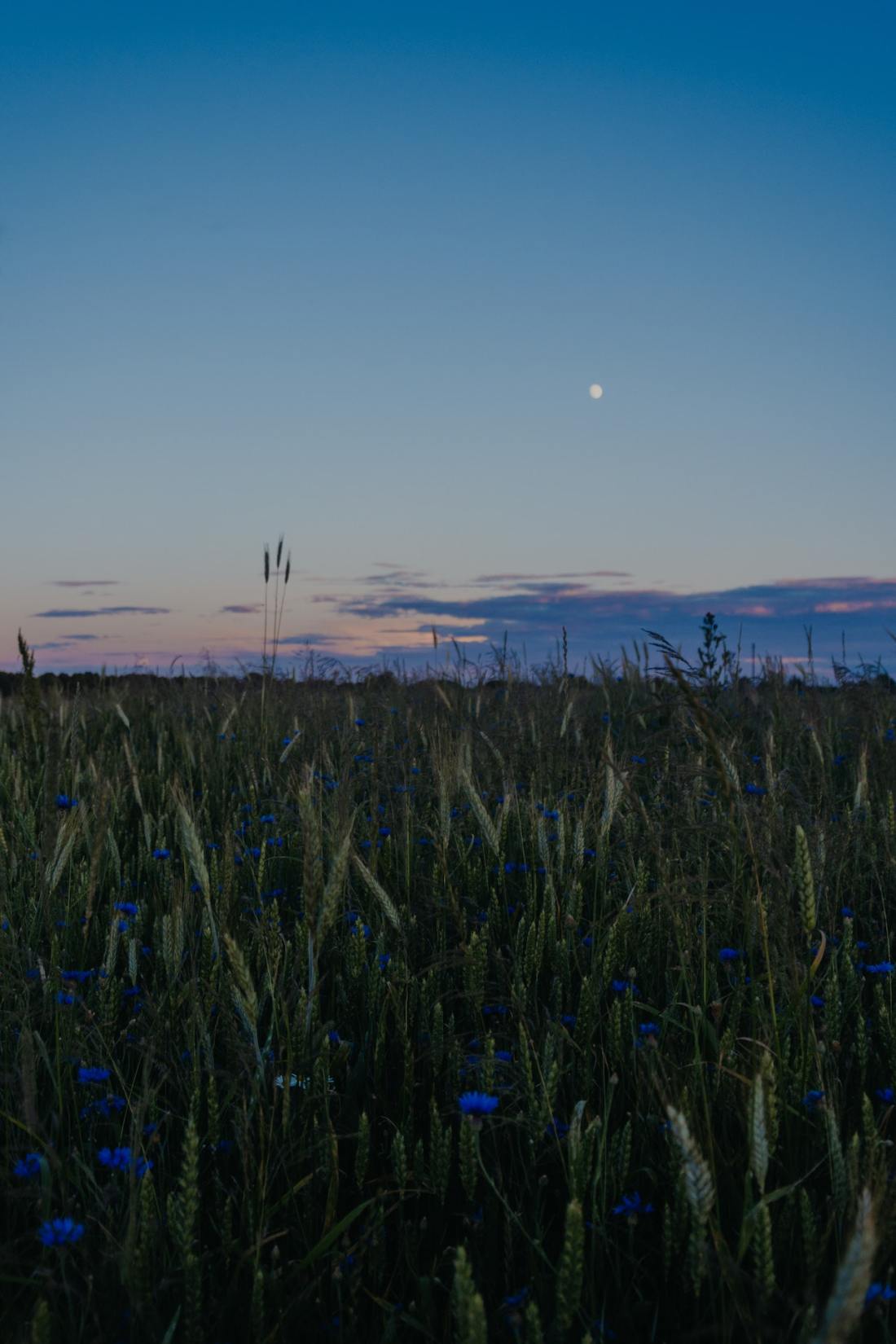
Summer Nights: Poem Number 36

For those who are stuck in the dead of winter (or for readers in the Southern Hemisphere), I thought a Summer-type poem would be appropriate:

JapaneseRomanizationTranslation
夏の夜はNatsu no yo waThe short summer nights
まだよながらMada yoi nagarawhile it seems yet early evening,
明けぬるをAkenuru woit has already dawned, but
雲のいくにKumo no izuku niwhere in the clouds, then,
月やどるらTsuki yadorurandoes the moon lodge, I wonder?
Translation by Dr Joshua Mostow

The author of the poem, Kiyohara no Fukayabu (清原深養父, dates unknown), was a relatively well-known poet in his time, but it also turns out that he is the grandfather of Motosuke (poem 42) and great-grandfather of the famous author, Sei Shonagon (poem 62), so it seems poetry and literature run in the family. 😁

Anyhow, as Mostow explains, this poem was highly regarded at the time, but for readers in the 21st century, it has so many hidden cultural allusions, that it’s hard to see the significance at first.

As he summarizes, summer nights are short, and Fukayabu is saying that he is surprised that the moon is already dawning in the western sky. Since it’s cloudy, he asks where the moon might be lodging since it’s hard to imagine that it is already setting. It’s a clever, light-hearted poem exploring brief summer, moonlit nights in other words.

Interestingly, Mostow points out that despite the praise on this poem from antiquity, Fukayabu was not included among the Thirty Six Immortals of Poetry and his reputation suffered a major blow that didn’t recover until it was included in later anthologies.

It’s pretty amazing to think how a poem can really make or break a person in that era. We saw this in reverse for poem 92.
Washed Away: Poem Number 32

JapaneseRomanizationTranslation
がわYamagawa niAh, the weir
風のかけたるKaze no kaketaruthat the wind has flung
しがらみはShigarami waacross the mountain stream
流れもあNagaremo aenuis the autumn foliage that
cannot flow on,
もみなりけりMomoji narikerieven though it would.
Translation by Dr Joshua Mostow

Harumichi no Tsuraki (春道列樹, ? – 920) was a relatively unknown, lower-ranking member of the Court who graduated from the Imperial university in 910 and had only a few poems published in the official anthologies. So, it’s somewhat unusual to see such a poem like this in the Hyakunin Isshu anthology, but as Mostow points out, commentators in the past heavily praised the line “the weir1 that the wind has flung” (kaze no kaketaru shigarami wa). Fujiwara no Teika, the composer of the Hyakunin Isshu, must have been similarly impressed.

Anyhow, nice to see someone get their moment in the sun (let alone poetic history).

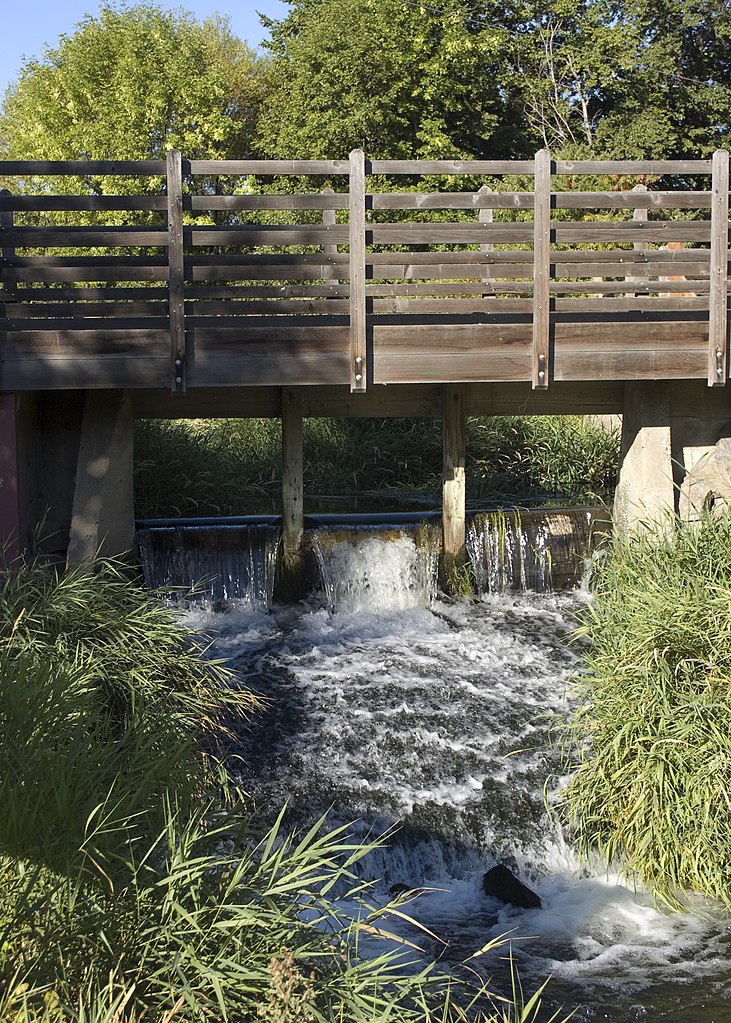
1 A weir, by the way, is a barrier across the length river or stream designed to adjust the flow of a stream. I had to look this up. 😅 Featured photo is a weir at the Thorp Gristmill in Thorp, WA. A. Balet, CC BY 3.0, via Wikimedia Commons

Have We Met? Poem Number 27

This poem may look straightforward, but it turns out that this is a technical masterpiece:

JapaneseRomanizationTranslation
みかの原Mika no haraLike Izumi River
わきてながるるWakite nagaruruthat wells up and flows,
泉川いずみがわIzumi-gawadividing the Moors of Urns
いつ見きとてかItsu mi kitote kawhen did I see her, I wonder,
こいしかるらKoishi karuranthat I should yearn for her so?
Translation by Dr Joshua Mostow

This poem was composed by Chūnagon Kanesuke (中納言兼輔, 877 – 933), or “Middle Counselor Kanésuké”. He is also known as Fujiwara no Kanésuké. He was the cousin of Sadataka (poem 25), and the great-grandfather of Lady Murasaki (poem 57). Lady Murasaki even used some of his poetry in her work, The Tales of Genji.

Because Kanesuke had a particularly nice residence just beside the dam of the Kamo River, he was also nicknamed the Tsutsumi (堤, “river bank”) Middle Counselor. This residence was a popular gathering place for the who’s-who of his time including Tsurayuki (poem 35) and Mitsune (poem 29). He is also listed among the Thirty-Six Immortals of Poetry as well.

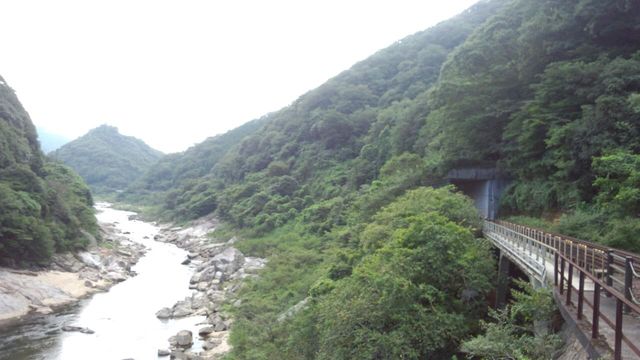
As Mostow points out, this poem is quite clever on a technical level. It uses a preface (the first three lines are a preface to the 4th), poetic place names (Izumi River is actually a real river called the Kizu-gawa 木津川 pictured above from Wikipedia), and pivot-words. The pivot word is izumi which can mean a spring (泉) which wells up, but also rhymes somewhat with the 4th line which says itsu mi as in “when did I see (her?)” (いつ見).

Interestingly though, Mostow points out that this poem may not actually be composed by Kanesuke given that it was originally listed as “anonymous” in the original anthology it came from. Also, as Mostow explains, it’s unclear from the poem whether this is a poem about lovers who met and cannot meet again, or lovers who actually haven’t met yet.

All in all, an interesting poem to examine by a famed poet of the day.

P.S. featured photo is of the Izumi River, near Kyoto, in modern times. Photo by 吉田宅浪, CC BY-SA 3.0, via Wikimedia Commons

Snowfall: Poem Number 31

Similar to the previous poem, this one deals with the moon, but I think this poem epitomizes the winter season:

JapaneseRomanizationTranslation
朝ぼらけAsaborakéSo that I thought it
有明の月とAriake no tsuki tothe light of the lingering moon
みるまでにMiru made niat dawn—
吉野の里にYoshino no sato nithe white snow that has fallen
ふれる白雪Fureru shirayukion the village of Yoshino
Translation by Dr Joshua Mostow

The author, Sakanoue no Korenori (坂上是則, dates unknown), is one of the Thirty-Six Immortals of Poetry, but otherwise nothing much is known about him.

This poem, as Professor Mostow explains, is similar to poem 29, and is part of a theme on “elegant confusion” which is a hallmark of Chinese poetry. Early poetry in Japan was still greatly indebted to Chinese poetry and many of the imagery, and idioms used in the Hyakunin Isshu anthology are not exception.

I happen to like this poem also because it has a lot of obscure, but cool Japanese poetic terms. We’ve seen ariaké discussed in poem 30. However, this poem also uses the term asaboraké (朝ぼらけ) which as we say in poem 64 means that period of time in the dawn, in either winter or autumn, when things are hazy. It’s a kind of slow, late dawn that you only find in that time of year. Compare with akatsuki (暁), which Professor Mostow explains can mean “dawn” any time of the year. Since asaboraké is used in two poems in the Hyakunin Isshu, it makes the kimari-ji for each poem particularly tricky.

The village of Yoshino that this poem refers to, is none other than the iconic village of Yoshino in Nara Prefecture.

Long Goodbyes: Poem Number 30

Hi all,

New year is here, and I guess it’s time to say “goodbye” to the old one. This poem is also happens to be about good-byes of another sort.

JapaneseRomanizationTranslation
有明のAriaké noThere is nothing so depressing
つれなくみえしTsurenaku mieshias the break of day and
別れよりWakare yorileaving you after
暁ばかりAkatsuki bakarihaving seen the heartless
うきものはなしUki mono wa nashimorning moon.
Translation by Dr Joshua Mostow

The author, Mibu no Tadamine (壬生忠岑, dates unknown), is one of the Thirty-Six Immortals of Poetry and was the father of Tadami (poem 41). He was also one of the official compilers of the official anthology, the Kokinshū, along with Ōshikōchi no Mitsune (poem 29).

By all accounts, this appears to be another famous “morning after poem”, similar to the one seen in poem 50. The term, ariake (有明) is a poetic term for the last-rising moon, in the last-half of the lunar cycle, which you can still see in the morning.1 On the other hand, as Professor Mostow points out, the fact that the moon was heartless could also imply lover who spent all night waiting to see his lover but was never received and finally went home at dawn.

Either way, the morning moon seems to carry a lot of significance for romantic types back then.

1 Similarly, akatsuki (暁) is a poetic term for daybreak.