Where to Purchase Hyakunin Isshu “Karuta” Cards

Edit: Revamped this page in January 2023 with a lot more information, updated Google Maps links and so on.

Edit 2: Revamped again in August 2023 with even more information.

One of the best ways to appreciate and celebrate the Hyakunin Isshu anthology (besides reading and reciting the poetry) is to play the traditional card game called karuta. I’ve written about it here, here and here before, but for a long time I never owned a set. My wife, who is Japanese, owns a set from when she was young, complete with a cassette tape for reciting the poems, but I wanted to own my own set while respecting her property.

It turns out that purchasing a karuta set can be really easy or somewhat hard, depending on whether you are in Japan or overseas. In Japan, they are easy to find in any local bookstore because kids in Japan often grow up learning the anthology and playing games (even if they lose interest later).

The good news is that you can get a set for relatively cheap (shipping might be pricey though) and there are plenty of good choices. A basic set, minus shipping, is about ¥1800 or $15 USD at current rates, while fancier sets get much more expensive.

This guide is to help folks who are interested in owning a karuta set navigate their options. If you are living outside of Japan, feel free to jump down to the “Purchasing Online” section.

In Tokyo

A while back, I found a good article on the Japan Times about a famous karuta store in Tokyo that has been selling karuta cards for 90 years named Okuno Karuta (奥野カルタ). This is the premiere place to go if you are in Tokyo, particularly in the Chiyoda Ward. You can find it here (Google Maps link):

According to their website they are:

The Jinbocho Station is the nearest one, and speaking from limited experience the Hanzomon Line is pretty easy to find and covers much of Tokyo.

I did contact Okuno Karuta about ordering online, and while they do have an online store, it usually only ships from within Japan. Your best bet is to simply visit the store in person, or plan to purchase online and ship to some place in Japan you can then pickup.

In Kyoto

If you are closer to the western half of Japan, or traveling through the Kyoto Area, there’s many great karuta shops to visit since it is essentially the home of the Hyakunin Isshu anthology.

My personal favorite is Tengudo (大石天狗堂), founded in 1800. This is the company that made the first karuta set that I purchased, and are located in the Fushimi ward of Kyoto (Google Maps link):

According to their website, the easiest ways to get there by train are:

Similar to Okuno Karuta, you can also order online, but it ships only within Japan.

Local Bookstores in Japan

Further, if you are in Japan, but not near Tokyo or Kyoto (as was my case in December 2022), you can also just visit any local bookstore and find karuta sets there. The selection can be more limited than a dedicated store. The first shop I went to had only one set, but Kinokuniya had several to choose from.

This is a nice middle-ground between big online sites like Amazon or Rakuten, and the smaller but hard to access mom-and-pop stores.

However, again, the shipping options will almost always be limited to Japan only.

Purchasing Online

And finally we come to the last, but most likely option: purchasing online.

If you can’t afford to go to Japan, and just want to get a set of Hyakunin Isshu cards for yourself, there are options for purchasing online.

If you only plan to play, and not read the cards, Tengu-do provides a minimal, tournament-standard set of torifuda cards, available on Amazon JP and Amazon US.1 English is available on Amazon JP.

The torifuda set from Tengu-do. It is a basic, no-nonsense set but still very nice.

But if you’re looking for a full set, maybe with a CD other things, Seattle Karuta Club has other helpful recommendations.

In some countries, Kinokuniya Bookstore has international online stores as well (example link for the USA) which can also ship karuta sets. The USA store can ship to Canada, USA and Mexico for example.

Finally, another option is proxy-buying. This is a niche option that lets you buy Japanese goods from smaller shops like Okuno Karuta or Tengudo, while still being accessible overseas. Japan Rabbit (formerly White Rabbit Express) is one such choice, Rakuten Global Express is another. I haven’t personally use either one, however.

If you go the Rakuten route, they usually have some English translations available, but it’s probably simplest to search for 百人一首カルタ to get accurate results, and then go from there.

Good luck and happy card hunting!

1 These Amazon links are “associate” links, so any purchases made through them give me a small amount of credit in the future.
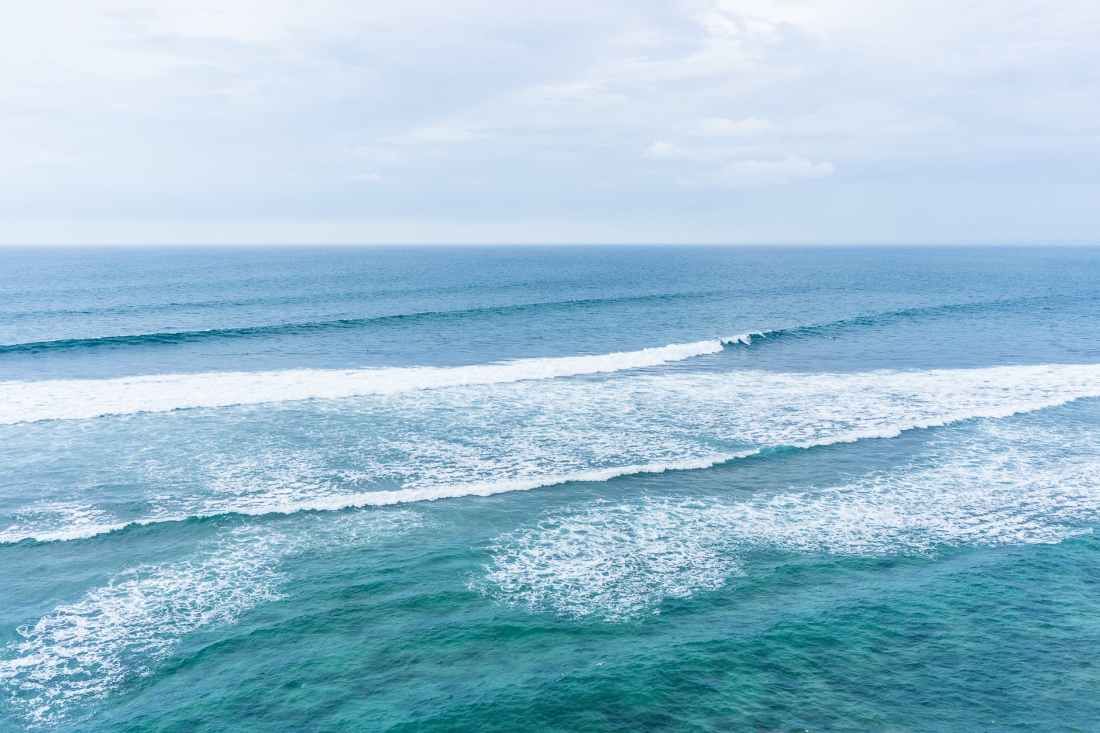
Waves and Clouds: Poem Number 76

This is a kind of continuation of the last poem, and is one of the most vivid in the Hyakunin Isshu:

JapaneseRomanizationTranslation
わたの原Wata no haraAs I row out into
こぎ出でて見ればKogi idete mirebathe wide-sea plain and look
久方のHisakata noall around me—
にまがうごうKumoi ni magouthe white waves of the offing
おきつしらなみOkitsu shiranamicould be mistaken for clouds!
Translation by Dr Joshua Mostow

The author of this poem has the rather grandiose name of Hosshōji Nyūdō Saki no Kanpaku Daijōdaijin (法性寺入道前関白太政大臣, 1097 – 1164), which means “Buddhist novice of Hosshoji Temple, and former Chief Adviser to the Emperor, and Chancellor of the Realm”. His personal name was Fujiwara no Tadamichi. Tadamichi was the recipient of Mototoshi’s complaint in poem 75, but my new book implies that Tadamichi was no saint.

The role of chief adviser (kanpaku 関白), was an increasingly common ploy in the 10th and 11th centuries used by members of the Fujiwara clan to control the Emperor. The cycle was to have the reigning emperor marry a daughter of a particular Fujiwara sub-clan. If an imperial heir was born, the head of that sub-clan of the Fujiwara would insinuate themselves as the regent (sesshō, 摂政) for the new child heir, while pushing out the old emperor using one excuse or another to justify their retirement. We see this very clearly in the Diary of Lady Murasaki, but also the struggle that affected Sadayori (poem 64) and Sei Shonagon (poem 62). Emperor Sanjō (poem 69) was one such emperor who was pushed out by his regent so his heir could take over early (with the Regent the power behind the throne).

Further, once the child heir is old enough to take the throne as emperor, the regent could seamlessly transition to chief adviser (kanpaku). With this process, the Fujiwara practically had a lock on the Imperial family, with few emperors able to resist this cycle.

Tadamichi as regent, was thus a literal king-maker, but was embroiled in a nasty succession dispute between the future Emperor Go-Shirakawa and the retired Emperor Sutoku (poem 77). This dispute spiraled out of control, resulting in the disastrous Hōgen Rebellion of 1156. The Rebellion in turn started the rapid decline of the Heian Court aristocracy, and the eventual rise of a series of samurai(not nobility)-led, military regimes until 1868. Saigyō Hōshi (poem 86) was devoted to Emperor Sutoku even after he took tonsure, and lamented the Emperor’s passing as a result of his failed rebellion.

The poem itself uses a lot of vivid imagery and pillow words that we’ve seen in other poems. For example the phrase, hisakata no was also found in poem 33. Other notable phrases:

  • wata no hara – field of cotton (the sky)
  • okitsu shiranami – the white waves offshore

It’s an interesting image to imagine: somewhere offshore where the clouds and the white waves blend together in the horizon.

Professor Mostow notes that this poem also has a possible political interpretation by some medieval commentators, because of the allusion “clouds” to “heaven” in the Confucian sense. In such interpretations, it implies that the author is confused by the affairs of the state. However, this interpretation is not shared by other commentators who believe this poem is literal, not allegorical.

In any case, a great poem.

A Peeking Moon: Poem Number 79

Because this is the Harvest Moon, I felt this poem was perfect for the occasion:

JapaneseRomanizationTranslation
秋風にAkikaze niFrom between the breaks
たなびく雲のTanabiku kumo noin the clouds that trail
たえまよりTaema yorion the autumn wind
もれ出る月のMore izuruleaks through the moon-
かげのさやけさKage no sayakesalight’s clear brightness!
Translation by Dr Joshua Mostow

The author is Sakyō Dayū Akisuke (左京大夫顕輔, 1090 – 1155), or “Grand Master of the West Akisuke”. His personal was Fujiwara no Akisuké, and he served as the administrator of the western “left” half of the capitol of Kyoto. In those days, the capitol was modeled off of the Chinese capitol of Chang-an of the illustrious Tang Dynasty, and was divided into a “western” and “eastern” half with an administrator for each one.

Additionally, Professor Mostow explains that Akisuke was the father of Kiyosuke (poem 84) with whom he had a poor relationship. Akisuke also inherited the Rokujō School of poetry in opposition to Shunzei (poem 83)’s Miko-Hidariké (御子左家) School. Although Akisuke was the rival of the father of Fujiwara no Teika (poem 97), the compiler of the Hyakunin Isshu, Teika apparently didn’t mind including his poems in the anthology anyway. Being a pre-eminent poet, Emperor Sutoku (poem 77) also commissioned him to compile a new anthology, the Shika Wakashū.

The poem itself is somewhat unusual in the Hyakunin Isshu, because the poem is completely straightforward. The poem literally paints a wonderful image of a hazy autumn moon-lit night, with no additional allusions. When you compare other poems in the Hyakunin Isshu about the moon, usually they have some additional meaning. This poem is unusually genuine and still well-composed.

So, as you enjoy the Harvest Moon this evening, take a moment to enjoy this poem if you can. If you’re in Japan, happy o-Tsukimi!

The Home Stretch!

Hi Everyone,

I have been actively updating the blog recently, and I realized that I’ve reached the 85% mark! That means there are about 15 poems left in the Hyakunin Isshu to post. I didn’t realize how far we’ve come this year.

I’m pretty excited, and I hope you are too. My goal is to complete the blog by the end of the year, but with the baby being born soon, who knows?

Behind the scenes though, I am working hard to complete the last poems, fix links, and find some cool things to share about the culture behind the famous anthology, Heian period culture, etc.

As always, thank you for reading. 🙂

Thanks for Nothing: Poem Number 75

This is another autumn-themed poem, but with an interesting story behind it:

JapaneseRomanizationTranslation
ちぎりをきしChigiri okishiDepending with my life
させもがつゆをSasemo ga tsuyu woon promises that fell thick
命にてInochi ni teas dew on sasemo plants—
れことしのAware kotoshi noalas! the autumn of
this year too
秋もいぬめりAki mo inumeriseems to be passing.
Translation by Dr Joshua Mostow

The author of the poem, Fujiwara no Mototoshi (藤原基俊, 1060 – 1142), was a leading poet of the famous Insei Period of Japanese history, along with his contemporary Toshiyori (poem 74), but according to my new book, was never particularly successful as a bureaucrat.

According to both Professor Mostow and my new book, this poem was written as a complaint to the former Chancellor and Buddhist lay-novice (upasaka) named Tadamichi, the same man who composed poem 76.

Mototoshi’s complaint is that his son, better known as Bishop Kōkaku of Kofukuji Temple, wanted to preside over the annual lecture on the Vimalakirti Sutra, an important Buddhist text. This occasion was known as the yuima-e (維摩会) and was rather prestigious within the bureaucratic monastic system of the time. Being the chosen lecturer would have fast-tracked Mototoshi’s son to other opportunities. In spite of Tadamichi’s promises to help, year after year Mototoshi’s son was passed up, and so Mototoshi sent this poem as a complaint.

The term sasemo is another way of saying sashimo, which in modern Japanese is the yomogi (ヨモギ) plant. In English, this is better known as the Japanese mugwort, pictured above. We saw the use of mugwort as well back in poem 51, though for a very different reason. The featured photo above shows Japanese Mugwort (yomogi, ヨモギ) leaves, photo by Sphl, CC BY-SA 3.0, via Wikimedia Commons.

Sasemo plants inspired an earlier, more Buddhist poem, which Mototoshi alludes to:

JapaneseRomanizationTranslation
なお頼めNao tanomeStill rely on me!
しめぢが原のShimeji ga hara nofor I will help those of
させも草Sasemo-gusathis world for as long
わが世の中にWa ga yo no naka nias there are sasemo-plants
あらむ限りはAramu kagiri wain the fields of Shimeji
Translation by Dr Joshua Mostow

This was attributed to Kannon, the Buddhist deity (bodhisattva) of compassion who promised to rescue all beings in the world. This poem was in the Shinkokin wakashū, number 1917.

Thanks to Professor Mostow for the double-translation this week. If you haven’t already, definitely show him some love and check out his excellent translations. 🙂

The Autumn Wind: Poem Number 71

Another great poem for Autumn:

JapaneseRomanzationTranslation
ゆうさればYū sarebaAs evening falls,
門田の稲葉Kadota no inabathrough the rice-plants before the gate,
おとれてOtozureteit comes visiting, and rustling
あしのまろやにAshi no maroya nion the reeds of the simple hut—
秋風ぞふくAkikaze zo fukuthe autumn wind does blow!
Translation by Dr Joshua Mostow

The poet, Dainagon Tsunenobu (大納言経信, 1016 – 1097) or “Major Counselor Tsunenobu”, also known as Minamoto no Tsunenobu, had a number of poets in his family. He was the father of Toshiyori (poem 74) and grandfather of Shun’e (poem 85), contributed a number of poems to the official anthologies and had a rival or two in his time.

Rice fields in Chiba prefecture, taken while aboard a moving train in 2019 by author

According to Mostow, this poem was composed by Tsunenobu when he was visiting the villa of his friend, Minamoto no Morokata. Unlike other poems of the era which are often composed for poetry contests, apparently he composed this while watching the view from the villa. The villa in question was in a place called Umezu (梅津), on the outskirts of Kyoto the capital. Nowadays, you can find Umezu within the suburbs of Kyoto now, but it’s interesting to imagine an earlier time when it was a country villa surrounded by rice fields, and to imagine a cold autumn wind blowing across them.

This poem catches the spirit of autumn better than many others, I feel. 🙂

A Brocade of Leaves: Poem Number 69

My favorite season, Autumn, is fast approaching so I thought this would be a good poem:

JapaneseRomanizationTranslation
あらし吹くArashi fukuIt’s the autumn leaves
三室の山のMimuro no yama noof the hills of Mimuro,
もみ葉はMomijiba wawhere the tempests blow,
龍田のがわTatsuta no kawa nothat are the woven
brocade floating
にしきなりけりNishiki nari kerion the waters of Tatsuta River!
Translation by Dr Joshua Mostow

The author, Nōin Hōshi (能因法師, 988 – ?) or “Dharma Master Nōin” was originally Tachibana no Nagayasu until the age of 26 when he took tonsure. From there, he traveled the provinces, composing poetry and contributed to various anthologies at the time. Because he was not tied to a politically prominent temple, he had more freedom than other monks in the Capitol to roam the countryside and write in his travels. My new book points out that he was eventually emulated by Saigyō Hōshi (poem 86) generations later.

Professor Mostow notes that this poem is unusual because it’s very straightforward with no hidden wordplay or anything. It’s just a nice, solid poem about Autumn.

As for the geography, Mt. Mimuro (三室山, mimuroyama) is in Nara Prefecture in Ikoma-gun, Ikaruga Village, while the famous Tatsuta-gawa River (竜田川) flows beside it. It was said in the old days that the gods would dwell at the mountain from time to time. In fact, you might recall hearing this river mentioned before all the way back in Poem 17. 😉

Mt Mimuro (Mimuroyama) and the Tatsuta-gawa River, photo by Kansai explorer, CC BY 3.0, via Wikimedia Commons

In those days, travel to places like Mimuro Mountain were generally hard to do for people, even the nobility. A day-hike into the mountains to see such a river was an expensive and exhausting affair as one had to bring their retinue, plan for food and supplies, etc.

So, many poems in the Hyakunin Isshu allowed contemporary people in those days to at least imagine what it would be like to visit even if they couldn’t afford to actually see it in person. Like a poetic “guidebook” in a sense. This is what makes poems like Nōin Hōshi’s so impactful, and why his travel writings were valued so highly: not only could he describe a place he had visited, but do skillfully using poetic verse. It helped to stir the imagination, just as it does for people living outside Japan today. 😏

P.S. For some reason, the last part of the Hyakunin Isshu has a lot of poems about Autumn in particular, so expect to see these soon amidst other things.