My First Karuta Purchase

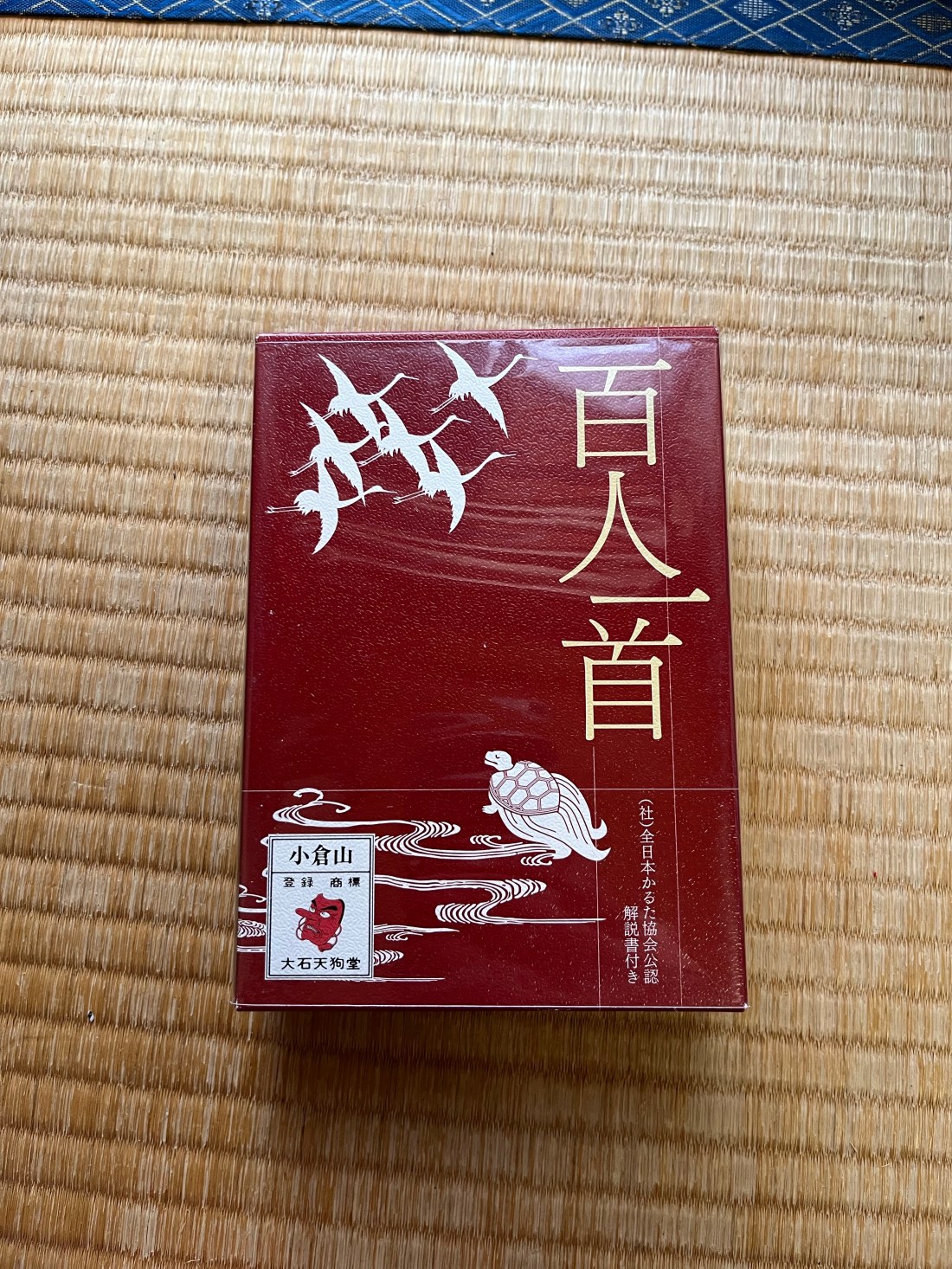
I finally did it! I got my very own karuta set of the hyakunin isshu.

Since we came to Japan earlier this week (just ahead of snowy weather, no less), my original plan was to go to the famous karuta shop in Tokyo: Okuno Karuta.

However, since we are here primarily for family matters, we are here for a narrow window of time, and because it’s fairly deep in Tokyo (and thus far removed from my in-laws home), getting there is probably not feasible. Plans might change, but I don’t think I will be able to visit this time around.

On the other hand, at a local bookstore I found a really nice, affordable set!

This set is made by Kyoto Tengu-dō, another famous karuta company. I love the box design. Inside, you can see the full set of yomifuda and torifuda cards:

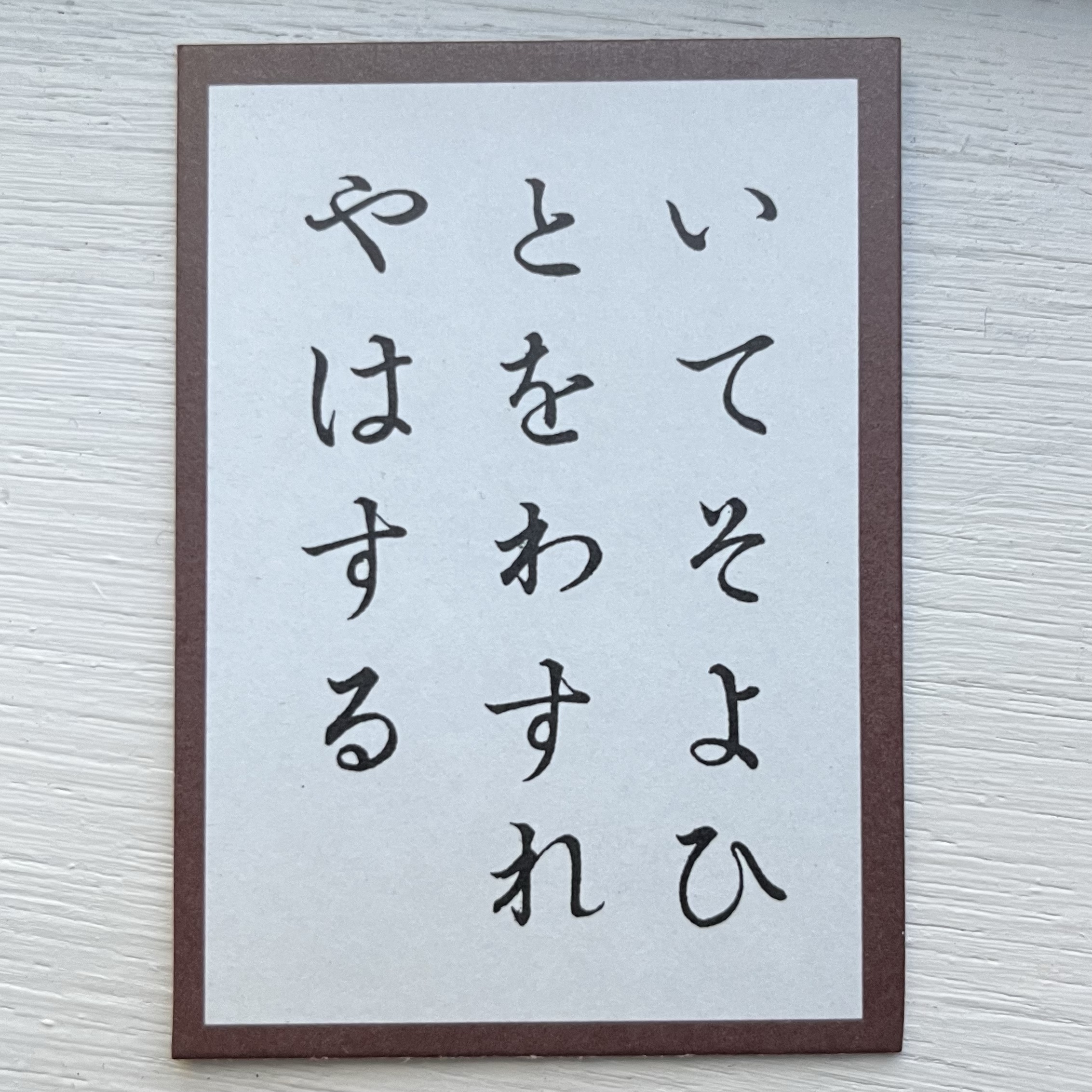
As the product link shows, this set was designed for beginners to karuta games, and the torifuda cards (the ones without pictures) are written in a very legible font, so they’re easier to newcomers to find cards on the fly.

The illustrations are different than what I normally see on karuta cards, but I found out later that this is more typical of handicrafts from Kyoto, versus more Tokyo-style art. Also, the more I look at them, the more I appreciate the amazing detail, such as the clothing patterns, curtains, etc. It’s really fun just to flip through the cards and look.

This set cost me ¥1700, so about $12-15 (depending on exchange rate), which as a gorgeous starter set is quite good deal in my opinion.

Also, I suspect that this won’t be the last set I collect either. 😜

P.S. I had also thought about ordering from Okuno Karuta, but I can’t be sure it would arrive at my in-laws house in time due to holidays and our short schedule. Like I said, I am in no rush and will visit another time.

Dec 2022 Update Done!

Dear Readers,

If you’re following on this blog, which I started way back in 2011, I am happy to report that the updates I made are now done. I made several updates and fixes, including:

  • Fixing broken links. There were quite a few (such is the ephemeral nature of the Internet).
  • Converting poem text into HTML tables for easier comparison.
  • Replaced some photos with updated photos from Wikimedia or Pexels where appropriate, proper citations added.
  • Consistent formatting updates to each poem page. When I first wrote them, there was some drift between how certain pages looked vs. other, newer pages.
  • Fixed or replaced, a few non-poem posts that were just really outdated.
  • Behind the scenes, fixed markup code in WordPress. The code I
  • used predated the current design, and led to some weird behavior.
  • Edited and rewrote some historical descriptions for clarity, or expanded on some details.

Anyhow, thanks all for patience, and please continue to enjoy!

P.S. I will be heading to Japan in a few days with the family (first time since pandemic), and hope to provide some updates for this blog, along with the other blog.

Hyakunin Isshu Crackers, Redux!

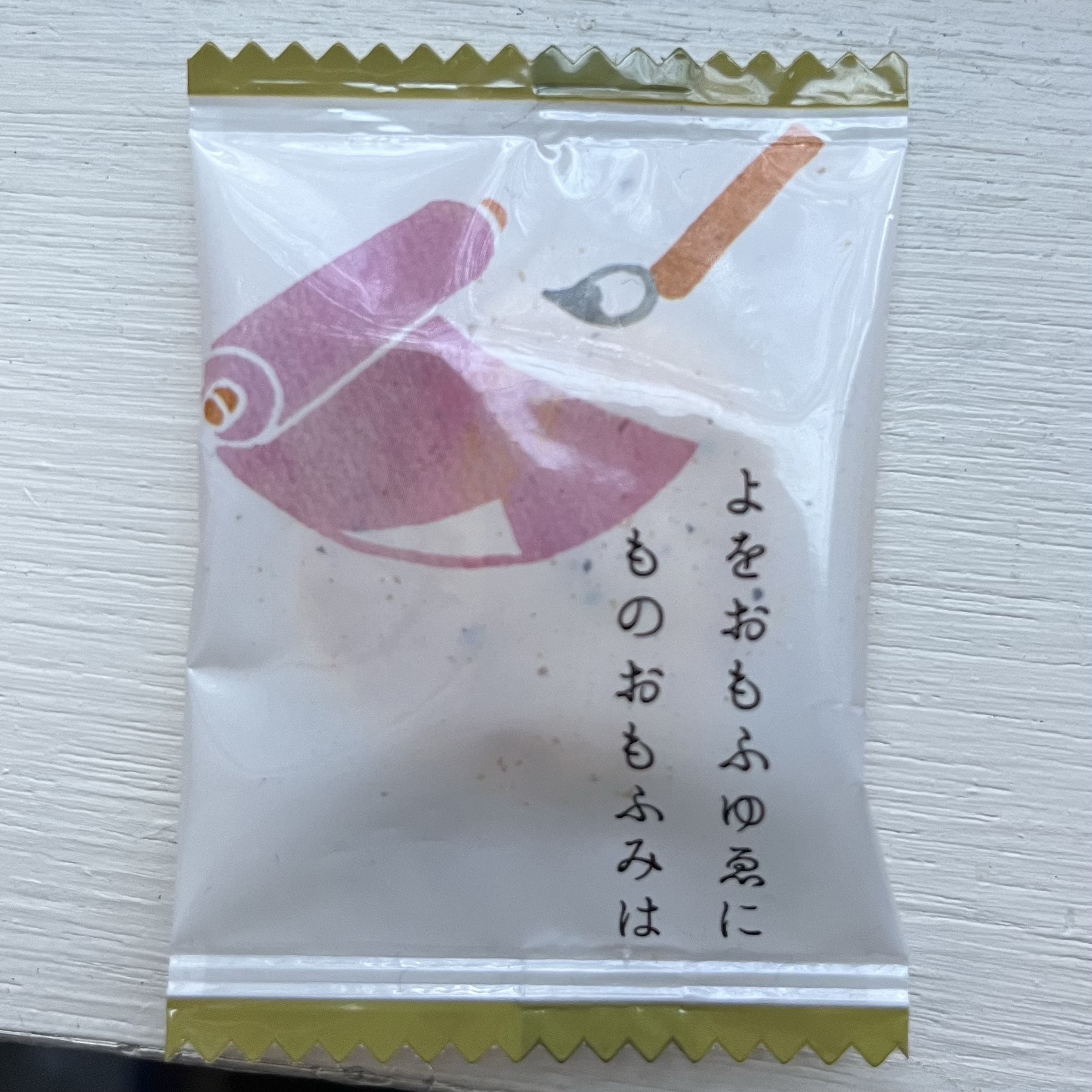
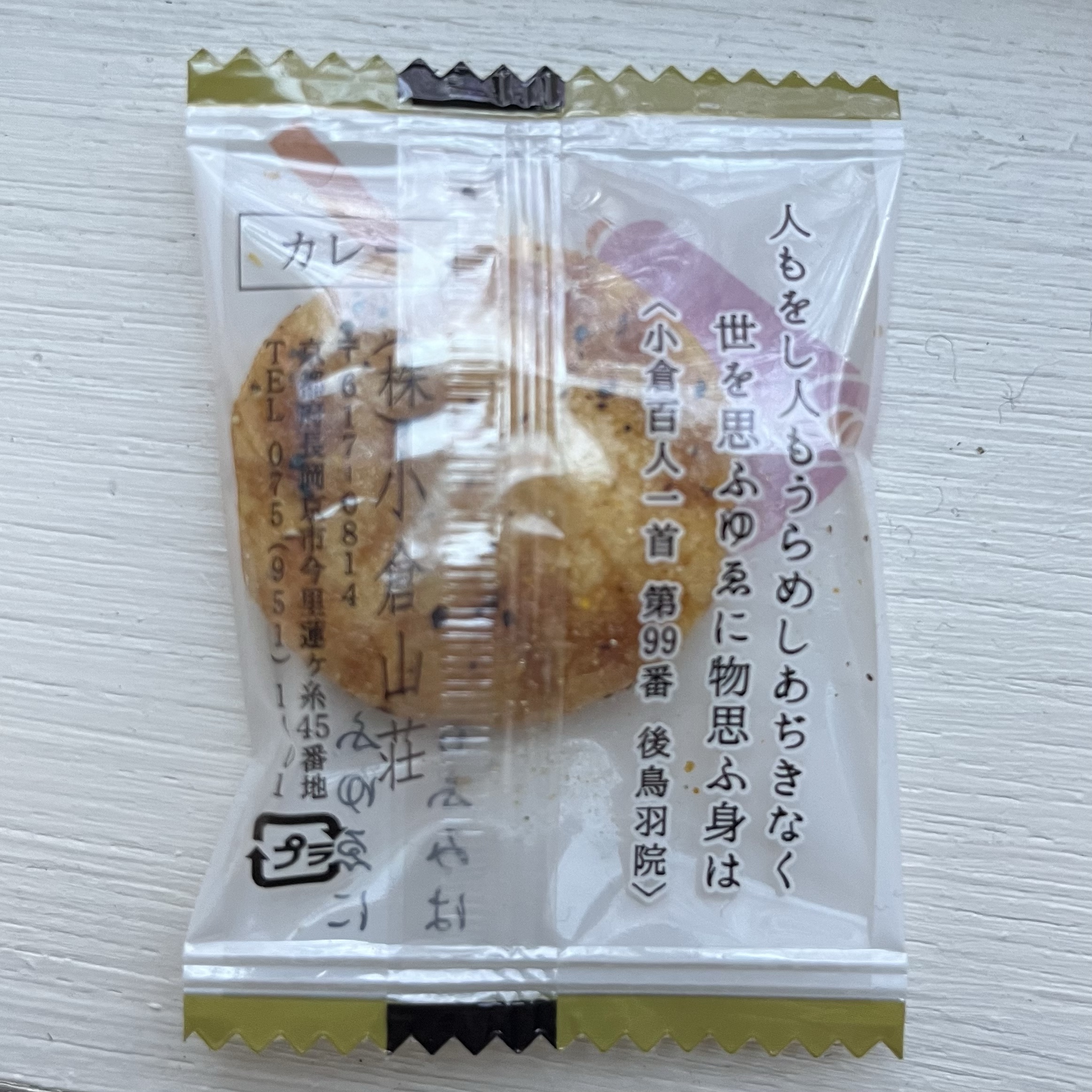
In Japan, gift-giving (omiyagé お土産) among friends and relatives is a common tradition, and recently a friend returned from Japan and gave us some special crackers (senbei) featuring poems from the Hyakunin Isshu. The crackers come in different flavors, and the wrapper each has a random poem.

I got a curry-flavored one:

The first two verses of the poem, poem 99, are written on the front. On the back are the remaining verses:

Hyakunin Isshu-themed crackers are sold here and there, and I’ve posted about it in the past, but it’s still nice to get them from time to time.

P.S. This vendor sells Hyakunin Isshu themed senbei crackers as well (it was the vendor featured in the original post).

Karuta Competitions

Since initially making this blog way back in 2011, I have learned that you can now find karuta competitions (競技かるた kyōgi karuta) online on the official Youtube channel!

Here’s a recent high school playoff competition in 2022 for men:

and ladies playoff competition:

As you can see, it’s a very formal, elegant affair, with traditional clothing, customs, etc. Good manners and sportsmanship are emphasized.

Hyakunin Isshu karuta sets, such as those used in games and competitions, are always divided by two sets of cards:

  • yomifuda (読み札) cards, illustrated cards with entire poem on them, and
  • torifuda (取り札) cards that only contain the last only the last 2 verses. Illustrations below.
The yomifuda card for poem 58, with the last two verses circled in blue. These correspond to the matching torifuda card on the right.
The matching torifuda card with the last two verses. Torifuda cards are always written in simple hiragana script for easy reading.

I admit that I am still learning the rules, but the gist is that 50 of the 100 total torifuda cards are laid out in a set pattern of cards on the floor, half (25) of them on one player’s side, the other half (25) with the other player.

A diagram of the play field that I made using LibreOffice

The yomité (読手, “reciter”) reads a randomly select poem in full using the illustrated yomifuda cards above.

The yomifuda card for poem 58, from my wife’s karuta set.

The players have to wait until the first 3 verses are completed, then if the matching torifuda cards on the field (i.e. the last 2 verses of the poem), the players can try to take that card. Whoever touches it first wins that round, and the card is taken off the field. Usually, players will swat the card aside because it’s just faster and keeps the other player from touching it.

If the card had been on the opponent’s side (相手陣, aitejin), then not only is the card taken off the field, but you also select a card from your side (自陣, jijin), and send it over to their side. Usually the players will raise their hand to pause the match while they decide which card to send over. The end result is that the cards on your side are reduced by 1, the opponent’s remain unchanged. If the card you took was on your side, then your side is reduced by 1 anyway. No transfer needed. When watching the videos, the player will the lower number of cards is winning.

Side note, if the matching torifuda card was not on the board anyway, then it’s considered karafuda (空札, “empty card”), and the game moves onto the next round.

The player who removes all cards from their side is the winner.

Anyhow, it’s pretty interesting to watch, even if the competitions can take an hour or more. You can see how explosively fast the players are.

Finally, I’d like to give a shout out to groups such as the Boston Karuta Club and Seattle Karuta Club. They have plenty of helpful links in English on getting started with karuta, rules and training resources, among many other great resources!