Sucking Up To The New Boss: Manyoshu Poem 235

Although this blog is primarily about the Hyakunin Isshu, I enjoy when things overlap with other Japanese poetry anthologies, and history.

Let’s talk about two of the poets: Empress Jitō (poem 2, はるす) and Kakinomoto no Hitomaro (poem 3, あし). After Empress Jito ascended to the throne, she was visited by Hitomaro, the revered court poet at the time, who composed the following poem:

Original ManyoganaModern JapaneseRomanizationRough Translation1
皇者大君おおきみOkimi waAs my sovereign
神二四座者神にしませばKami ni shimasebais a living kami,
(see below)
天雲之天雲のAmakumo noshe builds a temporary
雷之上尓いかづちの上にIkazuchi no ue niresidence atop
廬為流鴨いおりせるかもIoriseru kamoIkazuchi Hill.
1 I didn’t like any of the existing translations, so I tried to translate here. Any mistakes are my own.

At first, this poem seems like a simple case of a courtier sucking up to the new boss, but as we’ll see there’s more to it. This poem is very simple in some respects, and surprisingly difficult in others.

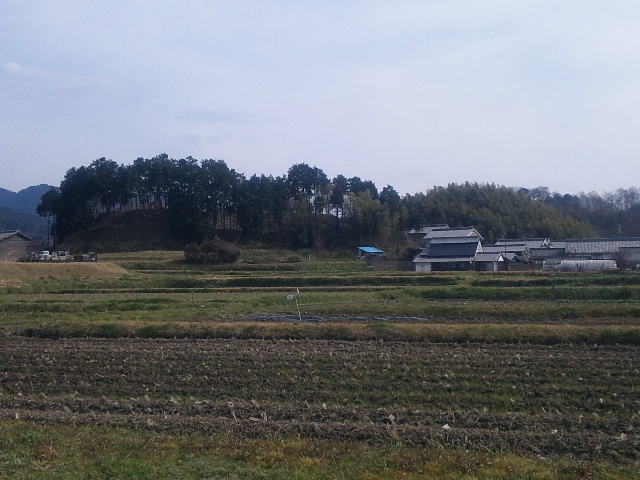
I had to check multiple sources to make sense of it, including my book on the Manyoshu, but the essence of the poem is that Kakinomoto no Hitomaro is describing Empress Jito as a living kami, and that because of her “supernatural abilities”, she can build a residence atop a small hill called Ikazuchi. Ikazuchi Hill, known as Ikazuchi no Oka (雷丘) can be seen in this photo, more information here.

But what the heck is kami? This is surprisingly tough to explain to Western audiences. It is deeply rooted in Shinto religion, and more closely matches something like ancient Greek religion where there were divine spirits both great and small. Small nature spirits would be worshiped as daimon (not to be confused with modern “demon”), and the Olympian gods were venerated too. Even the Olympian gods had “big forms” and small “household forms” worshiped at the hearth. It wasn’t unusual for Zeus, king to the gods, to also be venerated at a home shrine to protect the family assets, or a roadside marker.

In the same way, Shinto has countless kami. It’s not quite right to translate them as “gods” because the meaning is a little different, and “spirits” is not quite right either. But one could include both gods and spirits under the divine label kami. Just like in Greek religion, very talented people could also be venerated as kami after death, such as Hercules. I mention this because Sugawara no Michizane (poem 24 of the Hyakunin Isshu, この) was similarly venerated after death and became something like the Kami (god) of Learning.

This concept of great personages being kami is called arahito-gami (現人神) and that’s basically what Kakinomoto no Hitomaro is describing Empress Jito. Due to the divine ancestry of the Imperial family, this isn’t that surprising, but my book alludes to another reason for this. The turmoil caused by Emperor Tenji (poem 1 of the Hyakunin Isshu, あきの)’s family and his brother Emperor Tenmu’s family for control of the throne meant that Empress Jito (Tenmu’s wife/niece) ascended the throne on shaky ground. Female sovereigns were quite rare in Japanese history, and with the family fighting for control of the throne, Hitomaro was helping her reassert her divine status and legitimacy as the proper ruler of Japan.

The issue of arahito-gami comes up even as recently as 1946, when the reigning Emperor at the time (Emperor Showa, Hirohito), was requested to renounce his divine status after World War II. This declaration used some hair-splitting language about the Emperor’s divinity (or lack thereof), and various interpretations persist today.

…. but that’s something more knowledgeable people could explain better.

As for me, I find it fascinating (and a bit amusing) that these poets I know from the Hyakunin Isshu got embroiled in a succession dispute, but also that Hitomaro helped bolster Empress Jito’s credentials at a time when she was rebuilding the nation again while probably sucking up just a little too.

P.S. the featured photo above is Ikazuchi Hill, photo by Terumasa, CC BY-SA 3.0, via Wikimedia Commons

P.P.S. On a completely unrelated fact, while writing this post I learned that the Chinese characters for 雷丘 also mean “Raichu” as in the Pokemon.
From Darkness Into Darkness: Lady Izumi’s Final Poem

In a lesser-known Imperial poetry anthology called the Shui Wakashu (拾遺和歌集), poem 1342, is recorded what is believed to be Lady Izumi’s1 final poem:

JapaneseRomanizationTranslation
暗きよりKuraki yoriThe way I must enter
暗き道にぞKuraki michi ni zoleads through darkness to darkness —
入りぬべきIrinu bekiO moon above the mountains’ rim
はるかに照らせHaruka ni teraseplease shine a little further
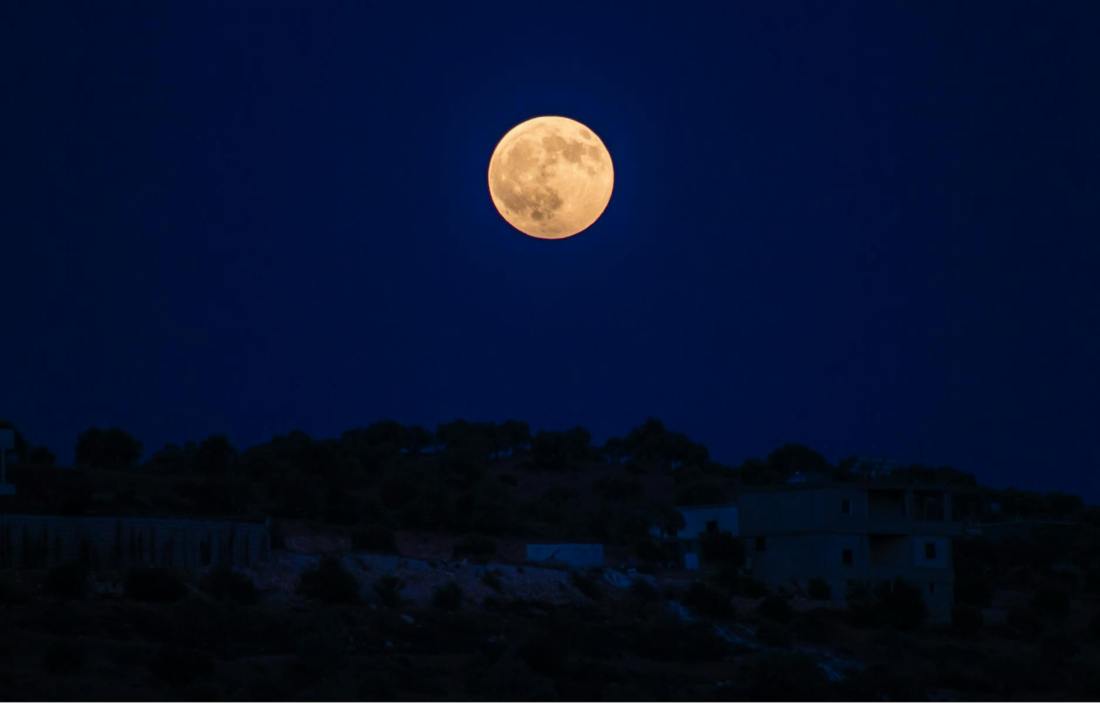
山の端の月Yama no wa no tsukion my path.
Translation by Jane Hirshfield and Mariko Aratani in “The Ink Dark Moon

This poem was addressed to a Buddhist monk named “Shoku” and includes several Buddhist allusions. The most important is the phrase “darkness to darkness”, which comes from chapter seven of the Lotus Sutra:

….from darkness they [living beings] enter into darkness,
to the end never hearing the Buddha’s name [hear the Dharma].

translation by Burton Watson2

This refers to the Buddhist notion of Samsara, the near-infinite, aimless wandering that living beings undergo lifetime after lifetime, like a cosmic rat race. Such beings, who have yet to hear the Dharma [the teachings] of the Buddha, will continue to wander lifetime after lifetime without rest.

Thus, Lady Izumi is asking Shoku to help shine a light in the darkness for her, so that she may find the way [follow the Buddhist path].

I had trouble deciding which blog to put this in, since it covers both themes, but I decided to post here since the poem was introduced in the new historical drama about Lady Murasaki, Izumi’s contemporary.

Lady Izumi was, to put it mildly, a complex woman. She had incredible talent, and found herself in one scandal3 after another as powerful men fell at her feet, plus she earned scorn from other women such as Lady Murasaki. And yet, she was also very kind, devout and struggled to balance both the religious and worldly aspects of her life, while raising her orphaned granddaughter.

Hirshfield and Aratani note that if this poem is indeed her last, the final word she ever wrote was tsuki (月), “moon”.

1 poem 56 in the Hyakunin Isshu (あらざらん)

2 alternate translation by Murano reads: …they go from darkness to darkness, and do not hear of the names of the Buddhas.

3 this was a conservative, narrow, aristocratic society where men frequently had affairs, but it was much more scandalous if women did. The idea that women could want, and enjoy sex, was not something people really accepted at the time.

Where It All Began: Mount Ogura

Hello everyone,

I just returned from another trip to Japan,1 and we got to spend a bit of time in Kyoto. By accident, I also found Mount Ogura, and the place where Hyakunin Isshu was compiled! But first, let’s backup and explain a bit of history first.

Kyoto was the capital of Japan from the 8th century to the 19th century, and so many well-to-do families lived here. This aristocracy wrote countless waka poems that were compiled into official poetry anthologies from time to time,2 but the Hyakunin Isshu was not one of them. It was compiled by Fujiwara no Teika (poem 97) as a favor to his in-laws. Teika had been a compiler of one of the major anthologies, the Shin-Kokin-Wakashu, but was now in retirement after his liege lords (poem 100 and poem 99) were exiled in the upheaval of the Jokyu Rebellion. He resided in a small villa on the west side of Kyoto on the hillside of Mount Ogura, and was tasked with selecting the very best 100 waka poems that his in-laws could decorate their home with. Teika’s excellent poetic taste led to the Hyakunin Isshu we celebrate today.

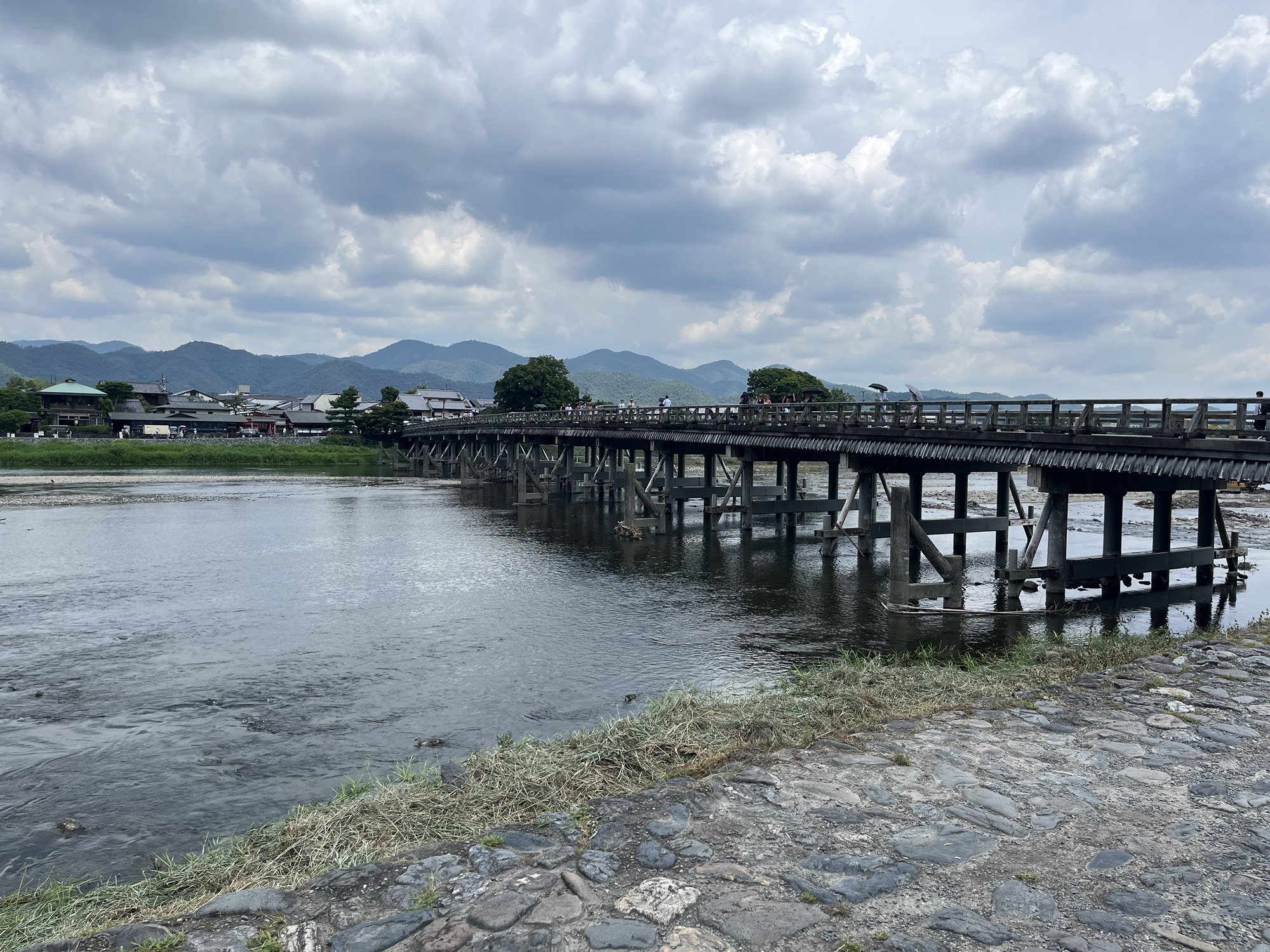
Anyhow, back to present day. I was with the family, and we visited a part of western Kyoto called Arashiyama (嵐山). It’s a very scenic place, with famous bamboo forests, and an iconic bridge named Togetsu-kyō (渡月橋):

Since we visited in the summer, it was extremely hot and muggy, so by lunch time we were exhausted and tired. We went to a local cafe and had lunch. Since we were in Kyoto, I assumed there would be many famous historical places related to the Hyakunin Isshu,3 but I was having trouble finding them on GPS, so I was disappointed.

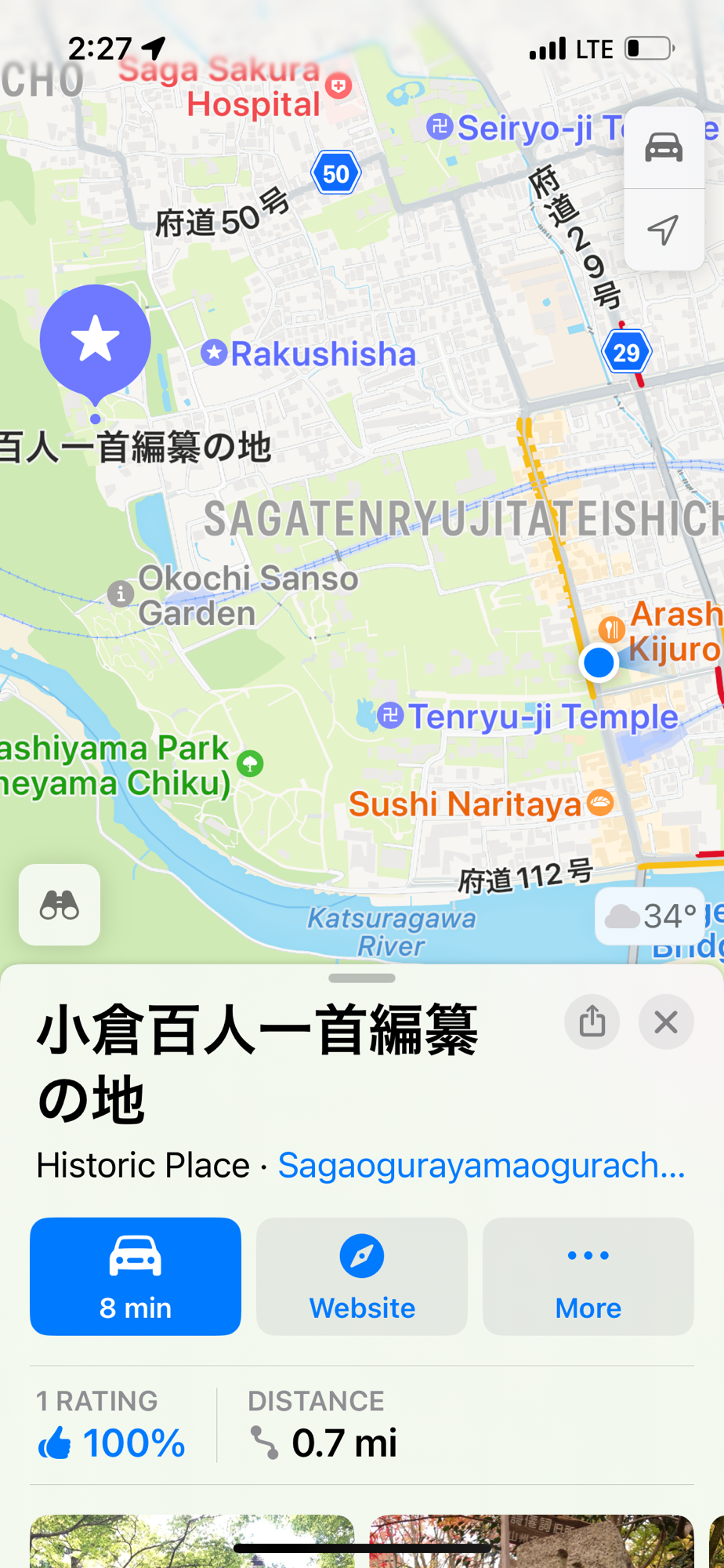
Then I noticed the following spot on my map app:

小倉百人一首編纂の地 (ogura hyakunin isshu hensan no chi) … the place where the Hyakunin Isshu was compiled…? Wow, that’s only 15 minutes by foot from where I was at!

The family was exhausted and sweaty, and were planning to return to our hotel, so I didn’t want to drag them uphill in the heat. I told them I’d be back, and I took off for the place on the map. It turns out that the properly had been converted to a Buddhist temple named Jojakkō-ji (常寂光寺) in the 17th century (a common practice in Kyoto). You can find the official website here.

This is Mount Ogura today.

I followed the map directions and made it safely to Jojakko-ji Temple:

There is a small entry fee, but once I paid that, I got to the second gate here:

The site of the Ogura Hyakunin Isshu is just down the path to the right, before the gate. I made the mistake of going up the stairs instead:

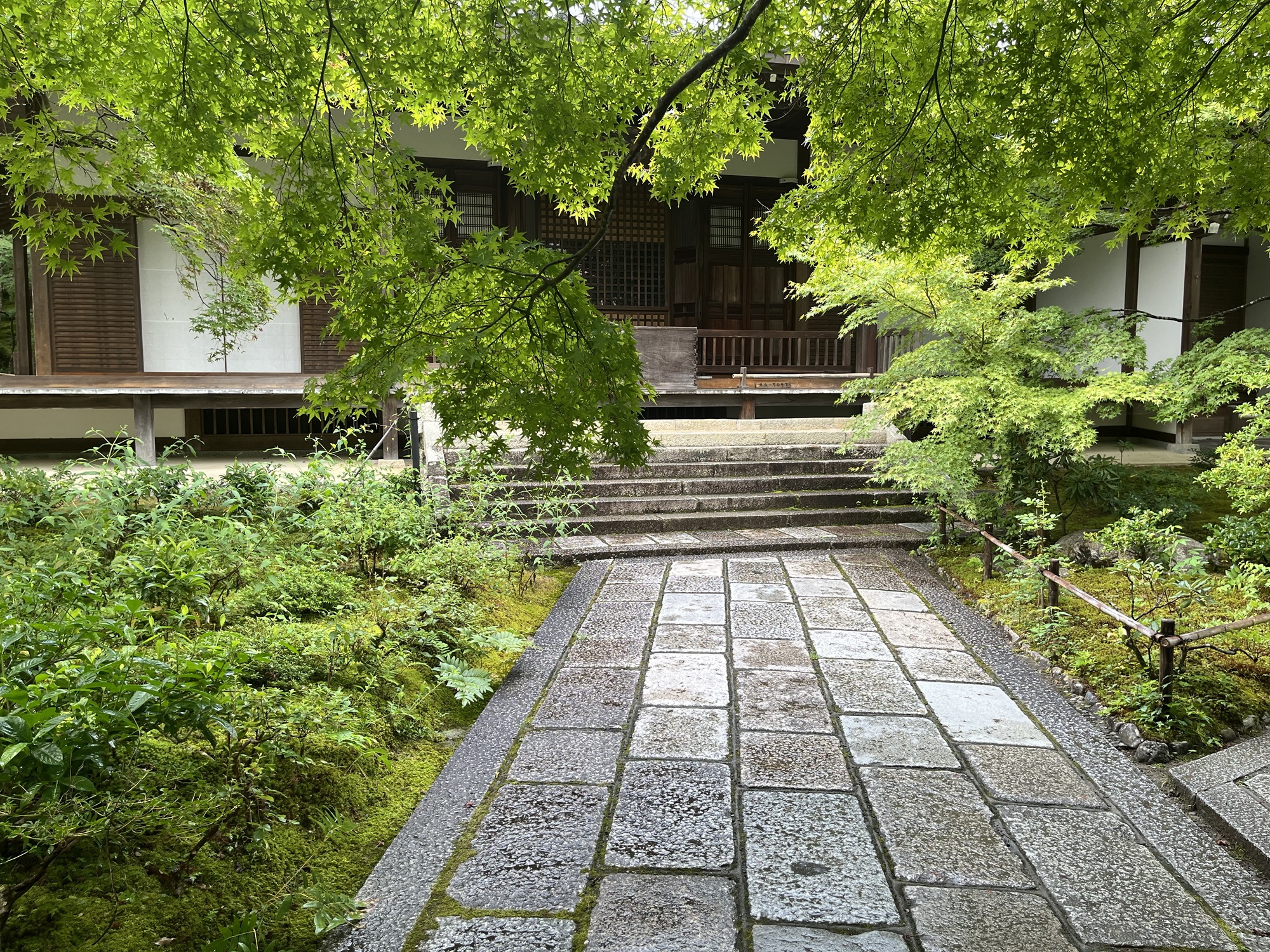
Jojakko-ji Temple is quite scenic actually:

… but it was very late in the day, my family was waiting back at Arashiyama, and I had to hurry. This was my one shot, probably in my lifetime, to find this place, but the temple maps, nor the website show precisely where it was.

Finally, I found it:

The photos from the prefectural website look a lot better than mine (good lighting helps). But there it was, the actual site where the Ogura Hyakunin Isshu was compiled!

The stone marker is pretty small and somewhat eroded, but there was no mistaking it.

Since I was short on time, I paused and said a quick “thank you” to Fujiwara no Teika and then headed back.

If you are fan of the Hyakunin Isshu, and you are in the Arashiyama area of Kyoto don’t miss this small but significant site.

P.S. while at Jojakko-ji, I met a nice Australian couple who had just finished their visit. They told me that at the top of the temple you can see a really view of Kyoto. I didn’t have the time to see it for myself, but if you go, don’t pass up the chance.

P.P.S. I forgot that, ten years ago, I had made a post about Mount Ogura. You can see the Togetsu-Kyo bridge here too.

1 We return every year when possible to visit my wife’s in-laws, and let the kids spend time with their relatives, learn more Japanese, etc.

2 Many earlier poems were also composed at a time when Japan’s capital moved around (Nara, Fujiwara-kyo, Asuka, etc) before settling down in Kyoto. See the Manyoshu for further details.

3 I did actually find one other place we visited earlier in the day, but more on that in an upcoming post.

Hello from Japan, new items

Hello readers,

I am writing this post while staying with my in-laws house in Japan. We will be doing a bit of traveling later, but are mostly fighting jet lag and record heat + humidity for now.

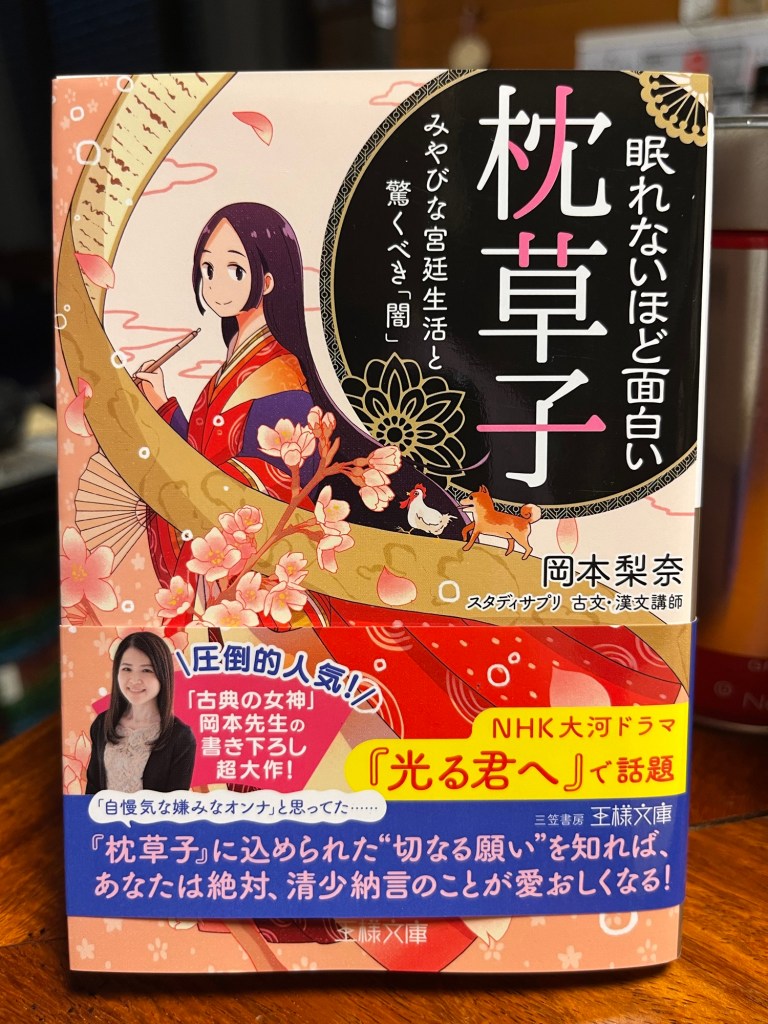
In the meantime I am excited to share some items I picked up, including these new books:

The first book explores the Pillow Book by Sei Shonagon, the second Lady Murasaki’s diary. These texts are both pivotal to appreciating the life and culture of people back then, the same people who composed the poetry of the Hyakunin Isshu. It’s a window to a world that simply doesn’t exist anymore.

Further, this book series, 眠れないほど面白い (nemurenai hodo omoshiroi, “so interesting you can’t sleep!”) has been a huge boon for the blog. It’s provided a lot of fun, historical information about the Heian Period, the Hyakunin Isshu, the Manyoshu, etc., that is simply not available in English. The Japanese is sometimes difficult to read at my level, but it’s been a labor of love, so I enjoy the challenge and have been learning a lot. So I am excited to delve into these two books as well.

Also, it’s noteworthy that both books above mention the current drama series 「光る君へ」as a tie-in.

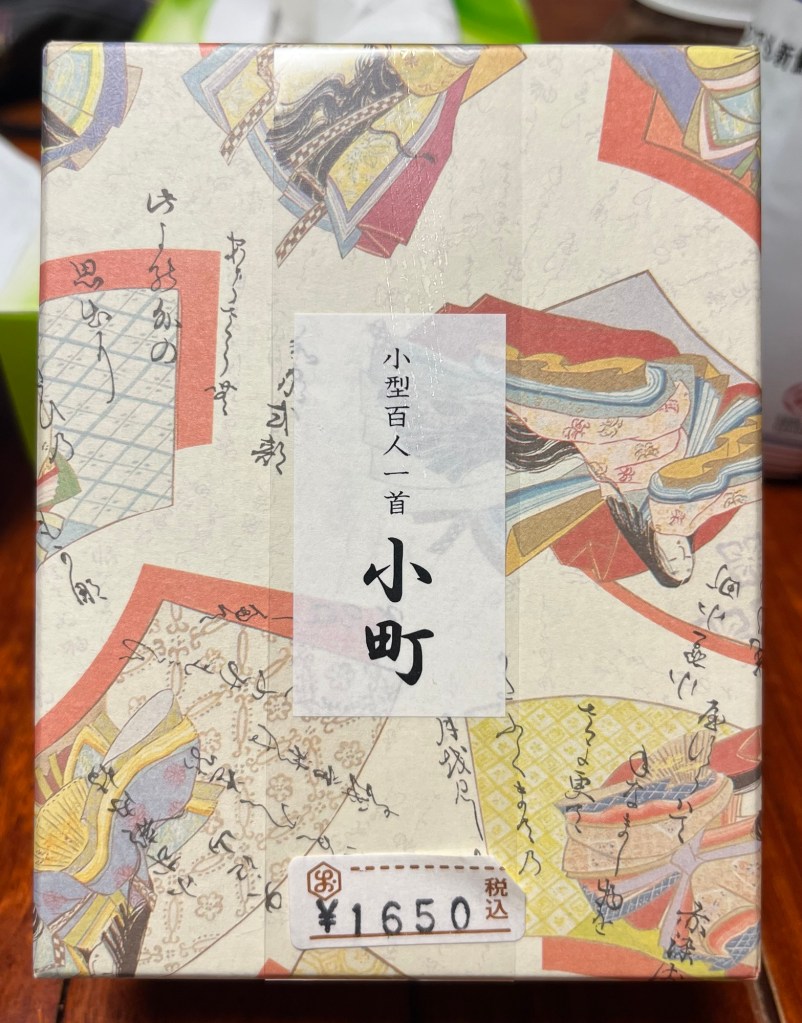
Yesterday, on a day trip to Tokyo I visited the Karuta shop Okuno Karuta (奥野かるた店). It was very easy to find from the Jinbocho train station (just head left and walk down a few blocks). The store was larger than the Tengu-do and includes lots of neat card sets not related to Karuta. I was on a budget so I tried not to spend too much. I did pick up a mini Karuta set though:

This set looks just like the first set I got, both Tengu-dō brand, but roughly half the size. It’s not suitable for competitive karuta but it’s cute and fun to own.

Anyhow, the staff at Okuno Karuta were very nice and helpful. While I was perusing, a tour group of elderly Japanese came through for a while, and the staff had to handle the rush of customers, before things quieted down again.

Hopefully I can post more updates soon.

P.S. also picked up an obscure Fire Emblem game too: