A Look at the Ise Stories: a Gentleman’s Tales

Hello dear readers,

Fall is approaching, and it reminds us of fall leaves, and famous poems of the Hyakunin Isshu such as the chihaya poem (poem 17) among others….

Throughout the blog, I’ve tended to focus on the lady authors and poets because it’s so rare to see women get credit for writing in the pre-modern era. There was an explosion of feminine talent in the Heian Period (8th – 12th century) that was not repeated until modern era in Japan, and it’s been fascinating.

However today, I wanted to highlight one particular text called the Ise Monogatari (伊勢物語). Our illustrious Dr. Joshua Mostow who has contributed much to this blog translates the title as the “Ise Stories” in his translation, but other translations call it the Tales of Ise. You can decide which one you prefer. Since Dr Mostow is a cool guy, and done much for the field, I will use his translated title. For this post, I am using the translation by Dr Mostow and Dr Royall Tyler.

Unfortunately, we still don’t know who the actual author of the Ise Stories was. In fact, Professor Mostow explains that the prevailing theory is that the Tales was composed over decades, in stages, possibly by different authors. Unlike the later Tales of Genji, or the Gossamer Years, or the Pillow Book, which were all clearly composed by one author, the Tales of Ise has a murkier development.

Anyhow, the Ise Stories is not a modern story, with narrative arc, nor does it have an ending. Instead, the Ise Stories are a series of short anecdotes about an anonymous prince who leaves the capitol of Heian (modern day Kyoto), and journeys east to the hinterlands for a time. In fact, you could probably call the Ise Stories the “Anecdotes of Ise With Lots of Poetry Thrown In”. The later work, the Tales of Genji, has a similar format.

The hero of the story, a young, charming prince who travels east with his entourage and has a few love trysts along the way, is a kind of idealized Heian-period aristocrat: a gentleman with an excellent pedigree, and talent for poetry to boot. Each story includes at least one waka poem, the same kind used in the Hyakunin Isshu, often more. Why so much poetry? Many times these were used as a back-and-forth way of greeting someone from afar, or saying “hello” to a promising lady, so a chapter might have multiple poems in the form of dialogue.

For example, section 14 deals with a tryst between our protagonist and a provincial lady in remote Michinoku province (a place also mentioned in poem 14 of the Hyakunin Isshu). She writes to him the following poem:1

Original textJapanese romanizationTranslation
なかなかにNaka-naka niSo if, after all,
恋に死なずはKoi ni shizanu waI am not to die of love,
桑子にぞKuhako ni zoI know just the thing;
なるべかりけるNarubekarikeruI should have been a silkworm,
玉の緒ばかりTama no wo bakarifor that little life’s short span.

Our protagonist was not impressed by her, as her poem “reeked of the country[side]”, but slept with her anyway. Classy guy.

Then, he left before dawn and she lamented:

Original textJapanese romanizationTranslation
夜も明けばYo mo akebaCome dawn’s early light
きつにはめなでKitsu ni hamenadeoh yes, in the tank you go,
くたかけのKutakake noyou obnoxious bird,
まだきに鳴きてMadaki ni nakiteto learn to cock-a-doodle
せなをやりつるSena wo yaritsurumy darling away too soon.

The protagonist then remarked he was going to the capitol, but left behind a “charming” poem:

Original textJapanese romanizationTranslation
栗原のKurihara noIf the Aneha
あねはの松のAneha no matsu noPine here at Kurihara
人ならばHito narabaonly were human
都のつとにMiyako no tsuto ni“Come along with me,” I’d say,
いざといましをIza to iwamashi wo“you’re my gift to the City.”

According to the Ise Stories, she was much impressed and thought he was in love with her, but the commentaries suggest he was being condescending by implying that “if only she were worthy of Courtly life at the capitol”. Damn.

But what’s the source for all this poetry and narrative?

The origins of the Ise Stories is somewhat of a mystery, but there is strong evidence that the central character was heavily based upon a real aristocrat named Ariwara no Narihira (825 – 880), the same man who composed the aforementioned poem 17 (ちはやふる), and also composed what’s considered the greatest poem about cherry blossoms ever composed. Some of his poems in the old Kokin Wakashu imperial anthology were re-used in the Ise Stories as well.

In addition to his poetic genius, the real life Narihira was a playboy and had many relationships, even by the standards of Heian-period aristocracy. Sometimes this got him into trouble. The Ise Stories begins with an explanation that the anonymous prince left the capitol after having an affair with Emperor Seiwa’s consort. Coincidence? I think not. 🤔

Nonetheless, the Ise Stories is a whimsical and irreverent look at Heian Period culture and how the aristocracy interacted with people in the provinces, even when it was somewhat condescending. Court culture was unlike anything else in Japan at the time, and this reveals some interesting things that are not always conveyed in other works of the time.

1 Mostow and Tyler explain that the young woman’s poem was a re-working of an older poem from the Manyoshu, poem 3086:

Original ManyoganaModern JapaneseJapanese romanizationTranslation
中々二なかなかにNaka naka niNot this lukewarm
人跡不在者人とあらずはHito to arazu walife that we humans live–
桑子尓毛桑子にもKuhako ni moa silkworm
成益物乎ならましものをNaramashi mono woI would rather be,
玉之緒許玉の緒ばかりTama no wo bakarihowever short its life.

Fall Longing: Manyoshu Poem 488

Back to our regularly scheduled program, I wanted to share a neat little poem, composed by none other than Princess Nukata using the theme of Autumn and of a night tryst:

Original ManyoganaModern JapaneseRomanizationRough Translation
君待跡君待つとKimi matsu toAs I wait for you
吾戀居者が恋ればA ga koi orebain anticipation
我屋戸乃宿戸やどA ga yado nothe blinds
簾令動簾動かしSudare ugokashiof my window flutter
秋之風吹秋の風吹くAki no kaze fukubut it is only the autumn breeze…

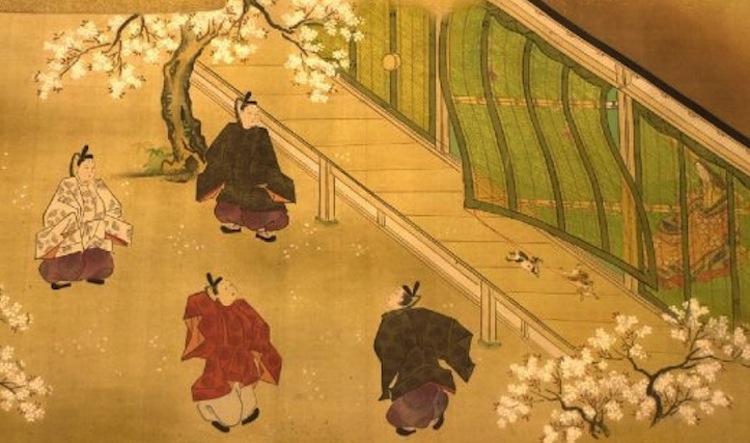
Princess Nukata needs little introduction in the blog. She was the love interest of two powerful men, issued a call to war, and made quite a contribution to the Manyoshu anthology which the Hyakunin Isshu and other later anthologies are all based upon. My book about the Manyoshu, in talking about spring versus fall, listed this poem as an early, early example in Japanese poetry of using autumn to symbolize other things. In this case, a romantic meeting at night, and a woman who eagerly awaits her lover. The blinds alluded to here are sudaré blinds used in Japanese culture since antiquity and even to this day.

Illustrated scroll of the Tales of Genji, chapter 34, 17th century. Courtesy of Wikimedia Commons.

Beyond that, it’s just a neat poem.

Happy Autumn everyone! 🍁

P.S. There is still time to register for the Professor Mostow online lecture at the UW on October 23rd!

Spring or Fall: Which is Better?

As fall is approaching, I wanted to share an interesting anecdote provided by my book on the Manyoshu. It seems that throughout Japanese antiquity, poets frequently debated which is better: spring or fall.

The first example comes from Princess Nukata in the 7th century, whom we discussed here and here, she wrote a lengthy poem (a chōka poem, not the usual tanka poem) in the Manyoshu (poem 16). She discusses the pros and cons of spring and of fall:

Original Manyogana1JapaneseRomanizationRough Translation2
冬木成 春去來者 冬ごもり 春さり來れば Fuyu gomori haru sari kurebaWhen winter passes and spring comes
不喧有之 鳥毛来鳴奴鳴かざりし鳥も來鳴きぬNakazarishi tori mo nakinuBirds that didn’t sing before, now come and sing
不開有之 花毛佐家礼抒 山乎茂咲かざりし 花も咲けれど 山を茂みSakazarishi hana mo sakeredo yama wo shigemiFlowers that didn’t bloom before now bloom, but because the mountains grass is so thick
入而毛不取 草深 執手母不見入りても取らず 草深み 取り手も見ずIrite mo torazu kusabukami torite me mizuOne cannot go and pick flowers, let alone see them.
秋山乃 木葉乎見而者 秋山の 木の葉を見ては Aki yama no ko no ba wo mite waWhen you look at the leaves in the mountains during fall,
黄葉乎婆 取而曾思努布黄葉をば 取りてそしのふMomiji wo ba torite soshi no fucollecting the yellow leaves is especially prized.
青乎者 置而曾歎久青きをば 置きてそ歎くAoki wo ba okite so nagekuLeaving the green leaves as they are is regrettable.
曾許之恨之 秋山吾者そこし恨めし 秋山われはSokoshi urameshi akiyama ware waIn spite of that, autumn in the mountains is spectacular…
a – I am heavily indebted to this site for both the original text. Translation is based in part on that site, but also my Manyoshu book, but probably lots of mistakes. Translating a five-line poem in archaic Japanese is hard enough… 😅

Speaking of the Manyoshu, its compiler Otomo no Yakamochi (poem 6 of the Hyakunin Isshu, かさ) left us some very nice poetry about spring:

Original Manyogana1JapaneseRomanizationRough Translation2
春苑春の苑Haru no sonoBeneath
紅尓保布紅にほふKurenai ni hofuthe shining crimson
桃花桃の花Momo no hanaorchard of
下照道尓下照る道にShita deru michi nipeach blossoms
出立オ嬬出で立つ少女Idetatsu otomea young maiden lingers.
Poem 4139, book 19

and about fall:

Original Manyogana1JapaneseRomanizationRough Translation2
秋去者秋さらばAki sarabaWhen fall comes
見乍思跡見つつ思Mitsutsu shinoe tothink fondly of those
妹之殖之妹が植Imo ga ue shipink blossoms
屋前乃石竹やどのなでしこYado no nadeshikoof days gone by
開家流香聞咲きにけるかもSaki ni keru kamoand remember me.
Poem 464, book 3

Otomo no Yakamochi wrote both of these poems about his beloved wife, but the second was composed shortly after her parting. The word nadeshiko has special meaning in Japan and has a very feminine, demure3 meaning.

Returning to the debate between spring and fall, Ki no Tsurayuki (poem 35 of the Hyakunin Isshu, ひとは) took up the same topic centuries later. This is poem 509 from an imperial anthology, the Shuishu :

JapaneseRomanizationRough Translation2
春秋にHaru aki niSpring or Fall?
おもみたれてOmoi mitareteMy thoughts are a mess,
わきかねつWaki kanetsuand I cannot decide.
時につけつつToki ni tsuketsutsuThe more time passes,
うつるこころUtsuru kokoro wathe more my heart shifts back and forth.
1 This is a rough translation, all mistakes are my own.

The debate was even cited in the famous 12th century novel Tales of Genji written by Lady Murasaki (poem 57 of the Hyakunin Isshu, め):

春秋の争ひに、昔より秋に心寄する人は数まさりけるを、名立たる春の御前の花園に心寄せし人びと、また引きかへし移ろふけしき、世のありさまに似たり。

“Since antiquity, in the debate about spring versus fall, many people lean toward fall, and yet some very noteworthy people who view the Imperial gardens in spring may yet change their mind, as is the way of the world.”

Princess Nukata all the way back in the Manyoshu seemed to imply that autumn was preferable, and it seems that most of the aristocracy shared this view. In fact if we divide up the poems of the Hyakunin Isshu by season, there are more fall poems than spring:

Spring Poems, first verse listedFall Poems, first verse listed
Hana no iro (poem 9)
Kimi ga tame haru (poem 15)
Hito wa isa (poem 35)
Inishie no (poem 61)
Morotomo ni (poem 66)
Haru no yo no (poem 67)
Takasago no (poem 73)
Hana sasou (poem 96)
Aki no ta no (poem 1)
Ashibiki no (poem 3)
Okuyama ni (poem 5)
Waga io wa (poem 8)
Chihayaburu (poem 17)
Ima kon to (poem 21)
Fuku kara ni (poem 22)
Tsuki mireba (poem 23)
Kono tabi wa (poem 24)
Ogurayama (poem 26)
Kokoroate ni (poem 29)
Yamagawa ni (poem 32)
Shiratsuyu wo (poem 37)
Yaemugura (poem 47)
Arashi fuku (poem 69)
Sabishisa ni (poem 70)
Yū sareba (poem 71)
Akikaze ni (poem 79)
Yo no naka yo (poem 83)
Nageke tote (poem 86)
Murasame no (poem 87)
Kirigirisu (poem 91)
Miyoshino no (poem 94)
Note: summer only has 4 poems, winter has 9 (same as spring).

But what do you think? Are you Team Spring, or Team Fall?

Edit: added Hyakunin Isshu poetry chart.

1 If you’re wondering why I post Manyogana for some poems, but not others, it depends on the era. The Manyoshu is the oldest anthology by far, and at that time, there was a brief writing system that took Chinese characters, but used them in a phonetic way for Japanese language (a.k.a. Manyogana). By the time of Ki no Tsurayuki and Lady Murasaki, centuries later, this had been replaced with hiragana script. This blog strives to both be accurate and accessible, so I try to balance both needs.

2 These are all rough translations on my part, and likely have mistakes. Any such mistakes are entirely my own.

3 Not to be confused with the “very demure, very mindful” meme. 😛

The Fulling of Cloth: Poem Number 94

Although not a well-known poem in the Hyakunin Isshu, I rather like this one for some reason:

JapaneseRomanizationTranslation
みよし野のMiyoshino noFair Yoshino,
山の秋風Yama no aki-kazethe autumn wind in its mountains
さよふけてSayo fuketedeepens the night and
ふるさとさむくFurusato samukuin the former capitol, cold
衣うつなりKoromo utsu nariI hear the fulling of cloth
Translation by Dr Joshua Mostow

The author, Sangi Masatsune (参議雅経, “Counselor Masatsune”, 1170-1221), also as known as Fujiwara no Masatsune, was another editor of the Shin Kokin Wakashū like Yoshitsune (poem 91) and went on to found the poetic house of Asukai (also famous for calligraphy). He also studied under Shunzei (poem 83) earlier in his career.

I had to look up what fulling cloth meant, but apparently it’s the process of beating cloth, especially wool, to improve the texture, or in the case of Japan, give the cloth a nice glossy sheen. You can see an example of this above, in a painting made in the 1800’s, almost 700 years later. I can’t imagine the process changed much within that time. The process was to place the cloth on a wood or stone surface and pound it with a wooden mallet. In Japanese, the process called koromo utsu (衣打つ) just as it is mentioned in this poem.

Also, this poem, like other poems we’ve looked at recently (poem 90 and poem 91), alludes to a much older poem by Korenori (poem 31), which also mentions snow in the village of Yoshino (yoshino-chō, 吉野町), near the old capitol of Nara.

Interestingly, the “former capitol” is referred to by the poetic phrase furusato, which in modern Japanese means one’s hometown. Nara was the capitol of Japan during the early Nara Period, and personally my most favorite place to visit in Japan. The culture at that time was an interesting fusion of early Japanese culture, Chinese art and culture, and Indian Buddhism (via Silk Road). Even after the capitol was moved to Kyoto (another great place), there existed many euphemisms to the “former capitol” by later poets and authors (poem 61, for example) as a kind of nostalgia or the “good ol’ days”. Hence the use of the term furusato I believe.

P.S. Featured photo is Surimono, Woman Fulling Cloth in the Moonlight, by Shigenobu, Brooklyn Museum, No restrictions, via Wikimedia Commons

A Cold Mat: Poem 91

A fitting poem for late fall and those who somehow missed out on Valentine’s Day recently:

JapaneseRomanizationTranslation
きりぎりすKirigirisuWhen the crickets
鳴くや霜夜のNaku ya shimoyo nocry in the frosty night,
さむしろにSa mushiro nion the cold reed-mat,
衣かたしきKoromo katashikispreading out my robe
just for one,
ひとりかも寝Hitori kamo nenmust I sleep all alone?
Translation by Dr Joshua Mostow

This sad, miserable poem was ironically composed by a famous poet of his era named Gokyōgoku Sesshō Saki no Daijōdaijin (後京極摂政前太政大臣, 1169-1206) or ”The Gokyōboku Regent and Former Chancellor”, also known as Fujiwara no Yoshitsune. He was the grandfather was Jien (poem 95). He was another member of the elite poetry family, the Mikohidari (see Jakuren poem 87) and was very well-represented in the Shin Kokin Wakashū poetry anthology which he was an editor. Elsewhere, as a scion of the Fujiwara family, he served as regent to the young Emperor Tsuchimikado, but unexpectedly died at the age of 36.

Astute readers may have noticed that this poem sounds similar, especially in Japanese, to a very early poem in the anthology by Hitomaro (poem 3). Even the last line is the same.

But part of the poem also seems similar to another poem in the Shin Kokin Wakashū anthology according to Professor Mostow, which relates to cold reed-mats and waiting alone. So, in a sense, this poem blends two famous poems and adds the novelty of crickets (kirigirisu) which symbolize autumn.

But as we’ve seen with poem 90, it was an accepted practice at the time to write poetry which allude to older poems in the poems. Indeed, as the author of the blog, I admit I kind of enjoyed this poem more when I noticed the final line and realized I had heard it before. So, I guess the amusement is not limited to 11th century Japanese aristocrats. 😉

Yoshitsune certainly never had to spend a night in the cold as a member of the elite Fujiwara family, but his ability to weave old poetry verses together and paint such a sad picture help explain why he was such a famous poet.

Mists and Rain: Poem 87

It’s been a while, but I wanted to start off with a nice, descriptive poem:

JapaneseRomanizationTranslation
むら雨のMurasame noWhile the raindrops of
つゆもまだ干ぬTsuyu mo mada hinuthe passing shower have
not yet dried from
まきの葉にMaki no ha ninear the leaves of the
evergreens,
きり立ちのぼるKiri tachinoboruthe mist is already rising, on
秋のゆうぐれAki no yugurethis evening in autumn.
Translation by Dr Joshua Mostow

This poem was composed by Jakuren Hōshi (寂蓮法師, 1139 – 1202), “Dharma-master Jakuren”, whose name was originally Fujiwara no Sadanaga before he took tonsure. He is a nephew of Shunzei (poem 83) and according to Professor Mostow a leading poets in the house of Mikohidari. He helped to compile the official poetry anthologies at the time, but died before completion.

Professor Mostow points out that Fujiwara no Teika (poem 97), another member of the House of Mikohidari, didn’t praise this poem at first, and it made the “cutting floor” of the Imperial anthology that Jakuren helped compile, the Shin-Kokinshū, or in other anthologies. And yet, years later, it appears here in the Hyakunin Isshu by Fujiwara no Teika. The poem is generally viewed as a simple, straightforward descriptive poem, which is perhaps why it wasn’t as highly revered as other more subtle poems, or poems with more of a backstory.

Still, I think anyone can appreciate the scenery painted in this poem even today.

Interestingly, the poetic verse kiri tachinoboru (霧立ち上る) or “the mist is already rising”, was coined by Jakuren and was associated with him by later poets and commentators.

P.S. I’ve been away from the blog for a couple months raising our new little boy and keeping up with holidays. Now that things are finally quieting down, I hope to complete the final 7 poems (aside from this one). I’m still debating on further topics for this blog, and suggestions or requests are always appreciated.

A Peeking Moon: Poem Number 79

Because this is the Harvest Moon, I felt this poem was perfect for the occasion:

JapaneseRomanizationTranslation
秋風にAkikaze niFrom between the breaks
たなびく雲のTanabiku kumo noin the clouds that trail
たえまよりTaema yorion the autumn wind
もれ出る月のMore izuruleaks through the moon-
かげのさやけさKage no sayakesalight’s clear brightness!
Translation by Dr Joshua Mostow

The author is Sakyō Dayū Akisuke (左京大夫顕輔, 1090 – 1155), or “Grand Master of the West Akisuke”. His personal was Fujiwara no Akisuké, and he served as the administrator of the western “left” half of the capitol of Kyoto. In those days, the capitol was modeled off of the Chinese capitol of Chang-an of the illustrious Tang Dynasty, and was divided into a “western” and “eastern” half with an administrator for each one.

Additionally, Professor Mostow explains that Akisuke was the father of Kiyosuke (poem 84) with whom he had a poor relationship. Akisuke also inherited the Rokujō School of poetry in opposition to Shunzei (poem 83)’s Miko-Hidariké (御子左家) School. Although Akisuke was the rival of the father of Fujiwara no Teika (poem 97), the compiler of the Hyakunin Isshu, Teika apparently didn’t mind including his poems in the anthology anyway. Being a pre-eminent poet, Emperor Sutoku (poem 77) also commissioned him to compile a new anthology, the Shika Wakashū.

The poem itself is somewhat unusual in the Hyakunin Isshu, because the poem is completely straightforward. The poem literally paints a wonderful image of a hazy autumn moon-lit night, with no additional allusions. When you compare other poems in the Hyakunin Isshu about the moon, usually they have some additional meaning. This poem is unusually genuine and still well-composed.

So, as you enjoy the Harvest Moon this evening, take a moment to enjoy this poem if you can. If you’re in Japan, happy o-Tsukimi!

Thanks for Nothing: Poem Number 75

This is another autumn-themed poem, but with an interesting story behind it:

JapaneseRomanizationTranslation
ちぎりをきしChigiri okishiDepending with my life
させもがつゆをSasemo ga tsuyu woon promises that fell thick
命にてInochi ni teas dew on sasemo plants—
れことしのAware kotoshi noalas! the autumn of
this year too
秋もいぬめりAki mo inumeriseems to be passing.
Translation by Dr Joshua Mostow

The author of the poem, Fujiwara no Mototoshi (藤原基俊, 1060 – 1142), was a leading poet of the famous Insei Period of Japanese history, along with his contemporary Toshiyori (poem 74), but according to my new book, was never particularly successful as a bureaucrat.

According to both Professor Mostow and my new book, this poem was written as a complaint to the former Chancellor and Buddhist lay-novice (upasaka) named Tadamichi, the same man who composed poem 76.

Mototoshi’s complaint is that his son, better known as Bishop Kōkaku of Kofukuji Temple, wanted to preside over the annual lecture on the Vimalakirti Sutra, an important Buddhist text. This occasion was known as the yuima-e (維摩会) and was rather prestigious within the bureaucratic monastic system of the time. Being the chosen lecturer would have fast-tracked Mototoshi’s son to other opportunities. In spite of Tadamichi’s promises to help, year after year Mototoshi’s son was passed up, and so Mototoshi sent this poem as a complaint.

The term sasemo is another way of saying sashimo, which in modern Japanese is the yomogi (ヨモギ) plant. In English, this is better known as the Japanese mugwort, pictured above. We saw the use of mugwort as well back in poem 51, though for a very different reason. The featured photo above shows Japanese Mugwort (yomogi, ヨモギ) leaves, photo by Sphl, CC BY-SA 3.0, via Wikimedia Commons.

Sasemo plants inspired an earlier, more Buddhist poem, which Mototoshi alludes to:

JapaneseRomanizationTranslation
なお頼めNao tanomeStill rely on me!
しめぢが原のShimeji ga hara nofor I will help those of
させも草Sasemo-gusathis world for as long
わが世の中にWa ga yo no naka nias there are sasemo-plants
あらむ限りはAramu kagiri wain the fields of Shimeji
Translation by Dr Joshua Mostow

This was attributed to Kannon, the Buddhist deity (bodhisattva) of compassion who promised to rescue all beings in the world. This poem was in the Shinkokin wakashū, number 1917.

Thanks to Professor Mostow for the double-translation this week. If you haven’t already, definitely show him some love and check out his excellent translations. 🙂

The Autumn Wind: Poem Number 71

Another great poem for Autumn:

JapaneseRomanzationTranslation
ゆうさればYū sarebaAs evening falls,
門田の稲葉Kadota no inabathrough the rice-plants before the gate,
おとれてOtozureteit comes visiting, and rustling
あしのまろやにAshi no maroya nion the reeds of the simple hut—
秋風ぞふくAkikaze zo fukuthe autumn wind does blow!
Translation by Dr Joshua Mostow

The poet, Dainagon Tsunenobu (大納言経信, 1016 – 1097) or “Major Counselor Tsunenobu”, also known as Minamoto no Tsunenobu, had a number of poets in his family. He was the father of Toshiyori (poem 74) and grandfather of Shun’e (poem 85), contributed a number of poems to the official anthologies and had a rival or two in his time.

Rice fields in Chiba prefecture, taken while aboard a moving train in 2019 by author

According to Mostow, this poem was composed by Tsunenobu when he was visiting the villa of his friend, Minamoto no Morokata. Unlike other poems of the era which are often composed for poetry contests, apparently he composed this while watching the view from the villa. The villa in question was in a place called Umezu (梅津), on the outskirts of Kyoto the capital. Nowadays, you can find Umezu within the suburbs of Kyoto now, but it’s interesting to imagine an earlier time when it was a country villa surrounded by rice fields, and to imagine a cold autumn wind blowing across them.

This poem catches the spirit of autumn better than many others, I feel. 🙂

A Brocade of Leaves: Poem Number 69

My favorite season, Autumn, is fast approaching so I thought this would be a good poem:

JapaneseRomanizationTranslation
あらし吹くArashi fukuIt’s the autumn leaves
三室の山のMimuro no yama noof the hills of Mimuro,
もみ葉はMomijiba wawhere the tempests blow,
龍田のがわTatsuta no kawa nothat are the woven
brocade floating
にしきなりけりNishiki nari kerion the waters of Tatsuta River!
Translation by Dr Joshua Mostow

The author, Nōin Hōshi (能因法師, 988 – ?) or “Dharma Master Nōin” was originally Tachibana no Nagayasu until the age of 26 when he took tonsure. From there, he traveled the provinces, composing poetry and contributed to various anthologies at the time. Because he was not tied to a politically prominent temple, he had more freedom than other monks in the Capitol to roam the countryside and write in his travels. My new book points out that he was eventually emulated by Saigyō Hōshi (poem 86) generations later.

Professor Mostow notes that this poem is unusual because it’s very straightforward with no hidden wordplay or anything. It’s just a nice, solid poem about Autumn.

As for the geography, Mt. Mimuro (三室山, mimuroyama) is in Nara Prefecture in Ikoma-gun, Ikaruga Village, while the famous Tatsuta-gawa River (竜田川) flows beside it. It was said in the old days that the gods would dwell at the mountain from time to time. In fact, you might recall hearing this river mentioned before all the way back in Poem 17. 😉

Mt Mimuro (Mimuroyama) and the Tatsuta-gawa River, photo by Kansai explorer, CC BY 3.0, via Wikimedia Commons

In those days, travel to places like Mimuro Mountain were generally hard to do for people, even the nobility. A day-hike into the mountains to see such a river was an expensive and exhausting affair as one had to bring their retinue, plan for food and supplies, etc.

So, many poems in the Hyakunin Isshu allowed contemporary people in those days to at least imagine what it would be like to visit even if they couldn’t afford to actually see it in person. Like a poetic “guidebook” in a sense. This is what makes poems like Nōin Hōshi’s so impactful, and why his travel writings were valued so highly: not only could he describe a place he had visited, but do skillfully using poetic verse. It helped to stir the imagination, just as it does for people living outside Japan today. 😏

P.S. For some reason, the last part of the Hyakunin Isshu has a lot of poems about Autumn in particular, so expect to see these soon amidst other things.