The Manyoshu: Japan’s First Poetry Anthology

Centuries before the Hyakunin Isshu was compiled and before official Imperial anthologies such as the Kokin Wakashū were promulgated there was the Manyoshu (万葉集) or “collection of ten thousand leaves”.

Link to publisher here.

The Manyoshu is the oldest extant poetry collection, completed in 759 CE for the pious Emperor Shomu, and has much that resembles the Hyakunin Isshu, but also much that differs. I have been reading all about it in a fun book, which is in the same series as this one.

The Manyoshu was purportedly compiled by one Ōtomo no Yakamochi (大伴家持, 718-785), author of poem 6 (かささぎの) in the Hyakunin Isshu, but it’s also likely that he only compiled the collection toward the end, and that others were involved too.

Sadly, English translations are very few in number and usually quite expensive. Translating the Hyakunin Isshu hard enough, and this is even more true with a larger, more obscure volume like the Manyoshu.

Format

The Manyoshu is a collection of poems from a diverse set of sources, including members of the Imperial family and the aristocracy, but also from many provinces across the country and people from many walks of life. In fact, 40% of the poems in the collection are anonymous, with sources unknown. It also includes a few different styles of poetry:

  • 265 chōka (長歌), long poems that have 5-7 syllable format over and over (e.g. 5-7-5-7-5-7…etc), until they end with a 5-7-7 syllable ending. These are often read aloud during public functions. Kakinomoto no Hitomaro (柿本 人麻呂, 653–655, or 707–710?), who wrote poem 3 in the Hyakunin Isshu, was considered the foremost poet of this format, but the longest was composed by one Takechi no Miko (高市皇子) at 149 verses.
  • 4,207 tanka (短歌), short poems as opposed to the long poems above. The “tanka” style poems are usually 5-7-5-7-7 syllables long, and are what we see in later anthologies such as the Hyakunin Isshu. At the time, they were often included as prologues to long poems above. The Hyakunin Isshu is entirely tanka poetry, by the way.
  • One an-renga (short connecting poem),
  • One bussokusekika (a poem in the form 5-7-5-7-7-7; named for the poems inscribed on the Buddha’s footprints at Yakushi-ji temple in Nara),
  • Four kanshi (漢詩), Chinese-style poems often popular with male aristocrats that contrasted with more Japanese-style poetry.
  • 22 Chinese prose passages.

Additionally, these poems were often grouped by certain subjects:

  • Sōmonka (相聞歌) – Originally poems to enquire how someone was doing, but gradually involved into couples expressing romantic feelings for one another.
  • Banka (挽歌) – Funerary poems honoring the deceased.
  • Zōka (雑歌) – Miscellaneous poems about many topics. Basically everything else that is not included into the other two topics.

Manyogana

One of the interesting aspects of the Manyoshu compared to the later Hyakunin Isshu, and other related anthologies, is the written script used. When people think of karuta or Hyakunin Isshu, they think of the hiragana script, but the hiragana script didn’t exist in the 8th century when texts such as the Manyoshu, the Kojiki or Nihon Shoki were composed. Such texts were composed purely using Chinese characters, but in a phonetic style native to Japanese later called Manyogana. Confusing? Let’s take a look.

The book above explains that in Manyogana, Chinese characters such as 安 and 以 are read phonetically in the Manyoshu as “a” and “i” respectively. Even modern Japanese people can easily intuit this.

Then you get more difficult examples such as 相 (saga) and 鴨 (kamo) in Manyogana. These are more obscure, but still possible for native Japanese speakers to understand them.

Then you get much harder examples such as 慍 (ikari) and 炊 (kashiki).

And finally you get even more difficult examples such as 五十 (also read as “i“) and 可愛 (just “e“). My wife, who has an extensive background in Japanese calligraphy, struggled with these.

In any case, words in the Manyoshu were all spelled out using Chinese characters like this, with no phonetic guide. You just had to know how to read or spell them, and as you can imagine this was a clunky system that only well-educated members of the aristocracy could make sense of. However in spite of its issues, this system of phonetic Chinese characters is how the later hiragana script gradually evolved.

Technique

When we compare the Manyoshu with the Hyakunin Isshu, there are many similarities. Both have tanka poetry (5-7-5-7-7 syllables), and cover a variety of topics. Further, both collections make good use of pillow words. In fact the same pillow words you see in the Hyakunin Isshu, such as hisakata no (poems 33 and 76), also show up centuries earlier in the Manyoshu:

Original ManyoganaModern JapaneseRomanizationMy Rough Translation
和何則能尓  我が園にWaga sono niPerhaps
宇米能波奈知流梅の花散るUme no hana chiruthe plum blossoms will
比佐可多能ひさかたのHisakata noscatter in my garden
阿米欲里由吉能天より雪のAma yori yuki nolike gleaming snow
那何久流加母流れ来るかもNagarekuru kamofrom the heavens

This poem, incidentally was composed by Yakamochi’s father, Ōtomo no Tabito, when he organized a flower viewing party at his villa (book 5, poem 822).

Another commonality, the book explains, is the use of preface verses or jo-kotoba (序詞) where the first verses are just one long-winded comparison to whatever comes after. Poem 39 in the Hyakunin Isshu is a great example of this since the first 3 verses describe various grasses in order to make a point: that love is hard to hide.

The Manyoshu used this technique as well:

Original ManyoganaModern JapaneseRomanizationMy Amateur Translation
千鳥鳴千鳥鳴くChidori nakuJust as the plovers’ cries
佐保乃河瀬之佐保の川瀬のSabo no kawase noalong the wavelets
小浪さざれ波Sazare namiof the Sabo river
止時毛無やむ時もなしYamu toki mo nashinever end,
吾戀者我が恋ふらくはA ga ko furaku waso too are my feelings of love.
Author: Ōtomo no Saka no Ue no Iratsume (大伴坂上郎女), book 4, poem 526

Historicity

Similar to the Hyakunin Isshu, the Manyoshu covers a fairly broad span of history, but much of it is now pretty obscure to historians. Even so, the poems in the Mayonshu can be grouped somewhat reliably into 4 specific eras:

  • first half of 5th century to 672 CE, starting with the reign of Emperor Nintoku onward.
  • 672 to 710 CE
  • 710 to 733 CE
  • 733 to 759 CE

These periods mostly coincide with certain authors who contributed poetry, but also appear to have breaks due to historical events such as conflicts, temporary political upheavals, etc.

Differences with the Hyakunin Isshu

Although there are many commonalities between the Hyakunin Isshu and the Manyoshu, there are also differences. The most obvious is that the Manyoshu is a mixed-format collection, so it includes poetry other than Tanka style. Another difference is its broad sources for poetry, not just contributions by the elite aristocracy.

However, the book above notes that on a technical level there are other differences.

For example, the use of “pivot words” frequently used in the Hyakunin Isshu ( poems 16, 20, 27, and 88 for example) is a technique that is almost absent in the Manyoshu. Similarly, puns are also rarely used.

Legacy

As the largest and earliest extant poetry collection, it set the standard for Japanese poetry that people were still studying and emulating centuries later. Poems such as 22, 64, and 88 are all examples that use themes or poetic styles that closely resemble poems in the Manyoshu.

Further, compared to more polished anthologies that came later, the Manyoshu’s bucolic and unvarnished content has often been revered by later generations (including Japanese nationalists and Shinto revivalists in the 19th century) for getting to the “heart of Japanese culture”.

The book has been a great read, with amazing illustrations, and it helps show how the roots of the Hyakunin Isshu, including a few of its early authors, lay centuries earlier in the Manyoshu.
Waves and Clouds: Poem Number 76

This is a kind of continuation of the last poem, and is one of the most vivid in the Hyakunin Isshu:

JapaneseRomanizationTranslation
わたの原Wata no haraAs I row out into
こぎ出でて見ればKogi idete mirebathe wide-sea plain and look
久方のHisakata noall around me—
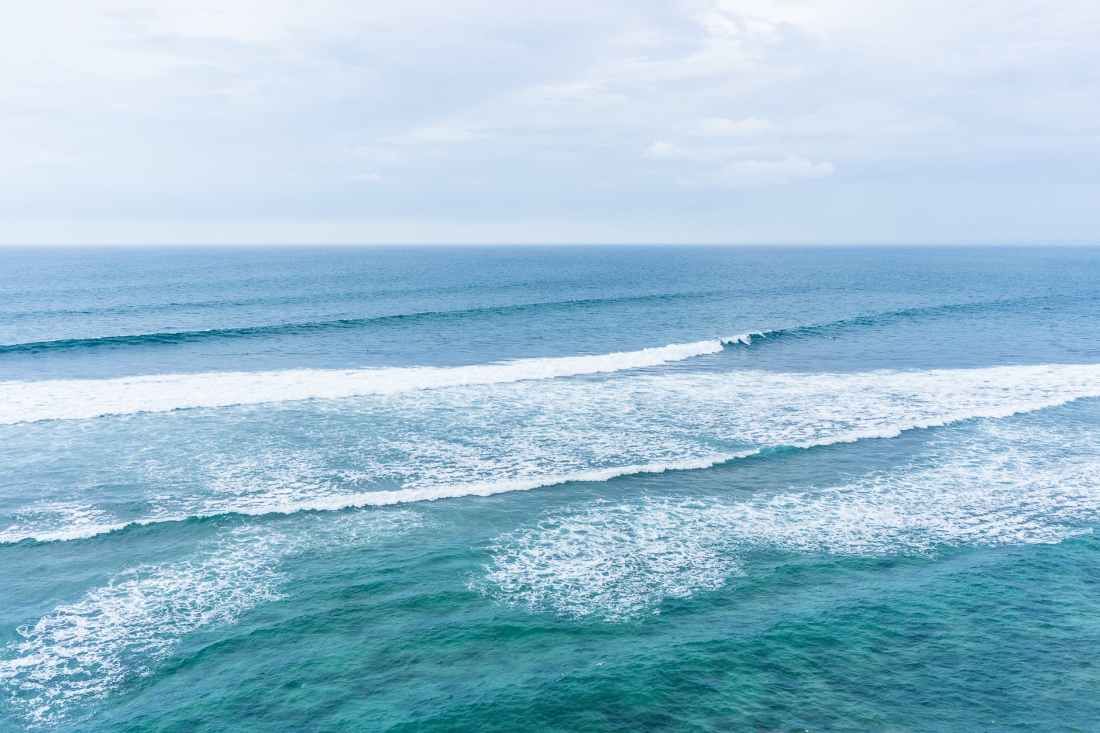
にまがうごうKumoi ni magouthe white waves of the offing
おきつしらなみOkitsu shiranamicould be mistaken for clouds!
Translation by Dr Joshua Mostow

The author of this poem has the rather grandiose name of Hosshōji Nyūdō Saki no Kanpaku Daijōdaijin (法性寺入道前関白太政大臣, 1097 – 1164), which means “Buddhist novice of Hosshoji Temple, and former Chief Adviser to the Emperor, and Chancellor of the Realm”. His personal name was Fujiwara no Tadamichi. Tadamichi was the recipient of Mototoshi’s complaint in poem 75, but my new book implies that Tadamichi was no saint.

The role of chief adviser (kanpaku 関白), was an increasingly common ploy in the 10th and 11th centuries used by members of the Fujiwara clan to control the Emperor. The cycle was to have the reigning emperor marry a daughter of a particular Fujiwara sub-clan. If an imperial heir was born, the head of that sub-clan of the Fujiwara would insinuate themselves as the regent (sesshō, 摂政) for the new child heir, while pushing out the old emperor using one excuse or another to justify their retirement. We see this very clearly in the Diary of Lady Murasaki, but also the struggle that affected Sadayori (poem 64) and Sei Shonagon (poem 62). Emperor Sanjō (poem 69) was one such emperor who was pushed out by his regent so his heir could take over early (with the Regent the power behind the throne).

Further, once the child heir is old enough to take the throne as emperor, the regent could seamlessly transition to chief adviser (kanpaku). With this process, the Fujiwara practically had a lock on the Imperial family, with few emperors able to resist this cycle.

Tadamichi as regent, was thus a literal king-maker, but was embroiled in a nasty succession dispute between the future Emperor Go-Shirakawa and the retired Emperor Sutoku (poem 77). This dispute spiraled out of control, resulting in the disastrous Hōgen Rebellion of 1156. The Rebellion in turn started the rapid decline of the Heian Court aristocracy, and the eventual rise of a series of samurai(not nobility)-led, military regimes until 1868. Saigyō Hōshi (poem 86) was devoted to Emperor Sutoku even after he took tonsure, and lamented the Emperor’s passing as a result of his failed rebellion.

The poem itself uses a lot of vivid imagery and pillow words that we’ve seen in other poems. For example the phrase, hisakata no was also found in poem 33. Other notable phrases:

  • wata no hara – field of cotton (the sky)
  • okitsu shiranami – the white waves offshore

It’s an interesting image to imagine: somewhere offshore where the clouds and the white waves blend together in the horizon.

Professor Mostow notes that this poem also has a possible political interpretation by some medieval commentators, because of the allusion “clouds” to “heaven” in the Confucian sense. In such interpretations, it implies that the author is confused by the affairs of the state. However, this interpretation is not shared by other commentators who believe this poem is literal, not allegorical.

In any case, a great poem.

The Wonders of Mount Fuji: Poem Number 4

This was something I read recently that I felt like posting:

JapaneseRomanizationTranslation
田子の浦にTago no ura niAs I set out on
うち出でて見ればUchi idete mirebathe beach of Tago, and look,
白たShirotae noI see the snow
constantly falling
富士の高嶺にFuji no takane nion the high peak of Fuji,
雪は降りつつYuki wa furitsutsuwhite as mulberry cloth.
Translation by Dr Joshua Mostow

This poem was composed by Yamabe no Akahito (山部赤人, dates unknown ) who according to Mostow was a contemporary of Hitomaro (poem 3). He is also one of the Thirty Six Immortals of Poetry and was a leading poet during the reign of Emperor Shomu and contributed to the Manyoshu. He is revered alongside his contemporary, Kakinomoto no Hitomaro (poem 3) as a “saint of poetry”. Compared to Kakinomoto no Hitomaro, Yamabe is known for a poetry style focused on the beauty of nature such as this poem, rather than clever verse.

Yamabe, for his part, served as a court poet under the pious Emperor Shomu. Unfortunately there is no information about his life before he served in the Court. My new book points out that since he was never mentioned in the historical document the Shoku Nihongi, Yamabe was probably a low-ranking bureaucrat.

Mostow carefully explains that this poem, like many of the earlier poems in the Hyakunin Isshu were written in an old Japanese-Chinese hybrid script called manyōgana and was thus open to many interpretations. In fact, the poem has evolved over time and the version in the Hyakunin Isshu is only one such version. The version above, compiled by Fujiwara no Teika (poem 97), was in an imperial anthology called the Shin-Kokin Wakashu. But the original version, poem 318 in the Manyoshu, read like so:

JapaneseRomanizationRough Translation1
田子の浦ゆTago no ura yuAs I passed
うち出でて見ればUchi idete mirebathe bay of Tago, and looked,
ま白にそMashiro ni soI saw the white snow
富士の高嶺にFuji no takane nifalling on the high peak
雪は降りけるYuki wa furitsukeruof Mount Fuji.
1 apologies in advance for any mistakes or for quality of translation

In this version, it sounds like Akahito is describing something more in the past, and the poem doesn’t use a pillow word (see below) to describe the snow. It uses the more mundane description of “very white”, not “white as mulberry cloth”.

The aforementioned vagaries of Manyogana script also matter because there’s much debate about where Akahito actually was when composing this poem. The location of Tago no Ura is now Suruga Bay in Shizuoka Prefecture, but originally may have meant some place much closer to Mount Fuji, under it’s “shadow”, so to speak.

One other interesting note for readers of this blog is the middle line, shirotae no, which as you may recall from poem 2 is one of those special “pillow words” used in Japanese poetry. It is a very idiomatic term which conveys something that is gleaming white, or as Professor Mostow translates, white as mulberry cloth. At some point in history, the third verse changed from a more mundane description of snow to a much more impactful description.

P.S. Featured photo is Mount Fuji as seen from Suruga Bay, photo by Shinichi Morita, CC BY-SA 2.0, via Wikimedia Commons

A Thousand Swift Swords: Poem Number 17

One of the most famous and recognizable poems in the Hyakunin Isshu is poem 17:

JapaneseRomanizationTranslation
千早ぶるChihayaburuUnheard of
神代もきかずKamiyo mo kikazueven in the legendary age
龍田がわTatsuta-gawaof the awesome gods:
からくれなKarakurenai niTatsuta River in scarlet
みずくくるとはMizu kukuru to waand the water flowing under it.
Translation by Dr Joshua Mostow

The poet, Ariwara no Narihara Ason (在原業平朝臣, 825 – 990) or “Sir Ariwara no Narihara”, was the closest thing to a poetic genius during his time, and this poem is a prime example. Originally published in the Imperial anthology, the Kokin Wakashū, as poem number 294, it is considered one of the most iconic of the one-hundred Hyakunin Isshu poems.

Narihara is also credited for writing what is considered the greatest Waka poem on cherry blossoms (桜, sakura) ever composed:

JapaneseRomanizationTranslation
世の中にYo no naka niIf in all the world
絶えて桜のTaete sakura nothere were of cherry blossoms
なかりせばKanarisebano trace anywhere
春の心はHaru no kokoro waah, how truly peaceful then
のどけからましNodokekaramashispring would be for everyone!
Translation by Dr Josha Mostow and Dr Royall Tyler from the Ise Stories, the poem is also number 53 in the Kokin Wakashū.

Not surprisingly, Narihira was thus considered one of the Six Immortals of Poetry.

Returning to this poem, there is a lot to unpack. The imagery of red, autumn leaves flowing along the river provides a very memorable contrast. The Tatsuta-gawa River can be found in modern-day Nara Prefecture, and is a scenic, gentle flowing river near the town of Ikaruka. I’d love to see it someday. I cover more about the Tatsuta-gawa River and iconic Mt Mimuro in poem 69, but several poems in the Kokin Wakashū anthology also refer to fall leaves floating on it.

Also, it should be noted that the fourth line is an example of a traditional Japanese color word.

Lastly, the opening line of this poem, chihayaburu, is a prime example of “pillow words” in Japanese poetry. It literally means something like “a thousand swift swords”, but really is an honorific epithet when referring to the gods, similar to how Homer used to use special epithets for each of the Olympian gods. Nevertheless, it’s a famous line, and can be found in Waka poetry written even in modern times, and is also the title of the popular manga exploring the Hyakunin Isshu card game.

If there is one poem worth learning in all the Hyakunin Isshu, I would argue, it is this one.

Hyakunin Isshu in High School

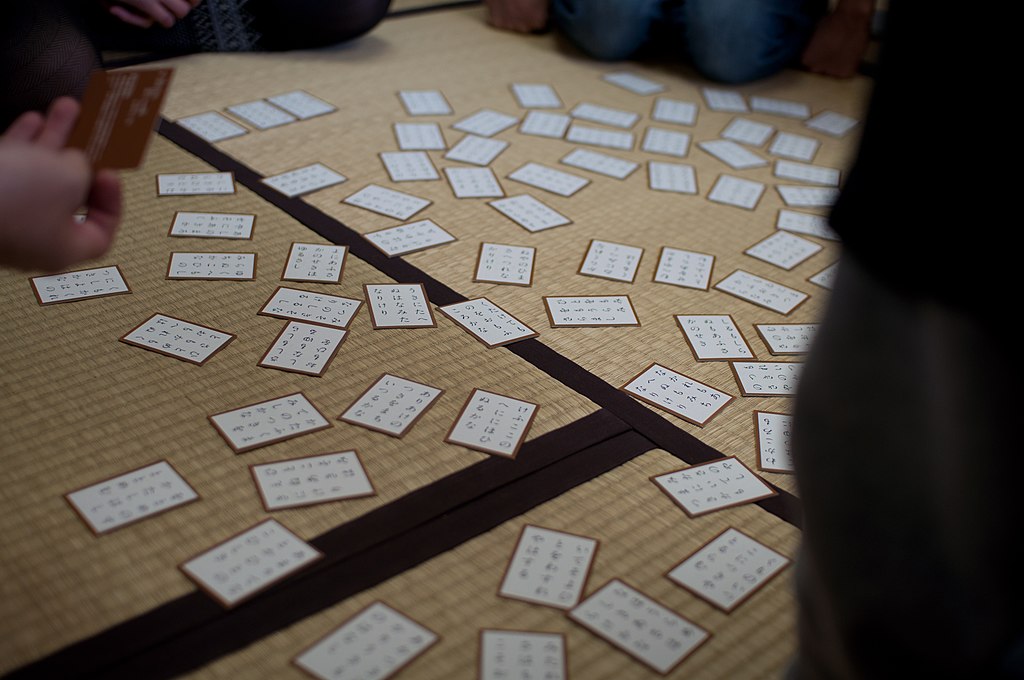
One subject I haven’t covered here much is the subject of the Hyakunin Isshu is the karuta card-game. I’ve talked about it on my other blog, but I saw this recent article on the Asahi Shinbun newspaper and wanted to talk this one in particular.

Photo by Koichiro Ohba, CC BY 2.0, via Wikimedia Commons

As the article explains, the Hyakunin Isshu card-game is one of many extra-curricular activities in Japan for kids, though usually not as popular as sports or other activities. Still it has a small, venerable tradition, and like many school activities, it can be pretty competitive, but a great team-building activity.

I was surprised to hear about the new comic about this sport though, titled “Chihayafuru“, which is related to poem 17 in the Hyakunin Isshu (the opening line), which also happens to be a famous pillow word too. I was thinking it might be interesting to read, except the cover implies that it’s a young ladies novel, and I am too old, and too much of a male neanderthal for that kind of thing. 😉

Update: I am reading the manga now. 😙

Update No. 2: Finally learned to play in 2023.

Summer Weather: Poem Number 2

One of my favorite poems in all the Hyakunin Isshu is also one of the first:

JapaneseRomanizationTranslation
春過ぎてHaru sugiteSpring has passed, and
夏来にけらしNatsu ki ni kerashisummer has arrived, it seems
白たShirotae noHeavenly Mount Kagu
衣ほすてふちょうKoromo hosu chōwhere, it is said, they dry robes
あまの香具山Ama no Kaguyamaof the whitest mulberry!
Translation by Dr Joshua Mostow

The author of this iconic poem was Jitō Tennō (持統天皇, 645 – 702) known in English as Empress Jitō. Originally Princess Unonosarara, she was the daughter of Emperor Tenji (poem 1), and later his sister-in-law after Tenji forced her to marry his brother (later Emperor Tenmu). In any case, she became the Empress after her husband Tenmu died, and reigned for 11 years. Female emperors were quite rare in Japanese history, by the way, so her reign was pretty noteworthy. Empress Jito proved to be a powerful and effective empress, a patron of the arts who promoted cherry-blossom viewing, completed the new capital of Fujiwara-kyō, but also ruthless toward potential political rivals as well as in the case of her step-son/nephew Prince Otsu.

This poem in general causes a lot of headaches for commentators and translators over generations because of the confusing relation between certain lines. Further, a second slightly different version of the poem exists in the Manyoshu poetry anthology (book 1, poem 28), with differences highlighted:

Original
Manyogana
JapaneseRomanizationTranslation adapted
from Dr Mostow’s1
春過而春過ぎてHaru sugiteSpring has passed, and
夏来良之夏来るらしNatsu kitaru rashisummer is coming, it seems
白妙能白たShirotae noHeavenly Mount Kagu
衣乾有衣干したりKoromo hoshitariwhere, it is said, they are drying robes
天之香来山あめの香具山Ame no kaguyamaof the whitest mulberry!
1 Special thanks to “Cameron” for helpful insights in making sense of the alternate version. Also, any translation mistakes are my own, not Dr Mostow’s.

According to Mostow, there’s a lot of uncertainty about what’s being dried, what does it stand for, and whether the scene is directly observed or not. One further note about the pillow word shirotae (白妙) in the third line, Mostow explains that the word tahe/tae refers to a kind of Paper Mulberry plant. So this is not just paper, but gleaming white paper.

Also, where is this famous Mount Kagu? Mount Kagu, more formally known as Amanokagu in Japanese,2 is one of three peaks called the Yamato Sanzan (大和三山, Three Peaks of [old] Yamato) or the Sanrinzan (三輪山) which are pictured here. These mountains are:

  • 畝傍山, Unebi-yama
  • 耳成山, Miminashi-yama
  • 天香具山, Ama-no-kaguyama (e.g. Mount Kagu)

Yamato is among the oldest parts of Japan as we know it, so these mountains, while small by standards of Mt. Fuji, have held important cultural significance since the beginning. Since antiquity, it was believed that all three mountains were inhabited by Shinto kami,3 and thus sacred spaces. Miminashi-yama and Ama-no-kaguyama were said to be inhabited by male kami, who competed for the affection of Unebi-yama, a female kami.

Ama-no-kaguyama with purple Cosmos flowers in the foreground. The remnants of the ancient capital of Fujiwara-kyo can also be seen to the right. Photograph by Ajax, CC BY-SA 4.0, via Wikimedia Commons

The ancient imagery of such a venerable old mountain, couple with such vivid imagery of a sunny, warm summer day are among the reasons why I like this poem so much. 🙂

2 The Manyoshu version of the poem alternatively spells it as ame-no-kaguyama, which is an obscure though valid way to read 天. I am not sure why both versions of the poem are read slightly differently.

3 Although kami is usually translated as a “god” in English, it helps to think of them more like ancient Greek gods, than the modern concept. Ancient Greek religion had gods both large and small, so the English word “divinity” might be more accurate?

Sleeping Alone: Poem Number 3

This is one of my favorite poems as of late:

JapaneseRomanizationTranslation
あしびきのAshibiki noMust I sleep alone
山鳥の尾のYamadori no ō nothrough the long autumn nights,
しだり尾のShidari no ō nolong like the dragging tail
ながながし夜をnaga nagashi yo woof the mountain pheasant
ひとりかもねむhitori kamo nenseparated from his dove?
Translation by Dr Joshua Mostow

The author of this poem Kakinomoto no Hitomaro (柿本人麻呂, dates unknown), was one of the pre-eminent poets of the Asuka Period in Japan, and contributed to the Manyoshu anthology as well. According to my new book, he served in the courts of emperors Tenmu, Jitō (poem 2), and Monmu as a kind of “court poet” (kyūtei-kajin, 宮廷歌人). During official outings, or former occasions, the court poet was relied upon to compose a fitting poem for the occasion. So revered was Hitomaro at his job that he, alongside his contemporary Yamabe no Akahito (poem 4), were later called kasei (歌聖, “saints of poetry”).

Hitomaro is also possible candidate for authorship of the famous iroha poem: a poem that uses every hiragana letter only once.

While the poem above looks like any other love poem, the composition, imagery, rhythm and such, make this one really stand out. 😁

The yamadori (山鳥) is actually a species of bird called the Copper Pheasant, known for its long tail, and is our featured photo for today (photo by KKPCW, CC BY-SA 4.0, via Wikimedia Commons). There’s a great photo here as well. Traditionally, it was thought that the male and female birds slept separately at night, hence Hitomaro was comparing this to his own feeling of loneliness.

One thing I like about this poem, and why I have a particular interest in it, is the repetitive sounds using の (no) throughout. If you recite the poem out loud, it has a particularly nice rhythm to it, and for me it is thus easy to memorize/recite. Try it out and you’ll see what I mean. The frequent use of の also links various words together in a way that stretches out the verse. Thus, Hitomaro isn’t sleeping alone, it feels like a looooooong night alone.

According to the Hyakunin Isshu Daijiten, there are certain birds in Japanese culture that are frequently used to represent autumn. In addition to the Copper Pheasant, other birds include:

  • The wild goose (kari, 雁)
  • The quail (uzura, うずら)
  • The bull-headed shrike, or Lanius bucephalus (mozu, もず)

More on seasonal birds in this post.

The opening verse of this poem is also a nice example of pillow words in the Hyakunin Isshu, originally taken from the Manyoshu.

Finally, one thing to note is that my new book about the Hyakunin Isshu suggests the authorship of this poem is doubtful. In the original Manyoshu anthology, this poem was listed as “author unknown”, poem number 2802, and looked noticeably different:

Original ManyoganaModern JapaneseRomanizationRough Translation1
念友思へどもOmoedomoEven as I try not to think about it,
念毛金津思ひもかねつOmoi mo kanetsuI can’t help but think
足桧之あしひきのAshihiki nohow long this night will
山鳥尾之山鳥の尾のYamadori no ō nobe, like the tail of a
永此夜乎長きこの夜をNagaki kono yo wocopper pheasant.
1 Rough translation by me, apologies for any mistakes.

… but by the time of Fujiwara no Teika (poem 97, こぬ) who compiled the Hyakunin Isshu, it was probably assumed to be Hitomaro. Teika might know something we don’t today though, so it’s quite possibly Hitomaro’s poem, but sadly we’ll never know for sure. But this mystery of how the poem came to be will be covered in a future post someday.

Spring is here: Poem Number 33

One of my personal favorite poems in the entire collection is this one:

JapaneseRomanizationTranslation
ひさかたのHisakata noIn these spring days
光のどけきHikari no dokekiwith the tranquil light
encompassing
春の日にHaru no hi niThe four directions
心なくShizu gokoro nakuwhy should the blossoms scatter
花のちるらHana no chiruranwith uneasy hearts?
Translation by Dr Joshua Mostow

The author, Ki no Tomonori (紀友則, ? – 905?), was the cousin of Ki no Tsurayuki (poem 35). Tomonori is one of the Thirty-Six Immortals of Poetry, and helped to compile another famous poetry anthology, the Kokinshū (古今集).

The Kokinshū, formerly known as the Kokin Waka Shū (古今和歌集 “Collection of Ancient and Modern Japanese Poetry”) was completed in 905 and was the first of many efforts by the ancient Court to compile the best poetry, past and present, into an official anthology. The Hyakunin Isshu by contrast was one man’s effort in his retirement. More on that in a later post. As for Tomonori, it is said that he didn’t live to see the completion of the Kokinshū, sadly.

As for this poem, this is one of the most famous in the collection and emblematic of Spring, but also the fleeting nature of the world, and the touch of melancholy that comes with it. Truly this is a lovely poem. It also has a textbook example of a pillow word in the form of ひさかたの (hisakata no) in its opening verse, also used in poem 76.

Pillow Words in the Hyakunin Isshu

Reading classical Japanese is hard enough as it is, what with its unusual spellings and archaic vocabulary, but what makes the Hyakunin Isshu interesting, among other things, is the colorful, poetic phrases sometimes used. These phrases are strictly literary, and tend to have a dramatic sound to them, but when translating to English sometimes the meaning is lost. These words are called makura kotoba (枕詞) or “pillow words”. The term “pillow” here has no romantic connotations whatsoever, but is simply a reference to poetry. Presumably, people in the old days sat in their rooms, leaning on a pillow, composing poetry in their idle time, I guess.

Anyway, pillow words can be thought of as “filler” phrases, because they don’t have much meaning themselves, but they dress up the poems a lot more. For example in this poem, number 17:

千早ぶる Chihayaburu
神代もきかず kamiyo mo kikazu
龍田川 Tatsutagawa
からくれないに karakurenai ni
水くくるとは mizu kukuru to wa

The pillow words “Chihayaburu” (千早ぶる) can mean something like “1,000 swift [swords]” or something, but really just dresses up the next word, 神 (kami, “a god”). So in modern English, it’s not just a god, but an awesome, awe-inspiring god. Likewise, in poem 2 we see another shining example.

春過ぎて Haru sugite
夏来にけらし natsu ki ni kerashi
白妙の shirotae no
衣ほすてふ koromo hosu chō
天の香具山 Ama no Kaguyama

Here again the pillow word shirotae no (白妙の) means something like gleaming white. The sheets being dried on Kaguyama mountain are not just white, but gleaming white, and a lovely contrast to the sunny, summer day in which they are being dried.

Such pillow-words don’t really exist in English, but they are very easy to find in classical Greek literature, especially the writings of Homer. Consider these epithets frequently used in the Iliad:

  • Agamemnon, son of Atreus: Ἀτρείδης (Atreídēs)
  • Swift-footed Achilleus: πόδας ὠκύς (podas ōkús)
  • Rosy-fingered Dawn: ῥοδο-δάκτυλος Ἠώς (rhodo-dáktylos Ēṓs)
  • Goddess of the white arms, Hera: θεὰ λευκώλενος Ἥρη (thea leukōlenos Hērē)

Whenever I read the Iliad, I always find that these epithets really bring out the drama in the text.

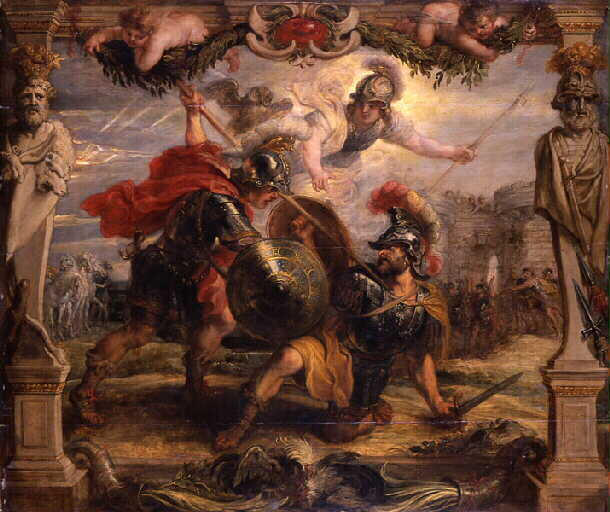
Peter Paul Rubens – Achilles slays Hector

In the same way, the pillow-words in the Hyakunin Isshu are frequently used in certain common combinations:

  • chihayaburu (千早ぶる) – used to describe the Shinto divinities or Kami (神). See iconic poem 17.
  • shirotae no (白妙の) – used to describe something white, in particular snow, clouds or cloth. Its literal meaning is taken from the color of fresh mulberry paper. See poem 2 and poem 4.
  • ashibiki no (あしびきの) – used sometimes to describe mountains (山, “yama”) and peaks. Its meaning is something like “foot-drawn”. See poem 3.
  • hisakata no (ひさかたの) – used to describe things like the sky (空, “sora”), moon (月, “tsuki”), rain (雨, “amé”), clouds (雲, “kumo”), light (光, “hikari”), night (夜, “yoru”), and even the capitol (都, “miyako”). Its meaning is something like peaceful, shining, and especially everlasting. See poem 33 and poem 76.

Some examples of pillow words used in Japanese waka poetry, but not found in the Hyakunin Isshu are:

  • ubatama no (烏羽玉の) – describes the color “jet-black” and often used to describe hair or night. An example is found in the Kokinshu anthology, poem 647.
  • aoniyoshi (あをによし) – used to describe the old capital of Nara itself. Poem 328 in the Manyoshu is one such example. The word aoni (
    青丹) refers to a high-quality bluish-back pigment that was derived from soil around the Nara area.
  • umasaké (味酒) – used to describe the sacred mountains around Nara (see poem 2 in the Hyakunin Isshu) implying the essence of delicious rice wine. Think Dionysus from Greek mythology. You can an example in the Manyoshu, poem 17.
  • yasumishishi (八隅知し, or 安見知し) – refers to the august reign of an Emperor, spanning the eight cardinal directions. Manyoshu poems 50 and 923 both contain this phrase.
  • isanatori (いさなとり), originally from an archaic word for “whale” (いさな) is used with words such as the ocean, beach, etc. Poem 3852 in the Manyoshu is an example.

Many of these phrases are 5-syllable phrases (sometimes 4), so they “slot” in seamlessly in a typical waka poem (5-7-5-7-7 syllables). In later ages, the number of pillow words increased to about 1,200 phrases, though many of them remain pretty obscure. Even in modern poetry, these stock phrases are still very much in use.

Interestingly, my book on the Manyoshu explains that some of these phrases do not appear until they are used in poetry by Kakinomoto Hitomaro (poem 3, あし), implying that he coined some of these phrases himself. Of the hundreds of documented pillow words, at least 50 are attributed to Hitomaro including some listed above.

Pillow words are hard to translate, but they are a fascinating window into Japanese culture in antiquity.