
Hello everyone,
I just returned from another trip to Japan,1 and we got to spend a bit of time in Kyoto. By accident, I also found Mount Ogura, and the place where Hyakunin Isshu was compiled! But first, let’s backup and explain a bit of history first.
Kyoto was the capital of Japan from the 8th century to the 19th century, and so many well-to-do families lived here. This aristocracy wrote countless waka poems that were compiled into official poetry anthologies from time to time,2 but the Hyakunin Isshu was not one of them. It was compiled by Fujiwara no Teika (poem 97) as a favor to his in-laws. Teika had been a compiler of one of the major anthologies, the Shin-Kokin-Wakashu, but was now in retirement after his liege lords (poem 100 and poem 99) were exiled in the upheaval of the Jokyu Rebellion. He resided in a small villa on the west side of Kyoto on the hillside of Mount Ogura, and was tasked with selecting the very best 100 waka poems that his in-laws could decorate their home with. Teika’s excellent poetic taste led to the Hyakunin Isshu we celebrate today.
Anyhow, back to present day. I was with the family, and we visited a part of western Kyoto called Arashiyama (嵐山). It’s a very scenic place, with famous bamboo forests, and an iconic bridge named Togetsu-kyō (渡月橋):

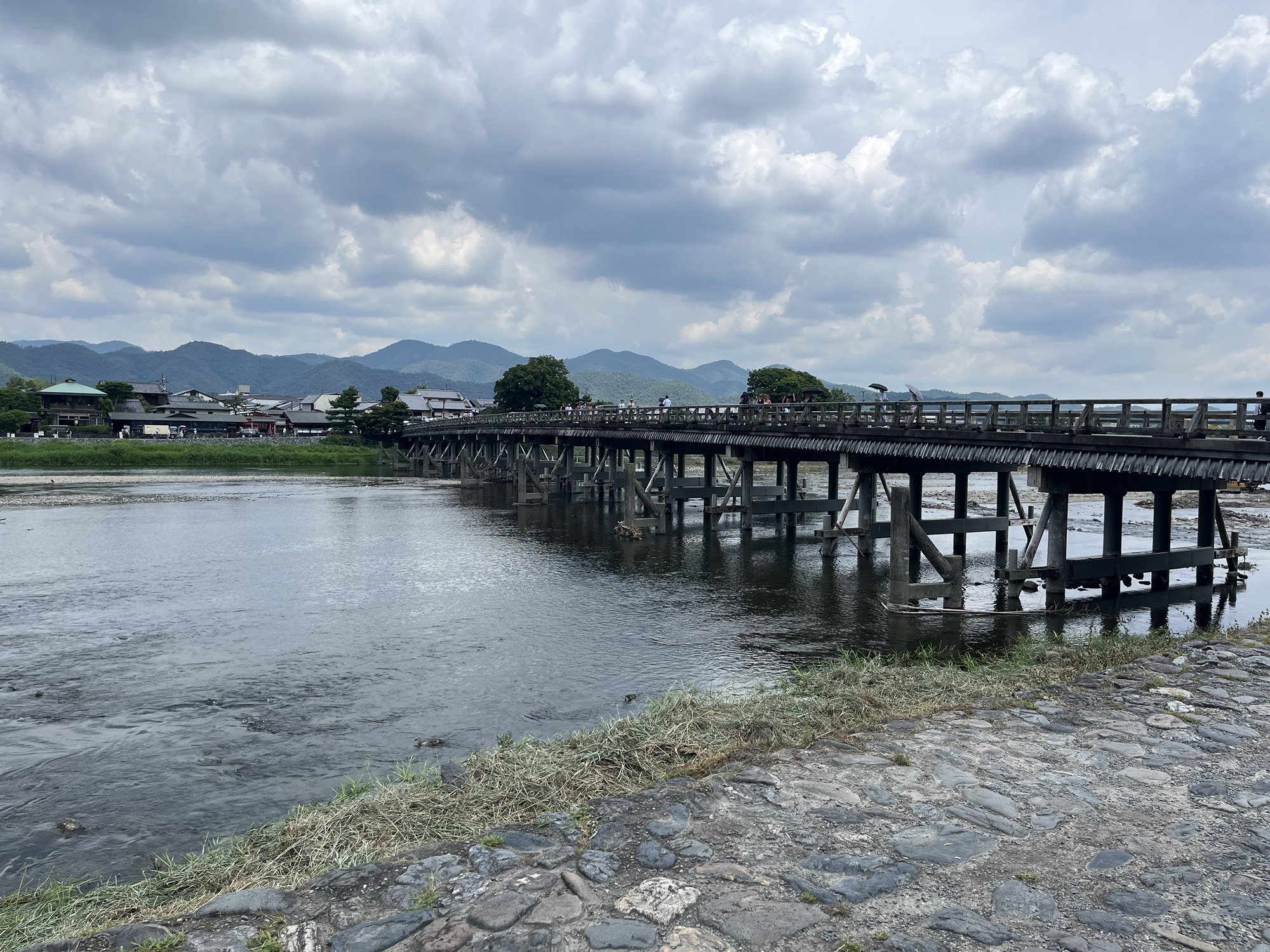
Since we visited in the summer, it was extremely hot and muggy, so by lunch time we were exhausted and tired. We went to a local cafe and had lunch. Since we were in Kyoto, I assumed there would be many famous historical places related to the Hyakunin Isshu,3 but I was having trouble finding them on GPS, so I was disappointed.
Then I noticed the following spot on my map app:
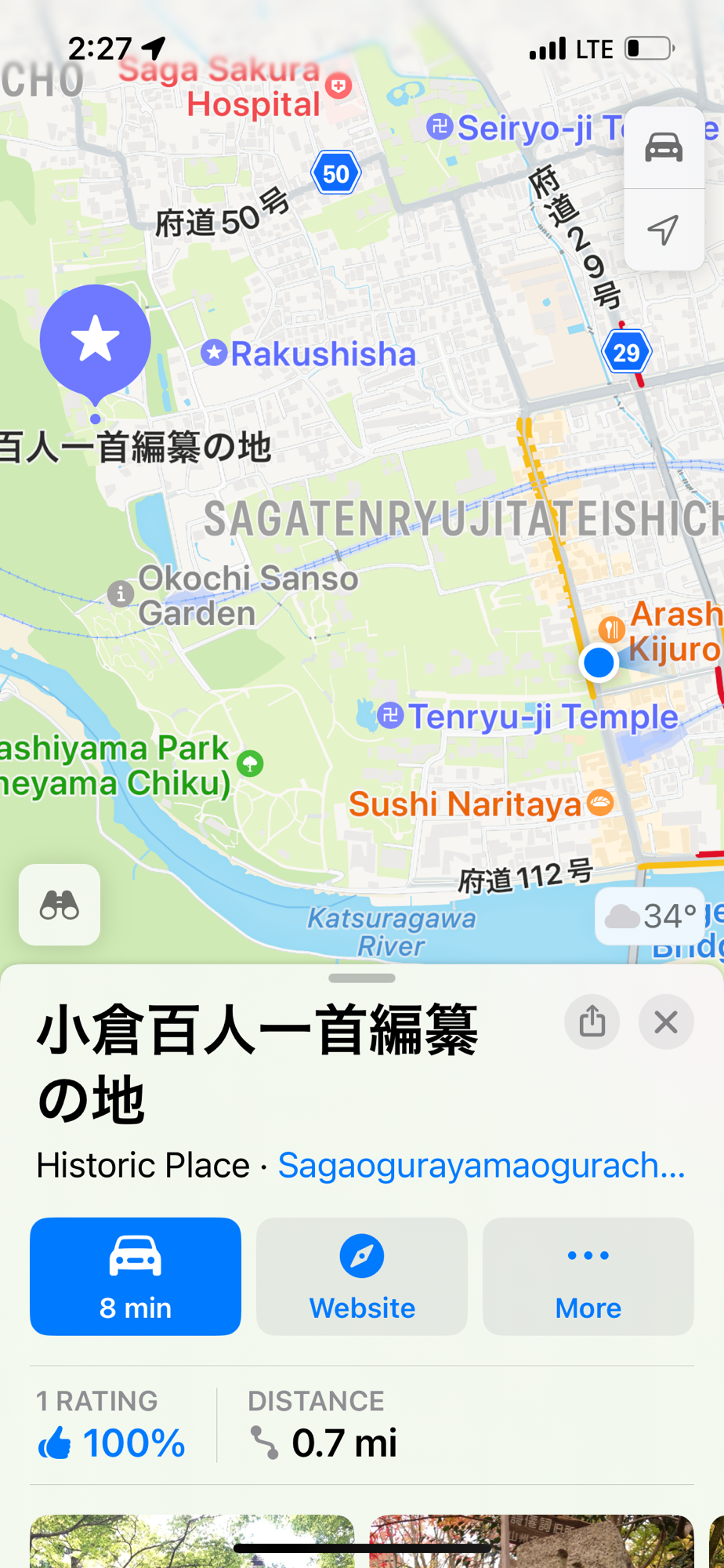
小倉百人一首編纂の地 (ogura hyakunin isshu hensan no chi) … the place where the Hyakunin Isshu was compiled…? Wow, that’s only 15 minutes by foot from where I was at!
The family was exhausted and sweaty, and were planning to return to our hotel, so I didn’t want to drag them uphill in the heat. I told them I’d be back, and I took off for the place on the map. It turns out that the properly had been converted to a Buddhist temple named Jojakkō-ji (常寂光寺) in the 17th century (a common practice in Kyoto). You can find the official website here.
This is Mount Ogura today.

I followed the map directions and made it safely to Jojakko-ji Temple:

There is a small entry fee, but once I paid that, I got to the second gate here:

The site of the Ogura Hyakunin Isshu is just down the path to the right, before the gate. I made the mistake of going up the stairs instead:

Jojakko-ji Temple is quite scenic actually:
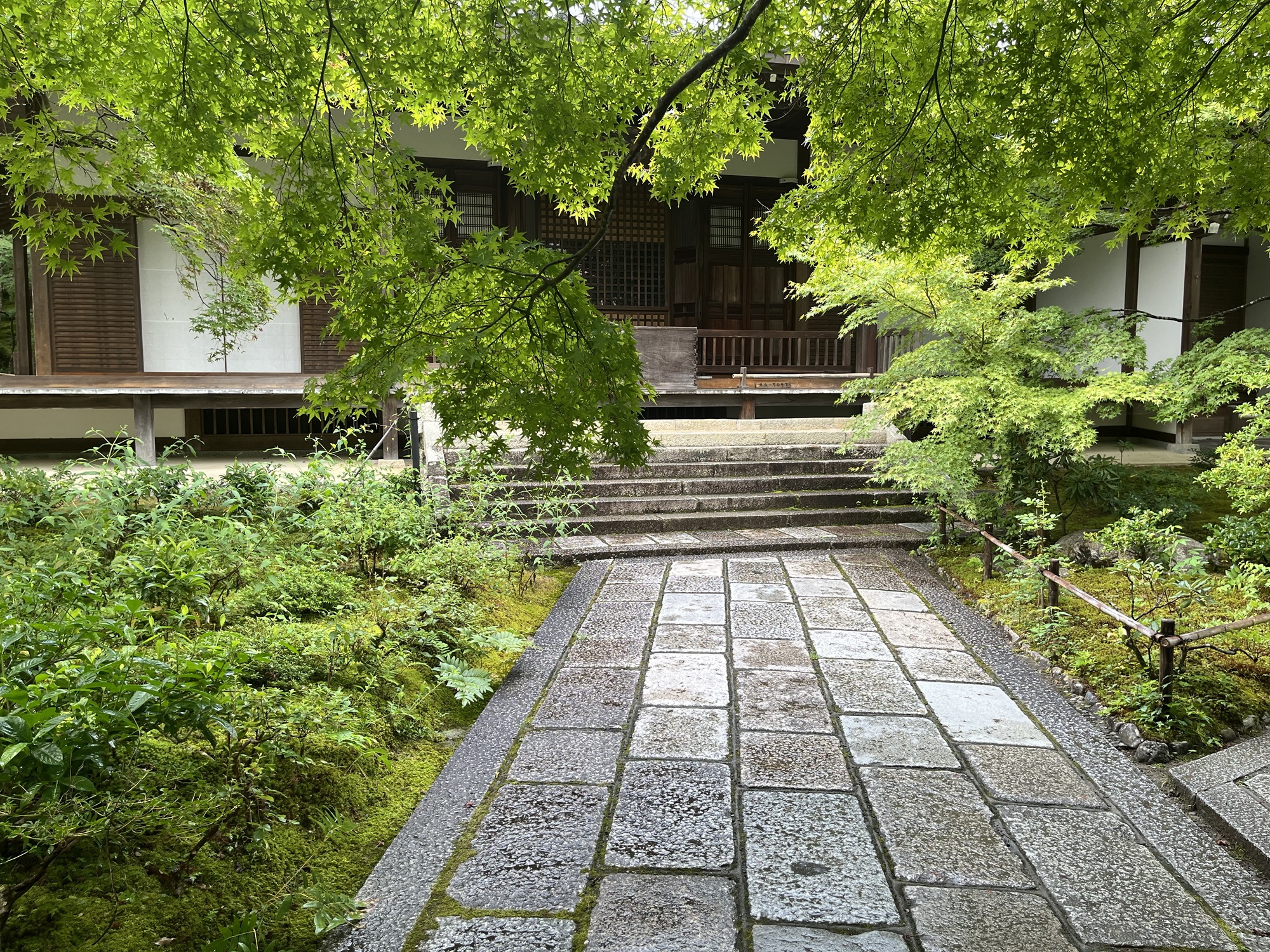


… but it was very late in the day, my family was waiting back at Arashiyama, and I had to hurry. This was my one shot, probably in my lifetime, to find this place, but the temple maps, nor the website show precisely where it was.
Finally, I found it:


The photos from the prefectural website look a lot better than mine (good lighting helps). But there it was, the actual site where the Ogura Hyakunin Isshu was compiled!
The stone marker is pretty small and somewhat eroded, but there was no mistaking it.
Since I was short on time, I paused and said a quick “thank you” to Fujiwara no Teika and then headed back.
If you are fan of the Hyakunin Isshu, and you are in the Arashiyama area of Kyoto don’t miss this small but significant site.
P.S. while at Jojakko-ji, I met a nice Australian couple who had just finished their visit. They told me that at the top of the temple you can see a really view of Kyoto. I didn’t have the time to see it for myself, but if you go, don’t pass up the chance.
P.P.S. I forgot that, ten years ago, I had made a post about Mount Ogura. You can see the Togetsu-Kyo bridge here too.
1 We return every year when possible to visit my wife’s in-laws, and let the kids spend time with their relatives, learn more Japanese, etc.
2 Many earlier poems were also composed at a time when Japan’s capital moved around (Nara, Fujiwara-kyo, Asuka, etc) before settling down in Kyoto. See the Manyoshu for further details.
3 I did actually find one other place we visited earlier in the day, but more on that in an upcoming post.
Discover more from The Hyakunin Isshu
Subscribe to get the latest posts sent to your email.
 The Hyakunin Isshu