Kurumazaki Shrine

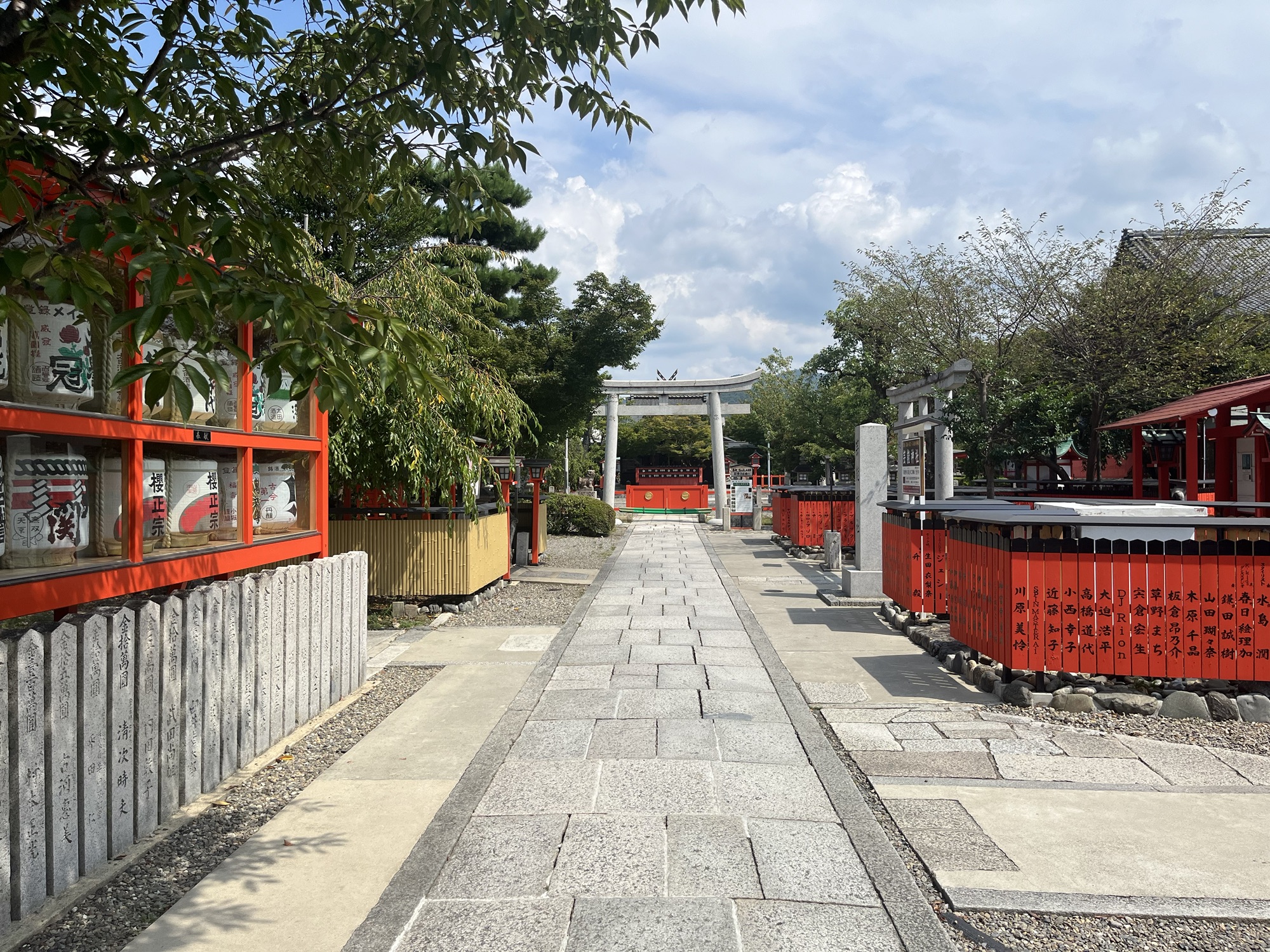
During our recent trip to Japan, we visited the city of Kyoto. I talked about this here, but I also wanted to share another site in Kyoto that relates to one of the poets of the Hyakunin Isshu : Kuramazaki Shrine. You can find their official website here, but there is no English and the site is a bit hard to navigate. The shrine itself has a very interesting layout:

The photo above is the main promenade leading to the inner sanctum (toward the back). Apparently, it’s tradition in Japanese culture to walk along the edge of the walkway, not right in the middle, so bear that in mind when visiting a shrine like this.

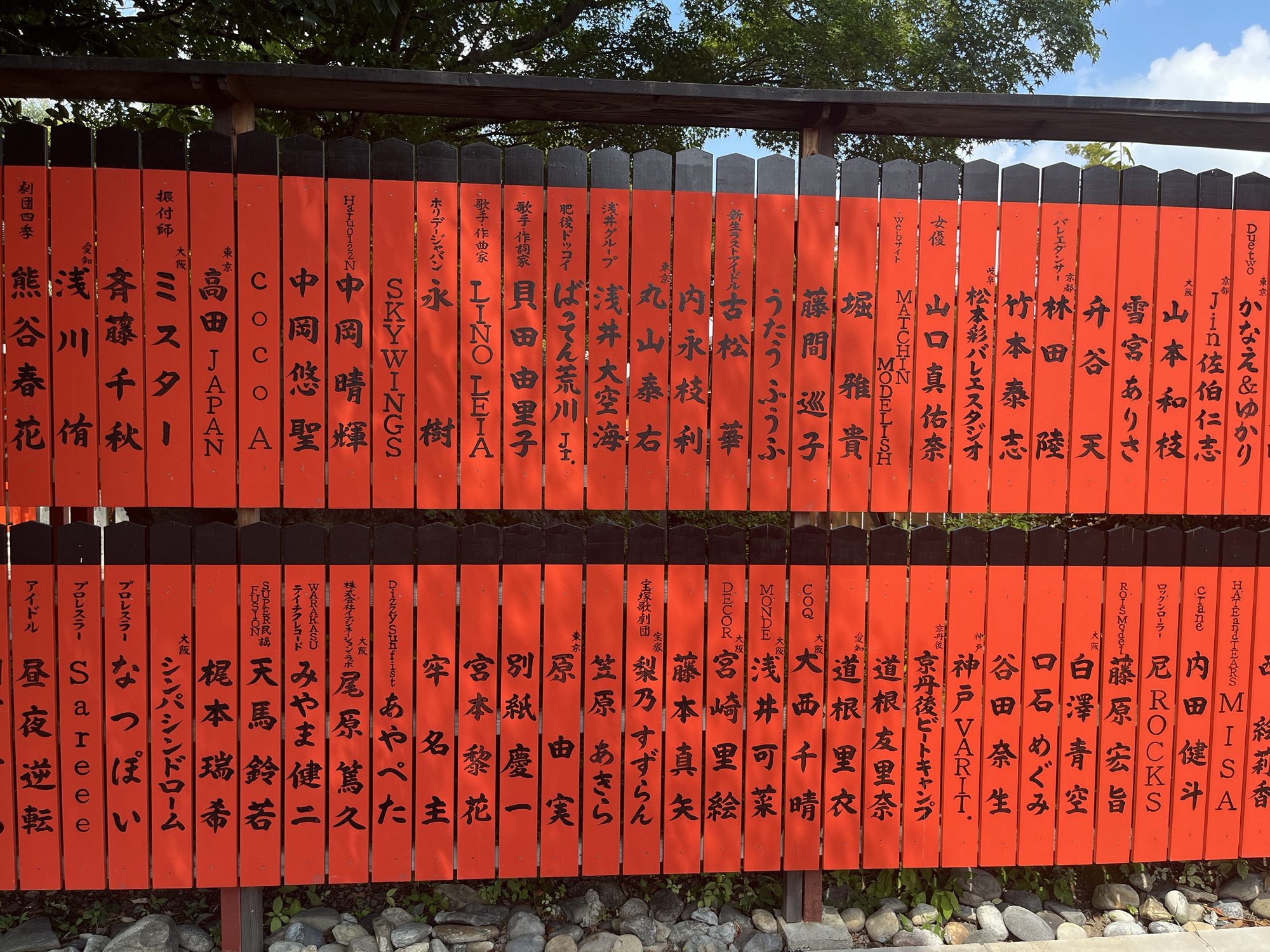
This Shinto shrine is notable for its many visits by celebrities who leave autographed red plaques.

Shinto shrines often serve particular need in society: love, business success, health, etc. In the case of Kurumazaki Shrine, the focus is on show-business, acting, theater, etc.

Why does this matter?

It turns out that Sei Shonagon, author of the Pillow Book and poem 62 (よを) in the Hyakunin Isshu is enshrined here. Not only that, but you can purchase a special omamori charm with her image on it. I learned about this place on social media after seeing the actress First Summer Uika, who played Sei Shonagon in the historical drama, visit the shrine.

Because this site contains many sub-shrines and side passages, it took a bit of effort to find Sei Shonagon’s shrine. It is halfway down the promenade, on the left, and looks like so:

I paid my respects to this esteemed author, and the family and I continued to explore. I found First Summer Uika’s plaque near the inner sanctum:

Incidentally, my wife is a fan of the JPop group Snow Man, and you can see one of their markers just to the left. We both got something out of this trip. 😛
As I alluded to earlier, the shrine complex is deceptively long, with many nooks and hidden shrines and side paths. The site map gives some sense of this. For reference, the Sei Shonagon shrine is number 20 on the map, and you can see there are many other sites here too. I didn’t photograph every shrine here, and most are probably obscure to readers (and obscure to myself). The common theme was both fortune, and also show business. They were some pretty neat shrines though, such as this one showing various theater masks:

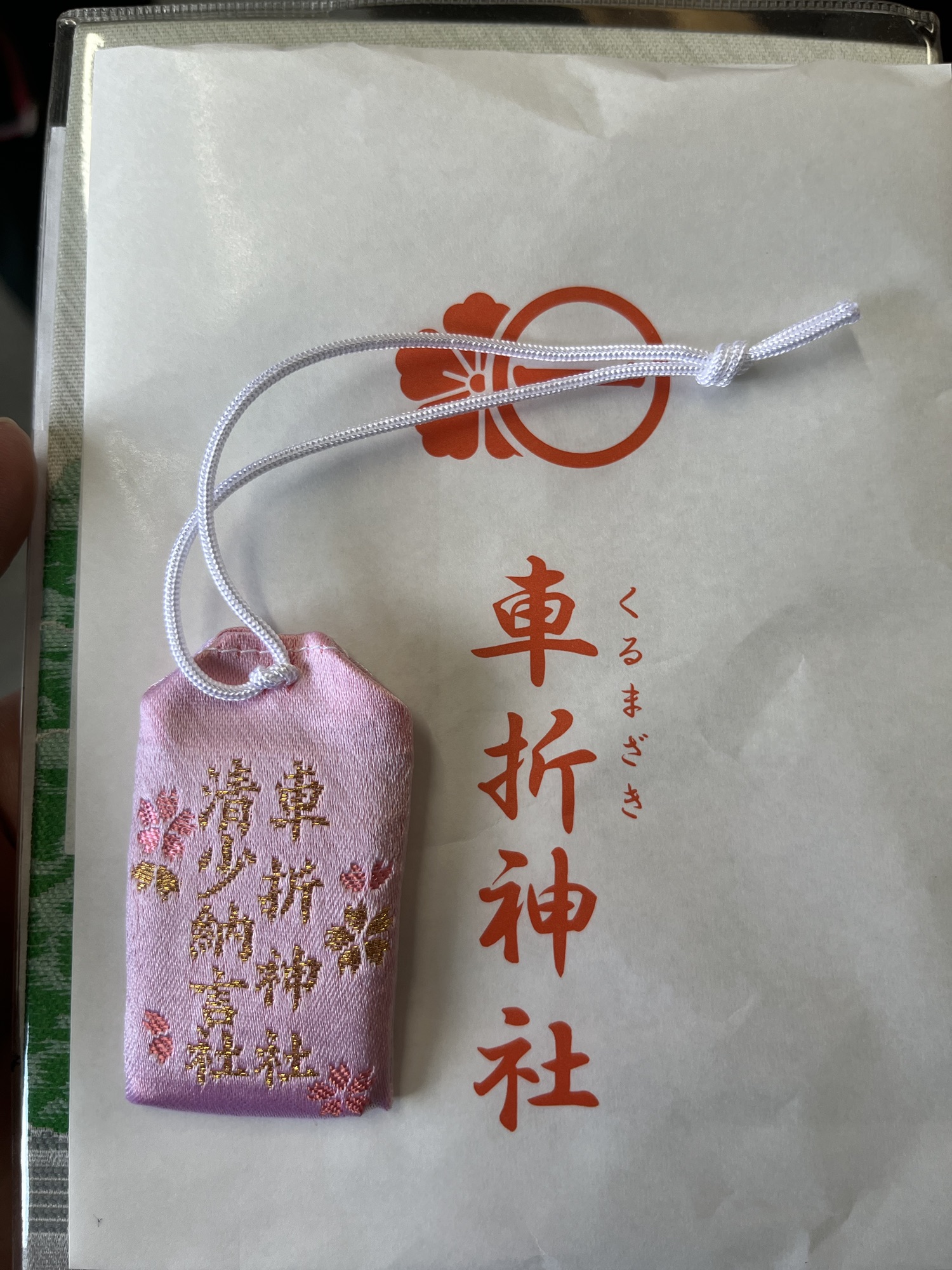
At last we came to the gift shop, and I got a Sei Shonagon charm (omamori):

Later, when I got back home and realized that the charm was intended for ladies,1 I was rather embarrassed, yet I didn’t want it to go to waste, so I gave it to my daughter whose preparing for college this year. It seemed fitting, and I am happy to report that she got a good score in her SAT exam the following month, so perhaps the charm worked?

Anyhow, Kurumazaki Shrine is not something tourists usually visit because it’s a little removed from the nearby touristy area of Arashiyama, and like many Shinto shrines, it’s very Japan-centric, but it’s a cool slice-of-life of Japanese popular culture, both past and present.

As for me, I was happy to pay my respects to such a wonderful poet and author directly, someone’s whose creativity and work indirectly helped make this blog what it is today.

P.S. Later that day, I stumbled upon the place where the Hyakunin Isshu was compiled, so I managed to visit two sites in one day. Not too shabby.

1 It’s clearly written on the signs, I just failed to pay attention. I was maybe a bit star-struck perhaps. 😅

Sucking Up To The New Boss: Manyoshu Poem 235

Although this blog is primarily about the Hyakunin Isshu, I enjoy when things overlap with other Japanese poetry anthologies, and history.

Let’s talk about two of the poets: Empress Jitō (poem 2, はるす) and Kakinomoto no Hitomaro (poem 3, あし). After Empress Jito ascended to the throne, she was visited by Hitomaro, the revered court poet at the time, who composed the following poem:

Original ManyoganaModern JapaneseRomanizationRough Translation1
皇者大君おおきみOkimi waAs my sovereign
神二四座者神にしませばKami ni shimasebais a living kami,
(see below)
天雲之天雲のAmakumo noshe builds a temporary
雷之上尓いかづちの上にIkazuchi no ue niresidence atop
廬為流鴨いおりせるかもIoriseru kamoIkazuchi Hill.
1 I didn’t like any of the existing translations, so I tried to translate here. Any mistakes are my own.

At first, this poem seems like a simple case of a courtier sucking up to the new boss, but as we’ll see there’s more to it. This poem is very simple in some respects, and surprisingly difficult in others.

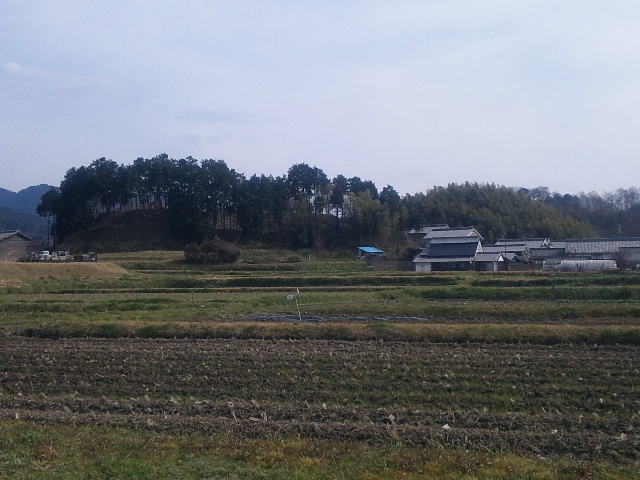
I had to check multiple sources to make sense of it, including my book on the Manyoshu, but the essence of the poem is that Kakinomoto no Hitomaro is describing Empress Jito as a living kami, and that because of her “supernatural abilities”, she can build a residence atop a small hill called Ikazuchi. Ikazuchi Hill, known as Ikazuchi no Oka (雷丘) can be seen in this photo, more information here.

But what the heck is kami? This is surprisingly tough to explain to Western audiences. It is deeply rooted in Shinto religion, and more closely matches something like ancient Greek religion where there were divine spirits both great and small. Small nature spirits would be worshiped as daimon (not to be confused with modern “demon”), and the Olympian gods were venerated too. Even the Olympian gods had “big forms” and small “household forms” worshiped at the hearth. It wasn’t unusual for Zeus, king to the gods, to also be venerated at a home shrine to protect the family assets, or a roadside marker.

In the same way, Shinto has countless kami. It’s not quite right to translate them as “gods” because the meaning is a little different, and “spirits” is not quite right either. But one could include both gods and spirits under the divine label kami. Just like in Greek religion, very talented people could also be venerated as kami after death, such as Hercules. I mention this because Sugawara no Michizane (poem 24 of the Hyakunin Isshu, この) was similarly venerated after death and became something like the Kami (god) of Learning.

This concept of great personages being kami is called arahito-gami (現人神) and that’s basically what Kakinomoto no Hitomaro is describing Empress Jito. Due to the divine ancestry of the Imperial family, this isn’t that surprising, but my book alludes to another reason for this. The turmoil caused by Emperor Tenji (poem 1 of the Hyakunin Isshu, あきの)’s family and his brother Emperor Tenmu’s family for control of the throne meant that Empress Jito (Tenmu’s wife/niece) ascended the throne on shaky ground. Female sovereigns were quite rare in Japanese history, and with the family fighting for control of the throne, Hitomaro was helping her reassert her divine status and legitimacy as the proper ruler of Japan.

The issue of arahito-gami comes up even as recently as 1946, when the reigning Emperor at the time (Emperor Showa, Hirohito), was requested to renounce his divine status after World War II. This declaration used some hair-splitting language about the Emperor’s divinity (or lack thereof), and various interpretations persist today.

…. but that’s something more knowledgeable people could explain better.

As for me, I find it fascinating (and a bit amusing) that these poets I know from the Hyakunin Isshu got embroiled in a succession dispute, but also that Hitomaro helped bolster Empress Jito’s credentials at a time when she was rebuilding the nation again while probably sucking up just a little too.

P.S. the featured photo above is Ikazuchi Hill, photo by Terumasa, CC BY-SA 3.0, via Wikimedia Commons

P.P.S. On a completely unrelated fact, while writing this post I learned that the Chinese characters for 雷丘 also mean “Raichu” as in the Pokemon.

Where It All Began: Mount Ogura

Hello everyone,

I just returned from another trip to Japan,1 and we got to spend a bit of time in Kyoto. By accident, I also found Mount Ogura, and the place where Hyakunin Isshu was compiled! But first, let’s backup and explain a bit of history first.

Kyoto was the capital of Japan from the 8th century to the 19th century, and so many well-to-do families lived here. This aristocracy wrote countless waka poems that were compiled into official poetry anthologies from time to time,2 but the Hyakunin Isshu was not one of them. It was compiled by Fujiwara no Teika (poem 97) as a favor to his in-laws. Teika had been a compiler of one of the major anthologies, the Shin-Kokin-Wakashu, but was now in retirement after his liege lords (poem 100 and poem 99) were exiled in the upheaval of the Jokyu Rebellion. He resided in a small villa on the west side of Kyoto on the hillside of Mount Ogura, and was tasked with selecting the very best 100 waka poems that his in-laws could decorate their home with. Teika’s excellent poetic taste led to the Hyakunin Isshu we celebrate today.

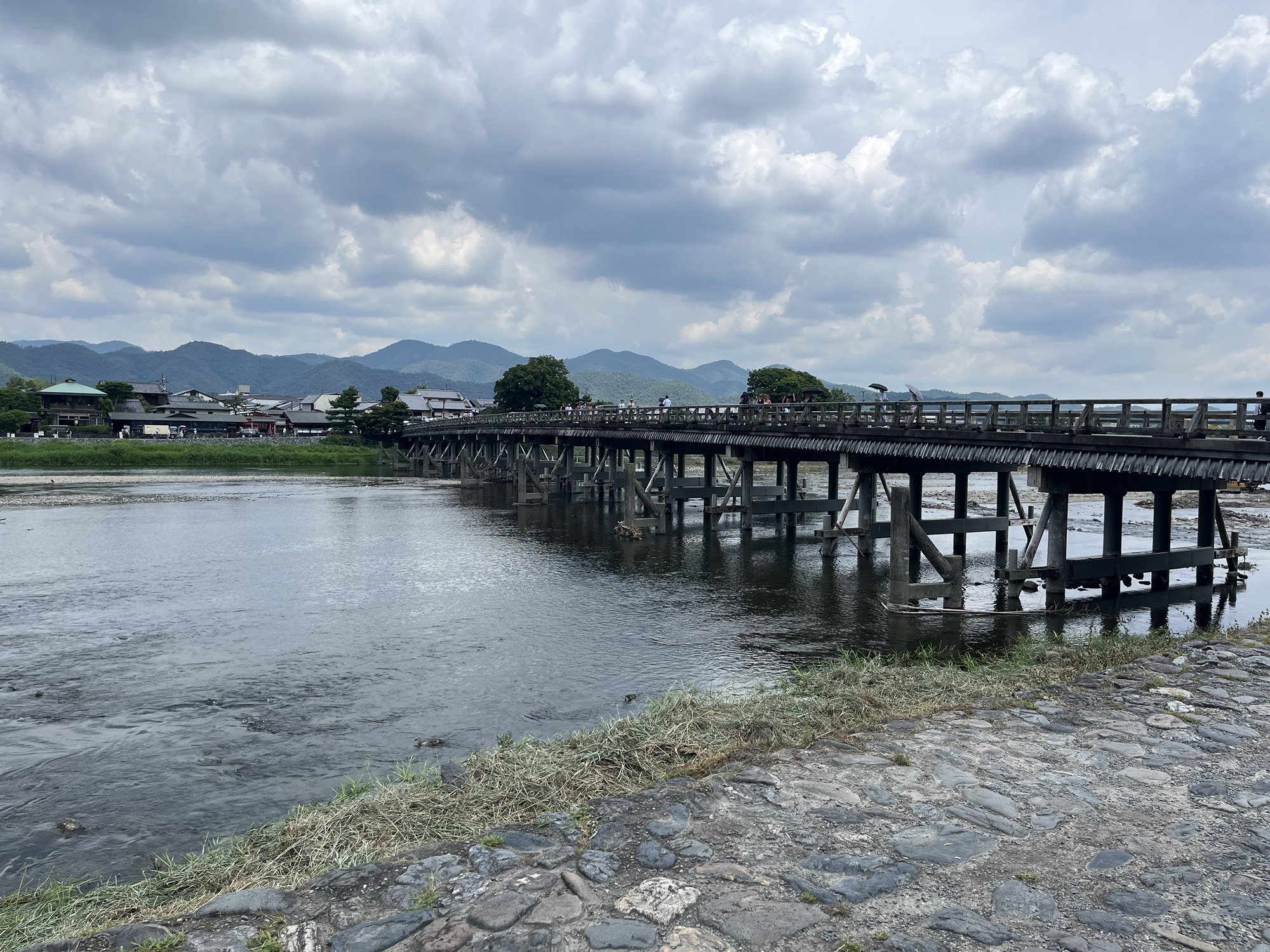
Anyhow, back to present day. I was with the family, and we visited a part of western Kyoto called Arashiyama (嵐山). It’s a very scenic place, with famous bamboo forests, and an iconic bridge named Togetsu-kyō (渡月橋):

Since we visited in the summer, it was extremely hot and muggy, so by lunch time we were exhausted and tired. We went to a local cafe and had lunch. Since we were in Kyoto, I assumed there would be many famous historical places related to the Hyakunin Isshu,3 but I was having trouble finding them on GPS, so I was disappointed.

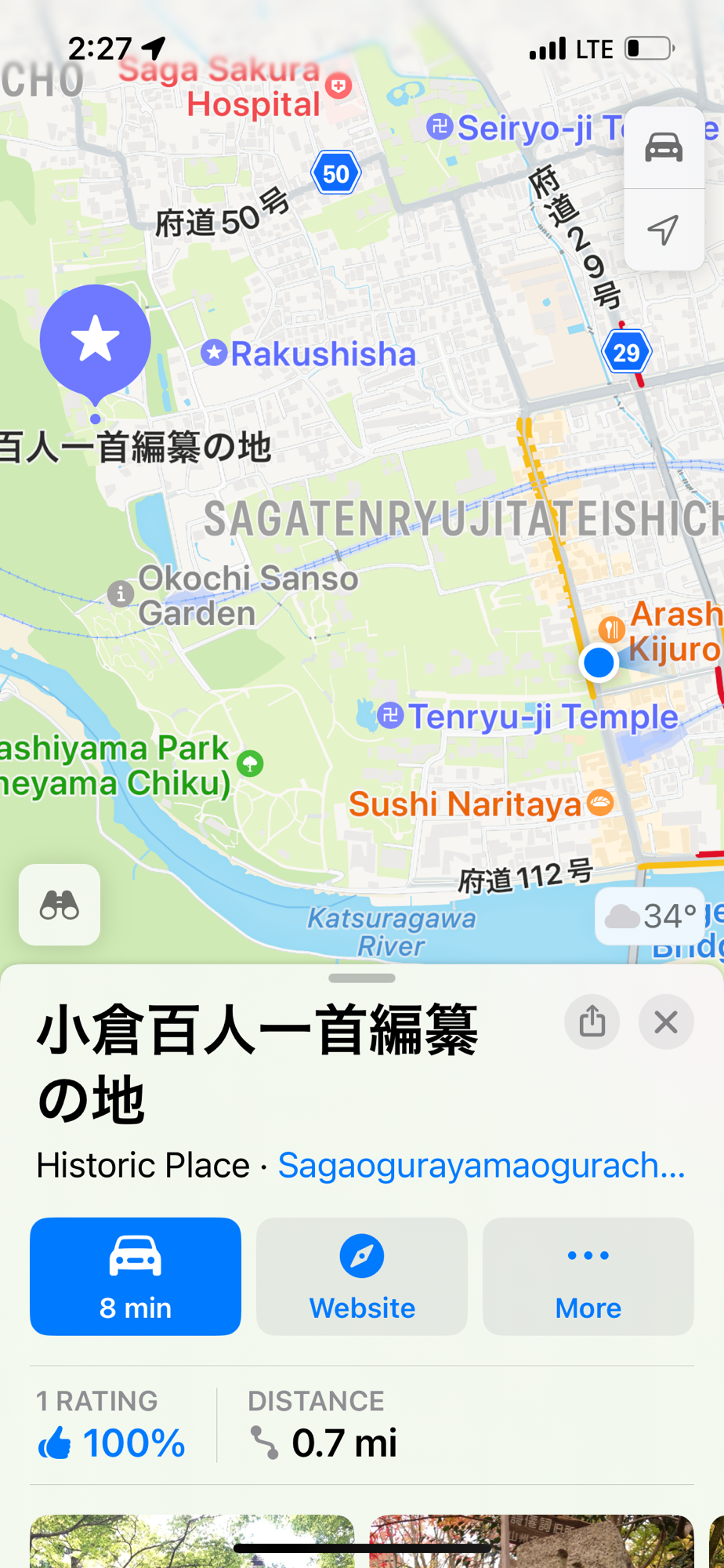
Then I noticed the following spot on my map app:

小倉百人一首編纂の地 (ogura hyakunin isshu hensan no chi) … the place where the Hyakunin Isshu was compiled…? Wow, that’s only 15 minutes by foot from where I was at!

The family was exhausted and sweaty, and were planning to return to our hotel, so I didn’t want to drag them uphill in the heat. I told them I’d be back, and I took off for the place on the map. It turns out that the properly had been converted to a Buddhist temple named Jojakkō-ji (常寂光寺) in the 17th century (a common practice in Kyoto). You can find the official website here.

This is Mount Ogura today.

I followed the map directions and made it safely to Jojakko-ji Temple:

There is a small entry fee, but once I paid that, I got to the second gate here:

The site of the Ogura Hyakunin Isshu is just down the path to the right, before the gate. I made the mistake of going up the stairs instead:

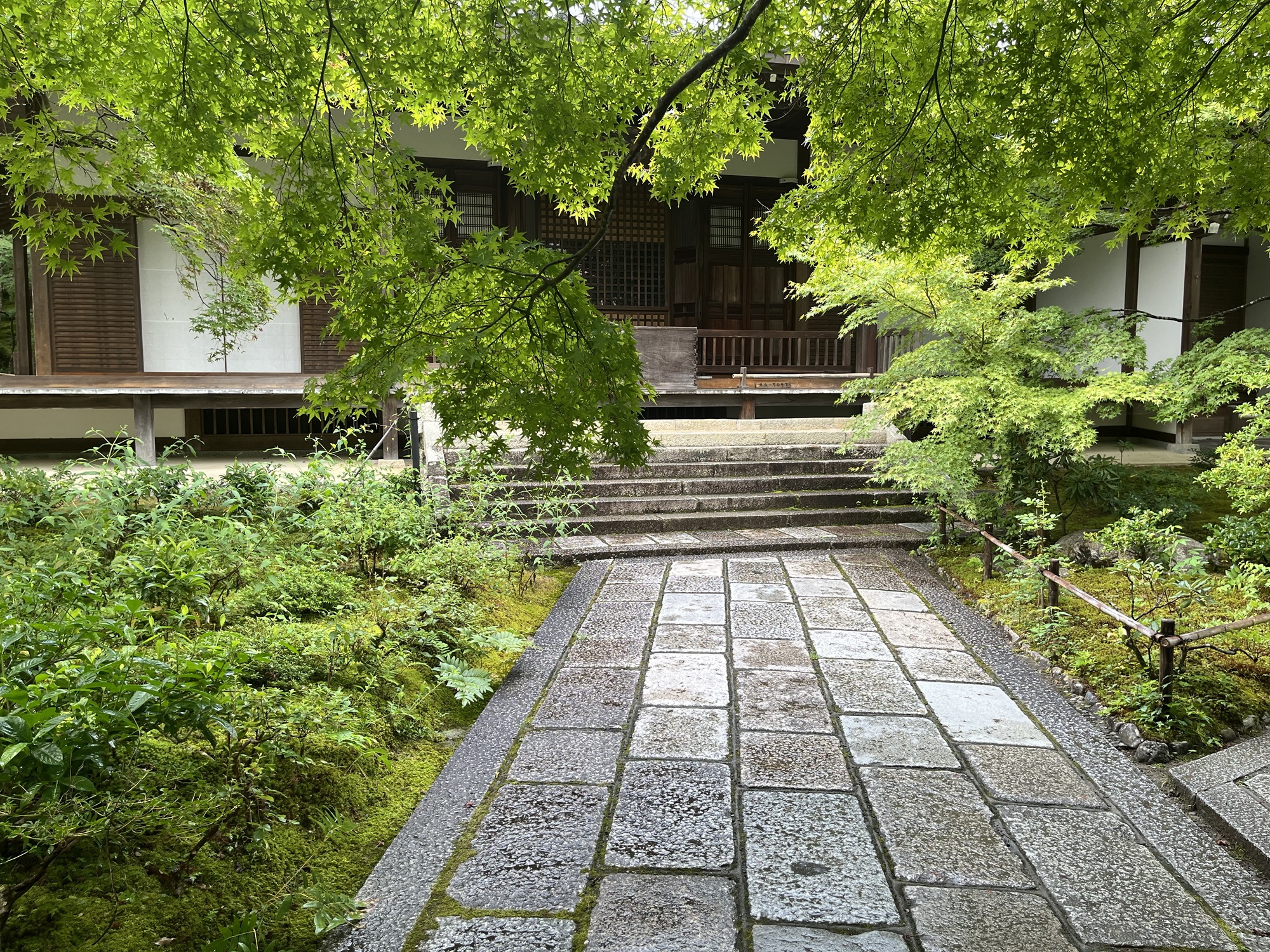
Jojakko-ji Temple is quite scenic actually:

… but it was very late in the day, my family was waiting back at Arashiyama, and I had to hurry. This was my one shot, probably in my lifetime, to find this place, but the temple maps, nor the website show precisely where it was.

Finally, I found it:

The photos from the prefectural website look a lot better than mine (good lighting helps). But there it was, the actual site where the Ogura Hyakunin Isshu was compiled!

The stone marker is pretty small and somewhat eroded, but there was no mistaking it.

Since I was short on time, I paused and said a quick “thank you” to Fujiwara no Teika and then headed back.

If you are fan of the Hyakunin Isshu, and you are in the Arashiyama area of Kyoto don’t miss this small but significant site.

P.S. while at Jojakko-ji, I met a nice Australian couple who had just finished their visit. They told me that at the top of the temple you can see a really view of Kyoto. I didn’t have the time to see it for myself, but if you go, don’t pass up the chance.

P.P.S. I forgot that, ten years ago, I had made a post about Mount Ogura. You can see the Togetsu-Kyo bridge here too.

1 We return every year when possible to visit my wife’s in-laws, and let the kids spend time with their relatives, learn more Japanese, etc.

2 Many earlier poems were also composed at a time when Japan’s capital moved around (Nara, Fujiwara-kyo, Asuka, etc) before settling down in Kyoto. See the Manyoshu for further details.

3 I did actually find one other place we visited earlier in the day, but more on that in an upcoming post.

Ancient Japanese Dad Joke: Manyoshu Poem Number 27

The poem from the Manyoshu feels like an ancient Japanese dad-joke. Read it out loud and you’ll see what I mean:

ManyoganaModern JapaneseRomanizationRough Translation
淑人乃よき人のYoki hito noMen of old
良跡吉見而よしとよく見てYoshito yoku mitecame to Yoshino
好常言師よしと言ひしYoshito ii shiand declared it a good place,
芳野吉見与吉野よく見よYoshino yoku miyoSo, good sons, go
良人四来三よき人よく見Yoki hito yoku miand take in the view!

The author of the poem is Emperor Tenmu whom we saw here and here. He is the younger brother of Emperor Tenji of Hyakunin Isshu fame (poem 1, あきの), and husband/uncle to Empress Jito (poem 2, はるす).

Yo, yo, yo, this poem has lots of “yo” words.

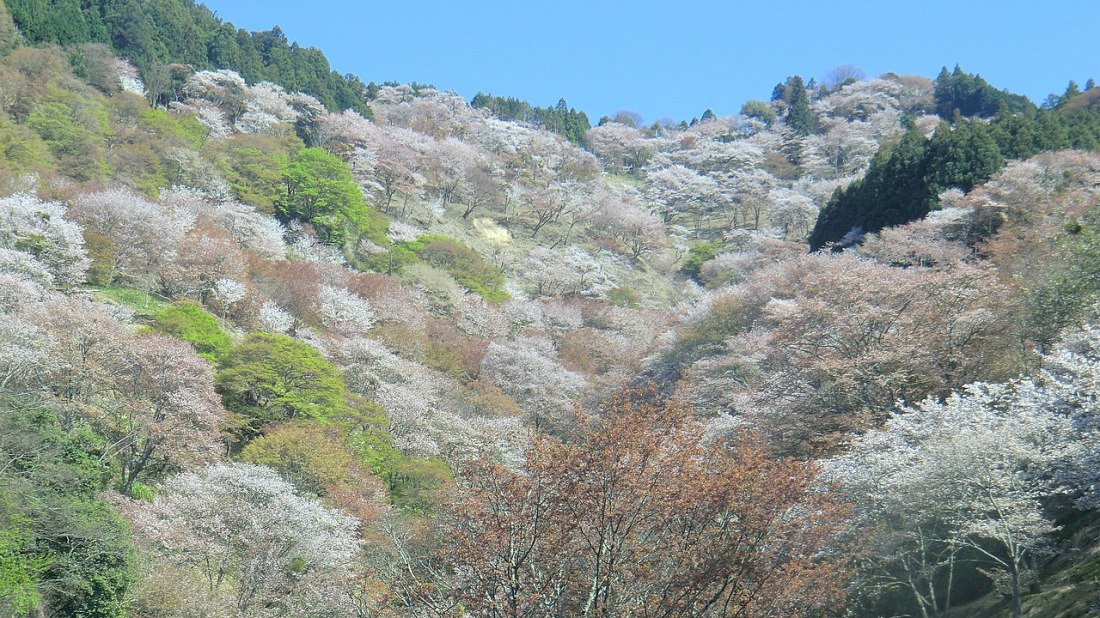
The poem was, evidentially, a suggestion by Emperor Tenmu to his sons to visit the beautiful village of Yoshino, near the old capital of Nara, famed for its otherworldly beauty in Spring. The featured image shows Yoshino and its famous cherry trees.

It was also an attempt to foster good relations between Tenmu and his sons through a combination of humor and providing some fatherly advice. Given how complicated family relations were at the time (see links above), and since Tenmu had defeated his own nephew in combat to assume the throne, he had reason to worry.

Sadly, it didn’t work.

After Tenmu’s passing, one son, Prince Ōtsu (ōtsu no miko, 大津皇子), started a rebellion and was later given the death penalty at the age of 24. Wikipedia implies that the rebellion may be a false charge though brought by Empress Jito so that her own son could ascend the throne. My book on the Manyoshu delves into this at length and comes to the same conclusion.

Still, you can’t blame Emperor Tenmu for trying to heal family divisions, yo.

Fashion of the Hyakunin Isshu

The fashion of the nobility of the Heian Period of Japanese history is fairly different than later, more familiar styles we often see in Japanese media like anime, manga, etc., because it reflects early Chinese influence, but also increasingly local innovations and culture. Further, as we’ll see, because the aristocracy was socially rigid and had many complex customs and rules, this affected how people dressed as well. Everyone knew their place, and their fashion reflected this too. I have touched on the subject a little bit here and here, but I always wanted to explore in depth. The issue was (until recently) a lack of resources and time. But, here we go.

Some great online resources for fashion during the Heian Period of Japanese history (c. 8th century to 12th century) can be found on this website (Google translated version here), and this site. The second link has some English in it, so even if you can’t read Japanese, it’s a great place to visit and look around.

However, for us Hyakunin Isshu poetry (and karuta) fans, you can see many great examples in the yomifuda cards too.

Women’s Fashion

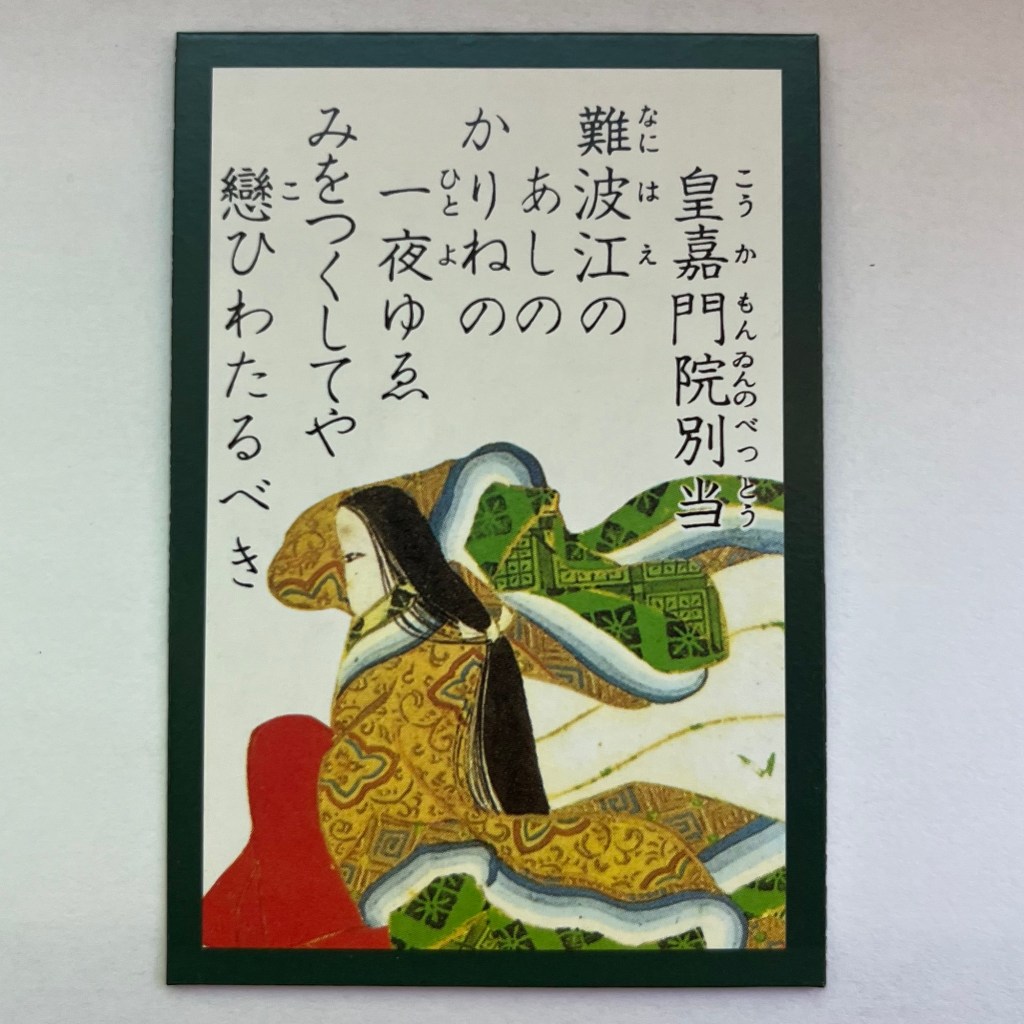
This card, depicts Daini no Sanmi (poem 58, ありま) of the Hyakunin Isshu. The illustration, part of the Ogata Korin collection, shows her in full formal dress.

Like many women of the Heian Period, during formal occasions, she would wear multiple layers of kimono robes called junihito-é (十二単) which literally translates to “twelve robes”. The women of the court did not actually wear 12 layers, but it was much heavier and bulkier than kimono fashion of later centuries.

Here’s another example: Suō no Naishi (poem 67, はるの):

And another: Kōkamonin no Bettō (poem 88, なにはえ):

A few things worth pointing out…

  • The robes (hitoé, 単) were very long and thus hard to walk in.
  • Over the layers of robes, the women would wear a “Chinese jacket” (karaginu, 唐衣).
  • The white train in the back was called a mo (裳), which tied around the waist.
  • The women wore hakama (袴) trousers much like Japanese traditional clothing today.

You can see a really good example of this kind of fashion here. Definitely check out the link.

Men’s Fashion

Men’s formal wear, if you can believe it, was actually more complicated than women’s. Broadly speaking, it could be divided into three categories: civil bureaucrats, warriors (e.g. palace guards), and upper class nobility including the Emperor.

Imperial Advisors

Because the Imperial court of Japan was modeled after the Chinese-Confucian bureaucracy from antiquity, there are some similarities in the fashion of the civil servants (bunkan, 文官): black robes, similar hats, etc. We can see some examples here: Middle Counselor Yakamochi (poem 6, かさ):

and Middle Counselor Yukihira (poem 16, たち):

Some things to point out here:

  • The hat they wore, the sui-ei-kan (垂纓冠) was a black lacquer helmet, but in this case, also had a ribbon hanging down the back too.
  • Black silk overcoat called a ho (枹), based on Chinese-Confucian style.
  • The high collar in the back was called an agekubi (盤領)
  • In formal settings, men would also wield a small, flat wooden scepter called a shaku (笏).
  • The silk pants were a variation of the modern Japanese hakama called an ué-no-hakama (表袴).
  • Finally, the shoes were a kind of black lacquer clogs called asagutsu (浅沓). Similarly to the women’s formal wear, it was hard to walk in.

You can see some great examples of both the summer dress and the winter dress.

One thing to note is that even samurai warlords who ruled the country in later periods (see Sanetomo), when they came to the capital (jōraku 上洛) were expected to wear this kind of court dress befitting whatever rank they had been bestowed. Although the samurai class held true power, they were still technically part of the Imperial court so customs persisted.

Guards

For the palace guards and other military figures, the formal dress was similar to the bureaucrats above, but with some notable differences. A good example from the Hyakunin Isshu is Fujiwara no Michinobu (poem 52, あけ):

Noting the differences here:

  • Guards and military figures were equipped with a sword (ken, 剣), bow (yumi, 弓), and a quiver of arrows (ya, 矢).
  • The crown on their head was shaped in a loop, not a long trailing one. It was called a ken-ei-kan (巻纓冠) instead.
  • The crown also had two fan-like protrusions called oikake (緌).
  • Instead of black-lacquer clogs, the shoes were often pointed-toe boots called kanokutsu (靴).

You can see an example here.

Upper Nobility

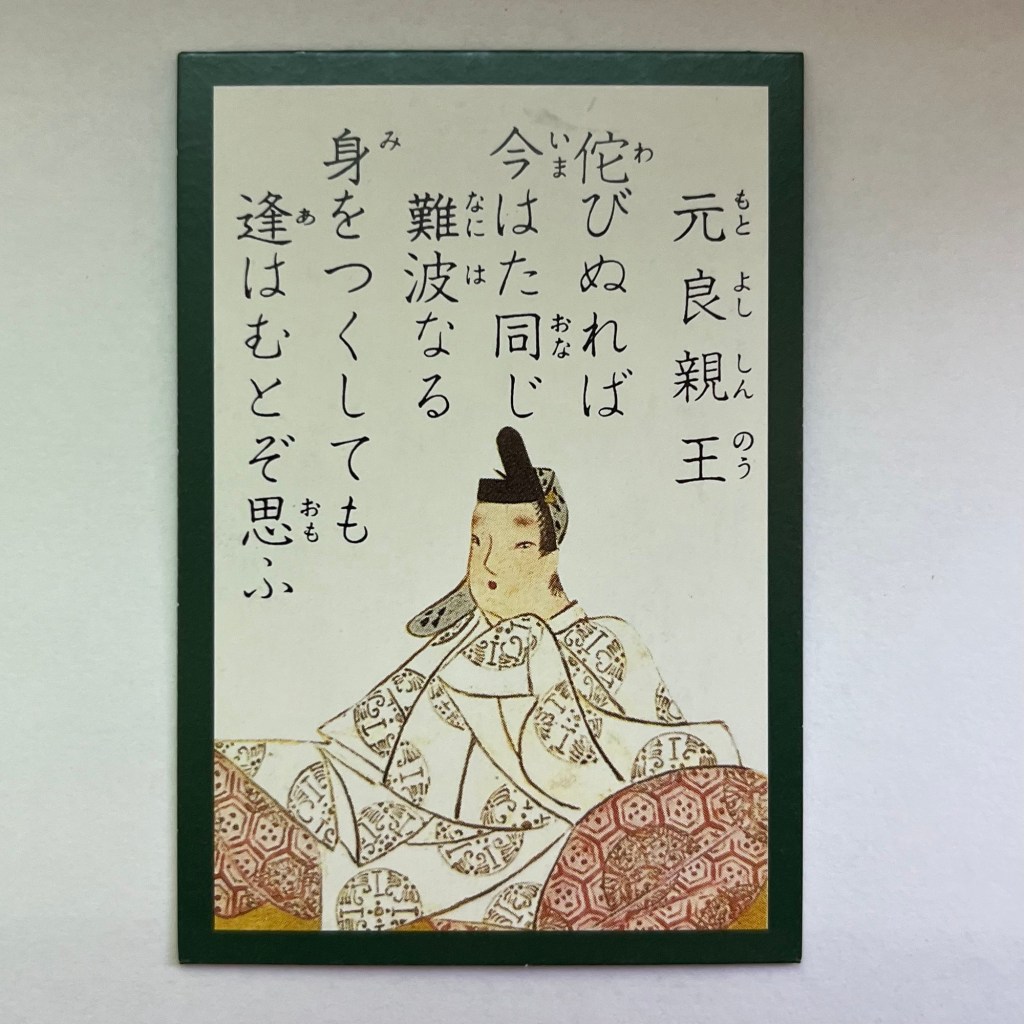
The upper nobility wore clothing that was pretty similar to other members court, but with one major exception: the colors of their robes. Here you can see Prince Motoyoshi (poem 20, わび):

As eluded to in Lady Murasaki’s diary and other sources, there was a strict hierarchy within the Court nobility, which was reinforced by which colors of robes people were permitted to wear. This included colors such as green (shown here), orange (shown here) or white (shown here). The green linked above was, for example, permitted to courtiers of the sixth rank, or palace servants of the fourth rank. Wikipedia has list of forbidden colors, and what ranks were associated with each. The point is is that just by looking at someone’s robes, members of the aristocracy knew each other’s place.

The very upper class nobility, namely those of the Emperor and his family, are often depicted in white robes with red trimming, which is similar to those used by Shinto priests (shown here). It’s probable this was intended to reinforce the Imperial family’s divine lineage, but that’s just a guess on my part.

The fashion used in the yomifuda Karuta cards really tells us a lot about the culture that the poets of the Hyakunin Isshu lived in.

The Birds of the Hyakunin Isshu

Waka poetry, including the Hyakunin Isshu has a lot of conventions and symbols used to express certain seasons or sentiments. This is not so unusual. For example, if someone in the US writes a poem about the smell of cinnamon, it definitely brings to mind late autumn or winter.

One common example in the Hyakunin Isshu of poetic symbolism are birds. Birds have distinctive calls, and different species tend to be prominent at different times of year, among other things. For this post, I included a lot of poetry from the Imperial anthology, the Kokin Wakashu, which is much larger than the 100 poems of the Hyakunin Isshu, and thus easier to find examples.

Spring

The most prominent bird in Spring is the uguisu, the Japanese Bush Warbler, also called the Japanese Mountain Thrush:

Photo by Alpsdake, CC BY-SA 3.0, via Wikimedia Commons

The uguisu’s distinctive bird call is very emblematic of the season.

The bird call of the uguisu sounds like ho-ho-ke-kyo, which to Japanese people sounds similar to a famous Buddhist text called the Lotus Sutra (hokekyo in Japanese). I’ve written much about the Lotus Sutra in my other blog, so I do not need to repeat here. Needless to say, when Spring comes, people in Japan inevitably hear this lovely sound, even in urban areas.

Oddly, there are no poems in the Hyakunin Isshu about the uguisu, however, I found many poems in the official anthology, the Kokin Wakashu. Here are a few of my favorites thus far. This first one is poem 4 by Fujiwara no Takako (藤原高子; 842–910) later Nijo-kisaki (二条后, “Nijō Consort”):

JapaneseRomanizationTranslation
雪の内にYuki no uchi niSpring has come amidst
春はきにけりHaru wa kinikerithe icy lingering snows
うぐひすのUguisu noof winter
れる涙Kōreru namidasurely now the frozen of the
今やとくらIma ya toku ranmountain thrush will melt away
Translation by Laurel Rasplica Rodd and Mary Catherine Henkenius from Kokinshu: A Collection of Poems Ancient and Modern

and this one, poem 10, by one Fujiwara no Kotonao:

JapaneseRomanizationTranslation
はるやときHana ya tokiHas spring come early—
花やおそきとHana ya osoki toor are the plum blossoms late—
ききわかKiki wakanI would like to know
鶯だにもUguisu dani mobut not even the song of the
なかずもあるかなNakazu mo aru kanamountain thrush trills the answer
Translation by Laurel Rasplica Rodd and Mary Catherine Henkenius from Kokinshu: A Collection of Poems Ancient and Modern

and finally this one by Mibu no Tadaminé whom we know from poem 30 in the Hyakunin Isshu (ありあ):

JapaneseRomanizationTranslation
春来ぬとHaru kinu toAlready they say
人はいどもHIto wa iedomoSpring is here but as for me
うぐひすのUguisu nowhile yet there is no
なかぬかぎりはNakanu kagiri wasong from the mountain thrush
あらじとぞ思Araji to zo omouI cannot believe spring has come
Translation by Laurel Rasplica Rodd and Mary Catherine Henkenius from Kokinshu: A Collection of Poems Ancient and Modern

Summer

In summer, the most iconic bird is the hototogisu, the Lesser Cuckoo.

Photo by christoph_moning, CC BY 4.0, via Wikimedia Commons

And it’s call sounds like so:

We’ve seen the Lesser Cuckoo in poem 81 (ほ) of the Hyakunin Isshu by Gotokudaiji no Sadaijin.

It is also found in Imperial anthologies such as the Kokin Wakashu by an anonymous source:

JapaneseRomanizationTranslation
郭公ほととぎすHototogisuWhen nightingales sing
鳴くや五月のNaku ya satsuki noin the sweet purple iris
あやめ草Ayamegusaof the Fifth Month
あやめも知らぬAyame mo shiranuI am unmindful of the warp on
恋もするかなKoi mo suru kanawhich we weave love’s pattern
Translation by Laurel Rasplica Rodd and Mary Catherine Henkenius from Kokinshu: A Collection of Poems Ancient and Modern

Apparently, the bird was highly praised during the aristocratic court culture of the Heian Period, and Sei Shonagon (poem 62) mentions an expedition in her Pillow Book:

[94] …it had been overcast and tending to rain since the first day of the [fifth] month. Some of us were sitting about at a loose end, when I came up with the suggestion that it would be fun to go off on an expedition to hear the hototogisu….

[ later ] … and as for the hototogisu, they were indeed calling back and forth, so loudly in fact that they made almost too much of a din for comfort.

Translation by Dr Meredith McKinney

The anecdote is quite long, but Sei Shonagon and the other ladies-in-waiting do encounter the hototogisu, and meant to write poetry about them, but then through a series of interactions forgot the poetry entirely and came back to the Empress empty handed, followed by various witty comments back and forth.

Autumn

Unlike the Spring, where the call of the bird is highly praised in poetry, in the Autumn, the Hyakunin Isshu Daijiten lists a few birds that were revered in poetry. For example, migratory birds, such as the Wild Goose (kari):

Photo by Piotr Kuczynski, CC BY-SA 3.0, via Wikimedia Commons

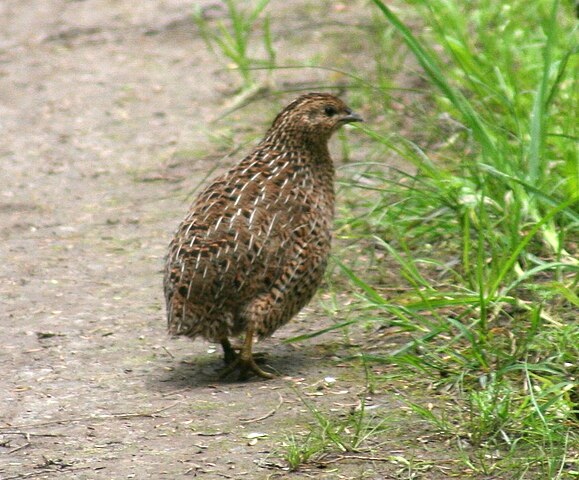
Or birds with autumnal colors such as the Quail (uzura):

Photo by Duncan Wright, CC BY-SA 3.0, via Wikimedia Commons

Or the swift Shrike (mozu):

Photo by Antonios Tsaknakis, CC BY-SA 4.0, via Wikimedia Commons

I had some trouble finding poems for the fall birds listed in either the Hyakunin Isshu or the Kokin Wakashu anthology, but there seems to be a lot in the later Shin-Kokin Wakashu anthology. I don’t have a reliable translation of the Shin-Kokin Wakashu, so I may update later.

I did find this poem under the section “Miscellany 2” in the Kokin Wakashu, poem 497 by an anonymous poet:

JapaneseRomanizationTranslation
野とならばNo to narabaIf all becomes dense fields
うづらとなきてUzura to nakiteI will pass my years
年はへToshi wa hencrying like a quail—
かりにだにやKari ni dani ya wafor surely you will come
君がこざらKimi wa kozaranif only for a few days’ hunt.
Translation by Laurel Rasplica Rodd and Mary Catherine Henkenius from Kokinshu: A Collection of Poems Ancient and Modern

Winter

The birds associated with winter, were birds whose cries were melancholy and said. First and foremost is the plover, which we saw in poem 78 (あわじ) of the Hyakunin Isshu:

Photo by J.M.Garg, CC BY 3.0, via Wikimedia Commons

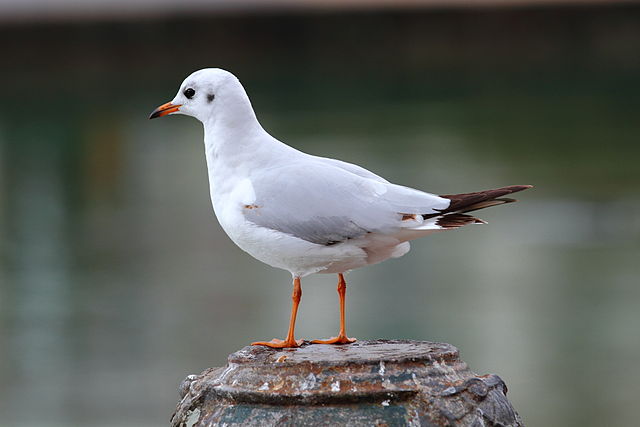
Or the Black-headed Gull (miyako-dori, meaning “bird of the capital”):

The miyakodori in particular stood out due to its unusual name. The Hyakunin Isshu Daijiten lists a poem from the official Kokin Wakashu anthology of note, poem 411 under the section “Travel Poems”:

JapaneseRomanizationTranslation
名にしおはばNa ni shi owabaOh capital bird
いざ言問はむIza koto towanif you are true to your name
都鳥Miyako-doriyou will know
わが思ふ人Waga omou hito watell me if the one whom I love is
ありやなしやとAri ya nashi ya tostill in this world of partings
Translation by Laurel Rasplica Rodd and Mary Catherine Henkenius from Kokinshu: A Collection of Poems Ancient and Modern

The headline for this poem explaining the backstory is unusually long, but basically the poet, Ariwara no Narihira (who also wrote poem 17, ちはやふる, in the Hyakunin Isshu) was away in eastern Japan with some companions, and longing for home in the capital, they saw a miyako-dori bird (lit. “capital bird”) and recited this poem.

And finally there is the Mallard (kamo):

Photo by Chuck Homler d/b/a FocusOnwWildlife, CC BY-SA 4.0, via Wikimedia Commons

The Mallard in particular had dual-association with romance and with the melancholy of winter. This poem in the Kokin Wakashu, number 533, by an anonymous author illustrates this:

JapaneseRomanizationTranslation
葦鴨のAshigamo noNo more than do
騒ぐ入江のSawagu irie noWhite waves dancing across the
白浪のShiranami noinlet, where reed ducks
知らずや人をShirazu ya hito wocry out noisily, no more
かく恋ひKaku koin to wadoes my love know my yearning.
Translation by Laurel Rasplica Rodd and Mary Catherine Henkenius from Kokinshu: A Collection of Poems Ancient and Modern

Other Birds

Certain birds were also used in Japanese poetry for symbolic purposes, but not necessarily for seasonal expression.

We’ve talked about birds associated with seasons thus far, but there’s a couple worth calling out that are an important part of Japanese poetry, but not related to seasons. The first is the Copper Pheasant, called yamadori, which we saw in poem 3 of the Hyakunin Isshu (あしびきの).

In antiquity, it was thought that Copper Pheasants mated for life (true), but slept in separate nests at night. Thus, the poet Kakinomoto no Hitomaro likened himself to a Copper Pheasant sleeping alone at night part from his lover.

And finally we come to the magpie. In poem 6 of the Hyakunin Isshu (かさ), the poet Chūnagon Yakamochi describes frost growing under moonlight on the so-called Magpie Bridge of the Imperial Palace. The magpie (kasasagi) was associated with a Chinese myth that evolved into the Qīxī Festival (七夕), celebrated as Tanabata in Japan.

The Magpie Bridge, illustration by ScribblingGeek, CC BY-SA 4.0, via Wikimedia Commons

In this tale, two star-crossed lovers, a celestial princess and a cowherd, were forcibly separated in the heavens by her father the Jade Emperor, but allowed to reunite one night a year. It was said they would reunite by crossing a bridge made of magpie birds who put their outstretched wings together. Thus, the magpie was always associated with this famous tale.

June Updates and Lazy Izumi Poem

Hi all,

You may have noticed the blog looks a bit different now. I have been struggling since the big blog refresh I started in December 2022 to get the appearance just right. Design isn’t my forte (I am a history nerd), so I’ve struggled with finding the right design for this blog. The original blog template on WordPress was so old (this blog was started in 2011) that it was no longer supported by WordPress, so I had to find something else that works. After dabbling with a few designs this past year, I’ve settled on current blog template as of last week and I am pretty happy with it. I hope you all like the new design. I liked it so much I applied the same template to the other blog.

Next news: I will be off to Japan again this summer … though only briefly. The family and I will visit the ancient capitol of Kyoto, just like last year,1 but the visit overall is much more limited and I probably won’t get to see many things related to this blog. I won’t have time to visit Oishi Tengudo again, or Kitano Tenmangu Shrine, but I do however plan to make a stop at Kurumazaki Shrine (mentioned here) to pick up one of those Sei Shonagon (poem 62, yo wo komete) charms. I may try to work in a few other tourist spots related to the Lady Murasaki drama given that it’s popular right now. I also expect to melt under 35C(95F)-degree weather with 75% humidity again like last year.2

I have a few more posts coming up between now and the trip (late July), and I hope you will find them interesting.

Finally, just as a fun bonus, I wanted to share a one-off poem by Lady Izumi (poem 56, arazan) that I recently heard on a different Japanese historical drama. Lady Izumi is one of my personal favorite figures in the Hyakunin Isshu, and this poem was first recorded in an Imperial anthology, the Goshūi Wakashū (後拾遺和歌集), poem 755:

JapaneseRomanizationTranslation
黒髪のKuro kami noMy black hair’s
みだれもしらずmidarete shirazuin disarray — uncaring
うち臥せばuchi fusebahe lay down, and
まづかきやりしmazu kakiyarishifirst, gently smoothed it:
人ぞ恋しきhito zo koishikimy darling love.
Translation source: http://www.wakapoetry.net/gsis-xiii-755/

It’s not clear from this poem which lover she is referring to, since she had a number of relationships over the years, nonetheless it is a very sincere, romantic poem and expresses her passionate style nicely.

Happy Summer!

P.S. speaking of history nerd, I’ve debated about making a Japan / history podcast (like many other fine podcasts I follow), but have struggled to find a good theme. I might simply do the “history of the hyakunin isshu” podcast someday. It’s a bit commitment though, so we shall see.

1 While we do visit Japan yearly so my kids can spend the summer with their grandparents and extended family, visits to Kyoto are rare because of cost, time, and so on. Our last visit was almost 15 years ago. It just so happens that we could make two trips in two years. After that, who knows when we will visit next?

2 Without going into too many details, the humidity, heat and fluid loss aggravated an old medical issue I have. A reminder to stay hydrated, and avoid junk food. I like getting older in many ways, except at times like this. 😋

The Pillow Book

Since I spent so much time gushing over First Summer Uika and her portrayal of Sei Shonagon in the Japanese drama Hikaru Kimi É (“Addressed To You, My Radiant One”), this seemed like a good time to talk about the Pillow Book, or Makura no Sōshi (枕草子).

Despite the name “Pillow Book”, the book has no erotic content. Instead, it is a collection of witty musings about life in the Heian Period aristocracy, early 11th century. The image is of a person lying on their pillow, composing thoughts in a diary.

The author, Sei Shonagan (poem 62), was one of the pre-eminent writers of her generation, in a field of many excellent talented women.

I had read the book many years ago, and I felt it was a bit dry at times since it has no narrative. But back then, I also had a much more limited understanding of Heian Period culture, and many of the things mentioned in the Pillow Book are also alluded to in the Hyakunin Isshu, as well as the Diary of Lady Murasaki. So, even if the format is different, all three collections draw from the same “cultural well”.

I thought I had lost my copy of the Pillow Book (the Penguin Classics version, translated by Dr Meredith McKinney) a long time ago, but was amazed to discover that it was just buried behind other books. So, I dusted off the book and have been reading through it again.

Sei Shonagon is a keen observer of life in the Heian Period, and makes lists for all kinds of obscure things:

[23] Occasions that induce half-heartedness — The religious services on days of Buddhist fasting. Preparations for something still far in the future. Long periods of seclusion at a temple.

trans. by Dr Meredith McKinney

or:

[65] Poetic anthologies — The Manyōshū. The Kokinshū.

[66] Topics of poetry — The capital. The kudzu vine. The water burr. Horses. Hail.

trans. by Dr Meredith McKinney

Or she adds things to lists that were probably drawn from personal experience:

[132] Occasions when time drags by — An abstinence that you must observe away from home. A game of sugoroku when you can’t manage to get your pieces off the board. The house of someone who’s failed to get a promotion in the Appointments List. And of course the worst of all is simply a day of heavy rain.

trans. by Dr Meredith McKinney

It’s also clear that Sei Shonagon had a pretty haughty attitude, especially when compared to Lady Murasaki’s (poem 57) withdrawn, melancholy tone or Lady Izumi’s (poem 56) whimsical passion. As they say in modern Japanese: seikaku ga deru (性格が出る, “people’s personalities come out”). In one anecdote, section 94, she grumbles about encountering “worthless peasants”. I wouldn’t be surprised if she was the only one among the nobility at the time who held such views, but it is nonetheless painful to read.

One thing I do particularly enjoy about the Pillow Book though are the anecdotes. While many of the entries are just lists and her opinions, she often reminisces about funny, sad or strange occurrences she witnessed during her 10-year tenure serving the ill-fated Empress Teishi. Some of these anecdotes and observations are quite long, while others are brief. Some happened long ago, and Sei Shonagon’s memory is a bit fuzzy, others are more recent.

For example in one anecdote, number 79, she talks about how her relationship with one Officer of the Left Gate Watch named Norimitsu had soured after an incident where he covered for her. She had gone somewhere and only Norimitsu knew her whereabouts, but the Captain Consultant demanded to know where she had gone and Norimitsu tried to keep his mouth shut. Later when Norimitsu complained, she sent a piece of dried seaweed in reply, and Norimitsu got annoyed. She criticized his lack of sense, and he was frustrated at her for putting him in such a difficult position. Later she muses that they grew more and more distant after that incident until “later, Norimitsu was promoted to Deputy Governor of Tōtōmi Province, and the relationship ended in hostility.”

Sei Shonagon discusses many people of the Court, including other ladies in waiting, but does not mention Lady Murasaki and other famous women of the Hyakunin Isshu. Such women served under the second empress, Shoshi, and thus came a bit later anyway. By the time Emperor Ichijo married a second time, Teishi’s status had greatly declined and her retinue (including Sei Shonagon) were on their way out the door. Teishi herself soon died in childbirth.

The Pillow Book is a really nice “slice of life” look at the court culture of the time: sometimes amusing, sometimes exquisite, and sometimes depressing. Her wit really shows through the ages and even today kids in Japan (and people outside Japan) still read her book.

P.S. Featured photo is a drawing of Sei Shonagon from a 13th-century illustrated copy of the Pillow Book. Courtesy of Wikimedia Commons.

The Scattering Years of My Life: Poem 96

Something we all have to face in the end:

JapaneseRomanizationTranslation
花さそHana sasouIt entices the flowers—
あらしのにわArashi no niwa nothe storm—but through
the garden’s white,
雪ならでYuki nara deit is not snow,
ふりゆくものはFuri yuku mono waand what it is that’s scattering
わが身なりけりWa ga mi narikeriare, in fact, the years of my life!
Translation by Dr Joshua Mostow

The author, Nyūdō Saki no Daijōdaijin (入道前太政大臣, 1171 – 1244), or “Buddhist novice and former Chancellor of the Realm”. His personal name was Fujiwara no Kintsune. He was a powerful member of the elite Fujiwara clan and extended his support to the Hyakunin Isshu’s compiler, Fujiwara no Teika (poem 97), after Teika married Kintsune’s older sister. He was also well-liked by members of the old Imperial Court and the new military government at Kamakura.

According to Mostow, Kintsune married a niece of Minamoto no Yoritomo, the first shogun of the new military government. After Yoritomo’s son Sanetomo (poem 93) died a tragic death with no heir, Kintsune pushed to make his grandson Kujō Yoritsune, a distant relation to Sanetomo, the next shogun. My new book states that his reputation worsens in his later years as he kept manipulating the power of shoguns from behind the throne.

It also implies that Kintsune may have helped tip off the new military government about Emperor Gotoba’s (poem 99) plans to wrest back control, helping to contribute to the demise of the Emperor and his son (poem 100).

Ah, times had changed since the earlier generations of the Hyakunin Isshu mostly worried about poetry contests and marriage arrangements.

But I digress.

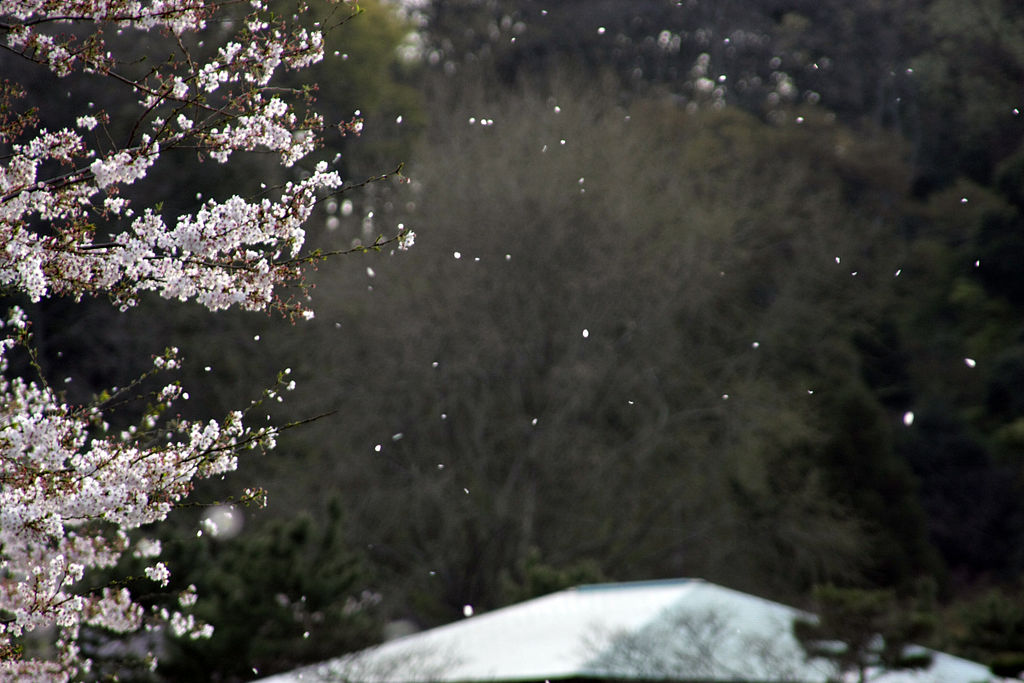
This poem, unlike other poems recently posted which were more clear-cut in meaning, often was the subject of much interpretation. The contrast between the aging man and the scattering of flowers in the wind, called hana fubuki (花吹雪) led to many interpretations by later commentators particularly about the man growing old, according to Professor Mostow. Perhaps he won’t be back next year?

The image of hana fubuki also is noteworthy, because it isn’t a small scattering of flowers. It refers to great scattering of blossoms in the wind, just like a snowfall. Thus Kintsune is witnessing this great scattering even as he contemplates his own decline even after so many years in power.

Pretty awesome poem, really, for a man who lived a noteworthy life.

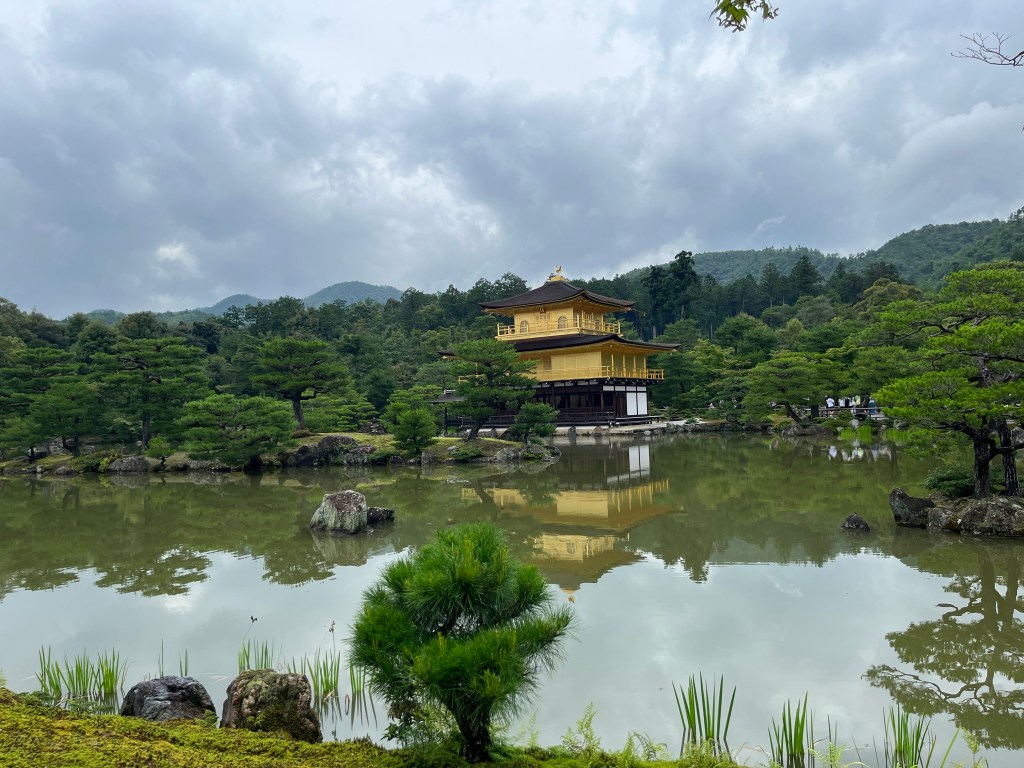
Speaking of scenic views, Kintsune’s residence of Saionji (西園寺), which was also established as his clan’s new name (Saionji), later became the famous Golden Pavilion.

Taken by me in July 2023

Indeed Kintsune’s contribution to Japanese culture and history, dubious as it may be, can be felt even today.

The Fulling of Cloth: Poem Number 94

Although not a well-known poem in the Hyakunin Isshu, I rather like this one for some reason:

JapaneseRomanizationTranslation
みよし野のMiyoshino noFair Yoshino,
山の秋風Yama no aki-kazethe autumn wind in its mountains
さよふけてSayo fuketedeepens the night and
ふるさとさむくFurusato samukuin the former capitol, cold
衣うつなりKoromo utsu nariI hear the fulling of cloth
Translation by Dr Joshua Mostow

The author, Sangi Masatsune (参議雅経, “Counselor Masatsune”, 1170-1221), also as known as Fujiwara no Masatsune, was another editor of the Shin Kokin Wakashū like Yoshitsune (poem 91) and went on to found the poetic house of Asukai (also famous for calligraphy). He also studied under Shunzei (poem 83) earlier in his career.

I had to look up what fulling cloth meant, but apparently it’s the process of beating cloth, especially wool, to improve the texture, or in the case of Japan, give the cloth a nice glossy sheen. You can see an example of this above, in a painting made in the 1800’s, almost 700 years later. I can’t imagine the process changed much within that time. The process was to place the cloth on a wood or stone surface and pound it with a wooden mallet. In Japanese, the process called koromo utsu (衣打つ) just as it is mentioned in this poem.

Also, this poem, like other poems we’ve looked at recently (poem 90 and poem 91), alludes to a much older poem by Korenori (poem 31), which also mentions snow in the village of Yoshino (yoshino-chō, 吉野町), near the old capitol of Nara.

Interestingly, the “former capitol” is referred to by the poetic phrase furusato, which in modern Japanese means one’s hometown. Nara was the capitol of Japan during the early Nara Period, and personally my most favorite place to visit in Japan. The culture at that time was an interesting fusion of early Japanese culture, Chinese art and culture, and Indian Buddhism (via Silk Road). Even after the capitol was moved to Kyoto (another great place), there existed many euphemisms to the “former capitol” by later poets and authors (poem 61, for example) as a kind of nostalgia or the “good ol’ days”. Hence the use of the term furusato I believe.

P.S. Featured photo is Surimono, Woman Fulling Cloth in the Moonlight, by Shigenobu, Brooklyn Museum, No restrictions, via Wikimedia Commons