Nonomiya Shrine, Charms and Thank You

Happy Holidays, Dear Readers!

As I noted in my other blog, I am taking time off the rest of the year to rest, and catch up on nerd projects.

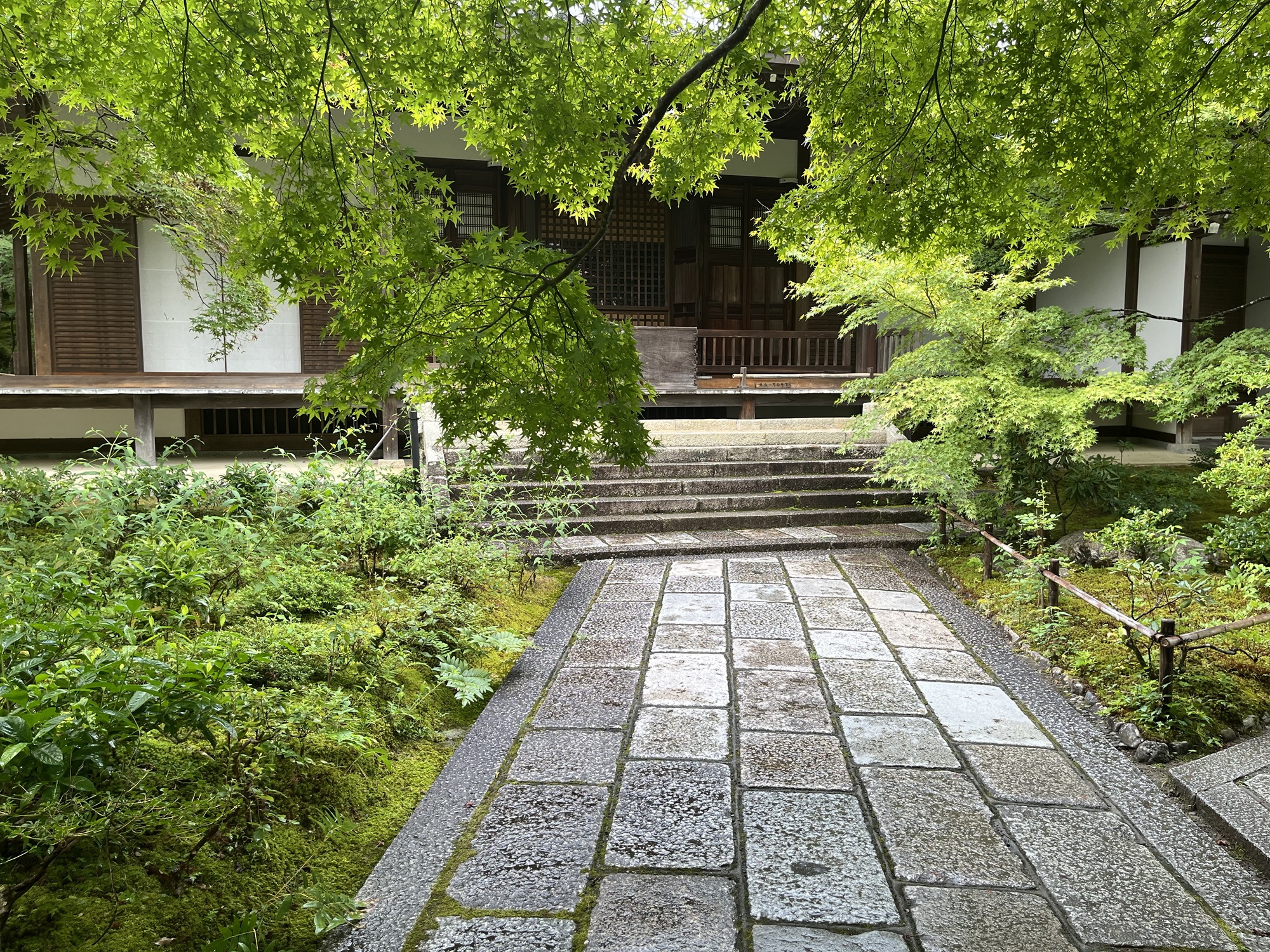
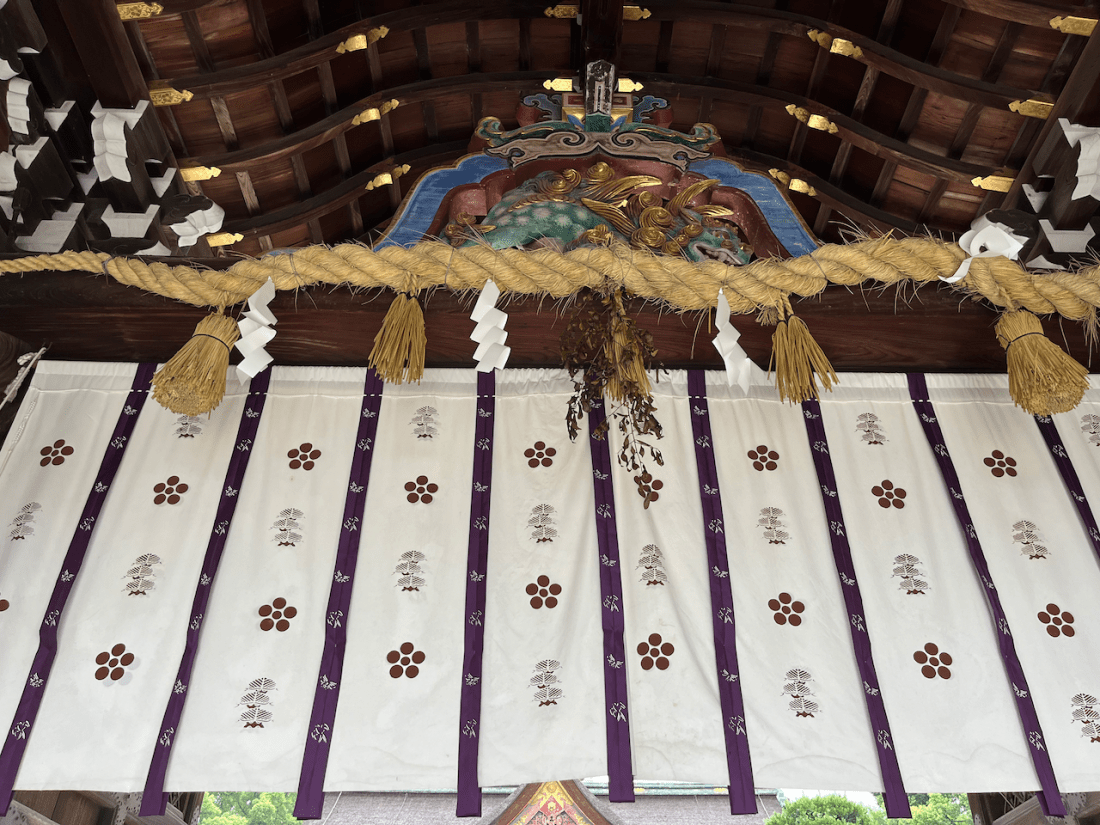
One last post before end of the year: I forgot to share this previously, but during the trip to Japan this summer, and on the same day we both visited the shrine to Sei Shonagon, and the site where the Hyakunin Isshu was compiled, I made one more stop: Nonomiya Shrine. The official website is here (English).

Nonomiya Shrine (nonomiya-jinja, ้‡Žๅฎฎ็ฅž็คพ) is a Shinto shrine that has been around since antiquity in west Kyoto within the bamboo forests. You can see it here on Google Maps:

While it is not related to the Hyakunin Isshu, it is related to Lady Murasaki (poem 57, ใ‚), whom I wrote about here. You see, one of the most iconic chapters of the Tales of Genji, Lady Murasaki’s famous novel, the “Heartvine” (Aoi, ่‘ต) takes place at Nonomiya Shrine. Here, Genji the protagonist meets Lady Aoi his future wife. So, Nonomiya Shrine is associated with romance and falling in love, or meeting one’s soulmate, and since it was already a fixture in Kyoto culture at the time, Lady Murasaki used it as the backdrop for this romantic encounter.

Even now, many people (both Japanese and tourists) come here to pray for love, and many of the omamori charms are focused on romance too. It’s nestled within the famous bamboo forests in the area:

I stumbled upon it by accident after leaving the aforementioned site where the Hyakunin Isshu site was compiled. My family was waiting for me, it was late in the day, and it was very hot and humid, so I didn’t stay very long, but I wanted to at least grab a few photos, and get an omamori charm.1

Anyhow, that’s it for the blog for 2024.

I wanted to end this post by saying thank you to readers. The blog has been been around since 2011 (with some major gaps in content), and with plenty of twists and turns, but I am happy to see that people are still actively reading it, and discovering the Hyakunin Isshu, Heian-period culture, and Japanese poetry overall.

See you all next year!

P.S. Not far away was an exhibit for the historical drama about Lady Murasaki as well.

1 Most of the charms are for en-musubi (็ธ็ตใณ), meaning finding a partner in life, but since I am already happily married, I looked for something general. I picked up a omamori for kai-un (้–‹้‹), meaning “good luck”, but it showed the famous scene from the Tales of Genji where Genji and Lady Aoi meet at Nonomiya Shrine. I wish I remembered to take a photo sooner, but I already gave it to someone, and have no photos to show. ๐Ÿคฆ๐Ÿผโ€โ™‚๏ธ

You can see it on the website here, the charm on the upper-right corner.

Kurumazaki Shrine

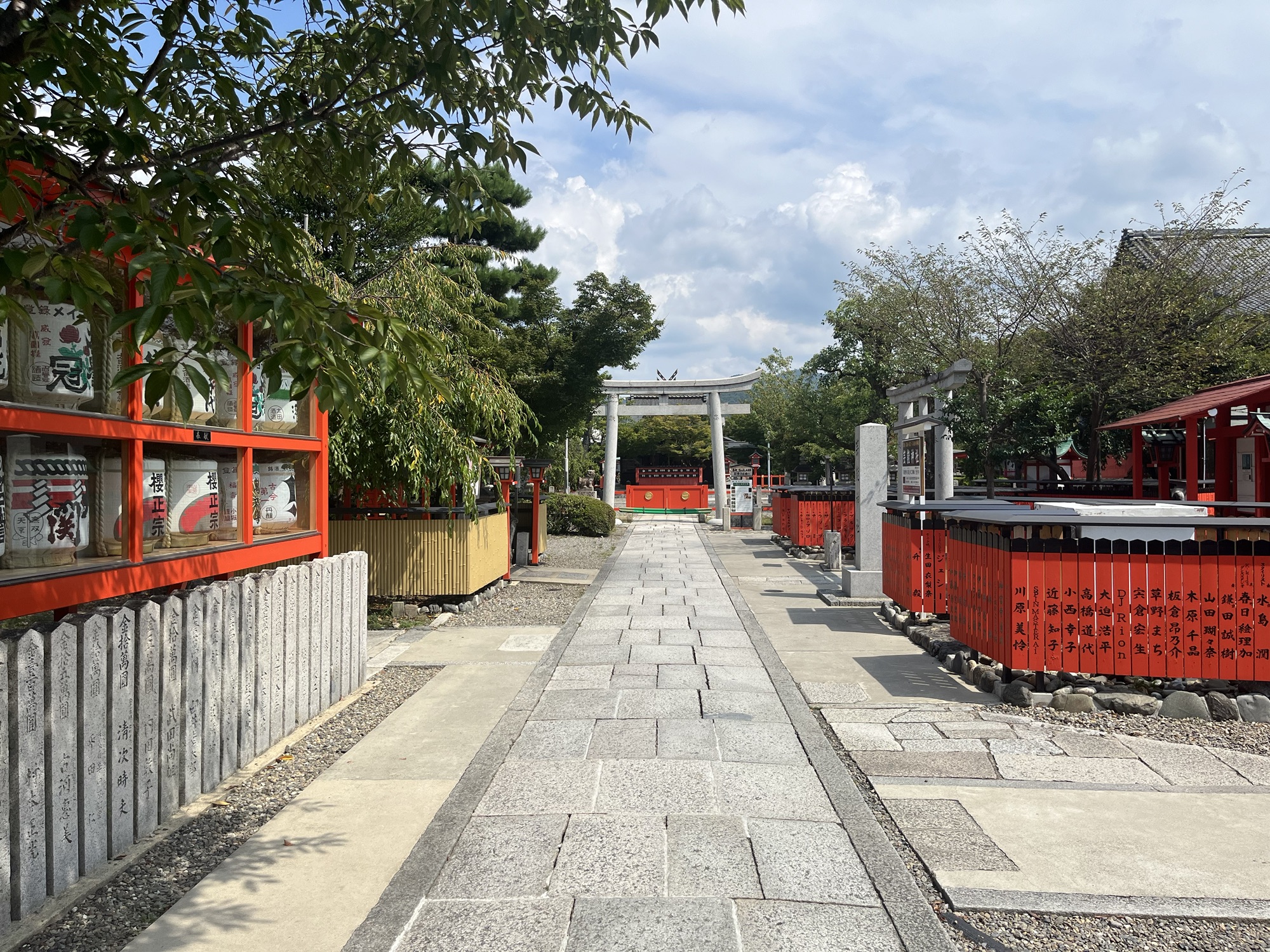
During our recent trip to Japan, we visited the city of Kyoto. I talked about this here, but I also wanted to share another site in Kyoto that relates to one of the poets of the Hyakunin Isshu : Kuramazaki Shrine. You can find their official website here, but there is no English and the site is a bit hard to navigate. The shrine itself has a very interesting layout:

The photo above is the main promenade leading to the inner sanctum (toward the back). Apparently, it’s tradition in Japanese culture to walk along the edge of the walkway, not right in the middle, so bear that in mind when visiting a shrine like this.

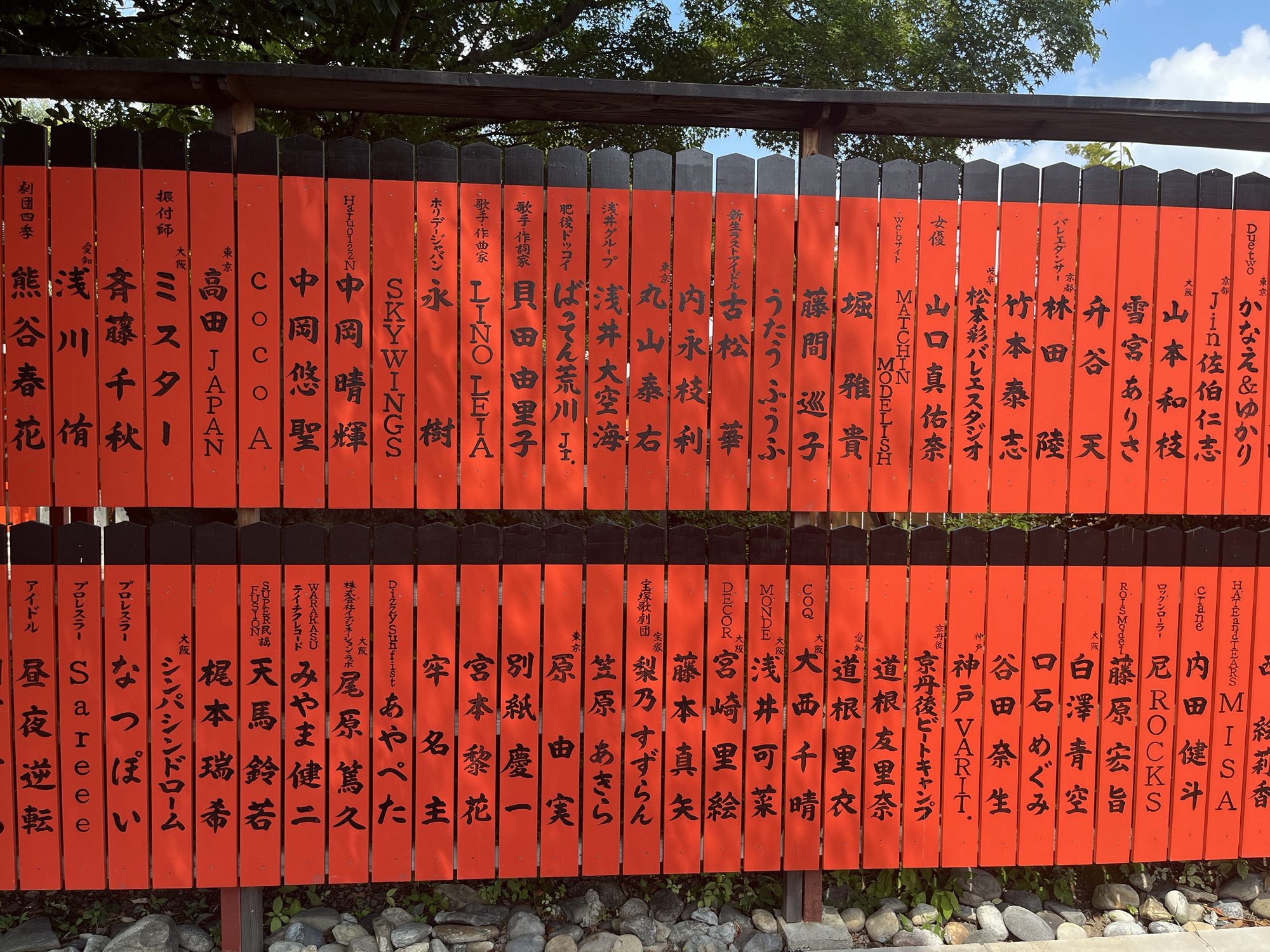
This Shinto shrine is notable for its many visits by celebrities who leave autographed red plaques.

Shinto shrines often serve particular need in society: love, business success, health, etc. In the case of Kurumazaki Shrine, the focus is on show-business, acting, theater, etc.

Why does this matter?

It turns out that Sei Shonagon, author of the Pillow Book and poem 62 (ใ‚ˆใ‚’) in the Hyakunin Isshu is enshrined here. Not only that, but you can purchase a special omamori charm with her image on it. I learned about this place on social media after seeing the actress First Summer Uika, who played Sei Shonagon in the historical drama, visit the shrine.

Because this site contains many sub-shrines and side passages, it took a bit of effort to find Sei Shonagon’s shrine. It is halfway down the promenade, on the left, and looks like so:

I paid my respects to this esteemed author, and the family and I continued to explore. I found First Summer Uika’s plaque near the inner sanctum:

Incidentally, my wife is a fan of the JPop group Snow Man, and you can see one of their markers just to the left. We both got something out of this trip. ๐Ÿ˜›

As I alluded to earlier, the shrine complex is deceptively long, with many nooks and hidden shrines and side paths. The site map gives some sense of this. For reference, the Sei Shonagon shrine is number 20 on the map, and you can see there are many other sites here too. I didn’t photograph every shrine here, and most are probably obscure to readers (and obscure to myself). The common theme was both fortune, and also show business. They were some pretty neat shrines though, such as this one showing various theater masks:

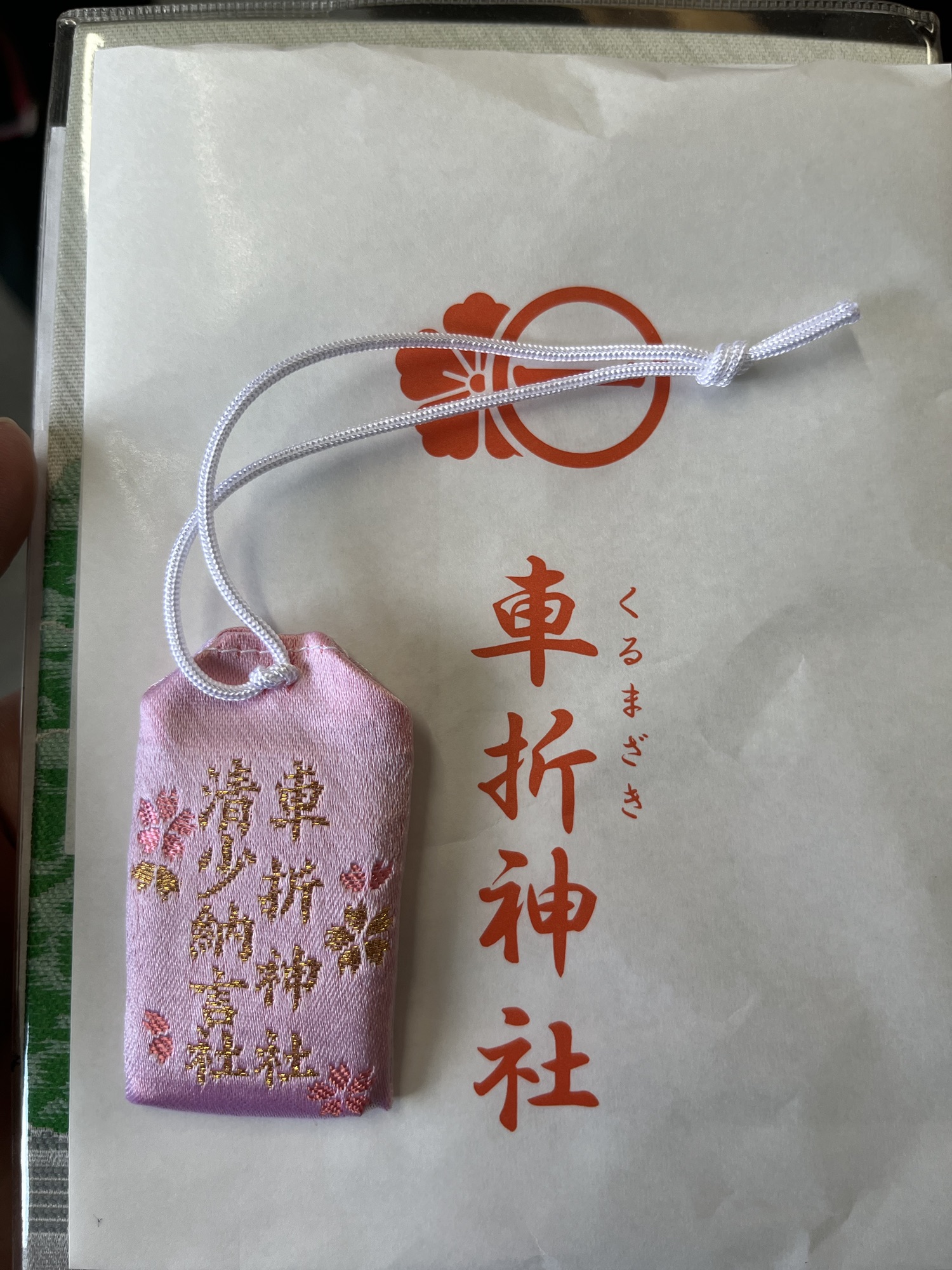
At last we came to the gift shop, and I got a Sei Shonagon charm (omamori):

Later, when I got back home and realized that the charm was intended for ladies,1 I was rather embarrassed, yet I didn’t want it to go to waste, so I gave it to my daughter whose preparing for college this year. It seemed fitting, and I am happy to report that she got a good score in her SAT exam the following month, so perhaps the charm worked?

Anyhow, Kurumazaki Shrine is not something tourists usually visit because it’s a little removed from the nearby touristy area of Arashiyama, and like many Shinto shrines, it’s very Japan-centric, but it’s a cool slice-of-life of Japanese popular culture, both past and present.

As for me, I was happy to pay my respects to such a wonderful poet and author directly, someone’s whose creativity and work indirectly helped make this blog what it is today.

P.S. Later that day, I stumbled upon the place where the Hyakunin Isshu was compiled, so I managed to visit two sites in one day. Not too shabby.

1 It’s clearly written on the signs, I just failed to pay attention. I was maybe a bit star-struck perhaps. ๐Ÿ˜…

Where It All Began: Mount Ogura

Hello everyone,

I just returned from another trip to Japan,1 and we got to spend a bit of time in Kyoto. By accident, I also found Mount Ogura, and the place where Hyakunin Isshu was compiled! But first, let’s backup and explain a bit of history first.

Kyoto was the capital of Japan from the 8th century to the 19th century, and so many well-to-do families lived here. This aristocracy wrote countless waka poems that were compiled into official poetry anthologies from time to time,2 but the Hyakunin Isshu was not one of them. It was compiled by Fujiwara no Teika (poem 97) as a favor to his in-laws. Teika had been a compiler of one of the major anthologies, the Shin-Kokin-Wakashu, but was now in retirement after his liege lords (poem 100 and poem 99) were exiled in the upheaval of the Jokyu Rebellion. He resided in a small villa on the west side of Kyoto on the hillside of Mount Ogura, and was tasked with selecting the very best 100 waka poems that his in-laws could decorate their home with. Teika’s excellent poetic taste led to the Hyakunin Isshu we celebrate today.

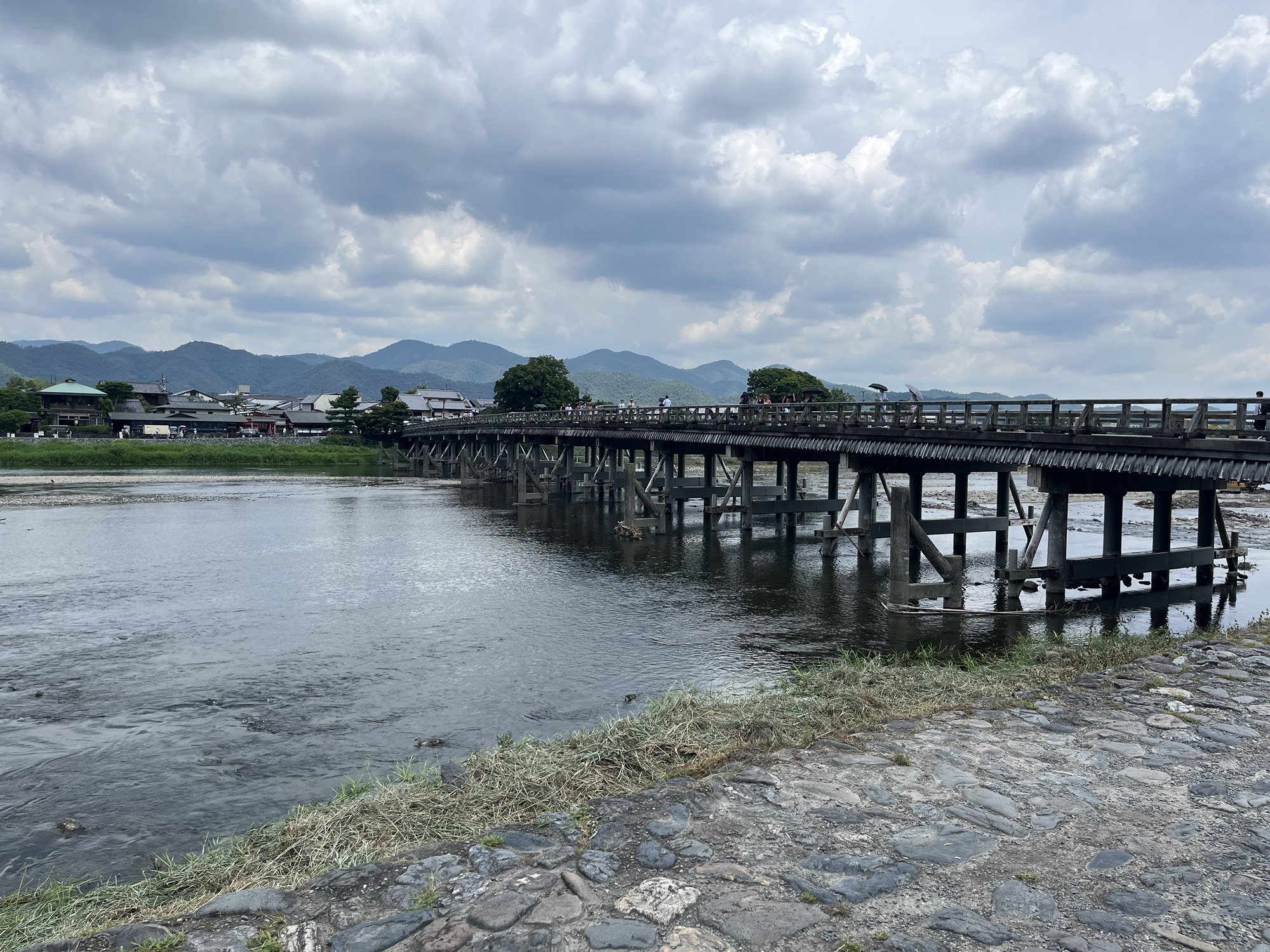
Anyhow, back to present day. I was with the family, and we visited a part of western Kyoto called Arashiyama (ๅตๅฑฑ). It’s a very scenic place, with famous bamboo forests, and an iconic bridge named Togetsu-kyล (ๆธกๆœˆๆฉ‹):

Since we visited in the summer, it was extremely hot and muggy, so by lunch time we were exhausted and tired. We went to a local cafe and had lunch. Since we were in Kyoto, I assumed there would be many famous historical places related to the Hyakunin Isshu,3 but I was having trouble finding them on GPS, so I was disappointed.

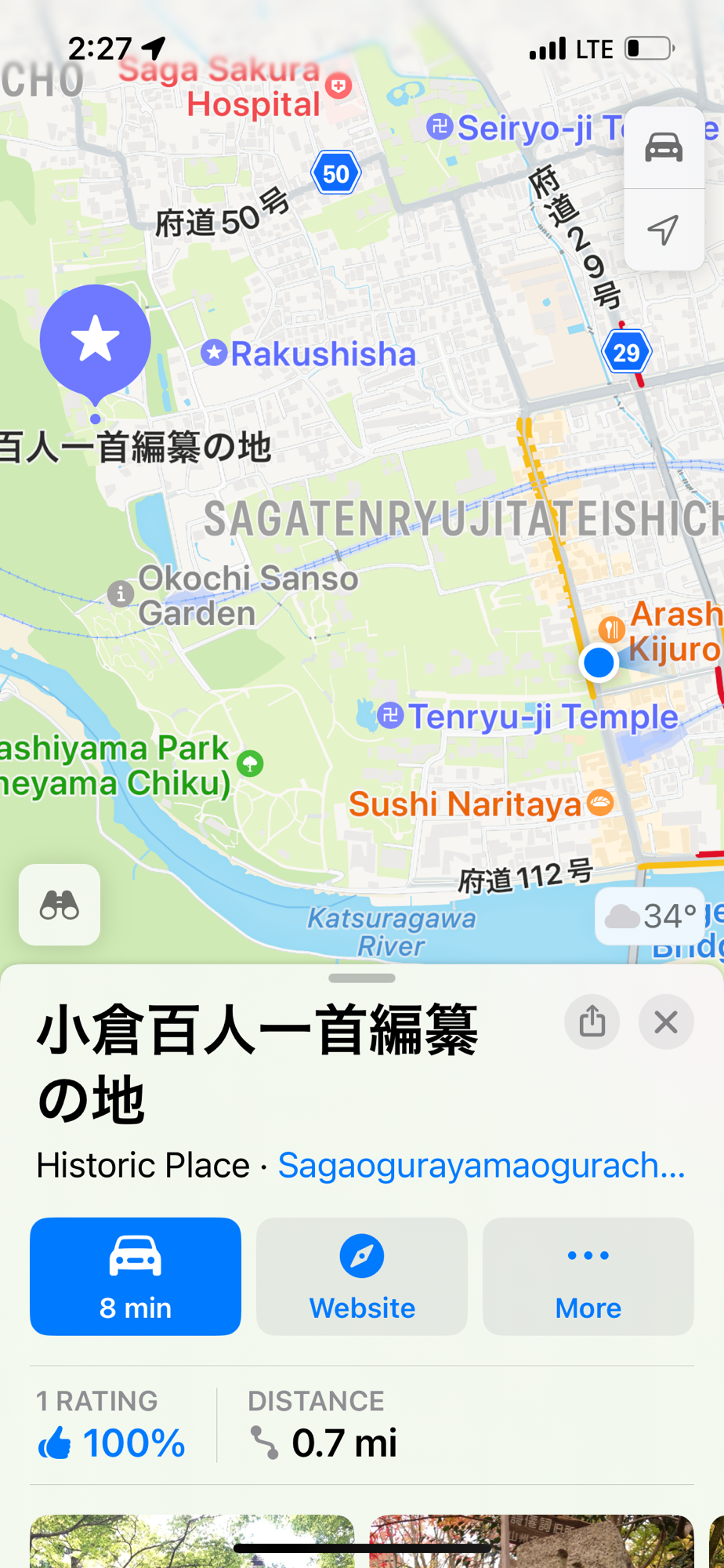
Then I noticed the following spot on my map app:

ๅฐๅ€‰็™พไบบไธ€้ฆ–็ทจ็บ‚ใฎๅœฐ (ogura hyakunin isshu hensan no chi) … the place where the Hyakunin Isshu was compiled…? Wow, that’s only 15 minutes by foot from where I was at!

The family was exhausted and sweaty, and were planning to return to our hotel, so I didn’t want to drag them uphill in the heat. I told them I’d be back, and I took off for the place on the map. It turns out that the properly had been converted to a Buddhist temple named Jojakkล-ji (ๅธธๅฏ‚ๅ…‰ๅฏบ) in the 17th century (a common practice in Kyoto). You can find the official website here.

This is Mount Ogura today.

I followed the map directions and made it safely to Jojakko-ji Temple:

There is a small entry fee, but once I paid that, I got to the second gate here:

The site of the Ogura Hyakunin Isshu is just down the path to the right, before the gate. I made the mistake of going up the stairs instead:

Jojakko-ji Temple is quite scenic actually:

… but it was very late in the day, my family was waiting back at Arashiyama, and I had to hurry. This was my one shot, probably in my lifetime, to find this place, but the temple maps, nor the website show precisely where it was.

Finally, I found it:

The photos from the prefectural website look a lot better than mine (good lighting helps). But there it was, the actual site where the Ogura Hyakunin Isshu was compiled!

The stone marker is pretty small and somewhat eroded, but there was no mistaking it.

Since I was short on time, I paused and said a quick โ€œthank youโ€ to Fujiwara no Teika and then headed back.

If you are fan of the Hyakunin Isshu, and you are in the Arashiyama area of Kyoto donโ€™t miss this small but significant site.

P.S. while at Jojakko-ji, I met a nice Australian couple who had just finished their visit. They told me that at the top of the temple you can see a really view of Kyoto. I didnโ€™t have the time to see it for myself, but if you go, donโ€™t pass up the chance.

P.P.S. I forgot that, ten years ago, I had made a post about Mount Ogura. You can see the Togetsu-Kyo bridge here too.

1 We return every year when possible to visit my wife’s in-laws, and let the kids spend time with their relatives, learn more Japanese, etc.

2 Many earlier poems were also composed at a time when Japan’s capital moved around (Nara, Fujiwara-kyo, Asuka, etc) before settling down in Kyoto. See the Manyoshu for further details.

3 I did actually find one other place we visited earlier in the day, but more on that in an upcoming post.

Hello from Japan, new items

Hello readers,

I am writing this post while staying with my in-laws house in Japan. We will be doing a bit of traveling later, but are mostly fighting jet lag and record heat + humidity for now.

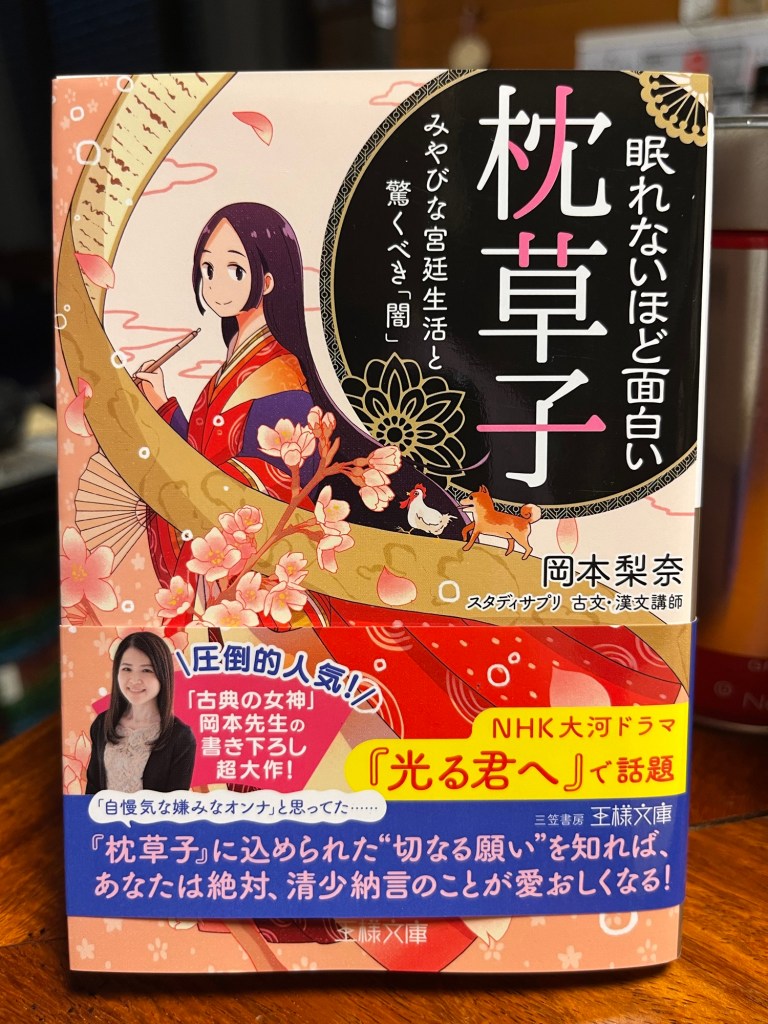
In the meantime I am excited to share some items I picked up, including these new books:

The first book explores the Pillow Book by Sei Shonagon, the second Lady Murasakiโ€™s diary. These texts are both pivotal to appreciating the life and culture of people back then, the same people who composed the poetry of the Hyakunin Isshu. Itโ€™s a window to a world that simply doesnโ€™t exist anymore.

Further, this book series, ็œ ใ‚Œใชใ„ใปใฉ้ข็™ฝใ„ (nemurenai hodo omoshiroi, โ€œso interesting you canโ€™t sleep!โ€) has been a huge boon for the blog. Itโ€™s provided a lot of fun, historical information about the Heian Period, the Hyakunin Isshu, the Manyoshu, etc., that is simply not available in English. The Japanese is sometimes difficult to read at my level, but itโ€™s been a labor of love, so I enjoy the challenge and have been learning a lot. So I am excited to delve into these two books as well.

Also, itโ€™s noteworthy that both books above mention the current drama series ใ€Œๅ…‰ใ‚‹ๅ›ใธใ€as a tie-in.

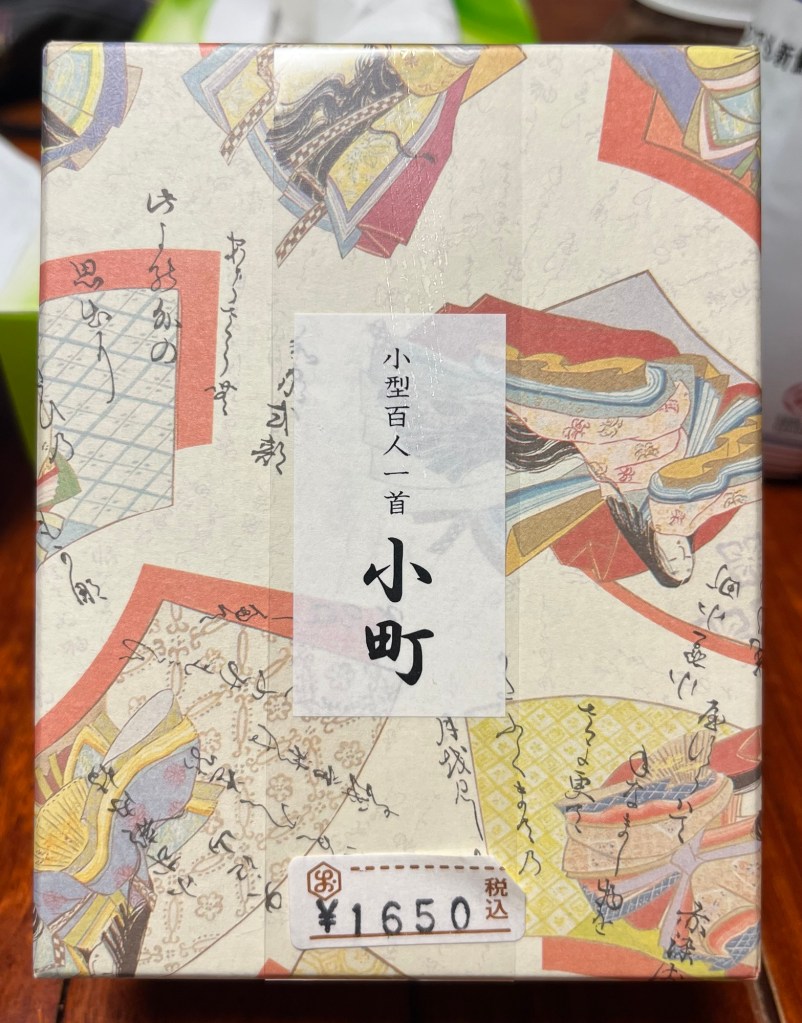
Yesterday, on a day trip to Tokyo I visited the Karuta shop Okuno Karuta (ๅฅฅ้‡Žใ‹ใ‚‹ใŸๅบ—). It was very easy to find from the Jinbocho train station (just head left and walk down a few blocks). The store was larger than the Tengu-do and includes lots of neat card sets not related to Karuta. I was on a budget so I tried not to spend too much. I did pick up a mini Karuta set though:

This set looks just like the first set I got, both Tengu-dล brand, but roughly half the size. Itโ€™s not suitable for competitive karuta but itโ€™s cute and fun to own.

Anyhow, the staff at Okuno Karuta were very nice and helpful. While I was perusing, a tour group of elderly Japanese came through for a while, and the staff had to handle the rush of customers, before things quieted down again.

Hopefully I can post more updates soon.

P.S. also picked up an obscure Fire Emblem game too:

Ancient Japanese Dad Joke: Manyoshu Poem Number 27

The poem from the Manyoshu feels like an ancient Japanese dad-joke. Read it out loud and youโ€™ll see what I mean:

ManyoganaModern JapaneseRomanizationRough Translation
ๆท‘ไบบไนƒใ‚ˆใไบบใฎYoki hito noMen of old
่‰ฏ่ทกๅ‰่ฆ‹่€Œใ‚ˆใ—ใจใ‚ˆใ่ฆ‹ใฆYoshito yoku mitecame to Yoshino
ๅฅฝๅธธ่จ€ๅธซใ‚ˆใ—ใจ่จ€ใฒใ—Yoshito ii shiand declared it a good place,
่Šณ้‡Žๅ‰่ฆ‹ไธŽๅ‰้‡Žใ‚ˆใ่ฆ‹ใ‚ˆYoshino yoku miyoSo, good sons, go
่‰ฏไบบๅ››ๆฅไธ‰ใ‚ˆใไบบใ‚ˆใ่ฆ‹Yoki hito yoku miand take in the view!

The author of the poem is Emperor Tenmu whom we saw here and here. He is the younger brother of Emperor Tenji of Hyakunin Isshu fame (poem 1, ใ‚ใใฎ), and husband/uncle to Empress Jito (poem 2, ใฏใ‚‹ใ™).

Yo, yo, yo, this poem has lots of โ€œyoโ€ words.

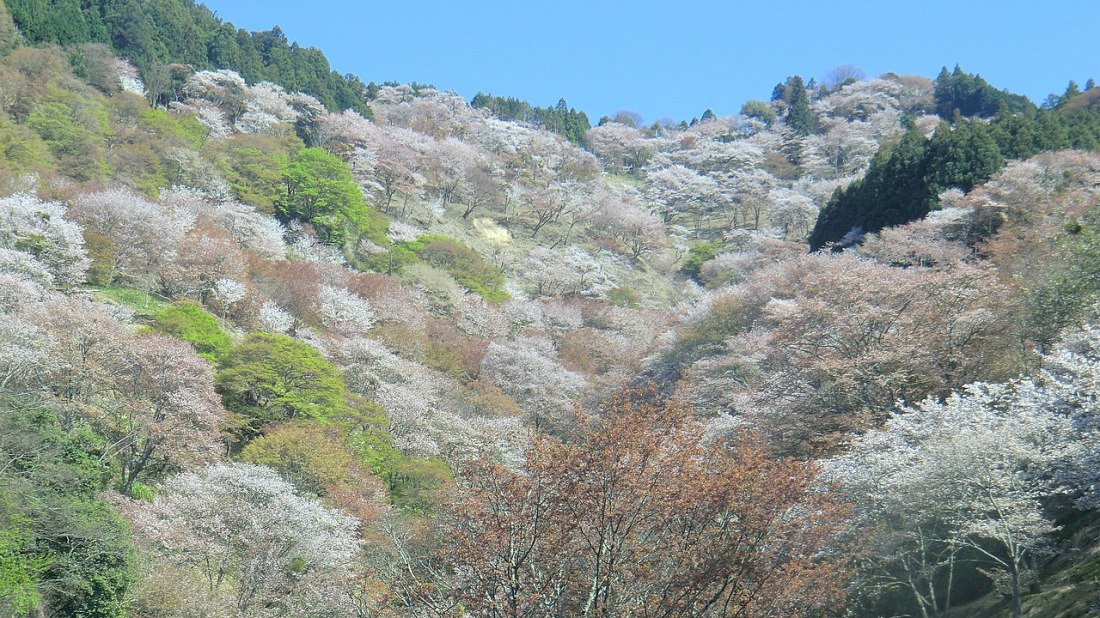
The poem was, evidentially, a suggestion by Emperor Tenmu to his sons to visit the beautiful village of Yoshino, near the old capital of Nara, famed for its otherworldly beauty in Spring. The featured image shows Yoshino and its famous cherry trees.

It was also an attempt to foster good relations between Tenmu and his sons through a combination of humor and providing some fatherly advice. Given how complicated family relations were at the time (see links above), and since Tenmu had defeated his own nephew in combat to assume the throne, he had reason to worry.

Sadly, it didnโ€™t work.

After Tenmuโ€™s passing, one son, Prince ลŒtsu (ลtsu no miko, ๅคงๆดฅ็š‡ๅญ), started a rebellion and was later given the death penalty at the age of 24. Wikipedia implies that the rebellion may be a false charge though brought by Empress Jito so that her own son could ascend the throne. My book on the Manyoshu delves into this at length and comes to the same conclusion.

Still, you canโ€™t blame Emperor Tenmu for trying to heal family divisions, yo.

June Updates and Lazy Izumi Poem

Hi all,

You may have noticed the blog looks a bit different now. I have been struggling since the big blog refresh I started in December 2022 to get the appearance just right. Design isn’t my forte (I am a history nerd), so I’ve struggled with finding the right design for this blog. The original blog template on WordPress was so old (this blog was started in 2011) that it was no longer supported by WordPress, so I had to find something else that works. After dabbling with a few designs this past year, I’ve settled on current blog template as of last week and I am pretty happy with it. I hope you all like the new design. I liked it so much I applied the same template to the other blog.

Next news: I will be off to Japan again this summer … though only briefly. The family and I will visit the ancient capitol of Kyoto, just like last year,1 but the visit overall is much more limited and I probably won’t get to see many things related to this blog. I won’t have time to visit Oishi Tengudo again, or Kitano Tenmangu Shrine, but I do however plan to make a stop at Kurumazaki Shrine (mentioned here) to pick up one of those Sei Shonagon (poem 62, yo wo komete) charms. I may try to work in a few other tourist spots related to the Lady Murasaki drama given that it’s popular right now. I also expect to melt under 35C(95F)-degree weather with 75% humidity again like last year.2

I have a few more posts coming up between now and the trip (late July), and I hope you will find them interesting.

Finally, just as a fun bonus, I wanted to share a one-off poem by Lady Izumi (poem 56, arazan) that I recently heard on a different Japanese historical drama. Lady Izumi is one of my personal favorite figures in the Hyakunin Isshu, and this poem was first recorded in an Imperial anthology, the Goshลซi Wakashลซ (ๅพŒๆ‹พ้บๅ’ŒๆญŒ้›†), poem 755:

JapaneseRomanizationTranslation
้ป’้ซชใฎKuro kami noMy black hairโ€™s
ใฟใ ใ‚Œใ‚‚ใ—ใ‚‰ใšmidarete shirazuin disarray โ€” uncaring
ใ†ใก่‡ฅใ›ใฐuchi fusebahe lay down, and
ใพใฅใ‹ใใ‚„ใ‚Šใ—mazu kakiyarishifirst, gently smoothed it:
ไบบใžๆ‹ใ—ใhito zo koishikimy darling love.
Translation source: http://www.wakapoetry.net/gsis-xiii-755/

It’s not clear from this poem which lover she is referring to, since she had a number of relationships over the years, nonetheless it is a very sincere, romantic poem and expresses her passionate style nicely.

Happy Summer!

P.S. speaking of history nerd, I’ve debated about making a Japan / history podcast (like many other fine podcasts I follow), but have struggled to find a good theme. I might simply do the “history of the hyakunin isshu” podcast someday. It’s a bit commitment though, so we shall see.

1 While we do visit Japan yearly so my kids can spend the summer with their grandparents and extended family, visits to Kyoto are rare because of cost, time, and so on. Our last visit was almost 15 years ago. It just so happens that we could make two trips in two years. After that, who knows when we will visit next?

2 Without going into too many details, the humidity, heat and fluid loss aggravated an old medical issue I have. A reminder to stay hydrated, and avoid junk food. I like getting older in many ways, except at times like this. ๐Ÿ˜‹

Omi Shrine

One of most iconic places in the world of Karuta is a placed called Omi Shrine, also called Omi Jingu (่ฟ‘ๆฑŸ็ฅžๅฎฎ, ใŠใ†ใฟใ˜ใ‚“ใใ†) in Japanese. It is here that the big championship events are often held, and it is a big part of season one of the anime series Chihayafuru. Not to sound like a clichรฉ, but it is a kind of mecca for the Karuta world and the Hyakunin Isshu.

A scene from Chihayafuru as Chihaya approaches the Rลmon gate.

What is Omi Shrine though?

You see, Japan has essentially two religions that co-exist: the native Shinto religion and imported Buddhist one. We donโ€™t need to go into detail about how they differ; I have an entire blog on the subject. Suffice to say, they differ. Even the place names are different. Buddhist temples are called otera or end with -ji. Shinto shrines are called jinja, jingu or taisha.

Anyhow, Omi is a Shinto shrine located in the city of ลŒtsu, in Shiga Prefecture. This area was once the province of Omi, hence the name. The shrineโ€™s constructed began in 1937 and finished by 1940. It is a young shrine, but has a deep connection to the past.

Like all Shinto shrines, Omi Shrine venerates a kami, a divine figure. A kami can be a god (think ancient Greek gods) from Japanese mythology, a local spirit, or even a historical figure. Some shrines venerate more than one kami.

Omi Shrine venerates none other than Emperor Tenji, who wrote poem one of the Hyakunin Isshu (ใ‚ใใฎ). During his reign, the capitol of Japan was moved to Otsu city and there he reigned until his death. Here, he carried out many essential reforms that provided the foundation for Japanese society for centuries. Because Tenji also wrote the opening poem of the Hyakunin Isshu, the shrine became quickly associated with the anthology and with Karuta.

The shrine website even has a handy catalog of the Hyakunin Isshu poems, not unlike mine. ๐Ÿ˜‰

The English website is pretty limited, but the Japanese site has a lot of great information about the shrine, Karuta and so on.

The shrine is a bit removed from the usual touristy areas, so you might not be able to get there. However if you do go, itโ€™s good etiquette to pay respects to the kami there. Per Shinto tradition (explained here) the process is:

  1. Bow deeply at the waist twice.
  2. In reverence, clap twice.
  3. Bow once more.

You can also use the water font nearby to wash your hands a bit (just watch how other Japanese do it) and your face a bit before facing the kami.

You can also pick up an omamori charm too.

I havenโ€™t been to Omi Shrine myself but it seems like a lovely, scenic location, and I would love to play Karuta there someday even if I get crushed.

P.S. Featured photo is the Rลmon (ๆฅผ้–€, โ€œSakura Gateโ€), photo by Kenpei, courtesy of Commons Wikimedia.

Visiting Kitano Tenmangu Shrine

I’ve been writing in my other blog several articles about my family’s visit to Kyoto and Nara in July 2023, but for this particular article, I wanted to write it on this blog instead. You’ll see why shortly. While in Kyoto, we made an unexpected stop at a Shinto shrine called the Kitano-Tenmangu Shrine (ๅŒ—้‡Žๅคฉๆบ€ๅฎฎ) right in the middle of the city.

Kitano-Tenmangu Shrine (English / Japanese homepages) is devoted to a Shinto kami named Tenjin, who’s essentially the God of Learning. Each year, thousands of kids trying to pass their entrance exams visit local shrines, and pray for success. I’ve prayed at the Yushima Tenmangu Shrine in Tokyo myself years ago when trying to pass a Japanese-language certification test (I passed). The one in Kyoto, though, Kitano Tenmangu, is the original shrine.

But what’s the big deal?

The kami Tenjin is a deified form of the poet and scholar, Sugawara no Michizane, who composed poem 24 in the Hyakunin Isshu. When he was ousted by the powerful rival Fujiwara no Tokihira (father of Atsutada, poem 43), and died in exile, people worried that his vengeful spirit had returned to plague the capitol. The untimely deaths Tokihira and Atsutada certainly didn’t help this. Michizane was posthumously re-instated to the Imperial Court bureaucracy, elevated to a high rank, and venerated as a Shinto kami1 to appease him.

Anyhow, Kitano Tenmangu is the original shrine devoted to Michizane and has since grown into a large network of shrines across Japan.

The Shrine itself is relatively small, since it’s inside the city, but it has lots of neat things in it. When you first come in, there is a walkway like so leading to the inner sanctum:

To the right, is a plum tree, though not blossomging in July:

Plum blossoms (umรฉ ๆข…) are associated with Michizane due to a famous poem he wrote in exile:

JapaneseRomanizationTranslation
ๆฑ้ขจๅนใ‹ใฐKochi fukabaWhen the east wind blows,
ใซใปใฒใ‚’ใ“ใ›ใ‚ˆNioi okose yolet it send your fragrance,
ๆข…ใฎ่ŠฑUme no hanaoh plum blossoms.
ไธปใชใ—ใจใฆAruji nashi toteAlthough your master is gone,
ๆ˜ฅใ‚’ๅฟ˜ใ‚‹ใชHaru o wasuru nado not forget the spring.
Sugawara no Michizanรฉ (845 โ€“ 903), translation by Robert Borgen

Anyhow, if you continue you get to the gate to the inner sanctum:

The inner sanctum is here (I prayed for my Japanese-language exam this year as well… we’ll see if I pass again ๐Ÿ˜„):

What’s really neat is that if you loop back around toward the main entrance, you’ll see this:

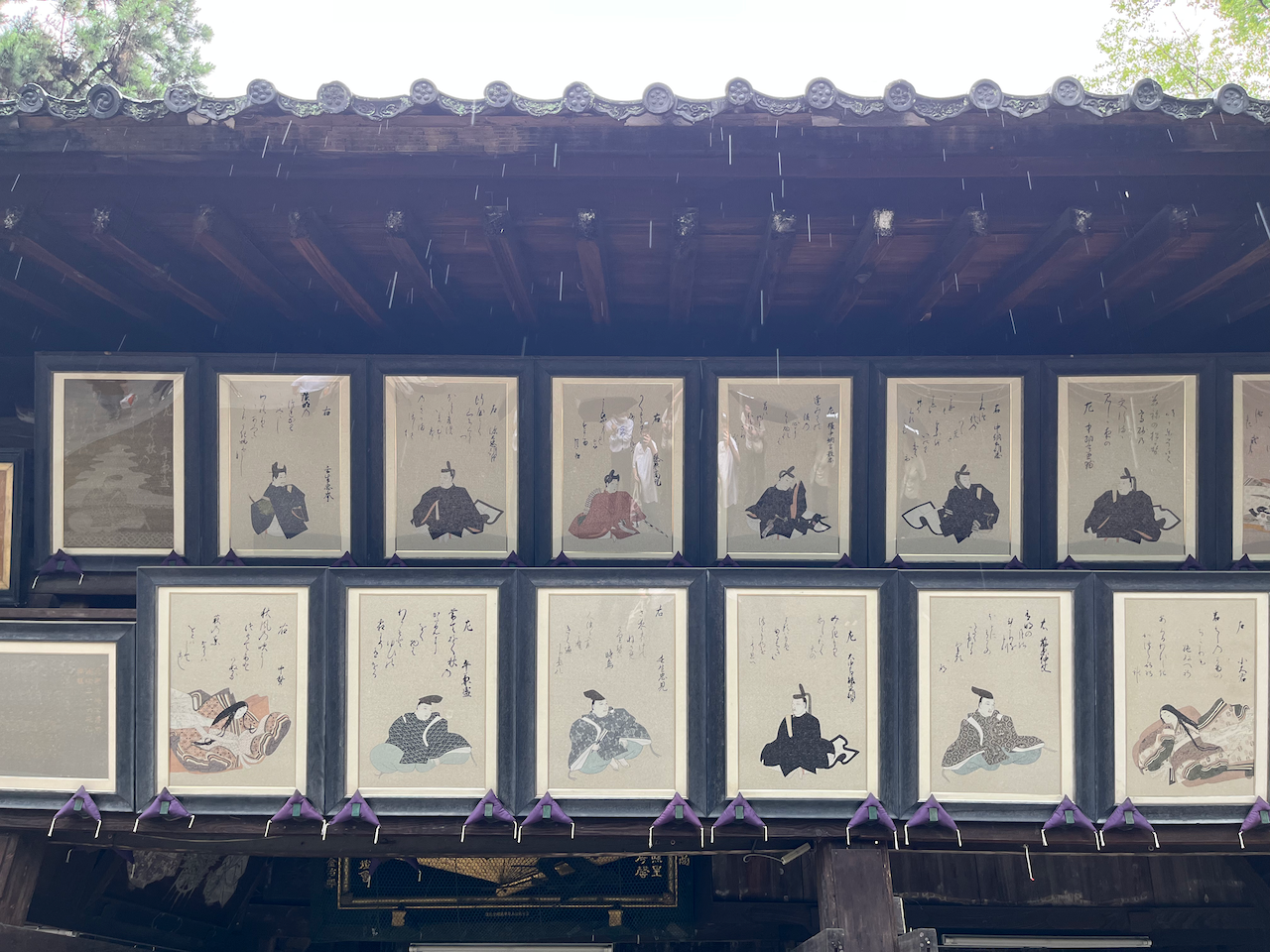
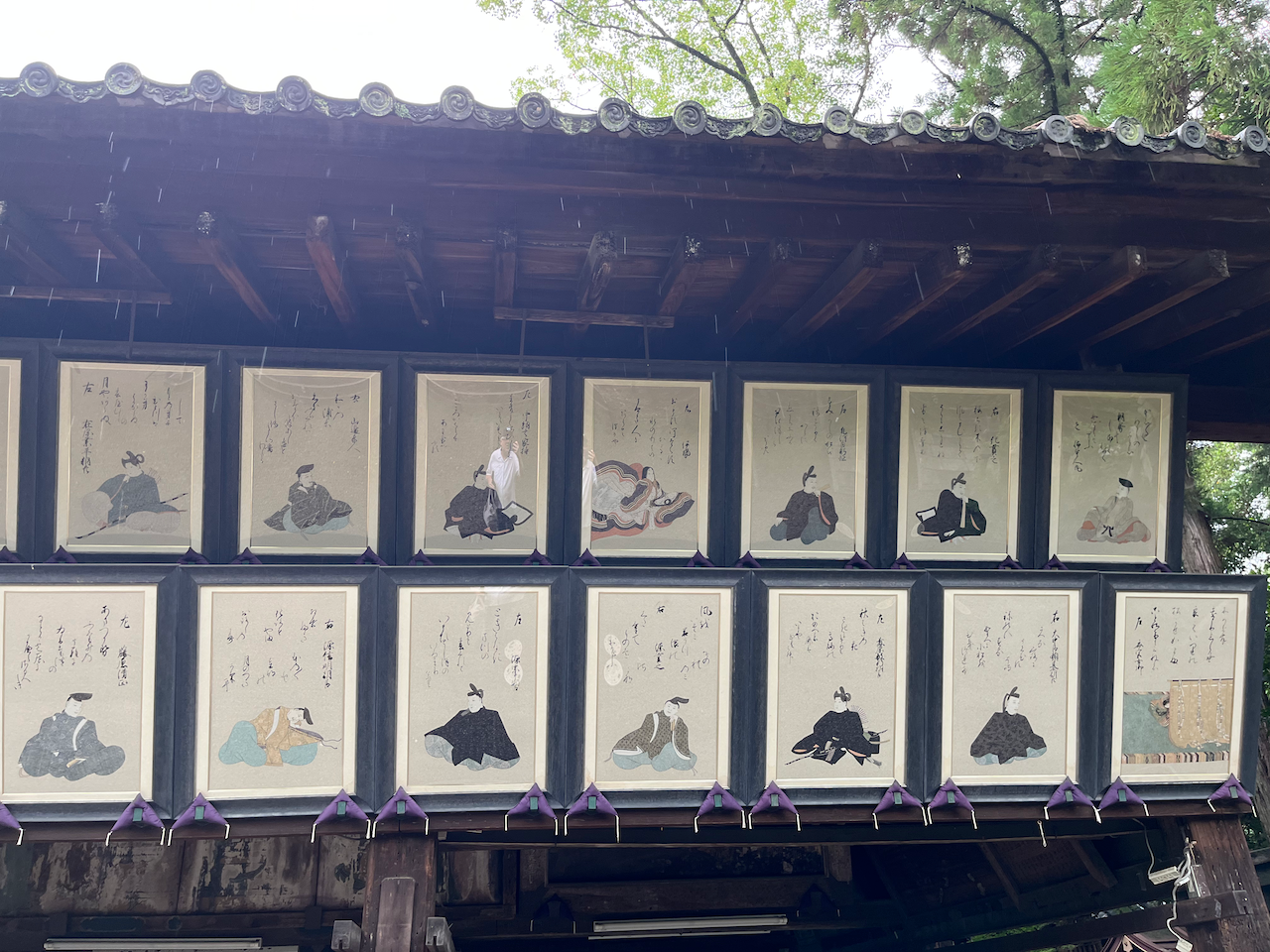
The pavilion near the front entrance had displays of various poems from the Hyakunin Isshu in the form of yomifuda karuta cards! If you look at the photos, you might even see my reflection, too. ;-p

The inside room of the pavilion was interesting too, with lots of really old pictures and paintings affixed:

I also picked up an omamori charm as well:

I keep this in my wallet.

Kitano Tenmangu is a great place to visit while you are in Kyoto, and its tribute to both the famous scholar, and to the Hyakunin Isshu really warmed my heart.

1 This isn’t that unusual in Shinto since the notion of a kami is very broad, and includes not just gods, but also nature spirits, great historical figures, and “anything else that inspires awe” according to one writer.

Visiting Kyoto, Tengu-do and New Karuta Set

Hello dear readers,

I recently came back from a family trip to Japan (mentioned here), and while there we took the kids to see the old capitol of Kyoto, where many of the poets of the Hyakunin Isshu lived,1 and where many events took place. But one thing on my bucket-list was to see was the Oishi Tengu-do karuta shop. Last year, I bought a karuta set at a local bookstore in Japan, and of the sets I bought the Tengu-do set was my favorite. And since we wanted to go to Kyoto anyway, it was a great opportunity to visit the home shop fo Tengu-do.

The Tengo-do shop is in the southeast part of Kyoto. If you get to Fushimi-Momoyama station, you can easily walk south 2-3 blocks to get there.

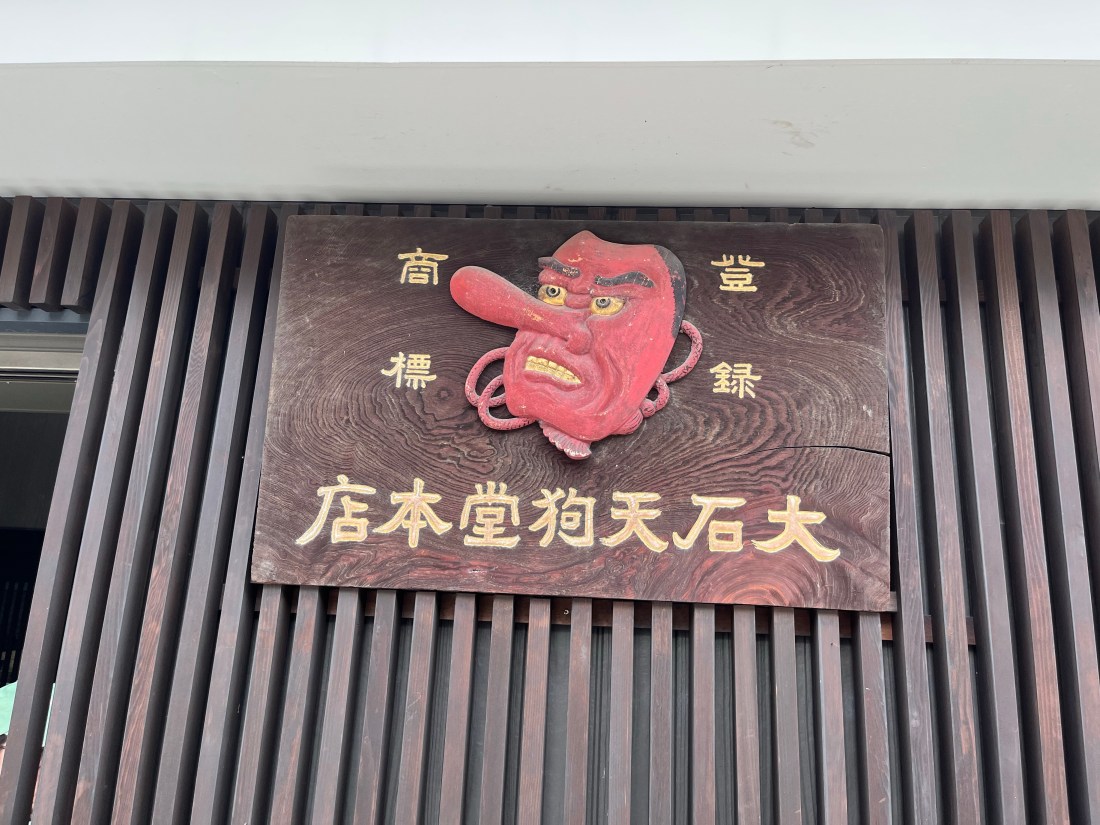
The shop is in a residential neighborhood, but if you look carefully, you can find the sign like so:

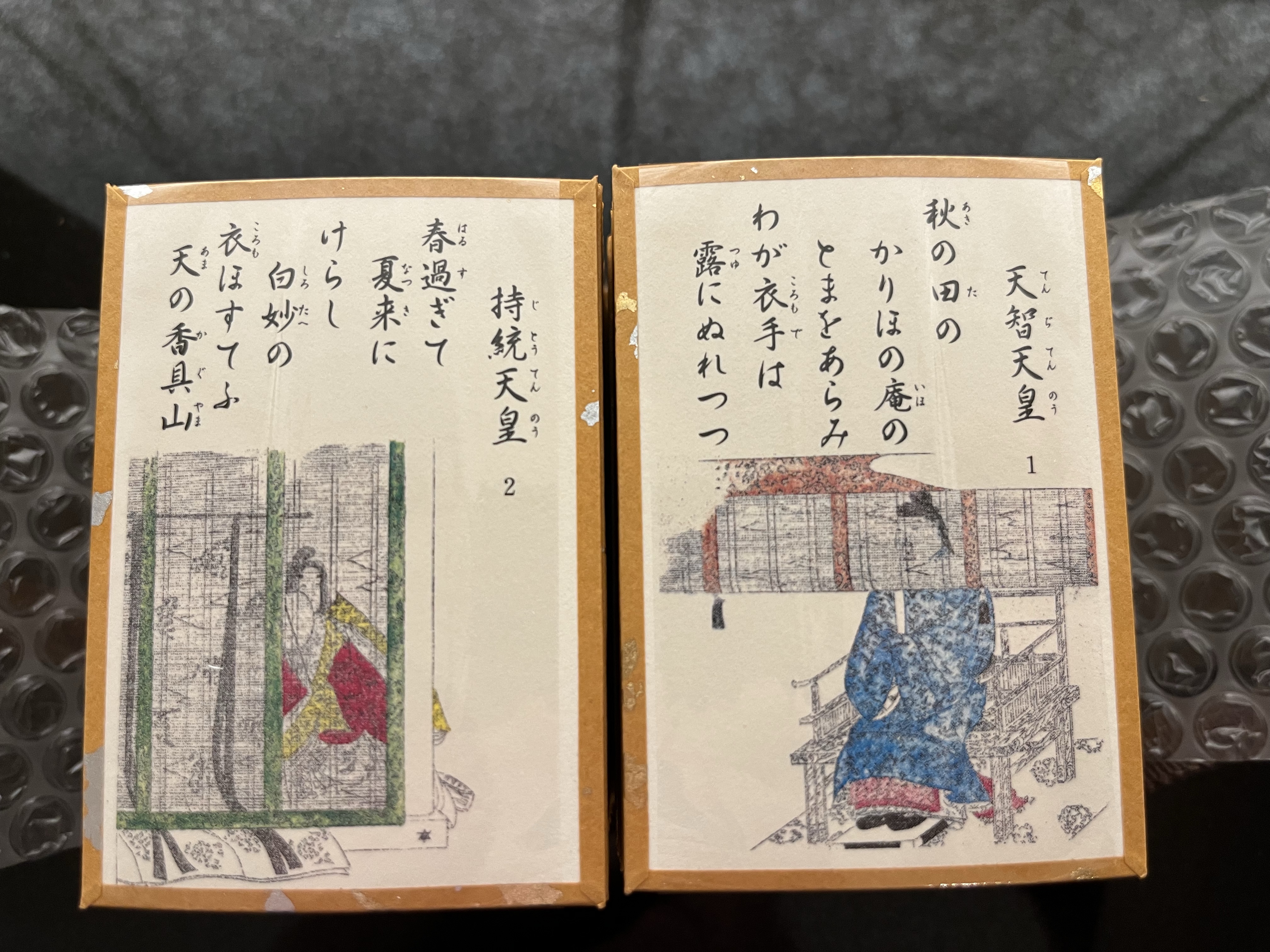
The inside of the shop is a single room, just enough room for myself and family, and I didn’t get a chance to take a photo, but I found some good photos online. The elderly lady minding the shop was very kind. We perused for a bit, and I found a few items that I wanted to get. The most important was this set:

This was one of more expensive sets, but I knew that I probably wouldn’t visit Kyoto again for another 10-15 years, so I figured I’d better go big or go broke.

The detail on the cards, especially the border is simply amazing. The yomifuda cards below are for poems 1 and 2:

I also picked up a couple other odds and ends, but this was the real treasure. It was great to visit the home shop of Tengu-do, and to patronize a business like this. If you happen to be in Kyoto, and have an interest in the Hyakunin Isshu and/or karuta, definitely stop by!

1 Prior to Kyoto, the capitol of Japan was a city called Nara. Some of the earliest poets and figures of the Hyakunin Isshu lived when Nara was still the capitol, but I’d estimate at the remaining three-fourths lived in and around Kyoto until you get to the very last few poets who lived in the new capitol of Kamakura. That’s how much history the anthology spans.

The Beautiful Village of Yoshino

The small town of Yoshino (ๅ‰้‡Ž, official site), near the old capitol of Nara, was a popular spot since ancient times and was often the subject of poetry in the Hyakunin Isshu anthology, for example poem 31 and poem 94.โ€‚Further, according to the old Japanese historical account, the Nihon Shoki, visits to Yoshino to view the cherry blossoms went as far back as Empress Jitล (poem 2) and became a tradition ever since.

There is also a famous love story that takes place between the celebrated 12th century warrior Minamoto no Yoshitsune, and his mistress Shizuka Gozen. It was said that winter, while fleeing his jealous older brother, on the way to Oshu province in the north, they had to separate for her safety. In the snows of Yoshino, they parted, and Shizuka was sad to watch her beloved disappear in the snow.

Last spring, the Yasaka Taxi company in Japan posted a terrific photo of Yoshino (original link on Twitter):

Even to this day, cherry blossom viewing at Yoshino is a major tourism destination, and from what I hear, it’s pretty amazing.

Yoshino is also lovely in Fall, by the way:

The mountains of Yoshino in Fall, photo by No machine-readable author provided. Outside147~commonswiki assumed (based on copyright claims)., CC BY-SA 3.0, via Wikimedia Commons

One can imagine why the aristocracy of early Japan valued this place so highly. ๐Ÿ˜„๐ŸŒธ

P.S. Featured photo is of the mountains surrounding Yoshino village in spring, photo by 8-hachiro, CC BY-SA 3.0, via Wikimedia Commons