Drinking Poems in the Manyoshu

The Hyakunin Isshu anthology, the subject of this blog, is not known for bawdy subjects as Japanese poetry by that time had become increasingly refined and codified in style. By contrast, the much older Manyoshu included a wider variety of poems and topics. This includes drinking poetry.

In fact, the compiler of the Manyoshu, Ōtomo no Yakamochi (大伴家持, 718 – 785) who also composed poem 6 in the Hyakunin Isshu (かさ), was the son of a famous literati and booze-hound: Ōtomo no Tabito (大伴旅人, 665 – 731). Tabito was a contemporary of Hyakunin Isshu poet Hitomaro (poem 3, あし), though not quite as successful.

Tabito was dispatched by the Imperial bureaucracy at the time to serve a term as governor of Daizafu in western Japan, and while there he formed a poetry circle called the Tsukushi Kadan (筑紫歌壇, “Tsukushi Poetry Circle”), where Tsukushi is the name of an old district in Dazaifu. Of Tabito’s 50+ poems in the Manyoshu, 13 of them were contributed by Tabito, known as the Sake wo Homuru Uta Ju-san-shu (酒を讃むる歌13首) or “The Thirteen Poems Praising Saké [rice wine]”.

My book lists two example poems:

Manyogana Modern JapaneseRomanizationRough Translation
験無験なきShirushi nakiI’d rather
物乎不念者ものを思はずはMono wo omowazu wadrink a cup of
一坏乃一杯のIppai no“dirty rice wine”1
濁酒乎濁れる酒をNigoreru sake wothan think about
可飲有良師飲むべくあるらしNomu beku aru rashiuseless things.
Poem 388, source: https://art-tags.net/manyo/three/m0338.html
ManyoganaModern JapaneseRomanizationRough Translation
中〻尒なかなかにNaka naka niI’d rather be
人跡不有者人とあらずはHito to arazu waa rice wine cask
酒壷二酒壷にSaka tsubo niand immerse myself
成而師鴨成りにてしかもNari te shikamoin wine, than live a
酒二染甞酒に染みなむSake ni shiminanhalf-assed life.
Poem 343, source: https://manyo-hyakka.pref.nara.jp/db/detailLink?cls=db_manyo&pkey=343

Although I joke about Tabito’s possible alcoholism, the poems are not necessarily meant to be taken as literal. My book on the Manyoshu points out that these poems may have intended to imitate a famous 3rd century literati group in China called the Seven Sages of the Bamboo Grove, sometimes known as the Seven Sages of the Western Jin [Dynasty]. In Japanese they are called the chikurin-shichiken (竹林七賢). The enduring image of these seven musicians, poets and scholars is a band of bohemian, drunken geniuses, and Tabito and his poetry circle was likely inspired by them. You can see other examples of artistic inspiration in this post from my other blog. Between this collection of poems, and the Zen artwork in my other blog, I had no idea that the Seven Sages were such a popular topic in art.

But I digress.

There is another side to this poetry as well : evidentially on the move from the capital (Kyoto) to Dazaifu to the west, Tabito’s wife apparently fell ill and died. So, my book alludes to the idea that Ōtomo no Tabito took up drinking not just as a literati trend, but also to deal with the grief of losing his wife. Marriages at this time were often political as various noble families vied for position in the tightly stratified hierarchy in the Imperial Court. However, even political marriages could be happy ones at a personal level, so Tabito may have genuinely been grieving for a wife that he loved, plus the isolation from the capital.

Tabito’s poems, celebrating the virtues of rice wine, are technically very good poems, but also cover a subject that is omitted in later anthologies where style and form were pretty much codified by then. So, by the time the Hyakunin Isshu was compiled, 4 centuries later, no one would write such crass poetry about booze and girls (at least not openly). Further, while the Manyoshu lacks the refinement of the Hyakunin Isshu, it does have a raw, visceral tone that’s often missing in later anthologies, and resonates differently with readers. Personally, I love both anthologies, but for different reasons.

P.S. I’m finally back, and have a few upcoming topics. Please enjoy.

1 This kind of rice wine seems to be a style from China, where the fluid is cloudy rather than clear.

Even At Low Tide: Poem 92

Another poem dedicated to those who were lonely for Valentine’s Day recently:

JapaneseRomanizationTranslation
わがそではWaga sodé waMy sleeves are like
しおに見えぬShioi ni mienuthe rock in the offing that
沖の石のOki no ishi nocan’t be seen even at low tide,
人こそしらねHito koso shiranéunknown to anyone, but
かはくまもなしKawaku mamo nashithere’s not a moment they are dry.
Translation by Dr Joshua Mostow

The author of this poem is Nijōin no Sanuki (二条院讃岐, 1141 – 1217), also known as “Lady Sanuki of Nijōin”. Her real name isn’t known. It is known that she was a daughter of famous warrior/poet Minamoto no Yorimasa and served the retired Emperor Nijō, hence her name nijōin (Imperial House of Nijō). The “Sanuki” part comes from Sanuki Province where her father was once posted on assignment.

Sanuki, like Sokushi, was a leading female poet of her day, and this poem helps illustrate why. As we discussed recently in poem 90, the image of sleeves wet with tears was a popular poetic technique used at the time for unrequited love (again, see poems 42, 65, and 72) but the idea of such sleeves being hidden like a submerged rock offshore was a novel, new way of expressing this.

Indeed, Sanuki became so famous for this verse, she herself was often referred to as oki no ishi no Sanuki (沖の石の讃岐) by later poets and authors. It was pretty rare for a poet to receive such a name for a famous verse they composed but a few other examples exist. Another female poet named kunaikyō (宮内卿) was called wakakusa no kunaikyō (若草の宮内卿) because of a famous verse she wrote regarding young grass (wakakusa, 若草) from the Shin Kokin Wakashū:

JapaneseRomanizationTranslation
薄く濃きUsuku kokiLight and dark:
野辺のみどりのNobe no midori nothe green of the field’s
若草のWakakusa noyoung herbs
あとまで見ゆるAto made miyurudistinct in
雪のむら消えYuki no muragiepatches of fading snow.
Translation source unknown

Pretty awesome when you can make a name for yourself that way.

Fisherwomen’s Sleeves: Poem Number 90

This poem is a clever variation on the “sleeves wet with tears” poems we often see in the Hyakunin Isshu:

JapaneseRomanizationTranslation
見せばやなMisebaya naHow I’d like to show him!
島のあまのOjima no ama noThe sleeves of the fishermen
袖だにもSode dani moof Male Island
ぬれにぞぬれしNure ni zo nureshiwhen it comes to wet, are wet indeed,
色はからずIro wa kawarazubut their color doesn’t change!
Translation by Dr Joshua Mostow

The author of this poem is Inpumon-in no Taiyu (殷富門院大輔, dates unknown) or “Taiyu of the Household of Princess Ryōshi”. She served Princess Ryōshi (“Inpumon-in”), the daughter of Emperor Go-Shirakawa. Princess Ryōshi was also known as Inpumon-in (殷富門院) hence the name here. Taiyu was an accomplished poet and another member of the elite “Garden in the Poetic Forest” group (see poem 85).

The poem here, according to Mostow, is a 200-year old rebuttal of an earlier poem that celebrates the “wet sleeves” of the fisherman of Matsushima, but saying “if you think their sleeves are wet, mine are even more wet and stained with blood-red tears!” We’ve seen other “sleeves wet with tears” poems in the Hyakunin Isshu, namely poem 65, poem 72, and my favorite poem 42. But Taiyu takes this one to a new level, I think. 🙂

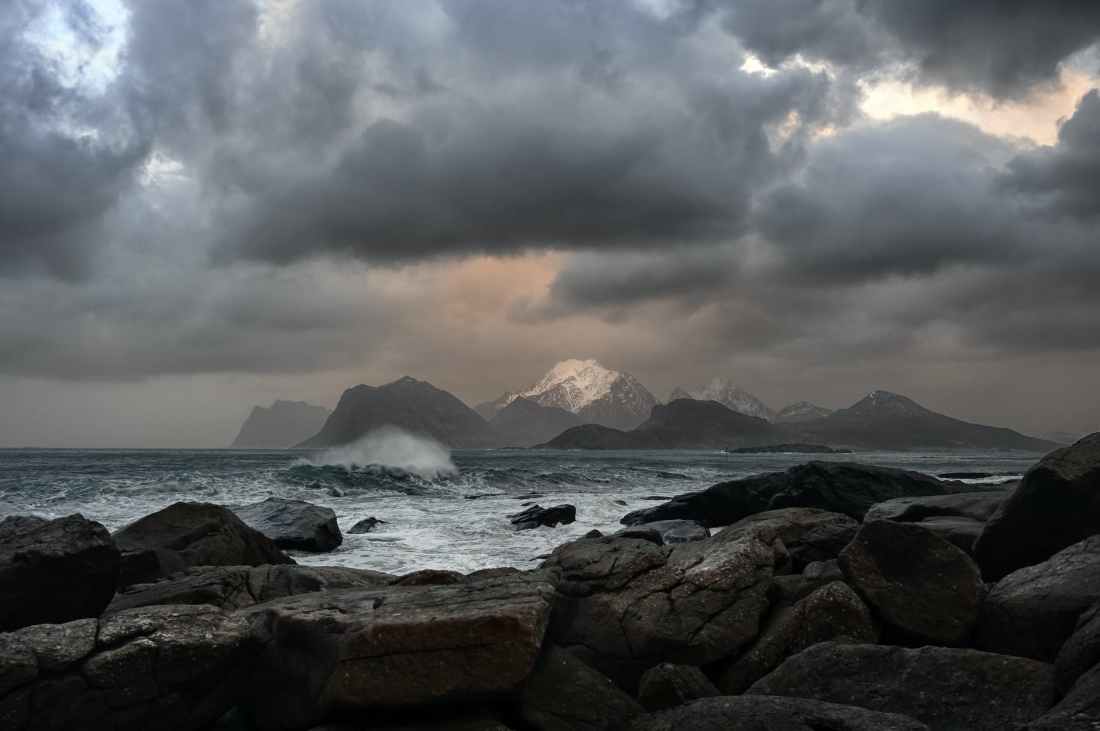
Regarding the location, “Male Island” (雄島, Oshima in Japanese) is one of 200+ tiny islands in a famous island chain called Matsushima (松島) in modern-day Miyagi Prefecture. The featured photo above is Matsushima (photo by Chensiyuan, CC BY-SA 4.0, via Wikimedia Commons). The islands are all pretty small, and very scenic, and each has their own unique name. However, in the 2011 Great Tohoku Earthquake, the area was badly devastated and still recovering.

In any case, poets from antiquity and centuries later used Matsushima in their poetry and it’s easy to see why.

One other point worth mentioning is that this poem, and poem 89 use a clever trick in Japanese poetry called kugire (句切れ). The idea is to add a single syllable in there, usually on the first line, in order to add impact, but also as a filler to help maintain the standard 5-7-5-7-7 lines in Waka poetry. In this poem the kugire is on the first line, at the end: 見せばや (mi-se-ba-ya-na), while in poem 89 it is 玉の緒 (ta-ma-no-o-yo).

You can see this technique centuries later in Japanese haiku, such as in the famous poem by Basho in the year 1686:

JapaneseRomanizationTranslation
古池Furu ike yaAn ancient pond!
蛙飛びこむKawazu tobikomuA frog jumps in;
水の音Mizu no otothe splash of water…
My amateur translation…

This haiku was composed 500+ years after the poems of the Hyakunin Isshu, but it’s interesting how some poetic-devices never quite get old.

Sleepless Nights: Poem Number 85

Whereas the last love poem expressed love and anxiety after a first-meeting, this poem is quite a different story:

JapaneseRomanizationTranslation
夜もすがらYo mo sugaraAll through the night
もの思ころはMono omou koro warecently, as I dwell on things,
明けやらでAke yaradeeven the gap between
the doors
ねやのひまさNeya no hima saeof my bedroom, which
does not lighten,
つれなかりけりTsure nakari keriseems cruel and heartless
to me.
Translation by Dr Joshua Mostow

The author is a Buddhist monk named Shun’e Hōshi (俊恵法師, 1113 – ?), or “Dharma Master Shun’e” who was the son of Minamoto no Toshiyori (poem 74) and grandson of Minamoto no Tsunenobu (poem 71). Though he had taken tonsure, Shun’e was quite a social figure and gathered many poets and writers around him and his residence called the Karin’en (歌林苑, “Garden in the Poetic Woods”). According to Professor Mostow, one of his students was a famous writer named Kamo no Chōmei who wrote the “Account of a Ten Foot Hut” or Hōjōki.

This poem is another example of when a poem expressing a woman’s anguish is written by a man, presumably on a set topic for a poetry contest. Other examples include poem 18 and poem 21. Obviously being able to express a woman’s feelings, namely that of a jilted lover, so well from a male author was not an easy task, and was a mark of excellent poetic skill, and not surprisingly Shun’e is counted among the Later Six Immortals of Poetry.

The respect that male actors in later Kabuki theater who specialize in female roles earn probably has a similar origin.

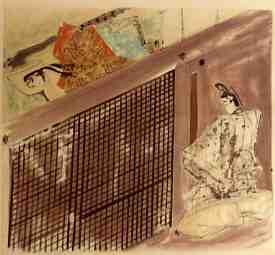
P.S. Featured photo is a scene from the illustrated Murasaki Shikibu Nikki Emaki, Public domain, via Wikimedia Commons

Disheleved: Poem Number 80

A clever morning-after love poem that I felt was fun to share:

JapaneseRomanizationTranslation
長からNagakaranI do not even know
心も知らずKokoro mo shirazuhow long your feelings
will last.
黒髪のKurokami noMy long black hair
乱れてけさはMidarete kesa wais all disheveled and,
this morning,
ものをこそ思Mono wo koso omoemy thoughts too are
in a tangle!
Translation by Dr Joshua Mostow

The author of this poem is Taikenmon-in no Horikawa (待賢門院堀川, dates unknown), or “Lady Horikawa of the household of Empress Taiken”. Empress Taiken was the consort to Emperor Toba, and was the mother of Emperor Sutoku (poem 77) who was later exiled.

The use of imagery of “disheveled hair” was a common device often used by women, or writing poetry about women, to express feelings of frustration or anxiety.

As we’ve seen before, morning-after poems were very popular at this time in Japan as many of the aristocracy of the Heian Court would have love trysts between each other. Often the first meeting was the morning important, not surprisingly. It set the tone for the rest of the relationship, so a meeting like this was often celebrated in poetry.

Of course, there was another side to these trysts in the Heian Period too.

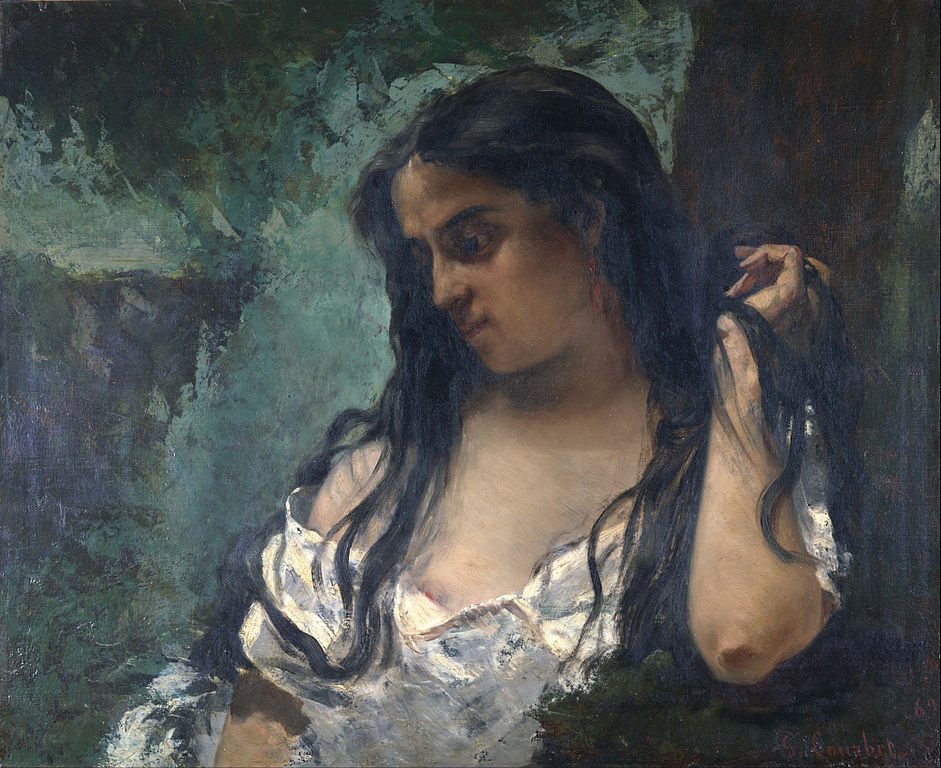
P.S. Featured photo is Gypsy in Reflection, by Gustave Courbet, Public domain, via Wikimedia Commons

Thanks for Nothing: Poem Number 75

This is another autumn-themed poem, but with an interesting story behind it:

JapaneseRomanizationTranslation
ちぎりをきしChigiri okishiDepending with my life
させもがつゆをSasemo ga tsuyu woon promises that fell thick
命にてInochi ni teas dew on sasemo plants—
れことしのAware kotoshi noalas! the autumn of
this year too
秋もいぬめりAki mo inumeriseems to be passing.
Translation by Dr Joshua Mostow

The author of the poem, Fujiwara no Mototoshi (藤原基俊, 1060 – 1142), was a leading poet of the famous Insei Period of Japanese history, along with his contemporary Toshiyori (poem 74), but according to my new book, was never particularly successful as a bureaucrat.

According to both Professor Mostow and my new book, this poem was written as a complaint to the former Chancellor and Buddhist lay-novice (upasaka) named Tadamichi, the same man who composed poem 76.

Mototoshi’s complaint is that his son, better known as Bishop Kōkaku of Kofukuji Temple, wanted to preside over the annual lecture on the Vimalakirti Sutra, an important Buddhist text. This occasion was known as the yuima-e (維摩会) and was rather prestigious within the bureaucratic monastic system of the time. Being the chosen lecturer would have fast-tracked Mototoshi’s son to other opportunities. In spite of Tadamichi’s promises to help, year after year Mototoshi’s son was passed up, and so Mototoshi sent this poem as a complaint.

The term sasemo is another way of saying sashimo, which in modern Japanese is the yomogi (ヨモギ) plant. In English, this is better known as the Japanese mugwort, pictured above. We saw the use of mugwort as well back in poem 51, though for a very different reason. The featured photo above shows Japanese Mugwort (yomogi, ヨモギ) leaves, photo by Sphl, CC BY-SA 3.0, via Wikimedia Commons.

Sasemo plants inspired an earlier, more Buddhist poem, which Mototoshi alludes to:

JapaneseRomanizationTranslation
なお頼めNao tanomeStill rely on me!
しめぢが原のShimeji ga hara nofor I will help those of
させも草Sasemo-gusathis world for as long
わが世の中にWa ga yo no naka nias there are sasemo-plants
あらむ限りはAramu kagiri wain the fields of Shimeji
Translation by Dr Joshua Mostow

This was attributed to Kannon, the Buddhist deity (bodhisattva) of compassion who promised to rescue all beings in the world. This poem was in the Shinkokin wakashū, number 1917.

Thanks to Professor Mostow for the double-translation this week. If you haven’t already, definitely show him some love and check out his excellent translations. 🙂

Backfired: Poem Number 74

Even the Hyakunin Isshu has its comedic moments:

JapaneseRomanizationTranslation
うかりけるUkarikeru“Make that heartless
人をはつせのHito wo hatsuse nowoman, O mountain storm
山おろしよYama oroshiyoof Hatsuse Temple—
はげしかれとはHageshikareto wacrueller still!”—this is not
祈らぬものをInoranu mono wowhat I prayed for, and yet…
Translation by Dr Joshua Mostow

The author is Minamoto no Toshiyori Ason (源俊頼朝臣, 1055 – 1129), “Sir Minamoto no Toshiyori”, who is the son of Tsunenobu (poem 71) and father of Shun’e (poem 85) and was also a leading poet of his era, along with Mototoshi (poem 75). Toshiyori’s talents were not limited to poetry. According to my new book, he excelled at playing an instrument called the hichiriki, enough that he was invited to serve in the Imperial court under Emperor Horikawa. We went on to serve three Emperors in this capacity, and helped compile the unusually eclectic Imperial Anthology the Kinyō Wakashū, as well as many poems of his own in various anthologies.

The poem above was actually composed during a poetry contest held at the residence of Fujiwara no Toshitada, grandfather of Fujiwara no Teika (poem 97) who compiled the Hyakunin Isshu. The topic of the contest was “unfulfilled love so strong that one even prays to the gods”. The poem expresses frustration after having prayed to be able to meet a certain woman, and somehow she became even more resistant. As Professor Mostow explains, Teika valued this poem very highly because of its depth of feeling, excellent word choices, and clever story-telling (see below).

The name “Hatsuse Temple” is another name for a famous Buddhist temple in Nara, Japan called Hasedera. Hasedera is very well-known in Japan, and apparently was a frequent pilgrimage site for lovers and those with romantic interests. If you ever do happen to be in Japan, especially in the Nara area, I’d highly recommend visiting Hasedera temple.

This poem is listed as a “winter” poem, but I was really confused why this is since the topic sounds more like unrequited love. I checked my source, which explains that Toshiyori went up to Hatsuse Temple to pray, and then came back down (yama-oroshi, 山おろし) in the third verse. This symbolism of coming back down the mountain is evidentially considered a powerful symbol of winter. Perhaps this relates to New Year’s prayers and such. This third verse is also a neat dividing technique between the first half, praying at the temple, and the second half, the girl he was fond of despising him even more.

A Matter of Personal Honor: Poem Number 65

A poignant poem that also provides insight into culture at the time:

JapaneseRomanizationTranslation
うらみわびUramiwabiAlthough there are
ほさぬそでだにHosanu sodé da nimy sleeves that never dry,
あるものをAru mono wobitter and sad,
恋にくちなKoi ni kuchinanwhat I really regret is
名こそしけれNa koso oshikerémy name, made rotten by love!
Translation by Dr Joshua Mostow

The author is Sagami (相模, 998? – 1068?) also known as “Lady Sagami”. Her name is taken from her father who served the governor of Sagami Province at one point, hence this became her sobriquet.

The poem is somewhat typical of the era, a woman is jilted and because of the public scrutiny her reputation is ruined. Because the Court society was so closed and small, rumors and reputation were a big part of the social life there. This is expressed in other poems in the Hyakunin Isshu, such as poem 18 or in the Gossamer Years. A woman who’s reputation was marred by an embarrassing incident, bad fashion choice or an unfaithful spouse would lose her standing in the court, and may not recover. She couldn’t really go pick up and start a new life either.

The motif tear-soaked sleeves was a popular poetic device, and you can find it in other poems in the Hyakunin Isshu, poem 42 for example. Sleeves (袖, sodé) in general are featured in a surprising number of poems from the Hyakunin Isshu:

  • Sleeves covered in dew from the overnight watch (poem 1)
  • Sleeves of a Buddhist monk, shielding the world (poem 95)
  • Pollen covered sleeves (poem 15)

Further, fashion in this time was somewhat different than the kimono we are familiar with from the medieval Japanese era. The photo above, taken by ロリ (CC BY-SA 3.0, via Wikimedia Commons) is an example of the jū-ni-hitoé (十二単) robes worn by ladies of the court during formal occasions. This multi-layered garment was difficult to put on as it comprised of up to 12 layers of garments. It was also difficult to walk in. And yet the junihitoé is an iconic fashion for the time, and as we can see in the Diary of Lady Murasaki, women of the Court would be heavily scrutinized for their sense of taste during such occasions.

It’s not hard to imagine a broken-hearted woman with tear-soaked sleeves nevertheless, and how it became an important expression of Japanese sentiment at the time.

A Cold Shoulder: Poem Number 45

This is another poem in our series leading up to Valentine’s Day. This one is perhaps a bit more unrequited, than the last poem I posted here:

JapaneseRomanizationTranslation
れともAwaré to moNot one person who would
べき人はIu beki hito wacall my plight pathetic
えでOmoedécomes at all to mind,
身のいたらにMi no itazura niand so, uselessly,
なりぬべきかなNarinu beki kanaI must surely die!
Translation by Dr Joshua Mostow

This poem was composed by Kentokukō (謙徳公, 924-972) also known as “Lord Kentoku”, or simply Fujiwara no Koremasa. Koremasa served as regent to the Emperor from 970 onward, and was frequently involved in compiling (and writing poems for) the second Imperial anthology of the time, the Gosenshō.

The poem, simply put, is Koremasa’s efforts to gain a girl’s attention, even after she spurned him previously. Mostow explains that according to the original sources, this poem was composed by Koremasa thinking “I will not be defeated!” and sent this poem as a last-ditch effort.

Nowadays, we might call such people stalkers, but at the time, this kind of persistent, dramatic effort wasn’t unusual. Men of the Court might try months if not years to gain a girl’s attention, and if she spurned him a few times, he might have chosen to persist, or possibly find a new lover.

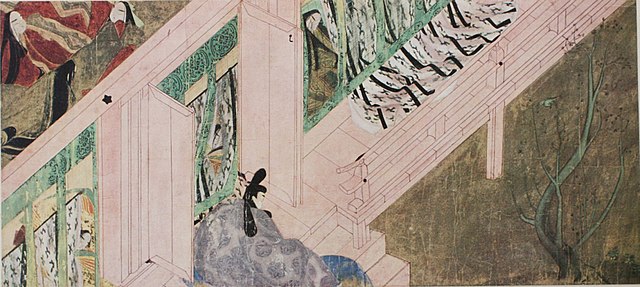
P.S. Featured photo is a scene of the Chapter “TAKEKAWA “(Bamboo River) of Illustrated handscroll of Tale of Genji (written by MURASAKI SHIKIBU(11th cent.)., Unknown author, Public domain, via Wikimedia Commons

Long Goodbyes: Poem Number 30

Hi all,

New year is here, and I guess it’s time to say “goodbye” to the old one. This poem is also happens to be about good-byes of another sort.

JapaneseRomanizationTranslation
有明のAriaké noThere is nothing so depressing
つれなくみえしTsurenaku mieshias the break of day and
別れよりWakare yorileaving you after
暁ばかりAkatsuki bakarihaving seen the heartless
うきものはなしUki mono wa nashimorning moon.
Translation by Dr Joshua Mostow

The author, Mibu no Tadamine (壬生忠岑, dates unknown), is one of the Thirty-Six Immortals of Poetry and was the father of Tadami (poem 41). He was also one of the official compilers of the official anthology, the Kokinshū, along with Ōshikōchi no Mitsune (poem 29).

By all accounts, this appears to be another famous “morning after poem”, similar to the one seen in poem 50. The term, ariake (有明) is a poetic term for the last-rising moon, in the last-half of the lunar cycle, which you can still see in the morning.1 On the other hand, as Professor Mostow points out, the fact that the moon was heartless could also imply lover who spent all night waiting to see his lover but was never received and finally went home at dawn.

Either way, the morning moon seems to carry a lot of significance for romantic types back then.

1 Similarly, akatsuki (暁) is a poetic term for daybreak.