From Darkness Into Darkness: Lady Izumi’s Final Poem

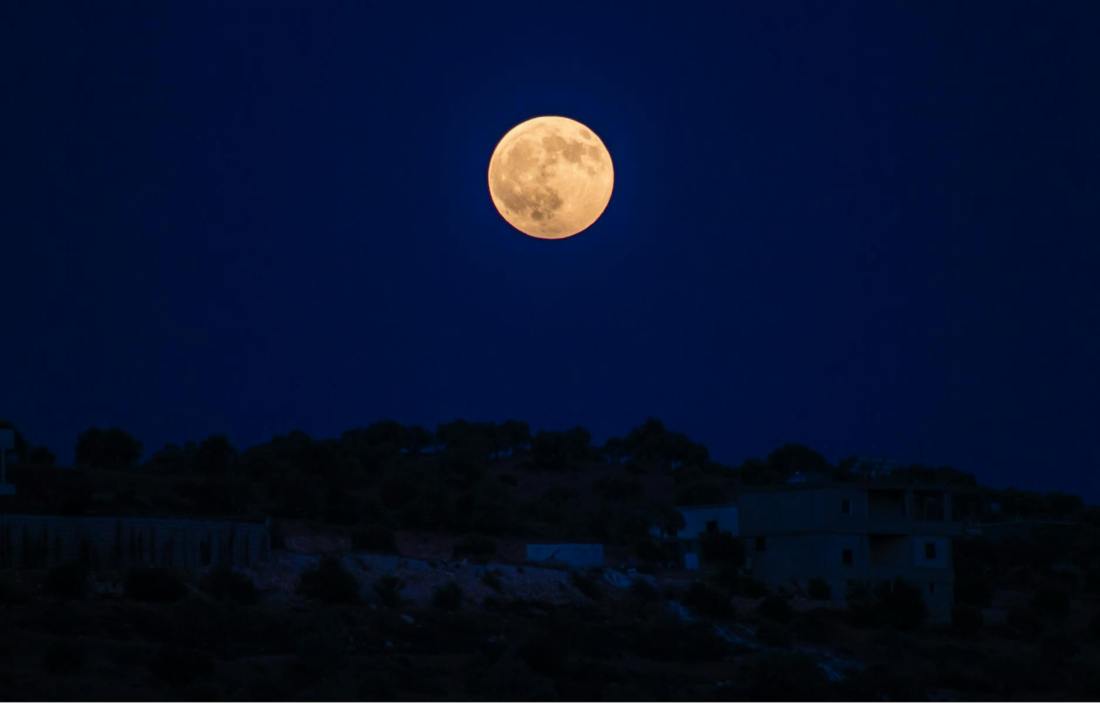
In a lesser-known Imperial poetry anthology called the Shui Wakashu (拾遺和歌集), poem 1342, is recorded what is believed to be Lady Izumi’s1 final poem:

JapaneseRomanizationTranslation
暗きよりKuraki yoriThe way I must enter
暗き道にぞKuraki michi ni zoleads through darkness to darkness —
入りぬべきIrinu bekiO moon above the mountains’ rim
はるかに照らせHaruka ni teraseplease shine a little further
山の端の月Yama no wa no tsukion my path.
Translation by Jane Hirshfield and Mariko Aratani in “The Ink Dark Moon

This poem was addressed to a Buddhist monk named “Shoku” and includes several Buddhist allusions. The most important is the phrase “darkness to darkness”, which comes from chapter seven of the Lotus Sutra:

….from darkness they [living beings] enter into darkness,
to the end never hearing the Buddha’s name [hear the Dharma].

translation by Burton Watson2

This refers to the Buddhist notion of Samsara, the near-infinite, aimless wandering that living beings undergo lifetime after lifetime, like a cosmic rat race. Such beings, who have yet to hear the Dharma [the teachings] of the Buddha, will continue to wander lifetime after lifetime without rest.

Thus, Lady Izumi is asking Shoku to help shine a light in the darkness for her, so that she may find the way [follow the Buddhist path].

I had trouble deciding which blog to put this in, since it covers both themes, but I decided to post here since the poem was introduced in the new historical drama about Lady Murasaki, Izumi’s contemporary.

Lady Izumi was, to put it mildly, a complex woman. She had incredible talent, and found herself in one scandal3 after another as powerful men fell at her feet, plus she earned scorn from other women such as Lady Murasaki. And yet, she was also very kind, devout and struggled to balance both the religious and worldly aspects of her life, while raising her orphaned granddaughter.

Hirshfield and Aratani note that if this poem is indeed her last, the final word she ever wrote was tsuki (月), “moon”.

1 poem 56 in the Hyakunin Isshu (あらざらん)

2 alternate translation by Murano reads: …they go from darkness to darkness, and do not hear of the names of the Buddhas.

3 this was a conservative, narrow, aristocratic society where men frequently had affairs, but it was much more scandalous if women did. The idea that women could want, and enjoy sex, was not something people really accepted at the time.

June Updates and Lazy Izumi Poem

Hi all,

You may have noticed the blog looks a bit different now. I have been struggling since the big blog refresh I started in December 2022 to get the appearance just right. Design isn’t my forte (I am a history nerd), so I’ve struggled with finding the right design for this blog. The original blog template on WordPress was so old (this blog was started in 2011) that it was no longer supported by WordPress, so I had to find something else that works. After dabbling with a few designs this past year, I’ve settled on current blog template as of last week and I am pretty happy with it. I hope you all like the new design. I liked it so much I applied the same template to the other blog.

Next news: I will be off to Japan again this summer … though only briefly. The family and I will visit the ancient capitol of Kyoto, just like last year,1 but the visit overall is much more limited and I probably won’t get to see many things related to this blog. I won’t have time to visit Oishi Tengudo again, or Kitano Tenmangu Shrine, but I do however plan to make a stop at Kurumazaki Shrine (mentioned here) to pick up one of those Sei Shonagon (poem 62, yo wo komete) charms. I may try to work in a few other tourist spots related to the Lady Murasaki drama given that it’s popular right now. I also expect to melt under 35C(95F)-degree weather with 75% humidity again like last year.2

I have a few more posts coming up between now and the trip (late July), and I hope you will find them interesting.

Finally, just as a fun bonus, I wanted to share a one-off poem by Lady Izumi (poem 56, arazan) that I recently heard on a different Japanese historical drama. Lady Izumi is one of my personal favorite figures in the Hyakunin Isshu, and this poem was first recorded in an Imperial anthology, the Goshūi Wakashū (後拾遺和歌集), poem 755:

JapaneseRomanizationTranslation
黒髪のKuro kami noMy black hair’s
みだれもしらずmidarete shirazuin disarray — uncaring
うち臥せばuchi fusebahe lay down, and
まづかきやりしmazu kakiyarishifirst, gently smoothed it:
人ぞ恋しきhito zo koishikimy darling love.
Translation source: http://www.wakapoetry.net/gsis-xiii-755/

It’s not clear from this poem which lover she is referring to, since she had a number of relationships over the years, nonetheless it is a very sincere, romantic poem and expresses her passionate style nicely.

Happy Summer!

P.S. speaking of history nerd, I’ve debated about making a Japan / history podcast (like many other fine podcasts I follow), but have struggled to find a good theme. I might simply do the “history of the hyakunin isshu” podcast someday. It’s a bit commitment though, so we shall see.

1 While we do visit Japan yearly so my kids can spend the summer with their grandparents and extended family, visits to Kyoto are rare because of cost, time, and so on. Our last visit was almost 15 years ago. It just so happens that we could make two trips in two years. After that, who knows when we will visit next?

2 Without going into too many details, the humidity, heat and fluid loss aggravated an old medical issue I have. A reminder to stay hydrated, and avoid junk food. I like getting older in many ways, except at times like this. 😋

Interview with Karuta Peru Club: History of the Hyakunin Isshu

Hello readers,

Recently I mentioned an upcoming interview with the Karuta Peru Club via Steph, a fellow karuta player.

I am happy to report that we finished our interview and it is available on YouTube!

Also available on Spotify in podcast form:

In this episode, Steph and I mostly discuss the history of the blog, but then talk about some of my favorite historical figures in the Hyakunin Isshu, such as Sugawara no Michigan’s (poem 24) and Lady Izumi (poem 56), among other things. It was a fun conversation and Steph was a terrific host.

I do sometimes use the word “um” a lot, especially when I am a bit nervous (this was my first interview), but I hope viewers and listeners learn something new, and enjoy the conversation too!

In the next episode, we plan to focus more on our experiences playing kyōgi Karuta (competitive karuta). Stay tuned!

Big thanks to Steph for making all this happen. 🎉

P.S. books cited in the interview (non-Amazon links below):

An Old Acquaintance: Poem Number 57

This next poem in our series devoted to women of the Hyakunin Isshu anthology is by one of the most famous women authors in Japanese history, Lady Murasaki:

JapaneseRomanizationTranslation
めぐりあMeguri aiteAs I was wondering
見しやそれともMishi ya sore tomowhether or not I had seen it
わかぬ間にWakanu ma niby chance,
雲がくれにしKumo-gakure ni shiit became cloud-hidden,
の月かなYowa no tsukikanathe face of the midnight moon!
Translation by Dr Joshua Mostow

Professor Mostow explains that the headnote for this poem describes an experience one night when Lady Murasaki had seen someone she had known long ago as a child, but she only saw them briefly in passing as they raced by. But there are many interpretations as to who that person had been. Many propose it was a fellow female acquaintance while others wonder if it was a male lover. Unfortunately we can’t be sure.

Lady Murasaki, known as murasaki shikibu (紫式部) in Japanese, was a somewhat unusual figure in the 11th century Heian Court, both for her talents and her personality. Compared to other women of that era, like Lady Izumi (poem 56) who was very passionate, and Sei Shonagon (poem 62) who was very bold and witty, Lady Murasaki was more introverted and sullen and prone to be alone, or exchange letters with other women who shared her frequent melancholy.

Lady Murasaki was among those rare women at the time who learned to read Classical Chinese, which normally was used by men of the Heian Court for official purposes, Buddhist liturgy, and of course Chinese-style poetry and literature. Women generally did not learn it, though the women listed above were exceptions. Indeed, Lady Murasaki’s father, Fujiwara no Tametoki, was said to have lamented that Lady Murasaki was born a woman, because her talents for literature was outstanding. In any case, it was Lady Murasaki’s talents that led her to being recruited as a lady-in-waiting (shikibu) to Empress Shoshi along with other dynamic women of her generation. She is often depicted in Japanese art like the painting below (she is at the bottom-right):

Empress Shoshi and son
Tokyo National Museum, Public domain, via Wikimedia Commons

Unfortunately, we know very little about Lady Murasaki today, apart from her writings: the Tales of Genji, her poetry, and of course her eponymous diary which covers a year or two of her life while serving the powerful Fujiwara no Michinaga. We don’t even know her real name. The term murasaki (紫, “purple”) refers to one of her characters in the Tales of Genji, of which several drafts circulated the Heian Court and people started to call her by that name. Her diary implies that the eminent poet of the time, Fujiwara no Kintō (poem 55), gave her this nickname as a nod to her skills. Later, her daughter Daini no Sanmi (poem 58) went on to become a talented woman herself.

Nevertheless, Lady Murasaki’s reputation has always endured throughout Japanese history as an author and poet of the highest caliber, and has a following even among Western audiences as well. She is celebrated and revered throughout the generations, and like Lady Izumi, enjoys a following in Japan among younger generations of women today. This page is a tribute to her as well.

P.S. Featured photo is of Lady Murasaki, as depicted by Tosa Mitsuoki (1617 – 1691), Public domain, via Wikimedia Commons

Last Meeting: Poem Number 56

This poem, the fifth in our series devoted to the women of the Hyakunin Isshu, is by one of the most famous women of her era, Lady Izumi:

JapaneseRomanizationTranslation
あらざらArazaranAmong my memories
この世の外のKono yo no hoka noof this world, from whence
出にOmoide niI will soon be gone,
今ひとたびのIma hitotabi nooh, how I wish there was
あふおうこともがなOu koto mo ganaone more meeting,
now, with you!
Translation by Dr Joshua Mostow

Izumi Shikibu (和泉式部, 978 – ?), known in the West as “Lady Izumi” was a very talented and passionate poet, but she also faced much tragedy and heartache as well. Apart from her skills with poetry, she was very famous for her public affairs with various men of the Court. Due to her unhappy marriage with Tachibana no Michisada, she left him and met Prince Tametaka, third son of Emperor Reizei. The ensuing affair was such a scandal that her husband divorced her for good and her father disowned her. Further, her daughter, Koshikibu no Naishi (poem 60) was in the custody of her ex-husband, and they remained separated for many years.

Sadly, Tametaka died soon after due to a plague, and Lady Izumi was devastated. She was later the subject of interest by Tametaka’s half-brother, Prince Atsumichi who was already married and slightly younger than her. Their affair was soon discovered, and Atsumichi’s wife was furious and left him. Undaunted, Izumi and Atsumichi moved in together and had a public relationship until Atsumichi died at the age of 27. This relationship is explained in 3rd person by Lady Izumi in her eponymous diary, izumi shikibu nikki (和泉式部日記, “Diary of Lady Izumi”).

At this time, Lady Izumi joined the inner circle of Empress Shoshi, and worked alongside other great women of her time including Lady Murasaki (poem 57) author of the Tales of Genji and Akazome Emon (poem 59). However, as Lady Murasaki’s writings show, the two definitely did not get along:

Izumi Shikibu is an amusing letter-writer; but there is something not very satisfactory about her. She has a gift for dashing off informal compositions in a careless running-hand; but in poetry she needs either an interesting subject or some classic model to imitate. Indeed it does not seem to me that in herself she is really a poet at all.
— trans. Waley, “Diary of Lady Murasaki

I wrote a much more detailed biography of Lazy Izumi on my other blog, but suffice to say Lady Izumi’s passion was her greatest strength and her greatest detriment. For all this and more, she’s been admired and remembered throughout the ages, and can be seen in young women’s comics in Japan even today:

Lady Izumi as depicted in a young women’s manga of love stories from the past.

Nevertheless, she eventually settled down and reuinted with her daughter, Koshikibu no Naishi, who shared her tremendous talent for verses (poem 60), though Lady Izumi likely outlived her. Once again, Lady Izumi could not escape death around her.

This poem reflects the end of her life and her desire to see someone one last time. According to Professor Mostow, commentators disagree as to whether she wrote this to a dear friend she wanted to see once more, her husband, or a lover. My new book strongly implies that due to the language used, it’s a plea a lover that she misses for one last intimate moment together. The word au/ou (逢う) ostensibly means “to meet”, but not in the generic sense as modern Japanese au (会う). As we also see in poem 25, the term 逢う meant to spend the night together romantically.

Nevertheless, to me the poem is also a sobering reminder that all good things must come to and end.