The Four Seasons Through The Eyes of a Twelfth Century Author

Ever since I picked up this book which explores the Pillow Book of Sei Shonagon (poem 62 of the Hyakunin Isshu, よを), it’s been fun to learn many of the hidden meanings and cultural allusions of this famous literary work.

It’s also fun to see how the Pillow Book is viewed by Japanese students in Japan. I talked with my wife and her friends about it, and they confirmed that kids in Japan study the Pillow Book in school, but like all students everywhere, they tend to forget most of it.1 My book jokes that most students in Japan only remember the very first line: haru wa akebono.

I bring this up because with the recent changing of the weather, I’ve been thinking a lot about seasons, especially after writing this post. So, I went back and looked at the first chapter of the Pillow Book.

The opening section begins with Sei Shonagon’s analysis of the four seasons, and what’s great about each one. This website posts the original text in Japanese (tl;dr it’s fairly different than modern Japanese) and even has a nice recording. It’s worth a listen, even if archaic Japanese is not your hobby.

Separately, if you want to hear how it was pronounced at the time you can see this video (00:47 onward):

Anyhow, let’s look at how Sei Shonagon describes each of the four seasons, starting with Spring…

Spring

Photo by Antony Trivet on Pexels.com

As alluded to earlier, Sei Shonagon opens her book with the following passage about Spring:

はるは、あけぼの。うしろくなりゆくやま、すこしかりて、むらさきだちたるくもの、ほそくたなびきたる。

Haru wa akebono. Yoyoshiroku nariyuku yamagi wa, sukoshi akarite, murasaki dachitaru kumo no hosoku tanabikitaru.

“In spring, the dawn — when the slowing paling mountain rim is tinged with red, and wisps of faintly crimson purple cloud float in the sky.”

Translation by Dr. Meredith McKinney

Summer

Fireflies in the woods near Nuremberg, Germany, 30-second exposure. Photo by Quit007, CC BY-SA 3.0, via Wikimedia Commons

and of Summer:

なつは、よるつきのころはさらなり。やみもなほたるおほびちがたる。また、ただひとふたつなど、ほのかにうちひかりてくも、かし。あめなどるも、かし。

Natsu wa yoru. Tsuki no koro wa sarinari. Yami mo nao, hotaru no ooku tobichigaitaru. Mata, tada hitsotsu futatsu nado, honoka ni uchi hikarite iku mo, okashi. Ame nado furu mo, okashi.

“In summer, the night — moonlight nights, of course, but also as the dark of the moon, it’s beautiful when fireflies are dancing everywhere in a mazy flight. And it’s delightful too to see just one or two fly through the darkness, glowing softly. Rain falling on a summer night is also lovely.”

Translation by Dr. Meredith McKinney

Autumn

Photo by NO NAME on Pexels.com

Of Autumn, she writes:

あきは、ゆふぐれゆふのさして、やまいとちかうなりたるに、からすどころへくとて、つ、ふたつなど、びいそぐされなり。まいて、かりなどのつらねたるが、いとちひさくゆるは、いとかし。りはてて、かぜおとむしなど、はた、べきにあらず。

Aki wa yuugure. Yuuhi no sashite, yama no hai to chikau nari taru ni, karasu no nedokoro e ikutote, mitsu, yotsu, futatsu mitsu nado, tobiisogu sae awarenari. Maite, kari nado no tsuranetaru ga, ito chiisaku miyuru wa, itokashi. Hiirihatete, kaze no oto, mushi no ne nado, hata, iiubeki ni arazu.

“In autumn, the evening — the blazing sun has sunk very close to the mountain rim, and now even the crows, in threes and fours or twos and threes, hurrying to their roost, are a moving sight. Still more enchanting is the sight of a string of wild geese in the distant sky, very tiny. And oh how inexpressible, when the sun has sunk, to hear in the growing darkness the wind, and the song of autumn insects.”

Translation by Dr. Meredith McKinney

Winter

Photo by Pixabay on Pexels.com

and finally Winter:

ふゆは、つとめて。ゆきりたるは、べきにもあらず。しものいとしろきも。またさらでも、いとさむきに、などいそぎおこして、すみ持てわたるも、いとつきづきし。ひるになりて、ぬるくゆるびもていけば、火桶ひをけも、しろはひがちになりて、わろし。

Fuyu wa tsutomete. Yuki no furitaru wa, iubeki ni mo arazu. Shimo no ito shiroki mo. Mata sara demo, itso samuki ni, hi nado isogi okoshite, sumi motewataru mo, ito tsukizuki shi. Hiru ni narite, nurukuyurubi moteikeba, hioke no hi mo, shiroki hai ga chininarite, waroshi.

“In winter, the early morning — if snow is falling, of course, it’s unutterably delightful, but it’s perfect too if there’s a pure white frost, or even just when it’s very cold, and they hasten to build up the fires in the braziers and carry fresh charcoal. But it’s unpleasant, as the day draws on and the air grows warmer, how the brazier fire dies down to white ash.”

Translation by Dr. Meredith McKinney

As someone who likes to “nerd out” about such things, I try to shorten this to the following for easier memorization:

  • Spring: haru wa akebono (spring daybreak)
  • Summer: natsu wa yoru (summer nights)
  • Fall: aki wa yuugure (fall sunsets)
  • Winter: huyu wa tsutomete (early winter morning)

… and now you too know some authentic Japanese literature from the Heian Period.

1 Despite being a nerd now, I was actually a pretty lazy student in school. I was assigned to read various English classics like Ivanhoe, Treasure Island, etc, but usually didn’t read them, and faked my way through exams and such. My grades were mostly C’s and even some D’s. In high school, I finally took an interest in reading after picking up J.R.R. Tolkein’s Fellowship of the Ring, and have loved reading since. Looking back, I suppose a chaotic home life, and also just lack of structure and inspiration were to blame.

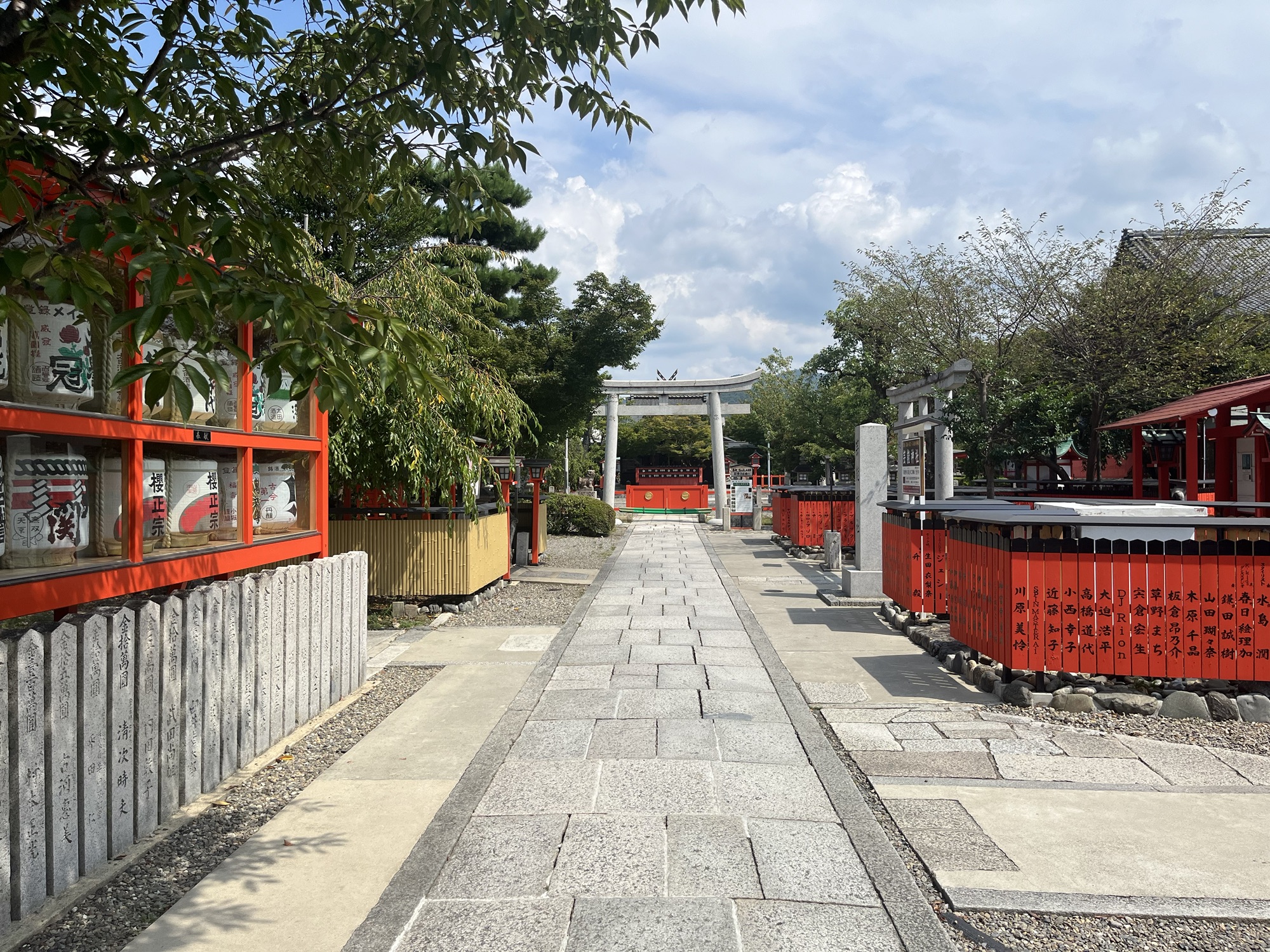
Kurumazaki Shrine

During our recent trip to Japan, we visited the city of Kyoto. I talked about this here, but I also wanted to share another site in Kyoto that relates to one of the poets of the Hyakunin Isshu : Kuramazaki Shrine. You can find their official website here, but there is no English and the site is a bit hard to navigate. The shrine itself has a very interesting layout:

The photo above is the main promenade leading to the inner sanctum (toward the back). Apparently, it’s tradition in Japanese culture to walk along the edge of the walkway, not right in the middle, so bear that in mind when visiting a shrine like this.

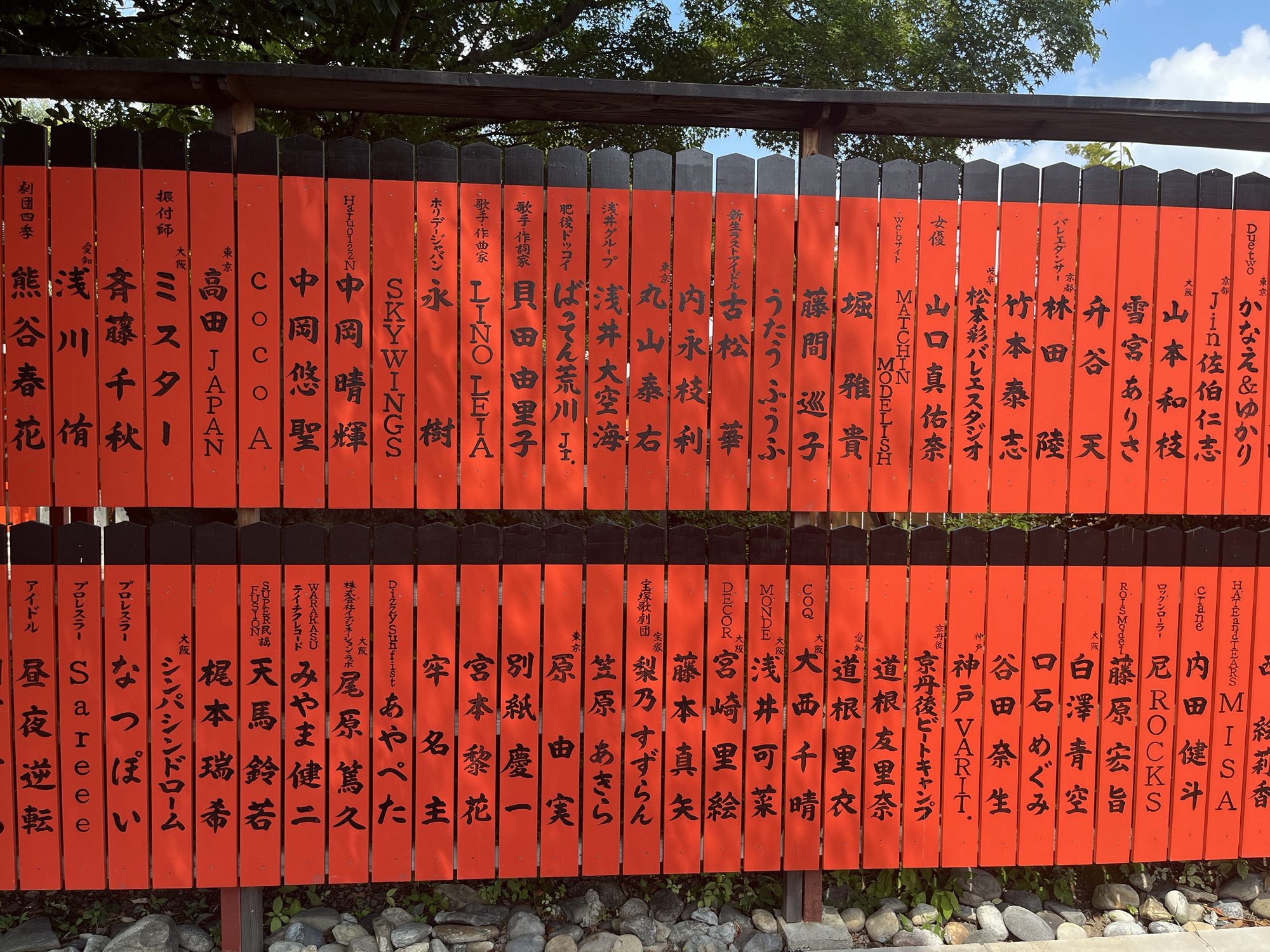
This Shinto shrine is notable for its many visits by celebrities who leave autographed red plaques.

Shinto shrines often serve particular need in society: love, business success, health, etc. In the case of Kurumazaki Shrine, the focus is on show-business, acting, theater, etc.

Why does this matter?

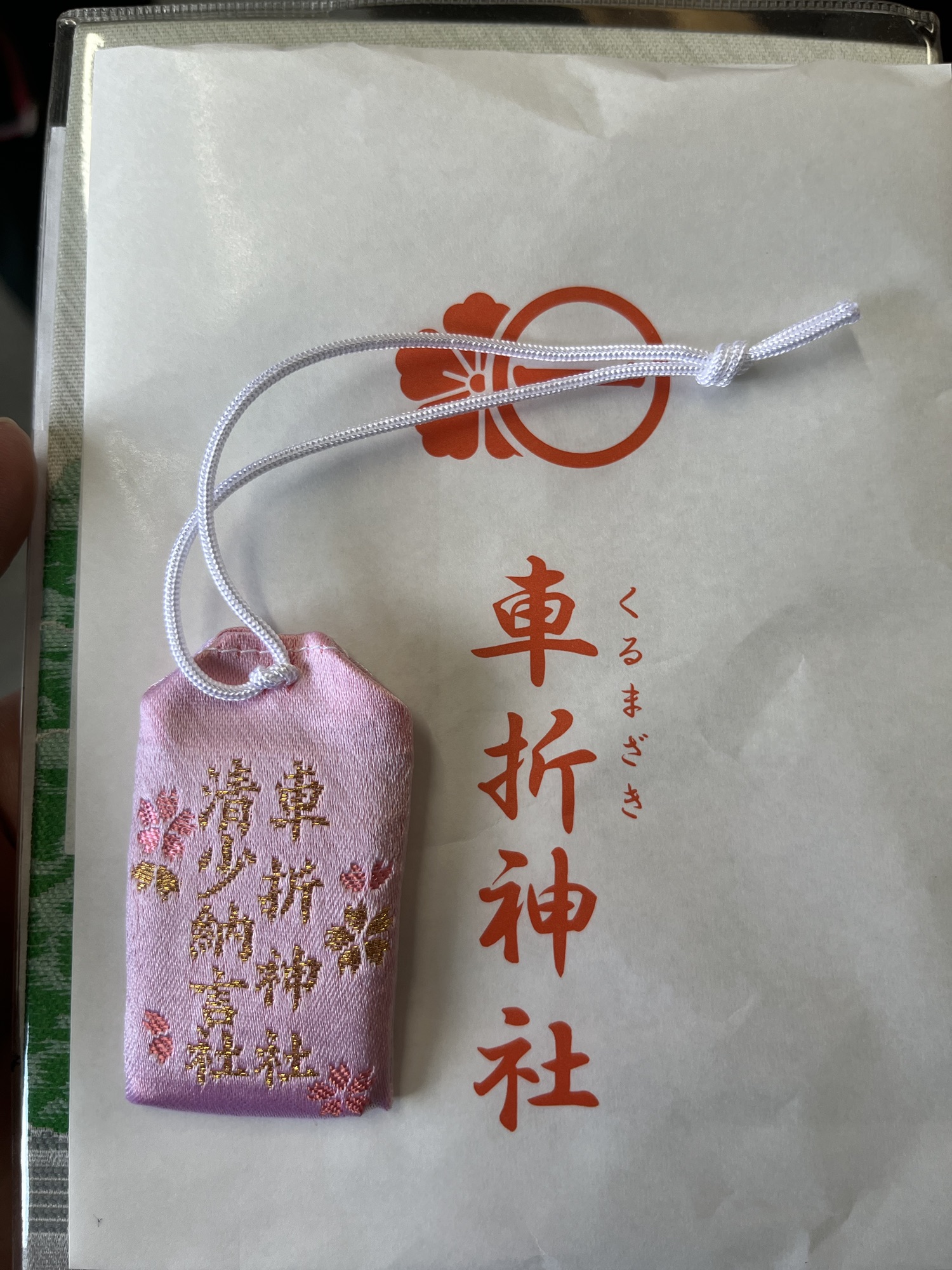
It turns out that Sei Shonagon, author of the Pillow Book and poem 62 (よを) in the Hyakunin Isshu is enshrined here. Not only that, but you can purchase a special omamori charm with her image on it. I learned about this place on social media after seeing the actress First Summer Uika, who played Sei Shonagon in the historical drama, visit the shrine.

Because this site contains many sub-shrines and side passages, it took a bit of effort to find Sei Shonagon’s shrine. It is halfway down the promenade, on the left, and looks like so:

I paid my respects to this esteemed author, and the family and I continued to explore. I found First Summer Uika’s plaque near the inner sanctum:

Incidentally, my wife is a fan of the JPop group Snow Man, and you can see one of their markers just to the left. We both got something out of this trip. 😛

As I alluded to earlier, the shrine complex is deceptively long, with many nooks and hidden shrines and side paths. The site map gives some sense of this. For reference, the Sei Shonagon shrine is number 20 on the map, and you can see there are many other sites here too. I didn’t photograph every shrine here, and most are probably obscure to readers (and obscure to myself). The common theme was both fortune, and also show business. They were some pretty neat shrines though, such as this one showing various theater masks:

At last we came to the gift shop, and I got a Sei Shonagon charm (omamori):

Later, when I got back home and realized that the charm was intended for ladies,1 I was rather embarrassed, yet I didn’t want it to go to waste, so I gave it to my daughter whose preparing for college this year. It seemed fitting, and I am happy to report that she got a good score in her SAT exam the following month, so perhaps the charm worked?

Anyhow, Kurumazaki Shrine is not something tourists usually visit because it’s a little removed from the nearby touristy area of Arashiyama, and like many Shinto shrines, it’s very Japan-centric, but it’s a cool slice-of-life of Japanese popular culture, both past and present.

As for me, I was happy to pay my respects to such a wonderful poet and author directly, someone’s whose creativity and work indirectly helped make this blog what it is today.

P.S. Later that day, I stumbled upon the place where the Hyakunin Isshu was compiled, so I managed to visit two sites in one day. Not too shabby.

1 It’s clearly written on the signs, I just failed to pay attention. I was maybe a bit star-struck perhaps. 😅

Hello from Japan, new items

Hello readers,

I am writing this post while staying with my in-laws house in Japan. We will be doing a bit of traveling later, but are mostly fighting jet lag and record heat + humidity for now.

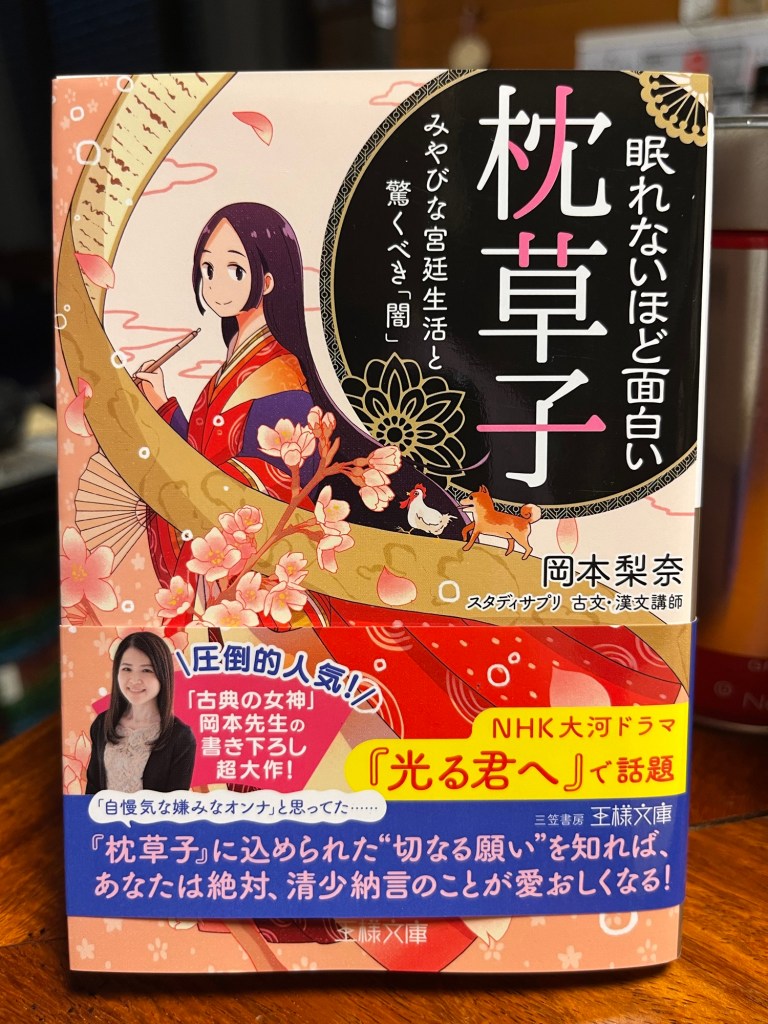
In the meantime I am excited to share some items I picked up, including these new books:

The first book explores the Pillow Book by Sei Shonagon, the second Lady Murasaki’s diary. These texts are both pivotal to appreciating the life and culture of people back then, the same people who composed the poetry of the Hyakunin Isshu. It’s a window to a world that simply doesn’t exist anymore.

Further, this book series, 眠れないほど面白い (nemurenai hodo omoshiroi, “so interesting you can’t sleep!”) has been a huge boon for the blog. It’s provided a lot of fun, historical information about the Heian Period, the Hyakunin Isshu, the Manyoshu, etc., that is simply not available in English. The Japanese is sometimes difficult to read at my level, but it’s been a labor of love, so I enjoy the challenge and have been learning a lot. So I am excited to delve into these two books as well.

Also, it’s noteworthy that both books above mention the current drama series 「光る君へ」as a tie-in.

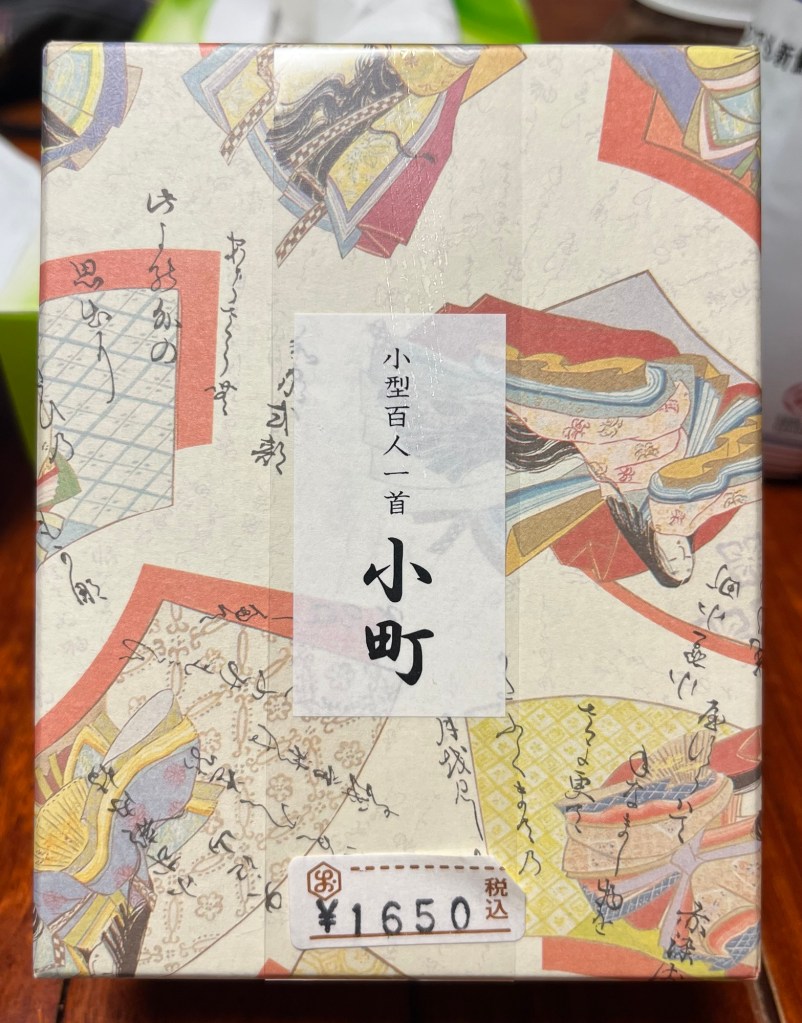
Yesterday, on a day trip to Tokyo I visited the Karuta shop Okuno Karuta (奥野かるた店). It was very easy to find from the Jinbocho train station (just head left and walk down a few blocks). The store was larger than the Tengu-do and includes lots of neat card sets not related to Karuta. I was on a budget so I tried not to spend too much. I did pick up a mini Karuta set though:

This set looks just like the first set I got, both Tengu-dō brand, but roughly half the size. It’s not suitable for competitive karuta but it’s cute and fun to own.

Anyhow, the staff at Okuno Karuta were very nice and helpful. While I was perusing, a tour group of elderly Japanese came through for a while, and the staff had to handle the rush of customers, before things quieted down again.

Hopefully I can post more updates soon.

P.S. also picked up an obscure Fire Emblem game too:

The Pillow Book

Since I spent so much time gushing over First Summer Uika and her portrayal of Sei Shonagon in the Japanese drama Hikaru Kimi É (“Addressed To You, My Radiant One”), this seemed like a good time to talk about the Pillow Book, or Makura no Sōshi (枕草子).

Despite the name “Pillow Book”, the book has no erotic content. Instead, it is a collection of witty musings about life in the Heian Period aristocracy, early 11th century. The image is of a person lying on their pillow, composing thoughts in a diary.

The author, Sei Shonagan (poem 62), was one of the pre-eminent writers of her generation, in a field of many excellent talented women.

I had read the book many years ago, and I felt it was a bit dry at times since it has no narrative. But back then, I also had a much more limited understanding of Heian Period culture, and many of the things mentioned in the Pillow Book are also alluded to in the Hyakunin Isshu, as well as the Diary of Lady Murasaki. So, even if the format is different, all three collections draw from the same “cultural well”.

I thought I had lost my copy of the Pillow Book (the Penguin Classics version, translated by Dr Meredith McKinney) a long time ago, but was amazed to discover that it was just buried behind other books. So, I dusted off the book and have been reading through it again.

Sei Shonagon is a keen observer of life in the Heian Period, and makes lists for all kinds of obscure things:

[23] Occasions that induce half-heartedness — The religious services on days of Buddhist fasting. Preparations for something still far in the future. Long periods of seclusion at a temple.

trans. by Dr Meredith McKinney

or:

[65] Poetic anthologies — The Manyōshū. The Kokinshū.

[66] Topics of poetry — The capital. The kudzu vine. The water burr. Horses. Hail.

trans. by Dr Meredith McKinney

Or she adds things to lists that were probably drawn from personal experience:

[132] Occasions when time drags by — An abstinence that you must observe away from home. A game of sugoroku when you can’t manage to get your pieces off the board. The house of someone who’s failed to get a promotion in the Appointments List. And of course the worst of all is simply a day of heavy rain.

trans. by Dr Meredith McKinney

It’s also clear that Sei Shonagon had a pretty haughty attitude, especially when compared to Lady Murasaki’s (poem 57) withdrawn, melancholy tone or Lady Izumi’s (poem 56) whimsical passion. As they say in modern Japanese: seikaku ga deru (性格が出る, “people’s personalities come out”). In one anecdote, section 94, she grumbles about encountering “worthless peasants”. I wouldn’t be surprised if she was the only one among the nobility at the time who held such views, but it is nonetheless painful to read.

One thing I do particularly enjoy about the Pillow Book though are the anecdotes. While many of the entries are just lists and her opinions, she often reminisces about funny, sad or strange occurrences she witnessed during her 10-year tenure serving the ill-fated Empress Teishi. Some of these anecdotes and observations are quite long, while others are brief. Some happened long ago, and Sei Shonagon’s memory is a bit fuzzy, others are more recent.

For example in one anecdote, number 79, she talks about how her relationship with one Officer of the Left Gate Watch named Norimitsu had soured after an incident where he covered for her. She had gone somewhere and only Norimitsu knew her whereabouts, but the Captain Consultant demanded to know where she had gone and Norimitsu tried to keep his mouth shut. Later when Norimitsu complained, she sent a piece of dried seaweed in reply, and Norimitsu got annoyed. She criticized his lack of sense, and he was frustrated at her for putting him in such a difficult position. Later she muses that they grew more and more distant after that incident until “later, Norimitsu was promoted to Deputy Governor of Tōtōmi Province, and the relationship ended in hostility.”

Sei Shonagon discusses many people of the Court, including other ladies in waiting, but does not mention Lady Murasaki and other famous women of the Hyakunin Isshu. Such women served under the second empress, Shoshi, and thus came a bit later anyway. By the time Emperor Ichijo married a second time, Teishi’s status had greatly declined and her retinue (including Sei Shonagon) were on their way out the door. Teishi herself soon died in childbirth.

The Pillow Book is a really nice “slice of life” look at the court culture of the time: sometimes amusing, sometimes exquisite, and sometimes depressing. Her wit really shows through the ages and even today kids in Japan (and people outside Japan) still read her book.

P.S. Featured photo is a drawing of Sei Shonagon from a 13th-century illustrated copy of the Pillow Book. Courtesy of Wikimedia Commons.

Lady Murasaki Drama

Hi folks!

I have been away for a while due to various life circumstances, but I’ve been wanting to share this news with readers.

The Japanese public TV station, NHK, broadcasts a new Taiga Drama (大河ドラマ) every year. These are big productions featuring some aspect of Japanese history, with big name actors and so on. I was very fond of the last one. Usually these cover periods of warfare or conflict, and male historical figures from Japan’s long history, but this year’s drama, titled Hikaru Kimi E (ひかる君へ, “Addressed to You [my dear Radiant One]”), features Lady Murasaki as the main character!

(Image by NHK, all rights reserved)

Lady Murasaki, poem 57 of the Hyakunin Isshu, needs little introduction. She composed the Tales of Genji, as well as her eponymous diary. She was the first female novelist in Japanese history, and has been a subject of interest ever since. The biographical details of her life are somewhat scant, unfortunately, and the drama does embellish quite a bit, including hinting strongly at a romance that probably didn’t happen in real life. My impression is that they are using romantic themes from her novel, the Tales of Genji, as the backdrop for the drama.

Nonetheless, I have been watching this series on Japanese TV1 and I enjoy it. It is somewhat different than past Taiga Drama, since it features a female main character, and this period of history (the late Heian Period), had little warfare, but it does have tons of scandal and intrigue as the Fujiwara clan tighten their grip on the reins of government. This drama is surprisingly risqué in parts, something you usually don’t see in a conservative Japanese drama. However, such scenes remind me more a more subdued Victorian romance than something in modern, American television.

That said, it’s a darn good drama thus far.

The drama frequently shows other people of the Heian period aristrocracy, many of whom were poets of the Hyakunin Isshu. To name a few who have been featured in the drama:

I admit I am particularly fond of the character Sei Shonagon. In historical pop culture, Sei Shonagon and Lady Murasaki are treated as rivals as they were both famous writers of the same generation who belong to rival cliques in the aristocracy, but in reality they probably didn’t interact much. Nonetheless, they frequently talk in the drama, and the actress who plays Sei Shonagon, stage name is “First Summer Uika” (ファーストサマーウイカ), is a talented actress and total babe:

She is on Instragram, too:

First Summer Uika also recently visited a Shinto shrine devoted to Sei Shonagon in Kyoto called Kurumazaki Jinja (車折神社), which even sells Sei Shonagon charms (omamori):2

But I digress.

Because the drama features so many people related to the Hyakunin Isshu, the drama subtly works in many poems from the anthology. It’s been great to suddenly recognize a poem being recited, even if I am a bit slow to recall. The settings, costumes, and cast are all amazing, and even though the historicity is questionable, it’s been a great watch.

I really hope they eventually make an English subtitle version so people outside Japan can watch. The quality of Taiga Dramas are terrific, and they are well worth watching if you can.

Update: while visiting Kyoto in 2024, we found a local NHK display of the drama:

The second photo above is First Summer Uika as Sei Shonagon.

1 Sadly there are not foreign translations, and no subtitles, and it is not always modern Japanese, so I admit I struggle at times to follow the story. At other times, I can follow easily enough.

2 We are going to visit Japan again this year (the last for our teenage daughter), including Kyoto. Visiting this shrine is definitely on the itinerary, even thought it’s pretty small.

Solitude: Poem Number 70

My favorite poem related to fall in the Hyakunin Isshu is this one:

JapaneseRomanizationTranslation
さびしさにSabishisa niWhen, from loneliness
宿を立ちいでてYado wo tachi ideteI stand up and leave my hut
ながむればNagamurebaand look distractedly about:
こも同じIzuko mo onajieverywhere it is the same
秋のゆうぐれAki no yugureevening in Autumn.
Translation by Dr Joshua Mostow

The author of this poem is a monk named Ryōzen Hōshi (良暹法師, dates unknown) or “Dharma Master Ryōzen”, who supposedly composed it while doing austerities in a remote hut outside the capitol. Unfortunately, we have little about Ryōzen Hōshi’s personal history, even in my new book. He had some infamy over a poem he composed during a poetry contest, by inadvertently copying one in the Kokin Wakashu, causing him to be a laughing stock. However, other scant records show he was still respected by the nobility overall.

The notion of “Autumn sunset” appears a lot in Japanese poetry, but apparently its meaning differs depending on the time and place. Ryōzen Hoshi gives a more melancholy, almost Buddhist, tone implying that the world around him is declining into winter and possibly, metaphorically declining in a general Buddhist sense. However, Sei Shonagon (poem 62) also wrote about Autumn Sunset in her Pillow Book, but used it to describe crows and wild-geese flying

An Autumn sunset means a lot of different things to a lot of different people, but it still is significant one way or another. For me, I tend to like Ryōzen’s imagery the best, and it’s the one I imagine whenever I read this poem.

A Lame Excuse: Poem Number 62

As a final poem in March to honor women poets in the Hyakunin Isshu, I wanted to post a humorous, witty poem by Sei Shonagon, author of the Pillow Book:

JapaneseRomanizationTranslations
夜をこめてYo wo kometeAlthough, still wrapped in night,
鳥の空音はTori no sorane wathe cock’s false cry
はかるともHakaru tomosome may deceive,
よにおう坂のYo ni Ōsaka nonever will the Barrier
ゆるさじSeki wa yurusajiof Meeting Hill let you pass.
Translation by Dr Joshua Mostow

Sei Shonagon (清少納言, dates unknown), along with Lady Izumi (poem 56) and Lady Murasaki (poem 57), is one of the most famous female authors of her generation and Japanese history as a whole. She was the daughter of Kiyohara no Motosuke (poem 42). Her name Sei is another way to read the Chinese character “kiyo” (清), while Shonagon refers to a government post (lit. “lesser councilor of state”), but it’s unclear why it’s attached to her.

She’s best known as the author of the Pillow Book. Despite the name, it is mostly just a book of witty observations regarding court life, nature, art, etc. Whereas Lady Izumi was a hopeless romantic, and Lady Murasaki was melancholy, Sei Shonagon’s writings show she had a sharp, often haughty wit:

[151] People who seem enviable — You set about learning to recite a [Buddhist] sutra, stumbling along, going endlessly over the ame places and constantly forgetting bits. When you hear the same words tripping smoothly off the tongues of others — not only the priests, but other men and women — you wonder enviously if you’ll ever be able to perform like that.

….You have an urge to go on a pilgrimage to Inari Shrine, and as you’re laboriously gasping your way up the steep mountainside to the middle shrine, you’re filled with admiration to see others who’ve obviously started behind you go climbing straight up without the least effort; when you arrive, there they stand, already at their worship….

The Pillow Book, trans. Dr Meredith McKinney, page 152

Sei had the misfortune of serving Empress Teishi, who fell out of favor after her father died, and the Emperor’s 2nd wife, Empress Shoshi, eclipsed her. Lady Izumi and Lady Murasaki served the latter, and by that time Sei Shonagon was a bit of a has-been. This same power struggle also negatively impacted Fujiwara no Sadayori (poem 64). It is thought that Pillow Book was, among other things, a subtle middle-finger to the Court for abandoning Empress Teishi by painting such a rosy picture of her time.

In any case, this poem demonstrates Sei Shonagon’s wit at her finest though. According to the back-story of this poem, she was visited by one Yukinari, the First Controller, who left early in the night, because he had to be back to the Palace before the rooster crowed. Then Sei Shonagon receives a letter from him the next day, stating that he would have loved to stay longer, but then uses the famous example of a Chinese legend about the Lord of Meng Chang who supposedly tricked the guards at Han Ku gate to open it by imitating a rooster crow at night so that they would believe it was morning.

However, Sei is not convinced by his eloquent excuse and sends this snarky poem back that basically says that no one at Ōsaka Gate (Meeting Hill) would be fooled by it.

Dang. 👈🏼👈🏼😎