Poet Ariwara no Narihira, who wrote poem 17 (ちは) in the Hyakunin Isshu, and quite possibly the best poem on cherry blossoms ever, is also the model for the protagonist of the Ise Stories. In it, he delivers yet another banger of a cherry blossom poem. This is episode 29 of the Ise Stories:
Back then, when called to attend the cherry-blossom jubilee held at the reside of the Heir Apparent‘s mother [he recited the following]:
This is a really good cherry blossom poem, but Professors Mostow and Tyler explain that there is more to the story too. The heir apparent, later the ill-fated Emperor Yozei (poem 13, つく) in the Hyakunin Isshu, had a mother named Fujiwara no Takaiko. And within the Ise Stories, episode 6, there is a famous anecdote where:
Back then there was this man. Year after year he courted a lady he was unlikely ever to win, until at last he managed to abduct her under cover of darkness.
Translation by Mostow and Tyler
Later, the pair take cover in a storehouse during a bad rainstorm, but while he stood guard outside, a demon came and swallowed her, losing her forever. The episode then explains that the demon was in fact Takaiko’s brothers who brought her back to the capitol. Thus, it’s strongly implied in the story that Narihira and Takaiko briefly eloped before she was found by her family and brought home.
The poem above was composed after Takaiko was already wed to Emperor Seiwa and had given birth to a son, Yozei. It’s not hard to imagine that Narihira maybe still had feelings for Takaiko, though modern scholarship seems to reject this, and suggest it is simply polite felicitations.
Was this a hidden love poem, or a really colorful description of cherry blossoms? Who knows?
I have been quietly doing a number of updates to existing blog content. This includes fixing some inconsistent formatting, and fixing broken or outdated links. Tags and categories were cleaned up and standardized as well. This was long overdue.
In addition, all references to Amazon.com have been removed.
Finally, it’s that time again: cherry blossom season. It is still a bit early where I live, but if you are planning to view cherry blossoms (ohanami, お花見), then feel free use my handy guide.
Thanks everyone and happy spring to readers in the Northern Hemisphere!
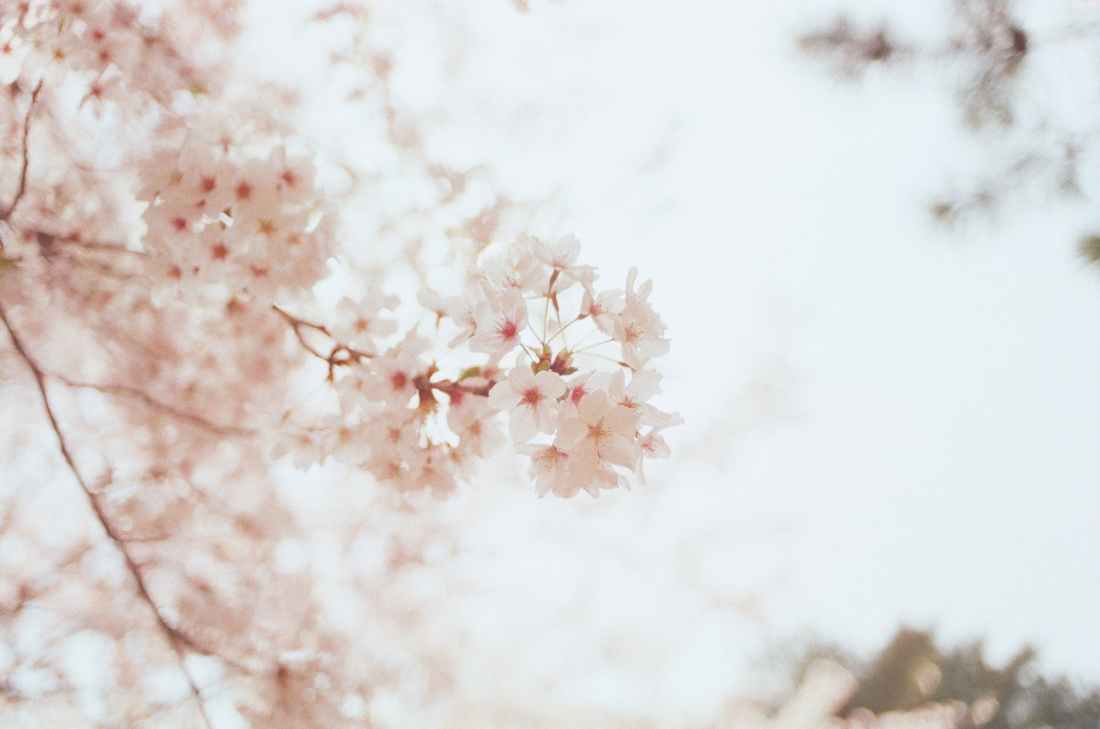
As spring approaches, people eagerly anticipate when cherry blossoms (sakura in Japanese, 桜), but as I have learned recently in my book, the Hyakunin Isshu Daijiten, there are many types of sakura, some of them even referenced in the Hyakunin Isshu. Let’s explore a few and learn how to spot one versus another.
If you’re curious about how to even spot a cherry tree, my alma mater has a nice video introduction from the Pandemic era on spotting various trees in your own neighborhood:
A Brief History Lesson of Cherry Blossoms
Cherry blossoms have been a part of Japanese culture for a very long time, but were not always revered as they are now. In antiquity, the plum blossom, imported from China, were more highly revered as one can see in the Manyoshu, but over the centuries the roles reversed. The tradition of outings to view cherry blossoms is credited to Empress Jitō (poem 2). Nowadays, this tradition continues as ohanami (お花見), and can be a fun outing with friends and family or co-workers. In places like Ueno Park in Tokyo, the grounds are crowded with picnic blankets, visitors, and plenty of food and saké to go around.
The most famous, most iconic poem about cherry blossoms was composed by Ariwara no Narihara (who also wrote poem 17):
Japanese
Romanization
Translation
世の中に
Yo no naka ni
If in all the world
絶えて桜の
Taete sakura no
there were of cherry blossoms
なかりせば
Kanariseba
no trace anywhere
春の心は
Haru no kokoro wa
ah, how truly peaceful then
のどけからまし
Nodokekaramashi
spring would be for everyone!
Translation by Dr Josha Mostow and Dr Royall Tyler from the Ise Stories, the poem is also number 53 in the Kokin Wakashū.
Varieties of Cherry Blossoms
Big thanks to this site for providing additional references. I also relied on some details from the Hyakunin Isshu Daijiten book I’ve used for the blog.
Yoshino Cherry
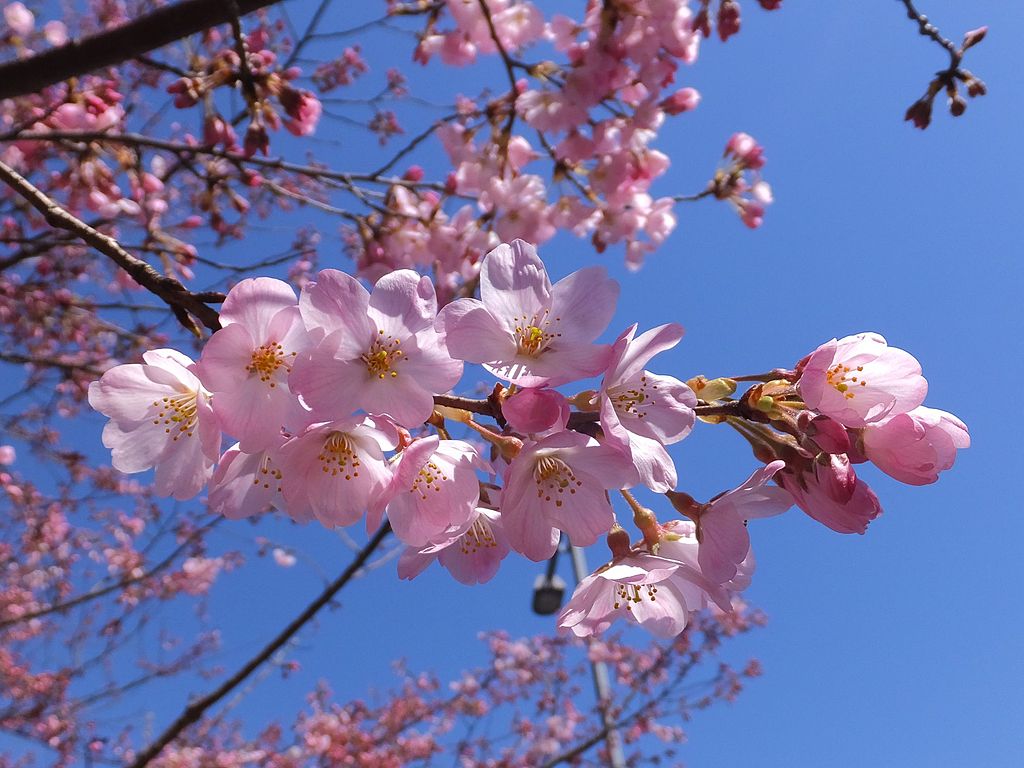
The most common, most well-known type are the Somei Yoshino (ソメイヨシノ) or “Yoshino Cherry” in English:
(Photo by Tak1701d, Public domain, via Wikimedia Commons)
This is a relatively recent variety that was bred for gardening, then gained popularity abroad. It is named after the famous village of Yoshino. For many, this is the classic “cherry blossom” and the one you’re most likely to see outside of Japan.
The term yae (八重) means something like “eight layers” or “eight levels”, which helps describe it’s thicker, multi-layered blossoms. It is also the subject of poem 61.
To be honest, yae-zakura are my personal favorite.
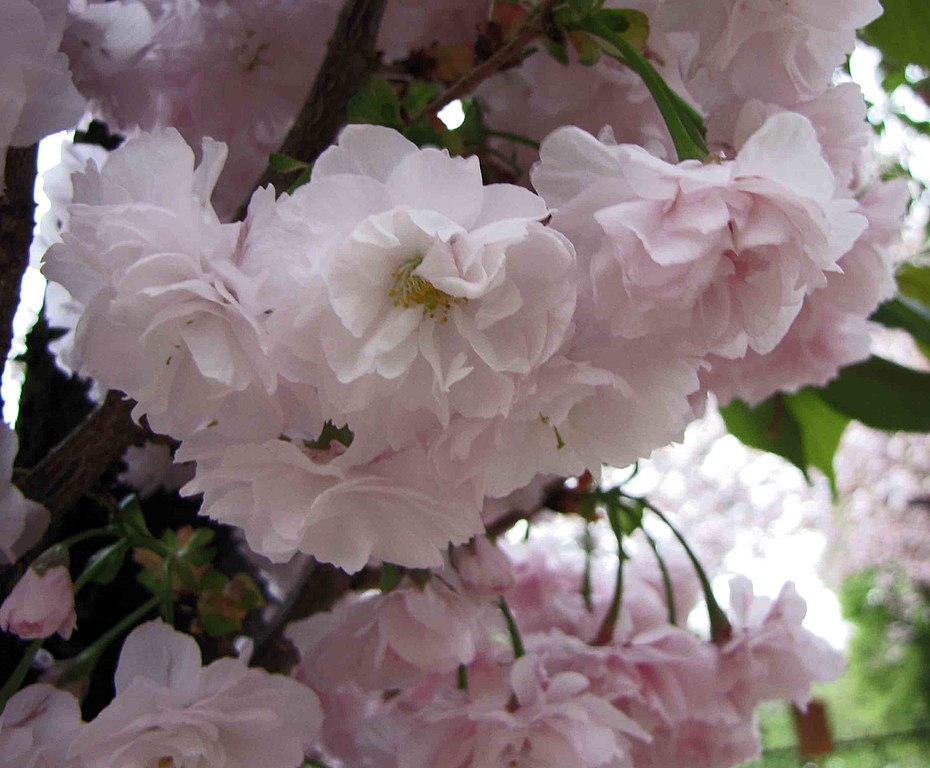
Kanzan Cherry
A popular variety that I only learned about recently is a hybrid variety called the kanzan (カンザン, sometimes archaically spelled Kwanzan). I didn’t find this one online at first, but was able to take a photo during a recent visit to the University of Washington.
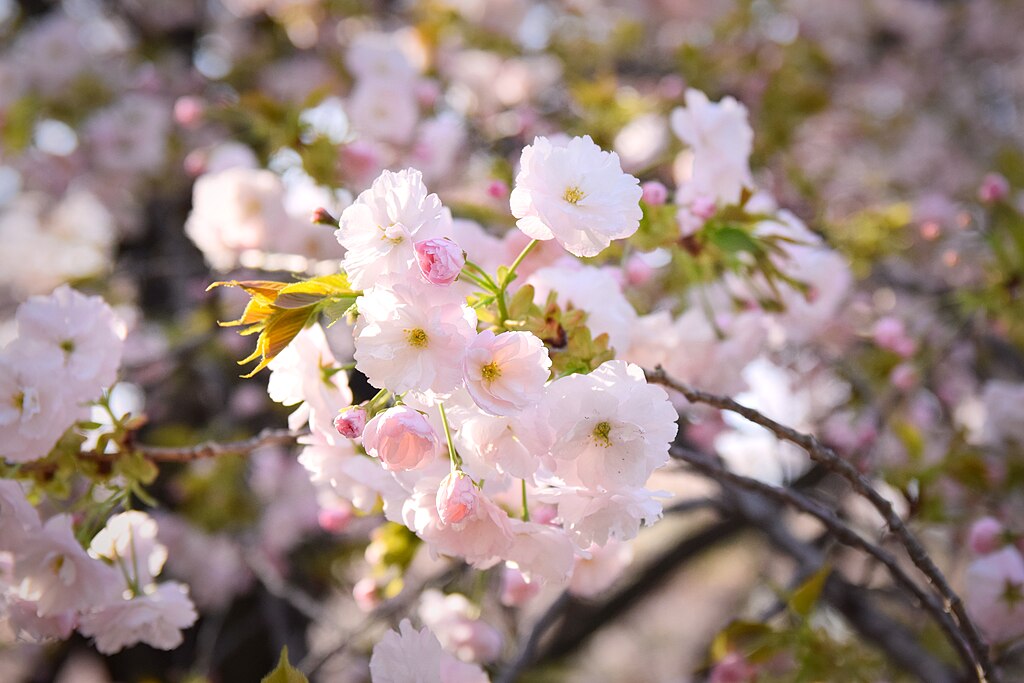
This variety was, similar to the Yoshino, a relatively recent variety, and a result of hybrid breeding with Ōshima cherry. What makes this one interesting is the both the rich pink color, and the multiple layers of blossoms (similar to the Kasumi cherry below).
Fugenzo Cherry
Taken at the University of Washington in 2026
Another variety descended from the Ōshima cherry is called the fugenzo (フゲンゾウ, “Fugen’s elephant”) variety, sometimes called the shirofugen (シロフゲン, “white Fugen”) variety. The name is derived from the pistil of the flower resembling the shape of an elephant’s trunk, and since a revered bodhisattva named Fugen rides a sacred white elephant, that’s how it got its name.
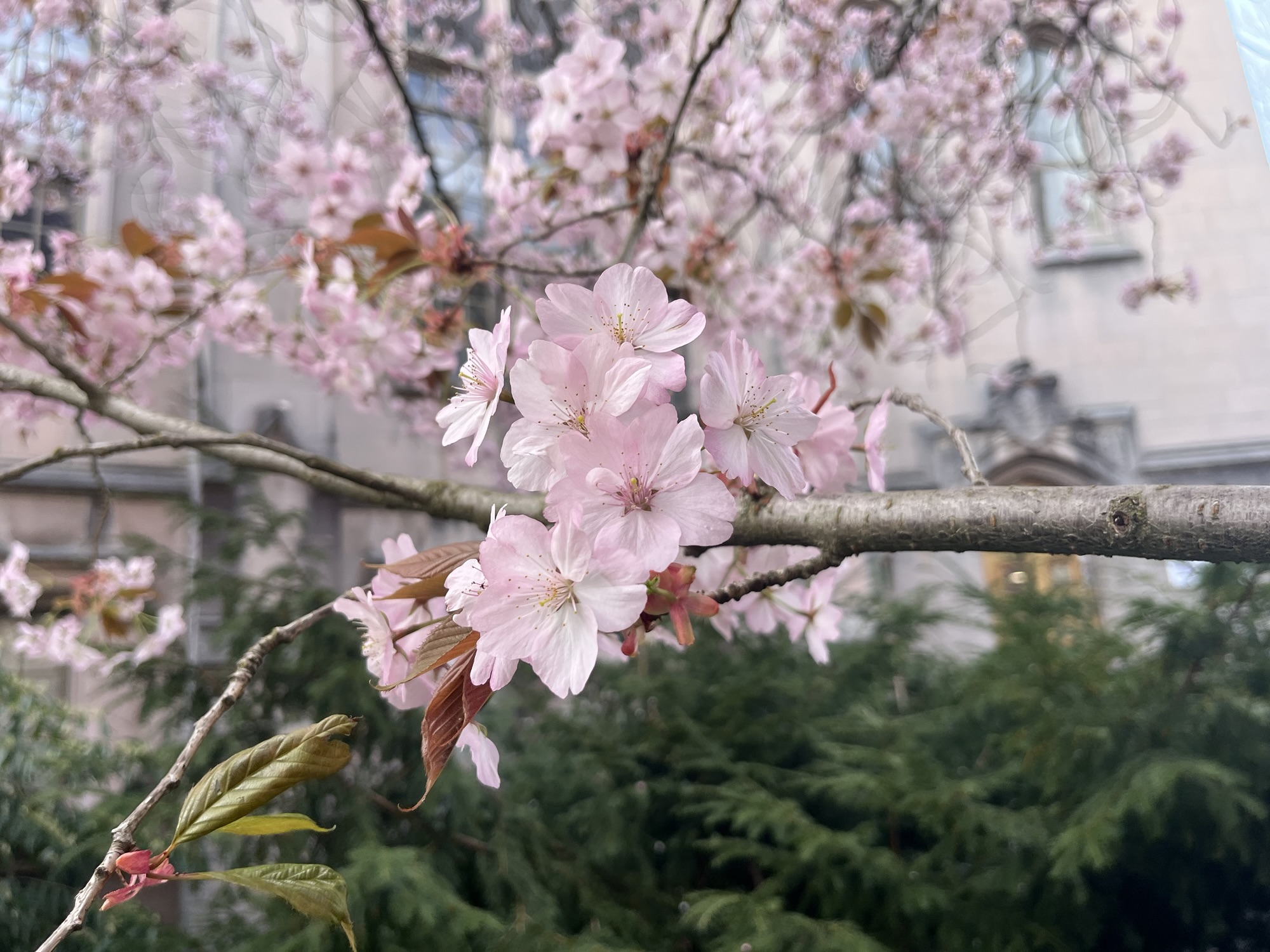
Mountain Cherry
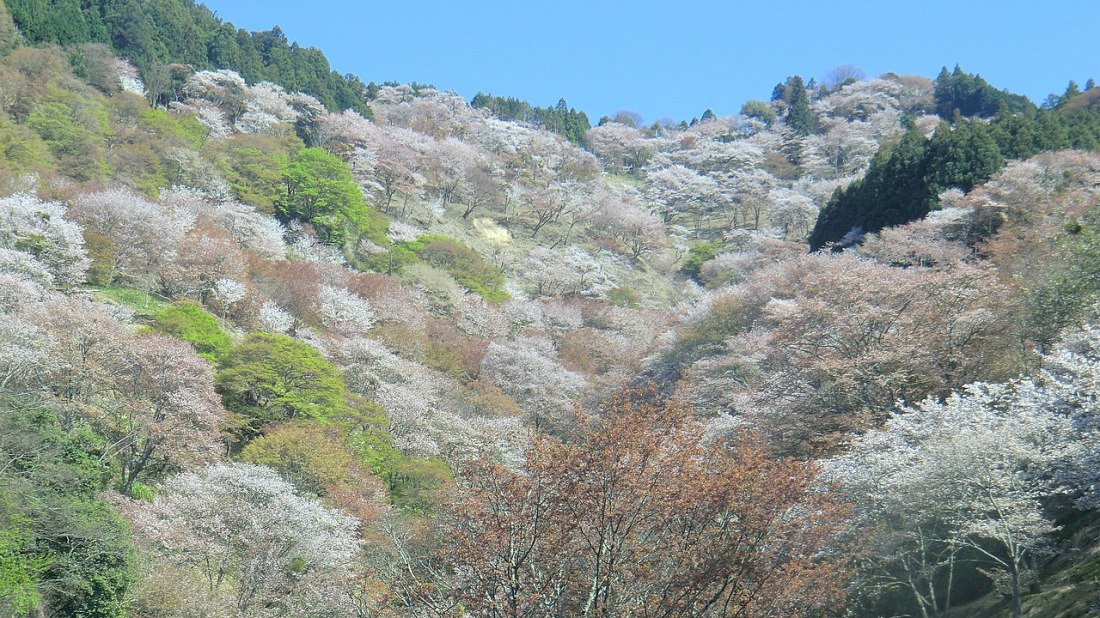
Another example of cherry blossoms, that’s lesser-known in the West are the wild cherry trees, or yama-zakura (ヤマザクラ) also known as the “Mountain Cherry”:
If you compare the Yama-zakura to the classic Yoshino Cherry, you can see the color is a little more faded, kind of whitish in comparison. I think I have also read somewhere that the leaves and blossoms of a mountain cherry sprout at the same time, compared to a Yoshino Cherry where the blossoms comes first.
In antiquity, when the nobility of the capitol would go on a cherry blossom viewing, these are the trees they would most likely go to see. They are the subject of poem 66 as well.
Shidaré-zakura Cherry
Another iconic variety of cherry blossoms are the shidaré-zakura (シダレザクラ), or Hanging Cherry:
You often see these grown in very scenic places, as well as on the grounds of Buddhist temples or Shinto shrines. The way the hanging branches sway in the wind is a sight to behold.
Kasumi-Zakura
One interesting variety that I was unaware of, until researching for this blog was the kasumi-zakura (カスミザクラ):
The word kasumi is a poetic term for haze or mist, especially a spring mist. You can see how the blossoms hang down somewhat, and are particularly large compared to other cherry blossoms varieties. They also seem to have a two-tone quality, where the edges are deeper color than the middle.
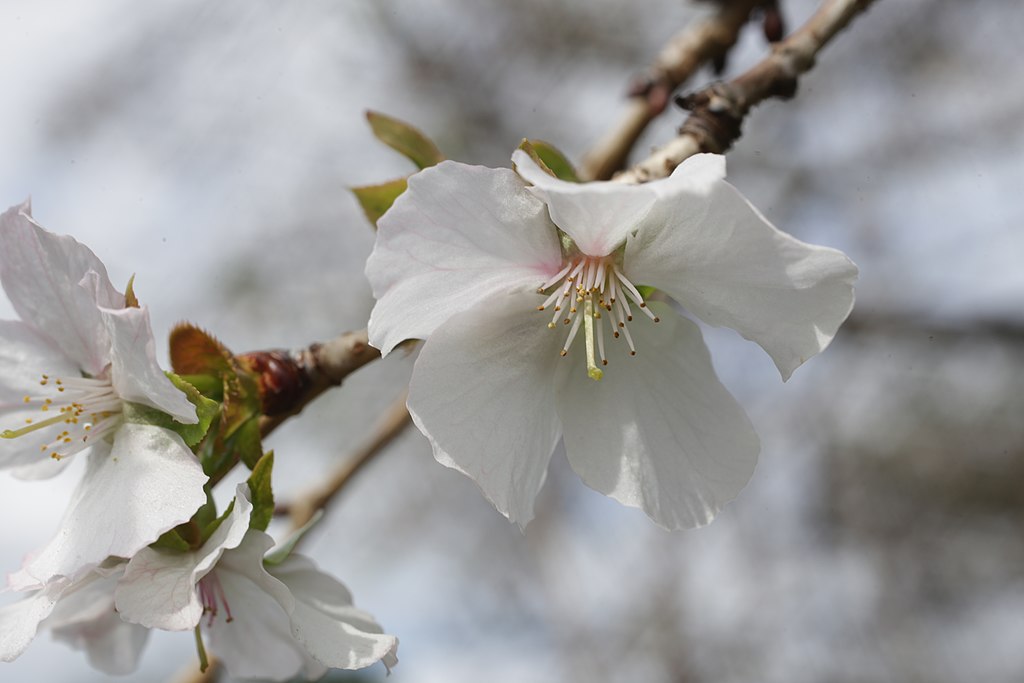
Fuyu-Zakura
Another example I wanted to share is an unusual variety that blooms in spring, and in winter, called the fuyu-zakura (フユザクラ):
This cherry variety, also known as a gobazakura (コバザクラ) has white blossoms and blooms both in April, and also in December.
Kanhi-zakura
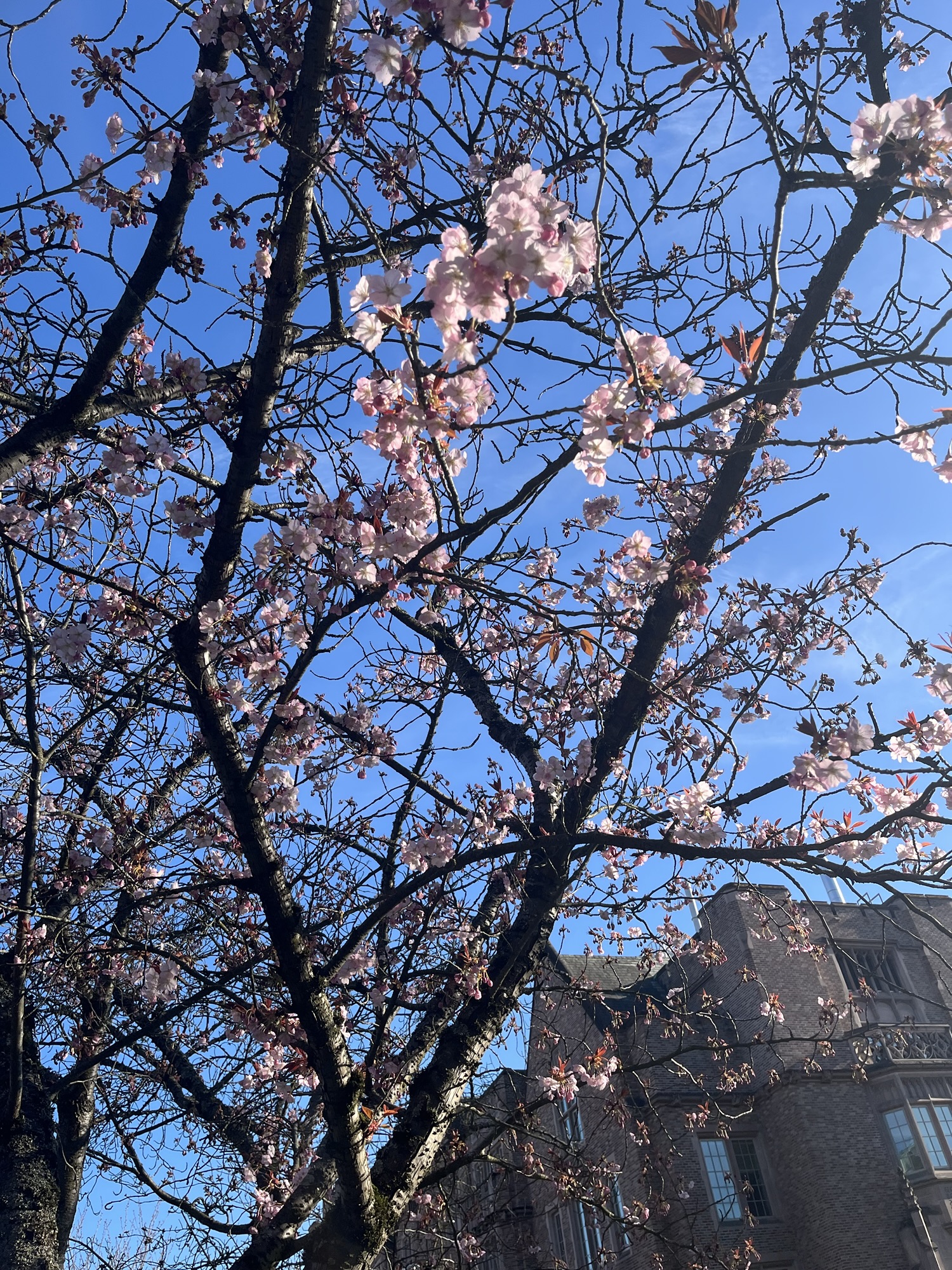
Taken by me at University of Washington in April 2025
While visiting the University of Washington in 2025, I found another variety I hadn’t noticed before. This variety is listed on UW maps as “Hisakura”, but in digging around in Japanese I found that a more common name is Kanhi-zakura (カンヒザクラ), also called Taiwan-zakura (タイワンザクラ) after the island of Taiwan. The name Hizakura (ヒザクラ) is also used. As the name implies (and according to Wikipedia), this variety is found all over East Asia, including Taiwan, and blooms somewhat early. Based on my visit to the UW I can confirm this as an amateur cherry blossom nerd.
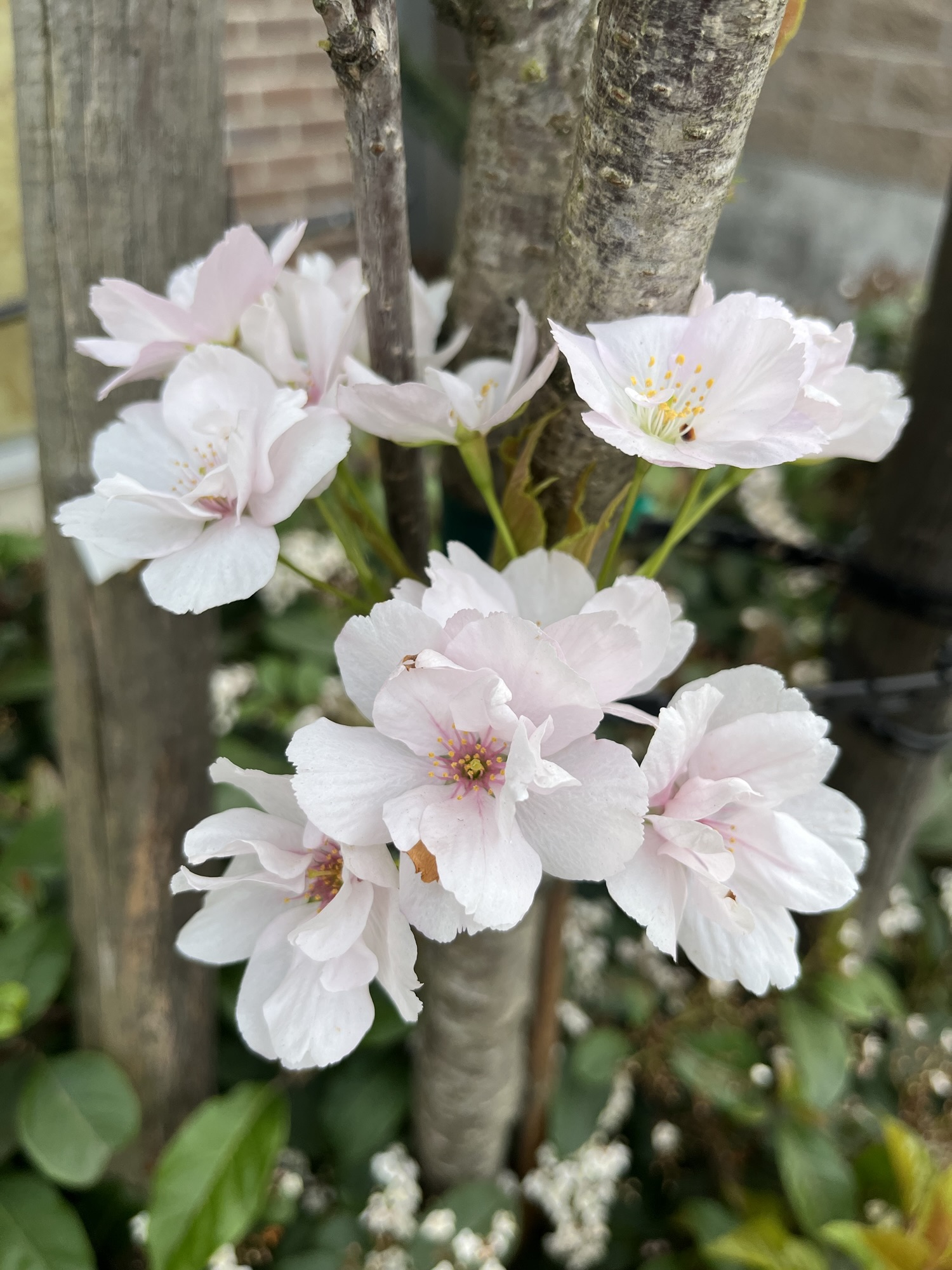
Amanogawa Cherry
Taken by me in my neighborhood, April of 2025
Yet another variety I stumbled upon recently in 2025 is the Amanogawa (アマノガワ, “Milky Way”) variety. You can see an extra layer of petals in this one, similar to the Kanzan variety, but a lighter, softer color. I couldn’t find much detail about this variety but it appears to be a form of sato-zakura plants also known as the Ōshima cherry, similar to the Kanzan and Fugenzo varieties.
Conclusion
There are many more varieties of cherry blossoms than listed here, but many are obscure or only known to botanists and experts. Also, it’s important to point out that Korea also has a venerable cherry blossom tradition, though I confess I don’t have much information.
In any case, when spring comes, see if you can identify the different cherry blossoms you see. You may be pleasant surprised.
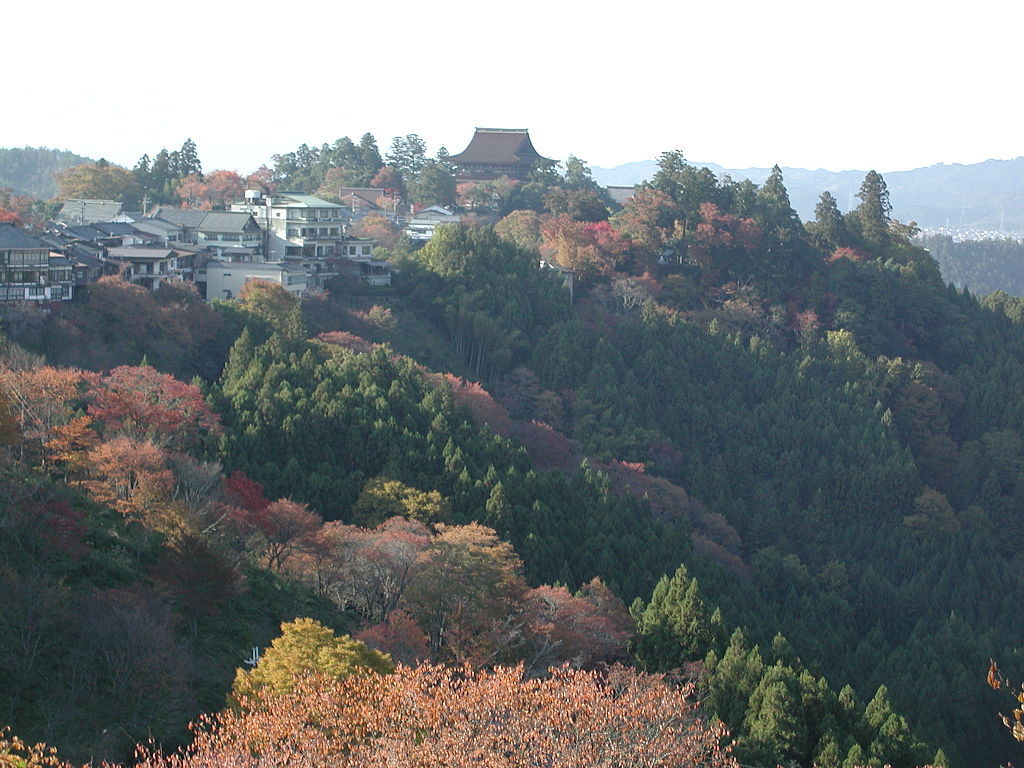
The small town of Yoshino (吉野, official site), near the old capitol of Nara, was a popular spot since ancient times and was often the subject of poetry in the Hyakunin Isshu anthology, for example poem 31 and poem 94. Further, according to the old Japanese historical account, the Nihon Shoki, visits to Yoshino to view the cherry blossoms went as far back as Empress Jitō (poem 2) and became a tradition ever since.
There is also a famous love story that takes place between the celebrated 12th century warrior Minamoto no Yoshitsune, and his mistress Shizuka Gozen. It was said that winter, while fleeing his jealous older brother, on the way to Oshu province in the north, they had to separate for her safety. In the snows of Yoshino, they parted, and Shizuka was sad to watch her beloved disappear in the snow.
Last spring, the Yasaka Taxi company in Japan posted a terrific photo of Yoshino (original link on Twitter):
Even to this day, cherry blossom viewing at Yoshino is a major tourism destination, and from what I hear, it’s pretty amazing.
The author, Nyūdō Saki no Daijōdaijin (入道前太政大臣, 1171 – 1244), or “Buddhist novice and former Chancellor of the Realm”. His personal name was Fujiwara no Kintsune. He was a powerful member of the elite Fujiwara clan and extended his support to the Hyakunin Isshu’s compiler, Fujiwara no Teika (poem 97), after Teika married Kintsune’s older sister. He was also well-liked by members of the old Imperial Court and the new military government at Kamakura.
According to Mostow, Kintsune married a niece of Minamoto no Yoritomo, the first shogun of the new military government. After Yoritomo’s son Sanetomo (poem 93) died a tragic death with no heir, Kintsune pushed to make his grandson Kujō Yoritsune, a distant relation to Sanetomo, the next shogun. My new book states that his reputation worsens in his later years as he kept manipulating the power of shoguns from behind the throne.
It also implies that Kintsune may have helped tip off the new military government about Emperor Gotoba’s (poem 99) plans to wrest back control, helping to contribute to the demise of the Emperor and his son (poem 100).
Ah, times had changed since the earlier generations of the Hyakunin Isshu mostly worried about poetry contests and marriage arrangements.
But I digress.
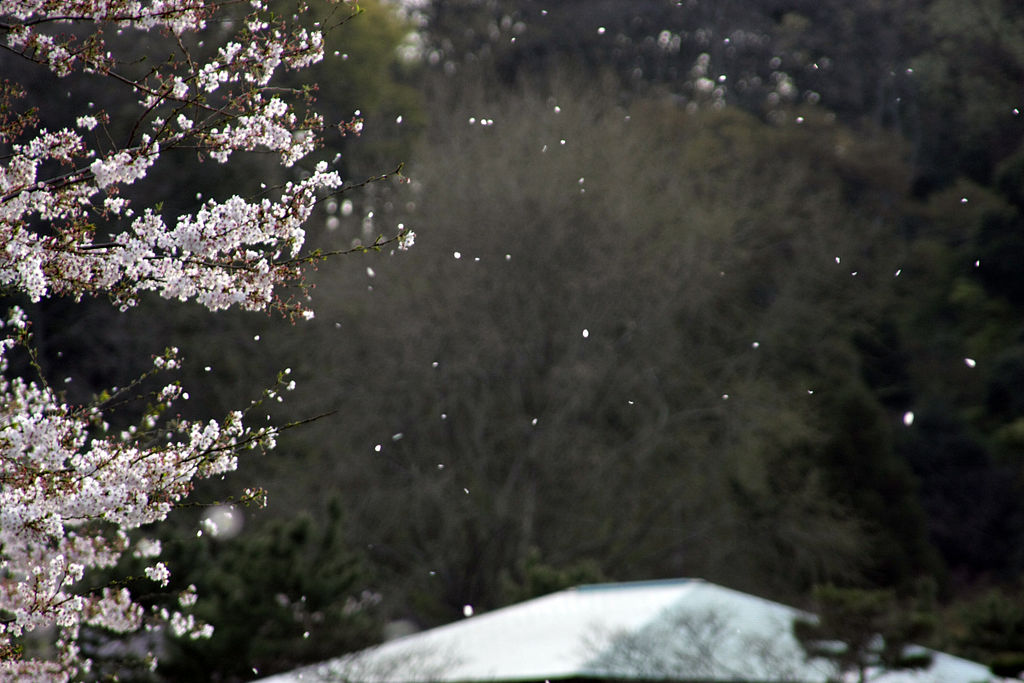
This poem, unlike other poems recently posted which were more clear-cut in meaning, often was the subject of much interpretation. The contrast between the aging man and the scattering of flowers in the wind, called hana fubuki (花吹雪) led to many interpretations by later commentators particularly about the man growing old, according to Professor Mostow. Perhaps he won’t be back next year?
The image of hana fubuki also is noteworthy, because it isn’t a small scattering of flowers. It refers to great scattering of blossoms in the wind, just like a snowfall. Thus Kintsune is witnessing this great scattering even as he contemplates his own decline even after so many years in power.
Pretty awesome poem, really, for a man who lived a noteworthy life.
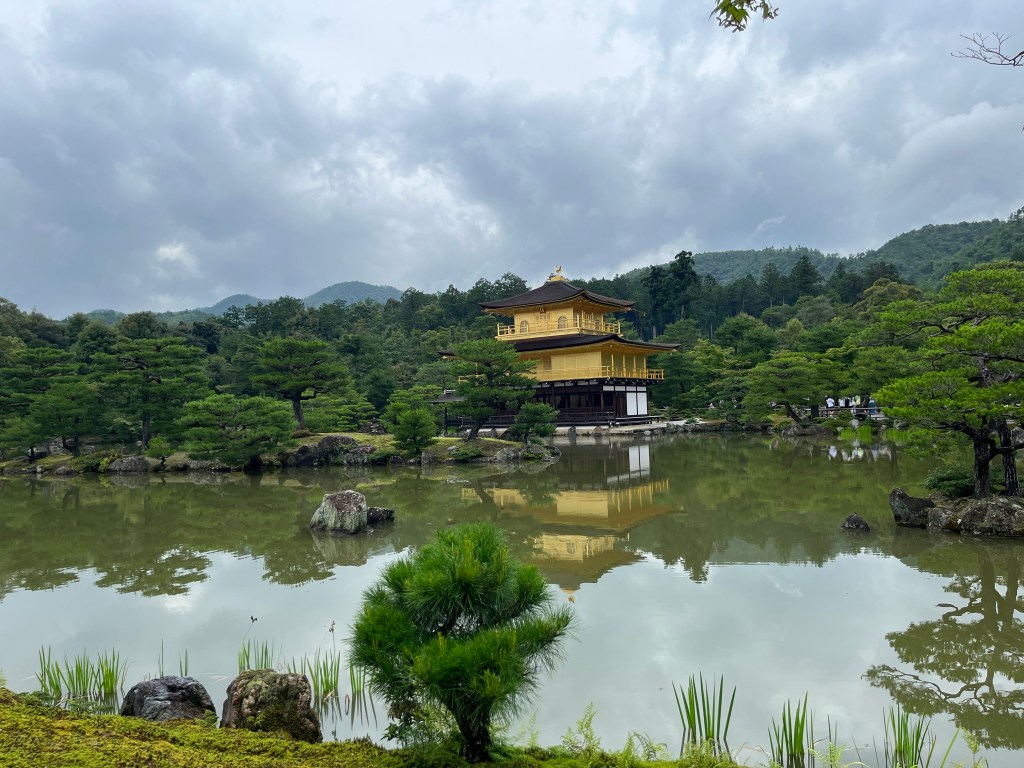
Speaking of scenic views, Kintsune’s residence of Saionji (西園寺), which was also established as his clan’s new name (Saionji), later became the famous Golden Pavilion.
Taken by me in July 2023
Indeed Kintsune’s contribution to Japanese culture and history, dubious as it may be, can be felt even today.
The author, Gonchūnagon (権中納言匡房, 1041 – 1111) or “Supernumerary Middle Counselor Masafusa”, was a prolific poet both in Japanese and in Chinese-style, and was a close confidant of Emperor Horikawa after retirement. His personal name was Ōe no Masafusa. As Professor Mostow notes, the poem’s meaning is very clear from the headnote, so there’s little if any debate about its meaning (unlike many poems in the Hyakunin Isshu). Masafusa hopes that the mist will not rise and block the view of the blossoms.
This poem brings to mind a time-honored tradition in Japan called hanami (花見) or “cherry-blossom viewing”. 🌸 This is a tradition you can see alive and well in Japan today, and each year there are plenty of websites and helpful guides for Japanese and foreigners to find a good spot for viewing.
However, during the time of the Heian Court and the poets of the Hyakunin Isshu, it was more of an outing for elite members of the court only. Such excursions, just like now, included lots of music, singing and drinking as well as impromptu poetry. The only difference, really, was that back then it was a very isolated affair between good friends and a private spot, whereas now people really have to fight for a good spot in places like Tokyo or Kyoto, and often times involve one’s boss and associates from work. 😏
Still, while some things have changed, it’s nice to see such a tradition live on for so many generations.
P.S. Featured photo is of cherry blossom viewing (hanami) in Oyamazaki, Kyoto Prefecture, Japan. Photo by Oilstreet, CC BY-SA 3.0, via Wikimedia Commons
The poem was composed by Saki no Daisōjō Gyōson (前大僧正行尊, 1055 – 1135), or “Former Major Archbishop Gyōson”, who according to Mostow, was a famed yamabushi or mountain ascetic, who dwelt on Mount Ōmine near Nara for a long time. He was the great-grandson of Emperor Sanjo (poem 68), and also a very prolific author in his day.
At the age of 10, his father passed away, and by age 12, Gyōson took tonsure at the Buddhist temple of Mii-dera, a major temple of the powerful Tendai sect. According to one episode in my new book, Gyōson had a reputation for being an expert at supplication of the Buddhist deities (lit. kaijikitō 加持祈禱). According to one story, when the newborn baby of Emperor Toba suddenly stopped breathing. Gyōson beseeched the gods, and somehow saved the baby, gaining trust of the Imperial family.
As for the poem, Mostow comments that the poem itself is fairly straightforward, but the poem’s headnote has confused many scholars over time, stating that it was composed “when he saw cherry blossoms unexpectedly at Ōmine.” Was it the time of year, or the location that made it so unexpected? No one really knows for sure.
Also, the term yamazakura (山桜) refers to mountain cherry blossoms. This is a wild variety of cherry blossom that differs from the typical cherry blossoms (somei-yoshino) often seen in gardens. The blossoms are more whitish than pink in color, and bloom at the same time that the leaves do.
Mount Ōmine (大峰山) near Nara was, among places, a popular mountain retreat for yamabushi practitioners. The phrase morotomoni means “you and me”, and implies intimate familiarity.
But, the joy of seeing cherry blossoms at this time of year is hard to deny. 🙂
P.S. Featured photo shows mountain cherry blossoms in Gunma Prefecture, Japan, taken by mahlervv, CC BY 3.0, via Wikimedia Commons
Sorry for the lengthy hiatus everyone. Been a long couple of weeks, but I am excited to post this poem in honor of women poets this month, and timely because of the coming of spring:
Isé no Tayū (伊勢大輔, dates unknown), also known in English as “Lady Ise” was another lady in waiting for Empress Shoshi, as was Lady Murasaki (poem 57) and Lady Izumi (poem 56), but was the newbie apparently.
According to Lady Ise’s own diary, she had to present a poem on the fly to the Bishop from the ancient capital of Nara and its Buddhist institutions, who had brought a lovely eight-petaled cherry blossom as a gift. This variety of cherry blossom is known as yae-zakura (八重桜) in Japanese. Further, the capitol of Japan had moved to Kyoto centuries earlier, but people in Kyoto still looked back to Nara at times for nostalgic reasons. Empress Shoshi’s father, Fujiwara no Michinaga (the same one mentioned in Lady Murasaki’s diary) had asked Lady Murasaki to compose the poem, but for reasons not understood, she deferred to Lady Ise because she was new.
Thankfully, her poem was a success. As Professor Mostow notes, it does a really nice job balancing the “ancient” with the modern, and the eight petals of the blossom with the metaphorical nine-layers of the Imperial court.
No wonder she made the inner-circle of Empress Shoshi. 😌
Happy Spring everyone!
P.S. Nara is a pretty awesome place to visit in Japan, definitely recommend.
P.P.S. Featured photo is of cherry blossoms at the University of Washington in 2022, taken by me
The author, Ki no Tomonori (紀友則, ? – 905?), was the cousin of Ki no Tsurayuki (poem 35). Tomonori is one of the Thirty-Six Immortals of Poetry, and helped to compile another famous poetry anthology, the Kokinshū (古今集).
The Kokinshū, formerly known as the Kokin Waka Shū (古今和歌集 “Collection of Ancient and Modern Japanese Poetry”) was completed in 905 and was the first of many efforts by the ancient Court to compile the best poetry, past and present, into an official anthology. The Hyakunin Isshu by contrast was one man’s effort in his retirement. More on that in a later post. As for Tomonori, it is said that he didn’t live to see the completion of the Kokinshū, sadly.
As for this poem, this is one of the most famous in the collection and emblematic of Spring, but also the fleeting nature of the world, and the touch of melancholy that comes with it. Truly this is a lovely poem. It also has a textbook example of a pillow word in the form of ひさかたの (hisakata no) in its opening verse, also used in poem 76.
P.S. Special thanks to “E.G.” for some typo fixes in the poem.








 The Hyakunin Isshu

.jpg)
.jpg)


