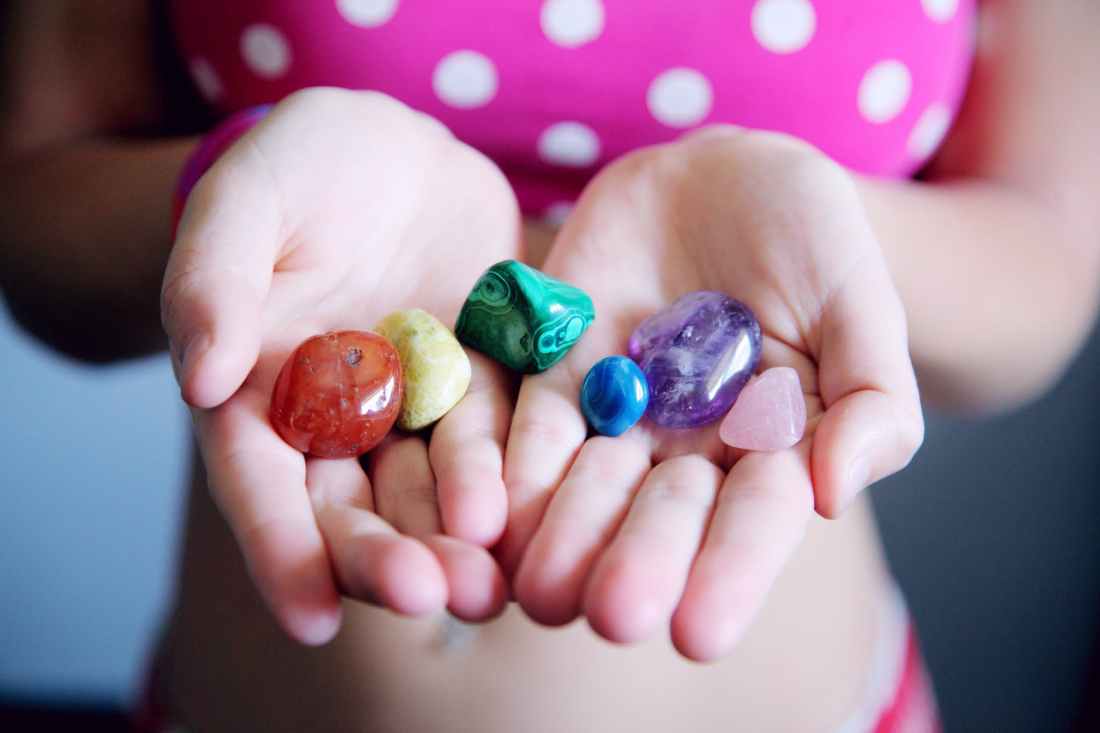
The author, Fun’ya no Asayasu (文屋朝康, dates unknown), is the son of Fun’ya no Yasuhidé (poem 22), but is otherwise unknown. My new book states that, like his father, he achieved only middling rank (junior sixth rank) in the Imperial bureaucracy, but unlike his father, he did not achieve much fame through poetry either. There have been persistent rumors, though, across the ages that some of Yasuhidé’s poems were in fact composed by his son, Asayasu. However, evidence is sketchy.
The poem is something of an oddity in the Hyakunin Isshu because, as Mostow explains, it seems to be a relatively common poem. It uses a popular motif of dew as gems, comparing them to pearls or jewels, and you can find similar imagery in other poems of the time. So, why did the compiler of the Hyakunin Isshu, Fujiwara no Teika (poem 97), select this poem for this anthology?
Mostow points out that this poem is featured in other anthologies as well, so for some unknown reason, it was highly prized, even though the significance is lost now.
Still, there is something beautiful about the idea of gems scattering in the Autumn wind in particular and perhaps that is what sets this poem apart from others from the same era.
The poet, Egyō Hōshi (恵慶法師, dates unknown) also known by his title “Dharma Master Egyō”, was a Buddhist monk active during the last half of the tenth century. He was the bishop (kōsō 高僧) of a major temple in old Harima Province and often gave lectures. As Professor Mostow explains, he was closely associated with other poets who frequently met at the Kawara Villa on the banks of the Kamo River. According to Mostow, these included Yoshinobu (poem 49) and Motosuke (poem 42) among others. He was also friends with Kanemori (poem 40).
The poem was given as an entry to a poetry contest about the coming of autumn to a ‘dilapidated house’ according to Mostow, but he points out that the “house” in question was probably referring to the Kawara Villa, itself previously owned generations earlier by Minamoto no Toru (poem 14). The juxtaposition between people (who don’t visit) and autumn (which does) makes this poem highly prized.
Given that Egyō is a Buddhist monk, and well-versed in the Buddhist teachings of the effervescence of life, it seems reasonable that he used the house and the seasons to give the poem a bit of a Buddhist theme. Spring gives way to Summer, Summer to Fall, Fall to Winter and so on. In the same way, things rise and fall, and Egyō perhaps wanted to remind his audience that “Autumn” comes sooner or later.
The author, Ōe no Chisato (大江の千里, dates unknown), is the nephew of Yukihira (poem 16) and Narihira (poem 17) and boasted a famous collection of his own called the Kudai Waka. Ōe no Chisato was also the son of a famous Chinese-studies scholar, who taught Confucianism and composed Chinese-style poetry (not Japanese-style waka poetry like above). Ōe no Chisato was thus part of the Imperial Court culture of the time, but not necessarily high-ranking. More of a middling family.
Similar to poem 22, this poem has influence from Chinese Six Dynasties style, but as Mostow explains, the poem reflects a change where Chinese poetic style is adapted into more native Japanese style. Mostow explains that the poem may allude to a famous poetic line by Bo Juyi.
As mentioned before, the moon plays a really important role in the Hyakunin Isshu, and poetry in general. But also, it’s a source of festivities too. In Japan, the 15th lunar day of the 8th month (harvest moon in the West), marks a fun time called o-tsukimi or “moon-viewing”. More on that in the other blog.
As for the poem, it kind of expresses a quiet humility too, I think, which is why I always find it one of the most memorable. The Moon inspires a lot of deep feelings, but this poem reminds us that it does not shine just for us.
Speaking of the moon, Ōe no Chisato is also famous for another moon poem, which is in the imperial anthology Shin-Kokin-Wakashu and considered one of the finest in the entire collection:
Japanese
Romanization
Rough Translation1
照りもせず
Teri mo sezu
Neither the shining moon,
曇りもはてぬ
Kumori mo hatenu
nor the cloudy night
春の夜の
Haru no yo no
can win against
朧月夜に
Oborozukuyo ni
a hazy moonlit
しくものぞなき
Shiku mono zo naki
night in Spring.
1 Amateur translation
This poem in turn was used in the iconic Tales of Genji by Lady Murasaki (poem 57 in the Hyakunin Isshu, め).
So, we can see that Ōe no Chisato was no stranger to poetry, especially Chinese-style poetry, and was capable of describing the moon in many contexts.
This, the opening poem of the Hyakunin Isshu, was composed by Tenji Tennō (天智天皇, 626 – 671), known in English as Emperor Tenji. Emperor Tenji helped oversee Taika Reforms as Crown Prince from the new capitol in Otsu, home of Omi Shrine, and was responsible for promulgating important historical texts in early Japanese history such as the Nihon Shoki and Kojiki. Further, he was a pretty ambitious guy and needed to strengthen his family lineage, so he compelled his younger brother to marry his own daughter, after marrying his younger brother’s former wife, Princess Nukata.
Complicated.
This poem is unique in the anthology because it deals with subjects that related to peasant life, rather than life in the Court, and later commentators explain that this was because of Emperor Tenji’s image as a benevolent ruler. It’s also possibly because of this image, that Fujiwara Teika chose this as the first poem.
In any case, the poem gives a window into the life of the peasants in Japan during this era. Like elsewhere in the world, the harvest was a very important time of the year, and in each village, someone had to guard the grain overnight from theft or from animals. They would often stay in small thatched huts, and stay awake overnight. As night fell, the temperatures would get cold and their sleeves wet with dew, while the smell of dried grains permeated the air.
Outside the aristocratic court, this was the life that many led to feed their family and it was this labor that Emperor Tenji sought to praise.
The poem was composed by one mysterious figure named Sarumaru Dayū (猿丸大夫, dates unknown), whom we know nothing about.
My new book offers a couple theories as to Sarumaru’s identity. One theory is that he could be the son of Emperor Tenmu (mentioned here among others places) named Prince Yuge (弓削皇子, Yuge no Miko). Another theory suggests that he could be the infamous Buddhist monk Dokyo, Japan’s version of Rasputin, who served Empress Shotoku. However, these theories are, as of writing, entirely speculative. We simply don’t have enough information.
Even in the Kokinshū where this poem is first found, it is listed as anonymous, according to Professor Mostow, but seems to have been composed for a poetry contest in 893 hosted by Prince Koresada. Mostow further explains that this poem is surprisingly tricky to interpret: who is walking through the leaves, the deer or the author?
Speaking of deer, deer have been an integral part of Japanese poetry since early times. This and poem 83 show how the deer’s cry is a popular poetic symbol of sadness or melancholy.
This poem was composed by Fujiwara no Toshiyuki Ason (藤原敏行朝臣, ? – 901) who was one of the Thirty-Six Immortals of Poetry, and was an active participant of poetry contests in his day and noted for his excellent calligraphy. His calligraphy was so good, he was often compared with the talented Buddhist monk and founder of the Shingon sect, Kukai.1 Coupled with his long life-span, he has a great presence in poetry and calligraphy during his era. My new book mentions that both he and one Ariwara no Norihira were both infamous playboys, and ended up marrying sisters. Needless to say his wild episodes were recorded in certain tales at the time.
In fact, this poem is part of a poetry contest held in 953, presumably under the theme of forbidden or another similar topic. The poem uses a clever pun for yoru. The first yoru in the poem refers to the waves visiting (寄る in modern day Japanese) the shore of Sumi-no-e Bay (modern day Osaka Bay, specifically Sumiyoshi).
The second yoru means night (夜). The author’s submission to the poetry contents laments that public scrutiny in the small, tightly-knit aristocracy of the Heian Period was so intense that his lover couldn’t even visit him even in his dreams. Professor Mostow points out that the poem can also be interpreted that he could not visit his lover in his dreams, as well.
Because it was such a closed and stratified society, gossip was rampant, and an embarrassing situation could destroy one’s career and family reputation. Forbidden love was something many in the Heian Court faced, and no doubt Toshiyuki’s poem resonated with such people.
1 Kukai (a.k.a. “Kōbō Daishi” posthumously) was so famous for his calligraphy, a phrase exists even to this day in Japanese:
The poem was composed by a young Kōkō Tennō (光孝天皇, 830 – 887), Emperor Kōkō in English, who was traditionally, the 55th Emperor in Japan. He ascended the throne somewhat late (age 55) after Yōzei (poem 13, つく) abruptly retired. Koko’s own reign was similarly short, and power rested in the hands of his minister Fujiwara no Mototsune.
Nonetheless, Koko had a reputation for being a rather bright and easy-going youth. Despite being a Prince of the Blood, he was unlikely to inherit the Throne anytime soon (Yozei was still young, and Koko wasn’t directly related), and thus lived in obscurity. It’s said that he even had to cook his own meals. A poem mourning his passing states that his Imperial chambers still had black soot in them from cooking his own meals even after becoming Emperor.
The poem above is from those younger days, after he picked some wild flowers and herbs and sent them to someone as a New Year’s greeting. The poem was included in the offering. Young greens (wakana, 若菜) were the seven herbs used in the traditional holiday of Nanakusa on January 7th.
Even in the old Lunar Calendar, Nanakusa would fall around late January to early February. This helps to explain why snow was falling on the young prince’s sleeves.
Who was the recipient? It’s not known who received the poem and herbs, but since Nanakusa herbs are meant to bring safety, plus the language used (kimi ga tamé, きみがため), it definitely implies a young woman he cared about. ❤️ One theory suggests it was a beautiful girl named Tachibana no Kachiko (橘嘉智子), who was the consort of Emperor Saga.
This poem doesn’t use a lot of clever wordplays, the meaning is fairly straightforward, and it paints a nice image. It is a remarkably sweet, easy to grasp poem, that even foreign students of the Hyakunin Isshu can easily learn.
The author, Kawara no Sadaijin (河原左大臣, 822 – 895), “Riverbank Minister of the Left”. His personal name was Minamoto no Toru, renowned for his courtly elegance, and Professor Mostow thinks he may have served as a partial role-model for the famous hero of the Tale of Genji.
The poem is thought to be Toru’s defense to his wife or lover about his faithfulness, but he uses some interesting imagery to convey how upset he is that his faithfulness is questioned. Mostow points out that the poem is a subject of debate because it’s also been interpreted as an expression of secret love to someone else (i.e. “why did you make me feel this way”?).
The place referenced, Shinobu in Michinoku, is the old name for what is now the city of Fukushima in Fukushima Prefecture. Although it is now known for last year’s earthquake and nuclear disaster, the area was originally a frontier area during the time of the Nara and Heian periods, and as evinced in the poem above, famous for it’s patterned cloth called shinobu mojizuri.
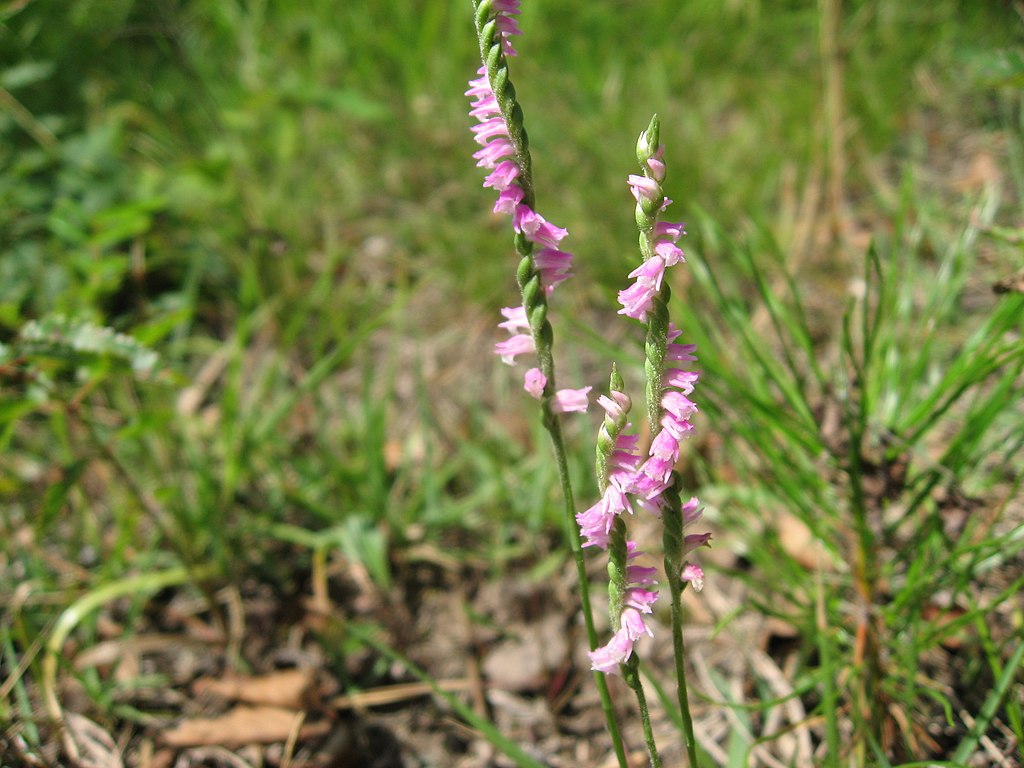
The term mojizuri refers to a type of plant, Spiranthes sinensis var. amoena pictured above (photo by Qwert1234, CC BY-SA 4.0, via Wikimedia Commons), a variety of orchid found in east Asia. It’s also called nejibana in modern Japanese. However, mojizuri also refers to a kind of dyed-cloth pattern made from the plant. The method involves pressing a cloth between the plant and a rock, forming dyed patterns like the ones shown here. This the context that Minamoto no Toru is using in the poem.
This poem was composed by one Fujiwara no Yoshitaka (藤原義孝, 954 – 974), the third son of Fujiwara Koremasa (poem 45). It was composed and sent after spending the night with his lover. These kind of “morning after” poems are very common at the time because lovers could not meet openly during the day, so they often met at night and slept together. The term for this kind of poem is kinuginu no uta (後朝の歌), and were often a way of sharing feelings after the two have parted company.
As Mostow also explains, it’s not clear why he valued his life so little, but the main interpretation is that he loved her so much, he was willing to throw his life away just to meet her. Other interpretations are, among other things, that he would have thrown away his life for her sake if he could.
What really makes this poem extra tragic though, is that Yoshitaka died at the age of twenty (he lived from 954 to 974), from smallpox. We don’t know what happened between him and his lover, but at least his words live on.
Anyhow, we’re at the halfway-point of this blog, and I wanted to thank everyone for your support. The biggest thanks go to Professor Mostow who graciously allowed me to use his translations for this blog (if you like to study the Hyakunin Isshu more in depth, I recommend his book).
This poem was composed by one Semimaru (蝉丸, dates unknown) who is reputedly a blind man who built a hut near Osaka Barrier and was famous for playing the biwa, but the authenticity of this story is questionable, and as Mostow points out, it’s not even certain he existed at all. The story about his life has also changed throughout the generations, so in some cases he’s the servant of the son of an Emperor, and in others he’s the son of an Emperor, abandoned by his blindness.
According to one account in my new book, a high-ranking official named Minamoto no Hiromasa (源博雅) once heard a rumor of a talented blind man with a biwa lute who lived near the Osaka Barrier (see below). He wanted to hear this man’s music, and sought him out for three years until he finally found him on the evening of 15th day of the 8th month (old lunar calendar), and from this man, Hiromasa learned to play the songs that he had been squirreling away. Songs titled such as 流泉 (ryūsen, “flowing spring”) and 啄木 (takuboku, “woodpecker”).
The place in question, Osaka Barrier, is a popular subject of poetry from this era. Poems 62 and 25 also mention the same place because it was a popular meeting spot for people coming and going from the capitol (modern-day Kyoto) eastward. Note that this Osaka has no relation to the modern city of Osaka, which was called Naniwa during that era. In fact the name of Osaka Barrier is also a pun. The Chinese characters are 逢坂, which means “meeting hill”, but is also the place-name.
Anyway, these kinds of check-points, or sekisho (関所) existed in Japan across major roads going in and out of the capitol, but were also popular meeting places for friends and lovers too, as well as having inns nearby for weary travelers. The featured photo above is an example of “sekisho” checkpoint, photo by 663highland, CC BY-SA 3.0, via Wikimedia Commons
The Osaka Barrier in particular was the first check-point leaving eastward from the capitol, so many people probably parted company here, or met old friends at this particular gate more than others. It’s fun to imagine what Osaka Barrier was like in those days. As Mostow points out, this poem probably was originally just a poem about Osaka Barrier, but by the medieval era, it took on an increasingly Buddhist tone in symbolizing the coming and going of all phenomena. Even modern Japanese books on the Hyakunin Isshu tend to reflect this sentiment. Pretty interesting metaphor I think.
One other interesting thing about this poem is its rhythm. If you read this one out loud, the rhythm is very easy to follow, and this is probably one of the easier poems to memorize if you’re looking for a place to start (poem 3 is another good choice in my opinion 😉).
Finally, one random note about Semimaru himself.
His artistic depiction in karuta cards, such as the yomifuda card above based on the famous Korin Karuta collection, leads to frequent confusion by people who play bozu mekuri: is he a monk or a nobleman? Even my new book mentions this conundrum among Japanese players. His lack of verified biographical information makes this question even more mysterious. The book jokes that the author’s house-rule is that if anyone pulls the Semimaru card, then everyone loses what their stack of cards. Feel free to make your own house-rule. 😊