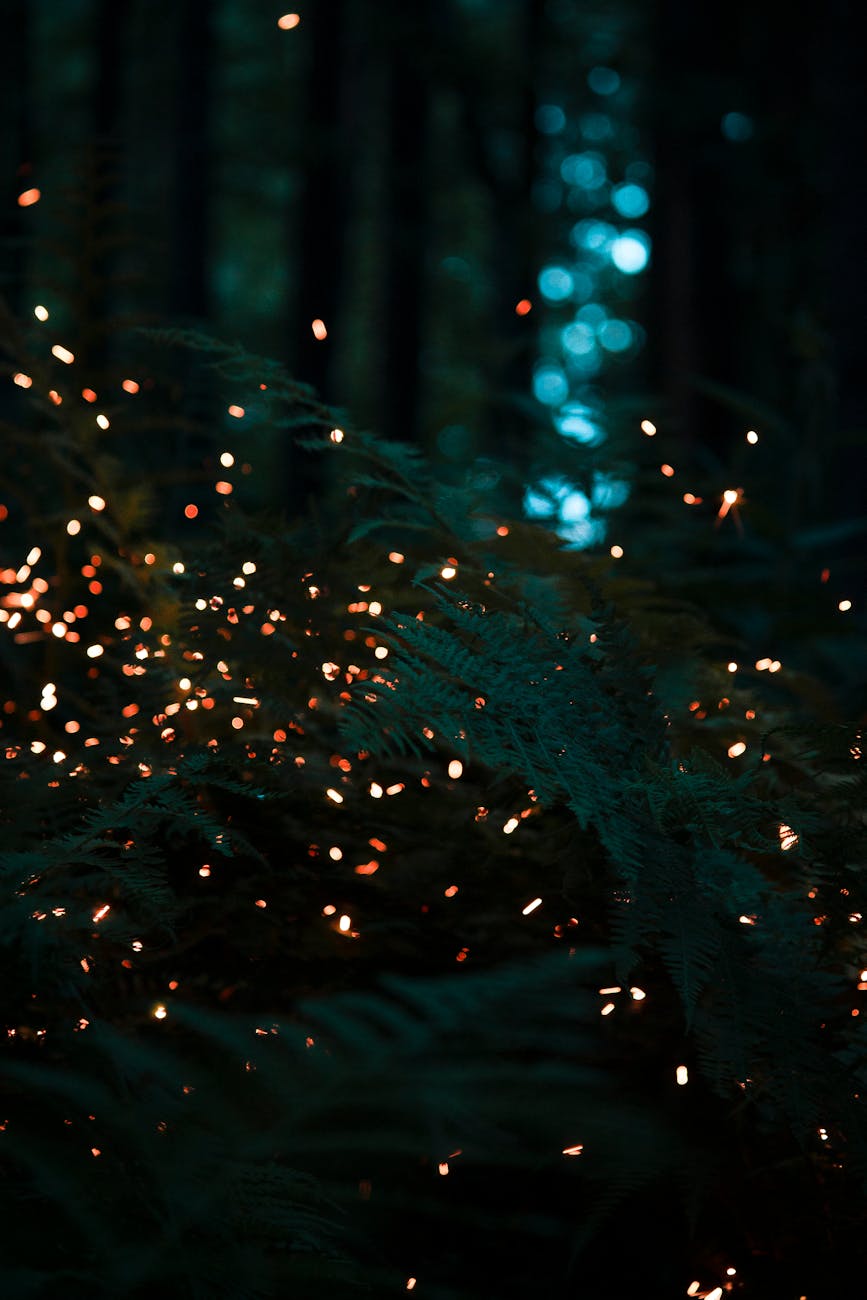

Poem 45 of the Ise Stories is an unusual anecdote, and includes some great poetry about summer. According to the story, there was a young woman who was hopelessly in love with someone (probably the protagonist of the Ise Stories, it is unclear), but she endured this unrequited love alone. In time, she fell very ill, and confessed to her parents her love for the young man. The parents called the young man over, but by the time he arrived, she had already passed away.
That evening, during the hot days of summer, the young man watched fireflies rise from the grasses, and recited these poems:
| Original Japanese | Romanization | Translation |
|---|---|---|
| ゆく螢 | Yuku hotaru | Wandering firelies, |
| 雲の上まで | Kumo no ue made | should your roaming carry you |
| 往ぬべくは | Inu beku wa | high above the clouds, |
| 秋風吹くと | Aki kaze fuku to | tell the wild geese on the wing |
| 雁に告げこせ | Kari ni tsuge-kose | an autumn breeze is blowing. |
Followed by:
| Original Japanese | Romanization | Translation |
|---|---|---|
| 暮れ難き | Kuregataki | All a summer day, |
| 夏の日ぐらし | Natsu no higurashi | one that seems never to end, |
| ながむれば | Nagamureba | I gaze before me, |
| その事となく | Sono koto to naku | absorbed — why, I do not know — |
| 物ぞ悲しき | Mono zo kanashiki | in a pervasive sorrow. |
I admit the idea that a young maiden pining for someone so much that she falls ill and dies feels more like a trope than reality (“girl, he’s just not that into you”). But, it should be noted that this was an era in Japan when death was seen as ritual pollution, so it’s noteworthy that he came nonetheless.
But also, there is another connection here: the summer tradition of Obon. Obon in Japan, roughly around July to August, is similar to the Mexican tradition of the Day of the Dead, and has Buddhist origins. Hence, the first poem and its symbolism of fireflies, can also be seen as the souls of the recent dead flitting in the summer night.
Discover more from The Hyakunin Isshu
Subscribe to get the latest posts sent to your email.


Hey Doug long time no poems. I think your turning Vulcanese.
Ha ha, you got me. 🖖🏼 How are you?