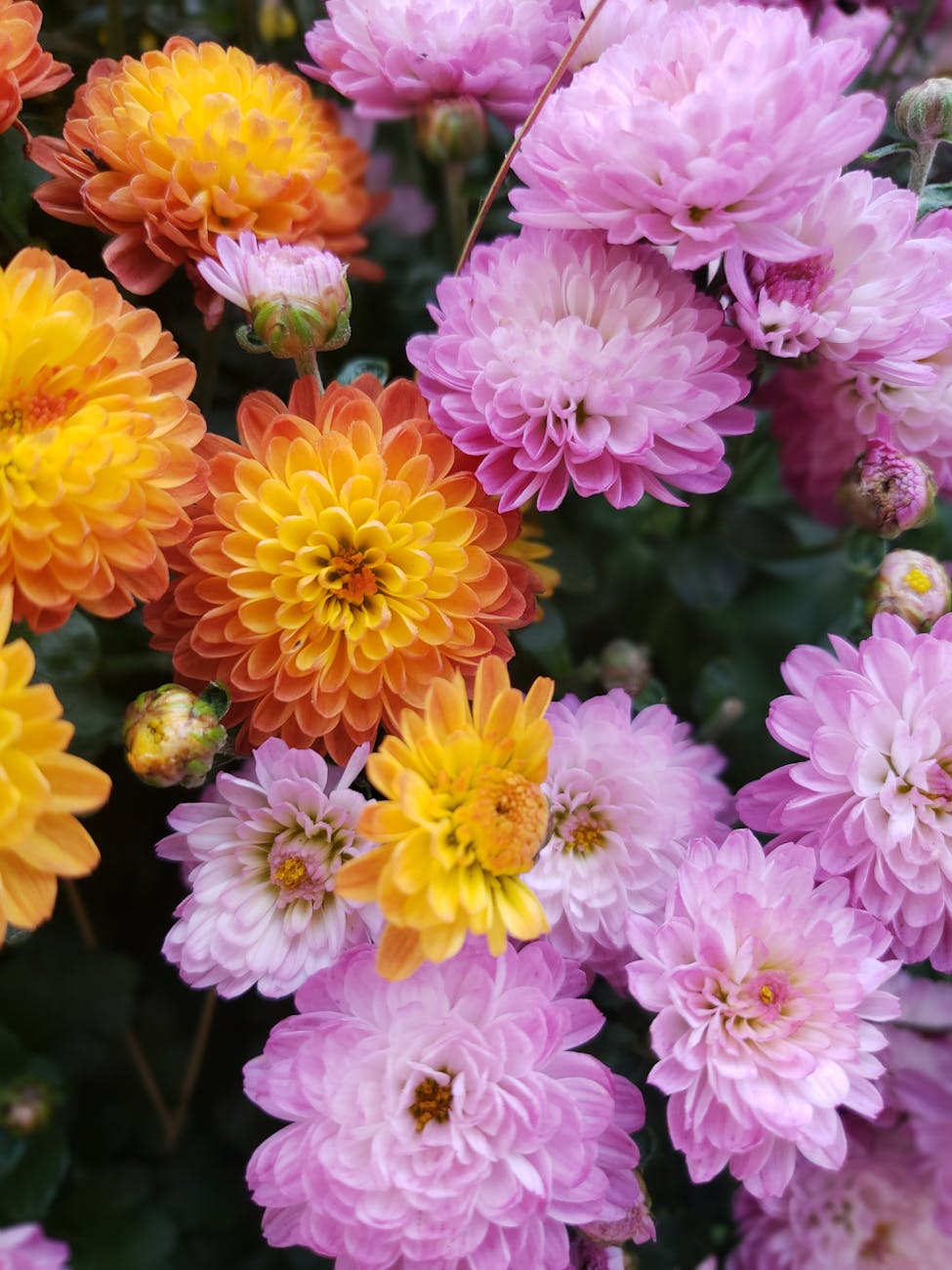

In the traditional Japanese calendar, there are five seasonal holidays (sekku, 節句) throughout the year, and the fifth one is a holiday called the Day of the Chrysanthemum. We’ve talked about it briefly here, but today I wanted to share another poem, this time from the Ise Stories.
| Original Japanese | Romanization | Translation |
|---|---|---|
| 植ゑし植ゑば | Ueshi ueba | I planted them right, |
| 秋なき時や | Aki naki toki ya | and I doubt that they will bloom |
| 咲かざらむ | Sakazaran | unless in autumn; |
| 花こそ散らめ | Hana koso chirame | but although the blossoms fall, |
| 根さへ枯れめや | Ne sae kareme ya | at root they will never die. |
The poem is attributed to our protagonist, who is none other than Narihira no Ariwara (poem 17 of the Hyakunin Isshu, ちは), who sent this attached to a chrysanthemum branch to Empress Nijō (a.k.a. Takaiko), which whom he may have had some romantic relationship with.
The chrysanthemum was since ancient times associated with longevity, hence the above festival, and so it is thought that Narihira was making a commentary about his own life. Thus, the poem may have been a simple greeting (“oh, life goes on, I am well”). Nonetheless, it is a cute anecdote between Narihira and Empress Nijo.
Happy Day of the Chrysanthemum to all!
Discover more from The Hyakunin Isshu
Subscribe to get the latest posts sent to your email.

