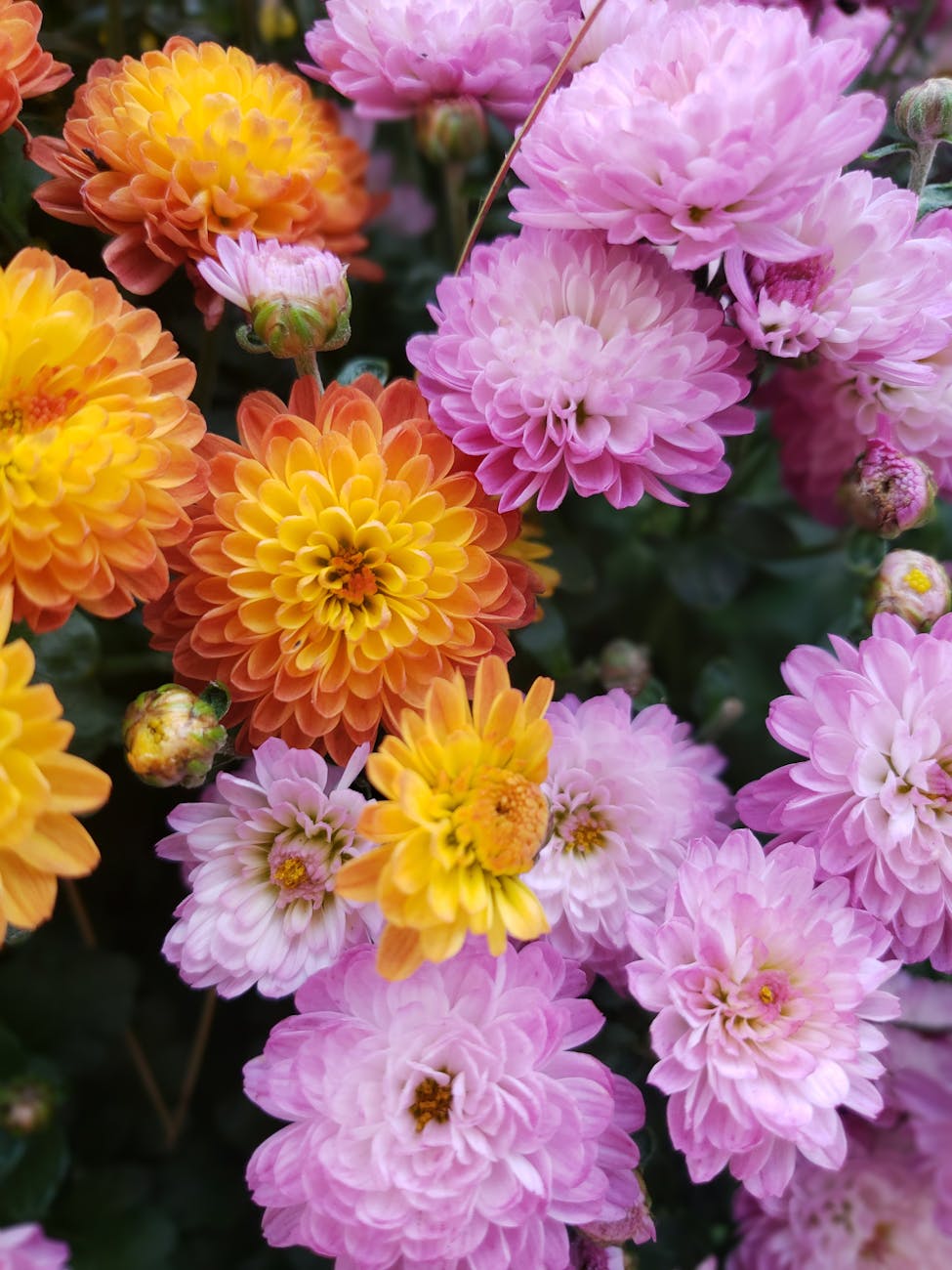
Chrysanthemums and the Ise Stories

In the traditional Japanese calendar, there are five seasonal holidays (sekku, 節句) throughout the year, and the fifth one is a holiday called the Day of the Chrysanthemum. We’ve talked about it briefly here, but today I wanted to share another poem, this time from the Ise Stories.

Original JapaneseRomanizationTranslation
し植Ueshi uebaI planted them right,
秋なき時やAki naki toki yaand I doubt that they will bloom
咲かざらSakazaranunless in autumn;
花こそ散らめHana koso chiramebut although the blossoms fall,
根さ枯れめやNe sae kareme yaat root they will never die.
Translation by Joshua Mostow and Royall Tyler.

The poem is attributed to our protagonist, who is none other than Narihira no Ariwara (poem 17 of the Hyakunin Isshu, ちは), who sent this attached to a chrysanthemum branch to Empress Nijō (a.k.a. Takaiko), which whom he may have had some romantic relationship with.

The chrysanthemum was since ancient times associated with longevity, hence the above festival, and so it is thought that Narihira was making a commentary about his own life. Thus, the poem may have been a simple greeting (“oh, life goes on, I am well”). Nonetheless, it is a cute anecdote between Narihira and Empress Nijo.

Happy Day of the Chrysanthemum to all!

Feeling Like Late Fall: Poem Number 29

November marks the last throes of Fall, and so with the recent cold here in the Pacific Northwest, I thought this poem seemed really fitting:

JapaneseRomanizationTranslation
心あてにKokoroate niMust it be by chance,
らばやOrabaya oranif I am to pluck one,
that I pluck it? —
初霜のHatsushimo nowhite chrysanthemums
おきまどせるOki madowaseruon which the first frost
白菊の花Shiragiku no hanalies bewilderingly.
Translation by Dr Joshua Mostow

According to my new book, Ōshikōchi no Mitsuné (凡河内躬恒, dates unknown) was a middling bureaucrat in the Imperial Court, serving in provinces such as Tanba, Izumi, and Awaji, but never reaching beyond the sixth rank in the Court hierarchy. Nobility usually were fifth rank or higher by default so he hit the “glass ceiling” so to speak.

On the other hand, Mitsune was very prodigious poet and his works appear in many later anthologies in Japanese history, and is also one of the compilers of the famous Kokinshū anthology, a prestigious honor. Not surprisingly he is among the Thirty-Six Immortals of Poetry too.

Professor Mostow notes that this poem is subject to many different interpretations ranging from simple word-repetition, to rhetorical questions or the speaker’s mental debate.

In any case, the imagery of white frost on white chrysanthemum’s, and how it’s hard to distinguish one from the other, is in large part why this poem is so highly prized in antiquity, and made it into the Hyakunin Isshu anthology. However, the 19th century poet Masaoka Shiki criticized the imagery as unrealistic. But my new book points out that that probably wasn’t the point. Mitsuné was trying to be surreal in his imagery and that the poem executes this brilliantly.

But you decide: is the imagery of first frost on a white chrysanthemum too much? Or is it brilliant imagery?

P.S. Since antiquity, September 9th has been the Day of the Chrysanthemum in Japan, mirroring a similar festival in China.