A Sad Autumn Moon: Poem Number 23

The Hyakunin Isshu is full of poems about Autumn as we’ve seen so far, and this is another example:

JapaneseRomanizationTranslation
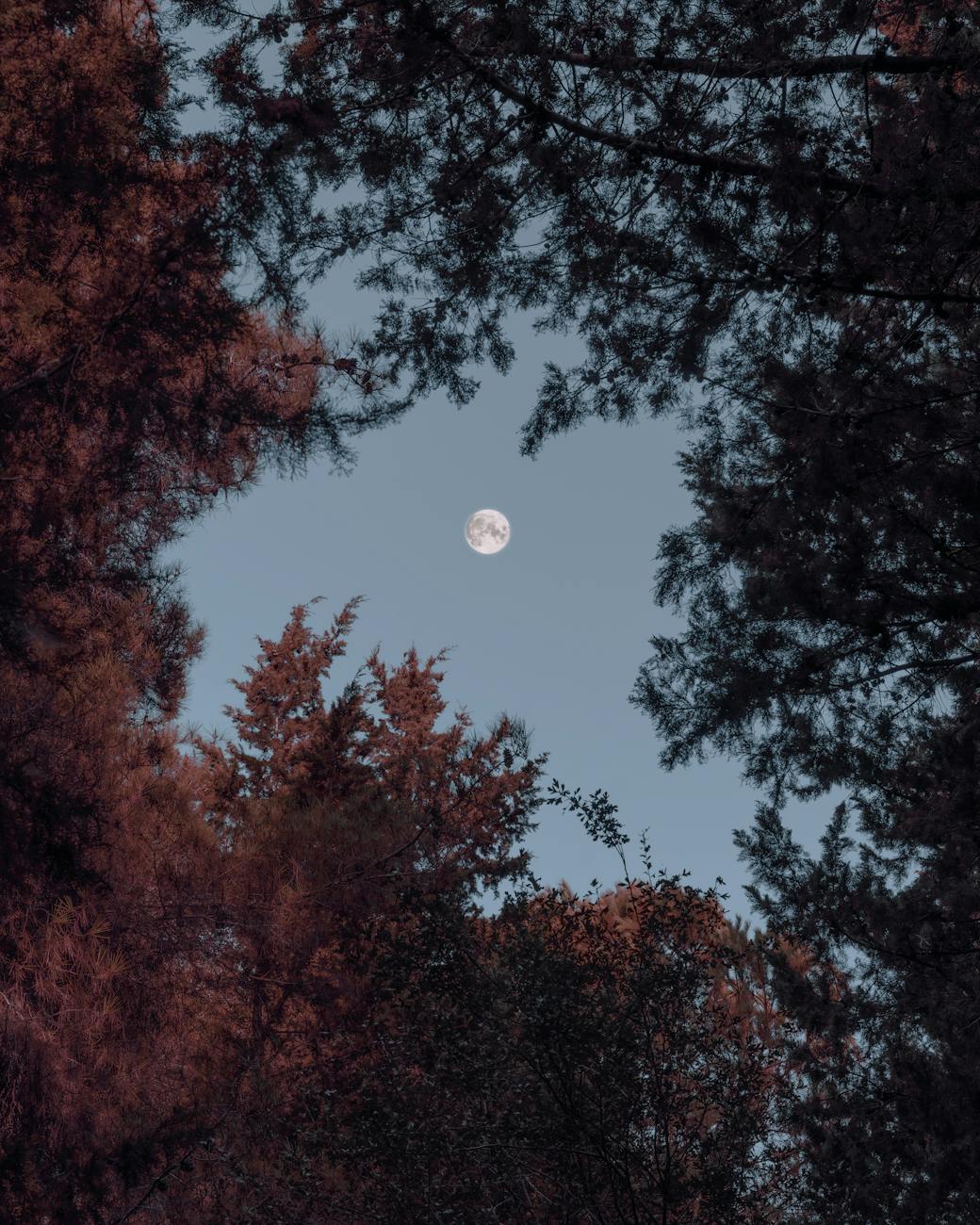
月見ればTsuki mirebaWhen I look at the moon
千々に物こそChiji ni mono kosoI am overcome by the sadness
悲しけれKanashi kereof a thousand,
thousand things—
わが身ひとつのWaga mi hitotsu noeven though it is not Fall
秋にはあらねどAki ni wa aranedofor me alone.
Translation by Dr Joshua Mostow

The author, Ōe no Chisato (大江の千里, dates unknown), is the nephew of Yukihira (poem 16) and Narihira (poem 17) and boasted a famous collection of his own called the Kudai Waka. Ōe no Chisato was also the son of a famous Chinese-studies scholar, who taught Confucianism and composed Chinese-style poetry (not Japanese-style waka poetry like above). Ōe no Chisato was thus part of the Imperial Court culture of the time, but not necessarily high-ranking. More of a middling family.

Similar to poem 22, this poem has influence from Chinese Six Dynasties style, but as Mostow explains, the poem reflects a change where Chinese poetic style is adapted into more native Japanese style. Mostow explains that the poem may allude to a famous poetic line by Bo Juyi.

As mentioned before, the moon plays a really important role in the Hyakunin Isshu, and poetry in general. But also, it’s a source of festivities too. In Japan, the 15th lunar day of the 8th month (harvest moon in the West), marks a fun time called o-tsukimi or “moon-viewing”. More on that in the other blog.

As for the poem, it kind of expresses a quiet humility too, I think, which is why I always find it one of the most memorable. The Moon inspires a lot of deep feelings, but this poem reminds us that it does not shine just for us.

Speaking of the moon, Ōe no Chisato is also famous for another moon poem, which is in the imperial anthology Shin-Kokin-Wakashu and considered one of the finest in the entire collection:

JapaneseRomanizationRough Translation1
照りもせずTeri mo sezuNeither the shining moon,
曇りもはてぬKumori mo hatenunor the cloudy night
春の夜のHaru no yo nocan win against
朧月夜にOborozukuyo nia hazy moonlit
しくものぞなきShiku mono zo nakinight in Spring.
1 Amateur translation

This poem in turn was used in the iconic Tales of Genji by Lady Murasaki (poem 57 in the Hyakunin Isshu, め).

So, we can see that Ōe no Chisato was no stranger to poetry, especially Chinese-style poetry, and was capable of describing the moon in many contexts.

Happy Moon Viewing everyone!

A Good Harvest: Poem Number 1

This is another iconic poem about Autumn and also happens to be the first poem in the Hyakunin Isshu:

JapaneseRomanizationTranslation
秋の田のAki no ta noIn the autumn fields
かりのいKario no io nothe hut, the temporary hut,
とまのあらみToma no aramiits thatch is rough
わが衣出はWaga koromo de waand so the sleeves of my robe
つゆにふりつつTsuyu ni furitsutsuare dampened night
by night with dew.
Translation by Dr Joshua Mostow

This, the opening poem of the Hyakunin Isshu, was composed by Tenji Tennō (天智天皇, 626 – 671), known in English as Emperor Tenji. Emperor Tenji helped oversee Taika Reforms as Crown Prince from the new capitol in Otsu, home of Omi Shrine, and was responsible for promulgating important historical texts in early Japanese history such as the Nihon Shoki and Kojiki. Further, he was a pretty ambitious guy and needed to strengthen his family lineage, so he compelled his younger brother to marry his own daughter, after marrying his younger brother’s former wife, Princess Nukata.

Complicated.

This poem is unique in the anthology because it deals with subjects that related to peasant life, rather than life in the Court, and later commentators explain that this was because of Emperor Tenji’s image as a benevolent ruler. It’s also possibly because of this image, that Fujiwara Teika chose this as the first poem.

In any case, the poem gives a window into the life of the peasants in Japan during this era. Like elsewhere in the world, the harvest was a very important time of the year, and in each village, someone had to guard the grain overnight from theft or from animals. They would often stay in small thatched huts, and stay awake overnight. As night fell, the temperatures would get cold and their sleeves wet with dew, while the smell of dried grains permeated the air.

Outside the aristocratic court, this was the life that many led to feed their family and it was this labor that Emperor Tenji sought to praise.

A Deer’s Cry in Autumn: Poem Number 5

This is a very iconic poem about Autumn from the Hyakunin Isshu:

JapaneseRomanizationTranslation
奥山にOkuyama niWhen I hear the voice
もみふみわけMomiji fumiwakeof the stag crying for his mate
鳴く鹿のNaku shika nostepping through the fallen leaves
こえ聞く時ぞKoe kiku toki zodeep in the mountains—
this is the time
秋は悲しきAki wa kanashikithat autumn is saddest.
Translation by Dr Joshua Mostow

The poem was composed by one mysterious figure named Sarumaru Dayū (猿丸大夫, dates unknown), whom we know nothing about.

My new book offers a couple theories as to Sarumaru’s identity. One theory is that he could be the son of Emperor Tenmu (mentioned here among others places) named Prince Yuge (弓削皇子, Yuge no Miko). Another theory suggests that he could be the infamous Buddhist monk Dokyo, Japan’s version of Rasputin, who served Empress Shotoku. However, these theories are, as of writing, entirely speculative. We simply don’t have enough information.

Whoever Sarumaru was though, he nonetheless earned a place among the Thirty-Six Immortals of Poetry.

Even in the Kokinshū where this poem is first found, it is listed as anonymous, according to Professor Mostow, but seems to have been composed for a poetry contest in 893 hosted by Prince Koresada. Mostow further explains that this poem is surprisingly tricky to interpret: who is walking through the leaves, the deer or the author?

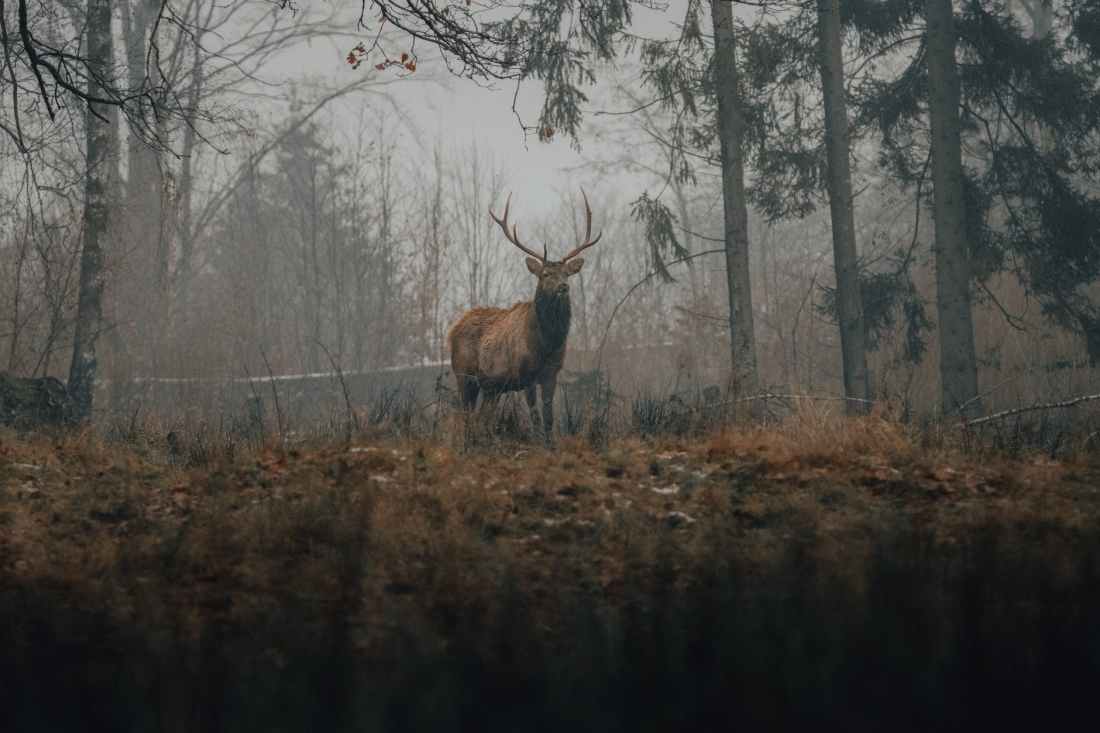
Speaking of deer, deer have been an integral part of Japanese poetry since early times. This and poem 83 show how the deer’s cry is a popular poetic symbol of sadness or melancholy.

A Small Token: Poem Number 15

Some people give cards, some people give poems:

JapaneseRomanizationTranslation
君がためKimi ga tameFor my lord’s sake
春の野に出でてHaru no no ni ideteI went out into the fields of spring
若菜つむWakana tsumuto pick young greens
わが衣手にWaga koromode niwhile on my robe-sleeves
雪はふりつつYuki wa furitsutsuthe snow kept falling and falling.
Translation by Dr Joshua Mostow

The poem was composed by a young Kōkō Tennō (光孝天皇, 830 – 887), Emperor Kōkō in English, who was traditionally, the 55th Emperor in Japan. He ascended the throne somewhat late (age 55) after Yōzei (poem 13, つく) abruptly retired. Koko’s own reign was similarly short, and power rested in the hands of his minister Fujiwara no Mototsune.

Nonetheless, Koko had a reputation for being a rather bright and easy-going youth. Despite being a Prince of the Blood, he was unlikely to inherit the Throne anytime soon (Yozei was still young, and Koko wasn’t directly related), and thus lived in obscurity. It’s said that he even had to cook his own meals. A poem mourning his passing states that his Imperial chambers still had black soot in them from cooking his own meals even after becoming Emperor.

The poem above is from those younger days, after he picked some wild flowers and herbs and sent them to someone as a New Year’s greeting. The poem was included in the offering. Young greens (wakana, 若菜) were the seven herbs used in the traditional holiday of Nanakusa on January 7th.

Even in the old Lunar Calendar, Nanakusa would fall around late January to early February. This helps to explain why snow was falling on the young prince’s sleeves.

Who was the recipient? It’s not known who received the poem and herbs, but since Nanakusa herbs are meant to bring safety, plus the language used (kimi ga tamé, きみがため), it definitely implies a young woman he cared about. ❤️ One theory suggests it was a beautiful girl named Tachibana no Kachiko (橘嘉智子), who was the consort of Emperor Saga.

This poem doesn’t use a lot of clever wordplays, the meaning is fairly straightforward, and it paints a nice image. It is a remarkably sweet, easy to grasp poem, that even foreign students of the Hyakunin Isshu can easily learn.

The Wonders of Mount Fuji: Poem Number 4

This was something I read recently that I felt like posting:

JapaneseRomanizationTranslation
田子の浦にTago no ura niAs I set out on
うち出でて見ればUchi idete mirebathe beach of Tago, and look,
白たShirotae noI see the snow
constantly falling
富士の高嶺にFuji no takane nion the high peak of Fuji,
雪は降りつつYuki wa furitsutsuwhite as mulberry cloth.
Translation by Dr Joshua Mostow

This poem was composed by Yamabe no Akahito (山部赤人, dates unknown ) who according to Mostow was a contemporary of Hitomaro (poem 3). He is also one of the Thirty Six Immortals of Poetry and was a leading poet during the reign of Emperor Shomu and contributed to the Manyoshu. He is revered alongside his contemporary, Kakinomoto no Hitomaro (poem 3) as a “saint of poetry”. Compared to Kakinomoto no Hitomaro, Yamabe is known for a poetry style focused on the beauty of nature such as this poem, rather than clever verse.

Yamabe, for his part, served as a court poet under the pious Emperor Shomu. Unfortunately there is no information about his life before he served in the Court. My new book points out that since he was never mentioned in the historical document the Shoku Nihongi, Yamabe was probably a low-ranking bureaucrat.

Mostow carefully explains that this poem, like many of the earlier poems in the Hyakunin Isshu were written in an old Japanese-Chinese hybrid script called manyōgana and was thus open to many interpretations. In fact, the poem has evolved over time and the version in the Hyakunin Isshu is only one such version. The version above, compiled by Fujiwara no Teika (poem 97), was in an imperial anthology called the Shin-Kokin Wakashu. But the original version, poem 318 in the Manyoshu, read like so:

JapaneseRomanizationRough Translation1
田子の浦ゆTago no ura yuAs I passed
うち出でて見ればUchi idete mirebathe bay of Tago, and looked,
ま白にそMashiro ni soI saw the white snow
富士の高嶺にFuji no takane nifalling on the high peak
雪は降りけるYuki wa furitsukeruof Mount Fuji.
1 apologies in advance for any mistakes or for quality of translation

In this version, it sounds like Akahito is describing something more in the past, and the poem doesn’t use a pillow word (see below) to describe the snow. It uses the more mundane description of “very white”, not “white as mulberry cloth”.

The aforementioned vagaries of Manyogana script also matter because there’s much debate about where Akahito actually was when composing this poem. The location of Tago no Ura is now Suruga Bay in Shizuoka Prefecture, but originally may have meant some place much closer to Mount Fuji, under it’s “shadow”, so to speak.

One other interesting note for readers of this blog is the middle line, shirotae no, which as you may recall from poem 2 is one of those special “pillow words” used in Japanese poetry. It is a very idiomatic term which conveys something that is gleaming white, or as Professor Mostow translates, white as mulberry cloth. At some point in history, the third verse changed from a more mundane description of snow to a much more impactful description.

P.S. Featured photo is Mount Fuji as seen from Suruga Bay, photo by Shinichi Morita, CC BY-SA 2.0, via Wikimedia Commons

Heavenly Maidens: Poem Number 12

Speaking of moments that we don’t want to end, I thought this poem was an interesting read, and is also one of the more famous ones:

JapaneseRomanizationTranslation
あまつ風Ama tsu kazeO heavenly breeze,
雲のかよKumo no kayoijiblow so as to block
吹きとFuki toji yotheir path back through
the clouds!
とめの姿Otome no sugataFor I would, if but for a moment,
しばしとどめShibashi todomendetain these maidens’ forms.
Translation by Dr Joshua Mostow

This poem was composed by Sōjō Henjō, (僧正遍昭, 816 – 890), “Bishop Henjo”, who served in the Heian Court until the death of Emperor Nimmyo. It was then that he took tonsure as a Buddhist priest. He is one of the original Six Immortals of Poetry as well as the Thirty-Six Immortals.

The poem was composed during the time that Henjo was in the service of the Emperor (and not yet a priest). The occasion for this was the famous Gosechi Dance or gosechi no mai (五節の舞), more formally known as the toyono akari no sechi-é (豊明の節会), a dance that took place in the Imperial Court during the middle of the eleventh month of the old Japanese calendar (roughly December in modern times) to celebrate the harvest.

During the final months of the year, the Imperial Court held several important events to celebrate the yearly harvest, starting with the niiname no matsuri (新嘗祭) when the Emperor would offer part of the harvest to the gods.1 The following day, the Court would celebrate the Gosechi dance at the Shishinden Palace, and the Emperor would partake of the new harvested rice. According to Richard Bowring, the Gosechi festivities last up to four days.

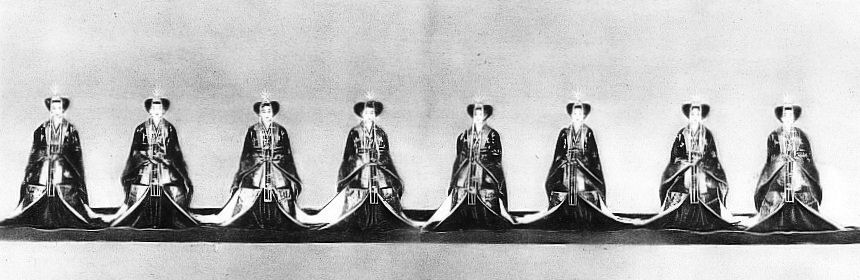
The Gosechi dance involved 4 “heavenly” maidens called otomé (をとめ) from high-ranking noble families, and is mentioned by several authors from the era, including Sei Shonagon (poem 62) in the Pillow Book:

[87] At the time of the Gosechi Festival somehow everything in the palace, even the people you see every day, becomes simply delightful. There’s the unusual sight of the bits of coloured fabric that the groundswomen wear in their ceremonial hair combs, rather like abstinence tags. When they seat themselves along the arched bridgeway from the Senyōden, the dapple-dye pattern on the ribbons that bind up their hair stands out beautifully, and the whole effect is somehow quite marvelous. It’s perfectly understandable that the serving women and those who attend the dancers should find it all a splendid honour.

trans. Meredith McKinney

And from the eponymous diary of Lady Murasaki (poem 57):

The Gosechi dancers arrived on the twentieth….I knew full well how hard the young dancers had prepared this year in comparison to normal years when things were worse it must have been for them this year, I thought; I was both apprehensive and eager to see them. As they fully stepped forward together I was, for some reason, overcome with emotion and felt dreadfully sorry for them….And with all those young nobles around and the girls not allowed so much as a fan to hide behind in broad daylight, I felt somehow concerned for them, convinced that, although they may have been able to deal with the situation both in terms of rank and intelligence, they must surely have found the pressures of constant rivalry daunting; silly of me, perhaps. (pg. 39-40)

trans. Richard Bowring

Further, even artwork depicts the Gosechi as shown by the featured photo, painted by Hokusai.

Even now, the Gosechi dance is still performed for the Emperor, at least for special occasions:

Dancers of the Gosechi dance performed in 1928, for the ascension of the Showa Emperor. See page for author, Public domain, via Wikimedia Commons

But I digress, Henjo was so mesmerized by their dance, he compared them with heavenly maidens, and hoped that the breeze would keep them on the earth a bit longer. As Professor Mostow notes, the Gosechi dance had a legendary origin involving Emperor Temmu who beheld heavenly maidens in the sky one night, so Bishop Henjo isn’t just making this up.

However, his playful simile has lasted through the ages.

1 This is still observed today in the form of Labor Day in Japan.

No Refuge In This World: Poem Number 83

This is a well-known poem in the Hyakunin Isshu, and I felt worth posting here:

JapaneseRomanizationTranslation
世の中よYo no naka yoWithin this world
道こそなけれMichi koso nakerethere is, indeed, no path!
入るOmoi iruEven deep in this mountains
山の奥にもYama no oku ni moI have entered, heart set,
鹿ぞ鳴くなるShika zo naku naruI seem to hear the deer cry!
Translation by Dr Joshua Mostow

The author, Kōtai Gōgū no Daibu Toshinari (皇太后宮大夫俊成, 1114 – 1204), or “Master of the Grand Empress’s Palace, Shunzei”. He is also known as Fujiwara no Shunzei, or Fujiwara no Toshinari (俊成 can be read either way), the father of Fujiwara no Teika . Additionally, a surprising number of other poets in the Hyakunin Isshu were associated with (poem 81, 86 and 87), studied under Shunzei (poem 89 and 98), or were directly in opposition to him (poem 79). Shunzei is probably the second most important person in the Hyakunin Isshu after his son of course. 😏

This poem is both moving and technically strong. For example, according to Mostow, the phrase omoi iru is a “pivot word”, meaning that both the words before and after hinge on its double meanings: omoi-iru “to set one’s heart on” and iru “to enter”.

Again, as Mostow explains, the poem generates quite a bit of debate because it’s not clear what concerned him so much. Was it melancholy, a sense of his mortality, or was the state of society at the time (i.e. the decline of the Heian Period)?

Speaking of a deer’s cry, I found this video one of the famous “Nara deer”:

The Nara deer are more domesticated versions of the wild deer in Japan, but it gives you an idea what Shunzei must have heard deep in the woods 900 years ago.

P.S. See poem 5 for something similar.

Contentment: Poem Number 8

An early poem by an obscure and mysterious figure:

JapaneseRomanizationTranslations
わがいWaga io waMy hut is to
都のたつみMiyako no tatsumithe capital’s southeast
しかぞすむShika zo sumuand thus I live. But
世をう山とYo wo ujiyama topeople call it “Uji, hill
人はいなりhito wa iu nariof one weary of the world,” I hear.
Translation by Dr Joshua Mostow

The poem was composed by a Buddhist monk named Kisen Hōshi (喜撰法師, dates unknown), in English lit. “Dharma master Kisen”. Kisen Hōshi lived in the mid-9th century, and this is the only poem known to be his, though others may exist. He is considered one of the original Six Immortals of Poetry and is mentioned in the preface of the official anthology, the kokin wakashū.

The location is a place called ujiyama (宇治山), located on the Tatsumi region southeast of Kyoto, which in turn is named after the twelve animals of the Chinese zodiac. In this context, tatsumi (辰巳) meaning literally “dragon-snake” refers to the direction (southeast) relative to the capitol of Kyoto, then Heian-kyō.

Due to word-play of “uji” meaning either 宇治 (“uji”) or 喜し[つらい] (“ushi[tsurai]”), this place was associated with sorry or grief, so few poeple chose to live here. Since that time, it has been renamed in honor of its resident and is now called kisenzan (喜撰山). Someone did a really nice write-up on their visit to Kisen-zan with photos and a view of what is purported to be Kisen’s original hut. Also, the famous Buddhist temple of Byōdōin also can be found there. It was located south of the capital at the time, Kyoto.

The poem is a tricky one and lends itself to two possible interpretations according to Professor Mostow. One interpretation has been that Kisen came there out of grief and weariness of the world, and made it his home. Mostow provides evidence that instead, Kisen lived there contentedly, and only heard from others that it was called brief mountain.

As there is a Buddhist tradition since the time of the Buddha to withdraw from the entanglement of the world, and find peace of mind. This tradition has led to the Buddhist monastic community that exists today in various parts of the world. Kisen is one of many who sought solace in places like Ujiyama. Question is, did he find only sorrow, or did he find contentedness?

Maybe only Kisen will ever know that.

Summer is Back: Poem Number 81

As spring turns into summer, I thought this poem seemed really appropriate and a great topic for discussion:

JapaneseRomanizationTranslation
ほととぎすHototogisuThe hototogisu:
鳴きつる方をNakitsuru kata wowhen I gaze out towards where
ながむればNagamurebahe was singing,
ただ有明のTada ariake noall that remains is the moon,
月ぞ残れるTsuki zo nokorerupale in the morning sky.
Translation by Dr Joshua Mostow

This poem was composed by Gotokudaiji no Sadaijin (後徳大寺左大臣, 1139 – 1191), the “Later Tokudaiji Minister of the Left Sanesada”. His personal name was Fujiwara no Sanesada, and he was the first cousin of Fujiwara no Teika (poem 97), as well as the nephew of Shunzei (poem 83). He left behind an extensive poetry collection as well as his personal diary.

According to Professor Mostow, the poem was composed on the topic of staying up all night, to hear one cry.

The hototogisu (ホトトギス), is called the “lesser cuckoo” in English, or, is Cuculus poliocephalus. The featured photo was taken by Kunming Institute of Botany. Sun Jiao (Interaccoonale), CC BY 4.0, via Wikimedia Commons.

The hototogisu in Japan is a famous bird known for its early summer call, and is thus an emblematic bird of the season. Compare with the plover in poem 78.

You can see a video of its call below:

According to the Hyakunin Isshu Daijiten, the hototogisu is an elusive bird. It flies from branch to branch often, so by the time you hear its distinctive call, it probably has flown elsewhere. Hence, they are easy to hear, but hard for birdwatchers to observe.

In any case, as Professor Mostow explains, the author is waiting all night to hear the first call of the hototogisu as the first sign of summer.

One other note is the term 有明 (ariake), which is one of many poetic terms for the moon. Specifically it means the moon that remains in the morning, after daybreak. This normally occurs on the 16th day of the lunar cycle according to the old Japanese calendar.

P.S. Like the title, I’m back too. 😉

Wishing This Moment Wouldn’t End: Poem Number 73

Cherry-blossom season doesn’t last long, so while there’s still time, I wanted to post one last poem on the subject:

JapaneseRomanizationTranslation
高砂のTakasago noAbove the lower slopes
の桜Onoe no sakuraof the high mountains,
the cherries
咲きにけりSaki ni kerihave blossomed!
とやまのかすみToyama no kasumiO, mist of the near mountains,
立たずもあらなTatazu mo arananhow I wish you would not rise!
Translation by Dr Joshua Mostow

The author, Gonchūnagon (権中納言匡房, 1041 – 1111) or “Supernumerary Middle Counselor Masafusa”, was a prolific poet both in Japanese and in Chinese-style, and was a close confidant of Emperor Horikawa after retirement. His personal name was Ōe no Masafusa. As Professor Mostow notes, the poem’s meaning is very clear from the headnote, so there’s little if any debate about its meaning (unlike many poems in the Hyakunin Isshu). Masafusa hopes that the mist will not rise and block the view of the blossoms.

This poem brings to mind a time-honored tradition in Japan called hanami (花見) or “cherry-blossom viewing”. 🌸 This is a tradition you can see alive and well in Japan today, and each year there are plenty of websites and helpful guides for Japanese and foreigners to find a good spot for viewing.

However, during the time of the Heian Court and the poets of the Hyakunin Isshu, it was more of an outing for elite members of the court only. Such excursions, just like now, included lots of music, singing and drinking as well as impromptu poetry. The only difference, really, was that back then it was a very isolated affair between good friends and a private spot, whereas now people really have to fight for a good spot in places like Tokyo or Kyoto, and often times involve one’s boss and associates from work. 😏

Still, while some things have changed, it’s nice to see such a tradition live on for so many generations.

P.S. Featured photo is of cherry blossom viewing (hanami) in Oyamazaki, Kyoto Prefecture, Japan. Photo by Oilstreet, CC BY-SA 3.0, via Wikimedia Commons