Waiting and Waiting: Poem Number 53

The fourth poem in our series dedicated to women is by the author of the famous diary, the Gossamer Years, or kagerō nikki (蜻蛉日記):

JapaneseRomanizationTranslation
なげきつつNageki tsutsuThe span of time
ひとりぬる夜のHitori nuru yo nothat I sleep alone, sighing,
明くる間はAkuru ma wauntil night lightens—
いかに久しきIkani hisashikican you know at all
ものとかは知るMono to ka wa shiruhow long that is?
Translation by Dr Joshua Mostow

The name of the author is unknown. She is only known as Udaishō Michitsuna no Haha (右大将道綱母, c. 937-995), or “The Mother of Michitsuna, Major Captain of the Right” both in the Hyakunin Isshu and in the Gossamer Years. Her son, Michitsuna, went on to be a Court official who held the prestigious post of Major Captain of the Right.

The Mother of Michitsuna, was the second wife of the powerful and ambitious Fujiwara no Kane’ie, and her diary, like this poem, reflects her pain and frustration as her husband slowly slips away from her and into the arms of other women. As the modern Japanese proverb goes: eiyū iro wo konomu (英雄色を好む), meaning “great men prefer color”. In other words, after Kane’ie had snagged his beautiful new bride, the mother of Michitsuna, he was off on his next conquest, and this pattern would continue throughout their marriage. His trophy wife was thus abandoned except when he needed her for some reason.

According to her diary, at times the couple reconciled somewhat, but over time they became more and more estranged, and the author thus felt more depressed and abandoned as the years wore on.

This poem actually comes from the Gossamer Years, book one, when her husband Kane’ie is spending his nights in a back-alley with a low-class woman in a short-lived affair (Kane’ie soon abandoned that woman even after she bore him a son). As she writes:

Two or three days later I was awakened toward dawn by a pounding on the gate. It was he, I knew, but I could not bring myself to let him in, and presently he went off, no doubt to the alley [and the mistress] that interested him so.

I felt that I could not let things stand as they were. Early the next morning I sent, attached to a withered chrysanthemum, a poem written with more care than usual.

translation by Edward Seidensticker, pg. 38

What’s important to understand is that this poem wasn’t something she composed for a poetry contest (i.e. poems 40 and 41), she was genuinely expressing her frustration and rage at being abandoned by her husband Kane’ie. Fujiwara no Teika, no doubt impressed with the poem and the story behind it, included it in the Hyakunin Isshu generations later.

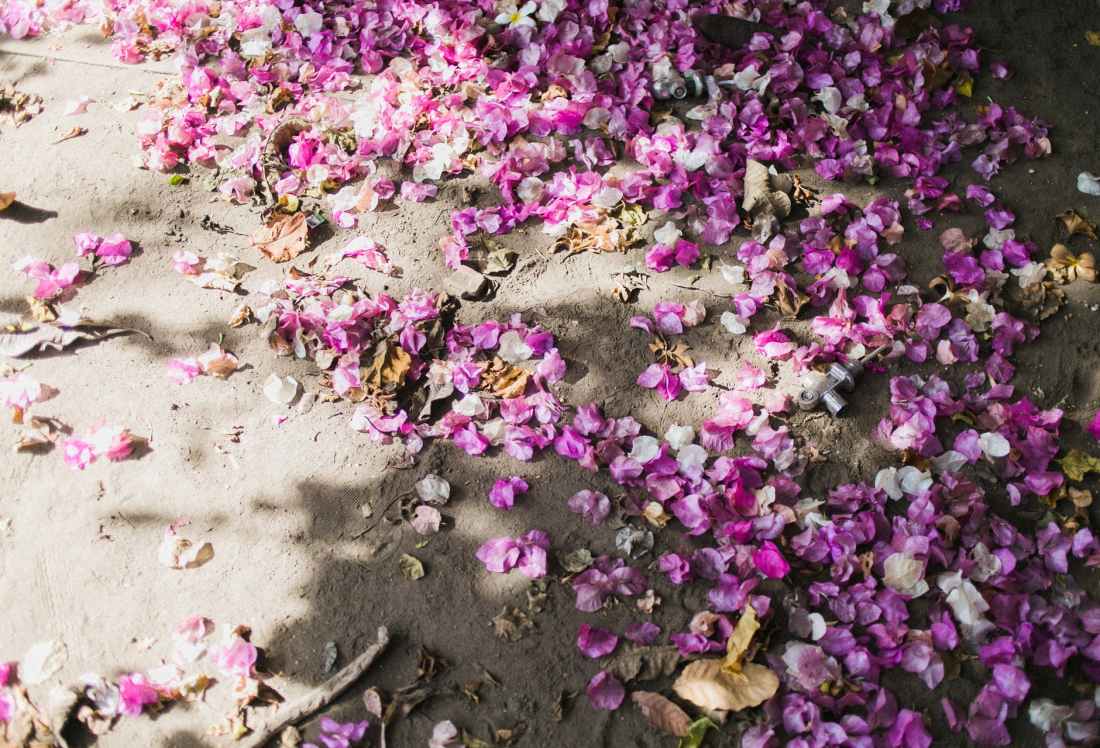
P.S. Featured photo is of a gate at a Buddhist temple in Kyoto, Japan. No machine-readable author provided. Fg2 assumed (based on copyright claims)., Public domain, via Wikimedia Commons

A Vow Broken Before the Gods: Poem Number 38

The third poem in our series dedicated to women is another personal favorite:

JapaneseRomanizationTranslation
忘らるるWasuraruruForgotten by him,
身をば思Mi wo ba omowazuI do not think of myself.
ちかてしChikaite shiBut I can’t help worry
人の命のHito no inochi noabout the life of
the man who
しくもあるかなOshiku mo aru kanaswore so fervently
before the gods!
Translation by Dr Joshua Mostow

The author, Ukon (右近, dates unknown), takes her sobriquet after her father’s position in the Court as Lesser Captain of the Right Bodyguards, or ukon-e no shōshō (右近衛少将). She served as a lady in waiting to Empress Onshi. Apparently she was a busy woman. Like her father, she is said to have had a number of romantic liaisons, including Atsutada (poem 43), Asatada (poem 44), and Prince Motoyoshi (poem 20) among others. Her tryst with Atsutada is mentioned in a later text called the Tales of Yamato. Ukon also actively participated in poetry contests.

Professor Mostow explains that there are historically two interpretations to this poem. One interpretation is that she wrote the letter to her cold lover, conveying a mean, sarcastic tone. My new book favors this theory, and implies that the lover who spurned her was none other than Fujiwara no Atsutada mentioned above.

The other explanation is more of a private letter to herself. This second meaning then sounds less harsh in tone, and more tragic.

He Spurned Me: Poem Number 19

This is the second poem in “women only” theme for March, and another classic:

JapaneseRomanzationTranslation
Naniwa gataTo go through this life,
not meeting
みじかきあしのMijikaki ashi nofor even as short a time
as the space
ふしの間もFushi no ma mobetween two nodes of a reed
でこの世をAwade kono yo woin Naniwa Inlet—
すぐしてよとやSugushite yo to yais that what you are telling me?
Translation by Dr Joshua Mostow

The poet Ise (伊勢, c. 875- c. 938), or “Lady Ise” in English, is another celebrated female poet from antiquity. Her sobriquet comes from her father’s position as governor of the prosperous Ise Province, but she earned a name for herself through her extensive poetry both in her private collection, the Ise Shū, and through Imperial anthologies where her poetry is both frequent and prominent.

As Professor Mostow explains, the poem has two possible interpretations: one where she has been spurned by a cold lover, and the other where she cannot reveal her hidden love.

Naniwa Inlet is the bay of what is now the famous city of Osaka, though back then it was a far smaller city, with many waterways, streams and such. Naniwa (Osaka) is often associated with reeds at the time as other poems of the time show, and is mentioned in two other poems in the Hyakunin Isshu (poem 20 and poem 88).

Past Her Prime: Poem Number 9

For the first poem for March’s “women only” theme, I chose this poem, one of the earliest by a female author (after Empress Jitō, poem 2), but also one of the most famous:

JapaneseRomanizationTranslation
花の色はHana no iro waThe color of flowers
うつりにけりなUtsuri ni keri nahas faded indeed
いたらにItazura niin vain
わが身世にふるWaga mi yo ni furuhave I passed through
the world
ながめせしまにNagame seshi ma niwhile gazing at the
falling rains.
Translation by Dr Joshua Mostow

The author, Ono no Komachi (小野小町, dates unknown), is one of the most celebrated women of Japanese antiquity for both her reputed beauty and her poetry. She is one of the original Six Immortals of Poetry and the later Thirty-Six Immortals, and was said to have had relationships with various men, including Henjō (poem 12), and Fun’ya Yasuhide (poem 22) among others.

Reading this poem is something of an intimate look at the fear many women (and men, see poem 96) face then as much as now: the fear of getting old. For someone who was beautiful as Ono no Komachi, the loss may have been even more distressing.

Mostow describes this poem featured in the Hyakunin Isshu as a “technical tour-de-force”: the third line, meaning “in vain”, could technically modify either the previous line, or the one after, or both. Also, the poem uses word-play around furu which could mean to either “fall (as in rain)” or “to pass time”, while nagame could mean both “to gaze lost in thought” or “long rains” (長雨, naga-ame as Mostow explains). Further, this poem has been the object of much debate because of all the possible ways to interpret it, and is one of the most iconic in the anthology both for its technical prowess, but also it’s poignant message.

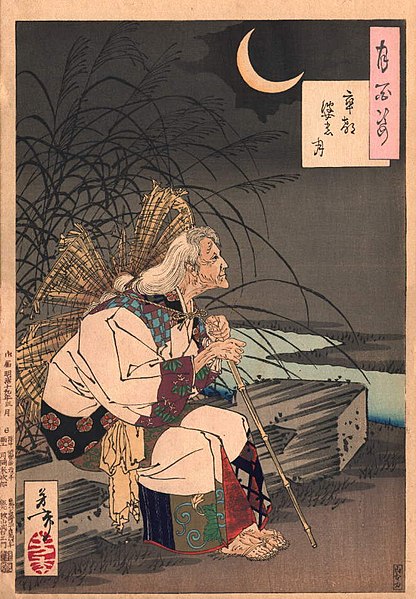
There are many legends that circulated in medieval Japan about Ono no Komachi’s good looks and her cruelty to men. In one famous story, she promised to love a certain suitor if he visited her 100 nights in a row. He completed 99 visits, but failed one night to visit her, and was so distraught that he fell ill and died. Ono no Komachi’s life and legends, including her decline, grew to become the subject of many Nō plays and art. Even 19th century woodblock prints depicted Ono no Komachi in her twilight years:

Yoshitoshi, One Hundred Aspects of the Moon, woodblock print #25, Public domain, via Wikimedia Commons

However, if you look at her other poems, mostly found in the Imperial anthology, the Kokin Wakashū, you can see she was more caring and sensitive than legend implies:

JapaneseRomanizationTranslation
思ひつつOmoitsutsuTormented by love
寝ればや人のNurebaya hito noI slept and saw him near me —
見えつらむMietsuranhad I known my love’s
夢と知りせばYume to shirisebavisit was but a dream I
覚めざらましをSamezaramashi oshould never have awakened.
Poem 552 in the Kokin Wakashū, translation by Laurel Rasplica Rodd and Mary Catherine Henkenius in Kokinshu: A Collection of Poems Ancient and Modern.

and:

JapaneseRomanizationTranslation
わびぬればWabinurebaI have sunk to the
身をうき草のMi o ukikusa nobottom and like the rootless
根を絶えてNe o taeteshifting water weeds
誘ふ水あらばSasou mizu arabashould the currents summon me
いなんとぞ思ふInan to zo omouI too would drift away
Poem 938 in the Kokin Wakashū, translation by Laurel Rasplica Rodd and Mary Catherine Henkenius in Kokinshu: A Collection of Poems Ancient and Modern.

So, Ono no Komachi wasn’t just a pretty face past her prime, she was a smart woman with a sharp wit, and a more sensitive side as well.

Once Was Enough: Poem Number 44

Although I have been posting love poetry from the Hyakunin Isshu all week in celebration of Valentine’s Day, I felt like posting this poem for all those who don’t like Valentine’s Day, or had a lousy time:

JapaneseRomanizationTranslation
あふおうことのAu(Ou)1 koto noIf there were no such things
絶えてしなくはTaete shi nakuwaas ever having met her, then,
中々にNakanaka nicontrary to all expectations,
人をも身をもHito wo mo mi wo moneither her coldness nor
my pain
恨みざらましUrami zaramashiwould I have to resent!
Translation by Dr Joshua Mostow

The author, Middle Counselor Asatada (中納言朝忠, 910 – 966), also known as Fujiwara no Asatada, was the fifth son of Fujiwara no Sadataka (poem 25) and one of the Thirty-Six Immortals of Poetry. I happen to consider this one of my favorite poems in the entire anthology, so I think it’s a fair ranking. 🙂

According to commentators, this poem was part of the same poetry contest as poems 40 and 41 and implies frustration that a woman has not consented to a visit by her presumed lover. Life would have been easier if they simply hadn’t bothered to try and meet.

However, Mostow also points out that the interpretation by Fujiwara no Teika (poem 97, who compiled the Hyakunin Isshu), was different, and implied that they had met, and she wouldn’t meet him again. It didn’t end well, in other words, and the lover is bitter over it.

P.S. Featured photo is a woodblock print of the Tale of Genji by Toyokuni Utagawa, Utagawa Kunisada, Public domain, via Wikimedia Commons

1 A good example of unusual spellings in the Hyakunin Isshu.

Hello, I Love You: Poem Number 51

This is the final poem in our series dedicated to Valentine’s Day:

JapanaeseRomanizationTranslation
かくとだにKaku to daniCan I even say
えやはいぶきのEyawa ibuki no“I love you this much”?—No, and so
さしも草Sashimogusayou do not know of it
さしも知らじなSashimo shiraji naanymore than of the sashimo grasses of Ibuki,
もゆる思Moyuru omoi womy burning love for you!
Translation by Dr Joshua Mostow

Fujiwara no Sanekata Ason (藤原実方), the poem’s author, was the grandson of Fujiwara no Tadahira (poem 26). True to his heritage, Sanetaka had an impressive record as a poet as well, and his poetry was frequently included in official anthologies such as the Shūishū among others. He was thought to also be friends with Sei Shonagon (poem 62) and Fujiwara no Michinobu (poem 52).

Sanekata apparently was quite full of himself too, and he later paid for this. According to my new book, Sanekata was a darling in his youth and frequently socialized with Emperors Enyu and Kazan. According to one story, when the Imperial procession went flower-viewing, Sanekata accompanied them, but then a heavy rain started. Everyone started to scatter, but Sanekata supposedly said “if I am going to get wet, might as well do it under the blossoms”, and he thus stood under a flowering tree. One Fujiwara no Yukinari later commented “that’s fine in poetry, but Sanetaka is a fool”. Sanetaka and Yukinari apparently had a prolonged and bitter hatred of one another, and in one incident Sanetaka took Yukinari’s headdress and angrily threw it into the garden. Emperor Ichijo, who caught sight of this, rebuked Sanetaka’s crass behavior, demoted him in rank, and sent him to the remote province of Mutsu as punishment. Yukinari, for his part, was later promoted head of the Imperial Archives.

According to Mostow, this poem was sent to a woman he was first starting to court, so the poem is an introduction of sorts to her, since she probably didn’t know who he was. The poem is as technically strong as it is bold, as Professor Mostow explains in detail. The reference to “Ibuki” is probably to a famous mountain in Japan called Mount Ibuki which has a variety of wildlife, including a kind of grass called sashimogusa or mogusa and is part of the Mugwort family. Mugwort was used in moxibustion, so it was burned, and this poem uses this as a symbol of his burning love.

According to Mostow, there is further word-play in the poem as sashimo can be read as sa shimo meaning “that much”, while the words mogusa and omohi reinforce each other to emphasize the passion of his burning love.

If Sanetaka wanted to introduce himself to a lady, he sure did a fine job of it!

P.S. Another poem about mugwort.

P.P.S. Featured photo is of a Japanese Mugwort (yomogi, ヨモギ) by Qwert1234 / CC BY-SA 3.0, courtesy of Wikipedia

Hidden Love Amongst the Grass: Poem Number 39

The sixth poem in our series dedicated to Valentine’s Day is one of hidden love:

JapaneseRomanizationTranslation
あさAsajiu noThough I reveal my love
野のしの原Ono no shinoharaas sparingly as the sparse reeds
忍ぶれどShinoburedothat grow in low bamboo fields,
あまりてなどかAmarite nado kait overwhelms me—why is it
人のこいしきHito no koishikithat I must love her so?
Translation by Dr Joshua Mostow

The author of the poem was Sangi Hitoshi (参議等, 880-951, “Counselor Hitoshi”), also known as Minamoto no Hitoshi. According to Mostow, he held many provincial posts, but is lesser known in the poetry world. Apparently the poem was sent to a woman, and is a fine specimen of love poetry.

The poem, when read aloud in Japanese, has a nice sound to it, owing to the way that shinohara and shinobu repeat, but also the poem has a nice contrast to it. According to Professor Mostow, the fourth line reverses the idea of scarcity with talk of being overwhelmed by love creating a kind of balance in the poem.

Hopefully the girl was impressed. 😉

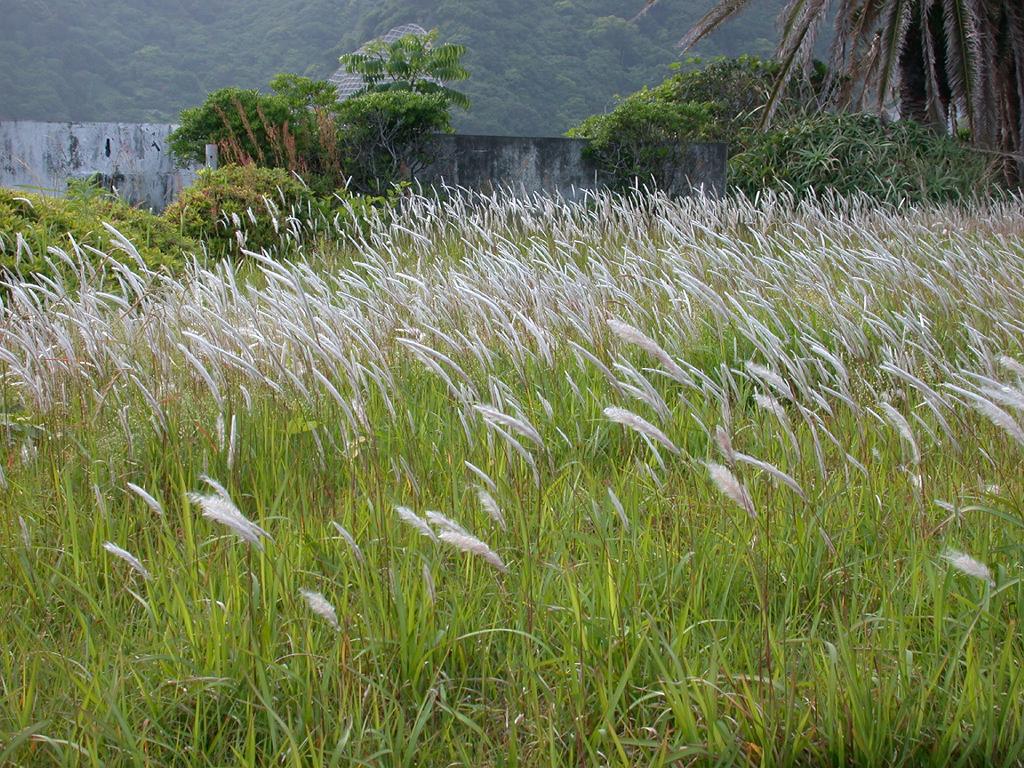
An example of imperata cylindrica (chigaya 茅), CC BY-SA 3.0, photo via Wikimedia Commons

One final note: the poem alludes to a couple plants of note:

  • one is chigaya (茅, Cogongrass, imperata cylindrica), which in the poem is called asajiu.
  • the other is a kind of thin bamboo grass called shinodaké (篠竹, pleioblastus simonii?), more commonly know as medaké in modern Japanese. The featured photo at the top of this post is an example of An example of pleioblastus simoni (photo by I, KENPEI, CC BY-SA 3.0, via Wikimedia Commons)

The scene described in the poem is a mixed field with taller bamboo grass poking out above a field of shorter reed grass.

The Joys and Pains of Marriage: Poem Number 54

This is the fifth poem in our series dedicated to Valentine’s Day:

JapaneseRomanizationTranslation
忘れじのWasureji noBecause that future, until which,
行くすまではYukusue made wayou say, you will “never forget,”
難ければKatakerebais hard to rely on,
けうきょうを限りのKyo wo kagiri nooh, if only today could be
命ともがなInochi to mo ganathe last day of my life!
Translation by Dr Joshua Mostow

This poem was composed by Gidō Sanshi no Haha (儀同三司母, ? – 996), or “Kishi” or short. Her personal name was Takashina no Takako, and she was the wife of the powerful regent, Fujiwara no Michitaka. She is listed in the Hyakunin Isshu as “Mother of the Supernumerary Grand Minister” due to the tremendous power wielded by her son, Fujiwara no Korechika for a time, as well as Princess Teishi whom Sei Shonagon (poem 62) served under.

Takako herself was from an elite family, and had considerable talent in Chinese poetry, which allowed her to win competitions over many learned gentleman. No doubt this helped her catch the eye of the ambitious and rising star that was Fujiwara no Michitaka. This poem was, according to Mostow, composed shortly after their wedding, with all the joy and excitement about the future that comes with marriage.

However, as you can see, there is a bitter undertone to this poem. Noblemen at the time often married multiple wives, and such women were often living apart from their husbands. Further, Michitaka was known to carry on many side affairs, including Akazomé Emon’s sister (poem 59).

As we saw with the Gossamer Years, this can lead to many years of isolation and loneliness if the husband neglects her. So, the poem expressed a sense of unease about the future and how long this excitement might last.

Later, when Michitaka later passed away, Takako took tonsure as a Buddhist nun and left behind few other poems.

Speaking as one who’s happily married myself, I can definitely understand her excitement that day, even a thousand years later, but also the joys of staying with it for many years. One wife is enough, and I am glad to have invested the care and devotion to make it work.

The photo above was taken by me of the doll set we keep at home for Girl’s Day, a holiday celebrated in early March. It symbolizes the happy marriage of the Emperor and Empress, and the aspirations of young women everywhere for a happy life with the man of their dreams.

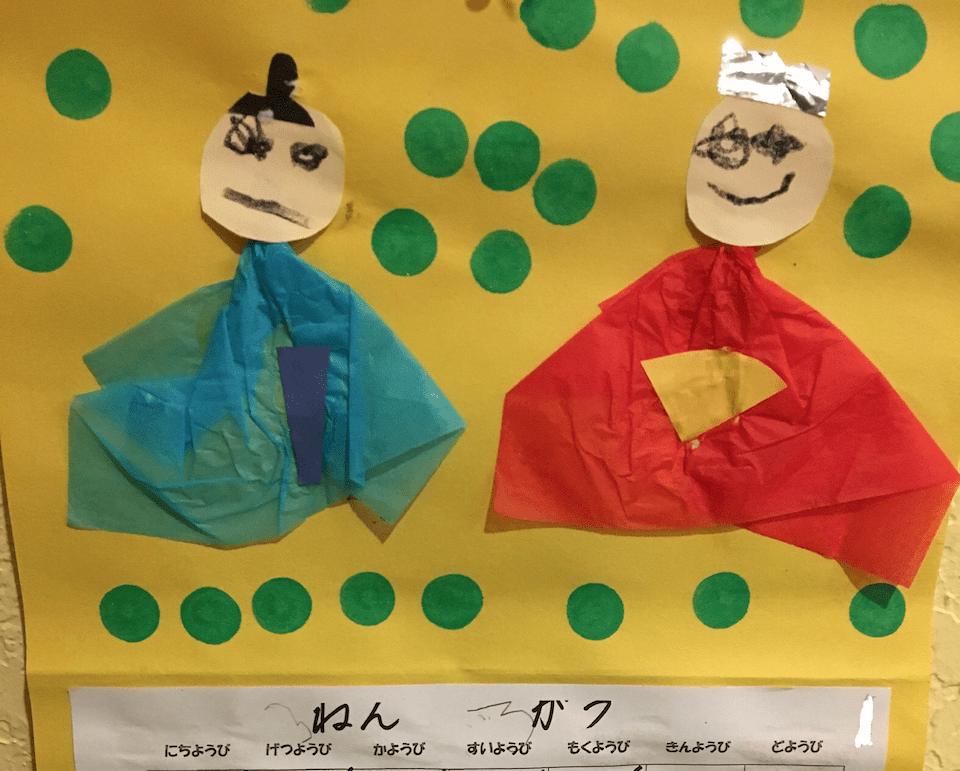
P.S. Featured image is a calendar my son made in Japanese preschool, depicting Girl’s Day.

A Broken Thread: Poem Number 89

For our fourth poem in honor of Valentine’s Day, I thought this was an excellent choice:

JapaneseRomanizationTranslation
玉のTama no o yoO, jeweled thread of life!
絶えなば絶えねTaenaba taeneif you are to break, then break now!
ながらNagaraebaFor, if I live on,
しのぶることのShinoburu koto nomy ability to hide my love
よはりもぞするYowari mo zo suruwill most surely weaken!
Translation by Dr Joshua Mostow

The author of this poem, Shokushi Naishinnō (式子内親王) was the daughter of Emperor Go-Shirakawa and was high priestess, or saiin (斎院), of the Kamo Shrine near Kyoto (office website, Japanese only). Because the Kamo Shrine was so central to the spiritual protection of the capitol, the high-priestess could only be the daughter of an emperor, and was expected to be a vestal virgin. She would serve as the high-priestess until such time as a new emperor was enthroned.

The daughter of Emperor Go-Shirakawa received a world-class education in poetry from none other than Fujiwara no Shunzei (poem 83), and later by his son, Fujiwara no Teika (poem 97), the compiler of the Hyakunin Isshu. The Hyakunin Isshu Daijiten also alludes to rumors that Teika and Shokushi Naishinnō later had a romantic relationship. Further, researchers have noted that Teika frequently mentions her in his journal.

However, if the two had a romantic relationship, they never married. Shokushi Naishinnō became the high priestess and led a celibate life. According to one story, after Shokushi Naishinnō passed away, it is said that Teika’s strong feelings of longing for her eventually led to the sprouting of teikakazura flowers (Asiatic Jasmine, Trachelospermum asiaticum) around her grave.

Shokushi Naishinnō, in addition to being the high priestess, also left a considerable poetry collection in her own right. This poem belonged to another anthology under the subject of “hidden love”, according to Mostow. This was a popular subject of poetry contests and similar poems can be found in the Hyakunin Isshu as well.

One other note here is the imagery of strings of jewelry symbolizing one’s life, as in the first verse of the poem above. It seems to have been a frequent metaphor and there are example poems dating all the way to the Manyoshu that use similar imagery.

Reel Her In: Poem Number 25

This is the third poem in the series dedicated to Valentine’s Day:

JapaneseRomanzationTranslation
名にしおNa ni shi owabaIf they bear such names:
おう坂山のOsakayama nothe “come-sleep vine” of
さねかSanekazura“Meeting-Slope Hill” —
人にしられでHito ni shiraredehow I wish there was a way to come to you,
くるよしもがなKuru yoshi mo ganaas if pulling in a vine, unknown to others.
Translation by Dr Joshua Mostow

The poem was composed by Sanjō Udaijin (三条右大臣, 873-932), or “Sanjō Minister of the Right”. He was also known as Fujiwara no Sadakata, the father of Fujiwara no Asatada (poem 44) and cousin of Kanesuke (poem 27). His sobriquet comes from his residence in the Sanjō district of the capitol of Kyoto (formerly Heian-kyō).

While successful politically, he was a minor poet in the day, whose poetry only appeared in a few collections. However, he was also the sponsor of a poetry circle centered around Kanesuke above, Ki no Tsurayuki (poem 35), and Ōshikōchi no Mitsune (poem 29) during the reign of Emperor Daigo.

Kadsura japonica (sanekazura), bearing fruit

In the days of the Heian Court, men and women frequently lived apart and meeting one another was very difficult. Also, traditionally, if they were going to meet, it was the man’s role to meet the woman. Thus poetry was a very useful means of expressing one’s love, arranging meetings, etc.

Here Sadakata uses the image of a vine pulling his lover to him (rather than him visiting her), but also a lot of clever word-play. The name of the place, Ōsaka (逢坂), no relation to the modern city, can mean “meeting place-hill”. Here, the verb for meeting, au/ou (逢う), is not the same as the generic, modern Japanese verb au (会う). The meeting in this context is an overtly romantic one. We see this again in Lady Izumi’s poem (poem 56). The name of the vine, sanekazura (Kadsura japonica), has the words sa ne (サ、寝), in there, meaning “come, sleep!” according to Professor Mostow. Lastly, the word kuru can mean either “come” or to “reel in”.