A Cold Shoulder: Poem Number 45

This is another poem in our series leading up to Valentine’s Day. This one is perhaps a bit more unrequited, than the last poem I posted here:

JapaneseRomanizationTranslation
れともAwaré to moNot one person who would
べき人はIu beki hito wacall my plight pathetic
えでOmoedécomes at all to mind,
身のいたらにMi no itazura niand so, uselessly,
なりぬべきかなNarinu beki kanaI must surely die!
Translation by Dr Joshua Mostow

This poem was composed by Kentokukō (謙徳公, 924-972) also known as “Lord Kentoku”, or simply Fujiwara no Koremasa. Koremasa served as regent to the Emperor from 970 onward, and was frequently involved in compiling (and writing poems for) the second Imperial anthology of the time, the Gosenshō.

The poem, simply put, is Koremasa’s efforts to gain a girl’s attention, even after she spurned him previously. Mostow explains that according to the original sources, this poem was composed by Koremasa thinking “I will not be defeated!” and sent this poem as a last-ditch effort.

Nowadays, we might call such people stalkers, but at the time, this kind of persistent, dramatic effort wasn’t unusual. Men of the Court might try months if not years to gain a girl’s attention, and if she spurned him a few times, he might have chosen to persist, or possibly find a new lover.

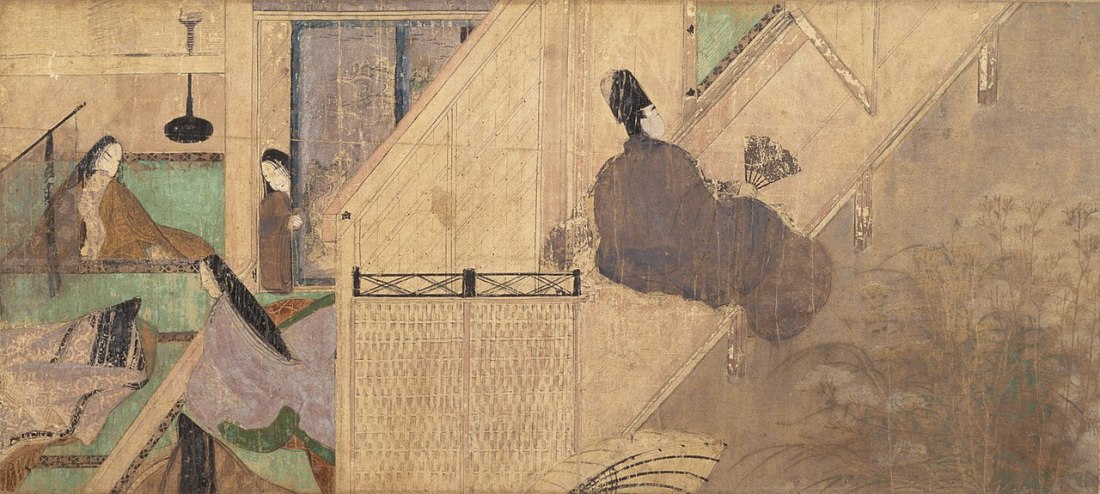
P.S. Featured photo is a scene of the Chapter “TAKEKAWA “(Bamboo River) of Illustrated handscroll of Tale of Genji (written by MURASAKI SHIKIBU(11th cent.)., Unknown author, Public domain, via Wikimedia Commons

Changed One’s Life: Poem Number 43

I can’t believe it’s been a year since my last series of love poems for Valentine’s Day. But, here we are again! This poem is the first in a series I’ll be posting before Valentine’s Day:

JapaneseRomanizationTranslation
見てのAi mite noWhen compared to
後の心にNochi no kokoro nithe feelings in my heart
くらぶればKuraburebaafter we’d met and loved,
むかしは物をMukashi wa mono woI realize that in the past
ざりけりOmowazari keriI had no cares at all.
Translation by Dr Joshua Mostow

The poet, Supernumerary Middle Counselor Atsutada (権中納言敦忠, 906-943), also known as Fujiwara no Atsutada, was among the sons of the power minister Fujiwara no Tokihira (the same man who had Sugawara no Michizane exiled, poem 24), and was one of the Thirty-Six Immortals of Poetry, as well as an accomplished poet all-around. Sadly, like his father Tokihira, Atsutada, according to my new book, died young in his 30’s and rumors swirled at the time that this was Michizane’s vengeful ghost. Such rumors help provide the impetus for Michizane’s later deification as a means of pacifying him.

The book also states that Atsutada was quite a playboy in his time. No sooner had he got into a relationship with Ukon (poem 38), then he dumped her, prompting her to write a bitter poem about it. On the other hand, Atsutada kept up a long, passionate correspondence with the daughter of Emperor Daigo, Masako, until she was sent away to be the high priestess of Ise Shrine. It was a heartbreaking separation we are told.

This is a classic “morning-after” poem (kinuginu no uta, 後朝の歌) which we’ve talked about in Poem 50 and Poem 30. The author’s love and longing have only increased, not decreased since their first meeting together.

As written before, meeting one’s lover was a huge ordeal among the aristocrats of the Heian Court in Japan. It wasn’t like meeting someone online today, or just going to have coffee together. Men and women were constantly separated from one another, and one would be lucky to catch sight of a woman’s sleeve back then, let alone her face. So, a first meeting required a long, drawn out courtship of exchanging poetry, and somehow arranging a way to meet that wouldn’t catch the public eye. Worse, if the meeting didn’t go well, then it was kind of a wasted effort and breaking up would be awkward as well. Or, if word got out, it could cause a scandal. Discretion was essential.

But, when things hit it off so well like this, it’s a cause to celebrate. 🙂

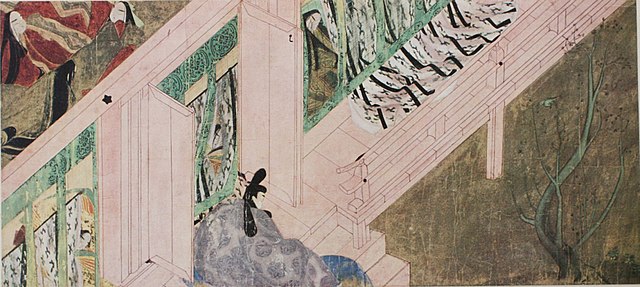
P.S. Featured photo is a scene (AZUMA YA: East Wing) from the Illustrated scroll of the Tale of Genji (written by MURASAKI SHIKIBU (11th cent.) Courtesy of Wikipedia

Summer Nights: Poem Number 36

For those who are stuck in the dead of winter (or for readers in the Southern Hemisphere), I thought a Summer-type poem would be appropriate:

JapaneseRomanizationTranslation
夏の夜はNatsu no yo waThe short summer nights
まだよながらMada yoi nagarawhile it seems yet early evening,
明けぬるをAkenuru woit has already dawned, but
雲のいくにKumo no izuku niwhere in the clouds, then,
月やどるらTsuki yadorurandoes the moon lodge, I wonder?
Translation by Dr Joshua Mostow

The author of the poem, Kiyohara no Fukayabu (清原深養父, dates unknown), was a relatively well-known poet in his time, but it also turns out that he is the grandfather of Motosuke (poem 42) and great-grandfather of the famous author, Sei Shonagon (poem 62), so it seems poetry and literature run in the family. 😁

Anyhow, as Mostow explains, this poem was highly regarded at the time, but for readers in the 21st century, it has so many hidden cultural allusions, that it’s hard to see the significance at first.

As he summarizes, summer nights are short, and Fukayabu is saying that he is surprised that the moon is already dawning in the western sky. Since it’s cloudy, he asks where the moon might be lodging since it’s hard to imagine that it is already setting. It’s a clever, light-hearted poem exploring brief summer, moonlit nights in other words.

Interestingly, Mostow points out that despite the praise on this poem from antiquity, Fukayabu was not included among the Thirty Six Immortals of Poetry and his reputation suffered a major blow that didn’t recover until it was included in later anthologies.

It’s pretty amazing to think how a poem can really make or break a person in that era. We saw this in reverse for poem 92.

Washed Away: Poem Number 32

JapaneseRomanizationTranslation
がわYamagawa niAh, the weir
風のかけたるKaze no kaketaruthat the wind has flung
しがらみはShigarami waacross the mountain stream
流れもあNagaremo aenuis the autumn foliage that
cannot flow on,
もみなりけりMomoji narikerieven though it would.
Translation by Dr Joshua Mostow

Harumichi no Tsuraki (春道列樹, ? – 920) was a relatively unknown, lower-ranking member of the Court who graduated from the Imperial university in 910 and had only a few poems published in the official anthologies. So, it’s somewhat unusual to see such a poem like this in the Hyakunin Isshu anthology, but as Mostow points out, commentators in the past heavily praised the line “the weir1 that the wind has flung” (kaze no kaketaru shigarami wa). Fujiwara no Teika, the composer of the Hyakunin Isshu, must have been similarly impressed.

Anyhow, nice to see someone get their moment in the sun (let alone poetic history).

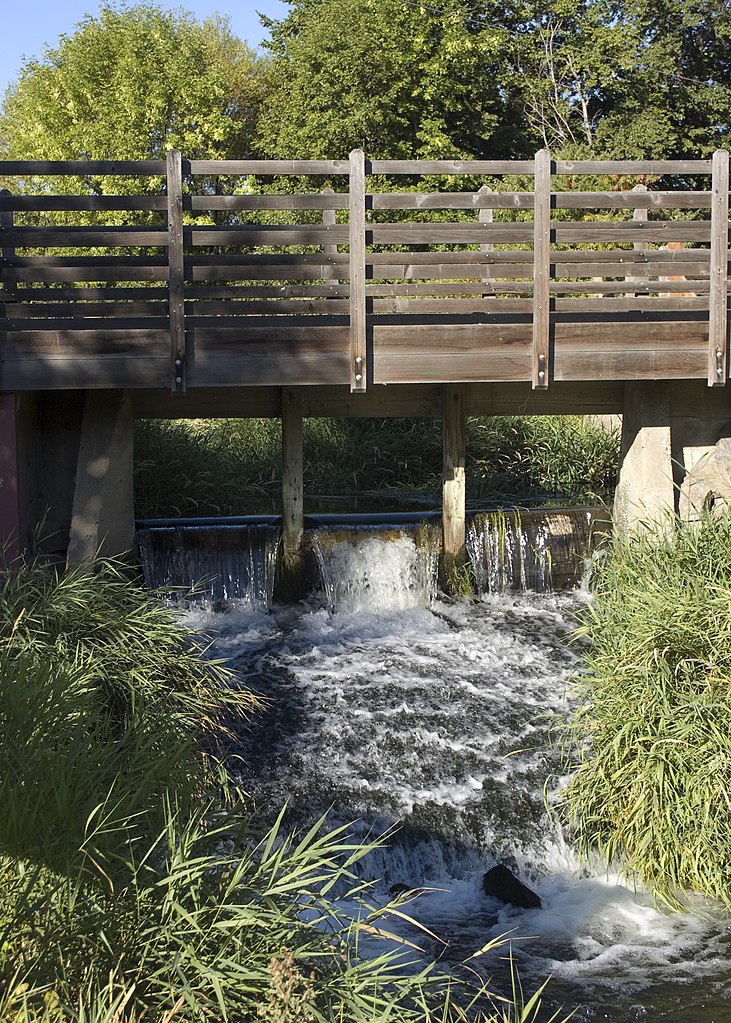
1 A weir, by the way, is a barrier across the length river or stream designed to adjust the flow of a stream. I had to look this up. 😅 Featured photo is a weir at the Thorp Gristmill in Thorp, WA. A. Balet, CC BY 3.0, via Wikimedia Commons

Have We Met? Poem Number 27

This poem may look straightforward, but it turns out that this is a technical masterpiece:

JapaneseRomanizationTranslation
みかの原Mika no haraLike Izumi River
わきてながるるWakite nagaruruthat wells up and flows,
泉川いずみがわIzumi-gawadividing the Moors of Urns
いつ見きとてかItsu mi kitote kawhen did I see her, I wonder,
こいしかるらKoishi karuranthat I should yearn for her so?
Translation by Dr Joshua Mostow

This poem was composed by Chūnagon Kanesuke (中納言兼輔, 877 – 933), or “Middle Counselor Kanésuké”. He is also known as Fujiwara no Kanésuké. He was the cousin of Sadataka (poem 25), and the great-grandfather of Lady Murasaki (poem 57). Lady Murasaki even used some of his poetry in her work, The Tales of Genji.

Because Kanesuke had a particularly nice residence just beside the dam of the Kamo River, he was also nicknamed the Tsutsumi (堤, “river bank”) Middle Counselor. This residence was a popular gathering place for the who’s-who of his time including Tsurayuki (poem 35) and Mitsune (poem 29). He is also listed among the Thirty-Six Immortals of Poetry as well.

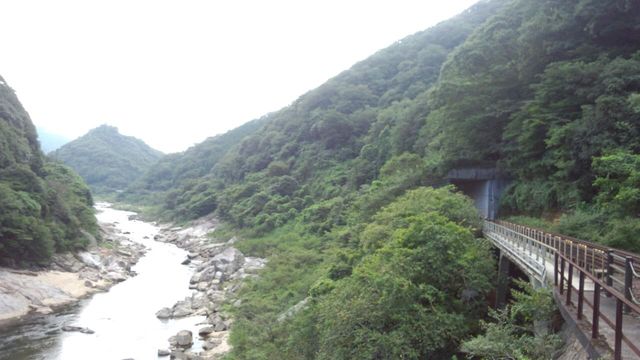
As Mostow points out, this poem is quite clever on a technical level. It uses a preface (the first three lines are a preface to the 4th), poetic place names (Izumi River is actually a real river called the Kizu-gawa 木津川 pictured above from Wikipedia), and pivot-words. The pivot word is izumi which can mean a spring (泉) which wells up, but also rhymes somewhat with the 4th line which says itsu mi as in “when did I see (her?)” (いつ見).

Interestingly though, Mostow points out that this poem may not actually be composed by Kanesuke given that it was originally listed as “anonymous” in the original anthology it came from. Also, as Mostow explains, it’s unclear from the poem whether this is a poem about lovers who met and cannot meet again, or lovers who actually haven’t met yet.

All in all, an interesting poem to examine by a famed poet of the day.

P.S. featured photo is of the Izumi River, near Kyoto, in modern times. Photo by 吉田宅浪, CC BY-SA 3.0, via Wikimedia Commons

Snowfall: Poem Number 31

Similar to the previous poem, this one deals with the moon, but I think this poem epitomizes the winter season:

JapaneseRomanizationTranslation
朝ぼらけAsaborakéSo that I thought it
有明の月とAriake no tsuki tothe light of the lingering moon
みるまでにMiru made niat dawn—
吉野の里にYoshino no sato nithe white snow that has fallen
ふれる白雪Fureru shirayukion the village of Yoshino
Translation by Dr Joshua Mostow

The author, Sakanoue no Korenori (坂上是則, dates unknown), is one of the Thirty-Six Immortals of Poetry, but otherwise nothing much is known about him.

This poem, as Professor Mostow explains, is similar to poem 29, and is part of a theme on “elegant confusion” which is a hallmark of Chinese poetry. Early poetry in Japan was still greatly indebted to Chinese poetry and many of the imagery, and idioms used in the Hyakunin Isshu anthology are not exception.

I happen to like this poem also because it has a lot of obscure, but cool Japanese poetic terms. We’ve seen ariaké discussed in poem 30. However, this poem also uses the term asaboraké (朝ぼらけ) which as we say in poem 64 means that period of time in the dawn, in either winter or autumn, when things are hazy. It’s a kind of slow, late dawn that you only find in that time of year. Compare with akatsuki (暁), which Professor Mostow explains can mean “dawn” any time of the year. Since asaboraké is used in two poems in the Hyakunin Isshu, it makes the kimari-ji for each poem particularly tricky.

The village of Yoshino that this poem refers to, is none other than the iconic village of Yoshino in Nara Prefecture.

Long Goodbyes: Poem Number 30

Hi all,

New year is here, and I guess it’s time to say “goodbye” to the old one. This poem is also happens to be about good-byes of another sort.

JapaneseRomanizationTranslation
有明のAriaké noThere is nothing so depressing
つれなくみえしTsurenaku mieshias the break of day and
別れよりWakare yorileaving you after
暁ばかりAkatsuki bakarihaving seen the heartless
うきものはなしUki mono wa nashimorning moon.
Translation by Dr Joshua Mostow

The author, Mibu no Tadamine (壬生忠岑, dates unknown), is one of the Thirty-Six Immortals of Poetry and was the father of Tadami (poem 41). He was also one of the official compilers of the official anthology, the Kokinshū, along with Ōshikōchi no Mitsune (poem 29).

By all accounts, this appears to be another famous “morning after poem”, similar to the one seen in poem 50. The term, ariake (有明) is a poetic term for the last-rising moon, in the last-half of the lunar cycle, which you can still see in the morning.1 On the other hand, as Professor Mostow points out, the fact that the moon was heartless could also imply lover who spent all night waiting to see his lover but was never received and finally went home at dawn.

Either way, the morning moon seems to carry a lot of significance for romantic types back then.

1 Similarly, akatsuki (暁) is a poetic term for daybreak.

Rejection: Poem Number 21

No one likes getting rejected. Even back in classical Japan:

JapaneseRomanzationTranslation
今来Ima kon toIt was only because
you said
しばかりにIishi bakari niyou would come right away
長月のNagatsuki nothat I have waited
ありあけの月をAriake no tsuki wothese long months,
till even
待ちいでつるかなMachi idetsuru ka nathe wan morning moon
has come out.
Translation by Dr Joshua Mostow

This poem was composed not by a woman as one would expect, but by a Buddhist priest named Sosei Hōshi (素性法師, dates unknown), or “Dharma Master Sosei”. He was the son of Henjō (poem 12, あまつ) before Henjō took tonsure. In fact, when Henjō did become a monk, Sosei was obligated to do the same.

Nonetheless, Sosei kept busy. He worked in the Imperial Court and was a priest, and a prolific and popular poet. He kept a salon of fellow poets including Ki no Tsurayuki (poem 35, ひさ) and Oshikochi no Mitsune (poem 29, こころあ). Both men were tasked with compiling the imperial anthology, the Kokin Wakashū, and Mostow points out Sosei is heavily represented in there. Coincidence? My new book suggests not. To his credit, Sosei is also one of the Thirty-Six Immortals of Poetry.

As we’ve seen with other poems from this earlier era, it was common to write about poetry themes, and to write from a role outside one’s own. So, for a monastic to be writing from the perspective of a lonely woman wasn’t unusual.

This poem is interesting because it seems to happen in one night, or a long period of time. It is a mystery. Mostow explains the contradiction in this poem between the “one long night” and “months” as being an issue of interpretation. Though most people assumed it was a long Autumn night, Fujiwara no Teika (poem 97, こぬ), the compiler of the Hyakunin Isshu anthology, felt it was more like a long passage of time.

P.S. Photo above is a Japanese calendar we have a home. More on that in a related post in my other blog.

Compassion: Poem Number 95

Since today is the Buddhist holiday of Bodhi Day, the Enlightenment of the Buddha, I felt this poem would be very suitable:

JapaneseRomanizationTranslation
けなくŌkenakuInadequate, but
うき世の民にUkiyo no tami nithey must shelter the folk
かなŌu kanaof this wretched world—
わがたつそまにWaga tatsu soma nimy ink-black sleeves, having begun to live
墨染の袖Sumizome no sode“in this timber forest that I enter”.
Translation by Dr Joshua Mostow

The author of the poem is by a priest of the Tendai sect of Buddhism named Saki no Daisōjō Jien (先の大僧正慈円, 1155-1225), or “Former Archbishop Jien”. He was the son of the powerful Fujiwara no Tadamichi (poem 76) and nephew of fellow poet Yoshitsune (poem 91) as well as Fujiwara no Teika (poem 97) himself. Although he was from an elite family, he was the 10th son of Tadamichi, and thus extraneous. Like many powerful medieval families in both Europe and Asia, the extraneous kid was sent to a monastery. In this case, the prestigious monastery of Mount Hiei (homepage here), one of two powerful centers of the Tendai sect.

Interestingly, Professor Mostow suspects the poem may actually be an allusion to Emperor Daigo, who was said to have taken off his robe one winter night to suffer the same cold as the people did.

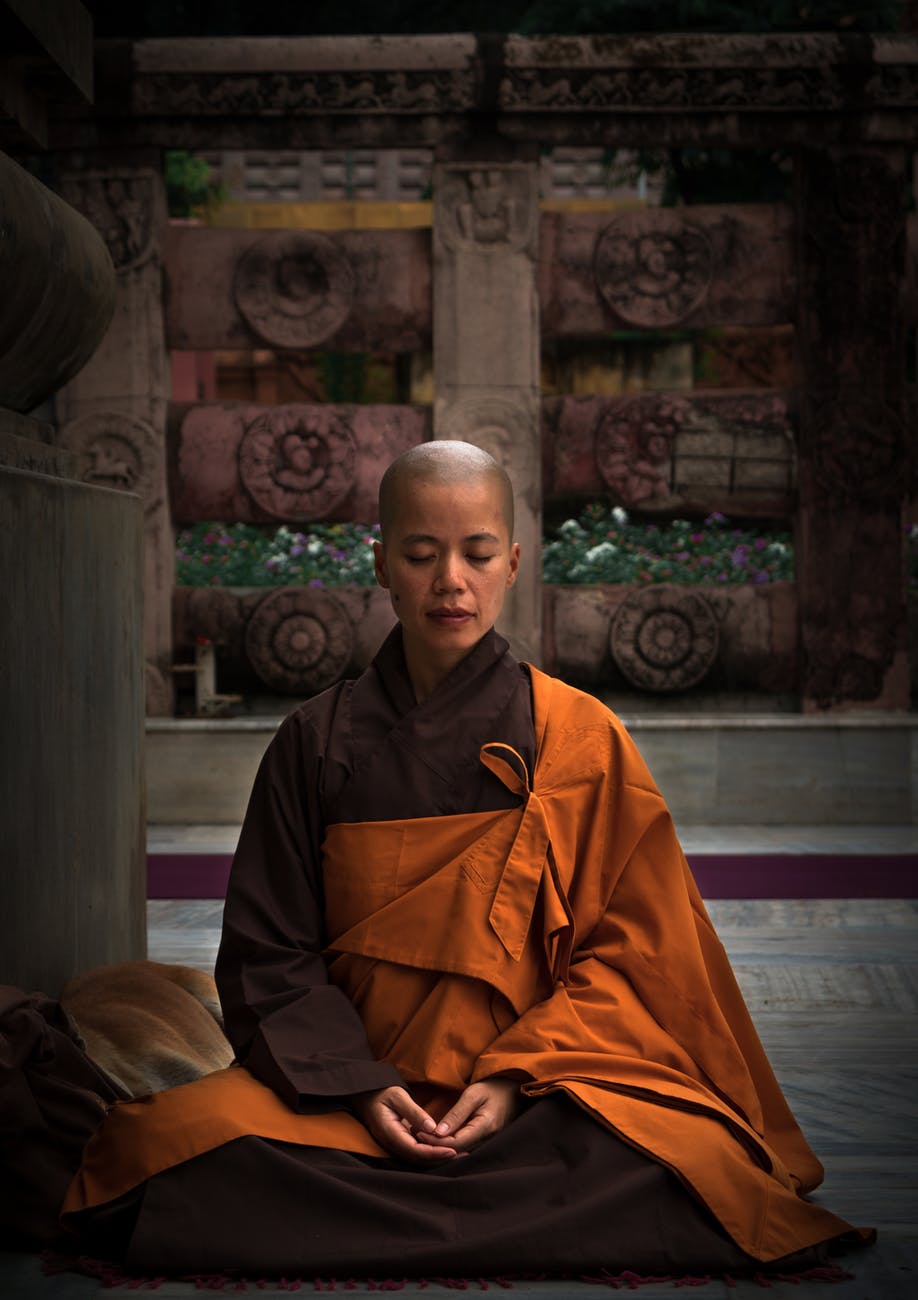
In any case, the last line of the poem is noteworthy because it is a direct quote from the founder of Tendai Buddhism in Japan, Saichō who lived centuries before. So, for many, this has been interpreted as Jien’s vow as a monk to carry on this tradition of compassion for all beings in a world that is transient and marked by suffering. Here, the “ink-black” or sumizome no sodé (墨染の袖) literally means “ink-black sleeves” (sumi is Japanese ink), and is the traditional color that Buddhist priests in East Asia wear. Compare the black sleeves with the orange-ochre robes in Southeast Asia, or red robes in Tibet.

This notion of compassion for all beings is exemplified by the Buddhist notion of a bodhisattva who is a being who is highly advanced on the Buddhist path and has turned outward to help and teach all beings before becoming a Buddha (i.e. enlightened) themselves. An example is a bodhisattva named Kannon (Avalokiteshvara), “who hears the cries of the world”.

Kannon, symbolized here with 1,000 arms, providing aid to all who seek it. Photo taken by me in 2013 at a local Vietnamese temple.

Tendai Buddhism, in particular, reveres the Bodhisattva ideal and practices, and not surprisingly the poem reflects this. In any case, the notion of goodwill and compassion for others is something I hope others find inspiring.

A Bold Declaration of Love: Poem Number 20

Hi everyone,

This poem has quite a story behind it and relates a little to the poem posted previously:

JapaneseRomanizationTranslation
わびぬればWabi nurebaMiserable,
今はた同じIma hata onajinow, it is all the same,
なるNaniwa naruChannel-markers at Naniwa—
みをつくしてもMi wo tsukushitemoeven if it costs my life,
とぞ思Awan to zo omouI will see you again!
Translation by Dr Joshua Mostow

The poem’s author, Motoyoshi Shinnō (元良親王, 890 – 943), the Crown Prince Motoyoshi, was the eldest son of the mad Emperor Yozei (poem 13), who was forced to abdicate prematurely. This likely affected Motoyoshi’s chances of assuming the throne, and before long Emperor Koko (poem 15) was enthroned instead. As an Imperial prince with nothing to do, Motoyoshi turned all his energy to women. My new book points out that the poetry collection that Motoyoshi left behind is almost entirely about women and sex.

According to commentaries, this poem was real and not part of a themed poetry contest. Motoyoshi, apparently, was in love with one of the hand-maidens of the retired Emperor Uda. The maiden, daughter of the powerful Fujiwara no Tokihira, had already given birth to 3 sons for Emperor Uda and was highly favored by him, but Motoyoshi persisted in his love, even if it cost him his reputation. Bear in mind that this was the same Fujiwara no Tokihira who was instrumental in getting Uda’s favorite advisor, Sugawara no Michizane (poem 24), exiled.

The main “pivot word” here is the phrase mi wo tsukushitemo, where miotsukushi (澪標) are famous water-markers in Japanese culture as pictured above, photograph taken during the Meiji era (Unknown author, Public domain, via Wikimedia Commons). But the poem can also be read as 身を尽くしても meaning “even if it exhausts my life”. So, rather than the subtle romantic allusions your normally see in poetry from this era, Motoyoshi is going all-out and making a big gamble.