The Hyakunin Isshu in the Edo Period

Since I began, this blog has focused on a period of Japanese history which I like to call “Classical Japan”, or “Japanese Antiquity”.1 That’s just a convenient name I call it.

But most researchers and historians tend to divide Japan’s history into “periods” (jidai, 時代) based on where the capitol was at the time. So, precisely speaking, this blog and the Hyakunin Isshu cover a 500-period of history overlapping the Asuka (6th – 8th c.), Nara (8th c.) and Heian Periods (8th – 12th c.), while dipping our toes just a bit into the the early Kamakura Period (12th – 14th c.) for certain poems (poems 93, 99 and 100 for example). For the sake of the Manyoshu we also ventured even further back to somewhat murkier periods of time since some of the very early poets of the Hyakunin Isshu (poems 1, 2, 3 and 4 for example) were also contributors.

But the blog has never really explored anything beyond the early 13th century because that’s when things effectively end. The Hyakunin Isshu was compiled, the aristocracy of the Heian Period were totally sidelined by the new samurai class, and Japan continued on in a new trajectory. The aristocracy still lived until the modern era, and Imperial poetry anthologies were issued from time to time, but the quality and popularity gradually petered out. As poem 100 above alludes to, this era embodied by the Hyakunin Isshu was effectively over.

For the purposes of this blog, why pay attention to anything that comes after?

Well, I attended Professor Mostow’s recent lecture at the University of Washington, and I learned that history of the Hyakunin Isshu kept going. In fact, it was all the rage in the much later Edo Period (17th – 19th c.).

Japan by the Edo Period was pretty different than the earlier Heian Period. By this point, Japan had been effectively ruled by one military government or another for centuries, while the capitol had shifted from Kyoto in central Japan, to a fortified castle town in eastern Japan called Edo (江戸). Edo started as a fishing town, but soon grew into a metropolis thanks to good urban planning and government policies that forced rival warlords to stay there every other year. Edo, later the modern capitol of Tokyo, was one of the largest cities in the world at one point.

After a century of constant warfare throughout Japan, the Edo Period brought unprecedented stability and cultural flourishing. Its isolation from European explorers and rival Asian powers meant that people turned inward and rediscovered Japanese culture that had been forgotten in ages past due to war and instability.

One aspect of this flourishing was the invention of block printing which suddenly allowed the masses to enjoy reading in a way that earlier generations had not. Books became far more affordable, and more available, and suddenly a variety of books about the Hyakunin Isshu were published. There were books about the Hyakunin Isshu as far back as the 15th century, namely the Ōei-shō (応永抄) composed in 1406, but mass-printing made books much more accessible and allowed for a greater variety.

Professor Mostow has collected and aggregated many examples on his website here. Take a look if you can, there are some neat scans of really old documents from the era.

One common usage of the Hyakunin Isshu at the time, according to Professor Mostow, was in the instruction of girls. Books about young women’s education were a popular subject, and such books would work lessons in along with poems of the Hyakunin Isshu. For example, Professor Mostow posted scans from a book called the Hyakunin Isshu Jokun Shō (“A Selection of the Hyakunin Isshu for Women’s Instruction” ?), published in 1849. Another example can be found here.

Men were often taught things like Confucian values and such. And yet, even the boys learned about the Hyakunin Isshu from their mothers who had been raised on it. Also, books that were published for men about the Hyakunin Isshu often did so under the theme of Kokugaku (“national learning”).

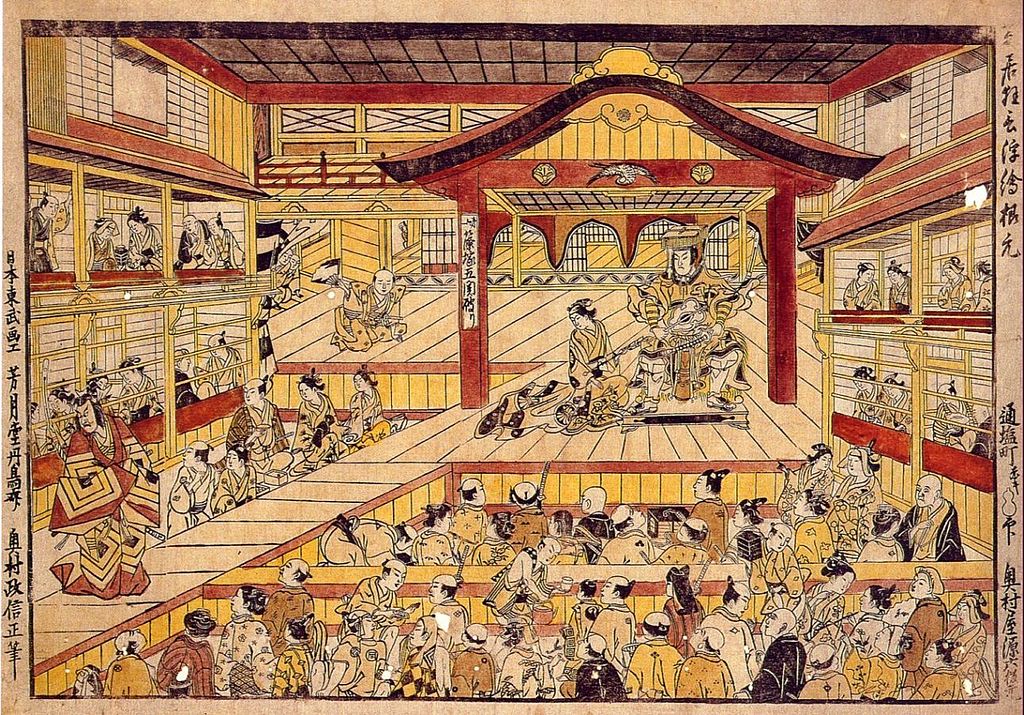
A block print of the Masanobu Kabuki theater, 1743. Hokusai, Masanobu, Kiyonobu, XVII-XIX century, Public domain, via Wikimedia Commons

The high point of Edo Period culture, and something that influences Tokyo even today was the Genroku Period (1688 – 1704). Many things people imagine of pre-modern Tokyo, such as Kabuki theater and Ukiyo-e prints, have their origin in this brief period. The Hyakunin Isshu was used in some Ukiyo-e block prints too. Since many of these images were racy or scandalous, publishers would work in poetry of the Hyakunin Isshu to either obfuscate the content from Edo government censors, or to lend a more “classy” air to the image. I found some examples here.

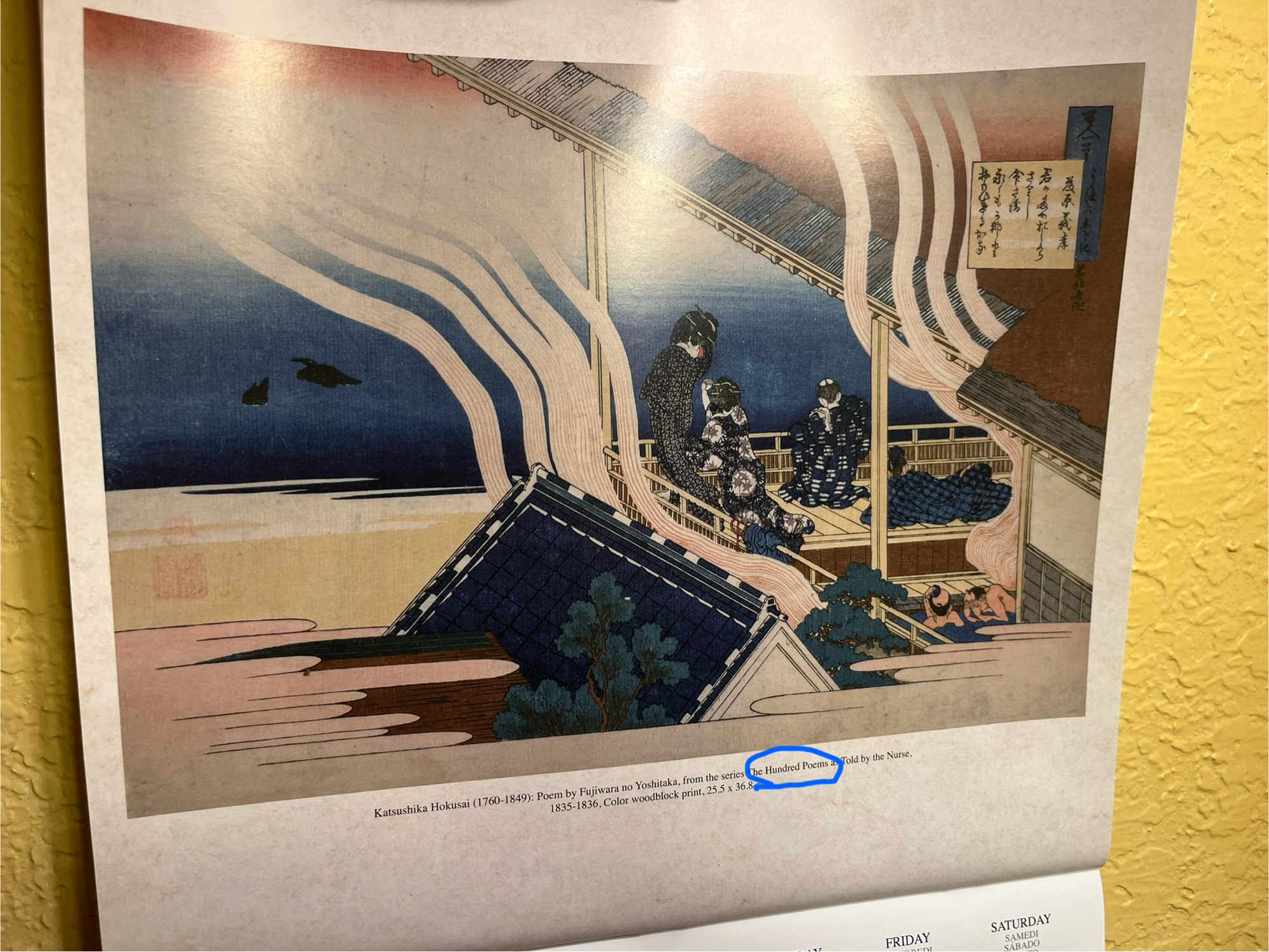
Even the famous artist Hokusai of “Great Wave” fame made block prints that would feature poems of the Hyakunin Isshu. We have a calendar at home and I was surprised to see this Hokusai block print with poem 50 (きみがためお) composed in cursive:

Our wall calendar featuring art by Hokusai. Turns out this page was from the Uba ga Etoki.
In blue, reads Hyakunin Isshu Uba Ga Toki, and in the yellow box poem 50 of the Hyakunin Isshu.

It turns out this is part of a series by Hokusai called the Uba ga Etoki (姥がゑとき), or more formally the 百人一首姥がゑとき2 , which means something like the “The Illustrated Hyakunin Isshu As Told By a Nurse(maid?)”. You can see more examples of this work here.

Anyhow, it’s fascinating that as literacy among the populace improved during the Edo Period, and access to information via books and printing increased, popular interpretations and illustrations of the Hyakunin Isshu took on a new life. The Hyakunin Isshu was, by that point, already 600 years old, and yet it enjoyed a revival that we benefit from today in the form of anime, karuta, and so on.3

Special thanks to Professor Mostow for his lecture and website! Also, check out Professor Mostow’s new book!4

1 I suppose my reason for doing this is that the end of the Heian Period and the subsequent change in Japan was somewhat similar to the fall of the Western Roman Empire in Europe, and how later generations of feudal lords kept up some of the trappings of the Romans, and yet it was still a different society altogether. But in the end, this is just one history nerd’s interpretation.

2 In modern Japanese 百人一首うばが絵解. See this post for more explanation.

3 Although social media and Internet reveal a pretty ugly side to humanity, it does also lead a similar explosion in cultural and accessibility. Two sides of the same coin, I suppose.

4 This is my associates link on Amazon. I get a small amount of credit for any purchases made through here. Feel free to purchase directly from University of Hawaii press instead though.

How To Recite the Hyakunin Isshu Like a Pro

If you’re here reading the blog, chances are you like the poetry of the Hyakunin Isshu. Who doesn’t? Maybe you like it so much, you’ve tried to memorize your favorite poems too (I do). But what’s better than memorizing your favorite poems? Reciting them!

When I first learned to play karuta, I realized that poems of the Hyakunin Isshu are recited in a specific style in Japanese. This is necessary for the players to hear clearly, but also reflects a traditional singing method for reciting waka poetry.1 Even on kids shows about Japanese language, when waka or haiku are recited, they’re recited in the same way. Of course, this is not required, but it is cool to learn, and doesn’t take that much effort.

First, let’s look at this Youtube playlist of Hyakunin Isshu poems.2 In particular, let’s look at poem 2:

Poem 2, はるす

All waka poems, including the Hyakunin Isshu have five verses, and are usually written top to bottom, right to left. The poems are further divided by the first three “upper verses” (kami no ku, 上の句) and last two “lower verses” (shimo no ku, 下の句) for structured, reciting, and for games.

It really helps if you can read hiragana script, but even if not, listen to the intonation of the poem, and the way some syllables are drawn out longer (expressed above as vertical “|” lines). That’s how you recite waka poetry.

The syllables that are drawn out are not always in the same place, by the way. Poem 24 of the Hyakunin Isshu does not always match poem 2 especially the fourth verse (fourth column from the right):

Poem 24, この

Or take a look at poem 11 which has a slightly unusual format. This makes the pacing different, and affects where syllables are drawn out:

Poem 11, わたのはらや

Poem 11 is a particularly tricky poem to recite, in my opinion, but also fun because the first two lines sound really neat.

Reciting isn’t just for showing off by the way.

In my book on the Manyoshu, it talks about how many poems come alive when they are recited. This was true during Japanese antiquity, and centuries later when the Hyakunin Isshu was compiled too. There are sounds and expressions that have a nice ring to them and it’s not always apparent if you are just reading the poem in your mind. For example poem 3 of the Hyakunin Isshu uses a lot of “no” (の) sounds that come alive when recited aloud:

Poem 3, あし

Another example is poem 58 which simply has a nice ring to it:

Poem 58, ありま

Anyhow, unless you’re training to be a professional yomité reader in karuta, it’s not necessary to master reciting all 100 poems, or to even sound this nice. However, if you have a handful of poems you like, learning to master the recitation is a great way to bring poems to life. You can use the excellent Youtube list above, or if you are a tactile person (like me), you might consider getting a set of yomite cards like the ones sold by Oishi Tengu-do, direct link here. I purchased mine in Japan this year and enjoy flipping through them and practicing poems I like.

In truth, I am a TERRIBLE singer. I am truly tone-deaf. But, with a bit of practice you get used to the rhythm of a poem and can recite it without much effort. Some poems are easier than others (poem 11 is tough), but with a bit of practice and familiarity anyone can learn to recite their favorite poem.

1 Roughly 99% of the poems I’ve posted in this blog for the past 13 years are all waka poems. These poems almost always have a pattern of 5-7-5-7-7 syllables, as opposed to later haiku poetry that only have 5-7-5 syllables.

2 If you want to search other Youtube examples, search for 百人一首 読み上げ (reading Hyakunin Isshu aloud).

Fall Longing: Manyoshu Poem 488

Back to our regularly scheduled program, I wanted to share a neat little poem, composed by none other than Princess Nukata using the theme of Autumn and of a night tryst:

Original ManyoganaModern JapaneseRomanizationRough Translation
君待跡君待つとKimi matsu toAs I wait for you
吾戀居者が恋ればA ga koi orebain anticipation
我屋戸乃宿戸やどA ga yado nothe blinds
簾令動簾動かしSudare ugokashiof my window flutter
秋之風吹秋の風吹くAki no kaze fukubut it is only the autumn breeze…

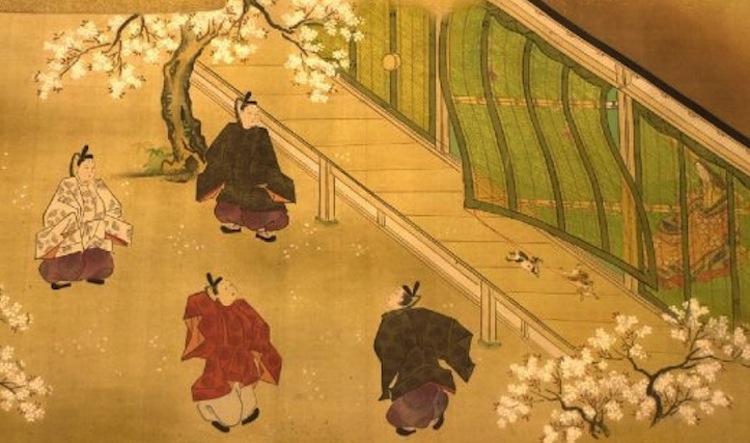
Princess Nukata needs little introduction in the blog. She was the love interest of two powerful men, issued a call to war, and made quite a contribution to the Manyoshu anthology which the Hyakunin Isshu and other later anthologies are all based upon. My book about the Manyoshu, in talking about spring versus fall, listed this poem as an early, early example in Japanese poetry of using autumn to symbolize other things. In this case, a romantic meeting at night, and a woman who eagerly awaits her lover. The blinds alluded to here are sudaré blinds used in Japanese culture since antiquity and even to this day.

Illustrated scroll of the Tales of Genji, chapter 34, 17th century. Courtesy of Wikimedia Commons.

Beyond that, it’s just a neat poem.

Happy Autumn everyone! 🍁

P.S. There is still time to register for the Professor Mostow online lecture at the UW on October 23rd!

Poets Illustrated: The Thirty Six Immortals Edition

Recently, while watching the historical drama about Lady Murasaki (poem 57, め), I was surprised to learn that there is an hand-made collection of poems by the Thirty Six Immortals of Poetry that has survived the centuries. This collection is called the Sanju-rokunin Kashu (三十六人家集, “Collection of the Thirty Six Immortals of Poetry”):

Collected poems of Minamoto no Kintada (889–948), not in the Hyakunin Isshu. See page for author, Public domain, via Wikimedia Commons

To recap, the Thirty Six Immortals of Poetry was list of esteemed poets in antiquity, coined by the revered poet and critic Fujiawara no Kintō (poem 55 in the Hyakunin Isshu). It was, in Kinto’s mind, the who’s-who of Japanese poetry up to that point in history. Two-thirds of the poets (24 out of 36) also appear Hyakunin Isshu, but otherwise there is no other overlap. Fujiwara no Teika clearly had differing tastes than his earlier kinsmen Kinto.

In any case, this collection was handmade in the early 12th century by ladies of the court for the birthday of Emperor Toba, and each book includes a unique design: a mix of paper collage, marbling and so on.

SYOGEI, Vol.5 No.6, 1935, August, Tokyo, Japan, Public domain, via Wikimedia Commons

The pages above show collected poetry by the Buddhist priest Sosei (poem 21 of the Hyakunin Isshu). You can see the collage here, using torn pieces of paper. Below is a page of poetry by Ōshikōchi no Mitsune (poem 29) shows an example of paper marbling.

MITSUNE-SHU, 1938, TAKEDA BOKUSAIDO, TOKYO, Public domain, via Wikimedia Commons

What makes the collection so amazing is that the pages aren’t just gorgeous, they often allude to some aspect of the poet in question. Some are quite obscure, some are easier for modern people to piece together. This page of poetry by Yamabe no Akahito (poem 4):

See page for author, Public domain, via Wikimedia Commons

The sky-blue color with snowy looking white surfaces evoke the image of Mount Fuji, which Yamabe wrote about in the iconic 4th poem in the Hyakunin Isshu. I am not certain if they are related, but it certainly seems likely.

As for the collection itself, over the century it changed hands a few times before finally being entrusted to the Nishi Honganji Temple in Kyoto, where it remains. Sadly, one volume was dismembered and the individual sheets were sold off to private collectors by a Japanese industrialist in 1929 to raise funds for a local university, but much of the original still remains.

My historical drama does a nice job showing how the ladies in waiting carefully constructed each page, each one a personal work of art, encapsulating a different kind of art. In Japanese literature there has never been anything quite like it since. Truly brilliant stuff.

P.S. apologies for the stupid title of this post. It just popped into my head.

Professor Mostow Upcoming Lecture!

Hello,

I wanted to share an exciting opportunity for readers. The University of Washington, my alma mater, is hosting a lecture in-person and online by none other than Professor Joshua Mostow!

Dr Mostow’s book Pictures of the Heart: The Hyakunin Isshu in Word and Image

Years ago, Dr Mostow graciously allowed me to use his translations of the Hyakunin Isshu for this blog, and readers have hopefully enjoyed his translations over the years. We poet-enthusiasts have all benefitted from Dr Mostow’s hard work and enthusiasm for the field. Let’s show our support, and enjoy a fascinating lecture on the Hyakunin Isshu and how it impacted Japanese history in later times.

You can see lecture details here:

https://asian.washington.edu/washin-kai-presents-lectures-and-events

Registration for the event is here:

https://events.uw.edu/event/JapanStudiesWK24/summary

Due to family scheduling conflicts, I am registered online. Hope you can all make it!

Sucking Up To The New Boss: Manyoshu Poem 235

Although this blog is primarily about the Hyakunin Isshu, I enjoy when things overlap with other Japanese poetry anthologies, and history.

Let’s talk about two of the poets: Empress Jitō (poem 2, はるす) and Kakinomoto no Hitomaro (poem 3, あし). After Empress Jito ascended to the throne, she was visited by Hitomaro, the revered court poet at the time, who composed the following poem:

Original ManyoganaModern JapaneseRomanizationRough Translation1
皇者大君おおきみOkimi waAs my sovereign
神二四座者神にしませばKami ni shimasebais a living kami,
(see below)
天雲之天雲のAmakumo noshe builds a temporary
雷之上尓いかづちの上にIkazuchi no ue niresidence atop
廬為流鴨いおりせるかもIoriseru kamoIkazuchi Hill.
1 I didn’t like any of the existing translations, so I tried to translate here. Any mistakes are my own.

At first, this poem seems like a simple case of a courtier sucking up to the new boss, but as we’ll see there’s more to it. This poem is very simple in some respects, and surprisingly difficult in others.

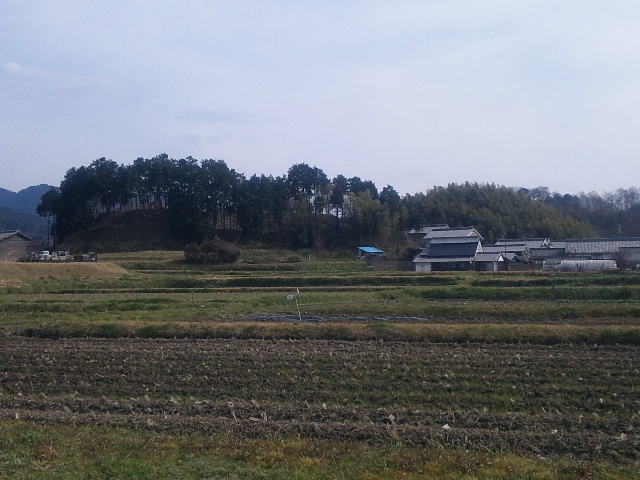
I had to check multiple sources to make sense of it, including my book on the Manyoshu, but the essence of the poem is that Kakinomoto no Hitomaro is describing Empress Jito as a living kami, and that because of her “supernatural abilities”, she can build a residence atop a small hill called Ikazuchi. Ikazuchi Hill, known as Ikazuchi no Oka (雷丘) can be seen in this photo, more information here.

But what the heck is kami? This is surprisingly tough to explain to Western audiences. It is deeply rooted in Shinto religion, and more closely matches something like ancient Greek religion where there were divine spirits both great and small. Small nature spirits would be worshiped as daimon (not to be confused with modern “demon”), and the Olympian gods were venerated too. Even the Olympian gods had “big forms” and small “household forms” worshiped at the hearth. It wasn’t unusual for Zeus, king to the gods, to also be venerated at a home shrine to protect the family assets, or a roadside marker.

In the same way, Shinto has countless kami. It’s not quite right to translate them as “gods” because the meaning is a little different, and “spirits” is not quite right either. But one could include both gods and spirits under the divine label kami. Just like in Greek religion, very talented people could also be venerated as kami after death, such as Hercules. I mention this because Sugawara no Michizane (poem 24 of the Hyakunin Isshu, この) was similarly venerated after death and became something like the Kami (god) of Learning.

This concept of great personages being kami is called arahito-gami (現人神) and that’s basically what Kakinomoto no Hitomaro is describing Empress Jito. Due to the divine ancestry of the Imperial family, this isn’t that surprising, but my book alludes to another reason for this. The turmoil caused by Emperor Tenji (poem 1 of the Hyakunin Isshu, あきの)’s family and his brother Emperor Tenmu’s family for control of the throne meant that Empress Jito (Tenmu’s wife/niece) ascended the throne on shaky ground. Female sovereigns were quite rare in Japanese history, and with the family fighting for control of the throne, Hitomaro was helping her reassert her divine status and legitimacy as the proper ruler of Japan.

The issue of arahito-gami comes up even as recently as 1946, when the reigning Emperor at the time (Emperor Showa, Hirohito), was requested to renounce his divine status after World War II. This declaration used some hair-splitting language about the Emperor’s divinity (or lack thereof), and various interpretations persist today.

…. but that’s something more knowledgeable people could explain better.

As for me, I find it fascinating (and a bit amusing) that these poets I know from the Hyakunin Isshu got embroiled in a succession dispute, but also that Hitomaro helped bolster Empress Jito’s credentials at a time when she was rebuilding the nation again while probably sucking up just a little too.

P.S. the featured photo above is Ikazuchi Hill, photo by Terumasa, CC BY-SA 3.0, via Wikimedia Commons

P.P.S. On a completely unrelated fact, while writing this post I learned that the Chinese characters for 雷丘 also mean “Raichu” as in the Pokemon.

From Darkness Into Darkness: Lady Izumi’s Final Poem

In a lesser-known Imperial poetry anthology called the Shui Wakashu (拾遺和歌集), poem 1342, is recorded what is believed to be Lady Izumi’s1 final poem:

JapaneseRomanizationTranslation
暗きよりKuraki yoriThe way I must enter
暗き道にぞKuraki michi ni zoleads through darkness to darkness —
入りぬべきIrinu bekiO moon above the mountains’ rim
はるかに照らせHaruka ni teraseplease shine a little further
山の端の月Yama no wa no tsukion my path.
Translation by Jane Hirshfield and Mariko Aratani in “The Ink Dark Moon

This poem was addressed to a Buddhist monk named “Shoku” and includes several Buddhist allusions. The most important is the phrase “darkness to darkness”, which comes from chapter seven of the Lotus Sutra:

….from darkness they [living beings] enter into darkness,
to the end never hearing the Buddha’s name [hear the Dharma].

translation by Burton Watson2

This refers to the Buddhist notion of Samsara, the near-infinite, aimless wandering that living beings undergo lifetime after lifetime, like a cosmic rat race. Such beings, who have yet to hear the Dharma [the teachings] of the Buddha, will continue to wander lifetime after lifetime without rest.

Thus, Lady Izumi is asking Shoku to help shine a light in the darkness for her, so that she may find the way [follow the Buddhist path].

I had trouble deciding which blog to put this in, since it covers both themes, but I decided to post here since the poem was introduced in the new historical drama about Lady Murasaki, Izumi’s contemporary.

Lady Izumi was, to put it mildly, a complex woman. She had incredible talent, and found herself in one scandal3 after another as powerful men fell at her feet, plus she earned scorn from other women such as Lady Murasaki. And yet, she was also very kind, devout and struggled to balance both the religious and worldly aspects of her life, while raising her orphaned granddaughter.

Hirshfield and Aratani note that if this poem is indeed her last, the final word she ever wrote was tsuki (月), “moon”.

1 poem 56 in the Hyakunin Isshu (あらざらん)

2 alternate translation by Murano reads: …they go from darkness to darkness, and do not hear of the names of the Buddhas.

3 this was a conservative, narrow, aristocratic society where men frequently had affairs, but it was much more scandalous if women did. The idea that women could want, and enjoy sex, was not something people really accepted at the time.

Where It All Began: Mount Ogura

Hello everyone,

I just returned from another trip to Japan,1 and we got to spend a bit of time in Kyoto. By accident, I also found Mount Ogura, and the place where Hyakunin Isshu was compiled! But first, let’s backup and explain a bit of history first.

Kyoto was the capital of Japan from the 8th century to the 19th century, and so many well-to-do families lived here. This aristocracy wrote countless waka poems that were compiled into official poetry anthologies from time to time,2 but the Hyakunin Isshu was not one of them. It was compiled by Fujiwara no Teika (poem 97) as a favor to his in-laws. Teika had been a compiler of one of the major anthologies, the Shin-Kokin-Wakashu, but was now in retirement after his liege lords (poem 100 and poem 99) were exiled in the upheaval of the Jokyu Rebellion. He resided in a small villa on the west side of Kyoto on the hillside of Mount Ogura, and was tasked with selecting the very best 100 waka poems that his in-laws could decorate their home with. Teika’s excellent poetic taste led to the Hyakunin Isshu we celebrate today.

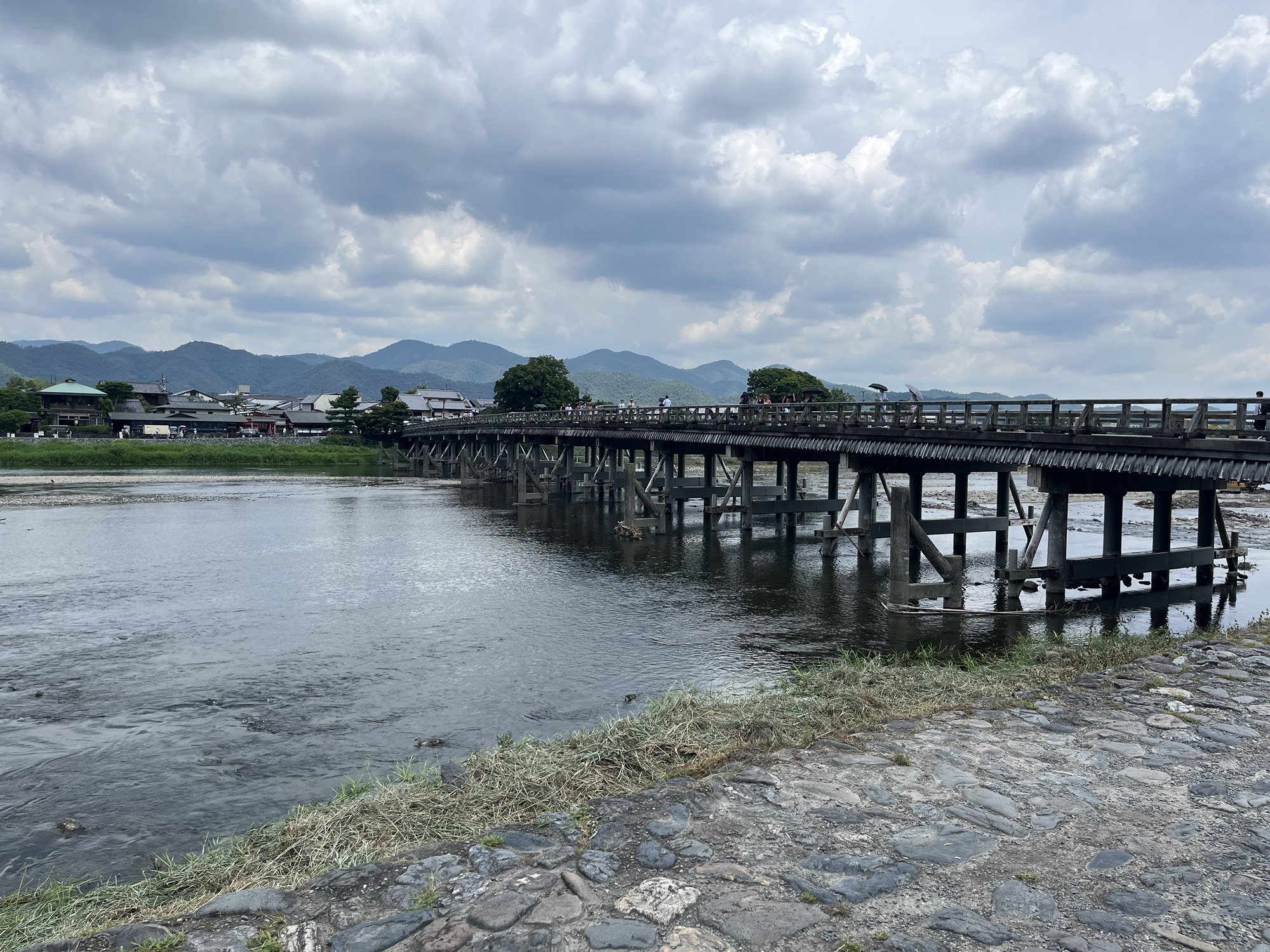
Anyhow, back to present day. I was with the family, and we visited a part of western Kyoto called Arashiyama (嵐山). It’s a very scenic place, with famous bamboo forests, and an iconic bridge named Togetsu-kyō (渡月橋):

Since we visited in the summer, it was extremely hot and muggy, so by lunch time we were exhausted and tired. We went to a local cafe and had lunch. Since we were in Kyoto, I assumed there would be many famous historical places related to the Hyakunin Isshu,3 but I was having trouble finding them on GPS, so I was disappointed.

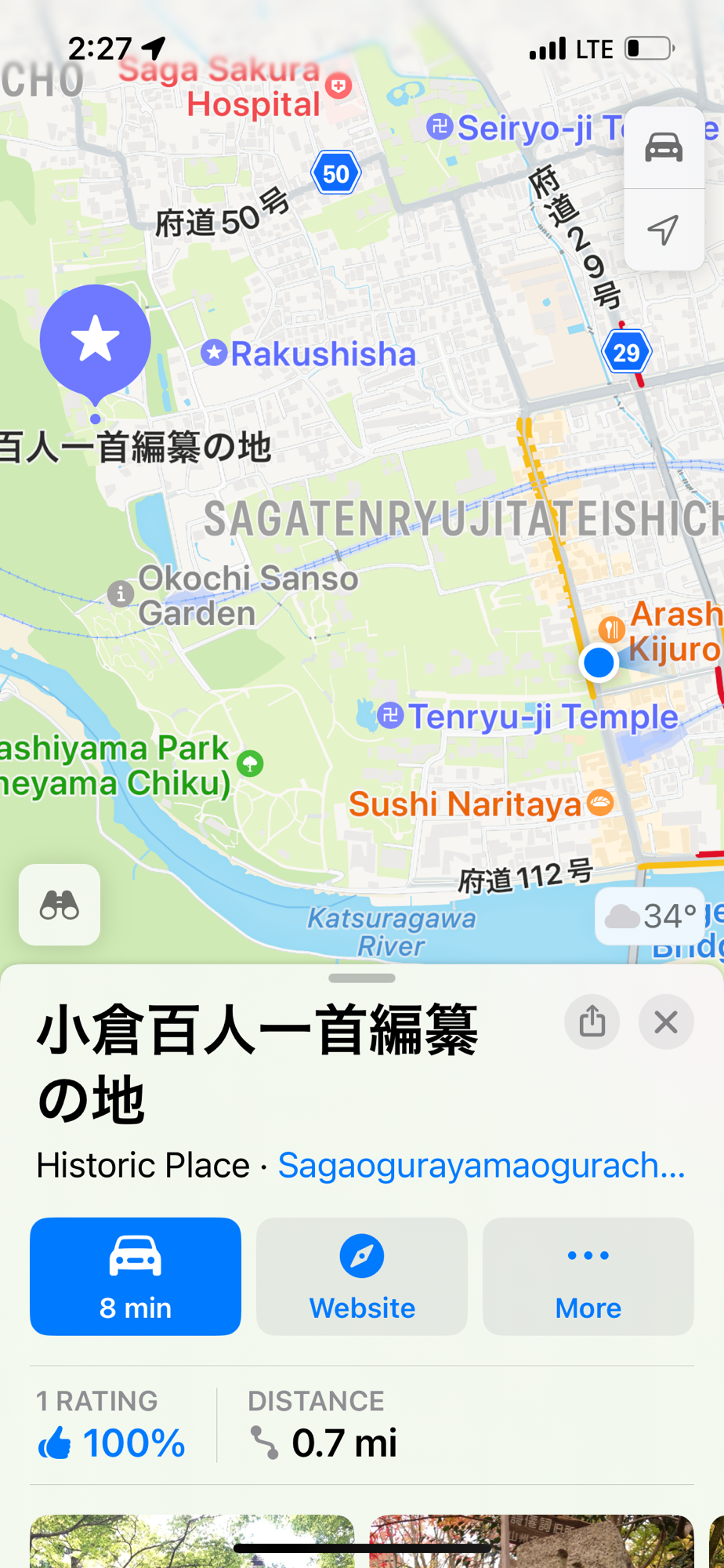
Then I noticed the following spot on my map app:

小倉百人一首編纂の地 (ogura hyakunin isshu hensan no chi) … the place where the Hyakunin Isshu was compiled…? Wow, that’s only 15 minutes by foot from where I was at!

The family was exhausted and sweaty, and were planning to return to our hotel, so I didn’t want to drag them uphill in the heat. I told them I’d be back, and I took off for the place on the map. It turns out that the properly had been converted to a Buddhist temple named Jojakkō-ji (常寂光寺) in the 17th century (a common practice in Kyoto). You can find the official website here.

This is Mount Ogura today.

I followed the map directions and made it safely to Jojakko-ji Temple:

There is a small entry fee, but once I paid that, I got to the second gate here:

The site of the Ogura Hyakunin Isshu is just down the path to the right, before the gate. I made the mistake of going up the stairs instead:

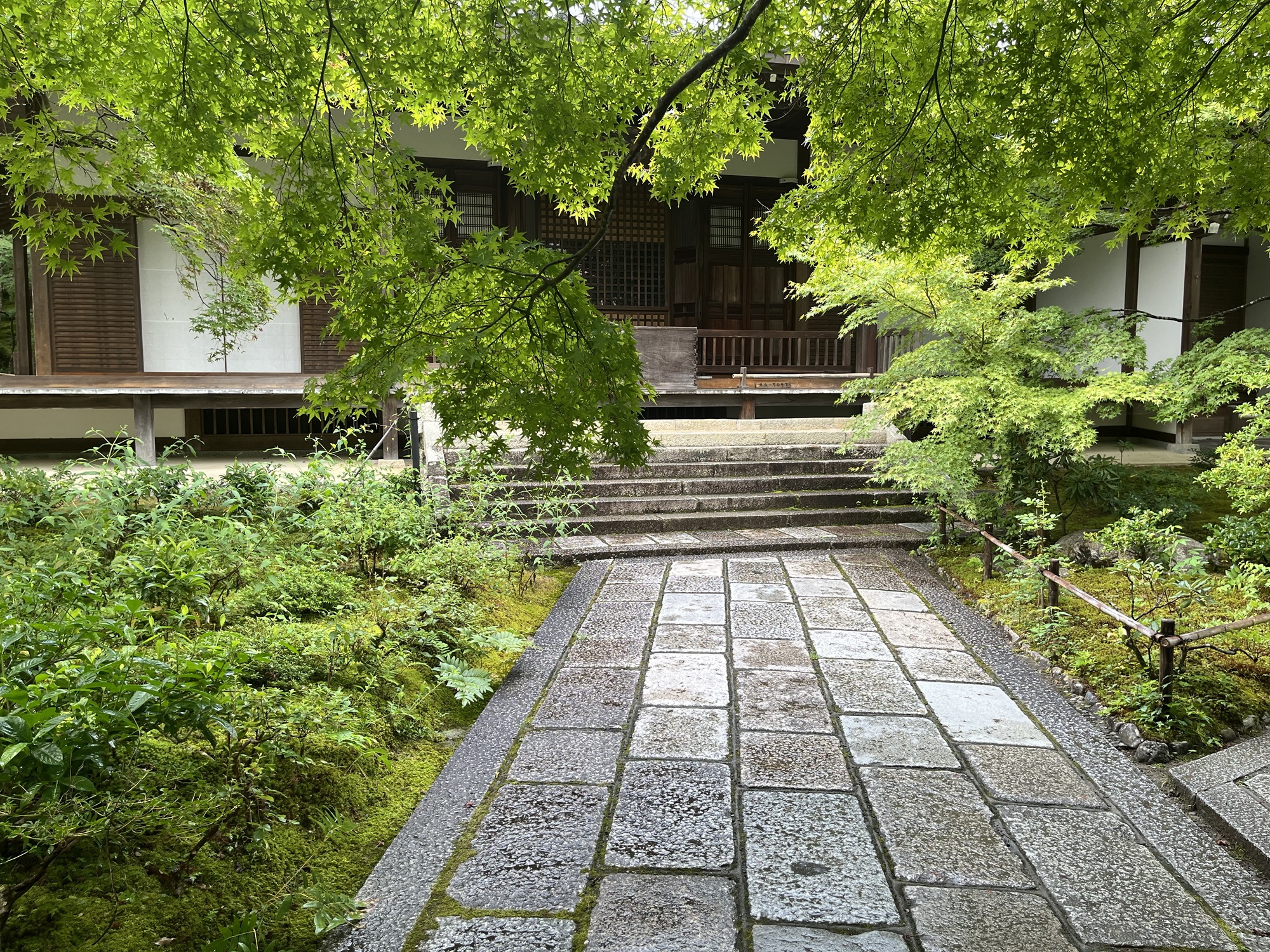
Jojakko-ji Temple is quite scenic actually:

… but it was very late in the day, my family was waiting back at Arashiyama, and I had to hurry. This was my one shot, probably in my lifetime, to find this place, but the temple maps, nor the website show precisely where it was.

Finally, I found it:

The photos from the prefectural website look a lot better than mine (good lighting helps). But there it was, the actual site where the Ogura Hyakunin Isshu was compiled!

The stone marker is pretty small and somewhat eroded, but there was no mistaking it.

Since I was short on time, I paused and said a quick “thank you” to Fujiwara no Teika and then headed back.

If you are fan of the Hyakunin Isshu, and you are in the Arashiyama area of Kyoto don’t miss this small but significant site.

P.S. while at Jojakko-ji, I met a nice Australian couple who had just finished their visit. They told me that at the top of the temple you can see a really view of Kyoto. I didn’t have the time to see it for myself, but if you go, don’t pass up the chance.

P.P.S. I forgot that, ten years ago, I had made a post about Mount Ogura. You can see the Togetsu-Kyo bridge here too.

1 We return every year when possible to visit my wife’s in-laws, and let the kids spend time with their relatives, learn more Japanese, etc.

2 Many earlier poems were also composed at a time when Japan’s capital moved around (Nara, Fujiwara-kyo, Asuka, etc) before settling down in Kyoto. See the Manyoshu for further details.

3 I did actually find one other place we visited earlier in the day, but more on that in an upcoming post.

Ancient Japanese Dad Joke: Manyoshu Poem Number 27

The poem from the Manyoshu feels like an ancient Japanese dad-joke. Read it out loud and you’ll see what I mean:

ManyoganaModern JapaneseRomanizationRough Translation
淑人乃よき人のYoki hito noMen of old
良跡吉見而よしとよく見てYoshito yoku mitecame to Yoshino
好常言師よしと言ひしYoshito ii shiand declared it a good place,
芳野吉見与吉野よく見よYoshino yoku miyoSo, good sons, go
良人四来三よき人よく見Yoki hito yoku miand take in the view!

The author of the poem is Emperor Tenmu whom we saw here and here. He is the younger brother of Emperor Tenji of Hyakunin Isshu fame (poem 1, あきの), and husband/uncle to Empress Jito (poem 2, はるす).

Yo, yo, yo, this poem has lots of “yo” words.

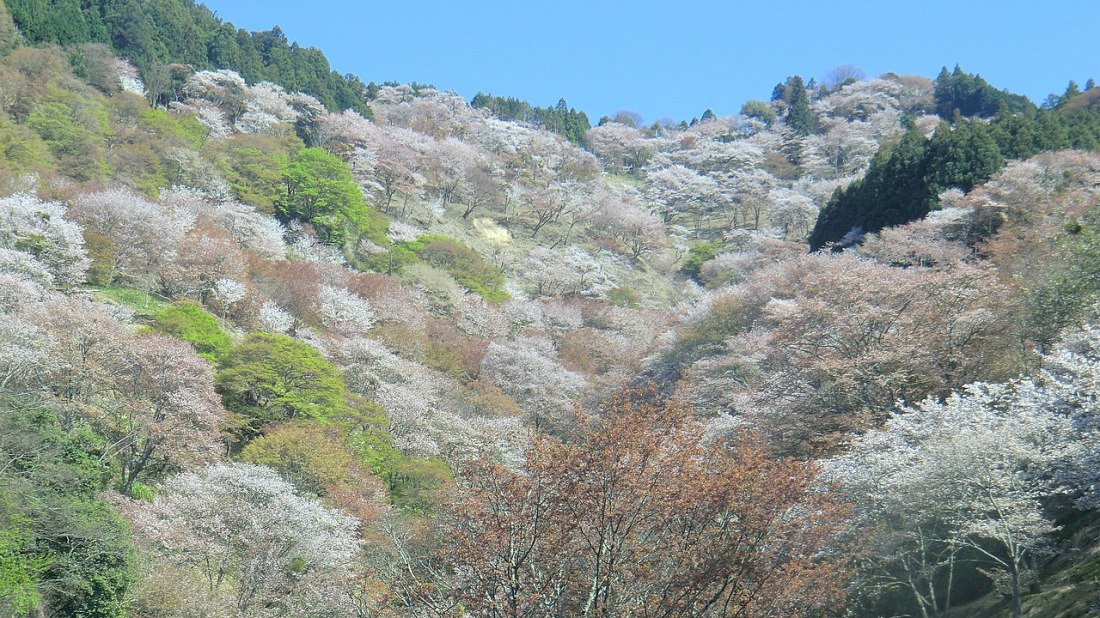
The poem was, evidentially, a suggestion by Emperor Tenmu to his sons to visit the beautiful village of Yoshino, near the old capital of Nara, famed for its otherworldly beauty in Spring. The featured image shows Yoshino and its famous cherry trees.

It was also an attempt to foster good relations between Tenmu and his sons through a combination of humor and providing some fatherly advice. Given how complicated family relations were at the time (see links above), and since Tenmu had defeated his own nephew in combat to assume the throne, he had reason to worry.

Sadly, it didn’t work.

After Tenmu’s passing, one son, Prince Ōtsu (ōtsu no miko, 大津皇子), started a rebellion and was later given the death penalty at the age of 24. Wikipedia implies that the rebellion may be a false charge though brought by Empress Jito so that her own son could ascend the throne. My book on the Manyoshu delves into this at length and comes to the same conclusion.

Still, you can’t blame Emperor Tenmu for trying to heal family divisions, yo.

To War! Manyoshu Book One, Poem 8

Poetry about war is not something you will ever find in the Hyakunin Isshu, or other Imperial anthologies. So, I was quite surprised to find this poem in the Manyoshu.

ManyoganaJapaneseRomanizationTranslation1
熟田津尓熟田津にNikitatsu niI was going to wait for
船乗世武登ふな乗りせFunanorisen tothe moon to rise before
月待者月待てばTsuki matebaembarking from Nikita bay,
潮毛可奈比沼しほもかなひぬShio mo kanainubut the tide is up:
今者許藝乞菜今は漕ぎ出でなIma wa kogi-idé nago, row out now!
1 Translation by Kudō Rikio, Ōtani Masao, Satake Akihiro, Yamada Hideo, Yamazaki Yoshiyuki, ed. SNKBT: Man’yōshū, 4 vols. Iwanami, 1999–2003, originally found here.

This poem was recited by none other than Princess Nukata (Nukata no Okimi, 額田王, 7th century), whom we saw in these two poems. She wasn’t just a woman sought after by two emperors, but also played a small part in the effort to restore the Korean kingdom of Baekje.

A map of Korea in the 4th century showing the three kingdoms. Baekje is at the height of power at this time. Map by Historiographer at English Wikipedia, Public domain, via Wikimedia Commons

For centuries, the Korean Peninsula was divided into three kingdoms: Goguryeo, Silla and Baekje who constantly vied for control. Baekje, called Kudara (百済) in Japanese, was the country most closely allied with Japan in antiquity and helped bring much continental culture to the fledging Japanese court. They had a long-standing alliance.

But in 660, Baekje was crushed by the combined forces of Silla and their ally, Tang-Dynasty China (aka “Great Tang” as they called themselves). The remnants of the Baekje court fled to Japan and sought help to restore their kingdom.

With Japanese and Korean restoration forces mustered at beaches of Nikita (熟田) Bay in modern day Ehime Prefecture, Princess Nukata, writing on behalf of the Baekje sovereign, Prince Buyeo Pung, recited this poem to fire up the troops.

Sadly, the restoration effort gradually failed. The forces landed in former Baekje and made initial gains, but gradually lost steam, and then were crushed in 663 at the Battle of Baekgang. This was also the last time that Japan sent troops to the Korean Peninsula until the 16th century under Toyotomi Hideyoshi’s invasion of Korea.

As I wrote before, the Manyoshu, while technically Japan’s first poetry anthology, is a somewhat different beast than later anthologies and collections. The poetry techniques are less refined, but the Manyoshu is often revered for its more visceral nature, its breadth, and its small peeks into antiquity.

P.S. Korean history is fascinating too, and makes for some pretty nice K-Dramas which you can easily find on streaming media such as Netflix. If you’re not already a K-Drama fan, maybe look up a few and enjoy.

P.P.S. Before I found a proper translation, I was translating the final line as “Let’s row” in the same way that Optimus Prime from the Transformers would say “Roll out!”. Maybe less accurate but it sounds cool, especially coming from Princess Nukata. 😎