The Cold Morning: Poem Number 52

For our final poem for Valentine’s Day, I thought this was another good choice:

JapaneseRomanizationTranslation
明けぬればAkenurebaBecause it has dawned,
暮るるものとはKururu mono to wait will become night again—
知りながらShiri nagarathis I know, and yet,
うらめしきNao urameshikiah, how hateful it is—
あさぼらけかなAsaborake kanathe first cold light of morning!
Translation by Dr Joshua Mostow

The author of the poem, Fujiwara no Michinobu Ason (藤原道信朝臣, 972-994), was the adopted son of the powerful Fujiwara no Kane’ie, husband of the mother of Michitsuna (poem 53) and subject of the Gossamer Years. His birth mother was the daughter of Fujiwara no Koretada (poem 45). Michinobu for his part, benefitted from his adoptive father’s influence, and rose to the Court rank of 4th-upper, and a position as part of the Imperial Guard (sakon no chūjō, 左近中将).

However, Michinobu seemed more interested in Waka poetry than in politics. He was close with Fujiwara no Sanekata (poem 51) and Fujiwara no Kinto (poem 55), and would often gather with them for poetry sessions. Further, Michinobu had a secret relationship with one of the court ladies under Emperor Kazan, named Enshi Jo-ō (婉子女王), but eventually he lost her to a political marriage with the powerful Fujiwara no Sanesuke. Sadly, Michinobu later died from due smallpox, which took his life at the age of 23.

This is another classic “Morning After” poem, which we’ve featured here, here and here.

Lord Michinobu dreads the rising sun because it means he has to sneak back to his own residence, away from his lover. Judging by his reaction, it must have been a night well-spent together. 😏

Happy Valentine’s Day!

Lost Without An Oar: Poem Number 46

Hello,

Continuing our theme for Valentine’s Day, this poem is quite fitting and another example of a “love poem” from the 40’s section of the Hyakunin Isshu:

JapaneseRomanizationTranslation
由良の門をYura no to woLike a boatman, crossing
わたる舟人Wataru funabitothe Strait of Yura,
をたえKaji wo taewhose oar-cord has snapped,
ゆくもしらぬYukue mo shiranuI’m lost and know not my way
こいの道かなKoi no michi kanaon the road of love!
Translation by Dr Joshua Mostow

The author, Sone no Yoshitada (曾禰好忠, dates unknown), lived toward the end of the 11th century, but as Mostow writes, very little else is known about him. Apparently he was a prolific poet and had his own collection, which was common among the aristocracy of day, but his style was considered unconventional and unappreciated until the time of Fujiwara no Teika (poem 97), who compiled the Hyakunin Isshu.

The poem is somewhat confusing, Mostow explains, for two reasons. The first is that the location of “Yura” isn’t know, but exists in both Kii and Tango provinces. Since Yoshitada was a secretary in the province Tango, perhaps he meant that Yura, but it’s only speculation on my part. The second is the phrase kaji wo tae (かぢをたえ), the third line. It can either be read as kaji wo tae (to lose an oar), or kaji-o tae (the oar cord snaps). Mostow makes a convincing argument for the latter.

But in any case, I think we all know that feeling when we were young and experienced love for the first time how happy, yet lost we were. Things haven’t changed in 900 years it seems. 🥰

A Cold Shoulder: Poem Number 45

This is another poem in our series leading up to Valentine’s Day. This one is perhaps a bit more unrequited, than the last poem I posted here:

JapaneseRomanizationTranslation
れともAwaré to moNot one person who would
べき人はIu beki hito wacall my plight pathetic
えでOmoedécomes at all to mind,
身のいたらにMi no itazura niand so, uselessly,
なりぬべきかなNarinu beki kanaI must surely die!
Translation by Dr Joshua Mostow

This poem was composed by Kentokukō (謙徳公, 924-972) also known as “Lord Kentoku”, or simply Fujiwara no Koremasa. Koremasa served as regent to the Emperor from 970 onward, and was frequently involved in compiling (and writing poems for) the second Imperial anthology of the time, the Gosenshō.

The poem, simply put, is Koremasa’s efforts to gain a girl’s attention, even after she spurned him previously. Mostow explains that according to the original sources, this poem was composed by Koremasa thinking “I will not be defeated!” and sent this poem as a last-ditch effort.

Nowadays, we might call such people stalkers, but at the time, this kind of persistent, dramatic effort wasn’t unusual. Men of the Court might try months if not years to gain a girl’s attention, and if she spurned him a few times, he might have chosen to persist, or possibly find a new lover.

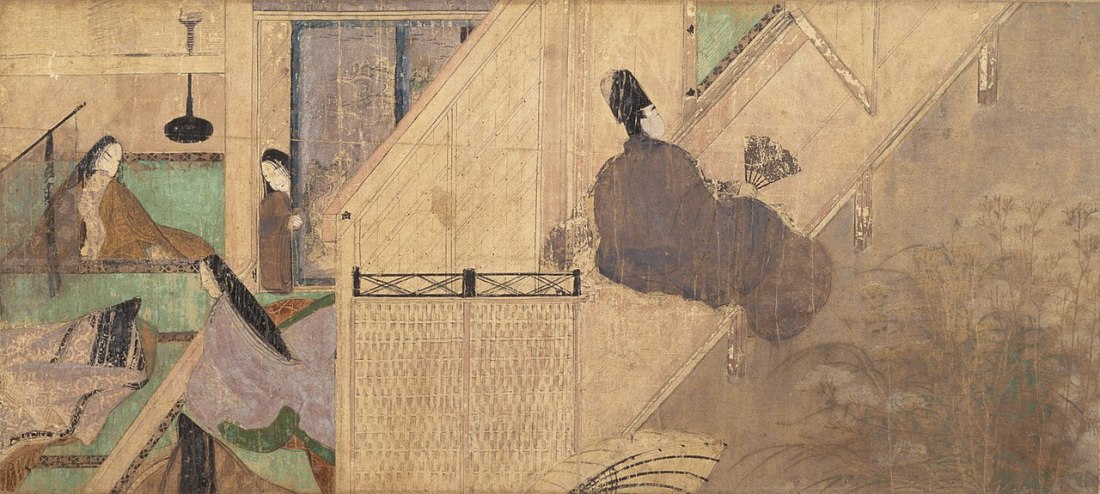
P.S. Featured photo is a scene of the Chapter “TAKEKAWA “(Bamboo River) of Illustrated handscroll of Tale of Genji (written by MURASAKI SHIKIBU(11th cent.)., Unknown author, Public domain, via Wikimedia Commons

Changed One’s Life: Poem Number 43

I can’t believe it’s been a year since my last series of love poems for Valentine’s Day. But, here we are again! This poem is the first in a series I’ll be posting before Valentine’s Day:

JapaneseRomanizationTranslation
見てのAi mite noWhen compared to
後の心にNochi no kokoro nithe feelings in my heart
くらぶればKuraburebaafter we’d met and loved,
むかしは物をMukashi wa mono woI realize that in the past
ざりけりOmowazari keriI had no cares at all.
Translation by Dr Joshua Mostow

The poet, Supernumerary Middle Counselor Atsutada (権中納言敦忠, 906-943), also known as Fujiwara no Atsutada, was among the sons of the power minister Fujiwara no Tokihira (the same man who had Sugawara no Michizane exiled, poem 24), and was one of the Thirty-Six Immortals of Poetry, as well as an accomplished poet all-around. Sadly, like his father Tokihira, Atsutada, according to my new book, died young in his 30’s and rumors swirled at the time that this was Michizane’s vengeful ghost. Such rumors help provide the impetus for Michizane’s later deification as a means of pacifying him.

The book also states that Atsutada was quite a playboy in his time. No sooner had he got into a relationship with Ukon (poem 38), then he dumped her, prompting her to write a bitter poem about it. On the other hand, Atsutada kept up a long, passionate correspondence with the daughter of Emperor Daigo, Masako, until she was sent away to be the high priestess of Ise Shrine. It was a heartbreaking separation we are told.

This is a classic “morning-after” poem (kinuginu no uta, 後朝の歌) which we’ve talked about in Poem 50 and Poem 30. The author’s love and longing have only increased, not decreased since their first meeting together.

As written before, meeting one’s lover was a huge ordeal among the aristocrats of the Heian Court in Japan. It wasn’t like meeting someone online today, or just going to have coffee together. Men and women were constantly separated from one another, and one would be lucky to catch sight of a woman’s sleeve back then, let alone her face. So, a first meeting required a long, drawn out courtship of exchanging poetry, and somehow arranging a way to meet that wouldn’t catch the public eye. Worse, if the meeting didn’t go well, then it was kind of a wasted effort and breaking up would be awkward as well. Or, if word got out, it could cause a scandal. Discretion was essential.

But, when things hit it off so well like this, it’s a cause to celebrate. 🙂

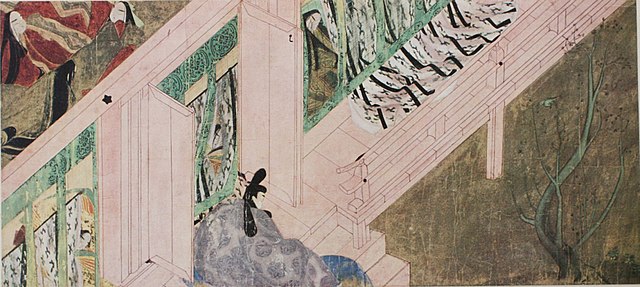
P.S. Featured photo is a scene (AZUMA YA: East Wing) from the Illustrated scroll of the Tale of Genji (written by MURASAKI SHIKIBU (11th cent.) Courtesy of Wikipedia

Summer Nights: Poem Number 36

For those who are stuck in the dead of winter (or for readers in the Southern Hemisphere), I thought a Summer-type poem would be appropriate:

JapaneseRomanizationTranslation
夏の夜はNatsu no yo waThe short summer nights
まだよながらMada yoi nagarawhile it seems yet early evening,
明けぬるをAkenuru woit has already dawned, but
雲のいくにKumo no izuku niwhere in the clouds, then,
月やどるらTsuki yadorurandoes the moon lodge, I wonder?
Translation by Dr Joshua Mostow

The author of the poem, Kiyohara no Fukayabu (清原深養父, dates unknown), was a relatively well-known poet in his time, but it also turns out that he is the grandfather of Motosuke (poem 42) and great-grandfather of the famous author, Sei Shonagon (poem 62), so it seems poetry and literature run in the family. 😁

Anyhow, as Mostow explains, this poem was highly regarded at the time, but for readers in the 21st century, it has so many hidden cultural allusions, that it’s hard to see the significance at first.

As he summarizes, summer nights are short, and Fukayabu is saying that he is surprised that the moon is already dawning in the western sky. Since it’s cloudy, he asks where the moon might be lodging since it’s hard to imagine that it is already setting. It’s a clever, light-hearted poem exploring brief summer, moonlit nights in other words.

Interestingly, Mostow points out that despite the praise on this poem from antiquity, Fukayabu was not included among the Thirty Six Immortals of Poetry and his reputation suffered a major blow that didn’t recover until it was included in later anthologies.

It’s pretty amazing to think how a poem can really make or break a person in that era. We saw this in reverse for poem 92.

Washed Away: Poem Number 32

JapaneseRomanizationTranslation
がわYamagawa niAh, the weir
風のかけたるKaze no kaketaruthat the wind has flung
しがらみはShigarami waacross the mountain stream
流れもあNagaremo aenuis the autumn foliage that
cannot flow on,
もみなりけりMomoji narikerieven though it would.
Translation by Dr Joshua Mostow

Harumichi no Tsuraki (春道列樹, ? – 920) was a relatively unknown, lower-ranking member of the Court who graduated from the Imperial university in 910 and had only a few poems published in the official anthologies. So, it’s somewhat unusual to see such a poem like this in the Hyakunin Isshu anthology, but as Mostow points out, commentators in the past heavily praised the line “the weir1 that the wind has flung” (kaze no kaketaru shigarami wa). Fujiwara no Teika, the composer of the Hyakunin Isshu, must have been similarly impressed.

Anyhow, nice to see someone get their moment in the sun (let alone poetic history).

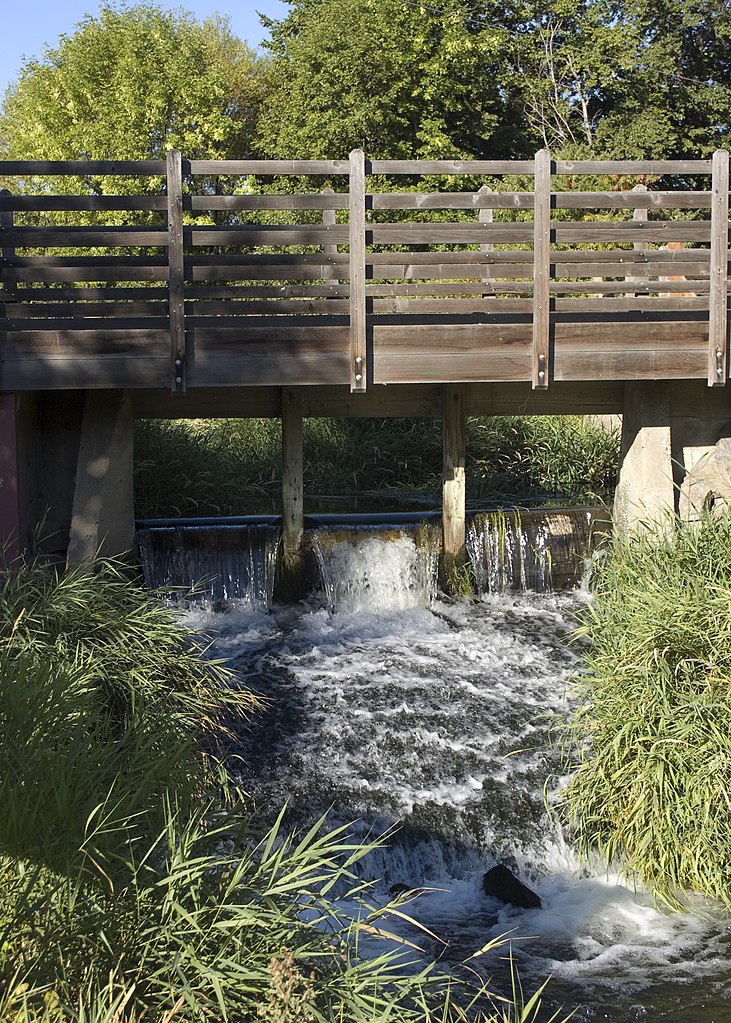
1 A weir, by the way, is a barrier across the length river or stream designed to adjust the flow of a stream. I had to look this up. 😅 Featured photo is a weir at the Thorp Gristmill in Thorp, WA. A. Balet, CC BY 3.0, via Wikimedia Commons

Have We Met? Poem Number 27

This poem may look straightforward, but it turns out that this is a technical masterpiece:

JapaneseRomanizationTranslation
みかの原Mika no haraLike Izumi River
わきてながるるWakite nagaruruthat wells up and flows,
泉川いずみがわIzumi-gawadividing the Moors of Urns
いつ見きとてかItsu mi kitote kawhen did I see her, I wonder,
こいしかるらKoishi karuranthat I should yearn for her so?
Translation by Dr Joshua Mostow

This poem was composed by Chūnagon Kanesuke (中納言兼輔, 877 – 933), or “Middle Counselor Kanésuké”. He is also known as Fujiwara no Kanésuké. He was the cousin of Sadataka (poem 25), and the great-grandfather of Lady Murasaki (poem 57). Lady Murasaki even used some of his poetry in her work, The Tales of Genji.

Because Kanesuke had a particularly nice residence just beside the dam of the Kamo River, he was also nicknamed the Tsutsumi (堤, “river bank”) Middle Counselor. This residence was a popular gathering place for the who’s-who of his time including Tsurayuki (poem 35) and Mitsune (poem 29). He is also listed among the Thirty-Six Immortals of Poetry as well.

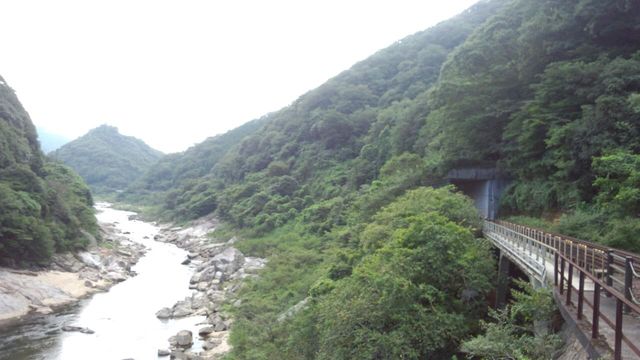
As Mostow points out, this poem is quite clever on a technical level. It uses a preface (the first three lines are a preface to the 4th), poetic place names (Izumi River is actually a real river called the Kizu-gawa 木津川 pictured above from Wikipedia), and pivot-words. The pivot word is izumi which can mean a spring (泉) which wells up, but also rhymes somewhat with the 4th line which says itsu mi as in “when did I see (her?)” (いつ見).

Interestingly though, Mostow points out that this poem may not actually be composed by Kanesuke given that it was originally listed as “anonymous” in the original anthology it came from. Also, as Mostow explains, it’s unclear from the poem whether this is a poem about lovers who met and cannot meet again, or lovers who actually haven’t met yet.

All in all, an interesting poem to examine by a famed poet of the day.

P.S. featured photo is of the Izumi River, near Kyoto, in modern times. Photo by 吉田宅浪, CC BY-SA 3.0, via Wikimedia Commons

Snowfall: Poem Number 31

Similar to the previous poem, this one deals with the moon, but I think this poem epitomizes the winter season:

JapaneseRomanizationTranslation
朝ぼらけAsaborakéSo that I thought it
有明の月とAriake no tsuki tothe light of the lingering moon
みるまでにMiru made niat dawn—
吉野の里にYoshino no sato nithe white snow that has fallen
ふれる白雪Fureru shirayukion the village of Yoshino
Translation by Dr Joshua Mostow

The author, Sakanoue no Korenori (坂上是則, dates unknown), is one of the Thirty-Six Immortals of Poetry, but otherwise nothing much is known about him.

This poem, as Professor Mostow explains, is similar to poem 29, and is part of a theme on “elegant confusion” which is a hallmark of Chinese poetry. Early poetry in Japan was still greatly indebted to Chinese poetry and many of the imagery, and idioms used in the Hyakunin Isshu anthology are not exception.

I happen to like this poem also because it has a lot of obscure, but cool Japanese poetic terms. We’ve seen ariaké discussed in poem 30. However, this poem also uses the term asaboraké (朝ぼらけ) which as we say in poem 64 means that period of time in the dawn, in either winter or autumn, when things are hazy. It’s a kind of slow, late dawn that you only find in that time of year. Compare with akatsuki (暁), which Professor Mostow explains can mean “dawn” any time of the year. Since asaboraké is used in two poems in the Hyakunin Isshu, it makes the kimari-ji for each poem particularly tricky.

The village of Yoshino that this poem refers to, is none other than the iconic village of Yoshino in Nara Prefecture.

Long Goodbyes: Poem Number 30

Hi all,

New year is here, and I guess it’s time to say “goodbye” to the old one. This poem is also happens to be about good-byes of another sort.

JapaneseRomanizationTranslation
有明のAriaké noThere is nothing so depressing
つれなくみえしTsurenaku mieshias the break of day and
別れよりWakare yorileaving you after
暁ばかりAkatsuki bakarihaving seen the heartless
うきものはなしUki mono wa nashimorning moon.
Translation by Dr Joshua Mostow

The author, Mibu no Tadamine (壬生忠岑, dates unknown), is one of the Thirty-Six Immortals of Poetry and was the father of Tadami (poem 41). He was also one of the official compilers of the official anthology, the Kokinshū, along with Ōshikōchi no Mitsune (poem 29).

By all accounts, this appears to be another famous “morning after poem”, similar to the one seen in poem 50. The term, ariake (有明) is a poetic term for the last-rising moon, in the last-half of the lunar cycle, which you can still see in the morning.1 On the other hand, as Professor Mostow points out, the fact that the moon was heartless could also imply lover who spent all night waiting to see his lover but was never received and finally went home at dawn.

Either way, the morning moon seems to carry a lot of significance for romantic types back then.

1 Similarly, akatsuki (暁) is a poetic term for daybreak.

The Hyakunin Isshu as a Rough Historical Tour

As you may have started to notice, the Hyakunin Isshu anthology provides a subtle historical overview of the classical period in Japanese history. This may have been intention on the part of Fujiwara no Teika, or just reflects the sentiment of his time. Either way, it’s an interesting tour of Japan from the 8th to 12th centuries.

The anthology begins with poems in the Nara Period, when Japanese culture, flush with cultural imports from China (e.g. Confucian ethics, Buddhism, technology, administration, poetry, etc). It was an exciting time in Japanese history. And if you look at the poems from this era, you can see that they tend to feature benevolent rulers (poem 1), bright and happy natural scenes (poems 2 and poem 4), or just often dealt with frivolous issues of love (poem 3 and poem 12) or just life in general around the capitol (poem 10).

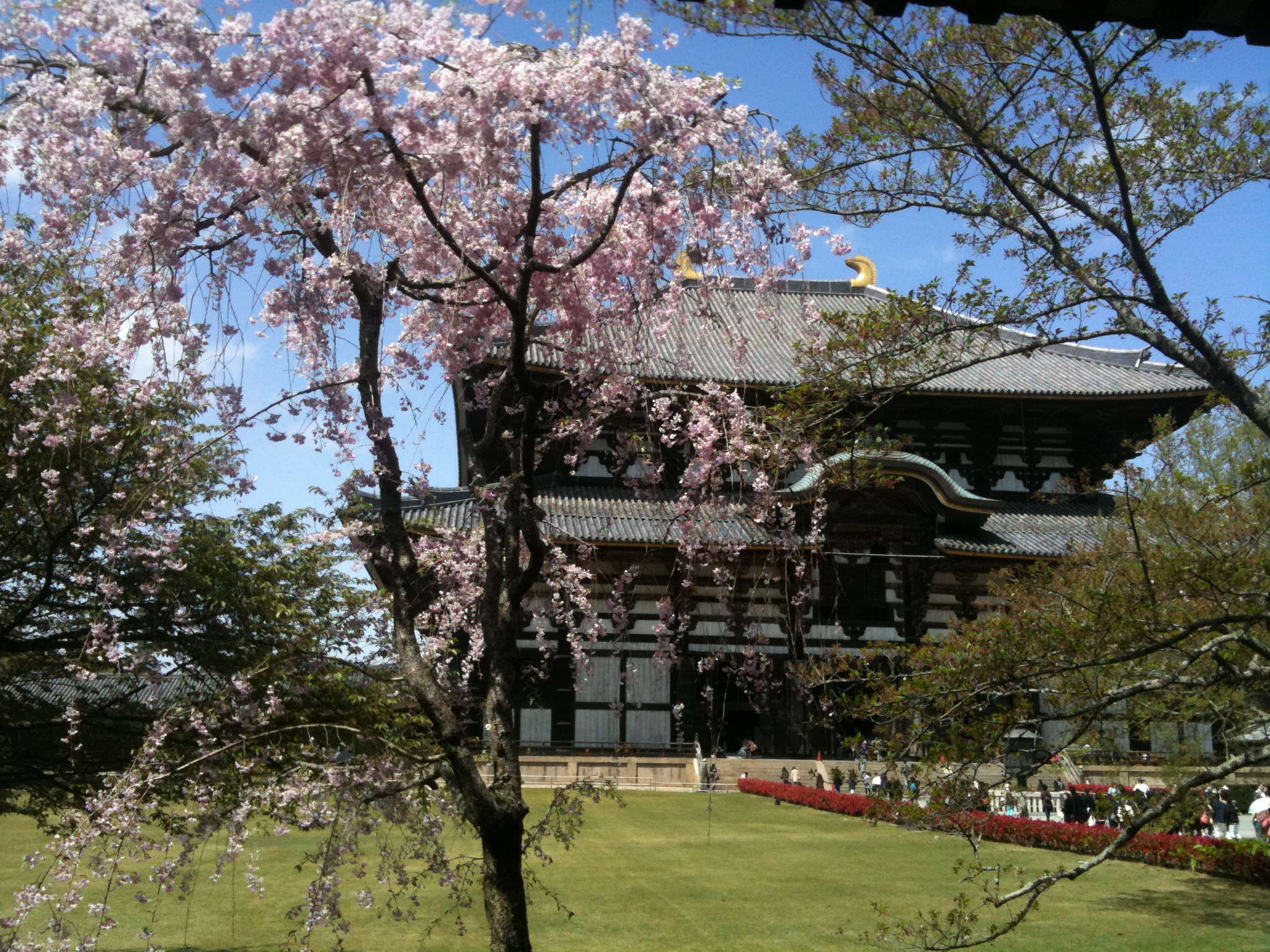
Todaiji Temple in Nara on a warm April day in 2010. Taken by author.

Even when the poems were more melancholy (poem 9, poem 11) they still reflected a more genteel time, and were probably included by Fujiwara no Teika to demonstrate the range of poetic skills of the nobility during that bygone time.

However, the Nara Period eventually gave way to the Heian Period, which was a 400-year flowering of Japanese culture that is still revered today. The transition was slow, and much remained the same generations later, but eventually things started to change:

  • Japan’s contact with China and the Asian mainland eventually stopped, and Japanese culture turned more and more inward for several centuries. Poetry and culture at this time reflected more “native” styles by and by.
  • Politically, the northern-branch of the Fujiwara clan gradually monopolized power around the Emperor through political marriages. In the early period, the nobility included several families who supported the family, but by the 11th century, the Fujiwara controlled every major position in government and most emperors were related to them in one way or another. This is what led in part to Sugawara no Michizan’e exile for example. You’ll notice too how many of the poets have the surname “Fujiwara” in the anthology as well, including Fujiwara no Teika the compiler himself.
  • Toward the end, conflict began to arise again and again, culminating in the famous Genpei War and the fall of the Heike clan. The new samurai class (originally bodyguards to the noble families) clashed with one another for control of Japan and ultimately swept aside the nobility, while still trying to imitate the courtly culture.

As such, if you look at poems toward the very end of the Hyakunin Isshu, they tend to be more dismal in tone. Starting with poem 77 onward, you get an increasing melancholy tone to many poems, culminating at the end when poets often speak of longing for the past (poem 100), complaints about life (poem 83, poem 99) or just expressions of people suffering (poem 95).

Indeed, by this time the flowering culture that started in the Nara Period and flourished in the Heian Period had declined, and war and politics had taken their toll on society. The final few poems begin in the militaristic Kamakura Period, and reflect both nostalgia and unease by people of that era. Small wonder that Fujiwara no Teika, who took tonsure after Emperor Go-Daigo was exiled, decided to compile the Hyakunin Isshu the way he did.