Thanks, But No Thanks: Poem Number 67

This clever little poem shows the battle of the sexes as it existed 1,000 years ago:

JapaneseRomanizationTranslation
春の夜のHaru no yo noWith your arm as my pillow
夢ばかりなるYume bakari narufor no more than a brief
たまくらにTamakura nispring night’s dream,
なく立たKainaku tatanhow I would regret my name
名こそしけれNa koso oshikerecoming, pointlessly, to ‘arm!
Translation by Dr Joshua Mostow

The author, known as Suō no Naishi (周防内侍, dates unknown), the “Suō Handmaid”, was so named because her father was governor Suō Province. As mentioned before, this was a common method used by female authors (cf. poem 65), so unfortunately, their real names are rarely known. This is another poem that speaks to the importance of a woman’s reputation in the ancient Court of Japan, just like poem 65. However, this one is much more playful and shows a lot of wit.

According to the back-story, there was a social gathering at the Nijō-In (二条院), the woman’s quarters at the palace. The woman there were relaxing, and the author of this poem said, “I wish I had a pillow”. At that moment, one Fujiwara no Tada’ie happen to walk by, and hearing this stuck his arm through the bamboo screen (御簾, misu) and said, “Here, takes this as your pillow!”.

In reply, the author composed this poem. As Professor Mostow points out, the word for arm here (kaina) is a pun for pointless (kainaku).

People flirted pretty clever back in those days. 😏

P.S. Featured photo by Christian Kadluba, CC BY-SA 2.0, via Wikimedia Commons
The Cold Morning: Poem Number 52

For our final poem for Valentine’s Day, I thought this was another good choice:

JapaneseRomanizationTranslation
明けぬればAkenurebaBecause it has dawned,
暮るるものとはKururu mono to wait will become night again—
知りながらShiri nagarathis I know, and yet,
うらめしきNao urameshikiah, how hateful it is—
あさぼらけかなAsaborake kanathe first cold light of morning!
Translation by Dr Joshua Mostow

The author of the poem, Fujiwara no Michinobu Ason (藤原道信朝臣, 972-994), was the adopted son of the powerful Fujiwara no Kane’ie, husband of the mother of Michitsuna (poem 53) and subject of the Gossamer Years. His birth mother was the daughter of Fujiwara no Koretada (poem 45). Michinobu for his part, benefitted from his adoptive father’s influence, and rose to the Court rank of 4th-upper, and a position as part of the Imperial Guard (sakon no chūjō, 左近中将).

However, Michinobu seemed more interested in Waka poetry than in politics. He was close with Fujiwara no Sanekata (poem 51) and Fujiwara no Kinto (poem 55), and would often gather with them for poetry sessions. Further, Michinobu had a secret relationship with one of the court ladies under Emperor Kazan, named Enshi Jo-ō (婉子女王), but eventually he lost her to a political marriage with the powerful Fujiwara no Sanesuke. Sadly, Michinobu later died from due smallpox, which took his life at the age of 23.

This is another classic “Morning After” poem, which we’ve featured here, here and here.

Lord Michinobu dreads the rising sun because it means he has to sneak back to his own residence, away from his lover. Judging by his reaction, it must have been a night well-spent together. 😏

Happy Valentine’s Day!

Summer Nights: Poem Number 36

For those who are stuck in the dead of winter (or for readers in the Southern Hemisphere), I thought a Summer-type poem would be appropriate:

JapaneseRomanizationTranslation
夏の夜はNatsu no yo waThe short summer nights
まだよながらMada yoi nagarawhile it seems yet early evening,
明けぬるをAkenuru woit has already dawned, but
雲のいくにKumo no izuku niwhere in the clouds, then,
月やどるらTsuki yadorurandoes the moon lodge, I wonder?
Translation by Dr Joshua Mostow

The author of the poem, Kiyohara no Fukayabu (清原深養父, dates unknown), was a relatively well-known poet in his time, but it also turns out that he is the grandfather of Motosuke (poem 42) and great-grandfather of the famous author, Sei Shonagon (poem 62), so it seems poetry and literature run in the family. 😁

Anyhow, as Mostow explains, this poem was highly regarded at the time, but for readers in the 21st century, it has so many hidden cultural allusions, that it’s hard to see the significance at first.

As he summarizes, summer nights are short, and Fukayabu is saying that he is surprised that the moon is already dawning in the western sky. Since it’s cloudy, he asks where the moon might be lodging since it’s hard to imagine that it is already setting. It’s a clever, light-hearted poem exploring brief summer, moonlit nights in other words.

Interestingly, Mostow points out that despite the praise on this poem from antiquity, Fukayabu was not included among the Thirty Six Immortals of Poetry and his reputation suffered a major blow that didn’t recover until it was included in later anthologies.

It’s pretty amazing to think how a poem can really make or break a person in that era. We saw this in reverse for poem 92.

Washed Away: Poem Number 32

JapaneseRomanizationTranslation
がわYamagawa niAh, the weir
風のかけたるKaze no kaketaruthat the wind has flung
しがらみはShigarami waacross the mountain stream
流れもあNagaremo aenuis the autumn foliage that
cannot flow on,
もみなりけりMomoji narikerieven though it would.
Translation by Dr Joshua Mostow

Harumichi no Tsuraki (春道列樹, ? – 920) was a relatively unknown, lower-ranking member of the Court who graduated from the Imperial university in 910 and had only a few poems published in the official anthologies. So, it’s somewhat unusual to see such a poem like this in the Hyakunin Isshu anthology, but as Mostow points out, commentators in the past heavily praised the line “the weir1 that the wind has flung” (kaze no kaketaru shigarami wa). Fujiwara no Teika, the composer of the Hyakunin Isshu, must have been similarly impressed.

Anyhow, nice to see someone get their moment in the sun (let alone poetic history).

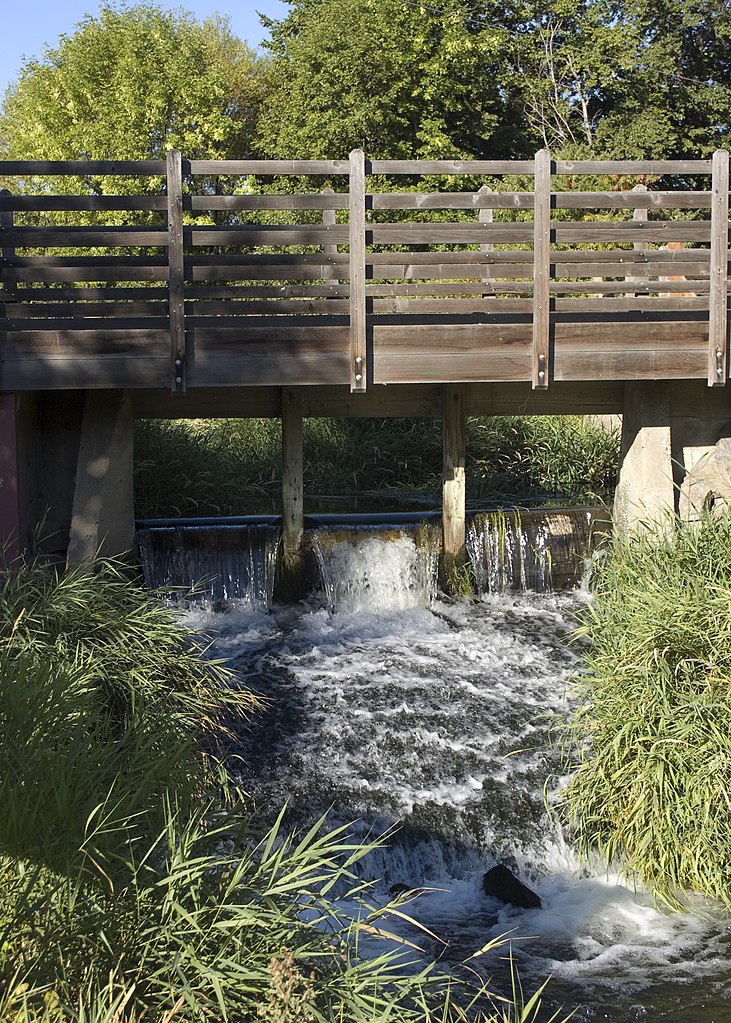
1 A weir, by the way, is a barrier across the length river or stream designed to adjust the flow of a stream. I had to look this up. 😅 Featured photo is a weir at the Thorp Gristmill in Thorp, WA. A. Balet, CC BY 3.0, via Wikimedia Commons

Snowfall: Poem Number 31

Similar to the previous poem, this one deals with the moon, but I think this poem epitomizes the winter season:

JapaneseRomanizationTranslation
朝ぼらけAsaborakéSo that I thought it
有明の月とAriake no tsuki tothe light of the lingering moon
みるまでにMiru made niat dawn—
吉野の里にYoshino no sato nithe white snow that has fallen
ふれる白雪Fureru shirayukion the village of Yoshino
Translation by Dr Joshua Mostow

The author, Sakanoue no Korenori (坂上是則, dates unknown), is one of the Thirty-Six Immortals of Poetry, but otherwise nothing much is known about him.

This poem, as Professor Mostow explains, is similar to poem 29, and is part of a theme on “elegant confusion” which is a hallmark of Chinese poetry. Early poetry in Japan was still greatly indebted to Chinese poetry and many of the imagery, and idioms used in the Hyakunin Isshu anthology are not exception.

I happen to like this poem also because it has a lot of obscure, but cool Japanese poetic terms. We’ve seen ariaké discussed in poem 30. However, this poem also uses the term asaboraké (朝ぼらけ) which as we say in poem 64 means that period of time in the dawn, in either winter or autumn, when things are hazy. It’s a kind of slow, late dawn that you only find in that time of year. Compare with akatsuki (暁), which Professor Mostow explains can mean “dawn” any time of the year. Since asaboraké is used in two poems in the Hyakunin Isshu, it makes the kimari-ji for each poem particularly tricky.

The village of Yoshino that this poem refers to, is none other than the iconic village of Yoshino in Nara Prefecture.

Rejection: Poem Number 21

No one likes getting rejected. Even back in classical Japan:

JapaneseRomanzationTranslation
今来Ima kon toIt was only because
you said
しばかりにIishi bakari niyou would come right away
長月のNagatsuki nothat I have waited
ありあけの月をAriake no tsuki wothese long months,
till even
待ちいでつるかなMachi idetsuru ka nathe wan morning moon
has come out.
Translation by Dr Joshua Mostow

This poem was composed not by a woman as one would expect, but by a Buddhist priest named Sosei Hōshi (素性法師, dates unknown), or “Dharma Master Sosei”. He was the son of Henjō (poem 12, あまつ) before Henjō took tonsure. In fact, when Henjō did become a monk, Sosei was obligated to do the same.

Nonetheless, Sosei kept busy. He worked in the Imperial Court and was a priest, and a prolific and popular poet. He kept a salon of fellow poets including Ki no Tsurayuki (poem 35, ひさ) and Oshikochi no Mitsune (poem 29, こころあ). Both men were tasked with compiling the imperial anthology, the Kokin Wakashū, and Mostow points out Sosei is heavily represented in there. Coincidence? My new book suggests not. To his credit, Sosei is also one of the Thirty-Six Immortals of Poetry.

As we’ve seen with other poems from this earlier era, it was common to write about poetry themes, and to write from a role outside one’s own. So, for a monastic to be writing from the perspective of a lonely woman wasn’t unusual.

This poem is interesting because it seems to happen in one night, or a long period of time. It is a mystery. Mostow explains the contradiction in this poem between the “one long night” and “months” as being an issue of interpretation. Though most people assumed it was a long Autumn night, Fujiwara no Teika (poem 97, こぬ), the compiler of the Hyakunin Isshu anthology, felt it was more like a long passage of time.

P.S. Photo above is a Japanese calendar we have a home. More on that in a related post in my other blog.

An Offering To The Gods: Poem Number 24

Hi folks, after a long break due to work obligations, I am back and happy to post this excellent poem by my favorite author in the Hyakunin Isshu:

JapaneseRomanizationTranslation
このたびはKono tabi waThis time around
ぬさもとりあNusa motori aezuI couldn’t even bring the
sacred streamers
手向山Tamuke yama—Offering Hill—
もみのにしきMomiji no nishikibut if this brocade of leaves
神のまにまにKami no mani maniis to the gods’ liking….
Translation by Dr Joshua Mostow

The poem is signed as Kanké (菅家, 845 – 903), which is the Sinified (Chinese) way to read the Sugawara Family name (lit. “House of Sugawara”). You see similar names used for the Taira Clan (e.g. Heike 平家) and Minamoto Clan (e.g. Genji 源氏) in later times. Anyhow, the author is none other than the famous poet/scholar Sugawara no Michizane who in later generations was deified as a sort of god of learning named “Tenjin” after he was wrongfully exiled through political intrigue.

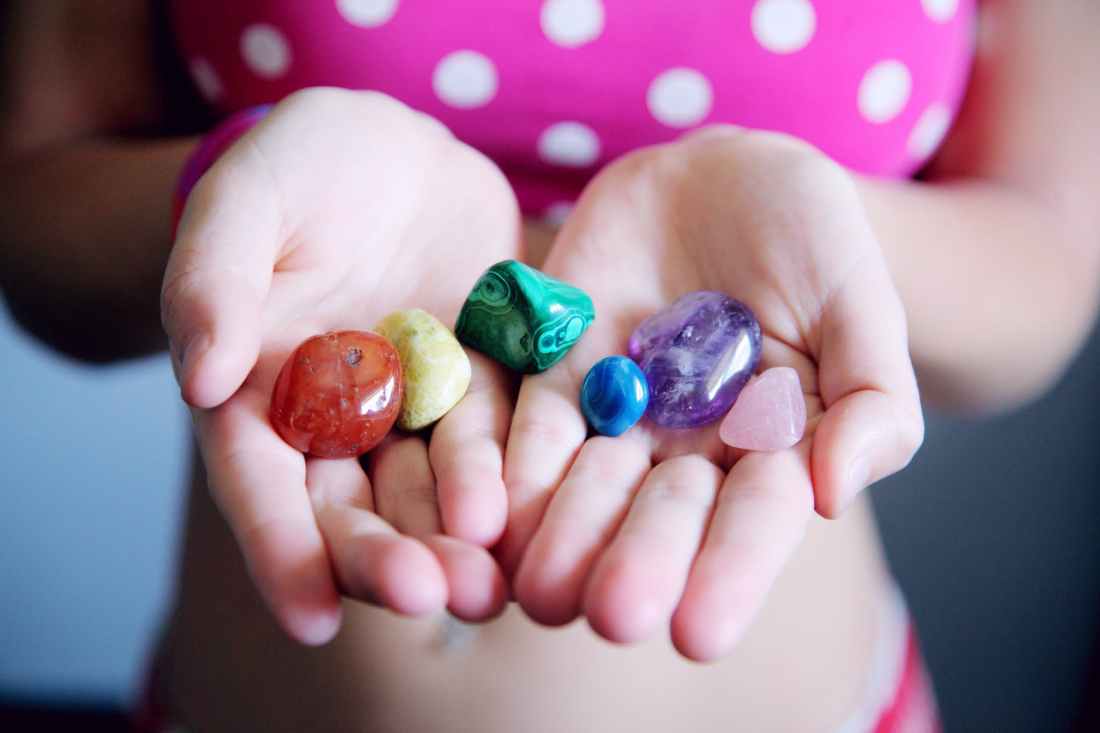
The term nusa (幣) means a special wand used in Shinto religious ceremonies. The photo above is an example of a nusa, more formally a gohei (御幣) “wand” used in Shinto religious ceremonies, with the paper streamers used for purification (photo by nnh, Public domain, via Wikimedia Commons). At this time in history, according to the Hyakunin Isshu Daijiten, small nusa were often made from thin strips of paper and cloth and offered to the gods for a safe journey.

The poem was composed by Michizane after going on an excursion with his patron, Emperor Uda. Compare with another outing made years later by (then retired) Emperor Uda later in poem 26. In this case, Michizane had little time to prepare, and couldn’t make a proper offering to the gods for a safe trip. However, admiring the beautiful autumn scene on Mount Tamuke, he hopes that this will make a suitable offering instead. Sadly Michizane would be disgraced and exiled only a short time later.

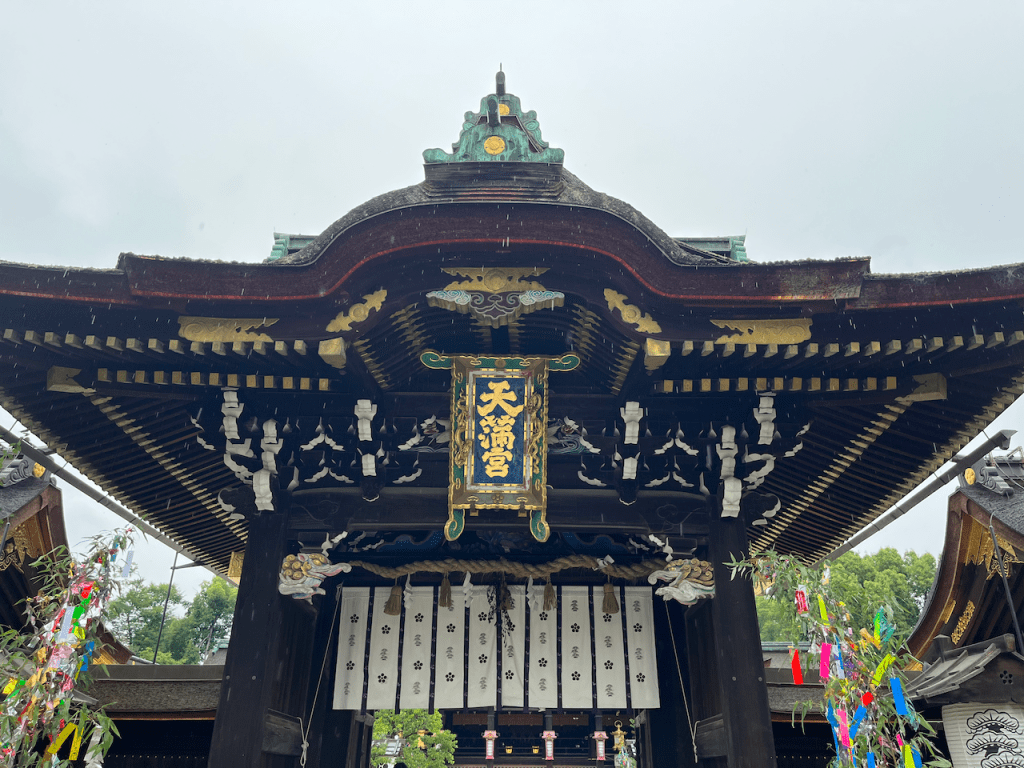
My interest in Sugawara no Michizane mostly comes because I admire him as a fellow scholar. I visited one of his shrines in Tokyo a couple times over the years, and usually try to pay respects. In July 2023, I visited the home shrine of Kitano Tenmangu as well.

Kitano Tenmangu shrine in Kyoto, Japan. Taken in July 2023.

The real life Michizane was no god of learning, but his real-life contributions to poetry and Chinese literature in Japan helped the culture flourish at that time, and earned his place as a trusted adviser to the Emperor, despite his more humble background. This also helped explain his status centuries later as a god of learning. Every year in Japan in April, students pay respects hoping that they can pass entrance exams, and it’s nice to see his legacy carry on so many years later.

Solitude: Poem Number 70

My favorite poem related to fall in the Hyakunin Isshu is this one:

JapaneseRomanizationTranslation
さびしさにSabishisa niWhen, from loneliness
宿を立ちいでてYado wo tachi ideteI stand up and leave my hut
ながむればNagamurebaand look distractedly about:
こも同じIzuko mo onajieverywhere it is the same
秋のゆうぐれAki no yugureevening in Autumn.
Translation by Dr Joshua Mostow

The author of this poem is a monk named Ryōzen Hōshi (良暹法師, dates unknown) or “Dharma Master Ryōzen”, who supposedly composed it while doing austerities in a remote hut outside the capitol. Unfortunately, we have little about Ryōzen Hōshi’s personal history, even in my new book. He had some infamy over a poem he composed during a poetry contest, by inadvertently copying one in the Kokin Wakashu, causing him to be a laughing stock. However, other scant records show he was still respected by the nobility overall.

The notion of “Autumn sunset” appears a lot in Japanese poetry, but apparently its meaning differs depending on the time and place. Ryōzen Hoshi gives a more melancholy, almost Buddhist, tone implying that the world around him is declining into winter and possibly, metaphorically declining in a general Buddhist sense. However, Sei Shonagon (poem 62) also wrote about Autumn Sunset in her Pillow Book, but used it to describe crows and wild-geese flying

An Autumn sunset means a lot of different things to a lot of different people, but it still is significant one way or another. For me, I tend to like Ryōzen’s imagery the best, and it’s the one I imagine whenever I read this poem.

Scattered Gems: Poem Number 37

Another iconic poem about Autumn in the Hyakunin Isshu:

JapaneseRomanizationTranslation
白露をShiratsuyu niIn the autumn fields
風のふきしくKaze no fukishikuwhere the wind blows repeatedly
秋の野はAki no no waon the white dewdrops,
つらぬきとめぬTsuranuki tomenuthe gems, not strung together,
玉ぞちりけるTama zo chiri kerudo scatter about indeed.
Translation by Dr Joshua Mostow

The author, Fun’ya no Asayasu (文屋朝康, dates unknown), is the son of Fun’ya no Yasuhidé (poem 22), but is otherwise unknown. My new book states that, like his father, he achieved only middling rank (junior sixth rank) in the Imperial bureaucracy, but unlike his father, he did not achieve much fame through poetry either. There have been persistent rumors, though, across the ages that some of Yasuhidé’s poems were in fact composed by his son, Asayasu. However, evidence is sketchy.

The poem is something of an oddity in the Hyakunin Isshu because, as Mostow explains, it seems to be a relatively common poem. It uses a popular motif of dew as gems, comparing them to pearls or jewels, and you can find similar imagery in other poems of the time. So, why did the compiler of the Hyakunin Isshu, Fujiwara no Teika (poem 97), select this poem for this anthology?

Mostow points out that this poem is featured in other anthologies as well, so for some unknown reason, it was highly prized, even though the significance is lost now.

Still, there is something beautiful about the idea of gems scattering in the Autumn wind in particular and perhaps that is what sets this poem apart from others from the same era.

Lonely In Autumn: Poem Number 47

This is a poem a like a lot from the Hyakunin Isshu that vividly expresses the mood of Autumn:

JapaneseRomanizationTranslation
むぐらYaemuguraTo the lonely house
しげれる宿のShigereru yado nowhere the weeds, eight
layers deep,
さびしきにSabishiki nihave grown rank,
人こそ見えねHito koso mienenot a soul can be seen—
秋は来にけりAki wa ki ni keribut autumn, at least,
has come.
Translation by Dr Joshua Mostow

The poet, Egyō Hōshi (恵慶法師, dates unknown) also known by his title “Dharma Master Egyō”, was a Buddhist monk active during the last half of the tenth century. He was the bishop (kōsō 高僧) of a major temple in old Harima Province and often gave lectures. As Professor Mostow explains, he was closely associated with other poets who frequently met at the Kawara Villa on the banks of the Kamo River. According to Mostow, these included Yoshinobu (poem 49) and Motosuke (poem 42) among others. He was also friends with Kanemori (poem 40).

The poem was given as an entry to a poetry contest about the coming of autumn to a ‘dilapidated house’ according to Mostow, but he points out that the “house” in question was probably referring to the Kawara Villa, itself previously owned generations earlier by Minamoto no Toru (poem 14). The juxtaposition between people (who don’t visit) and autumn (which does) makes this poem highly prized.

Given that Egyō is a Buddhist monk, and well-versed in the Buddhist teachings of the effervescence of life, it seems reasonable that he used the house and the seasons to give the poem a bit of a Buddhist theme. Spring gives way to Summer, Summer to Fall, Fall to Winter and so on. In the same way, things rise and fall, and Egyō perhaps wanted to remind his audience that “Autumn” comes sooner or later.