Spring or Fall: Which is Better?

As fall is approaching, I wanted to share an interesting anecdote provided by my book on the Manyoshu. It seems that throughout Japanese antiquity, poets frequently debated which is better: spring or fall.

The first example comes from Princess Nukata in the 7th century, whom we discussed here and here, she wrote a lengthy poem (a chōka poem, not the usual tanka poem) in the Manyoshu (poem 16). She discusses the pros and cons of spring and of fall:

Original Manyogana1JapaneseRomanizationRough Translation2
冬木成 春去來者 冬ごもり 春さり來れば Fuyu gomori haru sari kurebaWhen winter passes and spring comes
不喧有之 鳥毛来鳴奴鳴かざりし鳥も來鳴きぬNakazarishi tori mo nakinuBirds that didn’t sing before, now come and sing
不開有之 花毛佐家礼抒 山乎茂咲かざりし 花も咲けれど 山を茂みSakazarishi hana mo sakeredo yama wo shigemiFlowers that didn’t bloom before now bloom, but because the mountains grass is so thick
入而毛不取 草深 執手母不見入りても取らず 草深み 取り手も見ずIrite mo torazu kusabukami torite me mizuOne cannot go and pick flowers, let alone see them.
秋山乃 木葉乎見而者 秋山の 木の葉を見ては Aki yama no ko no ba wo mite waWhen you look at the leaves in the mountains during fall,
黄葉乎婆 取而曾思努布黄葉をば 取りてそしのふMomiji wo ba torite soshi no fucollecting the yellow leaves is especially prized.
青乎者 置而曾歎久青きをば 置きてそ歎くAoki wo ba okite so nagekuLeaving the green leaves as they are is regrettable.
曾許之恨之 秋山吾者そこし恨めし 秋山われはSokoshi urameshi akiyama ware waIn spite of that, autumn in the mountains is spectacular…
a – I am heavily indebted to this site for both the original text. Translation is based in part on that site, but also my Manyoshu book, but probably lots of mistakes. Translating a five-line poem in archaic Japanese is hard enough… 😅

Speaking of the Manyoshu, its compiler Otomo no Yakamochi (poem 6 of the Hyakunin Isshu, かさ) left us some very nice poetry about spring:

Original Manyogana1JapaneseRomanizationRough Translation2
春苑春の苑Haru no sonoBeneath
紅尓保布紅にほふKurenai ni hofuthe shining crimson
桃花桃の花Momo no hanaorchard of
下照道尓下照る道にShita deru michi nipeach blossoms
出立オ嬬出で立つ少女Idetatsu otomea young maiden lingers.
Poem 4139, book 19

and about fall:

Original Manyogana1JapaneseRomanizationRough Translation2
秋去者秋さらばAki sarabaWhen fall comes
見乍思跡見つつ思Mitsutsu shinoe tothink fondly of those
妹之殖之妹が植Imo ga ue shipink blossoms
屋前乃石竹やどのなでしこYado no nadeshikoof days gone by
開家流香聞咲きにけるかもSaki ni keru kamoand remember me.
Poem 464, book 3

Otomo no Yakamochi wrote both of these poems about his beloved wife, but the second was composed shortly after her parting. The word nadeshiko has special meaning in Japan and has a very feminine, demure3 meaning.

Returning to the debate between spring and fall, Ki no Tsurayuki (poem 35 of the Hyakunin Isshu, ひとは) took up the same topic centuries later. This is poem 509 from an imperial anthology, the Shuishu :

JapaneseRomanizationRough Translation2
春秋にHaru aki niSpring or Fall?
おもみたれてOmoi mitareteMy thoughts are a mess,
わきかねつWaki kanetsuand I cannot decide.
時につけつつToki ni tsuketsutsuThe more time passes,
うつるこころUtsuru kokoro wathe more my heart shifts back and forth.
1 This is a rough translation, all mistakes are my own.

The debate was even cited in the famous 12th century novel Tales of Genji written by Lady Murasaki (poem 57 of the Hyakunin Isshu, め):

春秋の争ひに、昔より秋に心寄する人は数まさりけるを、名立たる春の御前の花園に心寄せし人びと、また引きかへし移ろふけしき、世のありさまに似たり。

“Since antiquity, in the debate about spring versus fall, many people lean toward fall, and yet some very noteworthy people who view the Imperial gardens in spring may yet change their mind, as is the way of the world.”

Princess Nukata all the way back in the Manyoshu seemed to imply that autumn was preferable, and it seems that most of the aristocracy shared this view. In fact if we divide up the poems of the Hyakunin Isshu by season, there are more fall poems than spring:

Spring Poems, first verse listedFall Poems, first verse listed
Hana no iro (poem 9)
Kimi ga tame haru (poem 15)
Hito wa isa (poem 35)
Inishie no (poem 61)
Morotomo ni (poem 66)
Haru no yo no (poem 67)
Takasago no (poem 73)
Hana sasou (poem 96)
Aki no ta no (poem 1)
Ashibiki no (poem 3)
Okuyama ni (poem 5)
Waga io wa (poem 8)
Chihayaburu (poem 17)
Ima kon to (poem 21)
Fuku kara ni (poem 22)
Tsuki mireba (poem 23)
Kono tabi wa (poem 24)
Ogurayama (poem 26)
Kokoroate ni (poem 29)
Yamagawa ni (poem 32)
Shiratsuyu wo (poem 37)
Yaemugura (poem 47)
Arashi fuku (poem 69)
Sabishisa ni (poem 70)
Yū sareba (poem 71)
Akikaze ni (poem 79)
Yo no naka yo (poem 83)
Nageke tote (poem 86)
Murasame no (poem 87)
Kirigirisu (poem 91)
Miyoshino no (poem 94)
Note: summer only has 4 poems, winter has 9 (same as spring).

But what do you think? Are you Team Spring, or Team Fall?

Edit: added Hyakunin Isshu poetry chart.

1 If you’re wondering why I post Manyogana for some poems, but not others, it depends on the era. The Manyoshu is the oldest anthology by far, and at that time, there was a brief writing system that took Chinese characters, but used them in a phonetic way for Japanese language (a.k.a. Manyogana). By the time of Ki no Tsurayuki and Lady Murasaki, centuries later, this had been replaced with hiragana script. This blog strives to both be accurate and accessible, so I try to balance both needs.

2 These are all rough translations on my part, and likely have mistakes. Any such mistakes are entirely my own.

3 Not to be confused with the “very demure, very mindful” meme. 😛

Five Color Hyakunin Isshu Update

Hello,

If you are learning to play karuta there are plenty of resources in Japanese language, but outside of that, there’s almost nothing. This is understandable since karuta has only very recently become known outside of Japan, but it still challenging for foreign players to develop good foundations. So, although I am a casual novice myself, I try to share what I find.

One training method used in Japan, especially for children learning to play in school, is the Five Color (go-shiki, 五色) Hyakunin Isshu method. This is a way of color-coding the 100 poems of the Hyakunin Isshu into five groups of 20, based on relative difficulty to learn. I have posted about it before but didn’t have a set to try out and demonstrate.

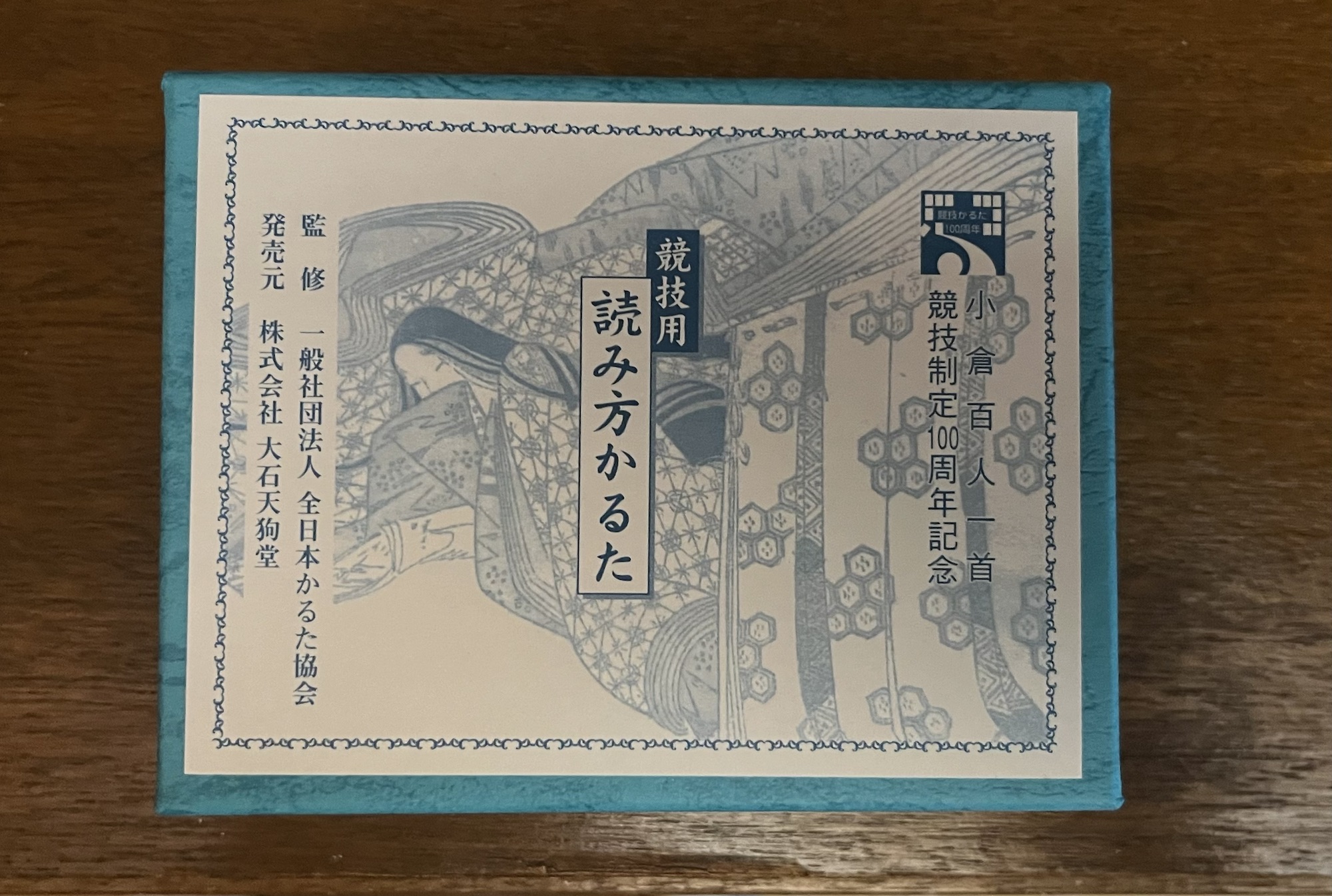
Since I was in Japan earlier this year with the family (visiting in-laws), I decided to get a boxed set for myself. They are hard to obtain outside of Japan, and I had to order directly from the Oishi Tengudo. My package soon arrived at my in-laws house,1 and later I brought them home and opened up the box.

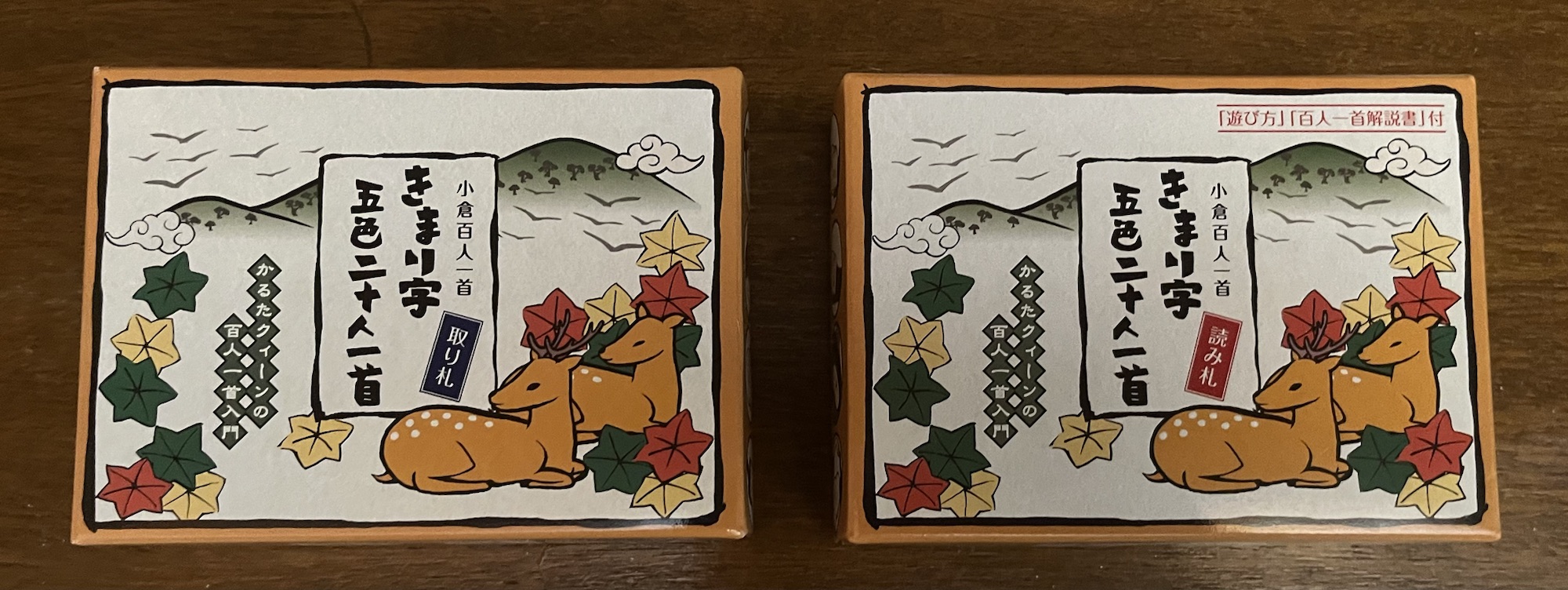
The set is very nicely put together. It comes in separate boxes for the reading cards, yomifuda, and corresponding the cards you take, torifuda.

Torifuda cards on the left, and yomifuda cards on the right.

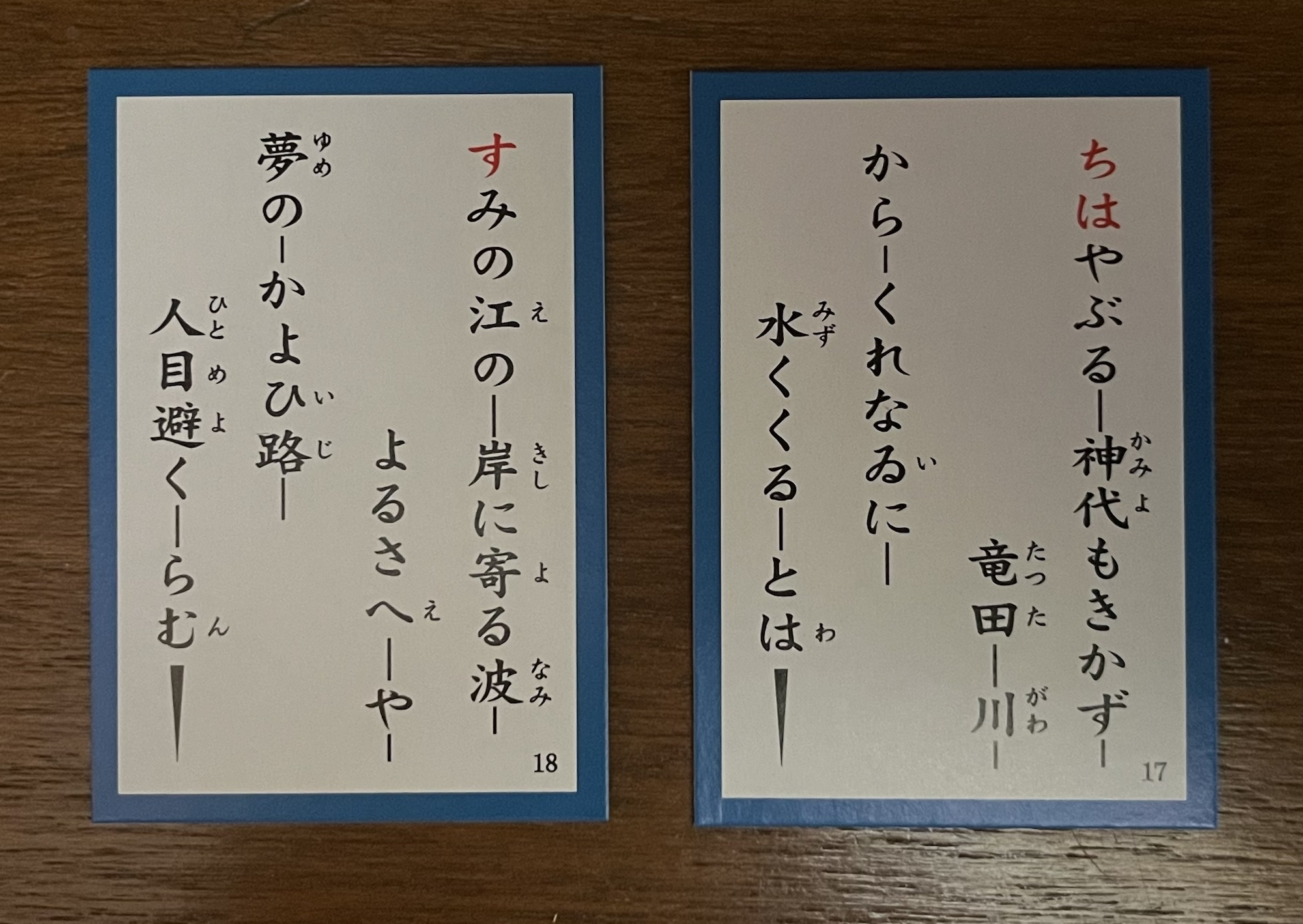
Because the Five Color Hyakunin Isshu is mostly geared for children (and not nerdy middle-aged foreigners 😅), the illustrations have a cute, cartooinish quality, and the hiragana script uses a very readable font. Notice that the card borders have colors too: yellow and red in the pictures above.

Something that surprised me was that the back of the torifuda cards, which are usually not seen during play, also show the first half of the Hyakunin Isshu poems, with the kimari-ji emphasized. This saves new players the hassle of having to go and look up what the kimari-ji are.

Poem 15 shown in yellow on the left, and poem 65 in red on the right.

Also, if you get a set like this, and you use a Karuta reader app to read only that color. Many reader apps have readings sets specifically for the Five Color Hyakunin Isshu, however, the Oishi Tengudo set divides its cards differently, and so the sets in karuta apps are not the same. You have to make your own custom sets like I did here.

So, does it work as a training method? Is it worth foreign players going to the effort to getting one of these sets?

I haven’t had a chance to field-test yet, especially with new karuta players, so I don’t know. Some foreign players online have derided the five-color method, and instead advocated other learning methods (more on those in later posts), but unfortunately I don’t have enough data to say which works. Since I have already self-learned karuta (more or less), I can’t really use myself as a test.

That said, the resources above are really nice, and since they’re geared for children, they provide a nice, gentle introduction to playing karuta. You do need to read hiragana script, but if you’re intending to play karuta, you need to know hiragana anyway. It is also one way to start with learning a smaller subnet of the 100 poems, with increasing difficulty as you move between colors.

I am eager to try this out the next time I meet with the local karuta club.

1 I also ordered a yomite card set for reading purposes. I’ve written about that in a previous post.

Kurumazaki Shrine

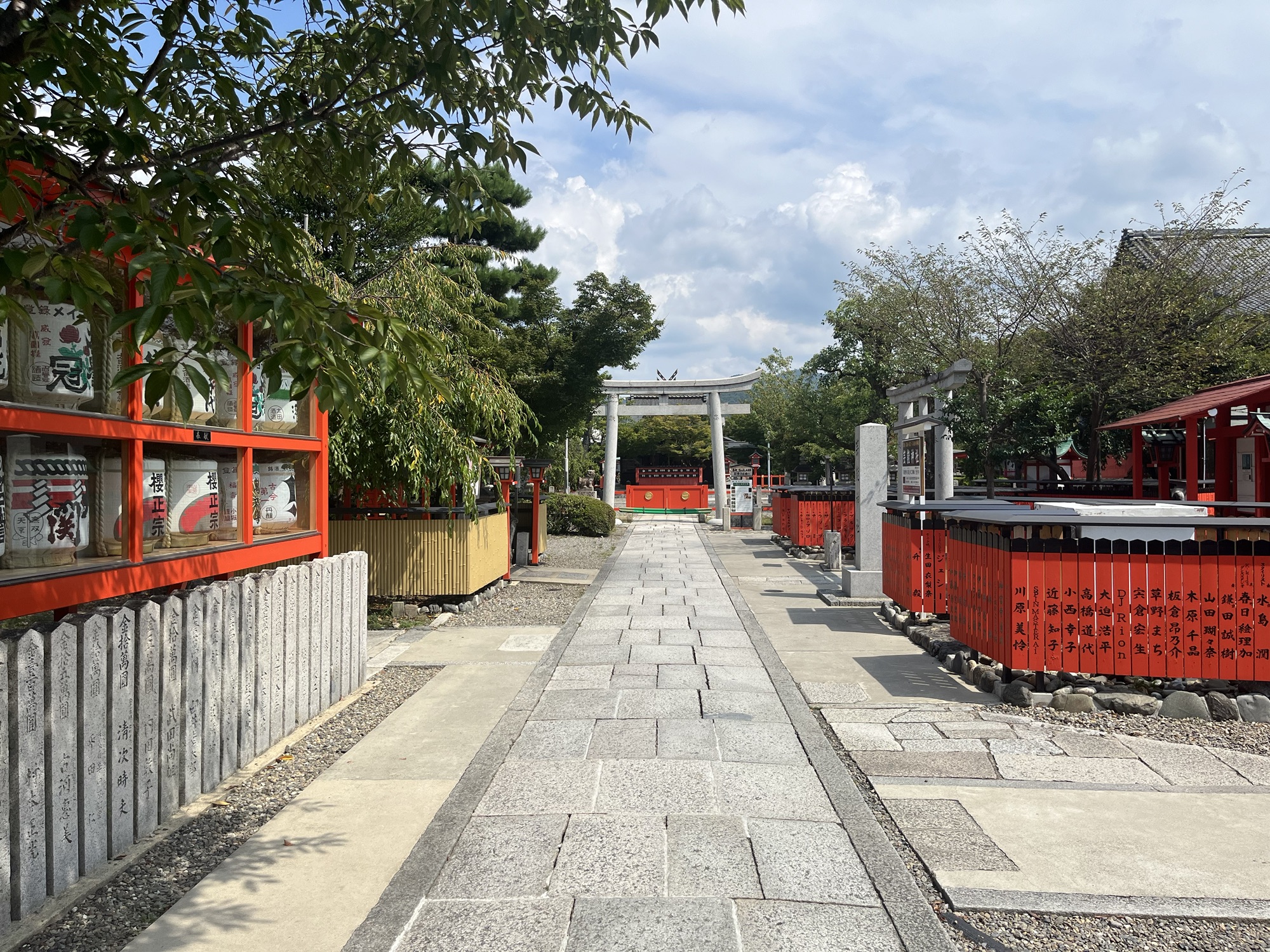
During our recent trip to Japan, we visited the city of Kyoto. I talked about this here, but I also wanted to share another site in Kyoto that relates to one of the poets of the Hyakunin Isshu : Kuramazaki Shrine. You can find their official website here, but there is no English and the site is a bit hard to navigate. The shrine itself has a very interesting layout:

The photo above is the main promenade leading to the inner sanctum (toward the back). Apparently, it’s tradition in Japanese culture to walk along the edge of the walkway, not right in the middle, so bear that in mind when visiting a shrine like this.

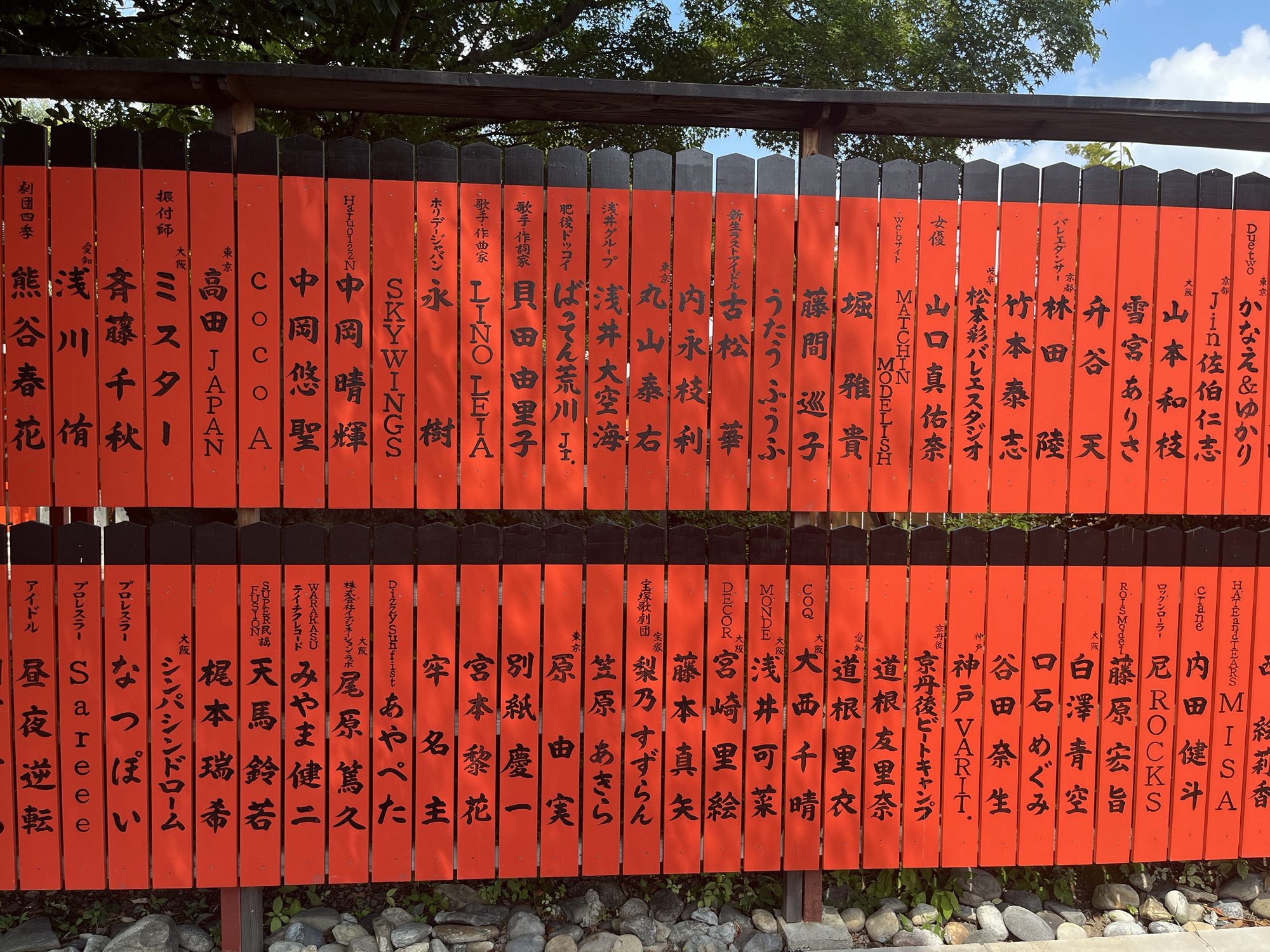
This Shinto shrine is notable for its many visits by celebrities who leave autographed red plaques.

Shinto shrines often serve particular need in society: love, business success, health, etc. In the case of Kurumazaki Shrine, the focus is on show-business, acting, theater, etc.

Why does this matter?

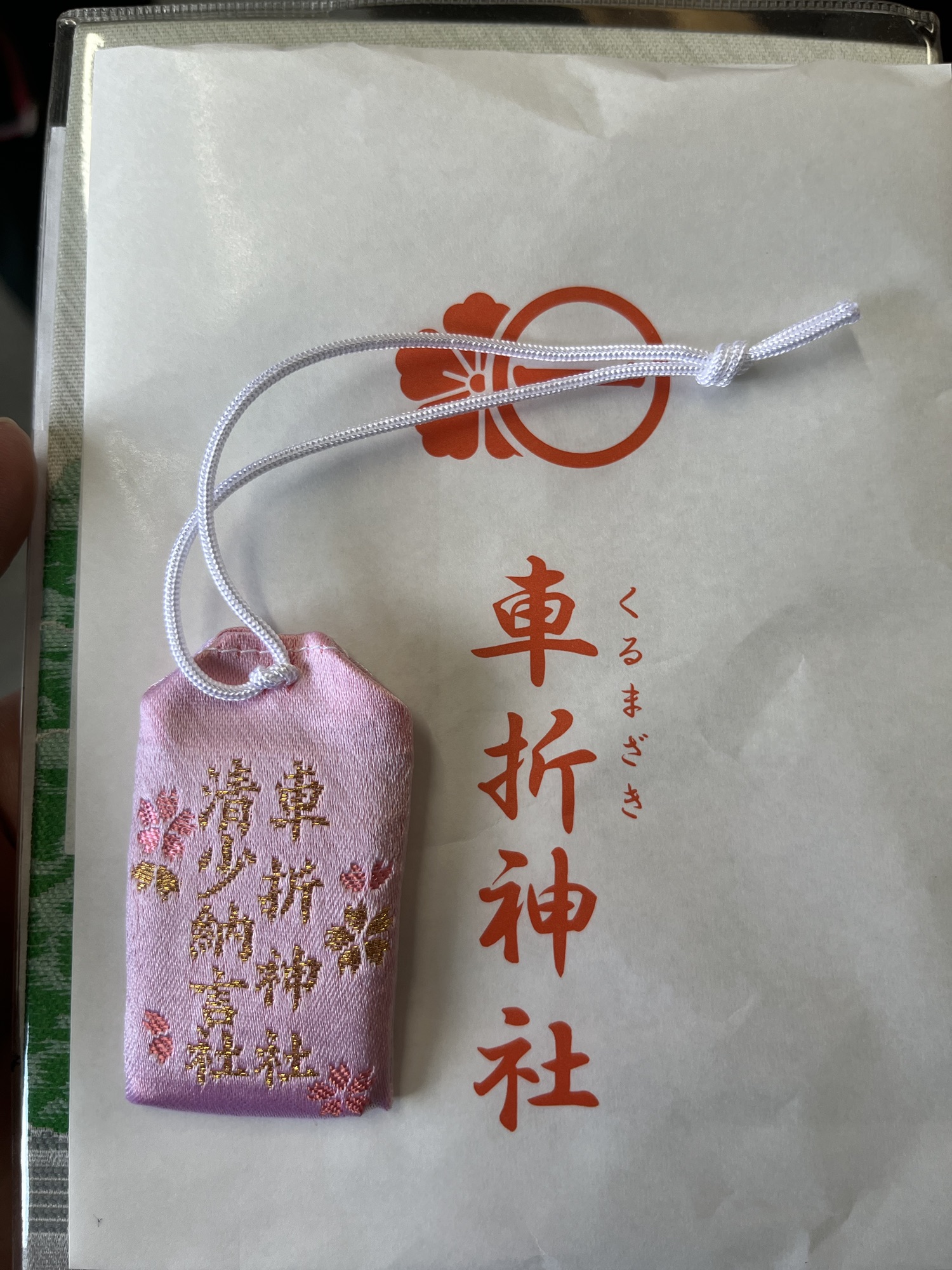
It turns out that Sei Shonagon, author of the Pillow Book and poem 62 (よを) in the Hyakunin Isshu is enshrined here. Not only that, but you can purchase a special omamori charm with her image on it. I learned about this place on social media after seeing the actress First Summer Uika, who played Sei Shonagon in the historical drama, visit the shrine.

Because this site contains many sub-shrines and side passages, it took a bit of effort to find Sei Shonagon’s shrine. It is halfway down the promenade, on the left, and looks like so:

I paid my respects to this esteemed author, and the family and I continued to explore. I found First Summer Uika’s plaque near the inner sanctum:

Incidentally, my wife is a fan of the JPop group Snow Man, and you can see one of their markers just to the left. We both got something out of this trip. 😛

As I alluded to earlier, the shrine complex is deceptively long, with many nooks and hidden shrines and side paths. The site map gives some sense of this. For reference, the Sei Shonagon shrine is number 20 on the map, and you can see there are many other sites here too. I didn’t photograph every shrine here, and most are probably obscure to readers (and obscure to myself). The common theme was both fortune, and also show business. They were some pretty neat shrines though, such as this one showing various theater masks:

At last we came to the gift shop, and I got a Sei Shonagon charm (omamori):

Later, when I got back home and realized that the charm was intended for ladies,1 I was rather embarrassed, yet I didn’t want it to go to waste, so I gave it to my daughter whose preparing for college this year. It seemed fitting, and I am happy to report that she got a good score in her SAT exam the following month, so perhaps the charm worked?

Anyhow, Kurumazaki Shrine is not something tourists usually visit because it’s a little removed from the nearby touristy area of Arashiyama, and like many Shinto shrines, it’s very Japan-centric, but it’s a cool slice-of-life of Japanese popular culture, both past and present.

As for me, I was happy to pay my respects to such a wonderful poet and author directly, someone’s whose creativity and work indirectly helped make this blog what it is today.

P.S. Later that day, I stumbled upon the place where the Hyakunin Isshu was compiled, so I managed to visit two sites in one day. Not too shabby.

1 It’s clearly written on the signs, I just failed to pay attention. I was maybe a bit star-struck perhaps. 😅

Sucking Up To The New Boss: Manyoshu Poem 235

Although this blog is primarily about the Hyakunin Isshu, I enjoy when things overlap with other Japanese poetry anthologies, and history.

Let’s talk about two of the poets: Empress Jitō (poem 2, はるす) and Kakinomoto no Hitomaro (poem 3, あし). After Empress Jito ascended to the throne, she was visited by Hitomaro, the revered court poet at the time, who composed the following poem:

Original ManyoganaModern JapaneseRomanizationRough Translation1
皇者大君おおきみOkimi waAs my sovereign
神二四座者神にしませばKami ni shimasebais a living kami,
(see below)
天雲之天雲のAmakumo noshe builds a temporary
雷之上尓いかづちの上にIkazuchi no ue niresidence atop
廬為流鴨いおりせるかもIoriseru kamoIkazuchi Hill.
1 I didn’t like any of the existing translations, so I tried to translate here. Any mistakes are my own.

At first, this poem seems like a simple case of a courtier sucking up to the new boss, but as we’ll see there’s more to it. This poem is very simple in some respects, and surprisingly difficult in others.

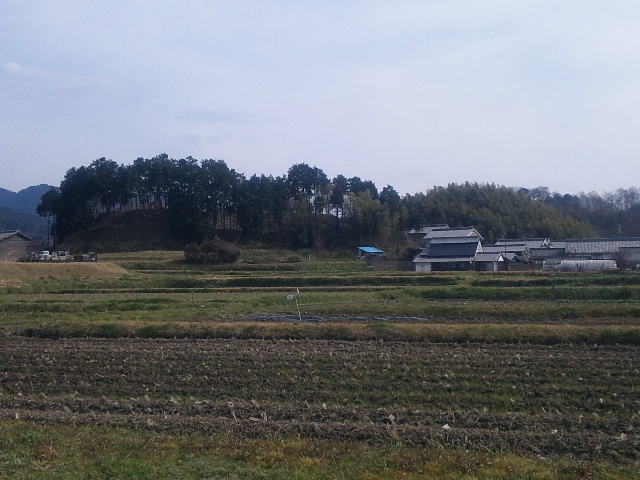
I had to check multiple sources to make sense of it, including my book on the Manyoshu, but the essence of the poem is that Kakinomoto no Hitomaro is describing Empress Jito as a living kami, and that because of her “supernatural abilities”, she can build a residence atop a small hill called Ikazuchi. Ikazuchi Hill, known as Ikazuchi no Oka (雷丘) can be seen in this photo, more information here.

But what the heck is kami? This is surprisingly tough to explain to Western audiences. It is deeply rooted in Shinto religion, and more closely matches something like ancient Greek religion where there were divine spirits both great and small. Small nature spirits would be worshiped as daimon (not to be confused with modern “demon”), and the Olympian gods were venerated too. Even the Olympian gods had “big forms” and small “household forms” worshiped at the hearth. It wasn’t unusual for Zeus, king to the gods, to also be venerated at a home shrine to protect the family assets, or a roadside marker.

In the same way, Shinto has countless kami. It’s not quite right to translate them as “gods” because the meaning is a little different, and “spirits” is not quite right either. But one could include both gods and spirits under the divine label kami. Just like in Greek religion, very talented people could also be venerated as kami after death, such as Hercules. I mention this because Sugawara no Michizane (poem 24 of the Hyakunin Isshu, この) was similarly venerated after death and became something like the Kami (god) of Learning.

This concept of great personages being kami is called arahito-gami (現人神) and that’s basically what Kakinomoto no Hitomaro is describing Empress Jito. Due to the divine ancestry of the Imperial family, this isn’t that surprising, but my book alludes to another reason for this. The turmoil caused by Emperor Tenji (poem 1 of the Hyakunin Isshu, あきの)’s family and his brother Emperor Tenmu’s family for control of the throne meant that Empress Jito (Tenmu’s wife/niece) ascended the throne on shaky ground. Female sovereigns were quite rare in Japanese history, and with the family fighting for control of the throne, Hitomaro was helping her reassert her divine status and legitimacy as the proper ruler of Japan.

The issue of arahito-gami comes up even as recently as 1946, when the reigning Emperor at the time (Emperor Showa, Hirohito), was requested to renounce his divine status after World War II. This declaration used some hair-splitting language about the Emperor’s divinity (or lack thereof), and various interpretations persist today.

…. but that’s something more knowledgeable people could explain better.

As for me, I find it fascinating (and a bit amusing) that these poets I know from the Hyakunin Isshu got embroiled in a succession dispute, but also that Hitomaro helped bolster Empress Jito’s credentials at a time when she was rebuilding the nation again while probably sucking up just a little too.

P.S. the featured photo above is Ikazuchi Hill, photo by Terumasa, CC BY-SA 3.0, via Wikimedia Commons

P.P.S. On a completely unrelated fact, while writing this post I learned that the Chinese characters for 雷丘 also mean “Raichu” as in the Pokemon.

From Darkness Into Darkness: Lady Izumi’s Final Poem

In a lesser-known Imperial poetry anthology called the Shui Wakashu (拾遺和歌集), poem 1342, is recorded what is believed to be Lady Izumi’s1 final poem:

JapaneseRomanizationTranslation
暗きよりKuraki yoriThe way I must enter
暗き道にぞKuraki michi ni zoleads through darkness to darkness —
入りぬべきIrinu bekiO moon above the mountains’ rim
はるかに照らせHaruka ni teraseplease shine a little further
山の端の月Yama no wa no tsukion my path.
Translation by Jane Hirshfield and Mariko Aratani in “The Ink Dark Moon

This poem was addressed to a Buddhist monk named “Shoku” and includes several Buddhist allusions. The most important is the phrase “darkness to darkness”, which comes from chapter seven of the Lotus Sutra:

….from darkness they [living beings] enter into darkness,
to the end never hearing the Buddha’s name [hear the Dharma].

translation by Burton Watson2

This refers to the Buddhist notion of Samsara, the near-infinite, aimless wandering that living beings undergo lifetime after lifetime, like a cosmic rat race. Such beings, who have yet to hear the Dharma [the teachings] of the Buddha, will continue to wander lifetime after lifetime without rest.

Thus, Lady Izumi is asking Shoku to help shine a light in the darkness for her, so that she may find the way [follow the Buddhist path].

I had trouble deciding which blog to put this in, since it covers both themes, but I decided to post here since the poem was introduced in the new historical drama about Lady Murasaki, Izumi’s contemporary.

Lady Izumi was, to put it mildly, a complex woman. She had incredible talent, and found herself in one scandal3 after another as powerful men fell at her feet, plus she earned scorn from other women such as Lady Murasaki. And yet, she was also very kind, devout and struggled to balance both the religious and worldly aspects of her life, while raising her orphaned granddaughter.

Hirshfield and Aratani note that if this poem is indeed her last, the final word she ever wrote was tsuki (月), “moon”.

1 poem 56 in the Hyakunin Isshu (あらざらん)

2 alternate translation by Murano reads: …they go from darkness to darkness, and do not hear of the names of the Buddhas.

3 this was a conservative, narrow, aristocratic society where men frequently had affairs, but it was much more scandalous if women did. The idea that women could want, and enjoy sex, was not something people really accepted at the time.

Where It All Began: Mount Ogura

Hello everyone,

I just returned from another trip to Japan,1 and we got to spend a bit of time in Kyoto. By accident, I also found Mount Ogura, and the place where Hyakunin Isshu was compiled! But first, let’s backup and explain a bit of history first.

Kyoto was the capital of Japan from the 8th century to the 19th century, and so many well-to-do families lived here. This aristocracy wrote countless waka poems that were compiled into official poetry anthologies from time to time,2 but the Hyakunin Isshu was not one of them. It was compiled by Fujiwara no Teika (poem 97) as a favor to his in-laws. Teika had been a compiler of one of the major anthologies, the Shin-Kokin-Wakashu, but was now in retirement after his liege lords (poem 100 and poem 99) were exiled in the upheaval of the Jokyu Rebellion. He resided in a small villa on the west side of Kyoto on the hillside of Mount Ogura, and was tasked with selecting the very best 100 waka poems that his in-laws could decorate their home with. Teika’s excellent poetic taste led to the Hyakunin Isshu we celebrate today.

Anyhow, back to present day. I was with the family, and we visited a part of western Kyoto called Arashiyama (嵐山). It’s a very scenic place, with famous bamboo forests, and an iconic bridge named Togetsu-kyō (渡月橋):

Since we visited in the summer, it was extremely hot and muggy, so by lunch time we were exhausted and tired. We went to a local cafe and had lunch. Since we were in Kyoto, I assumed there would be many famous historical places related to the Hyakunin Isshu,3 but I was having trouble finding them on GPS, so I was disappointed.

Then I noticed the following spot on my map app:

小倉百人一首編纂の地 (ogura hyakunin isshu hensan no chi) … the place where the Hyakunin Isshu was compiled…? Wow, that’s only 15 minutes by foot from where I was at!

The family was exhausted and sweaty, and were planning to return to our hotel, so I didn’t want to drag them uphill in the heat. I told them I’d be back, and I took off for the place on the map. It turns out that the properly had been converted to a Buddhist temple named Jojakkō-ji (常寂光寺) in the 17th century (a common practice in Kyoto). You can find the official website here.

This is Mount Ogura today.

I followed the map directions and made it safely to Jojakko-ji Temple:

There is a small entry fee, but once I paid that, I got to the second gate here:

The site of the Ogura Hyakunin Isshu is just down the path to the right, before the gate. I made the mistake of going up the stairs instead:

Jojakko-ji Temple is quite scenic actually:

… but it was very late in the day, my family was waiting back at Arashiyama, and I had to hurry. This was my one shot, probably in my lifetime, to find this place, but the temple maps, nor the website show precisely where it was.

Finally, I found it:

The photos from the prefectural website look a lot better than mine (good lighting helps). But there it was, the actual site where the Ogura Hyakunin Isshu was compiled!

The stone marker is pretty small and somewhat eroded, but there was no mistaking it.

Since I was short on time, I paused and said a quick “thank you” to Fujiwara no Teika and then headed back.

If you are fan of the Hyakunin Isshu, and you are in the Arashiyama area of Kyoto don’t miss this small but significant site.

P.S. while at Jojakko-ji, I met a nice Australian couple who had just finished their visit. They told me that at the top of the temple you can see a really view of Kyoto. I didn’t have the time to see it for myself, but if you go, don’t pass up the chance.

P.P.S. I forgot that, ten years ago, I had made a post about Mount Ogura. You can see the Togetsu-Kyo bridge here too.

1 We return every year when possible to visit my wife’s in-laws, and let the kids spend time with their relatives, learn more Japanese, etc.

2 Many earlier poems were also composed at a time when Japan’s capital moved around (Nara, Fujiwara-kyo, Asuka, etc) before settling down in Kyoto. See the Manyoshu for further details.

3 I did actually find one other place we visited earlier in the day, but more on that in an upcoming post.

Hello from Japan, new items

Hello readers,

I am writing this post while staying with my in-laws house in Japan. We will be doing a bit of traveling later, but are mostly fighting jet lag and record heat + humidity for now.

In the meantime I am excited to share some items I picked up, including these new books:

The first book explores the Pillow Book by Sei Shonagon, the second Lady Murasaki’s diary. These texts are both pivotal to appreciating the life and culture of people back then, the same people who composed the poetry of the Hyakunin Isshu. It’s a window to a world that simply doesn’t exist anymore.

Further, this book series, 眠れないほど面白い (nemurenai hodo omoshiroi, “so interesting you can’t sleep!”) has been a huge boon for the blog. It’s provided a lot of fun, historical information about the Heian Period, the Hyakunin Isshu, the Manyoshu, etc., that is simply not available in English. The Japanese is sometimes difficult to read at my level, but it’s been a labor of love, so I enjoy the challenge and have been learning a lot. So I am excited to delve into these two books as well.

Also, it’s noteworthy that both books above mention the current drama series 「光る君へ」as a tie-in.

Yesterday, on a day trip to Tokyo I visited the Karuta shop Okuno Karuta (奥野かるた店). It was very easy to find from the Jinbocho train station (just head left and walk down a few blocks). The store was larger than the Tengu-do and includes lots of neat card sets not related to Karuta. I was on a budget so I tried not to spend too much. I did pick up a mini Karuta set though:

This set looks just like the first set I got, both Tengu-dō brand, but roughly half the size. It’s not suitable for competitive karuta but it’s cute and fun to own.

Anyhow, the staff at Okuno Karuta were very nice and helpful. While I was perusing, a tour group of elderly Japanese came through for a while, and the staff had to handle the rush of customers, before things quieted down again.

Hopefully I can post more updates soon.

P.S. also picked up an obscure Fire Emblem game too:

Ancient Japanese Dad Joke: Manyoshu Poem Number 27

The poem from the Manyoshu feels like an ancient Japanese dad-joke. Read it out loud and you’ll see what I mean:

ManyoganaModern JapaneseRomanizationRough Translation
淑人乃よき人のYoki hito noMen of old
良跡吉見而よしとよく見てYoshito yoku mitecame to Yoshino
好常言師よしと言ひしYoshito ii shiand declared it a good place,
芳野吉見与吉野よく見よYoshino yoku miyoSo, good sons, go
良人四来三よき人よく見Yoki hito yoku miand take in the view!

The author of the poem is Emperor Tenmu whom we saw here and here. He is the younger brother of Emperor Tenji of Hyakunin Isshu fame (poem 1, あきの), and husband/uncle to Empress Jito (poem 2, はるす).

Yo, yo, yo, this poem has lots of “yo” words.

The poem was, evidentially, a suggestion by Emperor Tenmu to his sons to visit the beautiful village of Yoshino, near the old capital of Nara, famed for its otherworldly beauty in Spring. The featured image shows Yoshino and its famous cherry trees.

It was also an attempt to foster good relations between Tenmu and his sons through a combination of humor and providing some fatherly advice. Given how complicated family relations were at the time (see links above), and since Tenmu had defeated his own nephew in combat to assume the throne, he had reason to worry.

Sadly, it didn’t work.

After Tenmu’s passing, one son, Prince Ōtsu (ōtsu no miko, 大津皇子), started a rebellion and was later given the death penalty at the age of 24. Wikipedia implies that the rebellion may be a false charge though brought by Empress Jito so that her own son could ascend the throne. My book on the Manyoshu delves into this at length and comes to the same conclusion.

Still, you can’t blame Emperor Tenmu for trying to heal family divisions, yo.

Final Parting

I’ve written before about Empress Teishi, the ill-fated first wife of Emperor Ichijō, and patron of Sei Shonagon who wrote poem 62 of the Hyakunin Isshu (よを). Her family lost a power-struggle to a rival faction of the Fujiwara clan, and under pressure Ichijō took a second wife from the winning faction: Empress Shoshi. Teishi was sidelined, and although she did give birth to an heir, she soon died from illness and presumably humiliation and stress.

While watching the historical drama about Lady Murasaki, it showed Teishi’s untimely death, and revealed that she had left a final deathbed poem to her beloved husband. The poem really exists and is actually recorded in an imperial anthology, the lesser-known Goshūishū (後拾遺), number 536:

JapaneseRomanizationRough Translation
夜もすがらYo mo suguraIf you should remember
契りしことをChigirishi koto wothat vow we made
忘れずはWasurezu wain the deep of night,
恋ひむ涙のKoimu namida nothen I long to see
色ぞゆかしきIro zo yukashikithe color of your tears…

In the drama, Emperor Ichijo and Teishi are portrayed as being sincerely in love, yet ultimately they are a victim of politics and forced apart more and more over time. The vow alluded to here was portrayed in the drama as a promise by Emperor Ichijo to always love Teishi no matter what.

Rokuharamitsu-ji Temple in Kyoto, where Teishi was laid to rest. Photo by 663highland, CC BY-SA 3.0, via Wikimedia Commons

Later, Teishi was buried (not cremated in typical Buddhist fashion) at a temple called Roku-haramitsu-ji, near an area of Kyoto called Toribeno no Misasagi (鳥戸野陵). Legend says that on the night of her funeral it snowed. Emperor Ichijo, who was unable to attend, was said to have stayed up all night mourning for her at the palace. Later he composed a poem for her, preserved in the Eiga Monogatari, which is as follows:

JapaneseRomanizationRough Translation
野辺までにNobe made niMy heart yearns
心ばかりはKokoro bakari wafor you all the way
どもKayoe domoin Toribeno,
わが行幸みゆきともWaga miyuki tomoand yet I worry if
知らずやあるらんShirazuya aruranyou are aware of my coming.

Later, Sei Shonagon who retired from the Court, was said to have taken up residence near Toribeno no Misasagi, particularly near a temple named Sennyu-ji. You can see some photos of these places in the video posted here. It was looking back in her later years that Sei Shonagon wrote the Pillow Book as a subtle memorial to her beloved patron, looking back fondly on happier days together.

Sources used:

Places mentioned:

Lady Murasaki and Marital Strife

Lady Murasaki, one of the most famous women of Heian-period Japan, and the first novelist in Japan, wrote many wonderful romantic scenes through the Tales of Genji, yet her real life marriage was anything but.

The latest episode historical drama on NHK about the life and times of Lady Murasaki (poem 57, め) covers her marriage to her second-cousin Fujiwara no Nobutaka (藤原宣孝, ? – 1001), who was around 20 years her senior. Yes, this was not that unusual for the time, but still gross.

Sadly, the marriage quickly turned sour. Nobutaka slept around a lot, and had other hidden wives and children. Lady Murasaki did not take this lying down and the two of them fought frequently. Nobutaka for his part, enjoyed bragging about his trophy wife.

In the poems preserved in Lady Murasaki’s own private collection is this poem addressed to her husband:

JapaneseRomanizationRough Translation1
言ひ絶えばIi taebaIf you saw you’re going to
さこそは絶えめSa koso wa taemestop writing me, then fine!
なにかそのNanika sonoYou can’t even
らの池をMiwara no ike wostand by the bank
つつみしもせTsutsumi shimo senof Miwara pond properly.
1 Apologies for any mistakes, or for the roughness of this translation

The backstory of this poem is that Nobutaka had taken one of Lady’s Murasaki’s private letters addressed to him, and shown off that letter to friends (apparently bragging about how smart his young bride was). She was justifiably angry and told him to knock it off. Nobutaka was angry with her and threatened to stop writing. Her reply above, was a clever way of saying “fine, don’t bother writing me”. The allusion to Miwara pond was a pair of puns:

  • Miwana pond (mihara) is also a pun for anger.
  • The word tsutsumi is also pun for a bank (as in riverbank), and self-restraint.

Contrary to Lady Murasaki’s reply, Nobutaka was so impressed by the reply that he ended up bragging about it to his friends anyway. 🤦🏼‍♂️

Another letter is as follows:

JapaneseRomanizationRough Translation2
忘るるはWasururu waForgetting others is
うき世のつねとUki yo no tsune toa part of this ephemeral world,
思ふにもOmou ni moEven so,
身をやるかたのMi wo yarukata nobeing forgotten myself,
なきぞわびぬるNaki zo wabinuruI cannot help but cry.
2 Apologies for any mistakes, or for the roughness of this translation

The married nobility of the Heian Period frequently lived in separate estates, and the husband would visit his wife as needed, but not the other way around. It seems by this point, Lady Murasaki was forgotten by her philandering husband, and lamented her unhappy marriage. One can’t help but recall the Gossamer Years generations earlier.

It is sad that such a talented woman was relegated to an unhappy marriage with a faithless, not to mention narcissistic husband, especially in a society where women had little recourse. I also wonder how much this motivated her to write her novel, The Tales of Genji, as a coping mechanism.

P.S. Sources used in this post include:

P.P.S. For folks who are visiting Kyoto, there are many excellent locations associated with the life of Lady Murasaki and the Tales of Genji. The featured photo above is the “Genji Garden”, part of the Buddhist temple of Rozan-ji, courtesy of PlusMinus, CC BY-SA 3.0, via Wikimedia Commons. This blog includes an excellent photo-tour of Rozan-ji.