The Dark Side of Heian Period Japan

The Hyakunin Isshu and its poets, the aristocracy of the Heian Period, represent a golden age of Japanese history, and a level of cultural refinement that was often imitated, but never surpassed in later generations. I have been celebrating that culture on this blog all the way back since 2011 (!), and it has always been a personal fascination of mine.

And yet, amidst all this culture and elegance there was very much a dark side to this culture too. This is encapsulated in works at the time, such as the melancholy and weariness of backbiting in the diary of Lady Murasaki, the isolation and frustration at her husband’s rampant infidelity in the Gossamer Years, among other sources. Further, the historical drama about Lady Murasaki highlights a particularly dark episode involving the succession to the Imperial Throne around the years 1000-1010.

The top positions at the Imperial Court were the Udaijin (右大臣, “Minister of the Right”) and Sadaijin (左大臣, “Minister of the Left”). The minister of the Left was higher rank than the minister of the Right. If you look at the authors of the Hyakunin Isshu, you’ll notice a few held such positions over the years: poems 14, 25, 81, and 93.

If you look at the list of poems, you’ll notice quite a few are composed by members of the elite Fujiwara clan (roughly 25-30%). In the 7th century or so, the Fujiwara had been instrumental in protecting the Imperial throne from a usurper, and handsomely rewarded for it. By the year 1000, the Fujiwara clan had grown so large and prosperous that it developed into multiple sub-clans, branches and rival groups.

I mention this because the episode I relate here relates to two powerful branches of the Fujiwara clan in their struggle for power. There’s an excellent article in Japanese about it, which I encourage you check out because it also includes scenes from the drama.

It all begins with one Fujiwara no Kaneie, husband of “Michitsuna no Haha” (poem 53) and the “villain” of the Gossamer Years. Kaneie was particularly ambitious, served under three emperors, and had three sons, who each held ministerial positions. The eldest son was Fujiawara no Michitaka whose wife was “Gidō Sanshi no Haha” (poem 54). He served as the regent for the young Emperor Ichijo, and later, Ichijo married his daughter, Teishi.

The third son of Kaneie was Fujiwara no Michinaga. Remember this name.

After Kaneie’s first son, Michitaka, died his son (Teishi’s brother) named Fujiwara no Korechika, took over that branch of the family. Korechika contended with his uncle, Michinaga, from the get-go, but Korechika made a fatal error. In a strange tale, Korechika believed that retired Emperor Kazan had been sleeping with Korechika’s own mistress. During one of Kazan’s nighttime travels, Korechika in a jealous fit shot an arrow at him and hit the retired Emperor’s sleeve. Michinaga capitalized on this incident to get his nephew Korechika banished from the capitol. This is probably something “Gidō Sanshi no Haha” would have never imagined happened to her son.

Korechika’s sister, Empress Teishi (also daughter of “Gidō Sanshi no Haha”), was now in a vulnerable position without her family to protect her. So, Michinaga pushed forward his own daughter, Shoshi, as a second wife for Emperor Ichijo. Later, the isolated and vulnerable Emperess Teishi died in childbirth. Teishi’s son, the Imperial prince Atsuyasu, appears later. The end result was that Ichijo’s remaining wife Shoshi (daughter of Michinaga) was the reigning empress now, and Michinaga used his influence to gain the title of Minister of the Left. The diary of Lady Murasaki covers this period when Shoshi gave birth to Emperor Ichijo’s second son, Atsuhira.

Let’s pause for a moment. Emperor Ichijo had married two women who were from rival factions of the Fujiwara clan: the exiled Korechika’s sister, and Minister of the Left Michinaga’s daughter, and each bore him a son.

Meanwhile, Korechika was later pardoned and made a junior minister in the Court. And yet Korechika was very bitter toward Michinaga, and his mental health took a downward spiral. He hired a Buddhist priest to help craft a series of curses against Michinaga. Eventually, this was discovered, and Korechika’s career was over and retired until his death in 1010.

Things took an unexpected turn when Ichijo retired early during the same year due to poor health, and his cousin ascended the throne as Emperor Sanjo (poem 68). Sanjo only reigned for a few years before a combination of ill-health and Michinaga’s machinations as the minister pushed him to abdicate too. This is why his poem in the Hyakunin Isshu is so melancholy: Sanjo finally ascended the throne, but ill health and Michinaga’s power-plays ended his reign soon after it began.

Emperor Sanjo’s retirement left Ichijo’s two sons as the next successor: one by Korechika’s sister (Teishi), and the other by Michinaga’s daughter (Shoshi). Which imperial prince do you think Michinaga, the Minister of the Left, wanted to ascend the throne? Michinaga obviously wanted his grandson to be next emperor, so Michinaga could assume the position of regent (Sessho).

Due to age, Atsuyasu, son of the first empress Teishi, should have been Emperor (Atsuhira was too young), but he was bypassed entirely and faded out of history. The child Atsuhira, grandson of Michinaga, ascended the throne as Emperor Go-Ichijo (“The latter Ichijo”).

Korechika’s own son, Michimasa (poem 63), was totally shut out of the Imperial Court as well, and mostly lived a reckless life, trolling Michinaga’s administration, and being just plain obnoxious. His life took a downward spiral much like his father had done, and that branch of the Fujiwara’s male line died out. Michimasa’s fate is particularly dark and tragic.

This multi-generational struggle between two branches of the Fujiwara clan to control the Imperial throne through marriage resulted in Michinaga being the most powerful man in Japan at the time. It also adversely affected many lives of poets in the Hyakunin Isshu. We saw the examples of Michimasa, son of Korechika, and Emperor Sanjo above.

In the case of Sei Shonagon (poem 62), who served Empress Teishi and was loyal to the losing faction, she faded away in retirement. Her Pillow Book is a last swan-song of the time spent serving Empress Teishi, and conveys a very rosy look. It’s not hard to see it was also a subtle middle-finger to Michinaga’s faction.

Many of the ladies in waiting to Michinaga’s daughter, Shoshi, were also poets of the Hyakunin Isshu:

  • Lady Izumi (poem 56),
  • Lady Murasaki (poem 57), author of the Tales of Genji
  • Akazome Emon (poem 59), her sister had an affair with Michinaga’s older brother Michitaka much to the chagrin of “Gidō Sanshi no Haha” (poem 54)
  • Ko-Shikibu no Naishi (poem 60), Lady Izumi’s daughter
  • Lady Ise (poem 61)

By association with Empress Shoshi, not Empress Teishi, they all benefitted and their daughters and family members rose to positions in the Court over time. Lady Murasaki’s daughter, Daini no Sanmi (poem 58), eventually became a wet nurse for future Emperor Reizei and attained the third rank in the Court which was quite high.

Additionally, men like Fujiwara no Kintō (poem 55) benefitted from the association with Michinaga as well.

In the end, there were obvious winners and losers in this struggle. It was not all poetry parties, moon-viewing, and romantic dalliances; people’s lives profited or were destroyed due to hair-splitting power struggles that took generations to complete.

As alluded in Lady Murasaki’s diary, the whole thing was golden sham.

The Hyakunin Isshu in the Edo Period

Since I began, this blog has focused on a period of Japanese history which I like to call “Classical Japan”, or “Japanese Antiquity”.1 That’s just a convenient name I call it.

But most researchers and historians tend to divide Japan’s history into “periods” (jidai, 時代) based on where the capitol was at the time. So, precisely speaking, this blog and the Hyakunin Isshu cover a 500-period of history overlapping the Asuka (6th – 8th c.), Nara (8th c.) and Heian Periods (8th – 12th c.), while dipping our toes just a bit into the the early Kamakura Period (12th – 14th c.) for certain poems (poems 93, 99 and 100 for example). For the sake of the Manyoshu we also ventured even further back to somewhat murkier periods of time since some of the very early poets of the Hyakunin Isshu (poems 1, 2, 3 and 4 for example) were also contributors.

But the blog has never really explored anything beyond the early 13th century because that’s when things effectively end. The Hyakunin Isshu was compiled, the aristocracy of the Heian Period were totally sidelined by the new samurai class, and Japan continued on in a new trajectory. The aristocracy still lived until the modern era, and Imperial poetry anthologies were issued from time to time, but the quality and popularity gradually petered out. As poem 100 above alludes to, this era embodied by the Hyakunin Isshu was effectively over.

For the purposes of this blog, why pay attention to anything that comes after?

Well, I attended Professor Mostow’s recent lecture at the University of Washington, and I learned that history of the Hyakunin Isshu kept going. In fact, it was all the rage in the much later Edo Period (17th – 19th c.).

Japan by the Edo Period was pretty different than the earlier Heian Period. By this point, Japan had been effectively ruled by one military government or another for centuries, while the capitol had shifted from Kyoto in central Japan, to a fortified castle town in eastern Japan called Edo (江戸). Edo started as a fishing town, but soon grew into a metropolis thanks to good urban planning and government policies that forced rival warlords to stay there every other year. Edo, later the modern capitol of Tokyo, was one of the largest cities in the world at one point.

After a century of constant warfare throughout Japan, the Edo Period brought unprecedented stability and cultural flourishing. Its isolation from European explorers and rival Asian powers meant that people turned inward and rediscovered Japanese culture that had been forgotten in ages past due to war and instability.

One aspect of this flourishing was the invention of block printing which suddenly allowed the masses to enjoy reading in a way that earlier generations had not. Books became far more affordable, and more available, and suddenly a variety of books about the Hyakunin Isshu were published. There were books about the Hyakunin Isshu as far back as the 15th century, namely the Ōei-shō (応永抄) composed in 1406, but mass-printing made books much more accessible and allowed for a greater variety.

Professor Mostow has collected and aggregated many examples on his website here. Take a look if you can, there are some neat scans of really old documents from the era.

One common usage of the Hyakunin Isshu at the time, according to Professor Mostow, was in the instruction of girls. Books about young women’s education were a popular subject, and such books would work lessons in along with poems of the Hyakunin Isshu. For example, Professor Mostow posted scans from a book called the Hyakunin Isshu Jokun Shō (“A Selection of the Hyakunin Isshu for Women’s Instruction” ?), published in 1849. Another example can be found here.

Men were often taught things like Confucian values and such. And yet, even the boys learned about the Hyakunin Isshu from their mothers who had been raised on it. Also, books that were published for men about the Hyakunin Isshu often did so under the theme of Kokugaku (“national learning”).

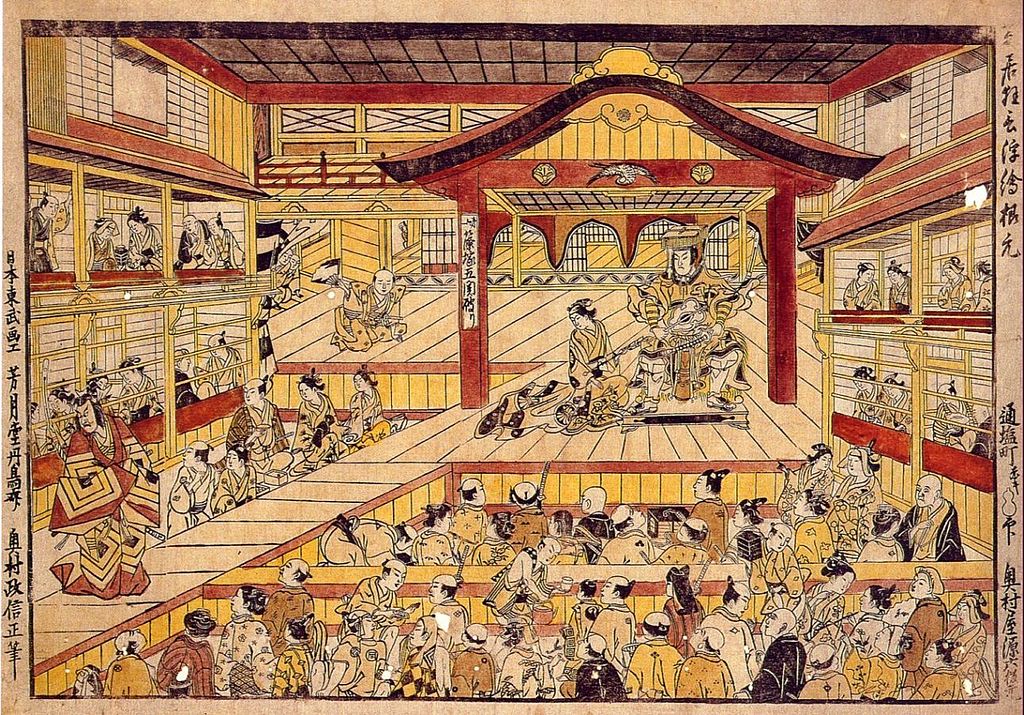
A block print of the Masanobu Kabuki theater, 1743. Hokusai, Masanobu, Kiyonobu, XVII-XIX century, Public domain, via Wikimedia Commons

The high point of Edo Period culture, and something that influences Tokyo even today was the Genroku Period (1688 – 1704). Many things people imagine of pre-modern Tokyo, such as Kabuki theater and Ukiyo-e prints, have their origin in this brief period. The Hyakunin Isshu was used in some Ukiyo-e block prints too. Since many of these images were racy or scandalous, publishers would work in poetry of the Hyakunin Isshu to either obfuscate the content from Edo government censors, or to lend a more “classy” air to the image. I found some examples here.

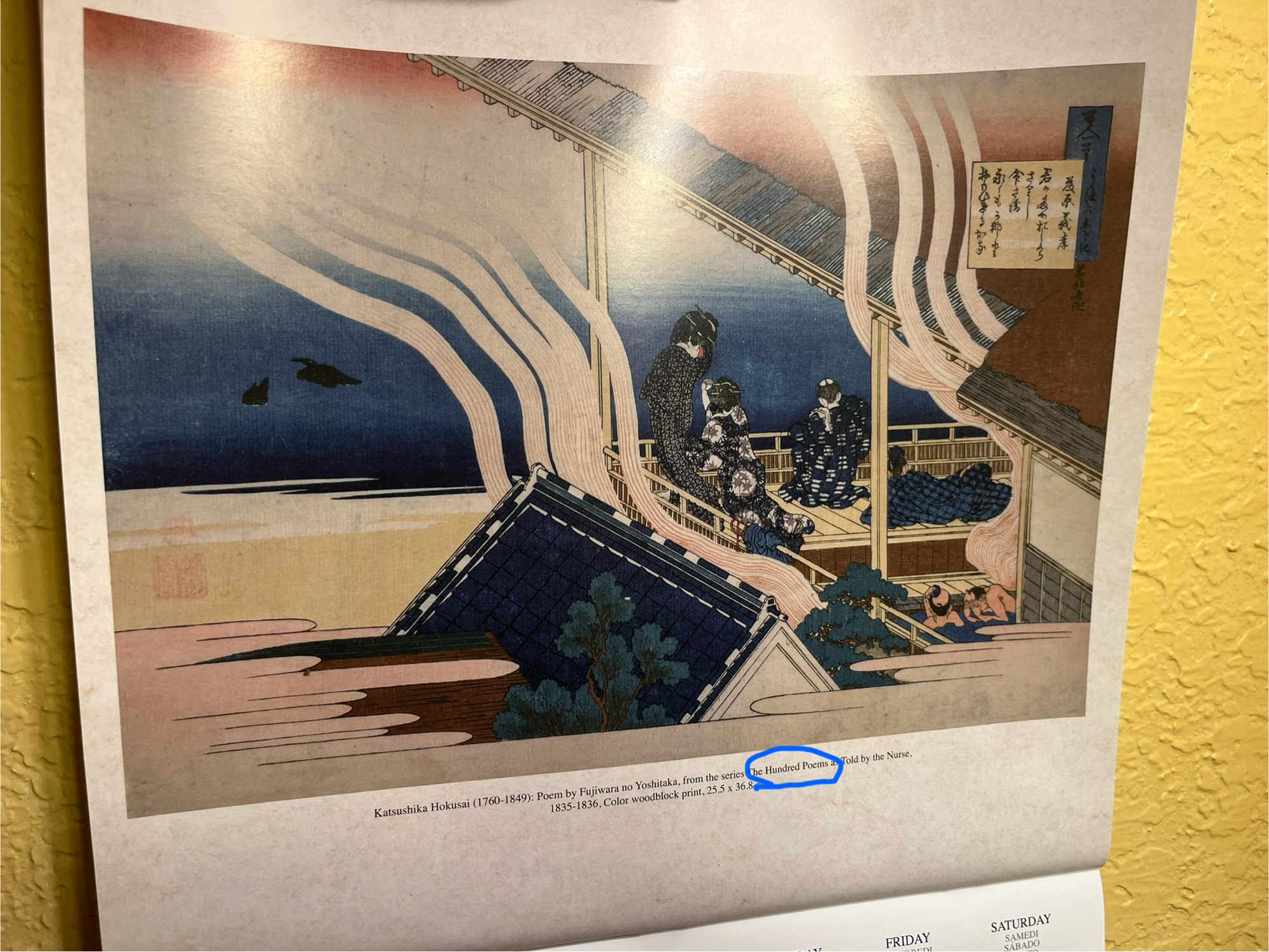
Even the famous artist Hokusai of “Great Wave” fame made block prints that would feature poems of the Hyakunin Isshu. We have a calendar at home and I was surprised to see this Hokusai block print with poem 50 (きみがためお) composed in cursive:

Our wall calendar featuring art by Hokusai. Turns out this page was from the Uba ga Etoki.
In blue, reads Hyakunin Isshu Uba Ga Toki, and in the yellow box poem 50 of the Hyakunin Isshu.

It turns out this is part of a series by Hokusai called the Uba ga Etoki (姥がゑとき), or more formally the 百人一首姥がゑとき2 , which means something like the “The Illustrated Hyakunin Isshu As Told By a Nurse(maid?)”. You can see more examples of this work here.

Anyhow, it’s fascinating that as literacy among the populace improved during the Edo Period, and access to information via books and printing increased, popular interpretations and illustrations of the Hyakunin Isshu took on a new life. The Hyakunin Isshu was, by that point, already 600 years old, and yet it enjoyed a revival that we benefit from today in the form of anime, karuta, and so on.3

Special thanks to Professor Mostow for his lecture and website! Also, check out Professor Mostow’s new book!4

1 I suppose my reason for doing this is that the end of the Heian Period and the subsequent change in Japan was somewhat similar to the fall of the Western Roman Empire in Europe, and how later generations of feudal lords kept up some of the trappings of the Romans, and yet it was still a different society altogether. But in the end, this is just one history nerd’s interpretation.

2 In modern Japanese 百人一首うばが絵解. See this post for more explanation.

3 Although social media and Internet reveal a pretty ugly side to humanity, it does also lead a similar explosion in cultural and accessibility. Two sides of the same coin, I suppose.

4 This is my associates link on Amazon. I get a small amount of credit for any purchases made through here. Feel free to purchase directly from University of Hawaii press instead though.

How To Recite the Hyakunin Isshu Like a Pro

If you’re here reading the blog, chances are you like the poetry of the Hyakunin Isshu. Who doesn’t? Maybe you like it so much, you’ve tried to memorize your favorite poems too (I do). But what’s better than memorizing your favorite poems? Reciting them!

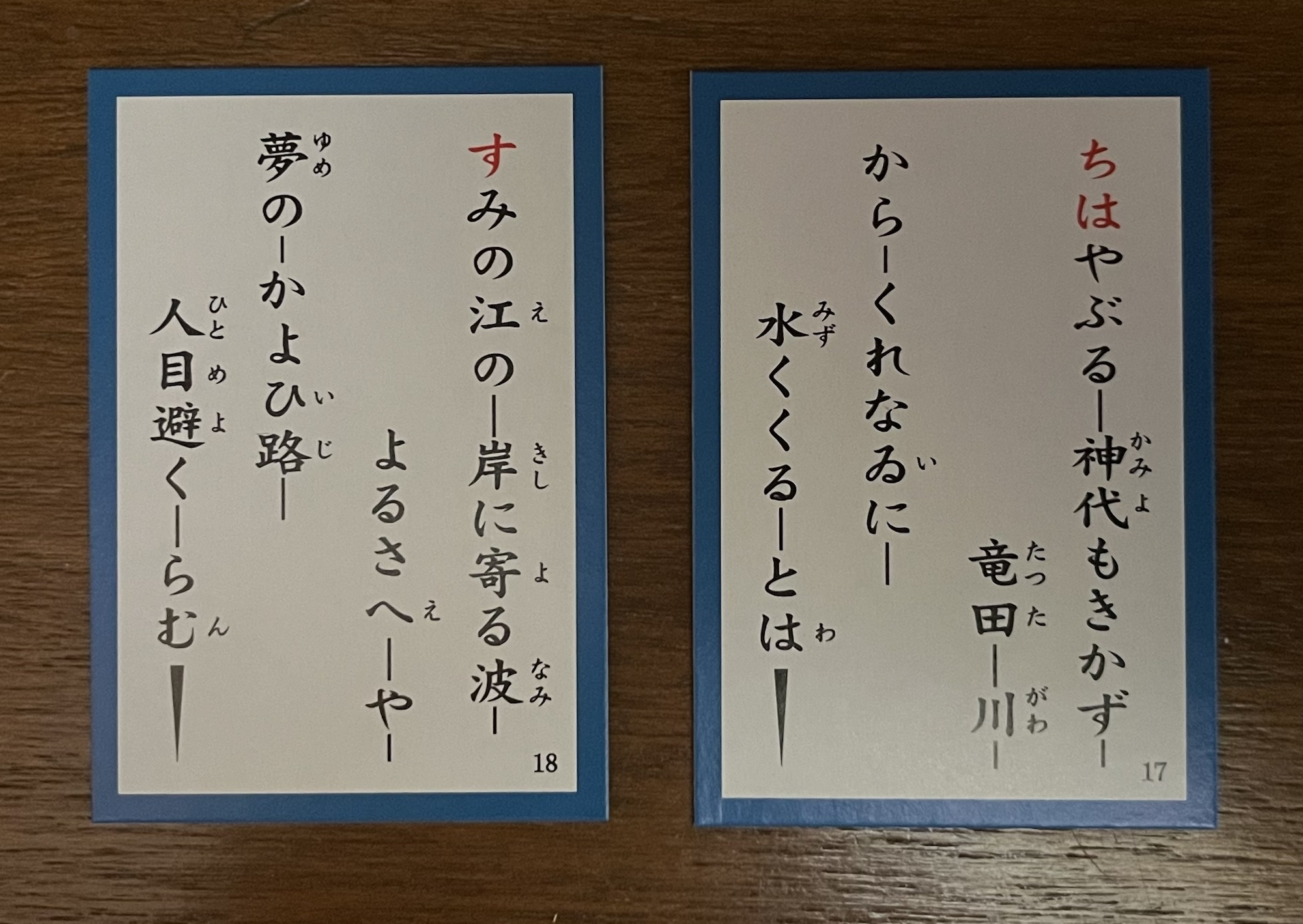
When I first learned to play karuta, I realized that poems of the Hyakunin Isshu are recited in a specific style in Japanese. This is necessary for the players to hear clearly, but also reflects a traditional singing method for reciting waka poetry.1 Even on kids shows about Japanese language, when waka or haiku are recited, they’re recited in the same way. Of course, this is not required, but it is cool to learn, and doesn’t take that much effort.

First, let’s look at this Youtube playlist of Hyakunin Isshu poems.2 In particular, let’s look at poem 2:

Poem 2, はるす

All waka poems, including the Hyakunin Isshu have five verses, and are usually written top to bottom, right to left. The poems are further divided by the first three “upper verses” (kami no ku, 上の句) and last two “lower verses” (shimo no ku, 下の句) for structured, reciting, and for games.

It really helps if you can read hiragana script, but even if not, listen to the intonation of the poem, and the way some syllables are drawn out longer (expressed above as vertical “|” lines). That’s how you recite waka poetry.

The syllables that are drawn out are not always in the same place, by the way. Poem 24 of the Hyakunin Isshu does not always match poem 2 especially the fourth verse (fourth column from the right):

Poem 24, この

Or take a look at poem 11 which has a slightly unusual format. This makes the pacing different, and affects where syllables are drawn out:

Poem 11, わたのはらや

Poem 11 is a particularly tricky poem to recite, in my opinion, but also fun because the first two lines sound really neat.

Reciting isn’t just for showing off by the way.

In my book on the Manyoshu, it talks about how many poems come alive when they are recited. This was true during Japanese antiquity, and centuries later when the Hyakunin Isshu was compiled too. There are sounds and expressions that have a nice ring to them and it’s not always apparent if you are just reading the poem in your mind. For example poem 3 of the Hyakunin Isshu uses a lot of “no” (の) sounds that come alive when recited aloud:

Poem 3, あし

Another example is poem 58 which simply has a nice ring to it:

Poem 58, ありま

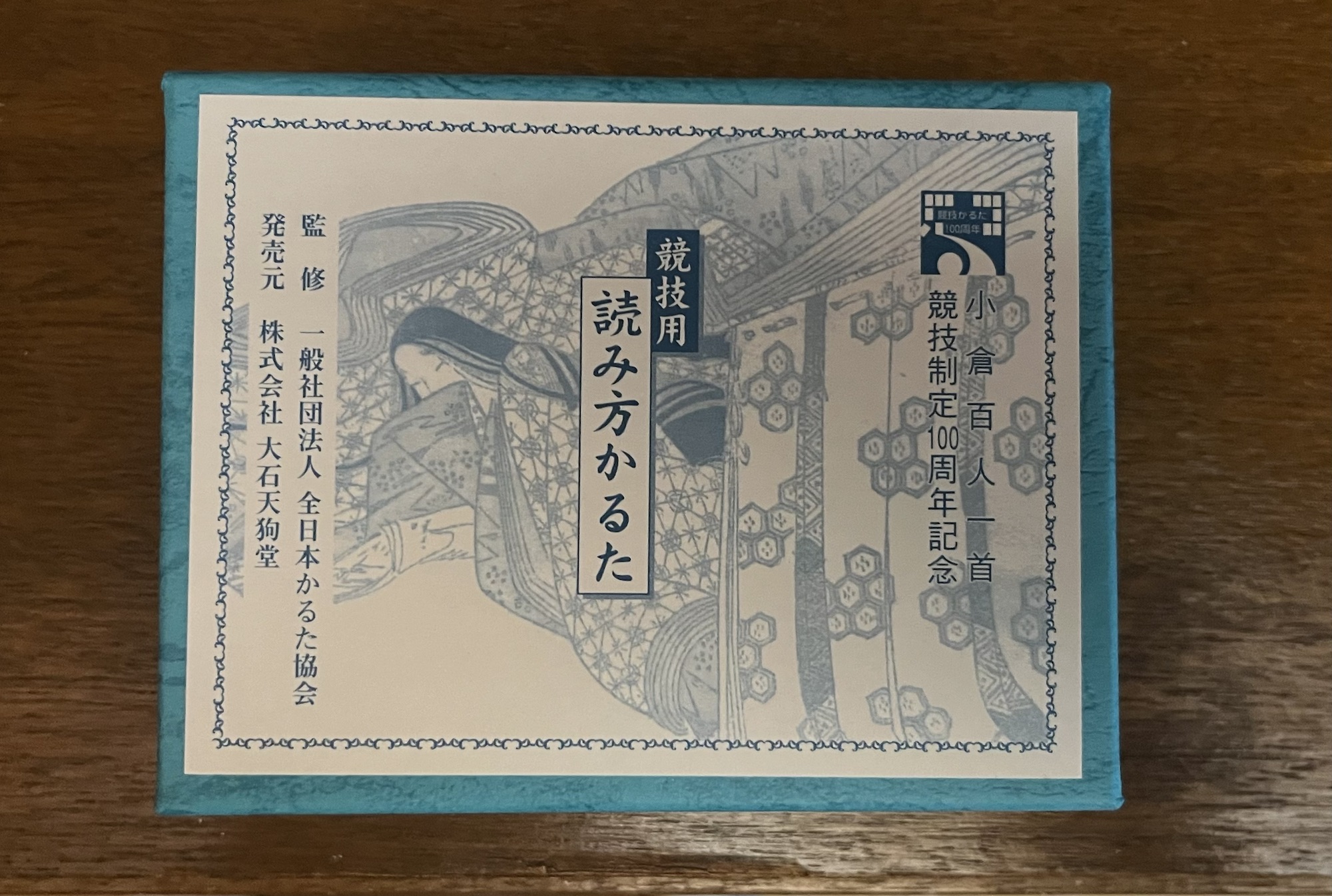
Anyhow, unless you’re training to be a professional yomité reader in karuta, it’s not necessary to master reciting all 100 poems, or to even sound this nice. However, if you have a handful of poems you like, learning to master the recitation is a great way to bring poems to life. You can use the excellent Youtube list above, or if you are a tactile person (like me), you might consider getting a set of yomite cards like the ones sold by Oishi Tengu-do, direct link here. I purchased mine in Japan this year and enjoy flipping through them and practicing poems I like.

In truth, I am a TERRIBLE singer. I am truly tone-deaf. But, with a bit of practice you get used to the rhythm of a poem and can recite it without much effort. Some poems are easier than others (poem 11 is tough), but with a bit of practice and familiarity anyone can learn to recite their favorite poem.

1 Roughly 99% of the poems I’ve posted in this blog for the past 13 years are all waka poems. These poems almost always have a pattern of 5-7-5-7-7 syllables, as opposed to later haiku poetry that only have 5-7-5 syllables.

2 If you want to search other Youtube examples, search for 百人一首 読み上げ (reading Hyakunin Isshu aloud).

Fall Longing: Manyoshu Poem 488

Back to our regularly scheduled program, I wanted to share a neat little poem, composed by none other than Princess Nukata using the theme of Autumn and of a night tryst:

Original ManyoganaModern JapaneseRomanizationRough Translation
君待跡君待つとKimi matsu toAs I wait for you
吾戀居者が恋ればA ga koi orebain anticipation
我屋戸乃宿戸やどA ga yado nothe blinds
簾令動簾動かしSudare ugokashiof my window flutter
秋之風吹秋の風吹くAki no kaze fukubut it is only the autumn breeze…

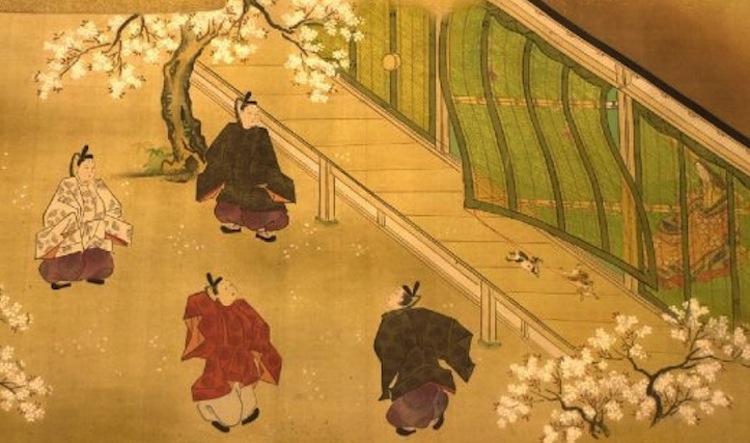
Princess Nukata needs little introduction in the blog. She was the love interest of two powerful men, issued a call to war, and made quite a contribution to the Manyoshu anthology which the Hyakunin Isshu and other later anthologies are all based upon. My book about the Manyoshu, in talking about spring versus fall, listed this poem as an early, early example in Japanese poetry of using autumn to symbolize other things. In this case, a romantic meeting at night, and a woman who eagerly awaits her lover. The blinds alluded to here are sudaré blinds used in Japanese culture since antiquity and even to this day.

Illustrated scroll of the Tales of Genji, chapter 34, 17th century. Courtesy of Wikimedia Commons.

Beyond that, it’s just a neat poem.

Happy Autumn everyone! 🍁

P.S. There is still time to register for the Professor Mostow online lecture at the UW on October 23rd!

A Look at Casual Karuta

In the past year, I’ve spent a fair amount of time talking about what’s called competitive karuta (kyōgi karuta, 競技カルタ in Japanese) after my first encounters, and subsequent efforts to learn to play the game. The truth is is in that in recent months, for various reasons, I’ve really started to wind down my involvement in the competitive karuta scene. I do enjoy playing karuta games, but frankly just not a very competitive person at heart, and the thought of investing what little time I have to increasingly small, incremental gains in an obscure sport doesn’t really appeal to me. I learned how to play the game, and consider myself decent at it, but the poetic side of the Hyakunin Isshu is still what appeals to me most.

Further, I realized through talking with Japanese people that a lot of people play casual karuta games, not competitive. This mundane side of karuta gaming is not featured in animé such as Chihayafuru. However it is a common past-time for people who enjoy karuta and the Hyakunin Isshu poems,1 but don’t necessarily want to invest countless hours in practice, drills, and so on. So, I wanted to explore the casual side of karuta gaming, and help casual players find ways to enjoy the game without the intense stress of competition.2

Japanese “Karuta”, especially karuta games based on the Hyakunin Isshu, come in many forms. There is a spectrum of very easy games on one end, and competitive karuta on the other. If you think of it like a video game with difficult settings, then games like bozu-mekuri are easy mode. You don’t have to know anything about the cards, it is visual only, and the rules are simple. On the other hand, competitive karuta is hard mode: you are playing against some very good players, the margin of error is very small (in higher ranks), and every bit counts including hand-techniques, card position, mental training, and so on. It’s a tough struggle, with lots of exciting moments, but sometimes also crushing defeats.

So between “easy mode” of bozu-mekuri, and “hard mode” of competitive karuta, isn’t there anything in between? Turns out, yes.

I found good examples of casual karuta games through my Hyakunin Isshu Daijiten book, mentioned here, as well as subsequent information online. Let’s look at the games of chirashi-tori and genpei gassen.

Chirashi-Tori

The game of chirashi-tori (散らし取り), meaning “scatter and take”, can be thought of as a lightweight version of competitive karuta. You don’t have to know the kimariji, but it helps, nor do you have to think about card position. In the same way, penalties don’t exist. You do need to know how to read the hiragana script though, even if slowly.

The game basically works like so:

  1. Take all 100 torifuda cards (the ones that are not illustrated) and spread them around face up. Players sit around the pile, spread out evenly.
  2. Similar to competitive karuta, someone else (not a player) reads a random yomifuda card (the illustrated ones). It’s customary to read the last two verses twice.
    • You can also use one of several nice karuta reader apps on your mobile phone too.
  3. As the poem is being read, whoever finds it’ll the corresponding card touches it, or takes it. If they are correct, they remove the card from the field and keep it in a stack next to them, face down.
  4. The reader then draws another card and a new round begins until there are no more cards on the field.
  5. Whoever took the most cards by the end of the game wins. 🏆

In terms of difficulty, this is the next step up from bozu-mekuri in that you do have to be able to read hiragana, but it’s a nice first step to getting familiar with the poems with little or no training. Even though knowing the kimariji is not required, knowing some can help you recognize some cards on the field quicker.

Genpei Gassen

The name of this game comes from the climatic war in 12th-century Japanese history: the Genpei War, pitting the Genji (“Gen”) clan versus the Heike (“pei”) clan. Unlike Chirashi-tori where each person plays separately, in Genpei Gassen people divide into even teams. Ostensibly one side plays the Heike clan, and the other the Genji clan.

There are a few other differences to Chirashi-tori:

  1. The two teams sit facing one another, with teammates sitting side by side. Ideally, 5 or 7 people will play. The odd-man-out is the reader (see below).
  2. The 100 torifuda cards (non-illustrated ones) are evenly divided into two groups of 50. Half the cards go to one side (i.e. facing them), and the other 50 go to the other team. Arrange the cards into three rows, roughly equal.
  3. To play the game, a separate person reads a random yomifuda card (the illustrated ones), one at a time. It’s customary to read the last two verses twice.
    • You can also use one of several nice karuta reader apps on your mobile phone too.
  4. As the poem is being read, players from both sides try to find the corresponding card somewhere on the field. If someone finds the poem, they may touch it, or take it. If they are correct, they remove the card from the field and keep it in a stack, face down.
  5. The first team to get to zero cards on their side wins. 🏆
  6. Similar to competitive karuta, if you take a card from the opponent’s side, you send over a card from your side. This way, their number stays the same, but since you correctly took a card, your side reduces by one.

This games has the advantage of being a gentler version of competitive karuta, but still keeping the look and feel of it. As with Chirashi-tori, you will need to be able to read hiragana script, and knowing the kimariji, even some of them, gives you an advantage, but these are things you’d learn anyway from repeated play. Also, having a team develops some fun and interesting strategies.

Five Color Hyakunin Isshu

Finally, if you still want the look and feel of competitive Karuta, but an easier version, you can look at Five Color Hyakunin Isshu. This way you can play a much smaller set of cards and warm up to the full competitive version. The catch is that it requires a custom set, or you will have to make your own by customizing a standard set.

Non-Hyakunin Isshu Karuta

If, like me, you somehow get a hold of a karuta set not featuring the Hyakunin Isshu poems (there are a surprising number in Japan), the games above will still work. Many karuta sets, regardless of theme, use the same basic format: two sets of cards for reading and taking. They are all meant to be read by someone, with other players finding the correct, corresponding card.

Conclusion

The game of Karuta at heart is just that : a game. It’s a great way to savor the poetry of the Hyakunin Isshu in a fun interactive way, and the more I explore it the more I realize that there are games to suit every player. If you purchase a set, you can try any number of games with friends or even by yourself. The most important thing is HAVE FUN! If poem 96 teaches us anything, it’s that life is short.

P.S. Speaking from experience, playing

1 Fun story, in summer of 2024, I was in Japan again briefly to visit my wife’s family, and found the famous Okuno Karuta store in Tokyo. I didn’t post about it as there wasn’t much to say (I didn’t find what I was looking for, tbh). I did see a tour group of elderly Japanese people come into the store in a single mass, and many of them bought karuta goods in one form or another before leaving again. So, it’s definitely a pasttime, but not quite the way I expected when I first learned about the game.

2 I don’t mean this lightly either. Some people definitely revel in competition, but I find such situations always make me intensely nervous, and uncomfortable, even when I win. Used to feel this way about Magic the Gathering competitions too. I thought maybe it was just me until I spoke to someone Japanese who also felt that way when playing competitive karuta. They just wanted to play casual games. That’s when I started to realize that there were different games for different crowds, but all of them celebrate the Hyakunin Isshu poetry in some way.

Similarly, some people want to play Pokemon TCG or Magic the Gathering at home with friends, rather than big competitions. Other people live for the thrill of competition. There’s enough room in the game for both types of players. I personally prefer Hyakunin Isshu karuta myself.

Poets Illustrated: The Thirty Six Immortals Edition

Recently, while watching the historical drama about Lady Murasaki (poem 57, め), I was surprised to learn that there is an hand-made collection of poems by the Thirty Six Immortals of Poetry that has survived the centuries. This collection is called the Sanju-rokunin Kashu (三十六人家集, “Collection of the Thirty Six Immortals of Poetry”):

Collected poems of Minamoto no Kintada (889–948), not in the Hyakunin Isshu. See page for author, Public domain, via Wikimedia Commons

To recap, the Thirty Six Immortals of Poetry was list of esteemed poets in antiquity, coined by the revered poet and critic Fujiawara no Kintō (poem 55 in the Hyakunin Isshu). It was, in Kinto’s mind, the who’s-who of Japanese poetry up to that point in history. Two-thirds of the poets (24 out of 36) also appear Hyakunin Isshu, but otherwise there is no other overlap. Fujiwara no Teika clearly had differing tastes than his earlier kinsmen Kinto.

In any case, this collection was handmade in the early 12th century by ladies of the court for the birthday of Emperor Toba, and each book includes a unique design: a mix of paper collage, marbling and so on.

SYOGEI, Vol.5 No.6, 1935, August, Tokyo, Japan, Public domain, via Wikimedia Commons

The pages above show collected poetry by the Buddhist priest Sosei (poem 21 of the Hyakunin Isshu). You can see the collage here, using torn pieces of paper. Below is a page of poetry by Ōshikōchi no Mitsune (poem 29) shows an example of paper marbling.

MITSUNE-SHU, 1938, TAKEDA BOKUSAIDO, TOKYO, Public domain, via Wikimedia Commons

What makes the collection so amazing is that the pages aren’t just gorgeous, they often allude to some aspect of the poet in question. Some are quite obscure, some are easier for modern people to piece together. This page of poetry by Yamabe no Akahito (poem 4):

See page for author, Public domain, via Wikimedia Commons

The sky-blue color with snowy looking white surfaces evoke the image of Mount Fuji, which Yamabe wrote about in the iconic 4th poem in the Hyakunin Isshu. I am not certain if they are related, but it certainly seems likely.

As for the collection itself, over the century it changed hands a few times before finally being entrusted to the Nishi Honganji Temple in Kyoto, where it remains. Sadly, one volume was dismembered and the individual sheets were sold off to private collectors by a Japanese industrialist in 1929 to raise funds for a local university, but much of the original still remains.

My historical drama does a nice job showing how the ladies in waiting carefully constructed each page, each one a personal work of art, encapsulating a different kind of art. In Japanese literature there has never been anything quite like it since. Truly brilliant stuff.

P.S. apologies for the stupid title of this post. It just popped into my head.

Professor Mostow Upcoming Lecture!

Hello,

I wanted to share an exciting opportunity for readers. The University of Washington, my alma mater, is hosting a lecture in-person and online by none other than Professor Joshua Mostow!

Dr Mostow’s book Pictures of the Heart: The Hyakunin Isshu in Word and Image

Years ago, Dr Mostow graciously allowed me to use his translations of the Hyakunin Isshu for this blog, and readers have hopefully enjoyed his translations over the years. We poet-enthusiasts have all benefitted from Dr Mostow’s hard work and enthusiasm for the field. Let’s show our support, and enjoy a fascinating lecture on the Hyakunin Isshu and how it impacted Japanese history in later times.

You can see lecture details here:

https://asian.washington.edu/washin-kai-presents-lectures-and-events

Registration for the event is here:

https://events.uw.edu/event/JapanStudiesWK24/summary

Due to family scheduling conflicts, I am registered online. Hope you can all make it!

The Iroha Poem

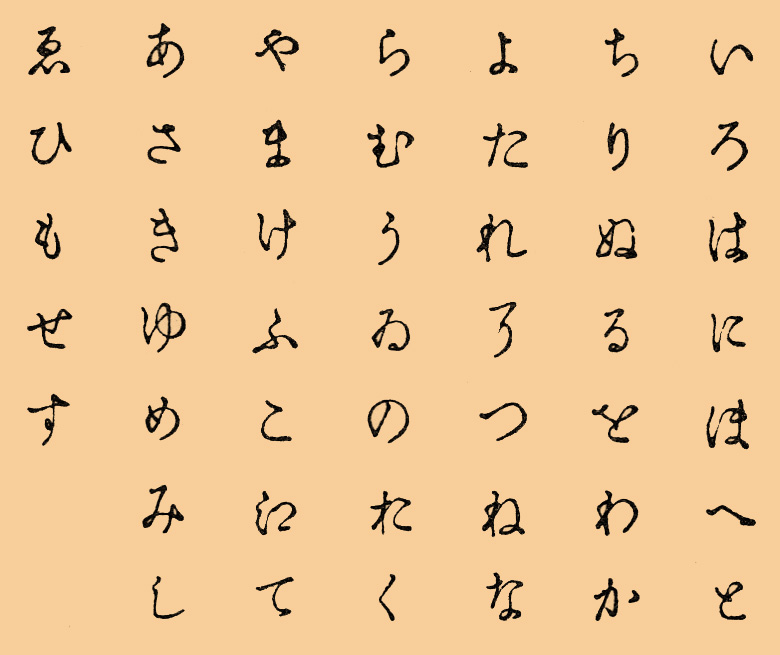
One of the most famous waka poems across Japanese history and even contemporary culture is a poem called the Iroha. The name “iroha” comes from the first three letters of the poem “i”, “ro” and “ha”. What makes this poem famous is that it uses each hiragana syllable exactly once, and still makes an intelligible, not to mention lovely, poem.

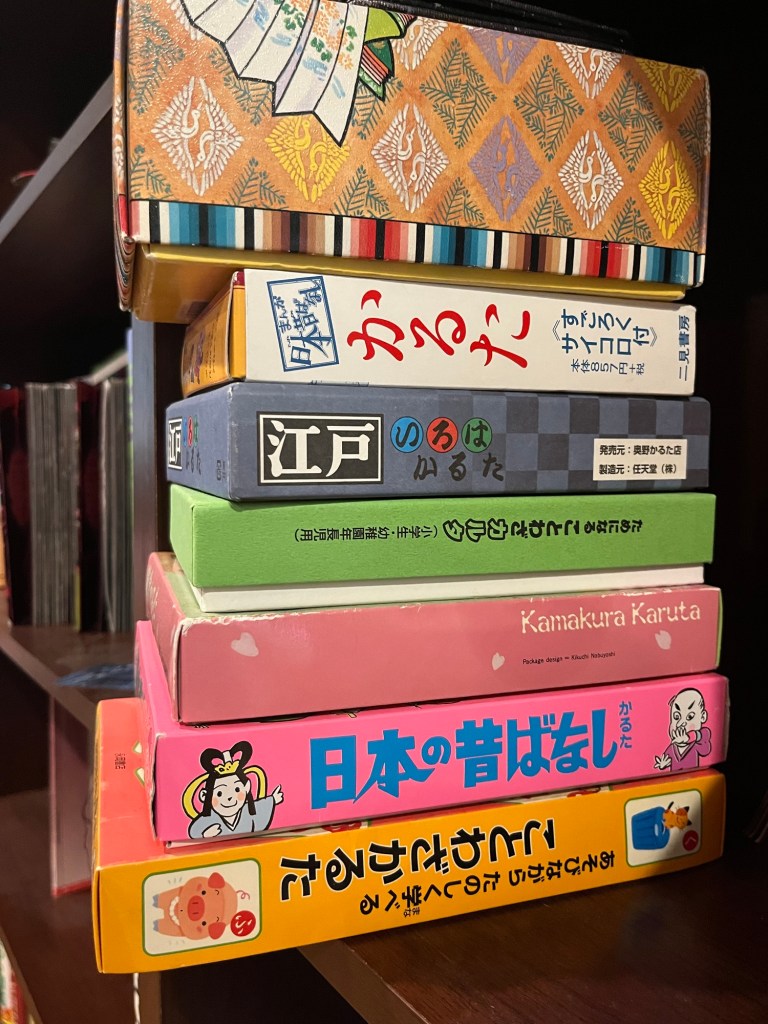
Because of this, it was often used in pre-industrial Japan as a way to organize things. Theater rows would be organized by the order in the Iroha letters, and so were firefighter brigades in pre-modern Tokyo (a.k.a. Edo). Even modern karuta sets are organized by iroha order. I don’t mean the Hyakunin Isshu karuta that I often discuss in the blog, but more informal karuta games that kids often play. We have a few sets here at home, given to us by my in-laws for the grandkids. You can see a nice selection of Iroha karuta sets on the Okuno Karuta online store, too.a

Various karuta sets my in-laws in Japan sent us. The top one is my wife’s original Hyakunin Isshu she had from grade-school.

But I digress.

The Iroha poem’s author is unknown (more on that later), but it was originally composed in old Manyogana script, like other poems of the early Manyoshu anthology, then later in hiragana. It includes many old spellings, so it’s a bit hard to render in modern Japanese.

The poem is as follows:

ManyoganaModern JapaneseRomanizationTranslation1
以呂波耳本部止いろはにほへI ro ha ni ho he toEven the blossoming flowers
千利奴流乎和加ちりぬるをわchi ri nu ru o wa kawill eventually scatter
餘多連曽津祢那よたれそつねyo ta re so tsu ne naWho in this world shall
良牟有為能於久らむうゐのおra mu u i no o kuremain unchanged? Let us today2
耶万計不己衣天やまけふこえya ma kyo (ke fu) ko e tecross the mountains of impermanence
阿佐伎喩女美之あさきゆめみa sa ki yu me mi shiand no longer have superficial
恵比毛勢須ゑひもせe hi mo se sudreams, nor be deluded
1 adapted translation from Wikipedia, plus a few modifications of my own
2 有為 (u i) meaning “viccisitudes of life” or the impermanence of all phenomena

This poem has strong Buddhist allusions to such concepts as samsara (“the aimless wandering lifetime after lifetime”), the delusions that bind us to this existence, awakening to these delusions (e.g. “enlightenment”), and finally nirvana (“unbinding”). The poem itself shows considerable familiarity with earlier Buddhist texts such as the Perfection of Wisdom sutras, including the Heart Sutra, as well.

But I digress. Again. 😅

There are some really interesting aspects of this poem that are worth sharing. First, authorship. Given the strongly Buddhist undertones of the poem, it’s often been attributed to a famous Buddhist monk named Kukai (a.k.a. Kobo Daishi) who was a talented poet and calligrapher. Another theory states that this poem may attributed to none other than the famous court poet Kakinomoto no Hitomaro, who composed poem 3 in the Hyakunin Isshu (あしびきの).

But things get even more interesting.

Scholars have noted that if you take the last syllable of each line (highlighted above for convenience) it spells another sentence: toka (ga) nakute shisu (咎[が]無くて死す) meaning “he/she died without fault or blemish”. Another theory, mentioned in my new book, points out that the 5th column spells out ho(n) wo tsu no ko me (本を津の小女), which could mean “deliver this book to my wife in the town of Tsu”, which if taken together with the 7th column implies that “I will die without blemish, please deliver this poem to my wife”.

So, is the poem a tribute to someone else? Perhaps Kukai or Hitomaro? If so, then who wrote it, and why? Was the poem a coded message to someone who was executed for political reasons? Or was the poem simply an attempt at word-play?

We will never know, but the impact of the Iroha on Japanese poem can still be easily seen today.

a Although things like Chihayafuru and this blog tend to emphasize the competitive karuta of the Hyakunin Isshu, in reality that’s only a small subset of karuta gaming culture. Most of it is much more informal stuff you play at home with family, much like board games in Western culture, and often times doesn’t even relate to the Hyakunin Isshu. Maybe I’ll post about it some time, but thanks to grandparents in Japan, we have 4-5 sets here ranging from such subjects as places in the city of Kamakura, old folks-sayings, Japanese fairy-tales, and just really basic words in Japanese. Most of these list the cards using iroha-order, and are not related to the Hyakunin Isshu. We’ve played them with our kids from time to time, and they’re much easier than competitive karuta, though it’s still assumed you know at least some basic Japanese.

Five Color Hyakunin Isshu Update

Hello,

If you are learning to play karuta there are plenty of resources in Japanese language, but outside of that, there’s almost nothing. This is understandable since karuta has only very recently become known outside of Japan, but it still challenging for foreign players to develop good foundations. So, although I am a casual novice myself, I try to share what I find.

One training method used in Japan, especially for children learning to play in school, is the Five Color (go-shiki, 五色) Hyakunin Isshu method. This is a way of color-coding the 100 poems of the Hyakunin Isshu into five groups of 20, based on relative difficulty to learn. I have posted about it before but didn’t have a set to try out and demonstrate.

Since I was in Japan earlier this year with the family (visiting in-laws), I decided to get a boxed set for myself. They are hard to obtain outside of Japan, and I had to order directly from the Oishi Tengudo. My package soon arrived at my in-laws house,1 and later I brought them home and opened up the box.

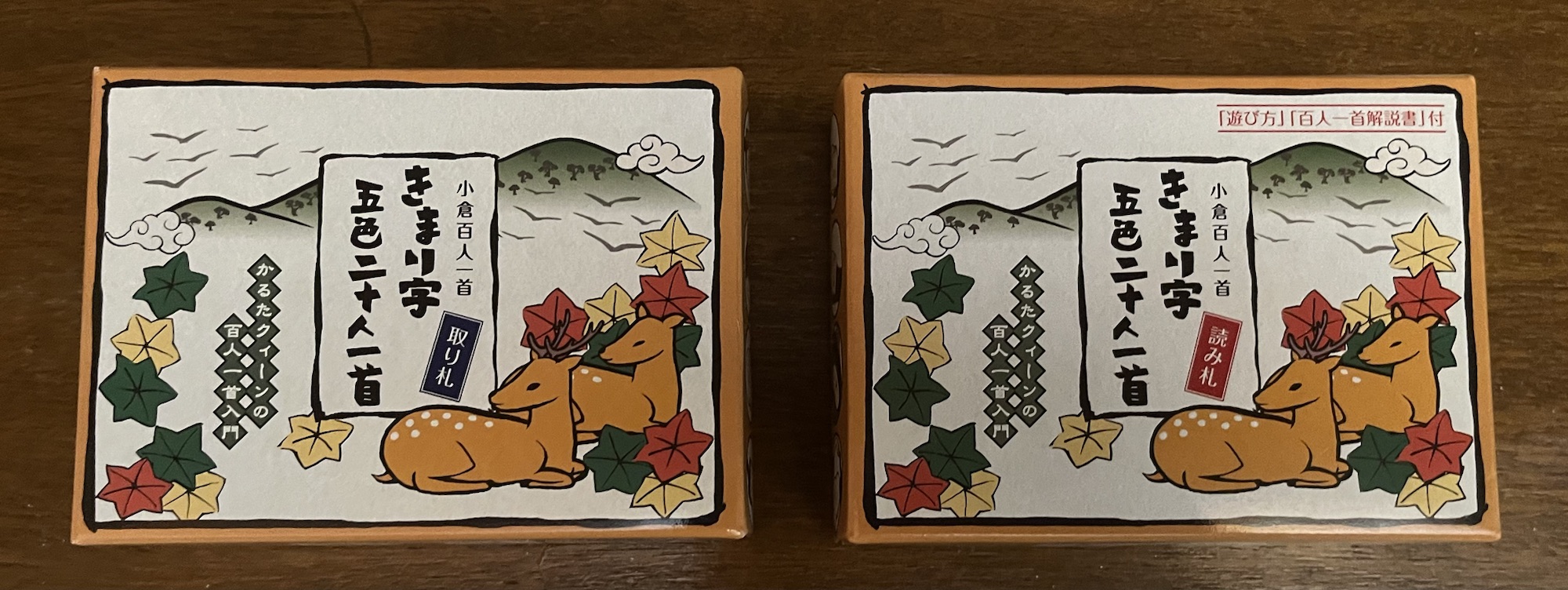
The set is very nicely put together. It comes in separate boxes for the reading cards, yomifuda, and corresponding the cards you take, torifuda.

Torifuda cards on the left, and yomifuda cards on the right.

Because the Five Color Hyakunin Isshu is mostly geared for children (and not nerdy middle-aged foreigners 😅), the illustrations have a cute, cartooinish quality, and the hiragana script uses a very readable font. Notice that the card borders have colors too: yellow and red in the pictures above.

Something that surprised me was that the back of the torifuda cards, which are usually not seen during play, also show the first half of the Hyakunin Isshu poems, with the kimari-ji emphasized. This saves new players the hassle of having to go and look up what the kimari-ji are.

Poem 15 shown in yellow on the left, and poem 65 in red on the right.

Also, if you get a set like this, and you use a Karuta reader app to read only that color. Many reader apps have readings sets specifically for the Five Color Hyakunin Isshu, however, the Oishi Tengudo set divides its cards differently, and so the sets in karuta apps are not the same. You have to make your own custom sets like I did here.

So, does it work as a training method? Is it worth foreign players going to the effort to getting one of these sets?

I haven’t had a chance to field-test yet, especially with new karuta players, so I don’t know. Some foreign players online have derided the five-color method, and instead advocated other learning methods (more on those in later posts), but unfortunately I don’t have enough data to say which works. Since I have already self-learned karuta (more or less), I can’t really use myself as a test.

That said, the resources above are really nice, and since they’re geared for children, they provide a nice, gentle introduction to playing karuta. You do need to read hiragana script, but if you’re intending to play karuta, you need to know hiragana anyway. It is also one way to start with learning a smaller subnet of the 100 poems, with increasing difficulty as you move between colors.

I am eager to try this out the next time I meet with the local karuta club.

1 I also ordered a yomite card set for reading purposes. I’ve written about that in a previous post.

Kurumazaki Shrine

During our recent trip to Japan, we visited the city of Kyoto. I talked about this here, but I also wanted to share another site in Kyoto that relates to one of the poets of the Hyakunin Isshu : Kuramazaki Shrine. You can find their official website here, but there is no English and the site is a bit hard to navigate. The shrine itself has a very interesting layout:

The photo above is the main promenade leading to the inner sanctum (toward the back). Apparently, it’s tradition in Japanese culture to walk along the edge of the walkway, not right in the middle, so bear that in mind when visiting a shrine like this.

This Shinto shrine is notable for its many visits by celebrities who leave autographed red plaques.

Shinto shrines often serve particular need in society: love, business success, health, etc. In the case of Kurumazaki Shrine, the focus is on show-business, acting, theater, etc.

Why does this matter?

It turns out that Sei Shonagon, author of the Pillow Book and poem 62 (よを) in the Hyakunin Isshu is enshrined here. Not only that, but you can purchase a special omamori charm with her image on it. I learned about this place on social media after seeing the actress First Summer Uika, who played Sei Shonagon in the historical drama, visit the shrine.

Because this site contains many sub-shrines and side passages, it took a bit of effort to find Sei Shonagon’s shrine. It is halfway down the promenade, on the left, and looks like so:

I paid my respects to this esteemed author, and the family and I continued to explore. I found First Summer Uika’s plaque near the inner sanctum:

Incidentally, my wife is a fan of the JPop group Snow Man, and you can see one of their markers just to the left. We both got something out of this trip. 😛

As I alluded to earlier, the shrine complex is deceptively long, with many nooks and hidden shrines and side paths. The site map gives some sense of this. For reference, the Sei Shonagon shrine is number 20 on the map, and you can see there are many other sites here too. I didn’t photograph every shrine here, and most are probably obscure to readers (and obscure to myself). The common theme was both fortune, and also show business. They were some pretty neat shrines though, such as this one showing various theater masks:

At last we came to the gift shop, and I got a Sei Shonagon charm (omamori):

Later, when I got back home and realized that the charm was intended for ladies,1 I was rather embarrassed, yet I didn’t want it to go to waste, so I gave it to my daughter whose preparing for college this year. It seemed fitting, and I am happy to report that she got a good score in her SAT exam the following month, so perhaps the charm worked?

Anyhow, Kurumazaki Shrine is not something tourists usually visit because it’s a little removed from the nearby touristy area of Arashiyama, and like many Shinto shrines, it’s very Japan-centric, but it’s a cool slice-of-life of Japanese popular culture, both past and present.

As for me, I was happy to pay my respects to such a wonderful poet and author directly, someone’s whose creativity and work indirectly helped make this blog what it is today.

P.S. Later that day, I stumbled upon the place where the Hyakunin Isshu was compiled, so I managed to visit two sites in one day. Not too shabby.

1 It’s clearly written on the signs, I just failed to pay attention. I was maybe a bit star-struck perhaps. 😅