This year has been very quiet on the blog as I focus on some other projects, parenting needs, and taking some much-needed time to recharge.
But I do have some updates:
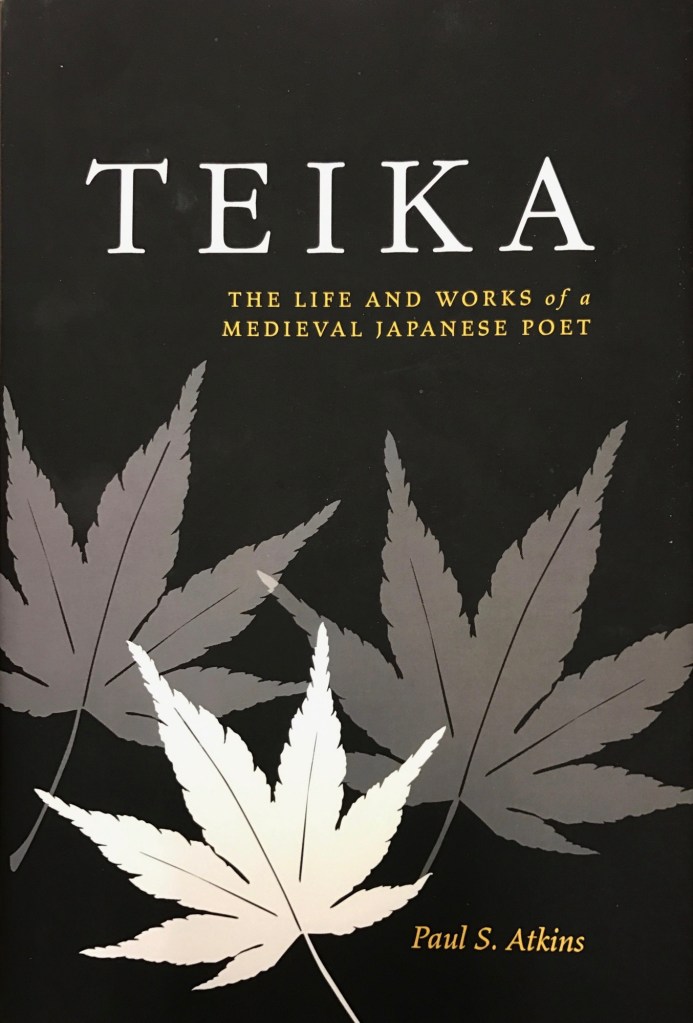
First, I got a new book published by the University of Washington about the compiler of the Hyakunin Isshu, Fujiwara no Teika (poem 97, こぬ). It is a dense book, maybe not for casual readers, but covers the history of Japanese poetry at the time very nicely.
The book has spurned some upcoming history posts, which I hope you will enjoy. I am still reading through later chapters though slowly, when time permits.
Second, I am experimenting with a format change for the poems to help visually, and easier to share outside the blog. I am testing it here with a recent post. Please feel free to leave a comment.
Third, the family and I went to Japan, which I mostly wrote about here on the other blog. I didn’t do anything Hyakunin Isshu or Karuta related (was burned out, see above), but I did pick up some more Japanese books which I hope to share. I am especially happy about the Pillow Book copy I found by Sei Shonagon (poem 62, よを).
Fourth, my karuta playing has mostly dropped to zero. Maybe it’s age, or challenges mentioned above, but competitive gaming just doesn’t have much appeal these days. I play every few months or so, just to stay on my toes, but unless there’s a change, my focus these days (in person and on the blog) is appreciating the poetry and history.
Finally, a big thanks to reader “L” for reporting some typos. During the big update in 2022-2023, I was making mass updates to modernize the site code and add some requested features, but some mistakes slipped through the cracks. So, if something seems off, please don’t hesitate to leave a comment.
Edit: after publishing this article, a kind reader “Kiri”, pointed out that an English-language option exists, so I re-wrote much of this post to focus on that. Thanks Kiri!
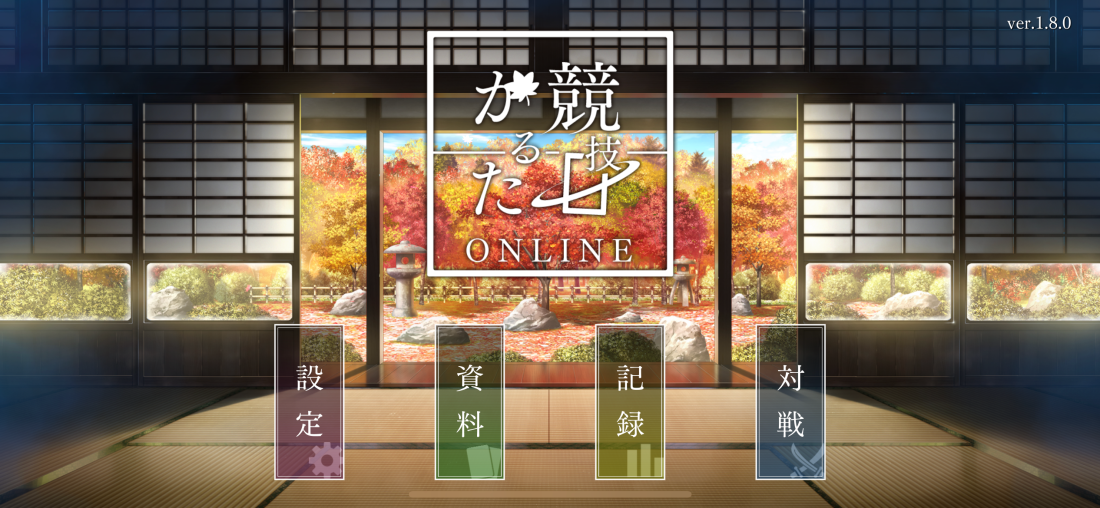
If you are interested in learning how to playkaruta, and especially if you live outside of Japan, it can be hard to find ways to practice, and learn the basics of karuta. The good news is that there is a great smartphone app for this. The Kyōgi Karuta Online (homepage), is available for both IOS and Google Android, and is a well-developed that lets you either play against a computer (great for training) or against opponents online (usually in Japanese time zones).
If you want to switch to English from Japanese, you can just follow this sequence of options (among other possible methods):
Battling
Battling of course is the point of the game, and there are two options available. The computer (CPU) option allows you to play anytime, anywhere without finding an opponent. I also find it very useful for training purposes.
Playing online of course is a more realistic experience, but requires finding opponents, and sometimes the skill levels do not always match.
Let’s look at each…
Computer Play
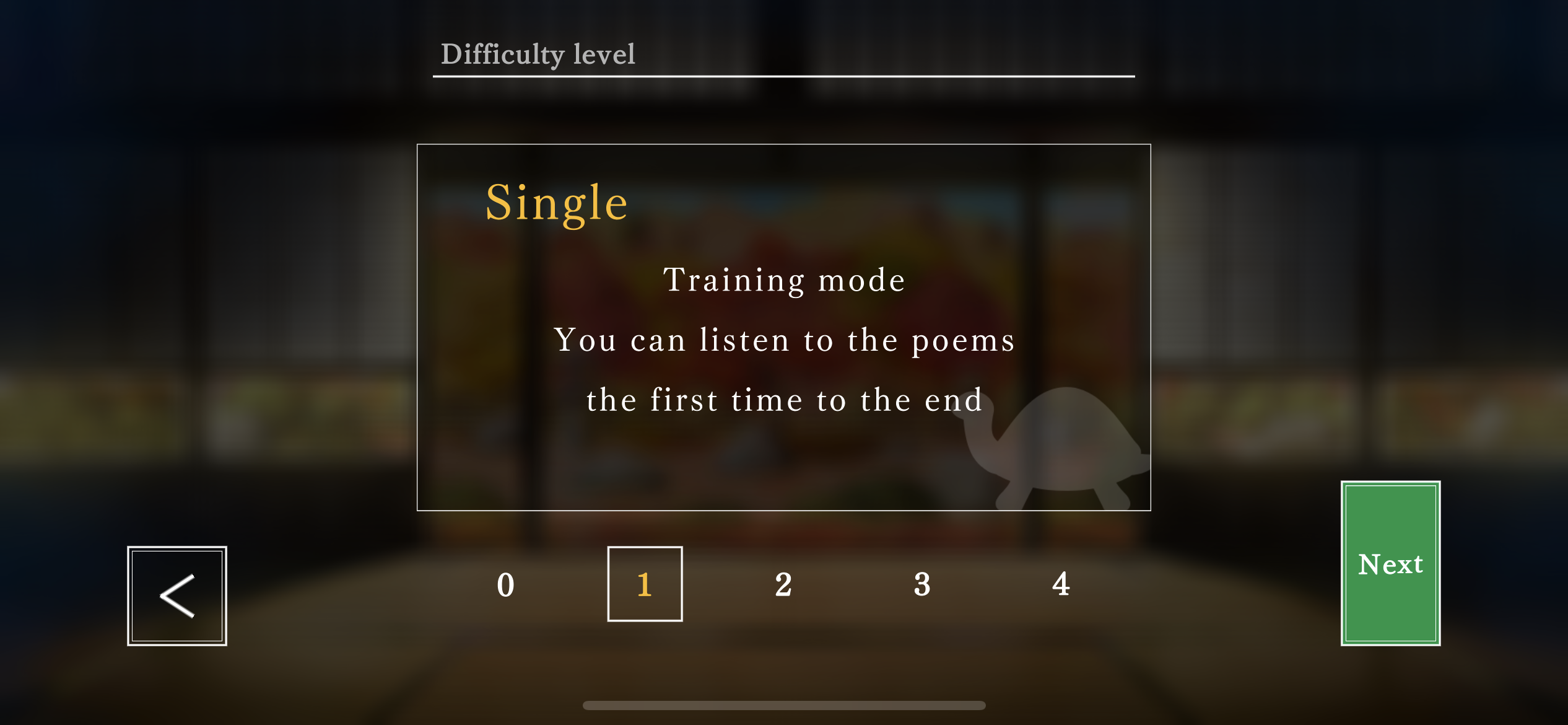
The computer play offers five modes, from left to right:
0 – short for tutorial
1 – single, this is basically a “goldfish” opponent, an opponent who is entirely passive allowing you to play at your own pace.
2 – easy
3 – normal
4 – hard
Even if you are somewhat familiar with the game of karuta, the tutorial is great and provides helpful tips and explanations of the rules of the game, plus you still get to play a match at the end.
I found, at first, that playing oneself (i.e the “goldfish” option) is a great, safe way to play and get the feel for the game before moving into easy mode.
Playing Online
At some point you will want to try online.
The vast majority of karuta players are in Japan and so Japanese daylight hours, especially weekends, are the best time to find an opponent. On the upper-right corner of the screenshot above you can change your gamer tag from “guest” to whatever you want. As of writing, my tag is SpockHere (not shown above), so maybe you might find me online.
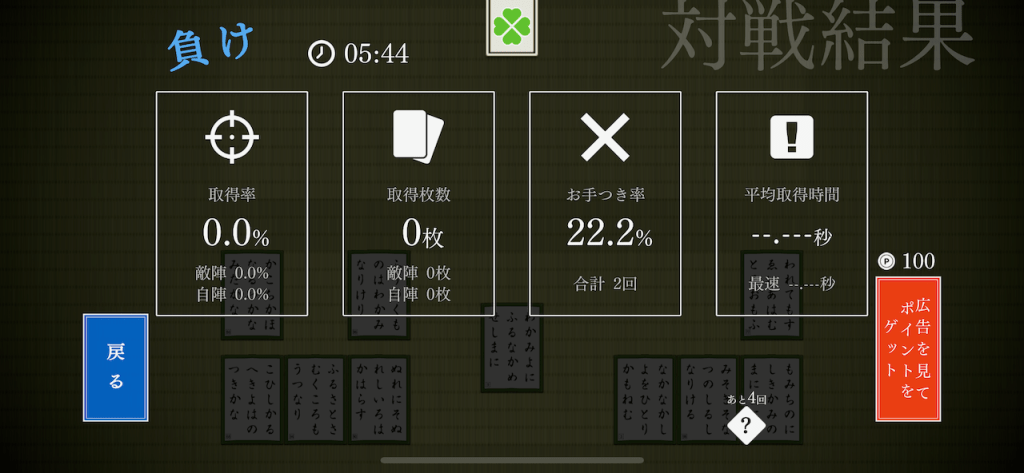
My first match online with a Japanese player was a complete disaster:
(I’ve been playing in Japanese partly to help with my reading, partly because I didn’t know the English-language option even existed until recently 🤦🏽♂️)
I took 0 cards and had 22.2% penalties because I was panicking. My opponent was so fast and aggressive that I failed miserably.
My second opponent was less experienced, but I still did poorly:
Here I did get 1 card, but still got 14.3% penalties.
That said, experience is the best teacher, so if you’re willing to take a few lumps early on, you can gain valuable experience that will help in the competitive scene. Eventually, the more you play, the better prepared you will be.
Mini Games
Note: special thanks to “Kiri” and “Lore” for pointing me to this feature. I totally overlooked it.
In the battle section, the game also includes some mini games which you can find here:
These games are a handy method for building basic skills.
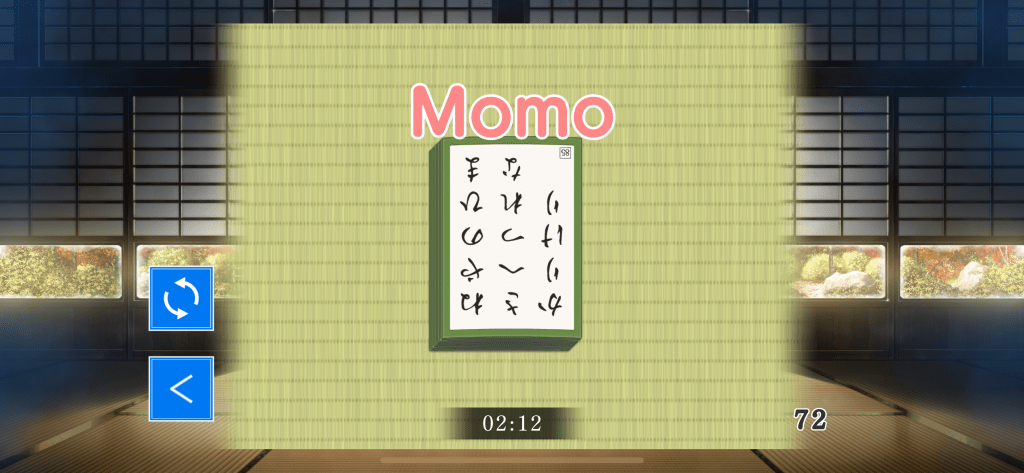
The “FlashCards” game (fudanagashi, 札流し in Japanese) will take you through all 100 torifuda cards and you guess the kimari-ji :
Sometimes the cards appear upside-down, just like in a real game.
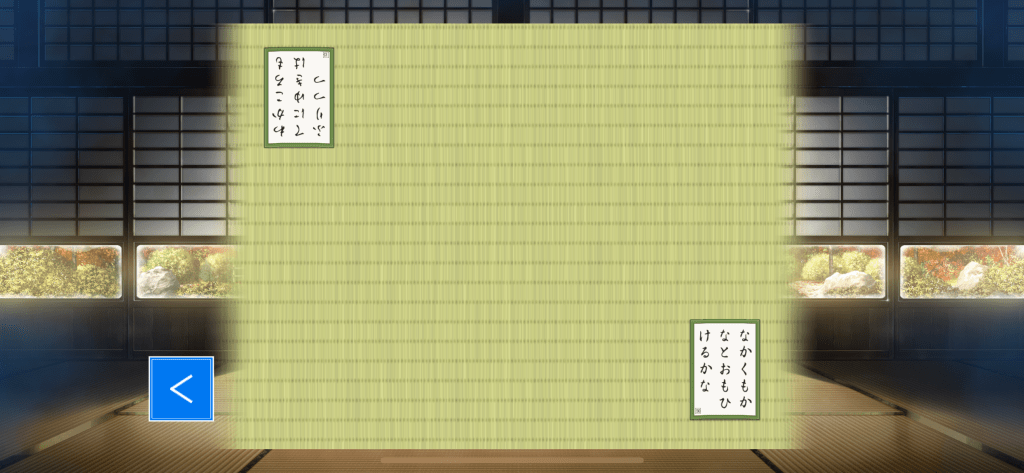
The other game, Branching Cards (kikiwake, 聞き分け), helps you distinguish cards with similar sounding kimari-ji. This is important in avoiding painful penalties.
One of these cards has a kimari-ji of きみがためは and the other has きみがためお. You have to listen carefully and take the correct one.
Conclusion
Karuta Online is a great app for easing into playing karuta without having to make a big commitment upfront, but also a way for experienced players to hone their skills too. Non-Japanese players, who are otherwise scattered around the globe, use it to organize tournaments too.