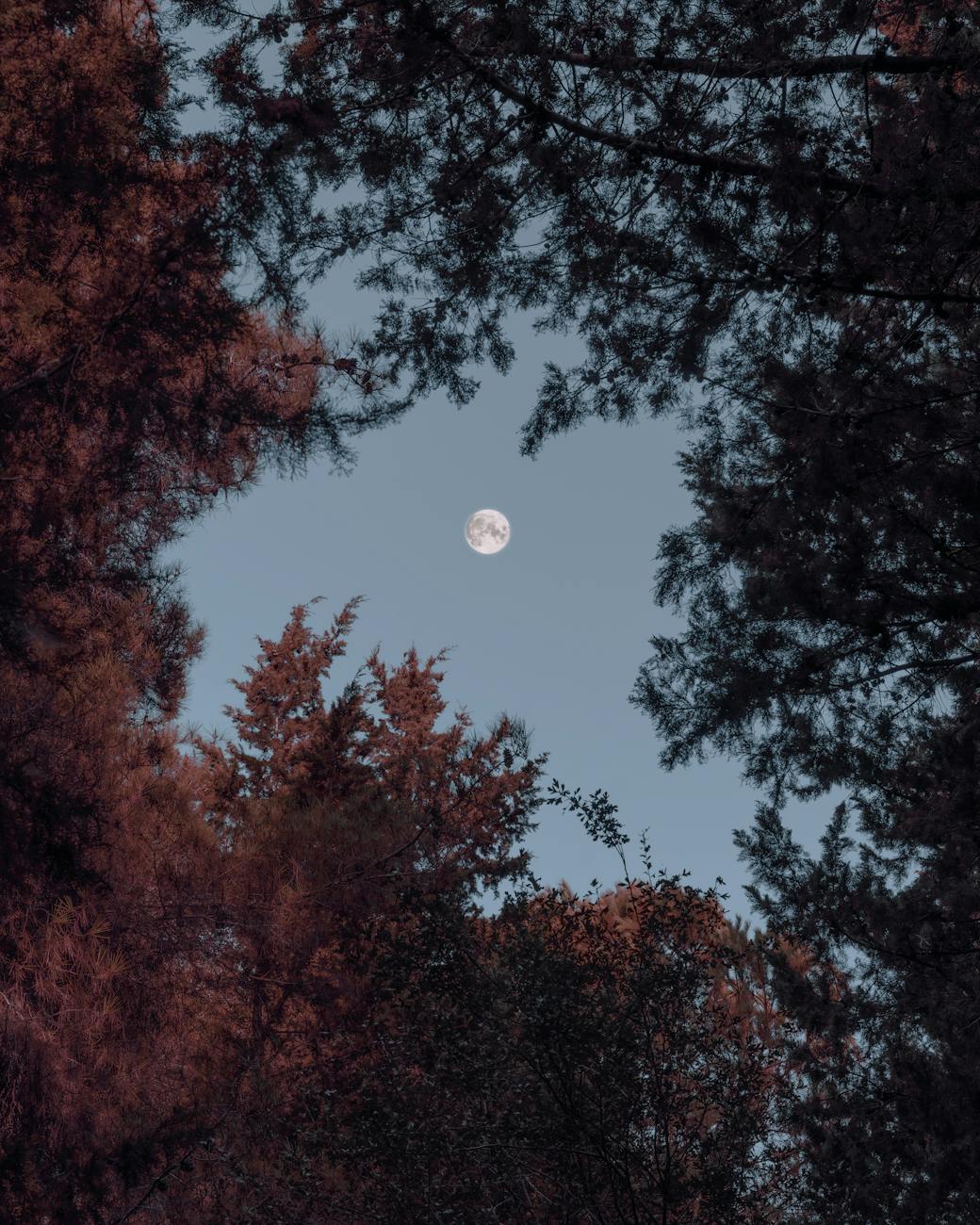
A Sad Autumn Moon: Poem Number 23

The Hyakunin Isshu is full of poems about Autumn as we’ve seen so far, and this is another example:

JapaneseRomanizationTranslation
月見ればTsuki mirebaWhen I look at the moon
千々に物こそChiji ni mono kosoI am overcome by the sadness
悲しけれKanashi kereof a thousand,
thousand things—
わが身ひとつのWaga mi hitotsu noeven though it is not Fall
秋にはあらねどAki ni wa aranedofor me alone.
Translation by Dr Joshua Mostow

The author, Ōe no Chisato (大江の千里, dates unknown), is the nephew of Yukihira (poem 16) and Narihira (poem 17) and boasted a famous collection of his own called the Kudai Waka. Ōe no Chisato was also the son of a famous Chinese-studies scholar, who taught Confucianism and composed Chinese-style poetry (not Japanese-style waka poetry like above). Ōe no Chisato was thus part of the Imperial Court culture of the time, but not necessarily high-ranking. More of a middling family.

Similar to poem 22, this poem has influence from Chinese Six Dynasties style, but as Mostow explains, the poem reflects a change where Chinese poetic style is adapted into more native Japanese style. Mostow explains that the poem may allude to a famous poetic line by Bo Juyi.

As mentioned before, the moon plays a really important role in the Hyakunin Isshu, and poetry in general. But also, it’s a source of festivities too. In Japan, the 15th lunar day of the 8th month (harvest moon in the West), marks a fun time called o-tsukimi or “moon-viewing”. More on that in the other blog.

As for the poem, it kind of expresses a quiet humility too, I think, which is why I always find it one of the most memorable. The Moon inspires a lot of deep feelings, but this poem reminds us that it does not shine just for us.

Speaking of the moon, Ōe no Chisato is also famous for another moon poem, which is in the imperial anthology Shin-Kokin-Wakashu and considered one of the finest in the entire collection:

JapaneseRomanizationRough Translation1
照りもせずTeri mo sezuNeither the shining moon,
曇りもはてぬKumori mo hatenunor the cloudy night
春の夜のHaru no yo nocan win against
朧月夜にOborozukuyo nia hazy moonlit
しくものぞなきShiku mono zo nakinight in Spring.
1 Amateur translation

This poem in turn was used in the iconic Tales of Genji by Lady Murasaki (poem 57 in the Hyakunin Isshu, め).

So, we can see that Ōe no Chisato was no stranger to poetry, especially Chinese-style poetry, and was capable of describing the moon in many contexts.

Happy Moon Viewing everyone!

A Good Harvest: Poem Number 1

This is another iconic poem about Autumn and also happens to be the first poem in the Hyakunin Isshu:

JapaneseRomanizationTranslation
秋の田のAki no ta noIn the autumn fields
かりのいKario no io nothe hut, the temporary hut,
とまのあらみToma no aramiits thatch is rough
わが衣出はWaga koromo de waand so the sleeves of my robe
つゆにふりつつTsuyu ni furitsutsuare dampened night
by night with dew.
Translation by Dr Joshua Mostow

This, the opening poem of the Hyakunin Isshu, was composed by Tenji Tennō (天智天皇, 626 – 671), known in English as Emperor Tenji. Emperor Tenji helped oversee Taika Reforms as Crown Prince from the new capitol in Otsu, home of Omi Shrine, and was responsible for promulgating important historical texts in early Japanese history such as the Nihon Shoki and Kojiki. Further, he was a pretty ambitious guy and needed to strengthen his family lineage, so he compelled his younger brother to marry his own daughter, after marrying his younger brother’s former wife, Princess Nukata.

Complicated.

This poem is unique in the anthology because it deals with subjects that related to peasant life, rather than life in the Court, and later commentators explain that this was because of Emperor Tenji’s image as a benevolent ruler. It’s also possibly because of this image, that Fujiwara Teika chose this as the first poem.

In any case, the poem gives a window into the life of the peasants in Japan during this era. Like elsewhere in the world, the harvest was a very important time of the year, and in each village, someone had to guard the grain overnight from theft or from animals. They would often stay in small thatched huts, and stay awake overnight. As night fell, the temperatures would get cold and their sleeves wet with dew, while the smell of dried grains permeated the air.

Outside the aristocratic court, this was the life that many led to feed their family and it was this labor that Emperor Tenji sought to praise.

A Deer’s Cry in Autumn: Poem Number 5

This is a very iconic poem about Autumn from the Hyakunin Isshu:

JapaneseRomanizationTranslation
奥山にOkuyama niWhen I hear the voice
もみふみわけMomiji fumiwakeof the stag crying for his mate
鳴く鹿のNaku shika nostepping through the fallen leaves
こえ聞く時ぞKoe kiku toki zodeep in the mountains—
this is the time
秋は悲しきAki wa kanashikithat autumn is saddest.
Translation by Dr Joshua Mostow

The poem was composed by one mysterious figure named Sarumaru Dayū (猿丸大夫, dates unknown), whom we know nothing about.

My new book offers a couple theories as to Sarumaru’s identity. One theory is that he could be the son of Emperor Tenmu (mentioned here among others places) named Prince Yuge (弓削皇子, Yuge no Miko). Another theory suggests that he could be the infamous Buddhist monk Dokyo, Japan’s version of Rasputin, who served Empress Shotoku. However, these theories are, as of writing, entirely speculative. We simply don’t have enough information.

Whoever Sarumaru was though, he nonetheless earned a place among the Thirty-Six Immortals of Poetry.

Even in the Kokinshū where this poem is first found, it is listed as anonymous, according to Professor Mostow, but seems to have been composed for a poetry contest in 893 hosted by Prince Koresada. Mostow further explains that this poem is surprisingly tricky to interpret: who is walking through the leaves, the deer or the author?

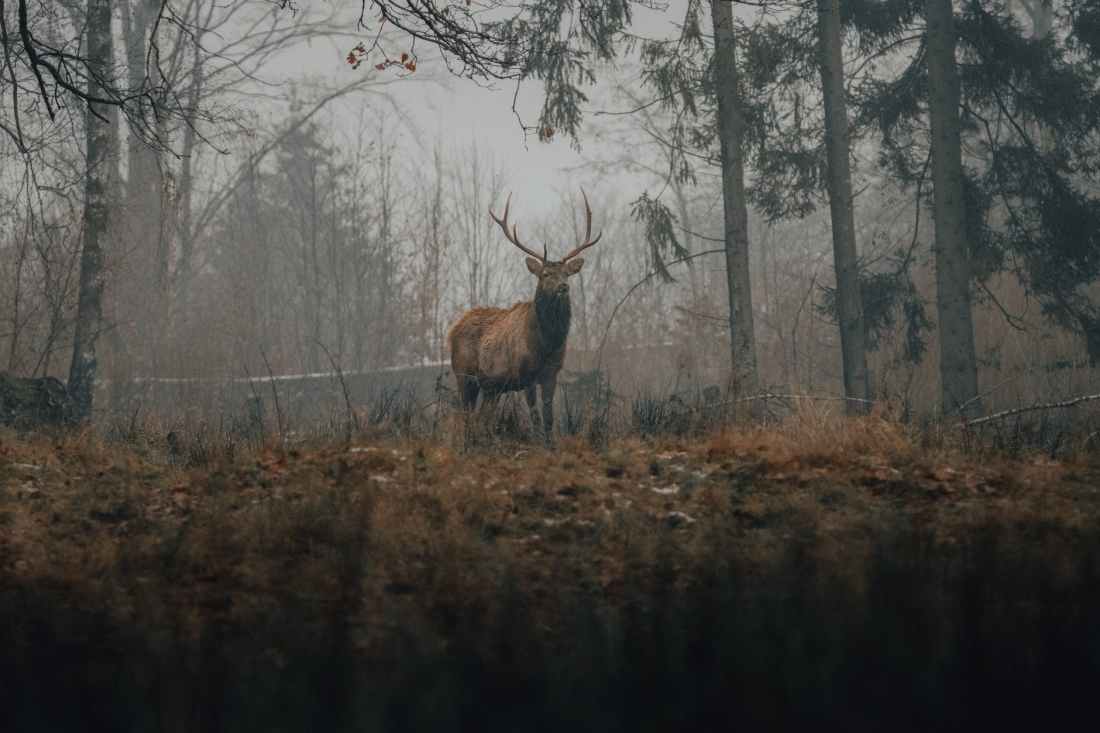
Speaking of deer, deer have been an integral part of Japanese poetry since early times. This and poem 83 show how the deer’s cry is a popular poetic symbol of sadness or melancholy.

Public Scrutiny: Poem Number 18

This was something many aristocrats in the old Heian court days probably faced:

JapaneseRomanizationTranslation
住の江のSumi no e noMust you so avoid others’ eyes
岸による波Kishi ni yoru namithat not even at night,
よるさYoru sae yaalong the road of dreams,
夢のかよYume no kayoi jiwill you draw nigh like the waves
人目よくらHito me yoku ranto the shore of Sumi-no-e Bay?
Translation by Dr Joshua Mostow

This poem was composed by Fujiwara no Toshiyuki Ason (藤原敏行朝臣, ? – 901) who was one of the Thirty-Six Immortals of Poetry, and was an active participant of poetry contests in his day and noted for his excellent calligraphy. His calligraphy was so good, he was often compared with the talented Buddhist monk and founder of the Shingon sect, Kukai.1 Coupled with his long life-span, he has a great presence in poetry and calligraphy during his era. My new book mentions that both he and one Ariwara no Norihira were both infamous playboys, and ended up marrying sisters. Needless to say his wild episodes were recorded in certain tales at the time.

In fact, this poem is part of a poetry contest held in 953, presumably under the theme of forbidden or another similar topic. The poem uses a clever pun for yoru. The first yoru in the poem refers to the waves visiting (寄る in modern day Japanese) the shore of Sumi-no-e Bay (modern day Osaka Bay, specifically Sumiyoshi).

The second yoru means night (夜). The author’s submission to the poetry contents laments that public scrutiny in the small, tightly-knit aristocracy of the Heian Period was so intense that his lover couldn’t even visit him even in his dreams. Professor Mostow points out that the poem can also be interpreted that he could not visit his lover in his dreams, as well.

Because it was such a closed and stratified society, gossip was rampant, and an embarrassing situation could destroy one’s career and family reputation. Forbidden love was something many in the Heian Court faced, and no doubt Toshiyuki’s poem resonated with such people.

1 Kukai (a.k.a. “Kōbō Daishi” posthumously) was so famous for his calligraphy, a phrase exists even to this day in Japanese:

弘法にも筆の誤り
kōbō ni mo fudé no ayamari

even Kobo Daishi’s brush makes mistakes

A Small Token: Poem Number 15

Some people give cards, some people give poems:

JapaneseRomanizationTranslation
君がためKimi ga tameFor my lord’s sake
春の野に出でてHaru no no ni ideteI went out into the fields of spring
若菜つむWakana tsumuto pick young greens
わが衣手にWaga koromode niwhile on my robe-sleeves
雪はふりつつYuki wa furitsutsuthe snow kept falling and falling.
Translation by Dr Joshua Mostow

The poem was composed by a young Kōkō Tennō (光孝天皇, 830 – 887), Emperor Kōkō in English, who was traditionally, the 55th Emperor in Japan. He ascended the throne somewhat late (age 55) after Yōzei (poem 13, つく) abruptly retired. Koko’s own reign was similarly short, and power rested in the hands of his minister Fujiwara no Mototsune.

Nonetheless, Koko had a reputation for being a rather bright and easy-going youth. Despite being a Prince of the Blood, he was unlikely to inherit the Throne anytime soon (Yozei was still young, and Koko wasn’t directly related), and thus lived in obscurity. It’s said that he even had to cook his own meals. A poem mourning his passing states that his Imperial chambers still had black soot in them from cooking his own meals even after becoming Emperor.

The poem above is from those younger days, after he picked some wild flowers and herbs and sent them to someone as a New Year’s greeting. The poem was included in the offering. Young greens (wakana, 若菜) were the seven herbs used in the traditional holiday of Nanakusa on January 7th.

Even in the old Lunar Calendar, Nanakusa would fall around late January to early February. This helps to explain why snow was falling on the young prince’s sleeves.

Who was the recipient? It’s not known who received the poem and herbs, but since Nanakusa herbs are meant to bring safety, plus the language used (kimi ga tamé, きみがため), it definitely implies a young woman he cared about. ❤️ One theory suggests it was a beautiful girl named Tachibana no Kachiko (橘嘉智子), who was the consort of Emperor Saga.

This poem doesn’t use a lot of clever wordplays, the meaning is fairly straightforward, and it paints a nice image. It is a remarkably sweet, easy to grasp poem, that even foreign students of the Hyakunin Isshu can easily learn.

Who’s Fault Is It? Poem Number 14

This poem has an interesting connection with the city and region of Fukushima as we shall see:

JapaneseRomanizationTranslation
みちのくのMichinoku noWhose fault is it
しのぶもずりShinobu mojizurithat my feelings have begun
to tangle
たれゆTare yue nilike the tangle-patterned prints
乱れそめにしMidare some nishiof Shinobu from the
distant north?
我ならなくにWare naranaku niSince it is not mine, it must be…
Translation by Dr Joshua Mostow

The author is Kawara no Sadaijin (河原左大臣, 822 – 895), “Riverbank Minister of the Left”. His personal name was Minamoto no Tōru (源融), the twelfth son of Emperor Saga. He was renowned for his courtly elegance, and Professor Mostow states that he may have served as a partial role-model for the famous hero of the Tale of Genji.

The poem is thought to be Toru’s defense to his wife or lover about his faithfulness, but he uses some interesting imagery to convey how upset he is that his faithfulness is questioned. Mostow points out that the poem is a subject of debate because it’s also been interpreted as an expression of secret love to someone else (i.e. “why did you make me feel this way”?).

The place referenced, Shinobu in Michinoku, is the old name for what is now the city of Fukushima in Fukushima Prefecture. Although it is now known for last year’s earthquake and nuclear disaster, the area was originally a frontier area during the time of the Nara and Heian periods, and as evinced in the poem above, famous for it’s patterned cloth called shinobu mojizuri.

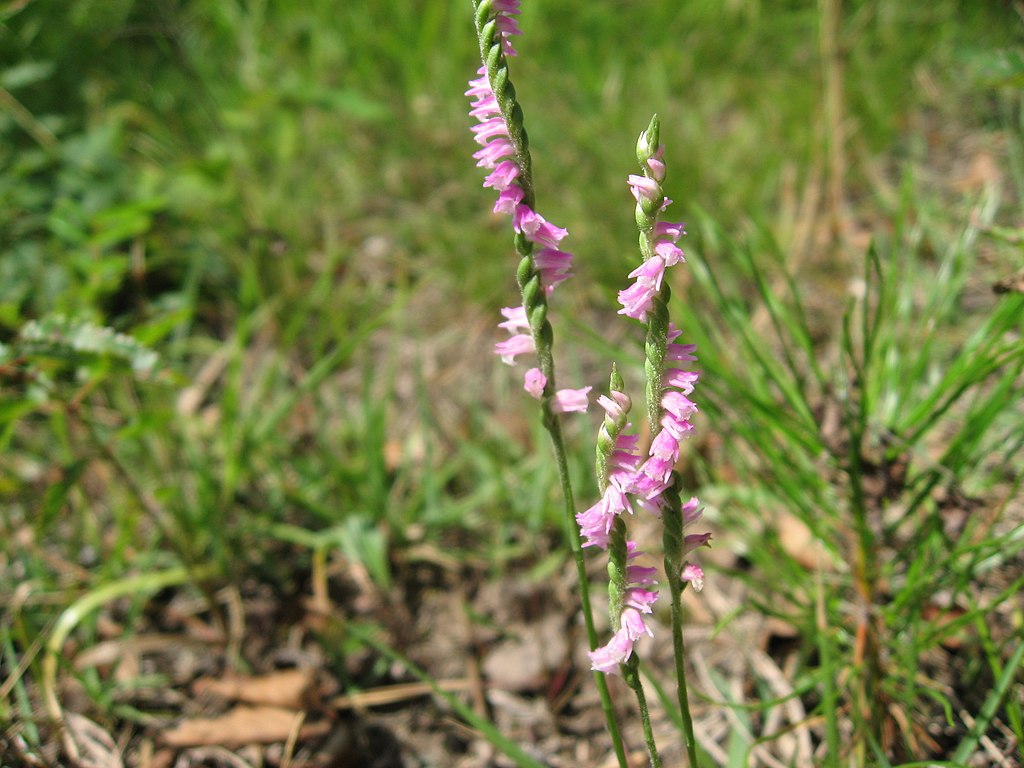
The term mojizuri refers to a type of plant, Spiranthes sinensis var. amoena pictured above (photo by Qwert1234, CC BY-SA 4.0, via Wikimedia Commons), a variety of orchid found in east Asia. It’s also called nejibana in modern Japanese. However, mojizuri also refers to a kind of dyed-cloth pattern made from the plant. The method involves pressing a cloth between the plant and a rock, forming dyed patterns like the ones shown here. This the context that Minamoto no Toru is using in the poem.

The Morning After: Poem Number 50

To celebrate our 50th poem on this blog, I am posting poem 50, which happens to be a particularly good one:

JapaneseRomanizationTranslation
君がためKimi ga tameEven the life that
しからざりしOshi karazarishiI’d not have been sorry to lose
命さInochi saejust to meet you once,
ながくもがなとNagaku mo gana tonow, having met, I think:
おもけるかなOmoi keru ka na“I want it to last forever!”
Translation by Dr Joshua Mostow

This poem was composed by one Fujiwara no Yoshitaka (藤原義孝, 954 – 974), the third son of Fujiwara Koremasa (poem 45). It was composed and sent after spending the night with his lover. These kind of “morning after” poems are very common at the time because lovers could not meet openly during the day, so they often met at night and slept together. The term for this kind of poem is kinuginu no uta (後朝の歌), and were often a way of sharing feelings after the two have parted company.

As Mostow also explains, it’s not clear why he valued his life so little, but the main interpretation is that he loved her so much, he was willing to throw his life away just to meet her. Other interpretations are, among other things, that he would have thrown away his life for her sake if he could.

What really makes this poem extra tragic though, is that Yoshitaka died at the age of twenty (he lived from 954 to 974), from smallpox. We don’t know what happened between him and his lover, but at least his words live on.

Anyhow, we’re at the halfway-point of this blog, and I wanted to thank everyone for your support. The biggest thanks go to Professor Mostow who graciously allowed me to use his translations for this blog (if you like to study the Hyakunin Isshu more in depth, I recommend his book).

And we’ve still got 50 to go. 🙂

Meeting and Parting: Poem Number 10

This poem is a nice reminder that “traffic” and “commuting” are two things that haven’t really changed much in 1,000 years:

JapaneseRomanizationTranslation
これやこのKore ya konoThis it is! That
行くもかえるもYuku mo kaeru mogoing, too, and coming too,
別れてはWakarete wacontinually separating,
知るも知らぬもShiru mo shiranu mothose known and
those unknown,
おう坂の関Ōsaka no sekimeet at the Barrier of Ōsaka
Translation by Dr Joshua Mostow

This poem was composed by one Semimaru (蝉丸, dates unknown) who is reputedly a blind man who built a hut near Osaka Barrier and was famous for playing the biwa, but the authenticity of this story is questionable, and as Mostow points out, it’s not even certain he existed at all. The story about his life has also changed throughout the generations, so in some cases he’s the servant of the son of an Emperor, and in others he’s the son of an Emperor, abandoned by his blindness.

According to one account in my new book, a high-ranking official named Minamoto no Hiromasa (源博雅) once heard a rumor of a talented blind man with a biwa lute who lived near the Osaka Barrier (see below). He wanted to hear this man’s music, and sought him out for three years until he finally found him on the evening of 15th day of the 8th month (old lunar calendar), and from this man, Hiromasa learned to play the songs that he had been squirreling away. Songs titled such as 流泉 (ryūsen, “flowing spring”) and 啄木 (takuboku, “woodpecker”).

The place in question, Osaka Barrier, is a popular subject of poetry from this era. Poems 62 and 25 also mention the same place because it was a popular meeting spot for people coming and going from the capitol (modern-day Kyoto) eastward. Note that this Osaka has no relation to the modern city of Osaka, which was called Naniwa during that era. In fact the name of Osaka Barrier is also a pun. The Chinese characters are 逢坂, which means “meeting hill”, but is also the place-name.

Anyway, these kinds of check-points, or sekisho (関所) existed in Japan across major roads going in and out of the capitol, but were also popular meeting places for friends and lovers too, as well as having inns nearby for weary travelers. The featured photo above is an example of “sekisho” checkpoint, photo by 663highland, CC BY-SA 3.0, via Wikimedia Commons

The Osaka Barrier in particular was the first check-point leaving eastward from the capitol, so many people probably parted company here, or met old friends at this particular gate more than others. It’s fun to imagine what Osaka Barrier was like in those days. As Mostow points out, this poem probably was originally just a poem about Osaka Barrier, but by the medieval era, it took on an increasingly Buddhist tone in symbolizing the coming and going of all phenomena. Even modern Japanese books on the Hyakunin Isshu tend to reflect this sentiment. Pretty interesting metaphor I think.

One other interesting thing about this poem is its rhythm. If you read this one out loud, the rhythm is very easy to follow, and this is probably one of the easier poems to memorize if you’re looking for a place to start (poem 3 is another good choice in my opinion 😉).

Finally, one random note about Semimaru himself.

A picture of a karuta card depicting Semimaru (poem 10), with his poem above his head. His clothes look similar to a monk and he is holding a Buddhist rosary. His eyes are closed, as he was reputedly blind.

His artistic depiction in karuta cards, such as the yomifuda card above based on the famous Korin Karuta collection, leads to frequent confusion by people who play bozu mekuri: is he a monk or a nobleman? Even my new book mentions this conundrum among Japanese players. His lack of verified biographical information makes this question even more mysterious. The book jokes that the author’s house-rule is that if anyone pulls the Semimaru card, then everyone loses what their stack of cards. Feel free to make your own house-rule. 😊

Getting Exiled Isn’t Fun: Poem Number 11

Another random poem I found lately. Interesting enough, it has some relation to the much later poem by Emperor Gotoba (poem 99):

JapaneseRomanizationTranslation
わたの原Wata no haraO tell her, at least,
八十島かけてYasoshima kaketethat I’ve rowed out,
heading towards
こぎ出ぬとKogi idenu tothe innumerable isles
人には告げよHito ni wa tsugeyoof the ocean’s wide plain,
あまのつり舟Ama no tsuribunéyou fishing boats of
the sea-folk!
Translation by Dr Joshua Mostow

The poet author was Sangi Takamura (参議篁, 802 – 852), “Counselor Takamura”, also known as Ono no Takamura. He was one of the premiere poets of his time, particularly with Chinese poetry, which was very popular in that era. People considered him a rival to the famous Chinese poet Bo Juyi, which was quite a compliment. Bo Juyi’s poetry is frequently recited or mentioned in many works from the Nara and Heian periods (such as the works of Lady Murasaki, poem 57).

For his talent with Chinese poetry, Takamura was selected to be part of the 837 embassy to Tang Dynasty China, the same one as Abe no Nakamaro (poem 7). Such trips were prestigious, but also incredibly perilous, because Japanese ships were not designed to cross deep sea, and withstand frequent typhoons. Plus ambassadors had to stay for 10+ years at a time, and some never returned from China at all, as in Nakamaro’s case.

Takamura, while revered by Emperor Saga, also had a dubious reputation for being a straight-shooter. As an eccentric genius he had a tendency to annoy everyone, including Emperor Saga.

It was probably for these two reasons, his hesitancy to carry out his ambassadorial duties, and his lack of tact, that Takamura was exiled to Oki Island and sent this poem back home as he headed for exile.

Oki Island shown above in the featured photo (photo by Yuvalr, CC BY-SA 4.0, via Wikimedia Commons), is where Emperor Gotoba (poem 99) was also exiled centuries later and stayed there for 20 years before he died. It is a lonely island facing the cold, windy Japan Sea/East Sea and far removed from the Court. Noble-born members of the Court were often exiled here, among other locations (see poem 100) for some length of time until they either died, or the reigning Emperor granted clemency. Fortunately, Takamura was pardoned a year a later, and allowed to return home.

One other note is that the poem slightly violates the traditional 5-7-5-7-7 syllable count in most waka poems. The third verse has 6 verses. Poets did occasionally violate this rule, probably for good reasons, but it’s interesting when it comes up. Then again, in Takamura’s case, maybe he just wanted to annoy people, or he just didn’t care. 🤭

The Wonders of Mount Fuji: Poem Number 4

This was something I read recently that I felt like posting:

JapaneseRomanizationTranslation
田子の浦にTago no ura niAs I set out on
うち出でて見ればUchi idete mirebathe beach of Tago, and look,
白たShirotae noI see the snow
constantly falling
富士の高嶺にFuji no takane nion the high peak of Fuji,
雪は降りつつYuki wa furitsutsuwhite as mulberry cloth.
Translation by Dr Joshua Mostow

This poem was composed by Yamabe no Akahito (山部赤人, dates unknown ) who according to Mostow was a contemporary of Hitomaro (poem 3). He is also one of the Thirty Six Immortals of Poetry and was a leading poet during the reign of Emperor Shomu and contributed to the Manyoshu. He is revered alongside his contemporary, Kakinomoto no Hitomaro (poem 3) as a “saint of poetry”. Compared to Kakinomoto no Hitomaro, Yamabe is known for a poetry style focused on the beauty of nature such as this poem, rather than clever verse.

Yamabe, for his part, served as a court poet under the pious Emperor Shomu. Unfortunately there is no information about his life before he served in the Court. My new book points out that since he was never mentioned in the historical document the Shoku Nihongi, Yamabe was probably a low-ranking bureaucrat.

Mostow carefully explains that this poem, like many of the earlier poems in the Hyakunin Isshu were written in an old Japanese-Chinese hybrid script called manyōgana and was thus open to many interpretations. In fact, the poem has evolved over time and the version in the Hyakunin Isshu is only one such version. The version above, compiled by Fujiwara no Teika (poem 97), was in an imperial anthology called the Shin-Kokin Wakashu. But the original version, poem 318 in the Manyoshu, read like so:

JapaneseRomanizationRough Translation1
田子の浦ゆTago no ura yuAs I passed
うち出でて見ればUchi idete mirebathe bay of Tago, and looked,
ま白にそMashiro ni soI saw the white snow
富士の高嶺にFuji no takane nifalling on the high peak
雪は降りけるYuki wa furitsukeruof Mount Fuji.
1 apologies in advance for any mistakes or for quality of translation

In this version, it sounds like Akahito is describing something more in the past, and the poem doesn’t use a pillow word (see below) to describe the snow. It uses the more mundane description of “very white”, not “white as mulberry cloth”.

The aforementioned vagaries of Manyogana script also matter because there’s much debate about where Akahito actually was when composing this poem. The location of Tago no Ura is now Suruga Bay in Shizuoka Prefecture, but originally may have meant some place much closer to Mount Fuji, under it’s “shadow”, so to speak.

One other interesting note for readers of this blog is the middle line, shirotae no, which as you may recall from poem 2 is one of those special “pillow words” used in Japanese poetry. It is a very idiomatic term which conveys something that is gleaming white, or as Professor Mostow translates, white as mulberry cloth. At some point in history, the third verse changed from a more mundane description of snow to a much more impactful description.

P.S. Featured photo is Mount Fuji as seen from Suruga Bay, photo by Shinichi Morita, CC BY-SA 2.0, via Wikimedia Commons