My SECOND Karuta Set and More!

While here in Japan for a couple weeks, I picked up my first karuta set of the Hyakunin Isshu at the local bookstore when I realized that getting to the more famous store was harder than I expected, and I just won’t be here long enough for local delivery.

However, my interest in the Hyakunin Isshu was not sated with a single set, and so, when the family I went to a local Kinokuniya bookstore (we have them in the US too), I found another set that I liked, shown above.

This set, by Silverback, linked here, is another set of karuta cards, but this one includes a CD of someone reciting the poems (読み手, yomité) just like in a karuta game. As you can see from the linked product description, this set has the cards color-coded. The illustrated cards (yomifuda) have a beige background, while the verses cards (torifuda) are blank white for easy searching.

When I got back home, I imported the CD into my iTunes playlist, so I can shuffle the album. That allows me to practice the karuta game since the next card read out loud will be random.

I can’t decide with of the two sets I like better. The artistic detail on the Kyoto set (the first purchase) is really quite amazing, while the character illustration on the Silverback set is more what I am familiar with. The CD the Silverback set is quite handy (and sounds very nice), while the box and presentation on the Kyoto set is more sturdy.

I suspect I will probably continue collecting sets over time. Each one is a work of art by itself. I also learned alot how and where to purchase karuta sets and will be updating my blog post about it as a result.

Separately, while at Kinokuniya though, my wife noticed this fascinating book (publisher’s link):
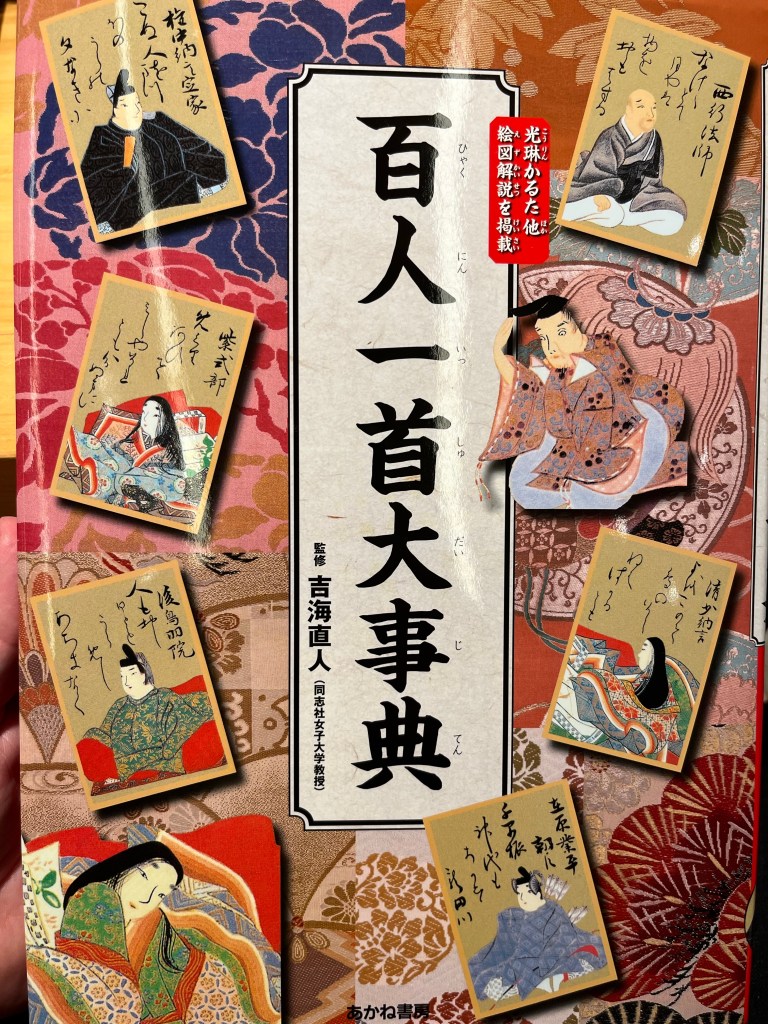
This is a comprehensive book (大辞典, daijiten) all about the Hyakunin Isshu. I like this book because it’s geared for younger audiences, so it’s easier to read, but it’s very comprehensive in detail about each poem, old vocabulary, famous places mentioned in the anthology and so on. I will likely be drawing on this book in the future.

One other interesting note about the book is that it does not present the poems in the usual numerical order, instead it sorts by topic (love, spring, autumn, etc) which is (coincidentially?) closer to how Waka poems were organized in official Imperial anthologies.

Anyhow, it’s been a very lucrative haul, and gives me plenty to admire and practice with. I have been busy memorizing poems of the Hyakunin Isshu over the past few weeks and will write more about how to accomplish that.
My First Karuta Purchase

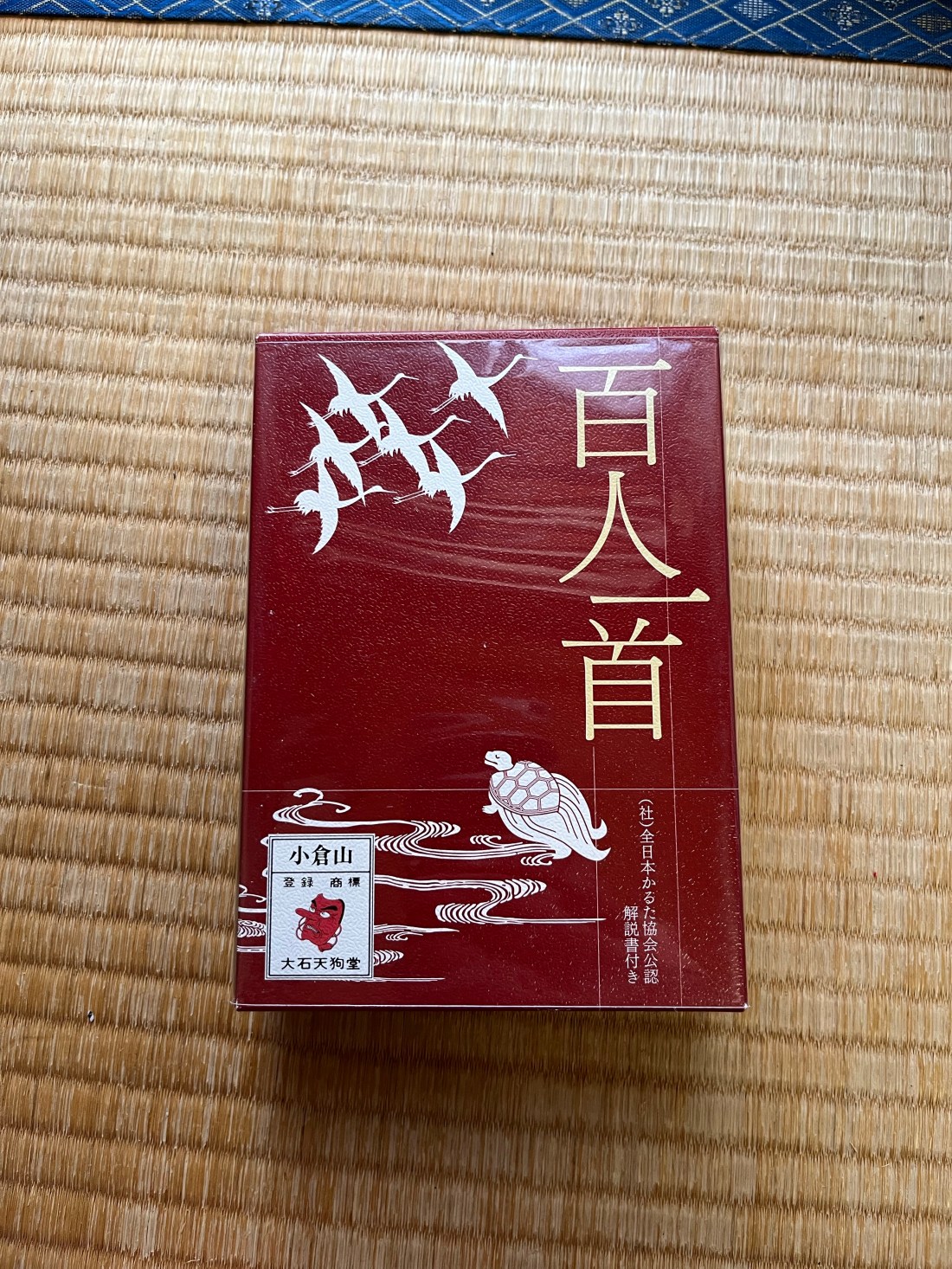
I finally did it! I got my very own karuta set of the hyakunin isshu.

Since we came to Japan earlier this week (just ahead of snowy weather, no less), my original plan was to go to the famous karuta shop in Tokyo: Okuno Karuta.

However, since we are here primarily for family matters, we are here for a narrow window of time, and because it’s fairly deep in Tokyo (and thus far removed from my in-laws home), getting there is probably not feasible. Plans might change, but I don’t think I will be able to visit this time around.

On the other hand, at a local bookstore I found a really nice, affordable set!

This set is made by Kyoto Tengu-dō, another famous karuta company. I love the box design. Inside, you can see the full set of yomifuda and torifuda cards:

As the product link shows, this set was designed for beginners to karuta games, and the torifuda cards (the ones without pictures) are written in a very legible font, so they’re easier to newcomers to find cards on the fly.

The illustrations are different than what I normally see on karuta cards, but I found out later that this is more typical of handicrafts from Kyoto, versus more Tokyo-style art. Also, the more I look at them, the more I appreciate the amazing detail, such as the clothing patterns, curtains, etc. It’s really fun just to flip through the cards and look.

This set cost me ¥1700, so about $12-15 (depending on exchange rate), which as a gorgeous starter set is quite good deal in my opinion.

Also, I suspect that this won’t be the last set I collect either. 😜

P.S. I had also thought about ordering from Okuno Karuta, but I can’t be sure it would arrive at my in-laws house in time due to holidays and our short schedule. Like I said, I am in no rush and will visit another time.

Dec 2022 Update Done!

Dear Readers,

If you’re following on this blog, which I started way back in 2011, I am happy to report that the updates I made are now done. I made several updates and fixes, including:

  • Fixing broken links. There were quite a few (such is the ephemeral nature of the Internet).
  • Converting poem text into HTML tables for easier comparison.
  • Replaced some photos with updated photos from Wikimedia or Pexels where appropriate, proper citations added.
  • Consistent formatting updates to each poem page. When I first wrote them, there was some drift between how certain pages looked vs. other, newer pages.
  • Fixed or replaced, a few non-poem posts that were just really outdated.
  • Behind the scenes, fixed markup code in WordPress. The code I
  • used predated the current design, and led to some weird behavior.
  • Edited and rewrote some historical descriptions for clarity, or expanded on some details.

Anyhow, thanks all for patience, and please continue to enjoy!

P.S. I will be heading to Japan in a few days with the family (first time since pandemic), and hope to provide some updates for this blog, along with the other blog.

Hyakunin Isshu Crackers, Redux!

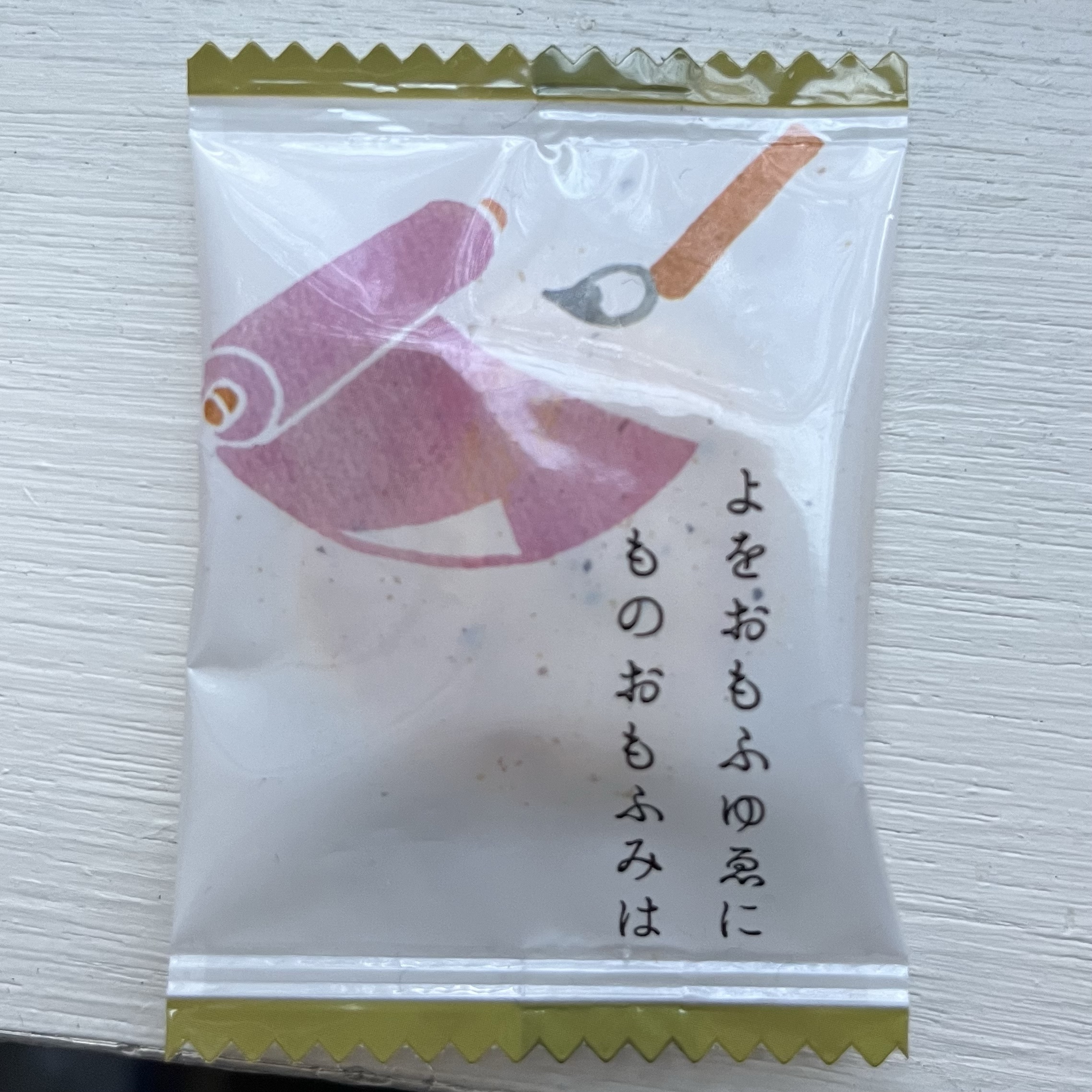
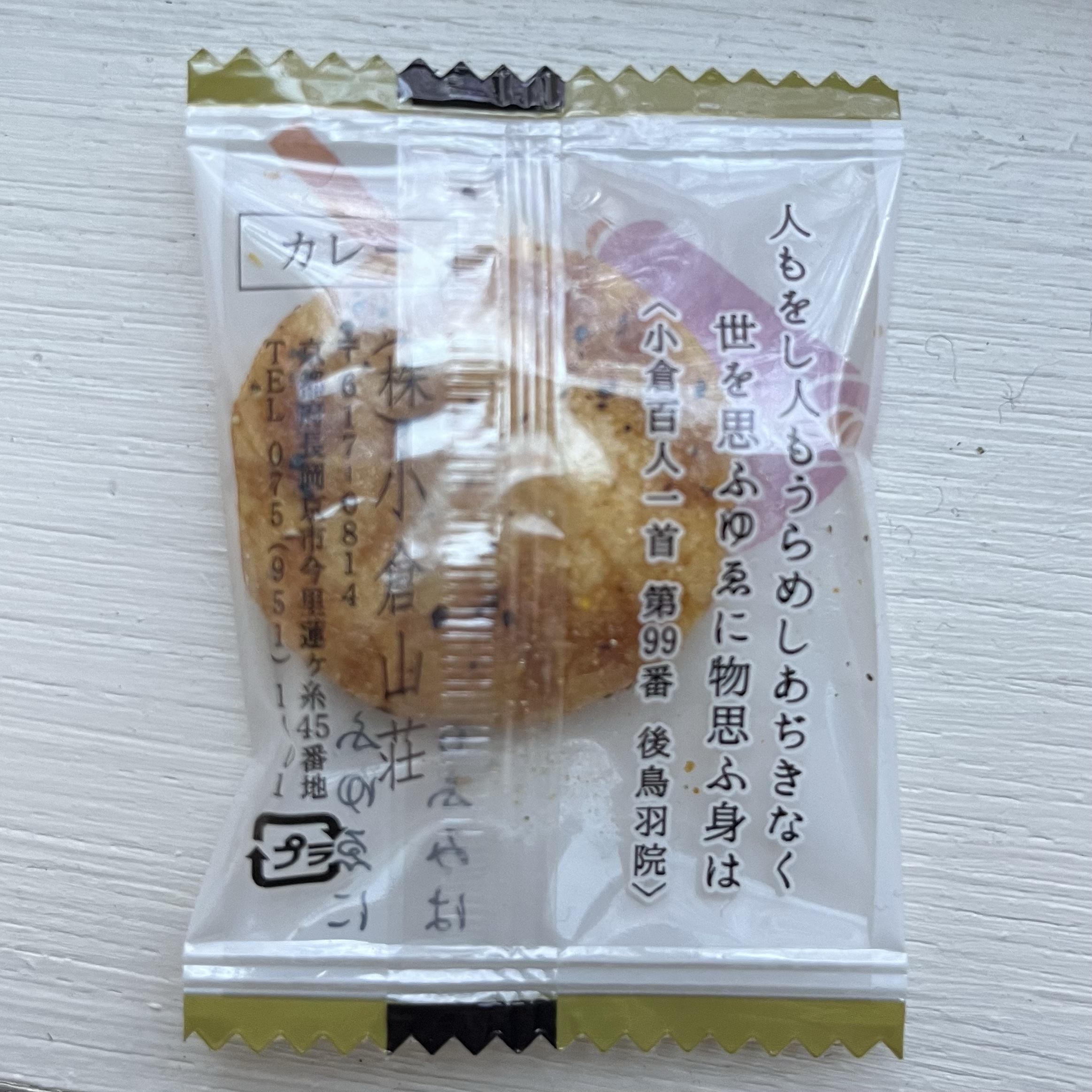
In Japan, gift-giving (omiyagé お土産) among friends and relatives is a common tradition, and recently a friend returned from Japan and gave us some special crackers (senbei) featuring poems from the Hyakunin Isshu. The crackers come in different flavors, and the wrapper each has a random poem.

I got a curry-flavored one:

The first two verses of the poem, poem 99, are written on the front. On the back are the remaining verses:

Hyakunin Isshu-themed crackers are sold here and there, and I’ve posted about it in the past, but it’s still nice to get them from time to time.

P.S. This vendor sells Hyakunin Isshu themed senbei crackers as well (it was the vendor featured in the original post).

Karuta Competitions

Since initially making this blog way back in 2011, I have learned that you can now find karuta competitions (競技かるた kyōgi karuta) online on the official Youtube channel!

Here’s a recent high school playoff competition in 2022 for men:

and ladies playoff competition:

As you can see, it’s a very formal, elegant affair, with traditional clothing, customs, etc. Good manners and sportsmanship are emphasized.

Hyakunin Isshu karuta sets, such as those used in games and competitions, are always divided by two sets of cards:

  • yomifuda (読み札) cards, illustrated cards with entire poem on them, and
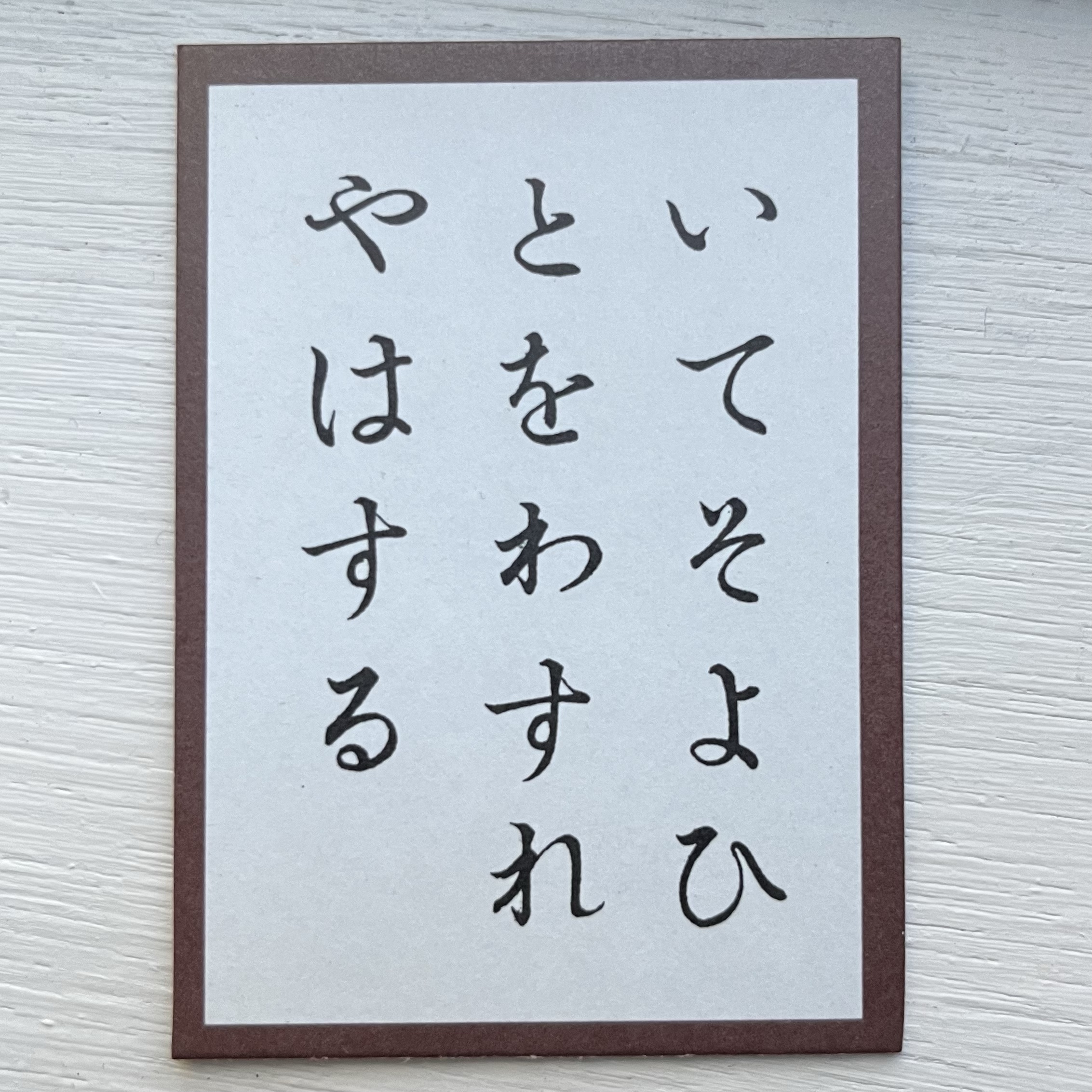
  • torifuda (取り札) cards that only contain the last only the last 2 verses. Illustrations below.
The yomifuda card for poem 58, with the last two verses circled in blue. These correspond to the matching torifuda card on the right.
The matching torifuda card with the last two verses. Torifuda cards are always written in simple hiragana script for easy reading.

I admit that I am still learning the rules, but the gist is that 50 of the 100 total torifuda cards are laid out in a set pattern of cards on the floor, half (25) of them on one player’s side, the other half (25) with the other player.

A diagram of the play field that I made using LibreOffice

The yomité (読手, “reciter”) reads a randomly select poem in full using the illustrated yomifuda cards above.

The yomifuda card for poem 58, from my wife’s karuta set.

The players have to wait until the first 3 verses are completed, then if the matching torifuda cards on the field (i.e. the last 2 verses of the poem), the players can try to take that card. Whoever touches it first wins that round, and the card is taken off the field. Usually, players will swat the card aside because it’s just faster and keeps the other player from touching it.

If the card had been on the opponent’s side (相手陣, aitejin), then not only is the card taken off the field, but you also select a card from your side (自陣, jijin), and send it over to their side. Usually the players will raise their hand to pause the match while they decide which card to send over. The end result is that the cards on your side are reduced by 1, the opponent’s remain unchanged. If the card you took was on your side, then your side is reduced by 1 anyway. No transfer needed. When watching the videos, the player will the lower number of cards is winning.

Side note, if the matching torifuda card was not on the board anyway, then it’s considered karafuda (空札, “empty card”), and the game moves onto the next round.

The player who removes all cards from their side is the winner.

Anyhow, it’s pretty interesting to watch, even if the competitions can take an hour or more. You can see how explosively fast the players are.

Finally, I’d like to give a shout out to groups such as the Boston Karuta Club and Seattle Karuta Club. They have plenty of helpful links in English on getting started with karuta, rules and training resources, among many other great resources!

Getting a Much Needed Update

Hello Readers,

I started this blog as far back as 2011, and it was only today that I noticed that the blog template is super old and doesn’t work well with WordPress features anymore. Further, a number of images and links are broken. Such is life on the Information Superhighway.

I am working on updating the blog layout and fixing broken links. It won’t look 100% like the old blog, but life is ephemeral anyway…

Thanks for your support, and I hope you like the updates!

December 2022 update: about 60% completed!

Hyakunin Isshu: Splatoon Style

Hello readers! It’s been a while (almost 10 years in fact) since I last posted to this blog. My interest in the Hyakunin Isshu has not diminished during that time, but I had reached the end of the initial project, and then focused on other things at the time. Now, things have somewhat come full-circle and if you are still here, I hope you enjoy these new posts.

Lately, I have been playing a great Nintendo game called Splatoon 2, a fun, futuristic game involving sea life that has evolved long after humans are gone, and is also a satire on Japanese culture.

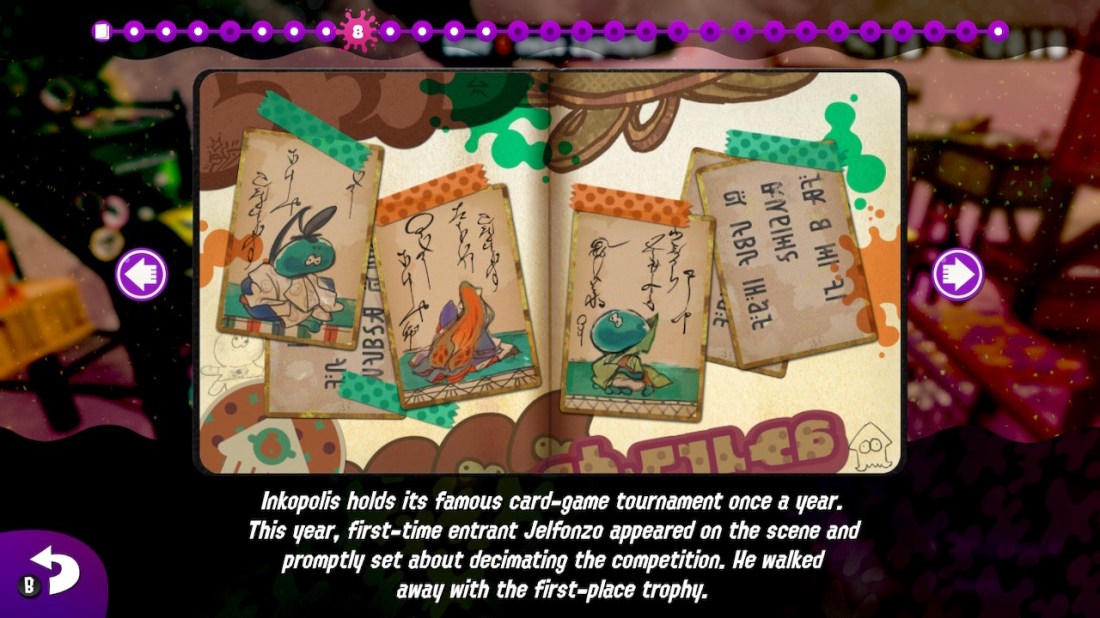
During the main story quest, players can pick up special journey entries that provide a window into the life of Inklings and Inkopolis city, and I was surprised by this entry, shown above.

Look familiar? These are karuta cards from the Hyakunin Isshu anthology, but featuring Splatoon characters instead! The text alludes to a karuta game tournament, just like those that take place in Japan.

I always enjoy it when subtle elements of Japanese culture make their way into popular games.1

If you own a Switch, but haven’t played Splatoon 2 yet, definitely pick it up and see if you can find this journal entry too. 🦑

1 Another example in the other blog.

The Beautiful Village of Yoshino

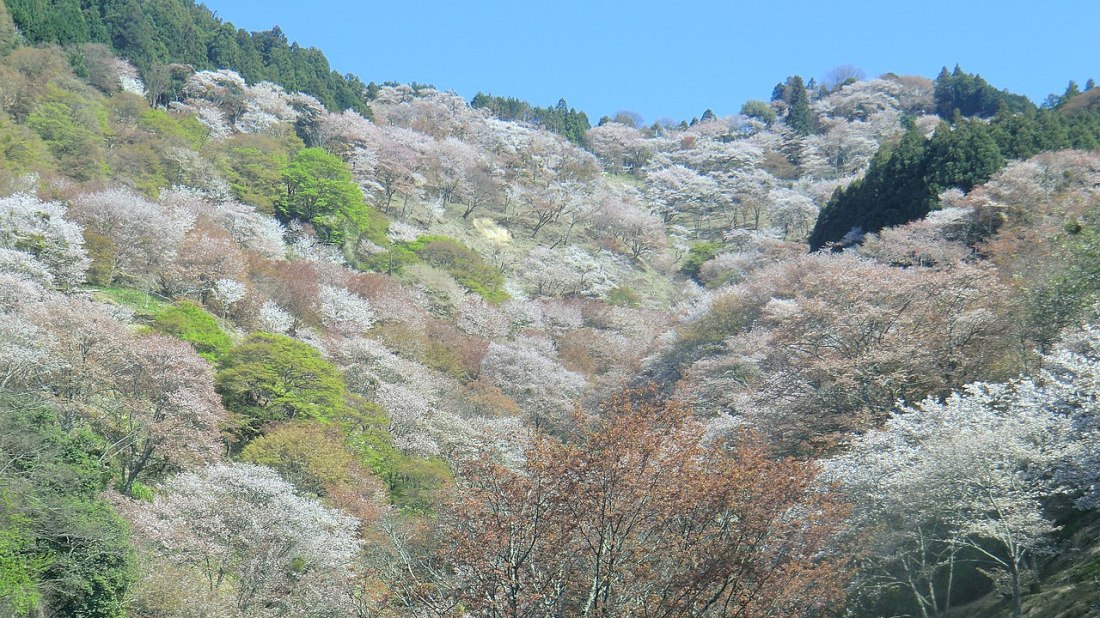
The small town of Yoshino (吉野, official site), near the old capitol of Nara, was a popular spot since ancient times and was often the subject of poetry in the Hyakunin Isshu anthology, for example poem 31 and poem 94. Further, according to the old Japanese historical account, the Nihon Shoki, visits to Yoshino to view the cherry blossoms went as far back as Empress Jitō (poem 2) and became a tradition ever since.

There is also a famous love story that takes place between the celebrated 12th century warrior Minamoto no Yoshitsune, and his mistress Shizuka Gozen. It was said that winter, while fleeing his jealous older brother, on the way to Oshu province in the north, they had to separate for her safety. In the snows of Yoshino, they parted, and Shizuka was sad to watch her beloved disappear in the snow.

Last spring, the Yasaka Taxi company in Japan posted a terrific photo of Yoshino (original link on Twitter):

Even to this day, cherry blossom viewing at Yoshino is a major tourism destination, and from what I hear, it’s pretty amazing.

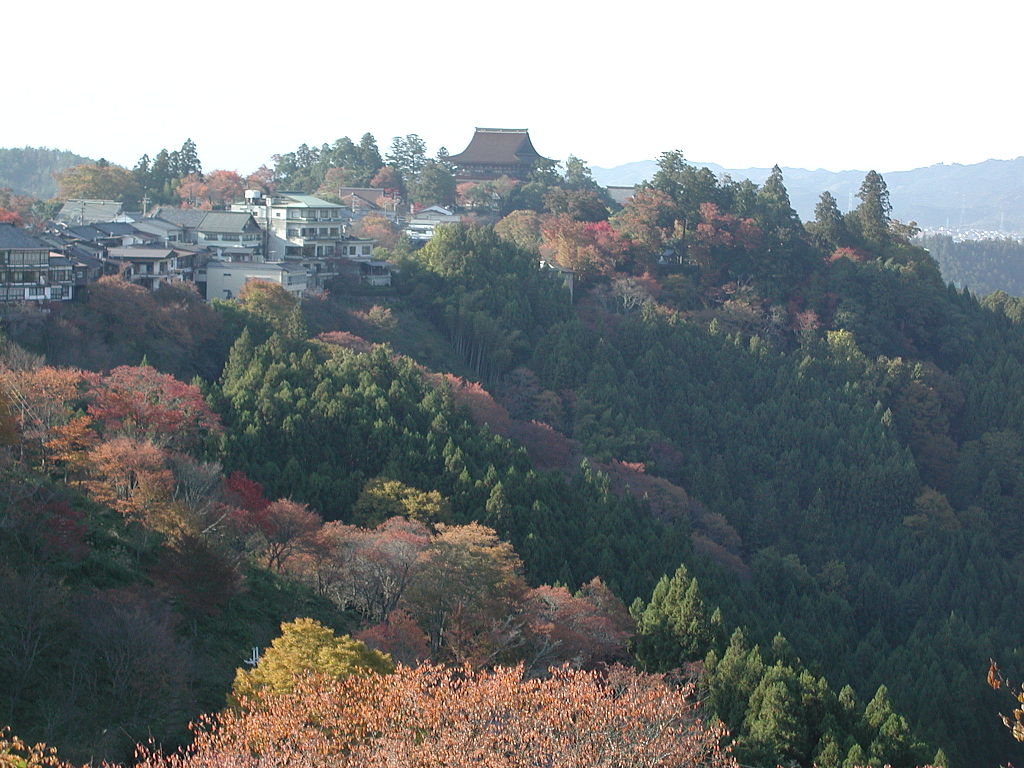
Yoshino is also lovely in Fall, by the way:

The mountains of Yoshino in Fall, photo by No machine-readable author provided. Outside147~commonswiki assumed (based on copyright claims)., CC BY-SA 3.0, via Wikimedia Commons

One can imagine why the aristocracy of early Japan valued this place so highly. 😄🌸

P.S. Featured photo is of the mountains surrounding Yoshino village in spring, photo by 8-hachiro, CC BY-SA 3.0, via Wikimedia Commons

Bozu Mekuri: Karuta for Beginners

Wow, it’s been a while. Recently, while playing with my wife and kids a game of karuta with our Hyakunin Isshu set, I learned about a simple, introductory way to enjoy the game without spending a lot of time learning the poems or mastering the rules of the competition. This simple game is called bōzu-mekuri (坊主めくり).

A recent game (Jan 2023) of bozu mekuri my family and I played on a Saturday night. We use the two-pile yamafuda setup (almost depleted now). The discarded cards are in the middle, with the remaining yamafuda on either side. My cards are in the foreground.

The rules are nicely explained here in Japanese, but goes like this:

  1. Two or more people sit around in a circle.
  2. Shuffle all 100 of the picture cards (yomifuda), then make a stack face-down. This stack is called the yamafuda (lit. “card mountain”).
    • Alternatively, you can split the stack into two stacks, three stacks, or even a ring of cards. My family plays with two stacks as shown above.
    • No matter how you deal the cards, they need to be face down.
  3. Players take turns drawing one card from any yamafuda stack.
  4. Depending on what kind of card a person gets, one of three things will happen:
    • If the card is a picture of a nobleman (tono), simply add it to your personal pile.
    • If the card is a picture of a Buddhist monk (bōzu), you lose all your cards. Put your cards into a pile somewhere in the middle, near the original yamafuda stack, but face up. If there are cards already there, just add to the pile.
    • If the card is a court lady (himé) then you get all the cards from the face-up pile.
  5. Once done, pass the turn to the next player.
  6. When all the yamafuda cards are exhausted, whoever has the most cards at the end wins the game.

One quick note: the poet Semimaru (poem 10) looks like a monk card, but the poet wasn’t a monk. This leads to a frequent confusion by players: does Semimaru count as a monk, or as a nobleman, or … something else? This actually did come up in a recent game I played with friends: we couldn’t figure how if he was tono or bōzu and apparently many Japanese people have been stumped by this.

The Hyakunin Isshu Daijiiten, which I mentioned here, considers Semimaru a bōzu (monk) for the purposes of the game, even though he wasn’t actually an ordained monk.

However, my other new book jokes that the author has a house-rule whereby if anyone draws the Semimaru card, then everyone loses their cards.

You can treat Semimaru the way you treat a Joker in poker cards: decide ahead of time what it means, and play accordingly.

Anyhow, once you get a set of hyakunin isshu karuta cards, try it out with your friends some time! I found the game very easy to learn, and fun to play with 3-4 people. More people the better. There are lots of house-rules possible in bozu-mekuri, so feel free to choose rules that you and the other players enjoy.

Enjoy!

Mount Ogura

Hi Folks,

Although I’ve finished all the poems in the Hyakunin Isshu, I wanted to share this cool photo I found on Twitter:

This is Mount Ogura (小倉山) also called Arashiyama (嵐山) near the city of Kyoto. The place name “Ogura” is where the Hyakunin Isshu gets its full-name: Ogura Hyakunin Isshu.

At that time, it was trendy for aristocrats to compile their own “hundred poems by a hundred poets” anthologies, all named “hyakunin isshu”, but the one that is by far the most famous is the Ogura Hyakunin Isshu, which of course is the source and inspiration of this blog. 🙂

Thanks to KyotoDailyPhoto on Twitter for taking this photo. It’s nice to see the place that inspired the anthology.

Update: I finally visited there in summer of 2024.