I just returned from another trip to Japan,1 and we got to spend a bit of time in Kyoto. By accident, I also found Mount Ogura, and the place where Hyakunin Isshu was compiled! But first, let’s backup and explain a bit of history first.
Kyoto was the capital of Japan from the 8th century to the 19th century, and so many well-to-do families lived here. This aristocracy wrote countless waka poems that were compiled into official poetry anthologies from time to time,2 but the Hyakunin Isshu was not one of them. It was compiled by Fujiwara no Teika (poem 97) as a favor to his in-laws. Teika had been a compiler of one of the major anthologies, the Shin-Kokin-Wakashu, but was now in retirement after his liege lords (poem 100 and poem 99) were exiled in the upheaval of the Jokyu Rebellion. He resided in a small villa on the west side of Kyoto on the hillside of Mount Ogura, and was tasked with selecting the very best 100 waka poems that his in-laws could decorate their home with. Teika’s excellent poetic taste led to the Hyakunin Isshu we celebrate today.
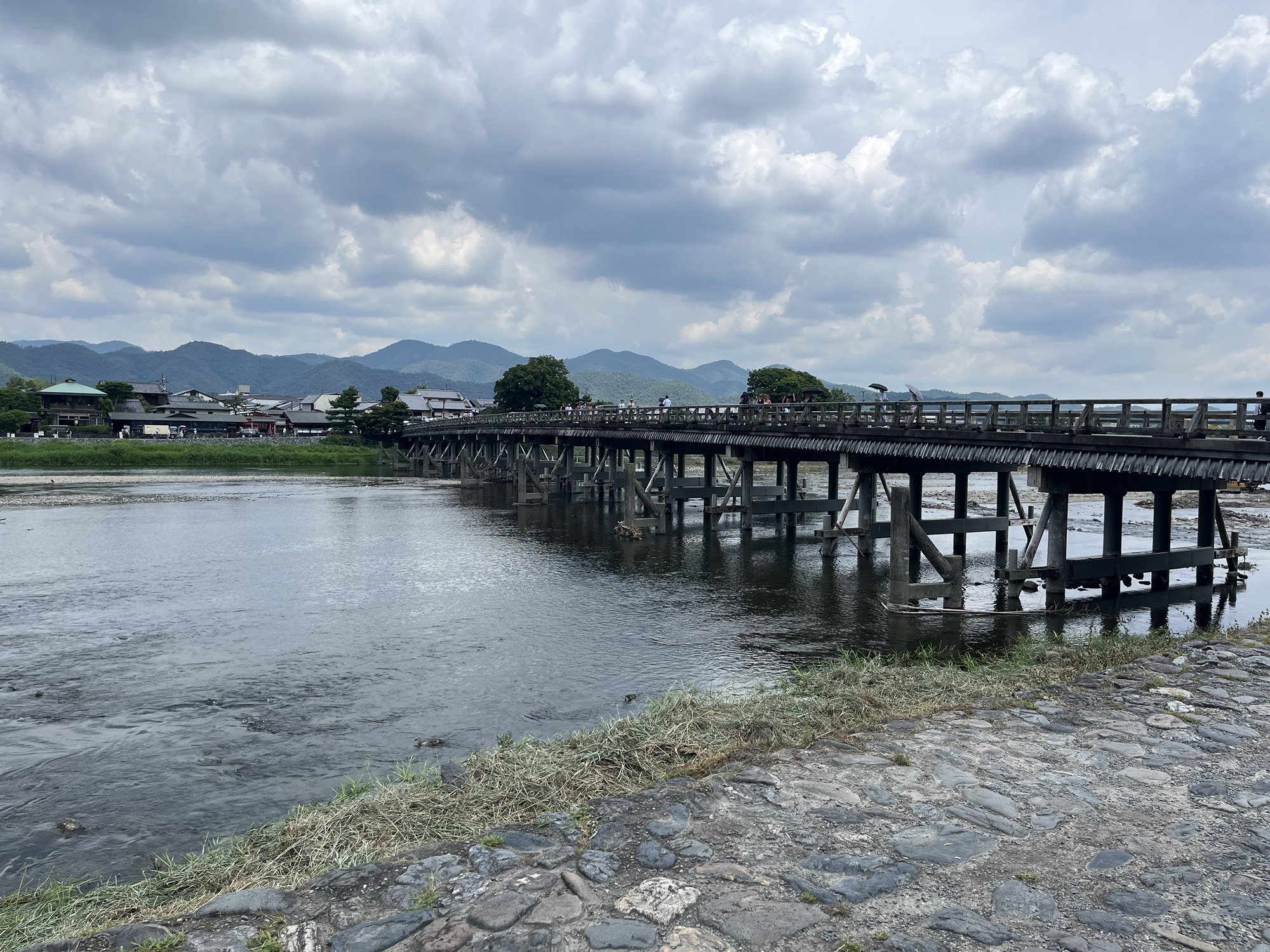
Anyhow, back to present day. I was with the family, and we visited a part of western Kyoto called Arashiyama (嵐山). It’s a very scenic place, with famous bamboo forests, and an iconic bridge named Togetsu-kyō (渡月橋):
Since we visited in the summer, it was extremely hot and muggy, so by lunch time we were exhausted and tired. We went to a local cafe and had lunch. Since we were in Kyoto, I assumed there would be many famous historical places related to the Hyakunin Isshu,3 but I was having trouble finding them on GPS, so I was disappointed.
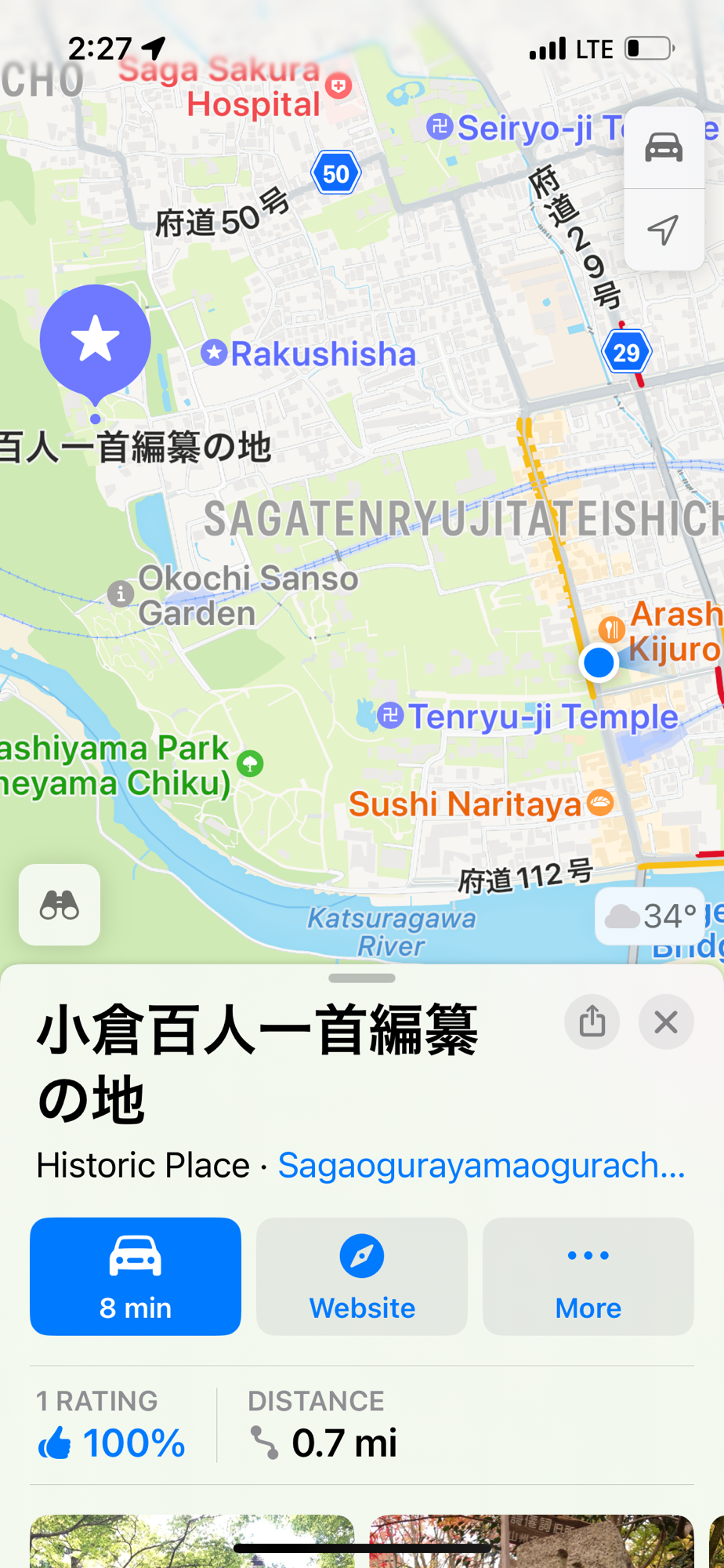
Then I noticed the following spot on my map app:
小倉百人一首編纂の地 (ogura hyakunin isshu hensan no chi) … the place where the Hyakunin Isshu was compiled…? Wow, that’s only 15 minutes by foot from where I was at!
The family was exhausted and sweaty, and were planning to return to our hotel, so I didn’t want to drag them uphill in the heat. I told them I’d be back, and I took off for the place on the map. It turns out that the properly had been converted to a Buddhist temple named Jojakkō-ji (常寂光寺) in the 17th century (a common practice in Kyoto). You can find the official website here.
This is Mount Ogura today.
I followed the map directions and made it safely to Jojakko-ji Temple:
There is a small entry fee, but once I paid that, I got to the second gate here:
The site of the Ogura Hyakunin Isshu is just down the path to the right, before the gate. I made the mistake of going up the stairs instead:
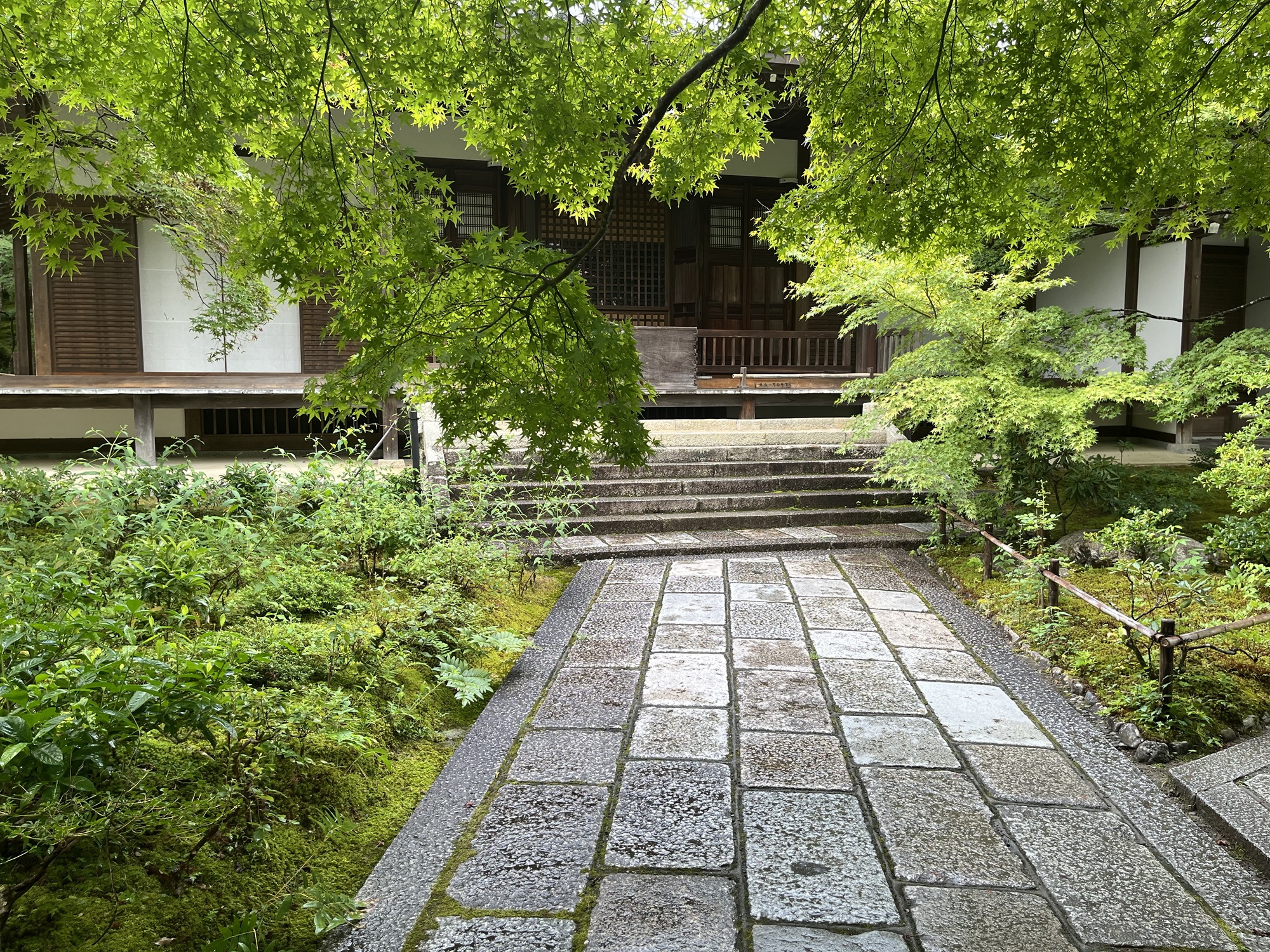
Jojakko-ji Temple is quite scenic actually:
… but it was very late in the day, my family was waiting back at Arashiyama, and I had to hurry. This was my one shot, probably in my lifetime, to find this place, but the temple maps, nor the website show precisely where it was.
Finally, I found it:
The photos from the prefectural website look a lot better than mine (good lighting helps). But there it was, the actual site where the Ogura Hyakunin Isshu was compiled!
The stone marker is pretty small and somewhat eroded, but there was no mistaking it.
Since I was short on time, I paused and said a quick “thank you” to Fujiwara no Teika and then headed back.
If you are fan of the Hyakunin Isshu, and you are in the Arashiyama area of Kyoto don’t miss this small but significant site.
P.S. while at Jojakko-ji, I met a nice Australian couple who had just finished their visit. They told me that at the top of the temple you can see a really view of Kyoto. I didn’t have the time to see it for myself, but if you go, don’t pass up the chance.
P.P.S. I forgot that, ten years ago, I had made a post about Mount Ogura. You can see the Togetsu-Kyo bridge here too.
1 We return every year when possible to visit my wife’s in-laws, and let the kids spend time with their relatives, learn more Japanese, etc.
2 Many earlier poems were also composed at a time when Japan’s capital moved around (Nara, Fujiwara-kyo, Asuka, etc) before settling down in Kyoto. See the Manyoshu for further details.
3 I did actually find one other place we visited earlier in the day, but more on that in an upcoming post.
Thepoem from the Manyoshu feels like an ancient Japanese dad-joke. Read it out loud and you’ll see what I mean:
Manyogana
Modern Japanese
Romanization
Rough Translation
淑人乃
よき人の
Yoki hito no
Men of old
良跡吉見而
よしとよく見て
Yoshito yoku mite
came to Yoshino
好常言師
よしと言ひし
Yoshito ii shi
and declared it a good place,
芳野吉見与
吉野よく見よ
Yoshino yoku miyo
So, good sons, go
良人四来三
よき人よく見
Yoki hito yoku mi
and take in the view!
The author of the poem is Emperor Tenmu whom we saw here and here. He is the younger brother of Emperor Tenji of Hyakunin Isshu fame (poem 1, あきの), and husband/uncle to Empress Jito (poem 2, はるす).
Yo, yo, yo, this poem has lots of “yo” words.
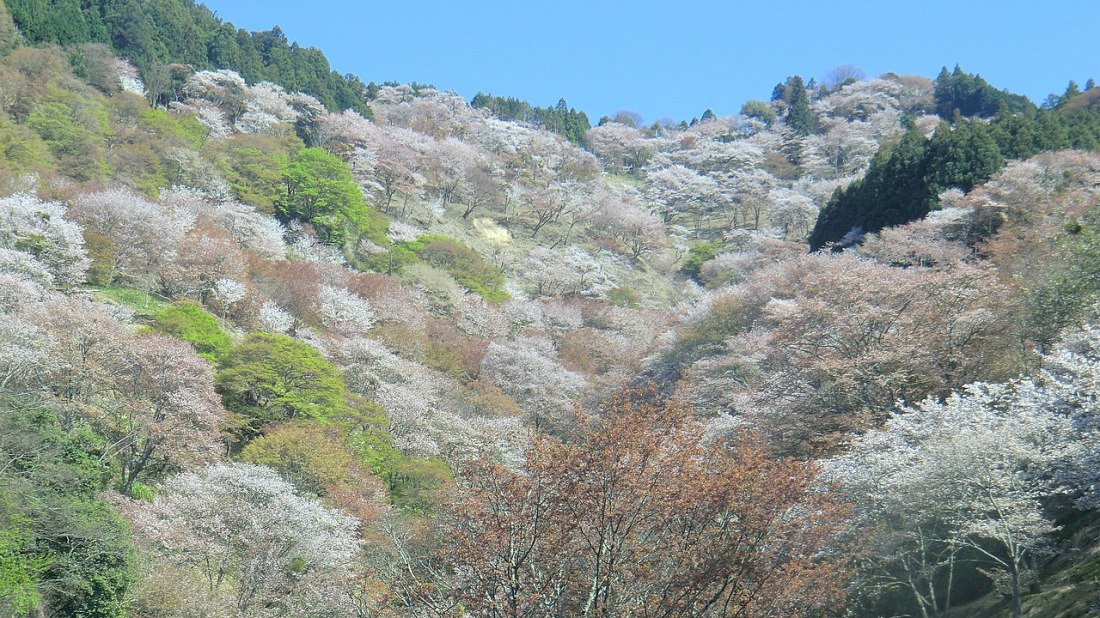
The poem was, evidentially, a suggestion by Emperor Tenmu to his sons to visit the beautiful village of Yoshino, near the old capital of Nara, famed for its otherworldly beauty in Spring. The featured image shows Yoshino and its famous cherry trees.
It was also an attempt to foster good relations between Tenmu and his sons through a combination of humor and providing some fatherly advice. Given how complicated family relations were at the time (see links above), and since Tenmu had defeated his own nephew in combat to assume the throne, he had reason to worry.
Sadly, it didn’t work.
After Tenmu’s passing, one son, Prince Ōtsu (ōtsu no miko, 大津皇子), started a rebellion and was later given the death penalty at the age of 24. Wikipedia implies that the rebellion may be a false charge though brought by Empress Jito so that her own son could ascend the throne. My book on the Manyoshu delves into this at length and comes to the same conclusion.
Still, you can’t blame Emperor Tenmu for trying to heal family divisions, yo.
I’ve written before about Empress Teishi, the ill-fated first wife of Emperor Ichijō, and patron of Sei Shonagon who wrote poem 62 of the Hyakunin Isshu (よを). Her family lost a power-struggle to a rival faction of the Fujiwara clan, and under pressure Ichijō took a second wife from the winning faction: Empress Shoshi. Teishi was sidelined, and although she did give birth to an heir, she soon died from illness and presumably humiliation and stress.
While watching the historical drama about Lady Murasaki, it showed Teishi’s untimely death, and revealed that she had left a final deathbed poem to her beloved husband. The poem really exists and is actually recorded in an imperial anthology, the lesser-known Goshūishū (後拾遺), number 536:
Japanese
Romanization
Rough Translation
夜もすがら
Yo mo sugura
If you should remember
契りしことを
Chigirishi koto wo
that vow we made
忘れずは
Wasurezu wa
in the deep of night,
恋ひむ涙の
Koimu namida no
then I long to see
色ぞゆかしき
Iro zo yukashiki
the color of your tears…
In the drama, Emperor Ichijo and Teishi are portrayed as being sincerely in love, yet ultimately they are a victim of politics and forced apart more and more over time. The vow alluded to here was portrayed in the drama as a promise by Emperor Ichijo to always love Teishi no matter what.
Rokuharamitsu-ji Temple in Kyoto, where Teishi was laid to rest. Photo by 663highland, CC BY-SA 3.0, via Wikimedia Commons
Later, Teishi was buried (not cremated in typical Buddhist fashion) at a temple called Roku-haramitsu-ji, near an area of Kyoto called Toribeno no Misasagi (鳥戸野陵). Legend says that on the night of her funeral it snowed. Emperor Ichijo, who was unable to attend, was said to have stayed up all night mourning for her at the palace. Later he composed a poem for her, preserved in the Eiga Monogatari, which is as follows:
Japanese
Romanization
Rough Translation
野辺までに
Nobe made ni
My heart yearns
心ばかりは
Kokoro bakari wa
for you all the way
通へども
Kayoe domo
in Toribeno,
わが行幸とも
Waga miyuki tomo
and yet I worry if
知らずやあるらん
Shirazuya aruran
you are aware of my coming.
Later, Sei Shonagon who retired from the Court, was said to have taken up residence near Toribeno no Misasagi, particularly near a temple named Sennyu-ji. You can see some photos of these places in the video posted here. It was looking back in her later years that Sei Shonagon wrote the Pillow Book as a subtle memorial to her beloved patron, looking back fondly on happier days together.
Lady Murasaki, one of the most famous women of Heian-period Japan, and the first novelist in Japan, wrote many wonderful romantic scenes through the Tales of Genji, yet her real life marriage was anything but.
The latest episode historical drama on NHK about the life and times of Lady Murasaki (poem 57, め) covers her marriage to her second-cousin Fujiwara no Nobutaka (藤原宣孝, ? – 1001), who was around 20 years her senior. Yes, this was not that unusual for the time, but still gross.
Sadly, the marriage quickly turned sour. Nobutaka slept around a lot, and had other hidden wives and children. Lady Murasaki did not take this lying down and the two of them fought frequently. Nobutaka for his part, enjoyed bragging about his trophy wife.
In the poems preserved in Lady Murasaki’s own private collection is this poem addressed to her husband:
Japanese
Romanization
Rough Translation1
言ひ絶えば
Ii taeba
If you saw you’re going to
さこそは絶えめ
Sa koso wa taeme
stop writing me, then fine!
なにかその
Nanika sono
You can’t even
みはらの池を
Miwara no ike wo
stand by the bank
つつみしもせむ
Tsutsumi shimo sen
of Miwara pond properly.
1 Apologies for any mistakes, or for the roughness of this translation
The backstory of this poem is that Nobutaka had taken one of Lady’s Murasaki’s private letters addressed to him, and shown off that letter to friends (apparently bragging about how smart his young bride was). She was justifiably angry and told him to knock it off. Nobutaka was angry with her and threatened to stop writing. Her reply above, was a clever way of saying “fine, don’t bother writing me”. The allusion to Miwara pond was a pair of puns:
Miwana pond (mihara) is also a pun for anger.
The word tsutsumi is also pun for a bank (as in riverbank), and self-restraint.
Contrary to Lady Murasaki’s reply, Nobutaka was so impressed by the reply that he ended up bragging about it to his friends anyway. 🤦🏼♂️
Another letter is as follows:
Japanese
Romanization
Rough Translation2
忘るるは
Wasururu wa
Forgetting others is
うき世のつねと
Uki yo no tsune to
a part of this ephemeral world,
思ふにも
Omou ni mo
Even so,
身をやるかたの
Mi wo yarukata no
being forgotten myself,
なきぞわびぬる
Naki zo wabinuru
I cannot help but cry.
2 Apologies for any mistakes, or for the roughness of this translation
The married nobility of the Heian Period frequently lived in separate estates, and the husband would visit his wife as needed, but not the other way around. It seems by this point, Lady Murasaki was forgotten by her philandering husband, and lamented her unhappy marriage. One can’t help but recall the Gossamer Years generations earlier.
It is sad that such a talented woman was relegated to an unhappy marriage with a faithless, not to mention narcissistic husband, especially in a society where women had little recourse. I also wonder how much this motivated her to write her novel, The Tales of Genji, as a coping mechanism.
P.P.S. For folks who are visiting Kyoto, there are many excellent locations associated with the life of Lady Murasaki and the Tales of Genji. The featured photo above is the “Genji Garden”, part of the Buddhist temple of Rozan-ji, courtesy of PlusMinus, CC BY-SA 3.0, via Wikimedia Commons. This blog includes an excellent photo-tour of Rozan-ji.
Waka poetry, including the Hyakunin Isshu has a lot of conventions and symbols used to express certain seasons or sentiments. This is not so unusual. For example, if someone in the US writes a poem about the smell of cinnamon, it definitely brings to mind late autumn or winter.
One common example in the Hyakunin Isshu of poetic symbolism are birds. Birds have distinctive calls, and different species tend to be prominent at different times of year, among other things. For this post, I included a lot of poetry from the Imperial anthology, the Kokin Wakashu, which is much larger than the 100 poems of the Hyakunin Isshu, and thus easier to find examples.
Spring
The most prominent bird in Spring is the uguisu, the Japanese Bush Warbler, also called the Japanese Mountain Thrush:
The uguisu’s distinctive bird call is very emblematic of the season.
The bird call of the uguisu sounds like ho-ho-ke-kyo, which to Japanese people sounds similar to a famous Buddhist text called the Lotus Sutra (hokekyo in Japanese). I’ve written much about the Lotus Sutra in my other blog, so I do not need to repeat here. Needless to say, when Spring comes, people in Japan inevitably hear this lovely sound, even in urban areas.
Oddly, there are no poems in the Hyakunin Isshu about the uguisu, however, I found many poems in the official anthology, the Kokin Wakashu. Here are a few of my favorites thus far. This first one is poem 4 by Fujiwara no Takako (藤原高子; 842–910) later Nijo-kisaki (二条后, “Nijō Consort”):
Apparently, the bird was highly praised during the aristocratic court culture of the Heian Period, and Sei Shonagon (poem 62) mentions an expedition in her Pillow Book:
[94] …it had been overcast and tending to rain since the first day of the [fifth] month. Some of us were sitting about at a loose end, when I came up with the suggestion that it would be fun to go off on an expedition to hear the hototogisu….
[ later ] … and as for the hototogisu, they were indeed calling back and forth, so loudly in fact that they made almost too much of a din for comfort.
Translation by Dr Meredith McKinney
The anecdote is quite long, but Sei Shonagon and the other ladies-in-waiting do encounter the hototogisu, and meant to write poetry about them, but then through a series of interactions forgot the poetry entirely and came back to the Empress empty handed, followed by various witty comments back and forth.
Autumn
Unlike the Spring, where the call of the bird is highly praised in poetry, in the Autumn, theHyakunin Isshu Daijiten lists a few birds that were revered in poetry. For example, migratory birds, such as the Wild Goose (kari):
I had some trouble finding poems for the fall birds listed in either the Hyakunin Isshu or the Kokin Wakashuanthology, but there seems to be a lot in the later Shin-Kokin Wakashu anthology. I don’t have a reliable translation of the Shin-Kokin Wakashu, so I may update later.
I did find this poem under the section “Miscellany 2” in the Kokin Wakashu, poem 497 by an anonymous poet:
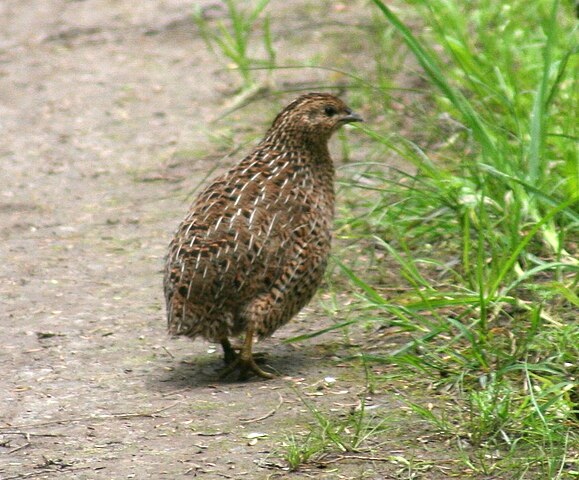
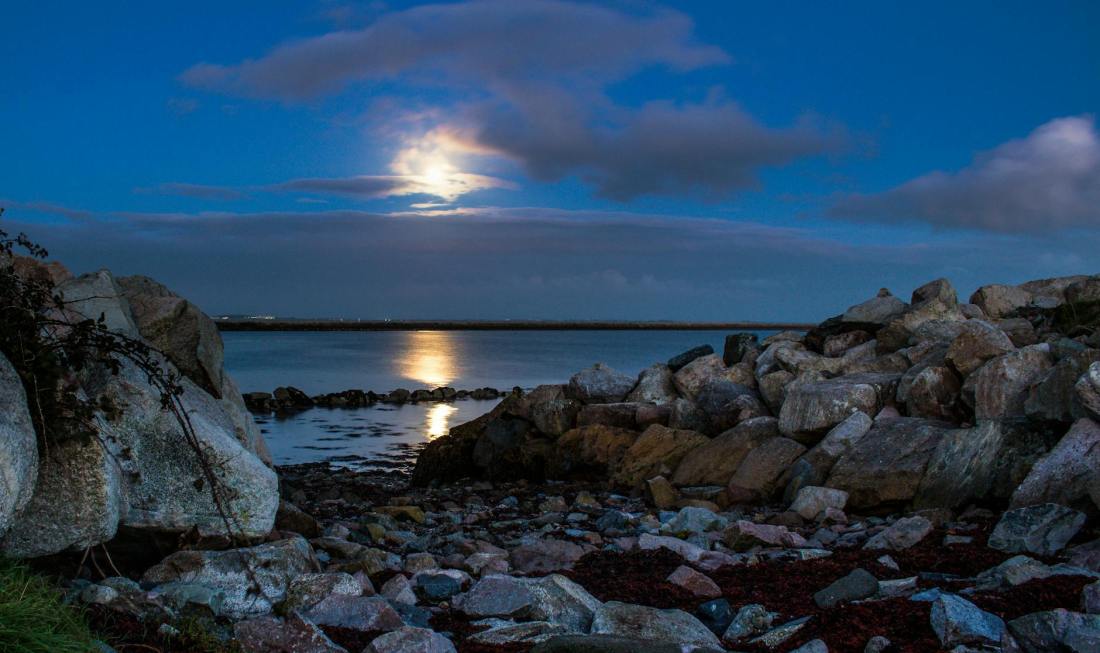
The birds associated with winter, were birds whose cries were melancholy and said. First and foremost is the plover, which we saw in poem 78 (あわじ) of the Hyakunin Isshu:
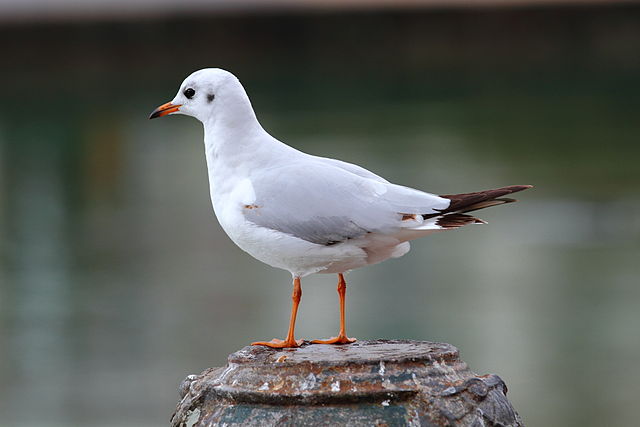
Or the Black-headed Gull (miyako-dori, meaning “bird of the capital”):
The miyakodori in particular stood out due to its unusual name. The Hyakunin Isshu Daijiten lists a poem from the official Kokin Wakashu anthology of note, poem 411 under the section “Travel Poems”:
The headline for this poem explaining the backstory is unusually long, but basically the poet, Ariwara no Narihira (who also wrote poem 17, ちはやふる, in the Hyakunin Isshu) was away in eastern Japan with some companions, and longing for home in the capital, they saw a miyako-dori bird (lit. “capital bird”) and recited this poem.
The Mallard in particular had dual-association with romance and with the melancholy of winter. This poem in the Kokin Wakashu, number 533, by an anonymous author illustrates this:
Certain birds were also used in Japanese poetry for symbolic purposes, but not necessarily for seasonal expression.
We’ve talked about birds associated with seasons thus far, but there’s a couple worth calling out that are an important part of Japanese poetry, but not related to seasons. The first is the Copper Pheasant, called yamadori, which we saw in poem 3 of the Hyakunin Isshu (あしびきの).
In antiquity, it was thought that Copper Pheasants mated for life (true), but slept in separate nests at night. Thus, the poet Kakinomoto no Hitomaro likened himself to a Copper Pheasant sleeping alone at night part from his lover.
And finally we come to the magpie. In poem 6 of the Hyakunin Isshu (かさ), the poet Chūnagon Yakamochi describes frost growing under moonlight on the so-called Magpie Bridge of the Imperial Palace. The magpie (kasasagi) was associated with a Chinese myth that evolved into the Qīxī Festival (七夕), celebrated as Tanabata in Japan.
In this tale, two star-crossed lovers, a celestial princess and a cowherd, were forcibly separated in the heavens by her father the Jade Emperor, but allowed to reunite one night a year. It was said they would reunite by crossing a bridge made of magpie birds who put their outstretched wings together. Thus, the magpie was always associated with this famous tale.
Poetry about war is not something you will ever find in the Hyakunin Isshu, or other Imperial anthologies. So, I was quite surprised to find this poem in the Manyoshu.
Manyogana
Japanese
Romanization
Translation1
熟田津尓
熟田津に
Nikitatsu ni
I was going to wait for
船乗世武登
船乗りせむと
Funanorisen to
the moon to rise before
月待者
月待てば
Tsuki mateba
embarking from Nikita bay,
潮毛可奈比沼
潮もかなひぬ
Shio mo kanainu
but the tide is up:
今者許藝乞菜
今は漕ぎ出でな
Ima wa kogi-idé na
go, row out now!
1 Translation by Kudō Rikio, Ōtani Masao, Satake Akihiro, Yamada Hideo, Yamazaki Yoshiyuki, ed. SNKBT: Man’yōshū, 4 vols. Iwanami, 1999–2003, originally found here.
This poem was recited by none other than Princess Nukata (Nukata no Okimi, 額田王, 7th century), whom we saw in these twopoems. She wasn’t just a woman sought after by two emperors, but also played a small part in the effort to restore the Korean kingdom of Baekje.
A map of Korea in the 4th century showing the three kingdoms. Baekje is at the height of power at this time. Map by Historiographer at English Wikipedia, Public domain, via Wikimedia Commons
For centuries, the Korean Peninsula was divided into three kingdoms: Goguryeo, Silla and Baekje who constantly vied for control. Baekje, called Kudara (百済) in Japanese, was the country most closely allied with Japan in antiquity and helped bring much continental culture to the fledging Japanese court. They had a long-standing alliance.
But in 660, Baekje was crushed by the combined forces of Silla and their ally, Tang-Dynasty China (aka “Great Tang” as they called themselves). The remnants of the Baekje court fled to Japan and sought help to restore their kingdom.
With Japanese and Korean restoration forces mustered at beaches of Nikita (熟田) Bay in modern day Ehime Prefecture, Princess Nukata, writing on behalf of the Baekje sovereign, Prince Buyeo Pung, recited this poem to fire up the troops.
Sadly, the restoration effort gradually failed. The forces landed in former Baekje and made initial gains, but gradually lost steam, and then were crushed in 663 at the Battle of Baekgang. This was also the last time that Japan sent troops to the Korean Peninsula until the 16th century under Toyotomi Hideyoshi’s invasion of Korea.
As I wrote before, the Manyoshu, while technically Japan’s first poetry anthology, is a somewhat different beast than later anthologies and collections. The poetry techniques are less refined, but the Manyoshu is often revered for its more visceral nature, its breadth, and its small peeks into antiquity.
P.S. Korean history is fascinating too, and makes for some pretty nice K-Dramas which you can easily find on streaming media such as Netflix. If you’re not already a K-Drama fan, maybe look up a few and enjoy.
P.P.S. Before I found a proper translation, I was translating the final line as “Let’s row” in the same way that Optimus Prime from the Transformers would say “Roll out!”. Maybe less accurate but it sounds cool, especially coming from Princess Nukata. 😎
A while back I wrote about a famous poem in the Manyoshu anthology by Princess Nukata addressed to her ex-husband Prince Oama (later Emperor Tenmu). It seems that the story of this forbidden encounter in a field of grass did not end there, because Prince Oama replied back…
Before we discuss the poet and the context, I wanted to briefly explain the plant described: murasaki (紫草). I had some trouble finding information on this plant, but it seems to be the species Lithospermum erythrorhizon which in English has a variety of names: purple gromwell, red stoneroot, red gromwell, etc.
Princess Nukata was Prince Oama’s ex-wife, but had remarried his older brother, Emperor Tenji (poem 1 in the Hyakunin Isshu), while the emperor had compelled Prince Oama to marry his own niece (Tenji’s daughter) Princess Unononosasara to strengthen the family line. Relations in the family were complicated. Later after Emperor Tenji died, Prince Oama went to war against Tenji’s son, and overthrew him to become Emperor Tenmu. Game of Thrones, Japanese ediiton.
Yet what makes this exchange of poems surprising is that both Princess Nukata’s poem, and Prince Oama’s were recited not in secret, but at a big public banquet in front of Emperor Tenji.
So, what’s going on here? Are they professing their love in defiance of the Emperor?
Well … no. My book on the Manyoshu strongly suggests that given the circumstances these poems were likely recited in jest. Maybe they did still have lingering feelings for one another, but the poems were not meant to reflect real life; they were meant to paint a beautiful, but surreal scene. The imagery is fantastic, and a testament to their poetic skills, but the scene described likely did not happen. This is not unusual with the poetry we’ve seen thus far on the blog: many poems paint idealistic scenes that might be based on real life, but didn’t necessarily happen.
Then again…. what if they recited their poems in jest in order to hide true feelings after all?
Author’s note: this draft was nearly complete before I had to go to the hospital in February. I decided to post as-is even if it is a bit late.
At a recent meeting of the Seattle Karuta Club, I tried my hand at being the yomité (読み手), the card reader.
The game of Karuta traditionally requires three people to play: two opponents and one person, the yomité, to read the full poem cards, the yomifuda.
Reading the cards is not just a matter of reading aloud, there’s a certain style and method to it. Plus you need to be able to read hiragana smoothly, including the weird spellings. Further you have to be clear enough that players know precisely which card to take.
Usually, Karuta players overseas just use one of several reader apps, but in Japan, Karuta matches usually have a yomité when possible. It’s a handy skill to learn if possible, even if you are musically tone-deaf like me.
This featured photo is me starting the match. I was quite nervous since it was my first time, and have a terrible singing voice. I don’t say that to be modest; I am genuinely a bad singer.
Right away, I found I could read the text easily enough, but I didn’t project my voice, or enunciate the kimari-jiproperly. Halfway through the match I “found my groove” and my reading improved but I still needed practice.
Learning to read Karuta cards does not take long to learn, but learning to read well takes time.
This page in Japanese focuses on learning to read Karuta cards. It even includes a video (Japanese only)
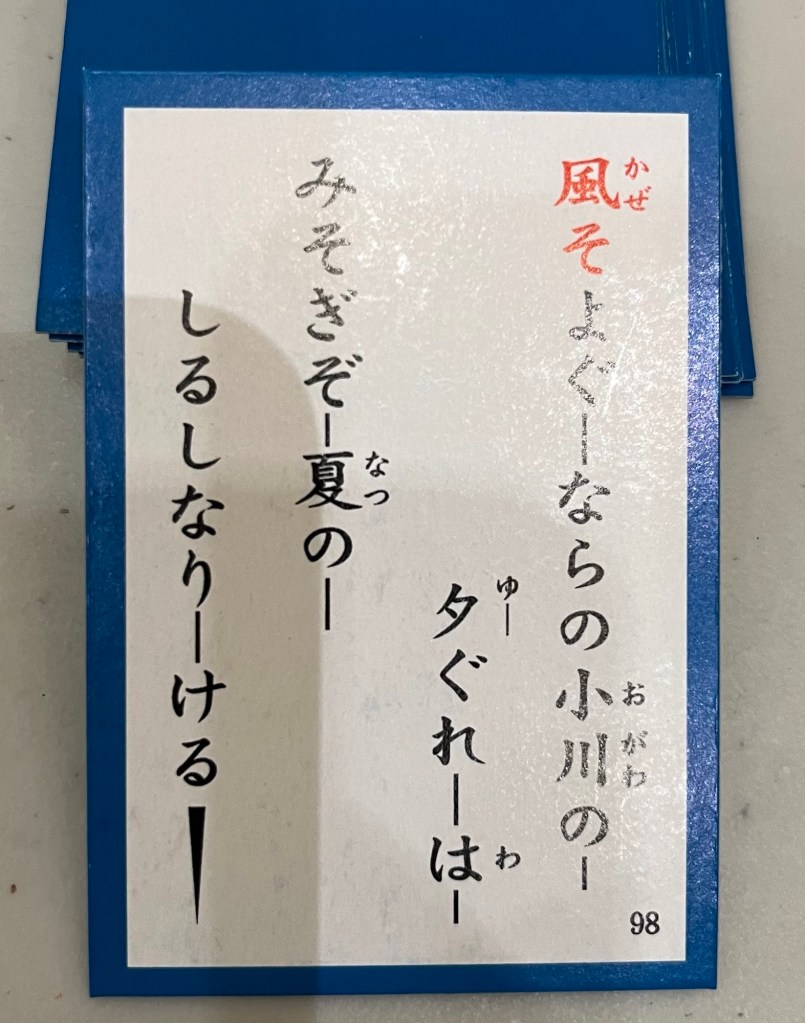
In red, the kimari-ji is shown, and the text of the poem includes rhythm clues (the lines and arrows) where you should elongate the syllable, for example. Each poem has a slightly different rhythm. It’s not the same pattern with every poem. So, you definitely have to practice each poem and how to recite them.
In the end, taking turns as the yomité is a nice way to share responsibility, and even Japanese is not your first language, you can pick it up with a bit of time and effort.
Being able to recite your favorite poem the traditional way is also a neat skill to learn anyway.
In other recent, exciting news, I found this article on the Asahi Shimbun newspaper: the discovery of some of Fujiwara no Teika’s personal notes. This is called the kenchū mikkan (顕注密勘).
Long before Fujiwara no Teika (poem 97) compiled the Hyakunin Isshu, he served as a minister under Emperor Gotoba (poem 99). Among his duties, Teika was commissioned in 1201 to compile a new Imperial poetry anthology, which later became the Shin Kokin Wakashu (新古今和歌集).
Here you can see some of his notes and thought process as he’s compiling the poems together. It’s a fascinating discovery.
You can click here to see more detailed photos of his notes. They are read from right to left, vertically not horizontally.
You can also see another example of his handwriting here, courtesy of Wikipedia, from diary:
Teika himself had a pretty rocky career and after his liege lord was exiled, Teika spent the rest of his days living as a Buddhist monk. Nonetheless, his legacy lives on.
I have been away for a while due to variouslifecircumstances, but I’ve been wanting to share this news with readers.
The Japanese public TV station, NHK, broadcasts a new Taiga Drama (大河ドラマ) every year. These are big productions featuring some aspect of Japanese history, with big name actors and so on. I was very fond of the last one. Usually these cover periods of warfare or conflict, and male historical figures from Japan’s long history, but this year’s drama, titled Hikaru Kimi E (ひかる君へ, “Addressed to You [my dear Radiant One]”), features Lady Murasaki as the main character!
(Image by NHK, all rights reserved)
Lady Murasaki, poem 57 of the Hyakunin Isshu, needs little introduction. She composed the Tales of Genji, as well as her eponymous diary. She was the first female novelist in Japanese history, and has been a subject of interest ever since. The biographical details of her life are somewhat scant, unfortunately, and the drama does embellish quite a bit, including hinting strongly at a romance that probably didn’t happen in real life. My impression is that they are using romantic themes from her novel, the Tales of Genji, as the backdrop for the drama.
Nonetheless, I have been watching this series on Japanese TV1 and I enjoy it. It is somewhat different than past Taiga Drama, since it features a female main character, and this period of history (the late Heian Period), had little warfare, but it does have tons of scandal and intrigue as the Fujiwara clan tighten their grip on the reins of government. This drama is surprisingly risqué in parts, something you usually don’t see in a conservative Japanese drama. However, such scenes remind me more a more subdued Victorian romance than something in modern, American television.
That said, it’s a darn good drama thus far.
The drama frequently shows other people of the Heian period aristrocracy, many of whom were poets of the Hyakunin Isshu. To name a few who have been featured in the drama:
I admit I am particularly fond of the character Sei Shonagon. In historical pop culture, Sei Shonagon and Lady Murasaki are treated as rivals as they were both famous writers of the same generation who belong to rival cliques in the aristocracy, but in reality they probably didn’t interact much. Nonetheless, they frequently talk in the drama, and the actress who plays Sei Shonagon, stage name is “First Summer Uika” (ファーストサマーウイカ), is a talented actress and total babe:
First Summer Uika also recently visited a Shinto shrine devoted to Sei Shonagon in Kyoto called Kurumazaki Jinja (車折神社), which even sells Sei Shonagon charms (omamori):2
Because the drama features so many people related to the Hyakunin Isshu, the drama subtly works in many poems from the anthology. It’s been great to suddenly recognize a poem being recited, even if I am a bit slow to recall. The settings, costumes, and cast are all amazing, and even though the historicity is questionable, it’s been a great watch.
I really hope they eventually make an English subtitle version so people outside Japan can watch. The quality of Taiga Dramas are terrific, and they are well worth watching if you can.
Update: while visitingKyoto in 2024, we found a local NHK display of the drama:
The second photo above is First Summer Uika as Sei Shonagon.
1 Sadly there are not foreign translations, and no subtitles, and it is not always modern Japanese, so I admit I struggle at times to follow the story. At other times, I can follow easily enough.
2 We are going to visit Japan again this year (the last for our teenage daughter), including Kyoto. Visiting this shrine is definitely on the itinerary, even thought it’s pretty small.
















.JPG)

.jpg)


_W_IMG_0104.jpg)


